

Young Spiritual Leader Centering Faith on Human Rights and Family Unity
Human rights, the dignity of man, and the unity of family are cornerstones of faith for Rabbi Moshe Birnbaum. The new young rabbi of Temple Shaare Tefilah—he is 30 years old—has centered his life on Jewish learning and freedom of choice. Profiled by Patriot Ledger staff reporter Nona Dearth, Rabbi Birnbaum arrived in Norwood this past August after four years as associate director of the B’nai B’rith Hillel Foundation at Rutgers University. He has also served part-time in pulpits in Flemington, N.J., and in Brooklyn, N.Y. As a child growing up in the Queens borough of New York, he went to Yeshivas, Jewish day schools, instead of public schools. Since then he has steered a steady course toward the rabbinate.
To Rabbi Birnbaum, religion is the vessel of understanding. “Religion gives you a total picture, a more mature perspective on how to live,” he said. “You learn to understand there must be patience with one’s spouse, with one’s children. You learn to bring the perspective of the ages to your everyday living.”
Though he is young in years, Rabbi Birnbaum has an innate wisdom that has ripened with experience. He has been many places and has seen many things. Now the Russian and Israeli trips are behind him. He has his bachelor’s degree in history from Queens College, his rabbinical degree from the Reconstructionist Rabbinical College in Philadelphia, his master’s degree in contemporary Jewish studies from Brandeis University, and there has been further study at the departments of religion and of communication at Temple University as well as courses at the Jewish Theological Seminary in New York.
The move from college campus to the 69-year-old Norwood temple provides a sharp contrast in goals. “Now I am working with families. I find it challenging and interesting,” Rabbi Birnbaum said. “Today we are seeing religion as more important in family life. And Judaism is very family oriented.”
There is warmth in his voice as he speaks of customs and rituals. “The sabbath is a time for families to come together, to relax and enjoy each other’s company,” he said. “And the Passover seder, one of the great Hebrew rituals, is totally family centered.” He speaks with love of his own family—his wife Inda, his three-year-old daughter Trina and the baby that is on the way. They are putting down roots in a stable community, and they are happy about it.
Rabbi Birnbaum has no plans for marked changes in the operation of the temple and its direction for the future. He feels that every rabbi does things differently because each is a different person, and that is change enough at first. “People come to religion for continuity,” he said. “It is more important to be rabbi to the congregation than to think sof change. People come to us to get a meaning out of life, and I think that is a holy mission. Life brings its own changes.”
Firsthand Observations in the USSR and Perspective on Human Rights
Rabbi Birnbaum was in Israel during the Six Day War in 1967 when he was a student at the Hebrew University in Jerusalem. That same year he went to Russia with a group of students and visited the USSR again, on a camping trip, in 1972. He has seen firsthand the restrictive powers of the Russian Communists, and he applauds President Carter’s stand on human rights. “I believe we must continue pressure for human rights. We can’t afford not to,” Rabbi Birnbaum declared. “It is not just an internal Russian problem.”
He sees economics as the lever that may move the Russians toward a freer society. “When the Russians need anything, as they needed wheat, they will make concessions,” the rabbi said. “We must link economics with human rights. When they want to trade, we should put the pressure on.” He noted that Communists in European countries are also pressuring the USSR for more human rights. “Party members feel that Russia gives Communism a bad name,” he commented, with a suggestion of a smile.
Rabbi Birnbaum views both the short-term and long-term results of such pressure. He feels that economic leverage, for the short term, will open up areas of more freedom for the future. He is less optimistic about long-term results. “Long-term benefits for the future?” He shook his head. “It depends on who is in power.”
Rabbi Birnbaum has seen the pendulum swing back and forth in Russia. On his first trip he saw “the Jews of silence,” in author Elie Wiesel’s phrase—a people who had lost touch with their heritage as the Communists severed their ties with the past through punitive measures. In 1972 the atmosphere was different. After the Six Day War in Israel, the rabbi explained, Russian Jews once again took pride in their heritage and made themselves heard as activists. There was a brief period of openness. “It was an exhilarating time for them, and for me when I saw it,” Rabbi Birnbaum recalled. Then he shook his head sadly. “Today, however, they are feeling more fear because the Russians are cracking down again.”
During his last trip to the USSR, when he camped throughout the countryside, he saw a land that is little known to the outside world. Even though he and his fellow camper were restricted in the roads they could travel, and were even timed on travel between camps, they saw a Russia not seen in the cities. It was a primitive country with thatched-roof houses, dirt roads and geese and chickens by the side of the road. The young rabbinical student could not believe that the world, and especially the United States, feared this backward country. “But, of course,” he added, “all Russian effort has gone into military technology.”
Archival Note: This article has been dynamically reconstructed from the original public record print archives of the Patriot Ledger
-
Baptist Property On Washington Street Sold-March 17, 1950
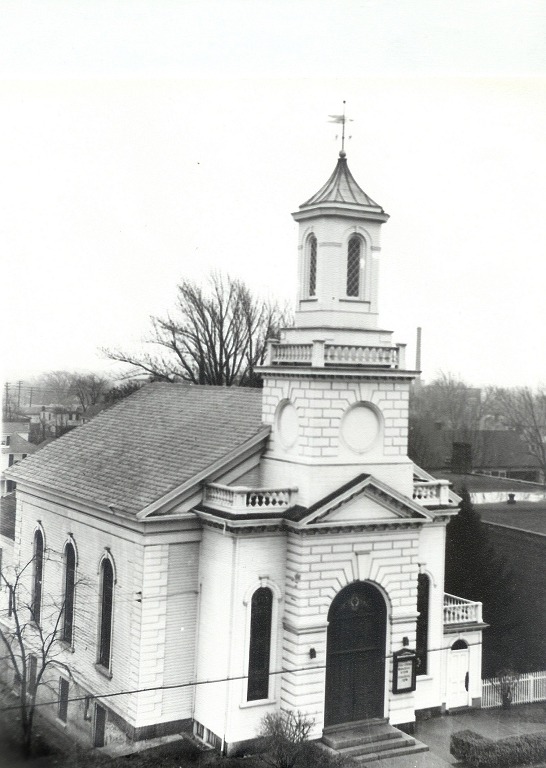
91-Year-Old Structure To Be Razed;Premises Must Be Vacated By July 1st The ninety-one-year-old First Baptist Church on Washington Street has been sold and the work of razing the ancient structure for the erection of a modern business block is expected to start in mid-July. The sale of the church property was announced at a business…
-
Norwood Contingent Off For Big New York Parade-March 17, 1950
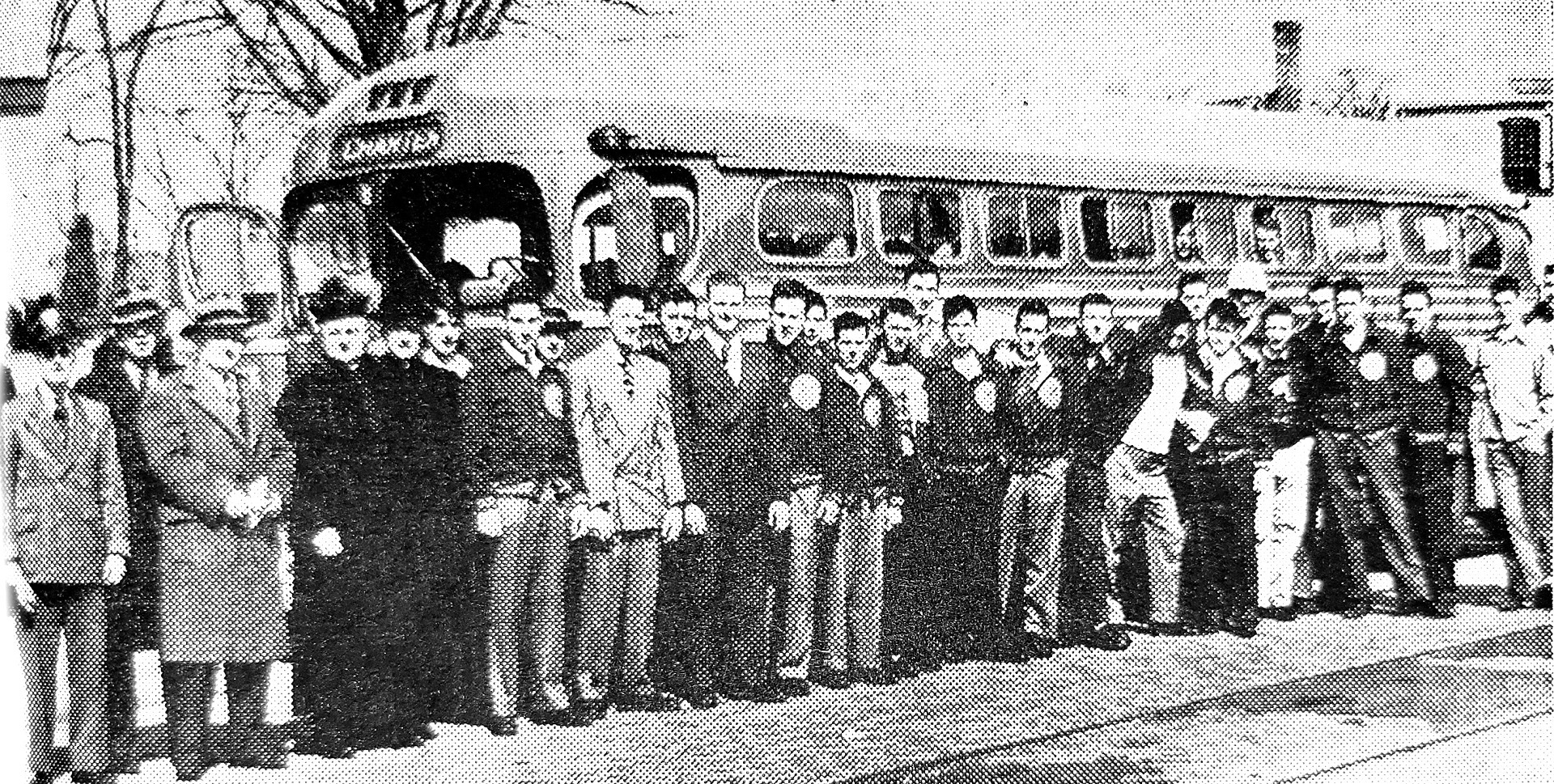
A large crowd was on hand outside St. Catherine’s Church Father MacAleer Fife and Drum Corps boarded a Greyhound bus for New York where they will be the first musical unit in the line of march for the annual St. Patrick’s parade of Fifth Avenue. By bus, train, and plane, scores of Norwood citizens also…
-
Observe Anniversary Of Lithuanian Independence-February 17, 1950

Nation’s Spirit Should Help World To Stand Strong, Says Wigglesworth Marking the 32nd anniversary of the independence of their native land, over 200 members of St. George’s Lithuanian Church heard Congressman Richard B. Wigglesworth laud their homeland at ceremonies held in the church parlors Sunday afternoon to commemorate the occasion. “Freedom and independence have triumphed…
-
Msgr. Minihan Greeted By Over 3000 On Return Home-This Day In Norwood History-October 8, 1948
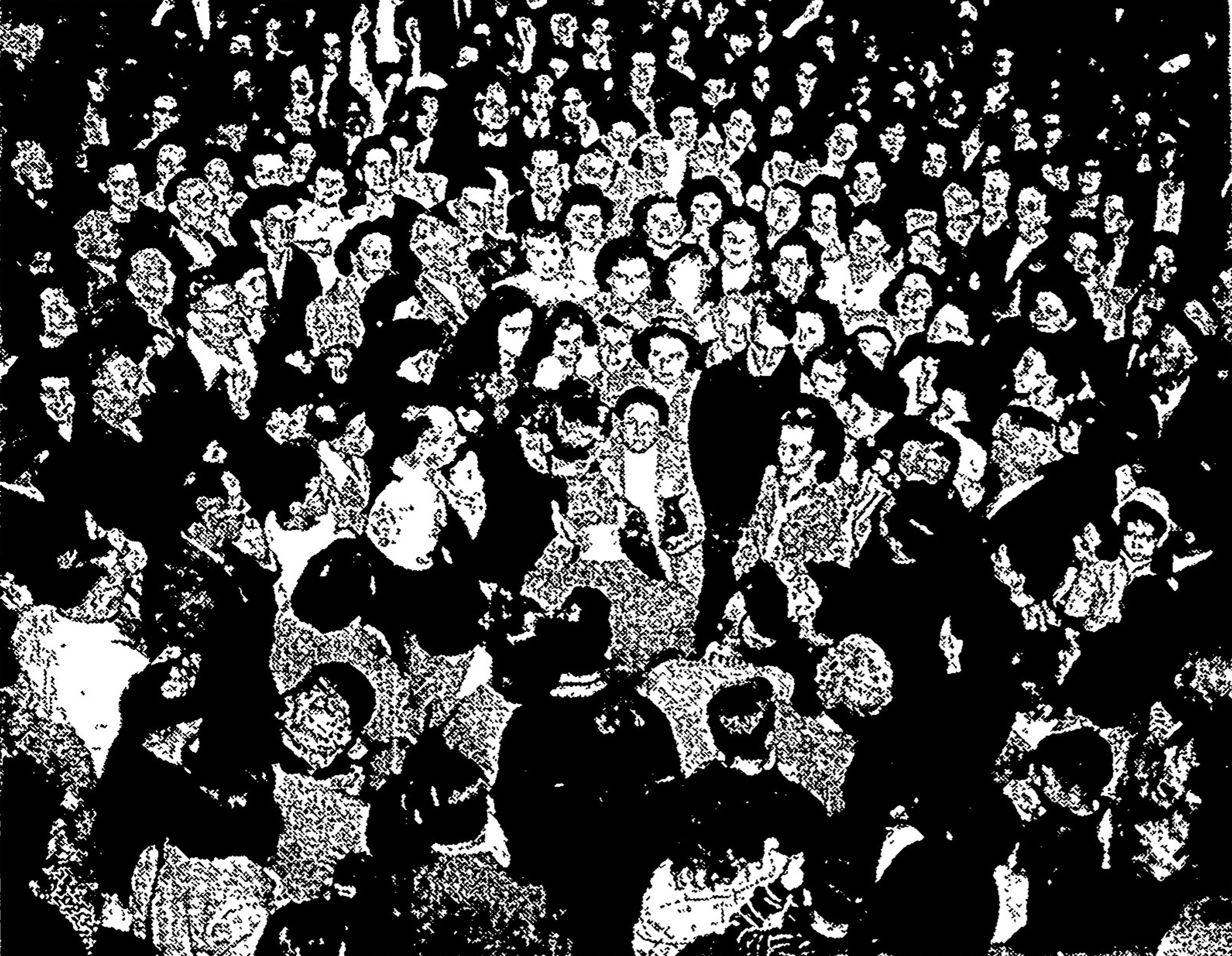
St. Catherine’s Pastor Is Given New Automobile By Parishioners One of the most enthusiastic welcomes ever accorded a Norwood citizen took place on Saturday night when a crowd of more than 3000 turned out to welcome home the Rt. Rev Jeremiah F. Minihan, D. D. LL. D., beloved pastor of St. Catherine’s Church, after his…
-
Parishioners Pitch In To Build Baptist Parsonage-This Day In Norwood History-July 31, 1948

Parishioners Pitch In To Build Baptist Parsonage
-
Emmanuel Lutheran Church To Mark 50th Birthday This Year-This Day in Norwood History-January 13, 1948
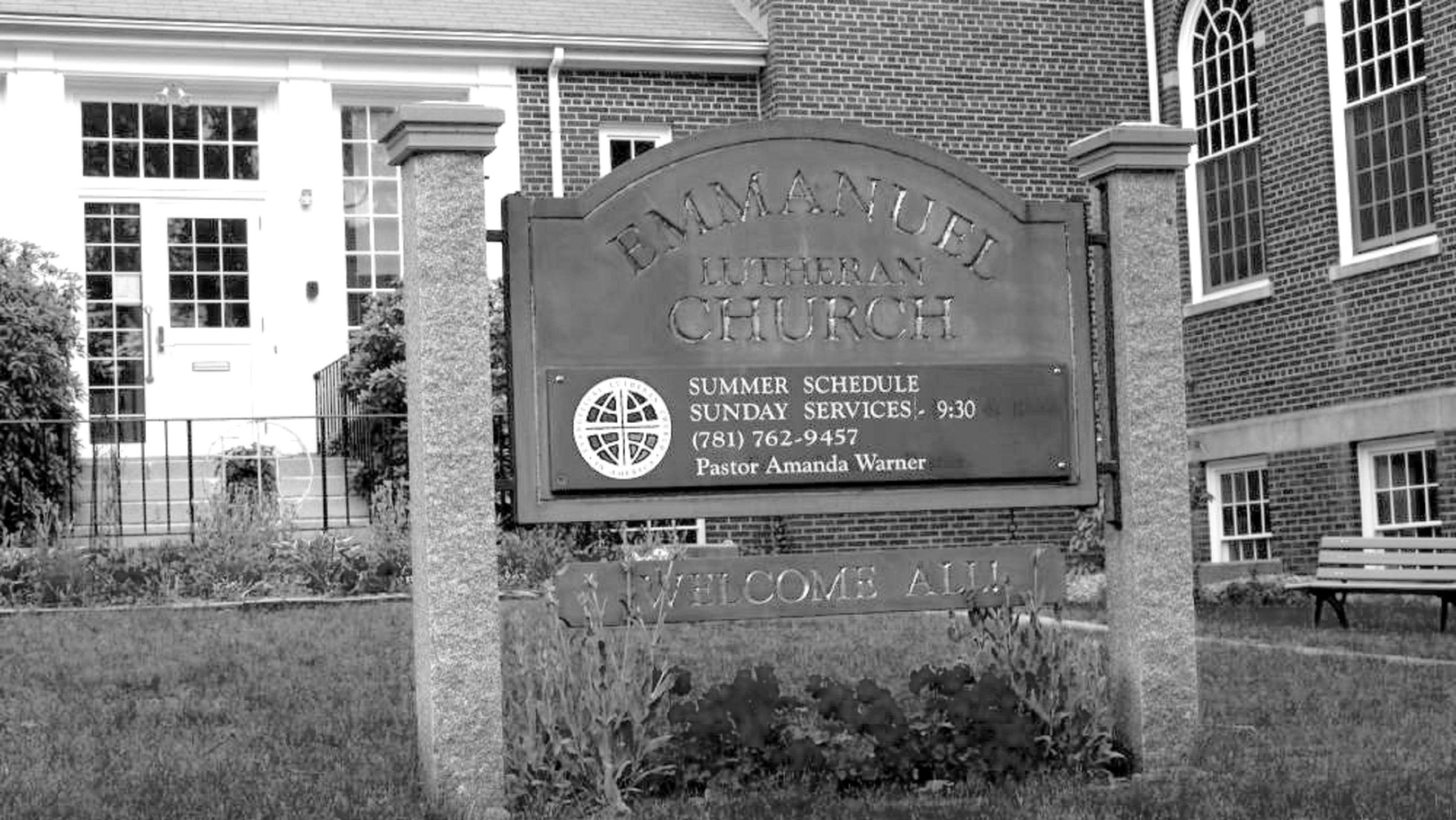
Congregation Holds Annual Meeting — Special Message Delivered By Pastor Pointing out that the Emmanuel Lutheran Church this year marks its fiftieth anniversary, Dr. A. E. Rehnstrom, pastor, asked the Board of Administration of the church to set a date in the fall and to make plans for a special service and program, during his…
-
The United Church Honors Veterans of World War II-This Day in Norwood History-November 12, 1946
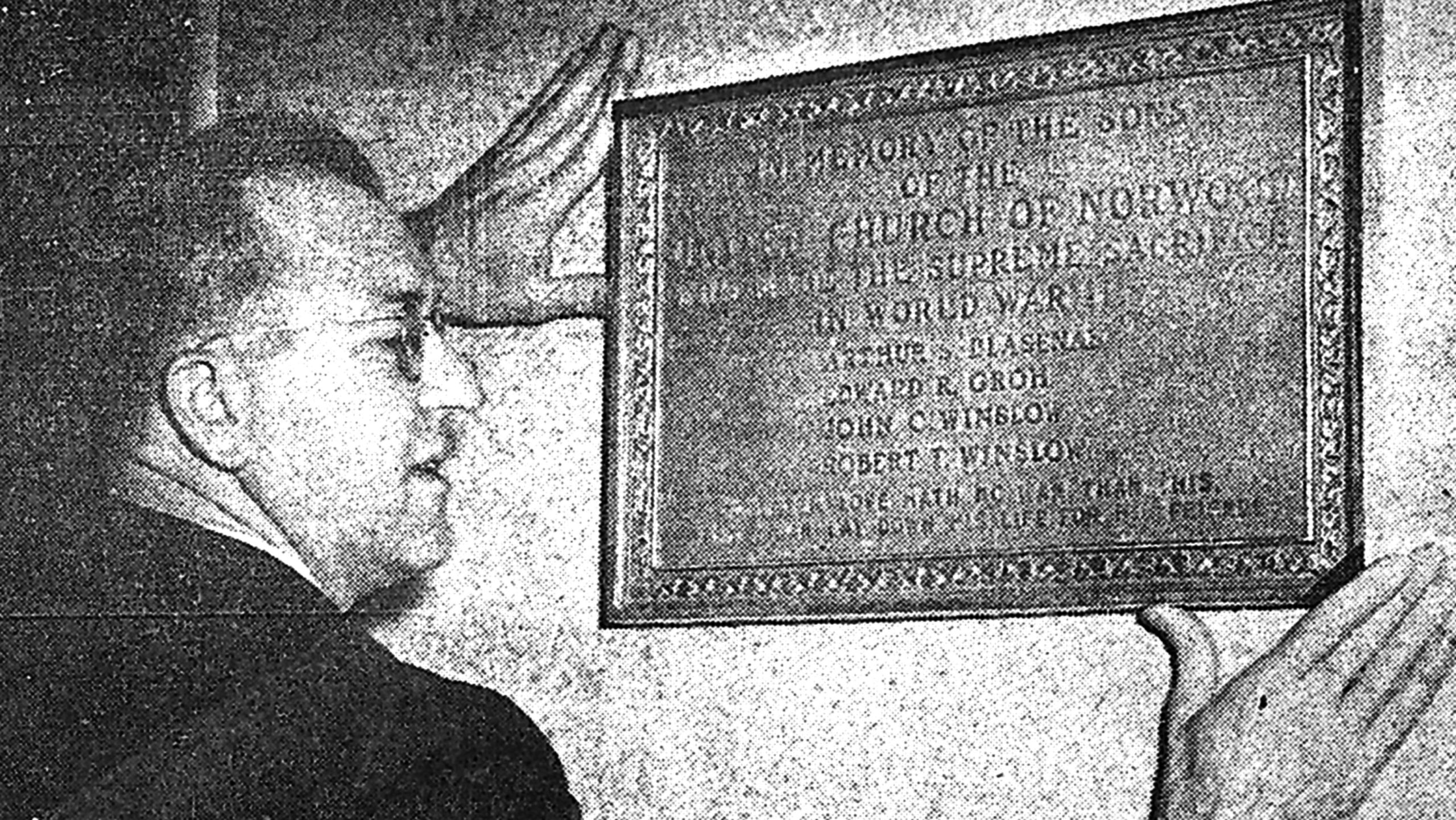
Before a large congregation at the regular service of Divine Worship on Sunday morning, the United Church paid tribute to both the living and the dead of World War II ) Speaking on behalf of the Church, the Rev. Edmund A. Miller officially welcomed the returned men and women of the armed forces. “We were…
-
Distinguished Pastor Of St. Catherine’s Succumbs At 63-This Day In Norwood History-August 30, 1946
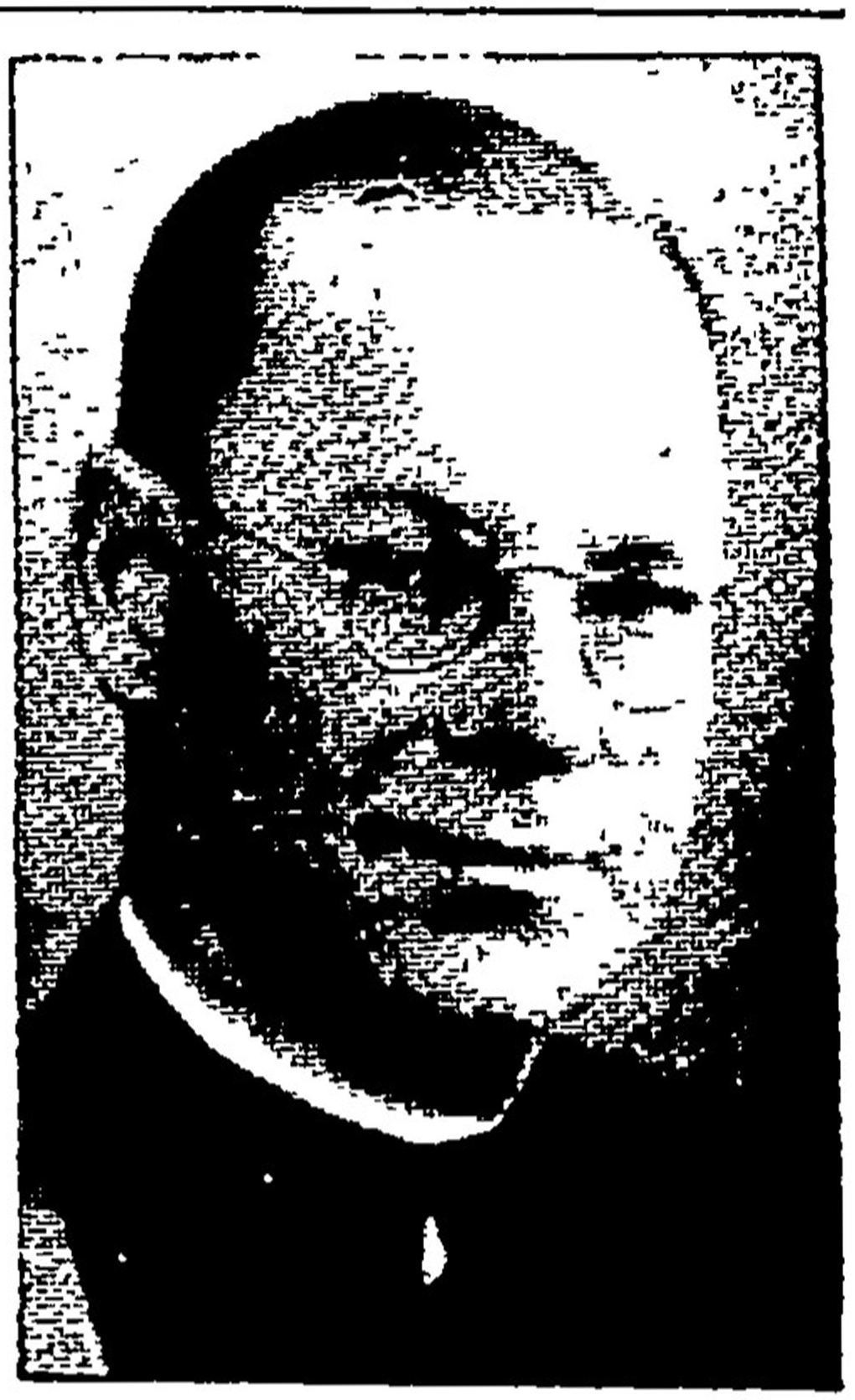
Rites Tomorrow For Msgr. Walsh While Norwood today mourned the death of Rt. Rev. Msgr. Joseph C. Walsh, beloved pastor of St. Catherine’s Church who died yesterday morning, complete plans for the funeral rites were announced at the Rectory. The friends of Monsignor Walsh may pay their respects at the Rectory up until this afternoon.…
-
United Church Men’s Club Chicken Supper-This Day in Norwood History-October 22, 1944
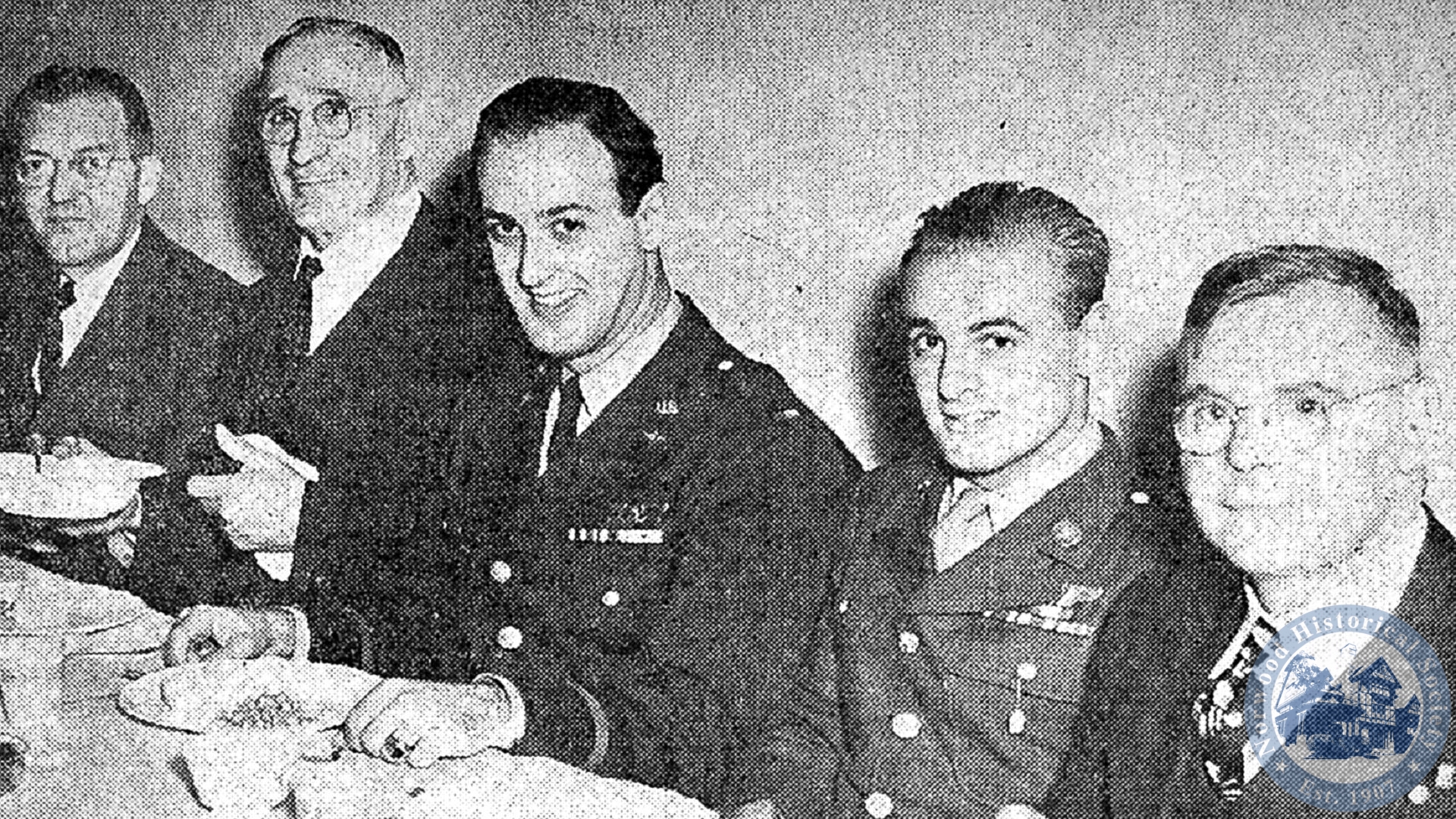
HEAD TABLE GUESTS at the chicken supper which opened the season of the United Men’s Club Monday night at the United Church are (left to right) Rev. Edmund Miller, new pastor of the church; Charles Donnell, club president; Lt. Lewis Harris, 10th Air Force veteran recently returned from the Burma-India China theatre, who was the…
-
Swedish Baptist Church Marks 40th Anniversary-This Day In Norwood History-December 3, 1942
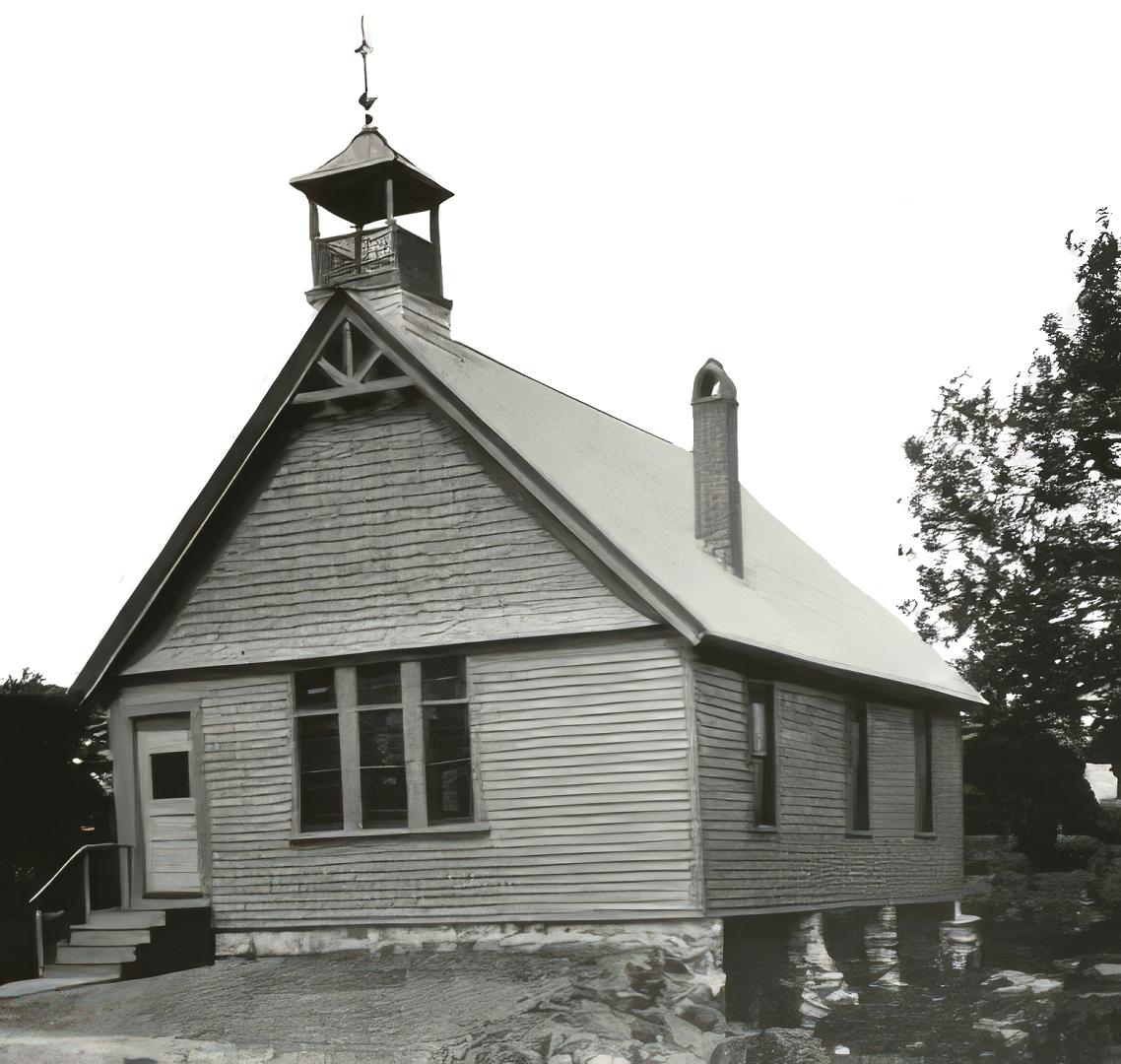
Swedish Baptists celebrated the 10th anniversary of the founding of the Swedish Baptist Church of Norwood with programs, services, and entertainment for four days ending with a big service last Sunday night in the church auditorium at 7 o’clock. Former pastors of the church, charter members, the choir of several years ago, and many former…
Discover more from Norwood Historical Society
Subscribe to get the latest posts sent to your email.