

Young Spiritual Leader Centering Faith on Human Rights and Family Unity
Human rights, the dignity of man, and the unity of family are cornerstones of faith for Rabbi Moshe Birnbaum. The new young rabbi of Temple Shaare Tefilah—he is 30 years old—has centered his life on Jewish learning and freedom of choice. Profiled by Patriot Ledger staff reporter Nona Dearth, Rabbi Birnbaum arrived in Norwood this past August after four years as associate director of the B’nai B’rith Hillel Foundation at Rutgers University. He has also served part-time in pulpits in Flemington, N.J., and in Brooklyn, N.Y. As a child growing up in the Queens borough of New York, he went to Yeshivas, Jewish day schools, instead of public schools. Since then he has steered a steady course toward the rabbinate.
To Rabbi Birnbaum, religion is the vessel of understanding. “Religion gives you a total picture, a more mature perspective on how to live,” he said. “You learn to understand there must be patience with one’s spouse, with one’s children. You learn to bring the perspective of the ages to your everyday living.”
Though he is young in years, Rabbi Birnbaum has an innate wisdom that has ripened with experience. He has been many places and has seen many things. Now the Russian and Israeli trips are behind him. He has his bachelor’s degree in history from Queens College, his rabbinical degree from the Reconstructionist Rabbinical College in Philadelphia, his master’s degree in contemporary Jewish studies from Brandeis University, and there has been further study at the departments of religion and of communication at Temple University as well as courses at the Jewish Theological Seminary in New York.
The move from college campus to the 69-year-old Norwood temple provides a sharp contrast in goals. “Now I am working with families. I find it challenging and interesting,” Rabbi Birnbaum said. “Today we are seeing religion as more important in family life. And Judaism is very family oriented.”
There is warmth in his voice as he speaks of customs and rituals. “The sabbath is a time for families to come together, to relax and enjoy each other’s company,” he said. “And the Passover seder, one of the great Hebrew rituals, is totally family centered.” He speaks with love of his own family—his wife Inda, his three-year-old daughter Trina and the baby that is on the way. They are putting down roots in a stable community, and they are happy about it.
Rabbi Birnbaum has no plans for marked changes in the operation of the temple and its direction for the future. He feels that every rabbi does things differently because each is a different person, and that is change enough at first. “People come to religion for continuity,” he said. “It is more important to be rabbi to the congregation than to think sof change. People come to us to get a meaning out of life, and I think that is a holy mission. Life brings its own changes.”
Firsthand Observations in the USSR and Perspective on Human Rights
Rabbi Birnbaum was in Israel during the Six Day War in 1967 when he was a student at the Hebrew University in Jerusalem. That same year he went to Russia with a group of students and visited the USSR again, on a camping trip, in 1972. He has seen firsthand the restrictive powers of the Russian Communists, and he applauds President Carter’s stand on human rights. “I believe we must continue pressure for human rights. We can’t afford not to,” Rabbi Birnbaum declared. “It is not just an internal Russian problem.”
He sees economics as the lever that may move the Russians toward a freer society. “When the Russians need anything, as they needed wheat, they will make concessions,” the rabbi said. “We must link economics with human rights. When they want to trade, we should put the pressure on.” He noted that Communists in European countries are also pressuring the USSR for more human rights. “Party members feel that Russia gives Communism a bad name,” he commented, with a suggestion of a smile.
Rabbi Birnbaum views both the short-term and long-term results of such pressure. He feels that economic leverage, for the short term, will open up areas of more freedom for the future. He is less optimistic about long-term results. “Long-term benefits for the future?” He shook his head. “It depends on who is in power.”
Rabbi Birnbaum has seen the pendulum swing back and forth in Russia. On his first trip he saw “the Jews of silence,” in author Elie Wiesel’s phrase—a people who had lost touch with their heritage as the Communists severed their ties with the past through punitive measures. In 1972 the atmosphere was different. After the Six Day War in Israel, the rabbi explained, Russian Jews once again took pride in their heritage and made themselves heard as activists. There was a brief period of openness. “It was an exhilarating time for them, and for me when I saw it,” Rabbi Birnbaum recalled. Then he shook his head sadly. “Today, however, they are feeling more fear because the Russians are cracking down again.”
During his last trip to the USSR, when he camped throughout the countryside, he saw a land that is little known to the outside world. Even though he and his fellow camper were restricted in the roads they could travel, and were even timed on travel between camps, they saw a Russia not seen in the cities. It was a primitive country with thatched-roof houses, dirt roads and geese and chickens by the side of the road. The young rabbinical student could not believe that the world, and especially the United States, feared this backward country. “But, of course,” he added, “all Russian effort has gone into military technology.”
Archival Note: This article has been dynamically reconstructed from the original public record print archives of the Patriot Ledger
-
First Congregational Church of Norwood Marks 275 Years-November 19, 2011
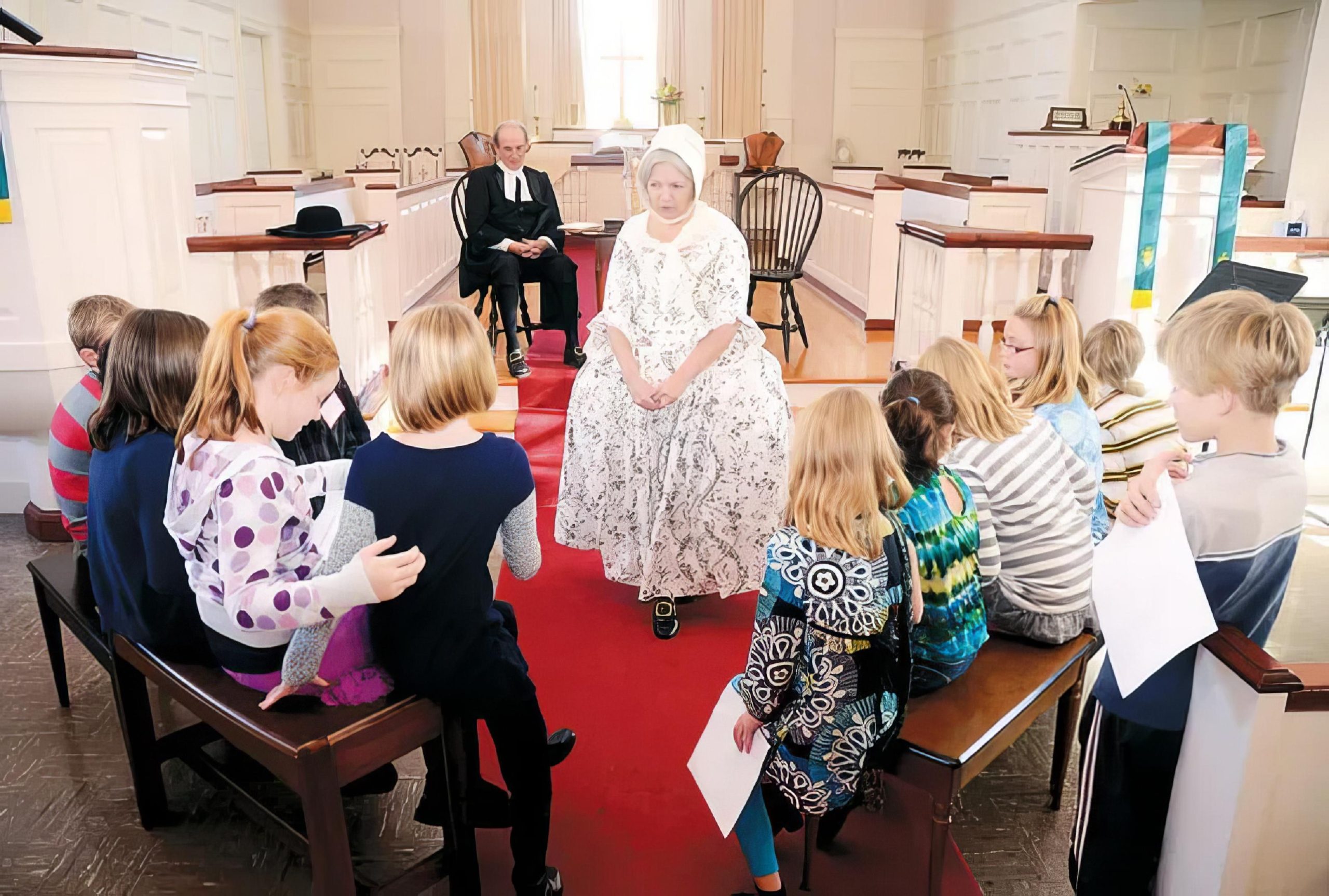
Amidst the commotion of a large church luncheon, the Rev. John Hamilton of the First Congregational Church of Norwood spoke about what it means to be a part of a congregation that has thrived longer than the country’s Declaration of Independence “It’s really a celebration of not just being around for such a long time,…
-
Norwood Statue Vandalized-March 27, 2005
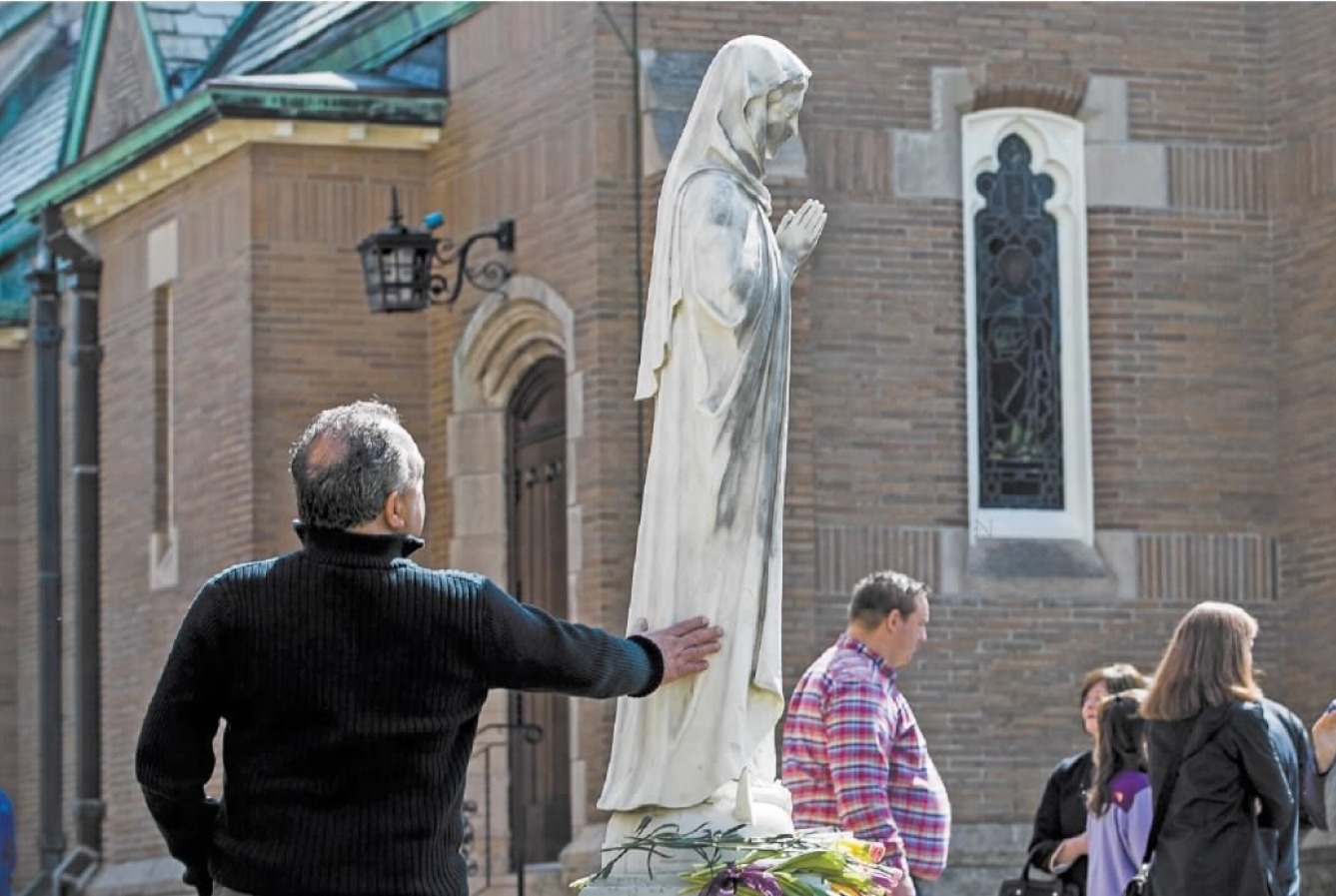
A statue of the Virgin Mary at St. Catherine of Siena Parish in Norwood was vandalized with black spray paint on Good Friday, the most sacred day of the year for Catholics. The body of the statue, which depicts the Blessed Mother with praying hands, was covered in paint. Graffiti was scrawled beneath a plaque…
-
Sharing a Home, a Career, a Church-June 15, 1991
A unique partnership brings growth and healing to a local pulpit as a co-pastor couple uses personal experience to connect with the pew.
-
Farrs Begin New Ministry as Co-Pastors of United Church of Norwood-October 18, 1980
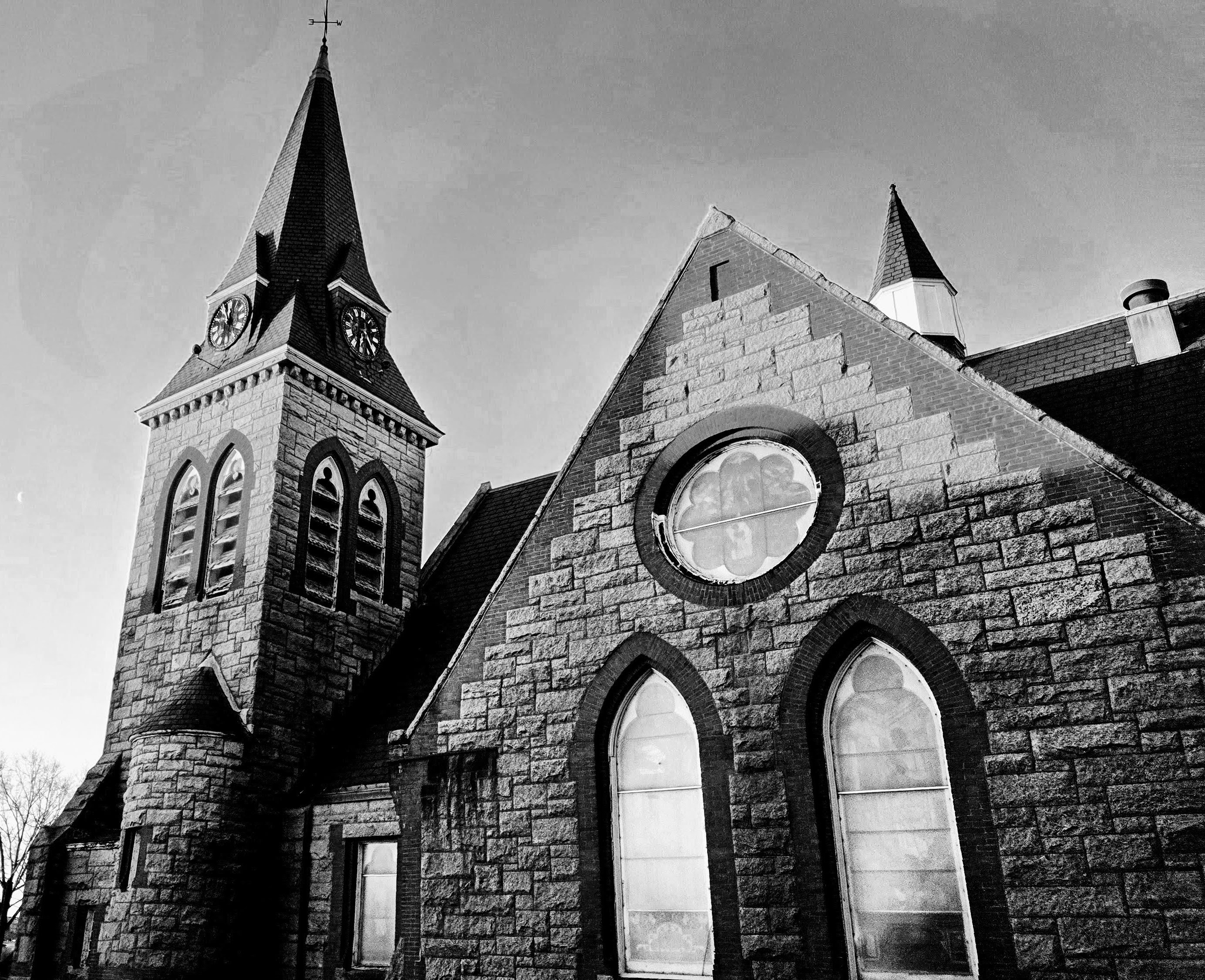
Unanimous Vote Establishes Husband-Wife Co-Pastorship-October 18, 1980 A unique ministry begins tomorrow at 10 a.m. when the husband-wife team of The Rev. Ronald S. Farr and The Rev. Patricia Heaney Farr are installed as co-pastors of the United Church of Norwood. Operating as a true partnership, the couple will share equally in the pastoral duties…
-
Vandalism of Blessed Mother Statue at St. Peter’s Catholic Church in South Norwood Appalls Parishioners-August 1, 1979
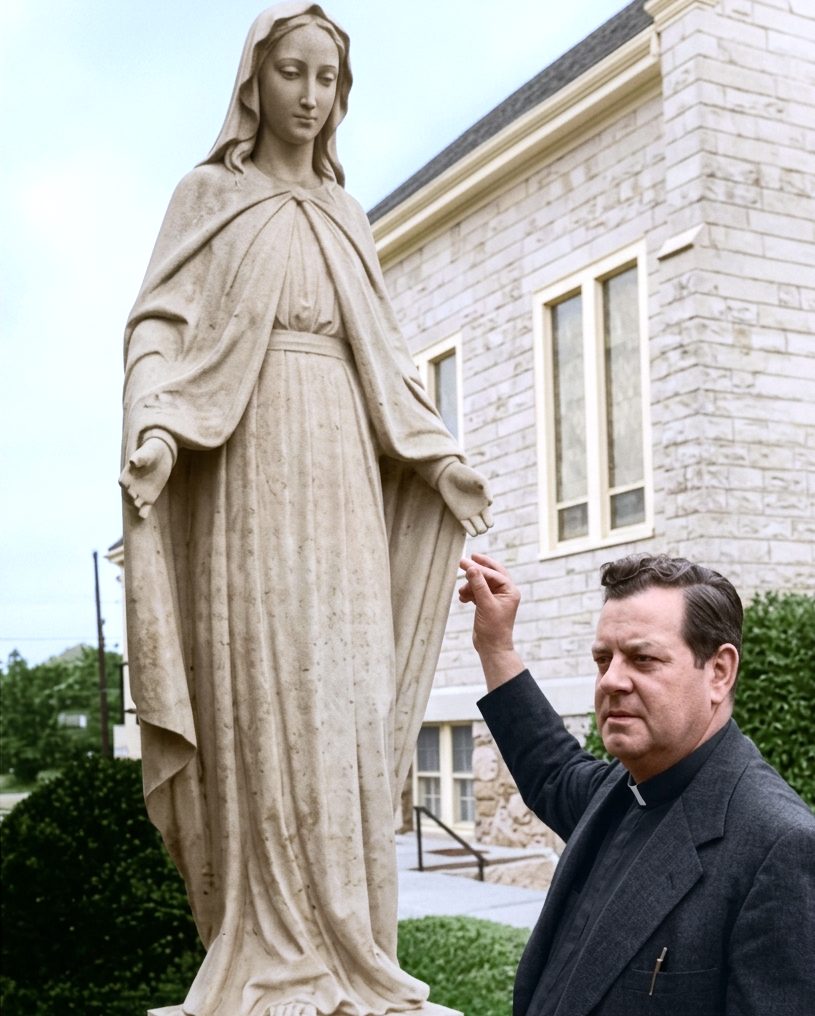
A marble statue of the Blessed Mother on the lawn of St. Peter’s Catholic Church rectory in South Norwood was heavily vandalized over the weekend, leaving all the fingers broken off the $3,000 imported figure.
-
New Pastor Became Born-Again Christian At 16-June 20, 1978
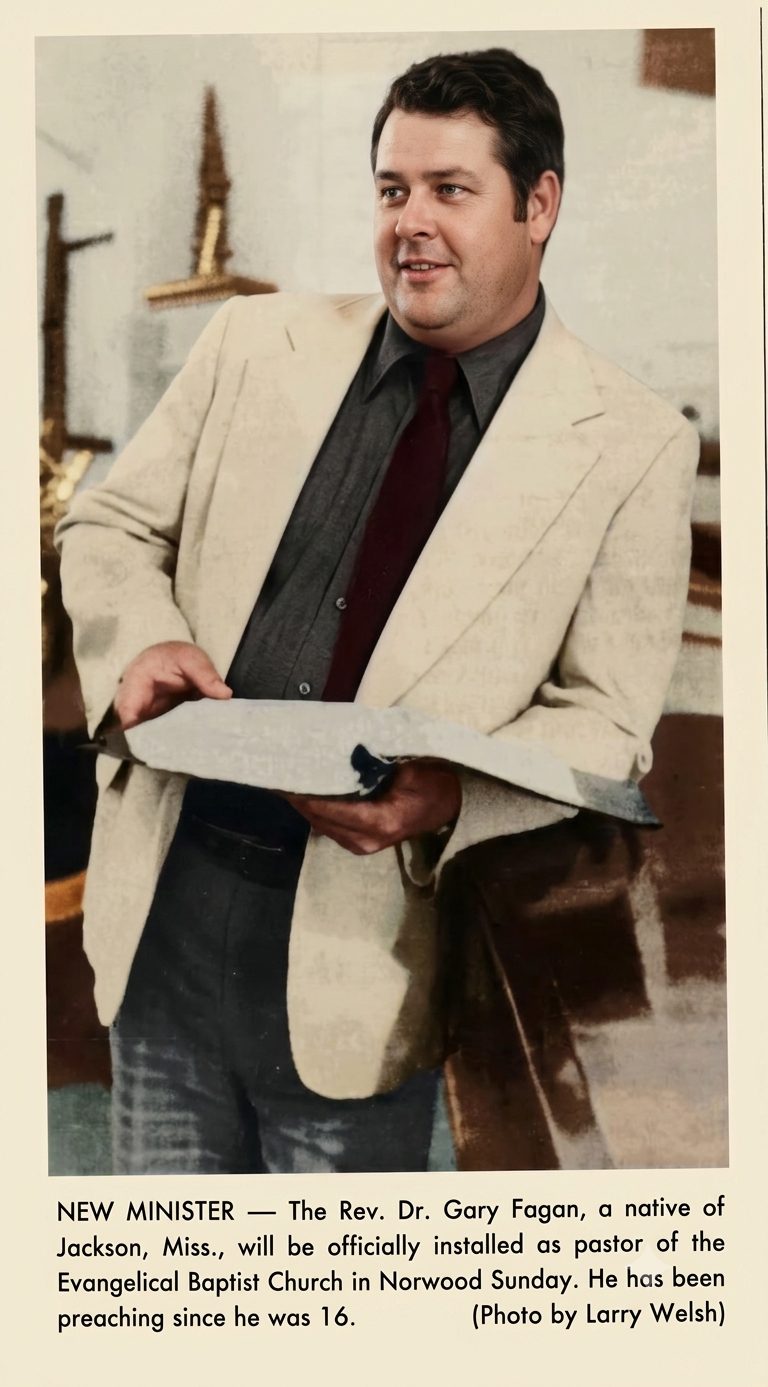
A former Barrington College professor takes command of the local pulpit, prioritizing youth work.
-
Norwood Catholics Laud Saturday Mass-June 23, 1969
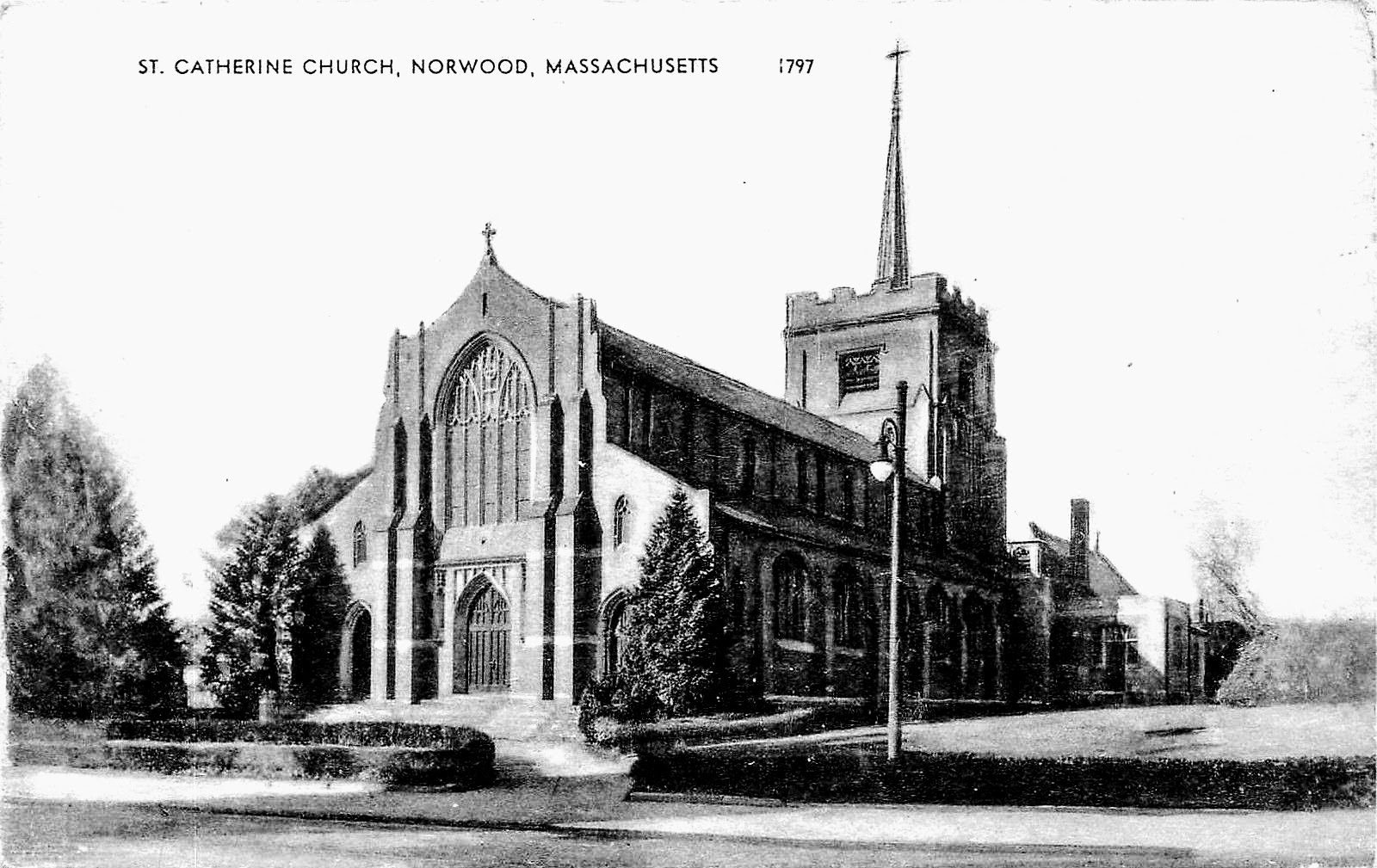
St. Catherine’s Church becomes one of 17 suburban Boston parishes chosen to launch the new Saturday evening Vigil Mass, sparking enthusiastic praise from local workers and commuters.
-
Norwood Priest Expelled From Iraq Sees Little Hope Of Return-June 17, 1969
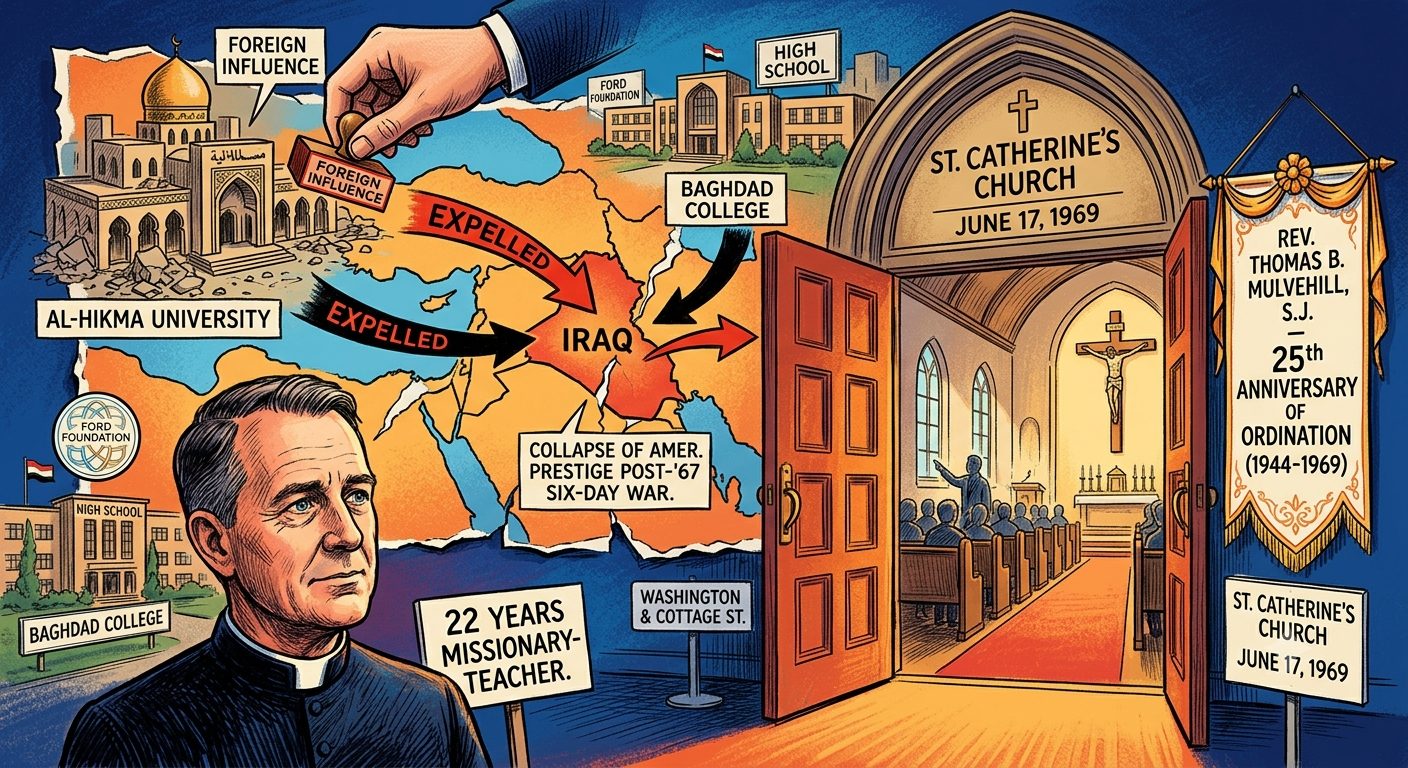
Expelled from Baghdad after 22 years, Norwood’s Father Thomas B. Mulvehill celebrates his ordination anniversary at home amidst Middle East turmoil.
-
Cardinal Cushing and Norwood Pastor Rt. Rev. Robert Sennott Have Audience with Pope Paul VI in Rome-September 17, 1965
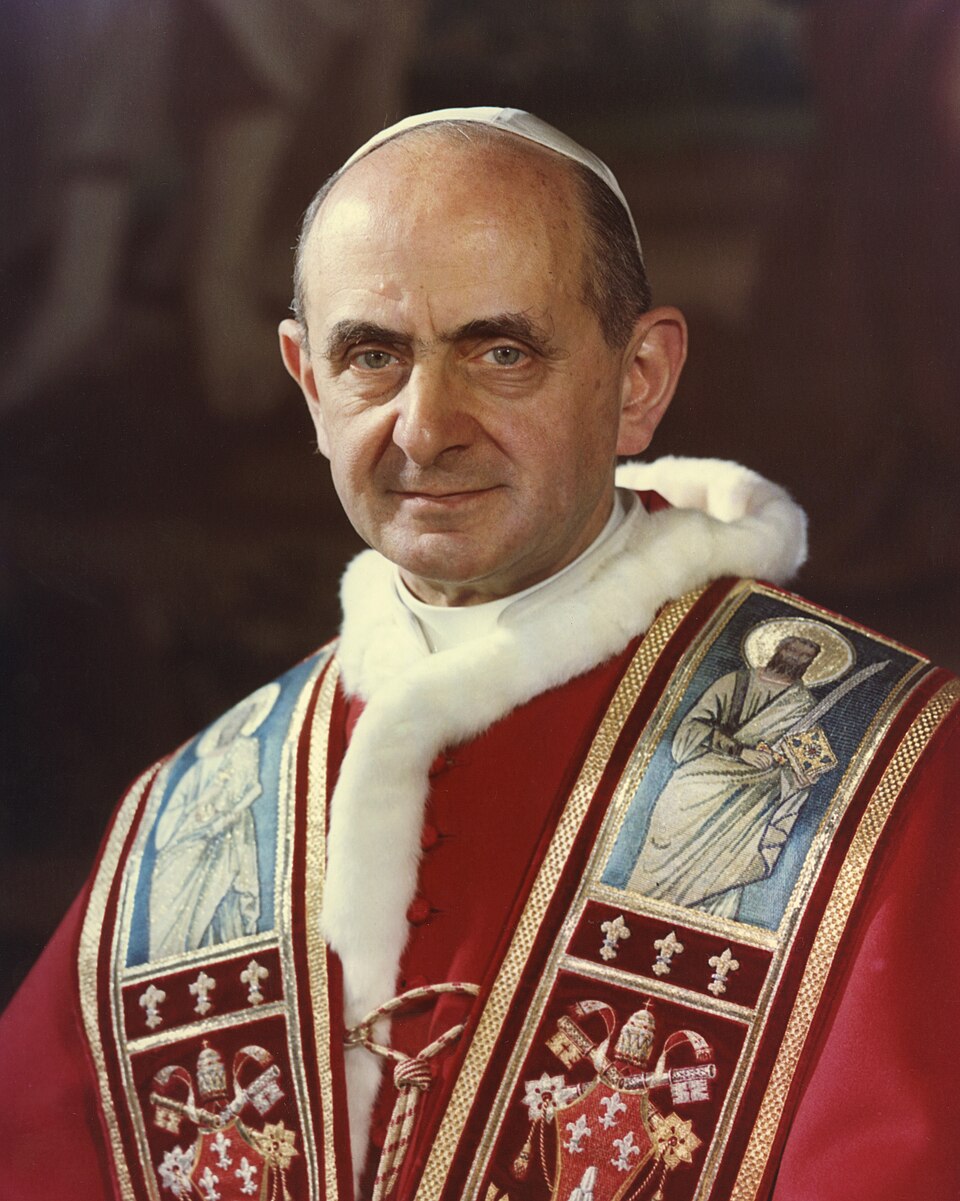
Cardinal Cushing and Rt. Rev. Robert Sennott, pastor of Norwood’s St. Catherine’s Church, meet with Pope Paul VI during a Vatican audience.
-
To Honor St. George’s Pastor On 25th Anniversary As A Priest-This Day in Norwood History-May 26, 1965
This Day in Norwood History-May 26, 1965-To Honor St. George’s Pastor On 25th Anniversary As A Priest
Discover more from Norwood Historical Society
Subscribe to get the latest posts sent to your email.