
DPW Project Engineer Michael J. Mahoney Projects 20-Year Traffic Capacity Without Full Interchange as Town Seeks Additional Engineer
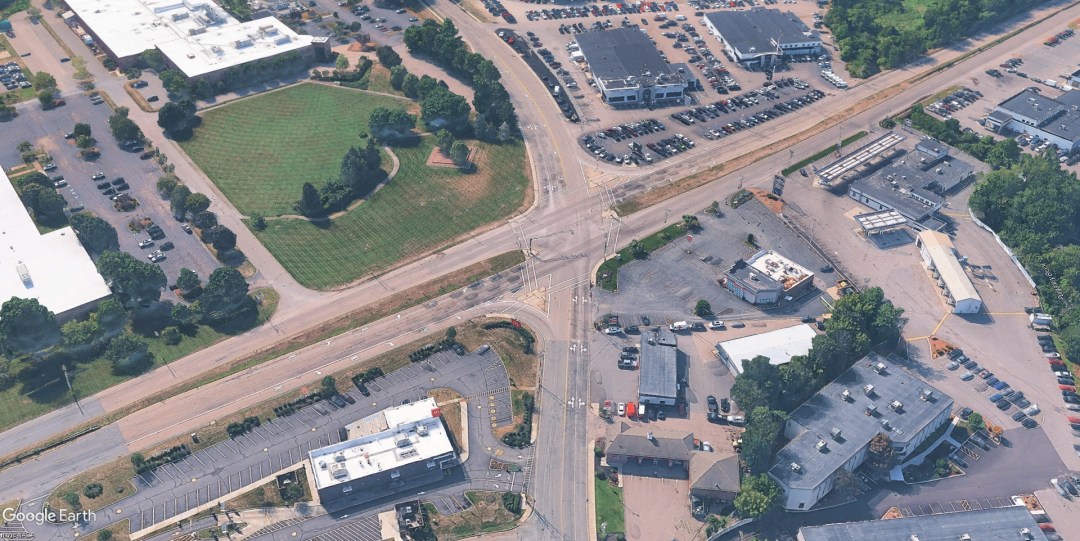
NORWOOD – Proposed state highway alterations at the intersection of Route 1 and Everett Street would safely accommodate local traffic flows for more than two decades—even with Polaroid Corp. opening a major new industrial complex nearby—state Department of Public Works (DPW) project engineer Michael J. Mahoney assured town and county officials in November 1968. Reported in The Patriot Ledger on Tuesday, November 19, 1968, Mahoney outlined the state’s engineering blueprint during a Monday night public hearing convened by the Norwood Planning Board and attended by selectmen and Norfolk County commissioners.
The hearing stemmed from an $8,000 Town Meeting appropriation passed the previous spring authorizing the Planning Board and selectmen to commission a private traffic safety survey of the corridor, which prompted the state DPW to conduct its own parallel engineering study. Mahoney explained that the state’s Chapter 90 improvement project called for widening Everett Street between Route 1A and Route 1 from its existing 40-foot width to 60 feet—a contract slated to go out to bid within the year—in anticipation of heavy commuter traffic generated by Polaroid’s multi-million-dollar industrial campus then under construction on the former Forbes Estate, once home to former U.S. Ambassador to Japan W. Cameron Forbes.
At the Route 1 junction itself, Mahoney stated that state plans called for a minor land taking on the northwesterly corner of Everett Street and Route 1 to round off the access road onto the highway, relocating existing small traffic islands, and creating dedicated left-turn “loading lanes” on both sides of Route 1. Mahoney dismissed proposals for a full grade-separated highway interchange at Everett Street as unwarranted, noting current traffic stood at roughly 28,000 vehicles daily—less than half the volume required before the state would consider building an interchange. Even after being informed that Polaroid expected to employ at least 1,200 workers at its Norwood complex, Mahoney maintained that widening Everett Street and reconfiguring the intersection would remain adequate “until 1990.”
However, Mahoney identified a major physical bottleneck along the Everett Street corridor: the low railroad bridge spanning Everett Street near Route 1A, which offered just 10.6 feet of vertical clearance whereas heavy commercial trucks required nearly 14 feet. Achieving full truck clearance, he warned, would eventually require the town to lower the street grade beneath the span.
Separately during the session, Town Manager Walter A. Blasenak informed planners that his office would assist the board and the town engineering department in recruiting an additional municipal engineer to help ease the mounting workload on Town Engineer Robert A. Hamilton and his four-man staff. Blasenak noted that recruiting qualified engineers at Norwood’s existing pay scale had proven difficult, setting a minimum starting salary of $12,000 for the new hire and adding that bringing in an engineer at that rate could prompt an upward pay reclassification across the entire engineering department.
1968 Municipal Figures Adjusted to 2026 Dollars & Corridor Legacy
Inflation-adjusted using U.S. Bureau of Labor Statistics CPI data ($1.00 in Nov. 1968 ≈ $9.23 in 2026)
| 1968 Municipal Appropriation / Salary Item | 1968 Amount | 2026 Equivalent |
|---|---|---|
| Minimum Starting Salary for Additional Town Engineer | $12,000 / yr | ~$110,760 / yr |
| Town Meeting Traffic Safety Survey Appropriation | $8,000 | ~$73,840 |
Archival Note: This article has been dynamically reconstructed from the original public record print archives of the Patriot Ledger
More…
-
Selectmen Approve Upland Road and Clapboardtree Street Infrastructure Project-July 13, 1971
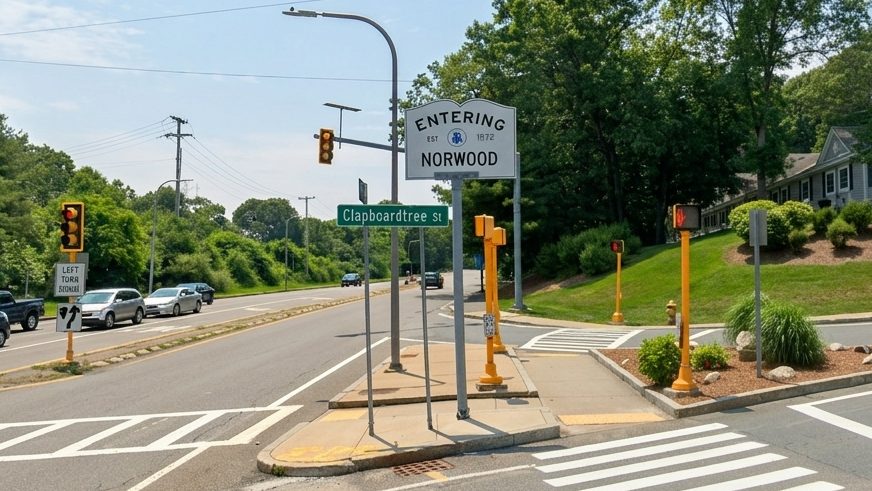
Local leaders also enacted emergency measures for the town dump to comply with state sanitary regulations and adjusted the 1971 tax rate through light department fund transfers.
-
Engineers Estimate $532,000 Cost for University Avenue Extension-September 4, 1970
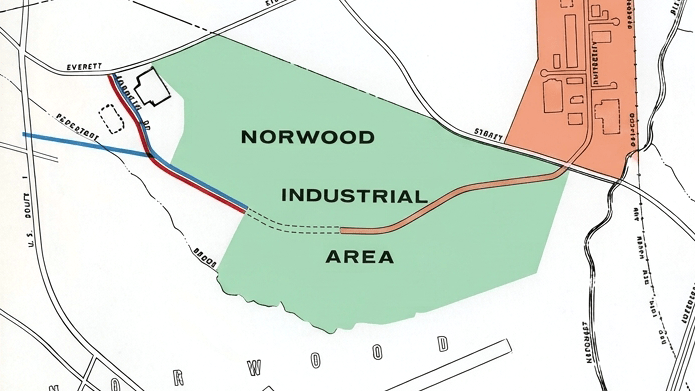
A four-month overdue engineering study prepared by Boston-based consultants Fay, Spofford & Thorndike Inc. at a cost of $8,000 has placed an estimated price tag of $532,000 on the proposed 2,700-foot extension of University Avenue. The recommended roadway layout will connect the existing portion of University Avenue with Everett Street just before intersecting Route 1,…
-
Route 1 Median Guard Rail and Safety Construction Nearing December Completion-October 15, 1969

Crews install median guard rails and chain-link safety fencing along Route 1 across Norwood, Westwood, and Dedham, with a target completion date of December.
-
Norwood Kills Funds For School Addition-June 26, 1969
Voters approve a $1,000 Endean Park drainage compromise and reverse a zoning rule to relocate Carl A. Johnson’s Norwood Cadillac Co. along Route 1.
-
State Unveils Route 1 and Everett Street Intersection Plans Ahead of Polaroid Complex Opening-November 19, 1968
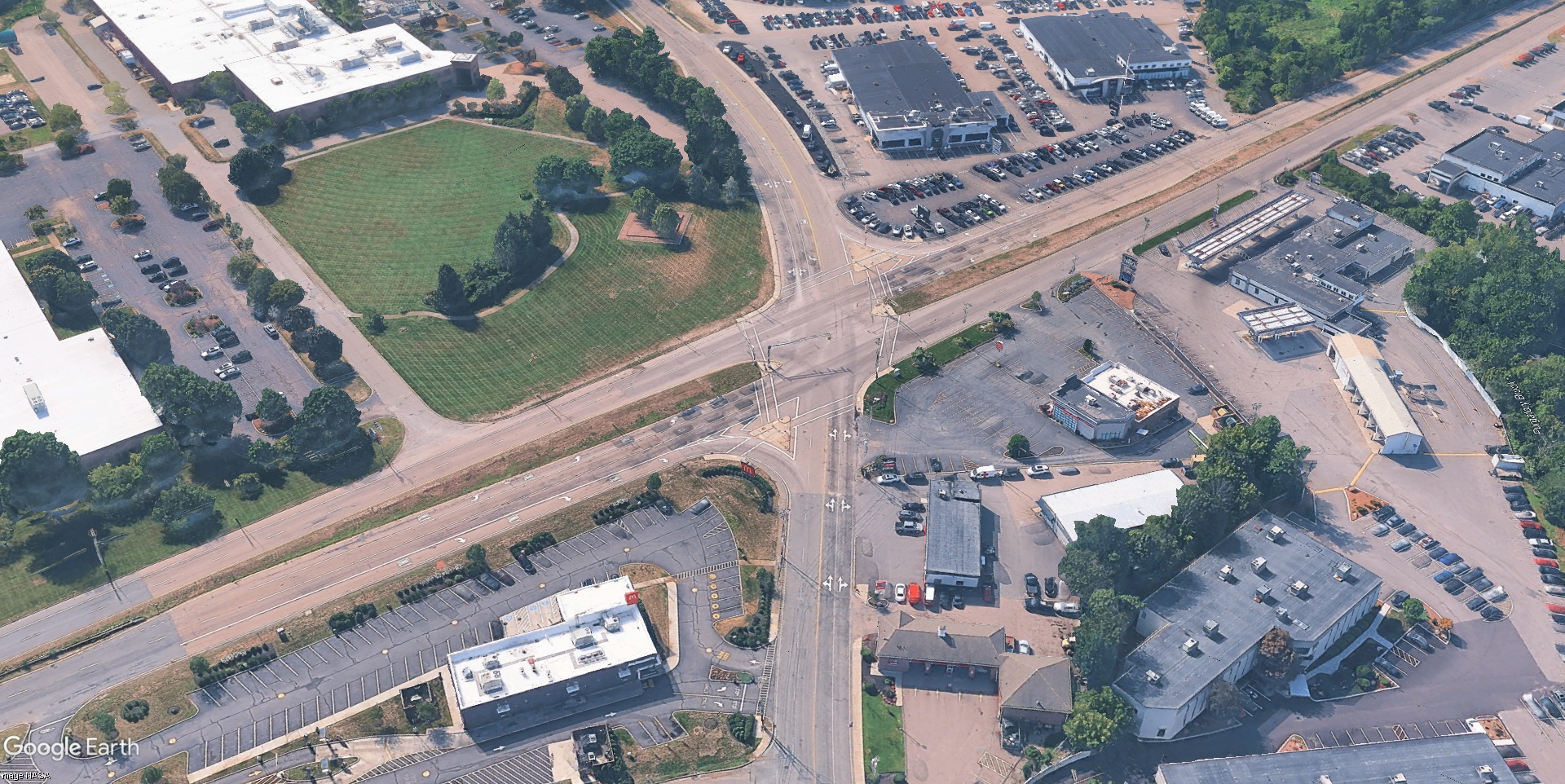
State DPW engineer Michael J. Mahoney told Norwood officials in November 1968 that widening Everett Street and adding Route 1 turning lanes would handle traffic from Polaroid’s 1,200-worker Forbes Estate plant until 1990 without a highway interchange.
-
Norwood Voters To Consider Lighting Funds-June 26, 1968

The Finance Commission backs the utility expansion alongside a $163,000 sewer construction article, while the town master plan is deferred.
-
Industrial Commission Welcomes Star Service Hub-June 30, 1967

Following 50 intensive town meetings to resolve department regulations, developers project the new multi-million square foot industrial hub will lower Norwood’s local tax rate.
-
Ask Town Meeting on Industrial Park-September 7, 1966
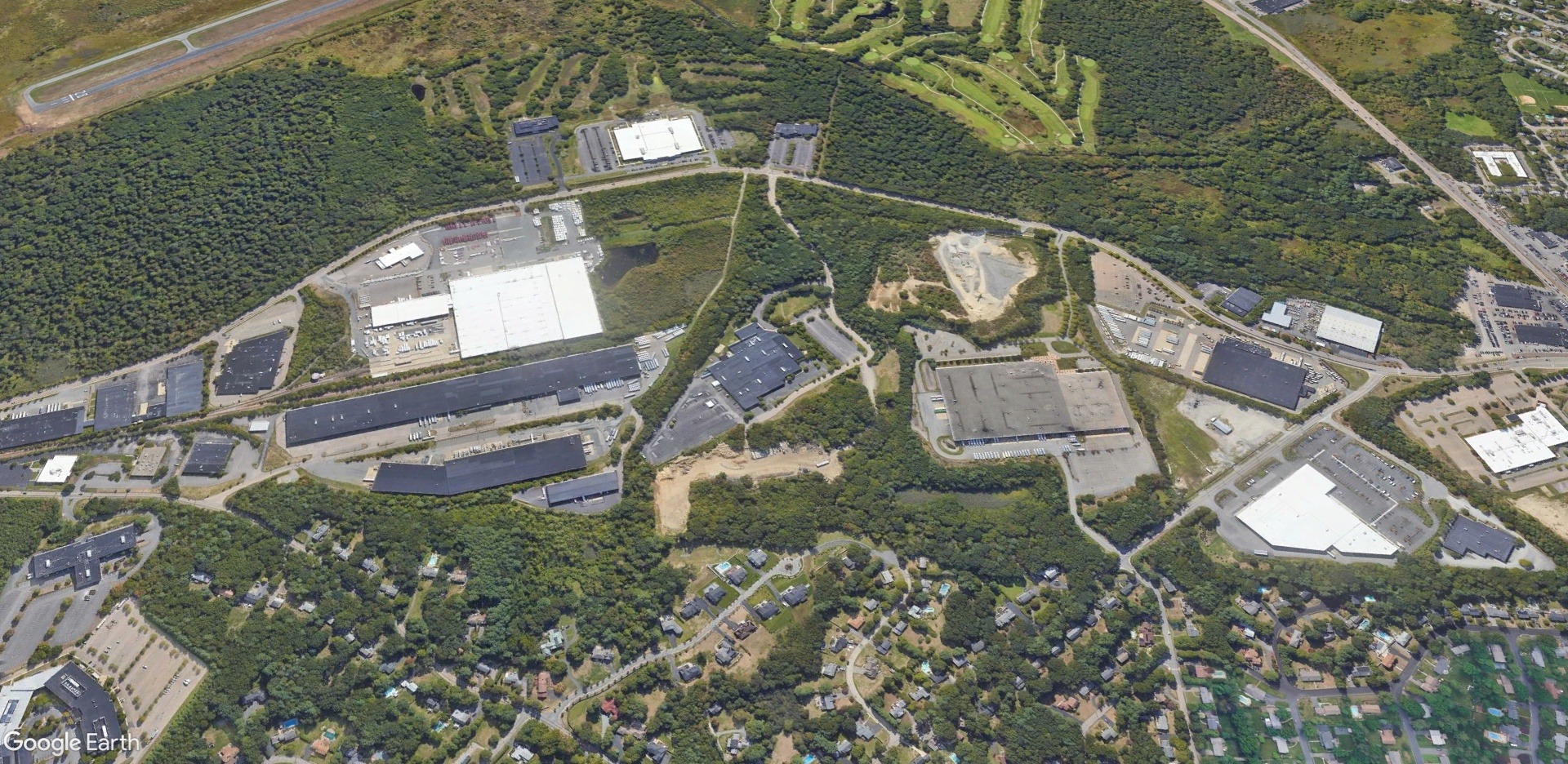
Representatives of the development firm Cabot, Cabot & Forbes (CC&F) urged the Board of Selectmen last night to place an article before an early October special town meeting to pave the way for major infrastructure development at the Norwood Industrial Park. C. Brooks Dodge, representing CC&F, asked the board to initiate town meeting action and…
-
State Traffic Engineers Investigate Missing Stop Sign Reports in Norwood-August 31, 1966

Local frustration over municipal traffic safety measures came to a head when town officials addressed long-standing delays regarding state approval for stop signs at key intersections. Commenting on the sluggish bureaucratic pace, one local selectman dryly remarked, “It takes an act of God to post a stop sign!” The exasperation stemmed from a nine-month delay…
-
Selectmen Call for Up-to-Date Delinquent Debt Listing-August 26, 1965

Norwood selectmen called for updated listings of delinquent town service accounts and authorized Dr. Norton Fishman to construct an access road along George Willett Parkway at his own expense.
Discover more from Norwood Historical Society
Subscribe to get the latest posts sent to your email.