
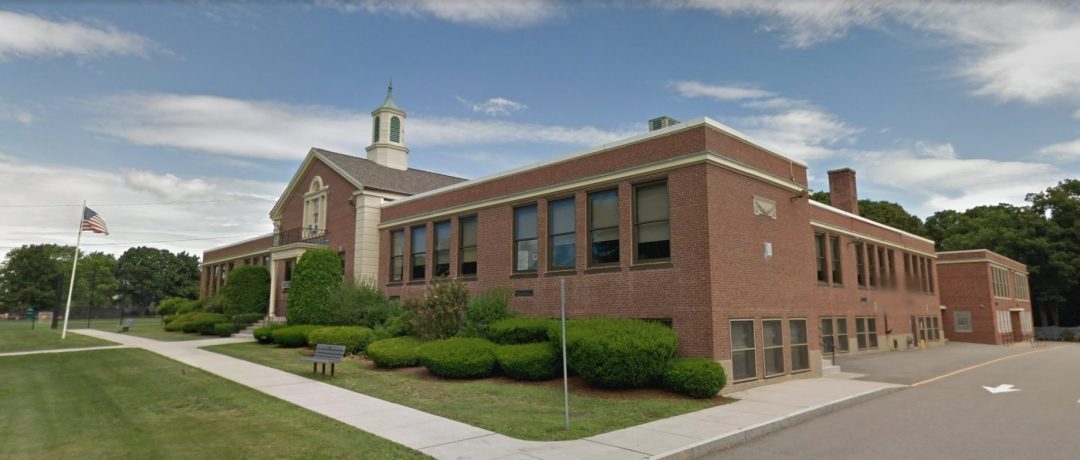
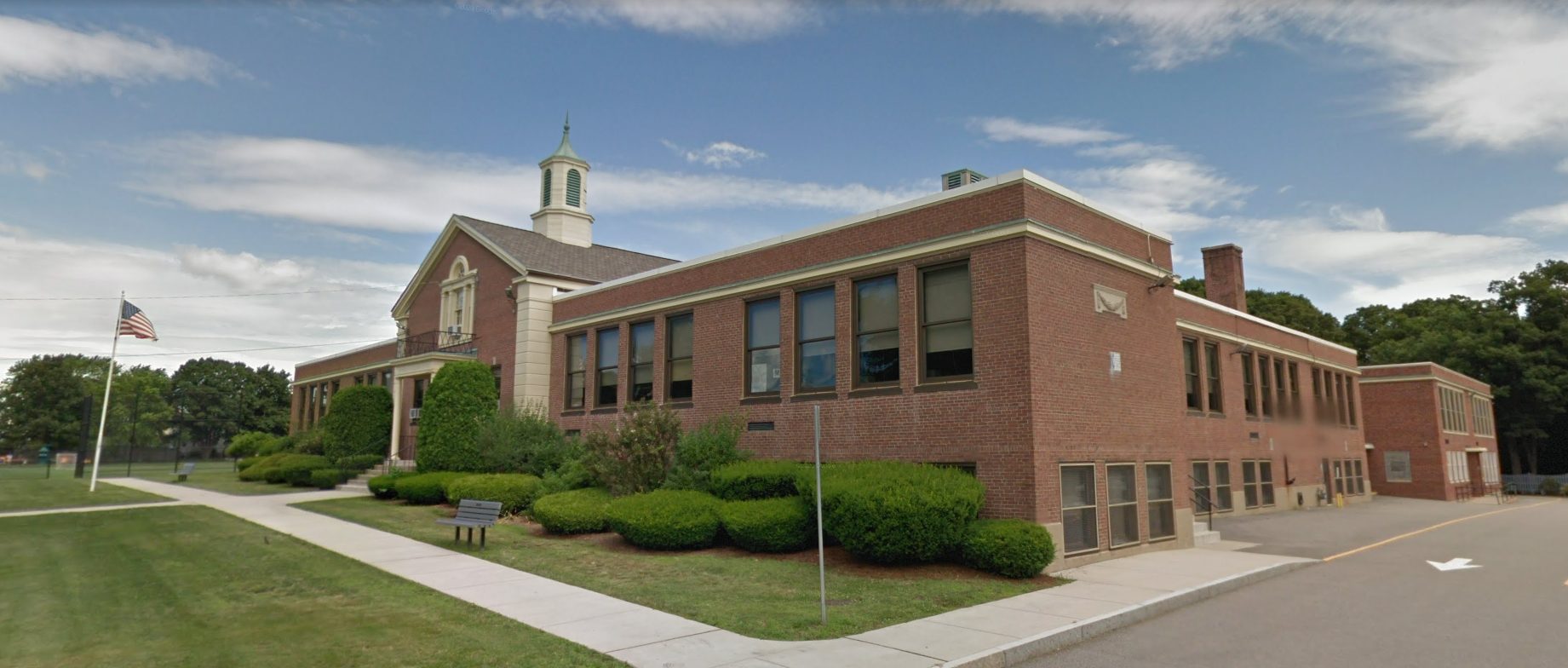
The school housing needs committee last night recommended a second school closing plan that would close the doors of the Callahan School in September, shut down the Balch School in 1981 and close a third, unnamed elementary school in 1983. The plan was backed by seven of the nine members voting and was billed as a statement of preference that in no way tells the school committee what to do. This decision came after the committee considered six new plans, all designed to preserve the town’s present kindergarten‑through‑Grade 6 elementary school format.
The six plans discussed last night were prepared as alternatives to the school closing plans examined last week, all of which called for the implementation of kindergarten‑through‑Grade 5 elementary schools. The committee’s decision to target the Callahan School for a September closing in both plans brought about an immediate and hostile response from a contingent of Callahan School parents present at the meeting. Commenting on the new recommendation after last night’s session, Robert Pennie, the PTA President of the Callahan School, said, We have our own facts and figures and we’ll have to hope the school committee will see it our way, and in their wisdom keep the neighborhood concept alive in the Norwood Hood school system. Pennie predicted the school committee would not rubber stamp the study group findings, adding, They know we won’t allow it to happen.
In recommending the staggered closing plan, Richard J. Smith, the chairman of the committee, said the proposal would eliminate the system’s two multi‑story facilities (bad for Chapter 766 programs and handicapped students), would avoid future maintenance costs on the Callahan School, and upgrade the town’s learning facilities. Under the plan backed last night, the entire student body of the Willett School would move to the Cleveland School in September, opening up the Willett School for the students of the then‑closed Callahan School.
The proposed transfer of students was spelled out in Plan L, which won approval last night. Smith said the section of the plan dealing with the logistics of the student move was only designed to show how it could be done. Smith stressed that the only meaningful part of the plan was the proposal to close the Callahan School and the other two schools. During the discussion of Plan L, Smith admitted he didn’t necessarily agree with the relocation (section of the proposal), adding, that’s why I favored the immediate double closing last week — You get it over with. Smith said he also had reservations about turning the Balch School into a lame‑duck school by slating it for a 1981 closing.
Time and time again, Smith reminded the group of approximately 30 parents that declining student enrollment necessitated closing at least three schools by 1983. The six plans considered last night were listed as Plans G through L. Plan G proposed the closing of the Callahan School and the Willett Schools in September. Plan H would see the Callahan School and the Balch Schools both closed next year, while Plan I called for the Cleveland School to be shut down in September, with the Callahan School then closing in 1981.
Under Plan J, the Willett School would be closing in September, with the Callahan School shutting down in 1980. Plan K proposed closing the Guild School in September and slated the Callahan School for a 1981 closing. In addition, all six plans called for the closing of an unnamed elementary school in 1983. Voting against the majority and for Plan K were committee members Francis Ahern and Frances Phipps.
Ahern said he supported Plan K because it would be the least disruptive in 1979. Last week, Ahern, a principal in the Foxboro school system, voted against the plan to close the Callahan School and the Balch Schools in September, saying, The kids might lose educationally if it is done all at once. Prior to last night’s deliberations, Smith told parents that the sole explanation for the existence of the school housing needs committee was because the paid experts haven’t done the job.
In defending his committee from the criticisms of disgruntled Callahan School parents, Smith added, The declining student enrollment necessitated closing at least three schools by 1983. Following last night’s meeting, Smith said the next act of the committee will be to bring its findings to the school committee next week. After receiving the study committee’s recommendations, school committee members will receive a report from Supt. Louis Taris. That report is expected to come within a few weeks.
With both reports in hand, the school committee is expected to hold public hearings on the school closing question before reaching a final decision. The school housing needs committee’s decision to recommend a second school closing plan has brought about an immediate and hostile response from Callahan School parents, who are determined to keep their neighborhood school alive.
Archival Note: This article has been dynamically reconstructed from the original public record print archives of the Patriot Ledger
-
School Committee Discloses Closed-Session Debate Over Elementary School Principalship Merger-August 25, 1967
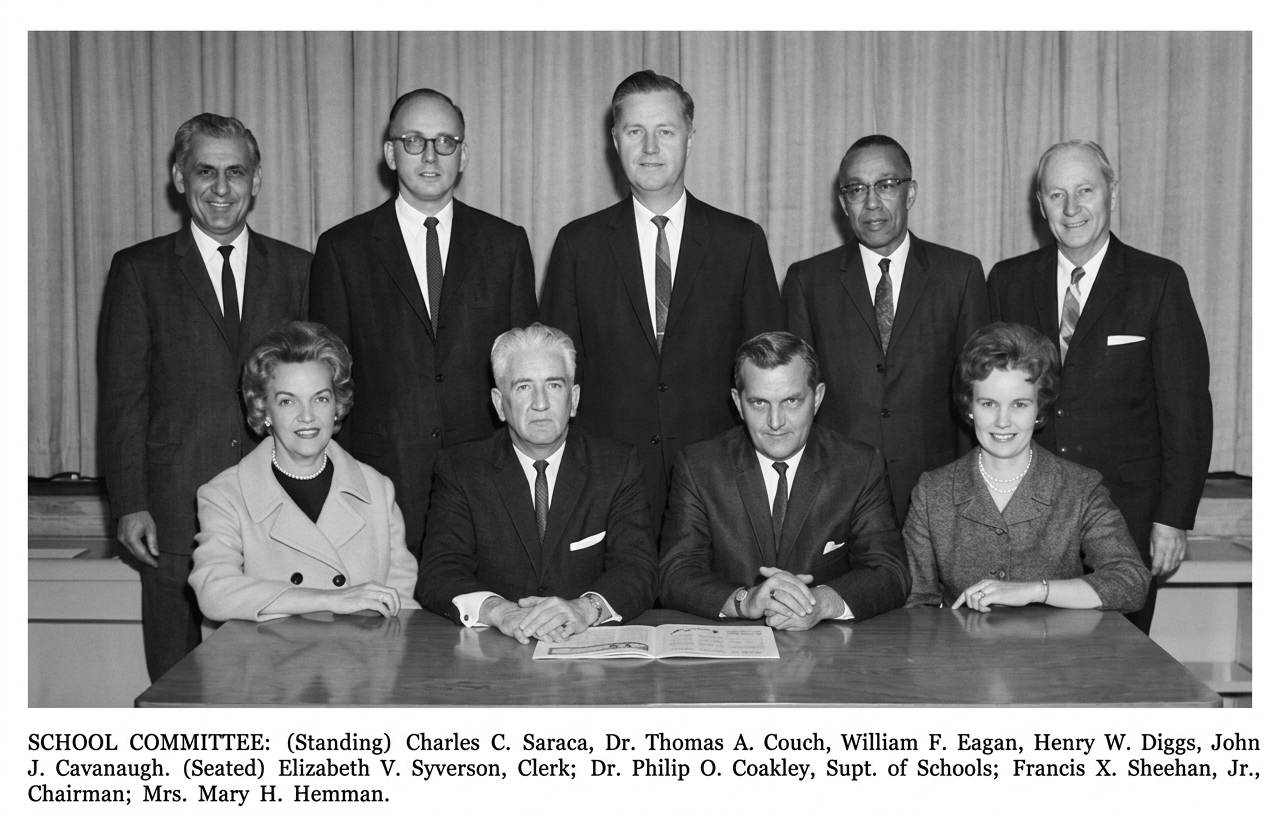
School committee minutes revealed a shelved plan to merge Shattuck and Winslow schools
-
School Committee Considers Sweeping Administrative Reorganization Plan-August 24, 1967
School Committee Chairman Francis X. Sheehan Jr. proposed a sweeping administrative reorganization creating an associate superintendent to streamline Norwood school management
-
Schools Prepare for 5th Annual New Teacher Orientation-August 22, 1967

Superintendent Dr. Philip O. Coakley welcomed 58 incoming educators at the fifth annual teacher orientation institute at Prescott School, introducing new faculty across secondary and elementary schools.
-
School Committee Inspects “Deplorable” Balch School, Demanding Immediate Repairs-October 27, 1966

Following a 90-minute inspection revealing rotting windows, cracked ceilings, and decaying staircases, the School Committee ordered immediate priority repairs for the 50-year-old Balch Elementary School.
-
Norwood Teachers Association Submits $1,000 Pay Increase Proposal-August 18, 1966

The Norwood Teachers Association submitted a $1,000-plus pay raise proposal as the school committee signed its first collective bargaining agreement amid debate led by John J. Cavanaugh and William Egan.
-
Andrew J. Ciarletta Jr. Appointed Principal of Winslow Elementary School-July 27, 1966

The Norwood School Committee appointed Andrew J. Ciarletta Jr. as principal of Winslow Elementary School, succeeding Alan R. Wonson.
-
“Middle School” Configuration Proposed to Address School Overcrowding-November 4, 1965

Norwood School Committee member William Egan proposed establishing a sixth-grade “middle school” and a 2,000-pupil high school to address surging enrollment pressures.
-
Retired Norwood Junior High Vice-Principal Mildred I. O’Donnell Honored at Testimonial Dinner-October 30, 1965
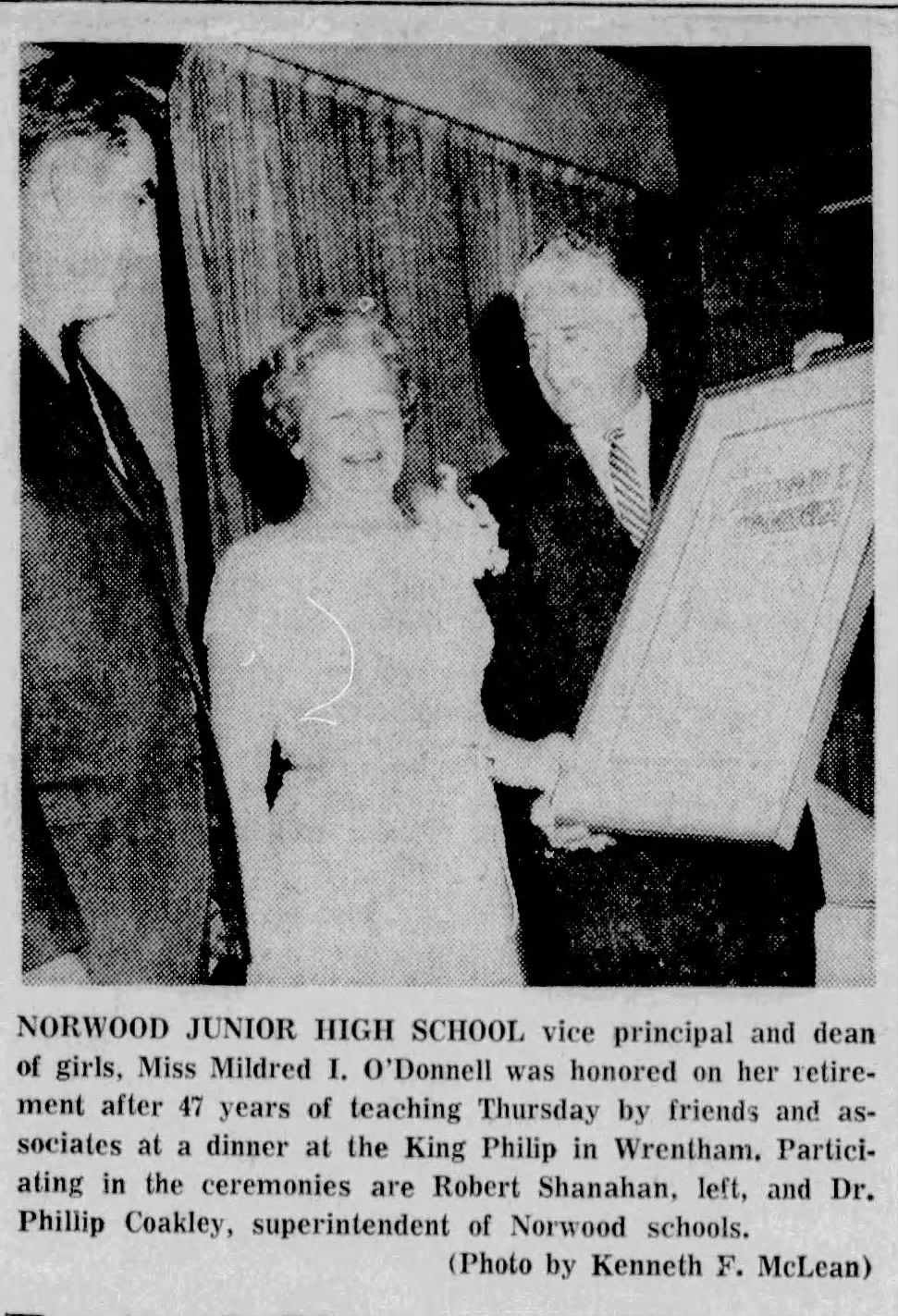
Celebrating a 47-year teaching career, retired Norwood Junior High vice-principal and dean of girls Mildred I. O’Donnell was honored during a testimonial dinner at the King Philip in Wrentham.
-
Superintendent Coakley Tells PTA Council That $4 Million in New School Construction Is Mandatory-September 10, 1965

Dr. Philip O. Coakley tells the PTA Council that $4 million in new school construction—including a new elementary and junior high—is mandatory to handle over-capacity enrollment.
-
Norwood School Committee Reviews Summer School Program and Proposes Token Fees-September 3, 1965

Following the successful completion of Norwood’s first town-sponsored summer school program—which enrolled approximately 330 local students in remedial coursework—the Norwood School Committee is evaluating future administrative structures, including a proposal to institute a nominal student fee. Superintendent Philip O. Coakley presented a comprehensive report detailing the inaugural summer session, noting that progress reports for every…
Discover more from Norwood Historical Society
Subscribe to get the latest posts sent to your email.