The town of Norwood was abuzz with controversy in the summer of 1978 as the finance commission (FinCom) and the school committee engaged in a heated debate over the school budget. The issue at hand was the $255,000 cut to the school budget voted by the school committee on Wednesday, which a majority of FinCom members deemed “not meaningful,” “false cuts,” and not enough for them to accept.
The school committee had sought FinCom’s support for the cuts, but three FinCom members – Chairman William F. Collins, Member E. Peter Bamber, and Member Joseph Adakonis – were unimpressed. They felt that the school committee was still looking for at least $363,000 more than town meeting had appropriated, and that the $255,000 cut was merely a token gesture.
Collins, who was instrumental in negotiating the compromise cuts, expressed his reservations about the adequacy of the cuts, stating that he personally did not think the money cut was enough. Bamber, one of the architects of the town meeting cuts, echoed Collins’ sentiments, saying that a majority of FinCom members felt that the school committee was still seeking at least $363,000 more.
Adakonis also chimed in, stating that he was not interested in the amount the school committee cut on Wednesday but wanted to hear justification for “what they are adding back from what town meeting cut.” Members William C. Phipps and Allan D. Howard questioned the validity of some of the cuts proposed by the school committee, saying that they wanted to see meaningful cuts and a definite commitment regarding the closing of a school in 1979.
The school committee had agreed to cut $55,000 from the maintenance of buildings budget, which Phipps and Bamber felt was a false cut since that budget came under the jurisdiction of the board of selectmen. They also questioned the validity of cutting $34,500 from utilities, saying that the school committee could not do without lights or heat.
The controversy surrounding the school budget cuts was further complicated by the fact that 36 taxpayers and the teachers’ union had initiated a court suit to get the full $618,000 restored. The school committee did not have to have the budget amount settled by July 21, as Town Counsel Justin C. Barton could file the amount appropriated by town meeting and amend it if necessary at a later date.
However, Barton emphasized that before the court takes action, the school committee will have to say exactly what it needs for funds. The recall of three members of the school committee – John H. Chisholm, Chairman Henry W. Diggs, and Richard W. Kief – was also underway, with leaders of the drive citing fiscal irresponsibility and failure to comply with the wishes of town meeting as the reasons for recalling them.
The controversy surrounding the school budget cuts and the recall of three members of the school committee highlighted the deep-seated divisions within the town of Norwood in the summer of 1978. The debate over the school budget cuts was a complex issue that involved not only financial considerations but also questions of governance, accountability, and the role of different branches of government.
The fact that FinCom members were unimpressed by the $255,000 cut to the school budget suggested that there were deeper issues at play. The recall of three members of the school committee added another layer of complexity to the issue, highlighting the tensions between different factions within the town and the challenges of governing a community with competing interests.
The controversy surrounding the school budget cuts in Norwood in 1978 serves as a reminder of the importance of effective governance, transparency, and accountability in local government. It also highlights the need for careful consideration and negotiation when dealing with complex issues that involve multiple stakeholders and competing interests.
Archival Note: This article has been dynamically reconstructed from the original public record print archives of the Patriot Ledger
More Town Government Stories
-
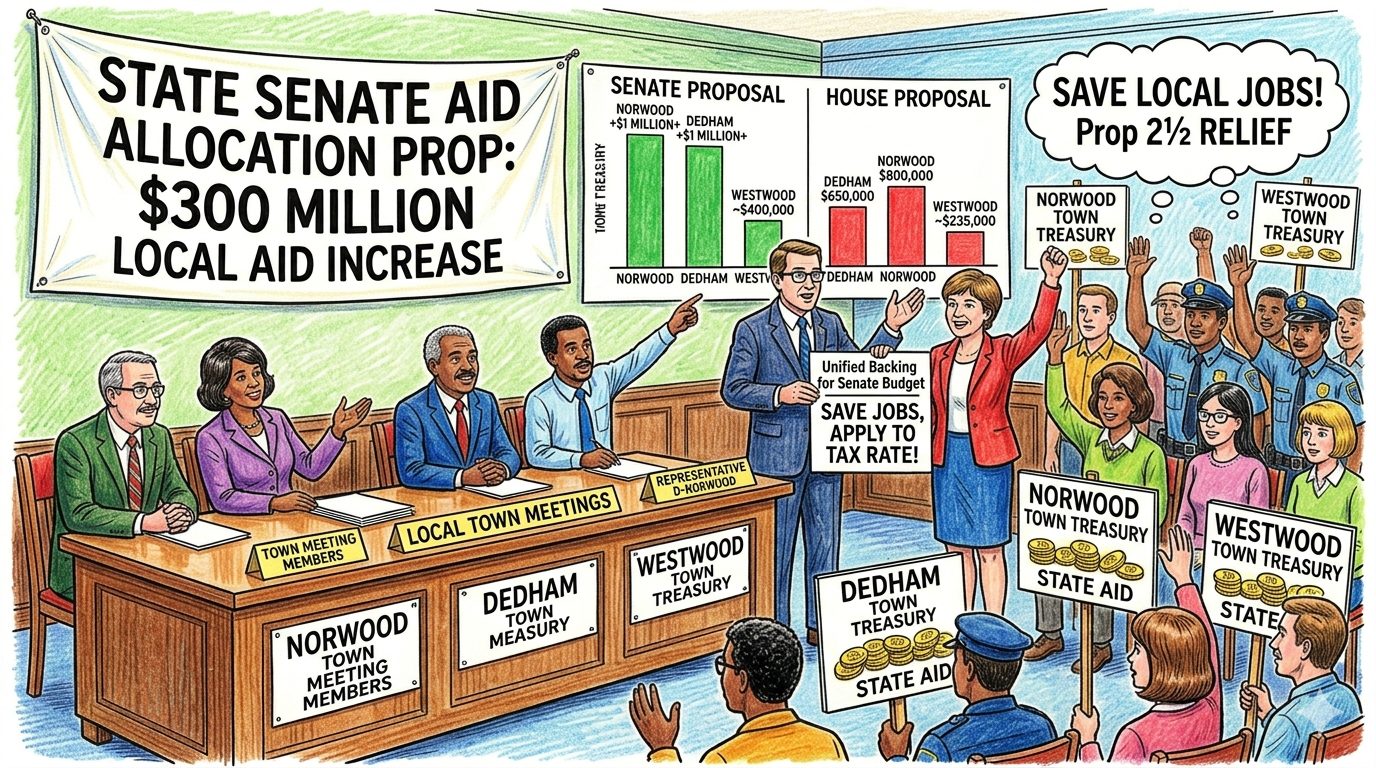
Senate budget gives towns $2.4M in aid-June 23, 1981
A bipartisan legislative front forms to secure critical financial relief for regional town treasuries facing immediate cutbacks.
-
Referendum Drive Seen Well Underway-June 23, 1981
A rapid grassroots signature campaign aims to stall a major town development project through a public ballot referendum.

-
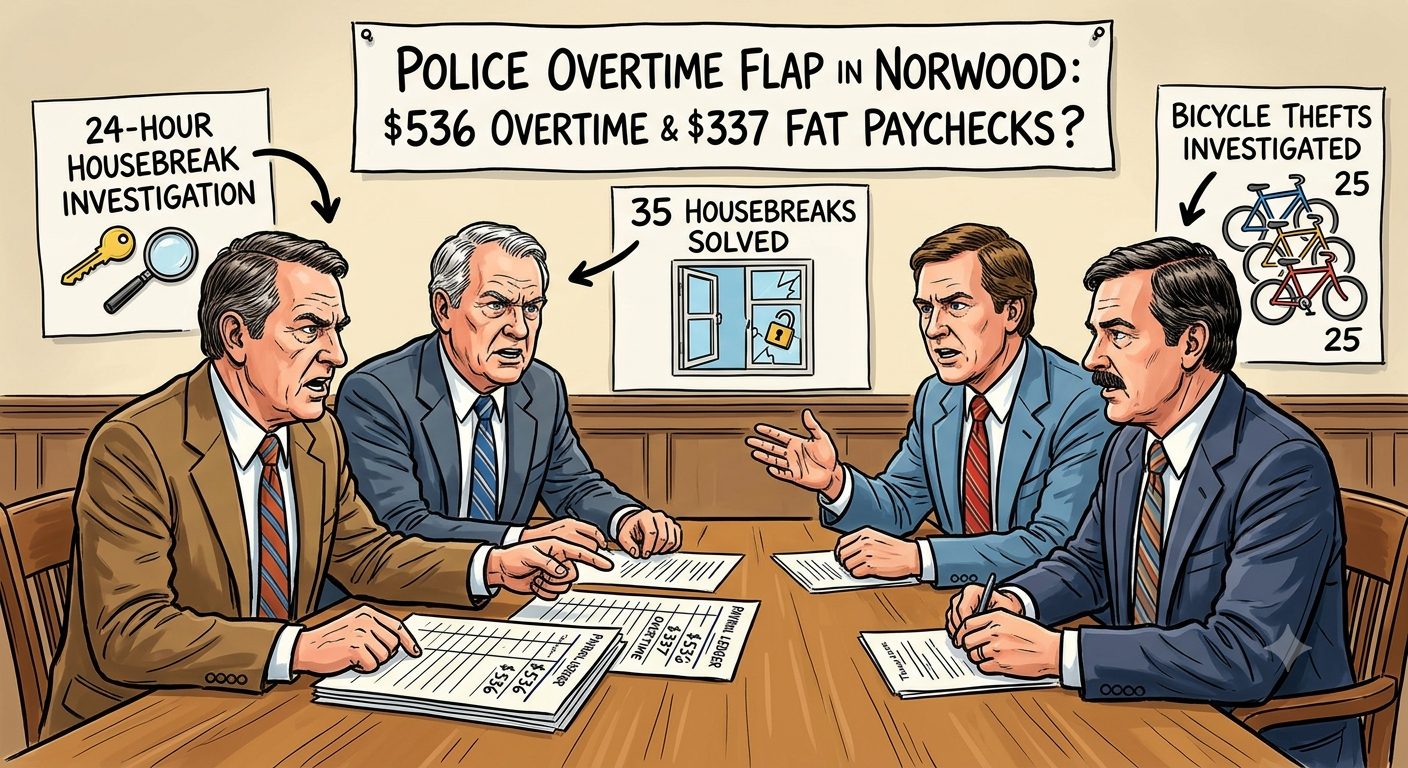
Police Overtime Pay Causes Flap-June 17, 1981
Selectmen Spar Over Fat Paychecks Following Around-The-Clock Housebreak Investigation One policeman got $536 in overtime pay last week. Another got $337. And two selectmen say that’s too much. “It’s not right for one man to work 35 hours overtime,” Selectman Walter J Dempsey said last night, adding, “536 bucks for my money is too much…
-
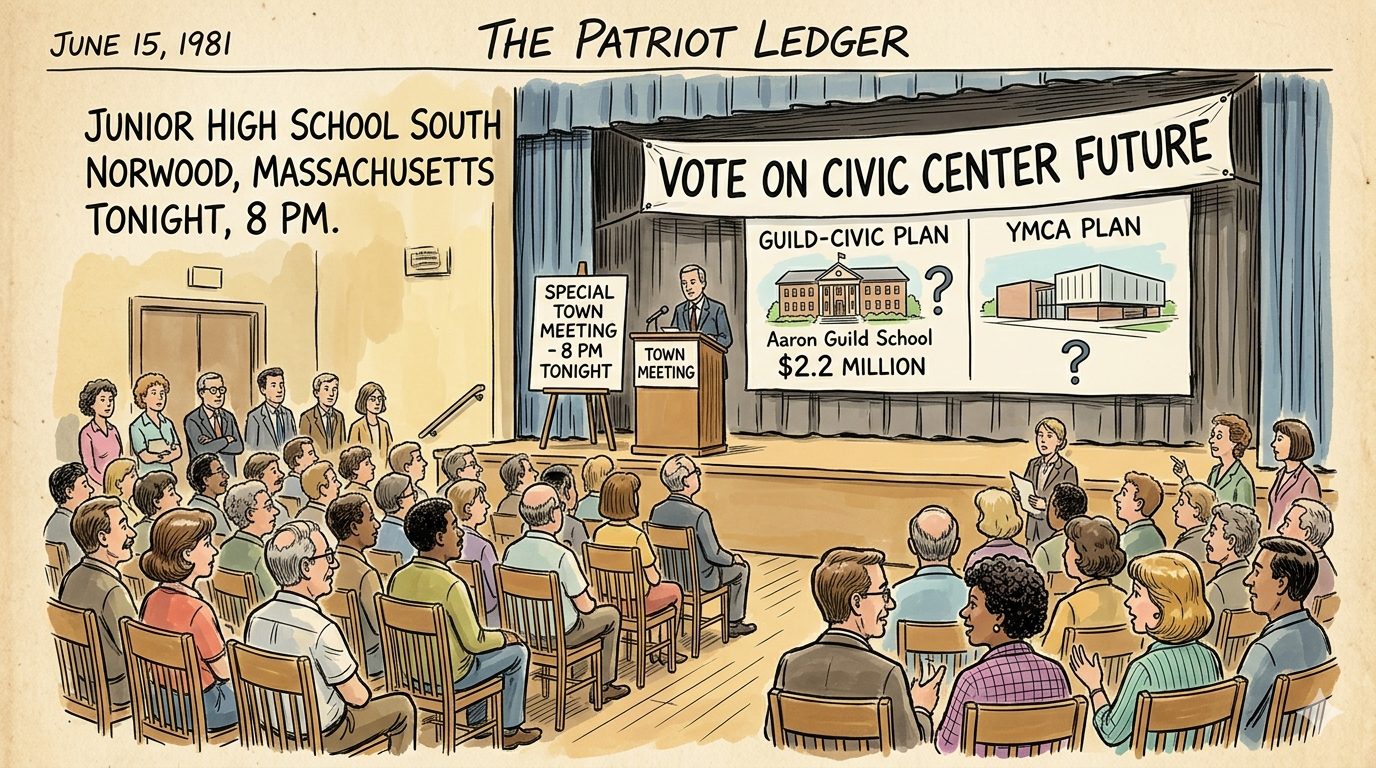
Civic Center Future Up For Vote-June 15, 1981
A high-stakes special town meeting agenda features a multi-million dollar Civic Center relocation choice and the $325,250 sale of Winslow School.
-
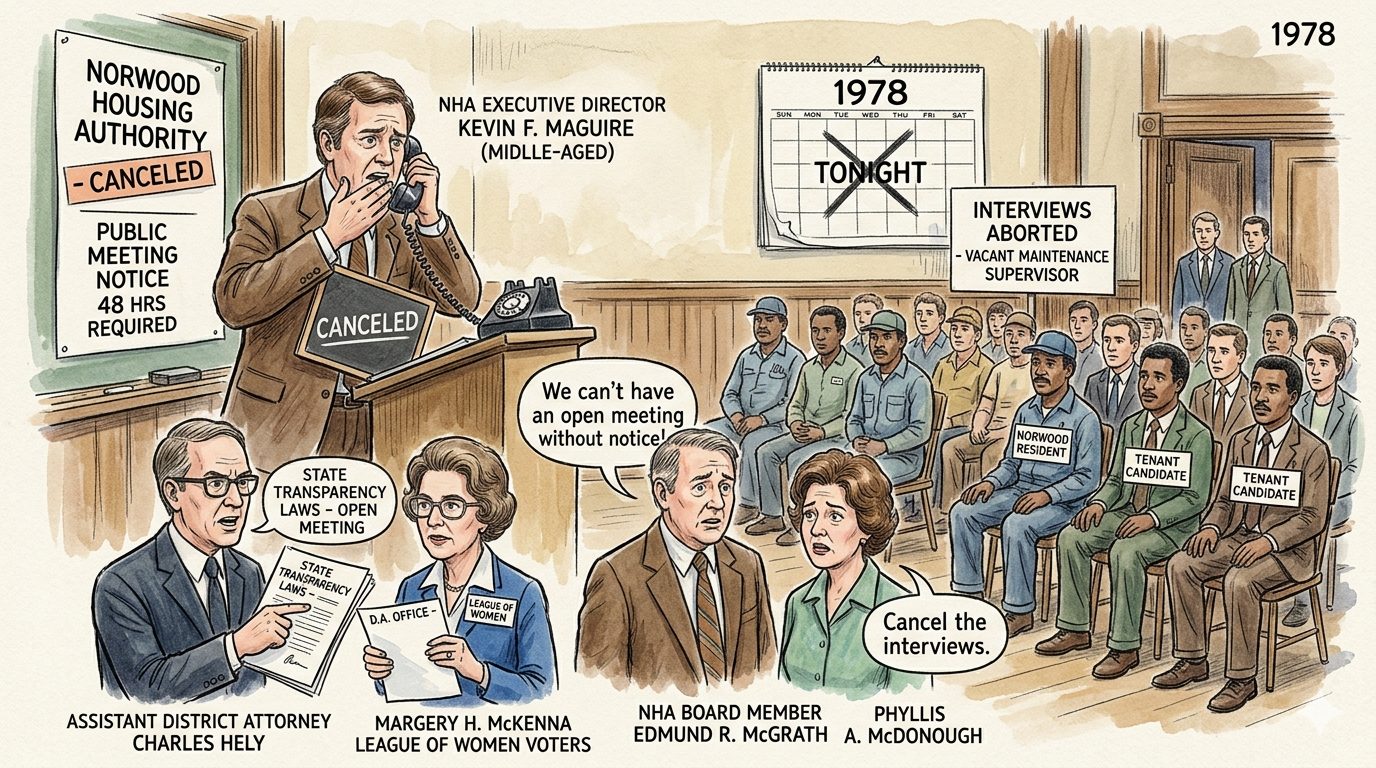
Housing Authority Candidate Screening Halted-June 16, 1978
League Watchdogs and District Attorney Block Closed Maintenance Interviews A sweeping attempt to accelerate administrative appointments inside the local municipal infrastructure collapsed under legal scrutiny last night. The Norwood Housing Authority was forced to completely abort a scheduled slate of 20 confidential candidate interviews for its vacant maintenance supervisor role after legal monitors formally warned…
-
Selectmen Outraged by FinCom Veto of Youth Summer Job Program Funding-June 26, 1974
Runaway teenage unemployment sparks a fierce municipal funding war as watchdogs lock horns over emergency summer public works spending.
-
Norwood FinCom’s Elias Refuses To Resign Amid Recall Threats-June 22, 1974
| A political standoff gridlocks the Finance Commission as a newly elected official breaks rank and drops out of municipal sessions
-
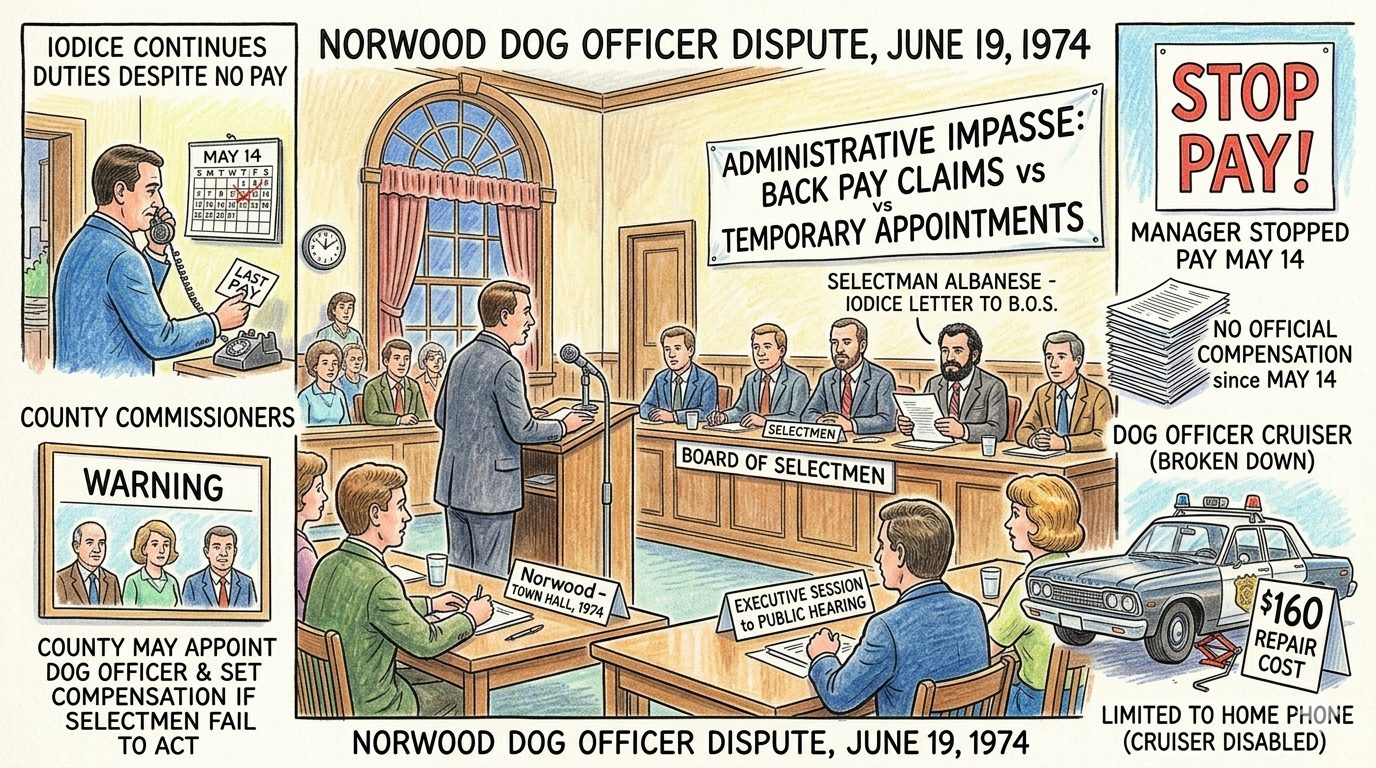
Dog Officer Row Unsettled-June 19, 1974
A breakdown in communication and transport leaves Norwood’s animal control duties in limbo during a fierce political standoff.
-
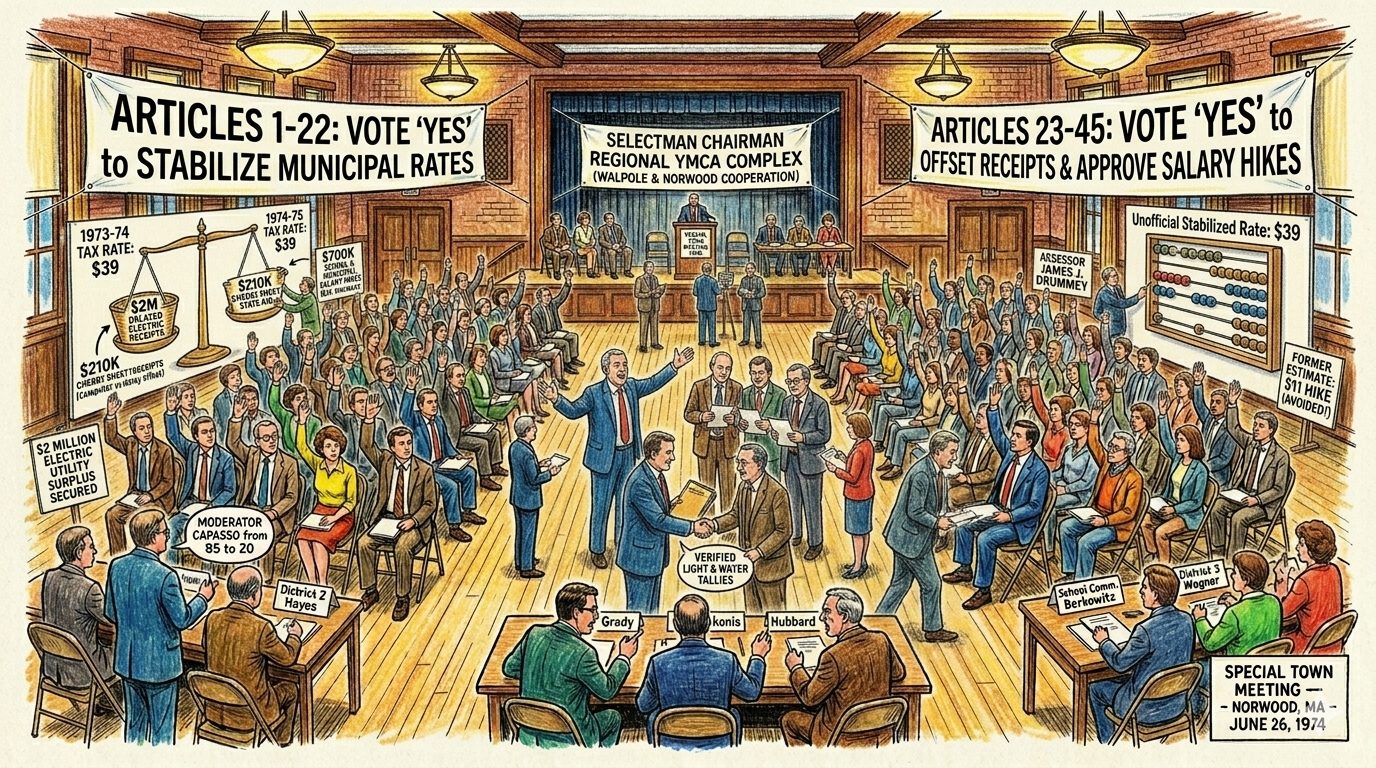
Delayed Computer Billing Receipts Spark Optimistic Tax Forecasts-June 18, 1974
Selectmen and assessors leverage delayed electric receipts and cherry sheet funds to keep tax rates at 39.
-
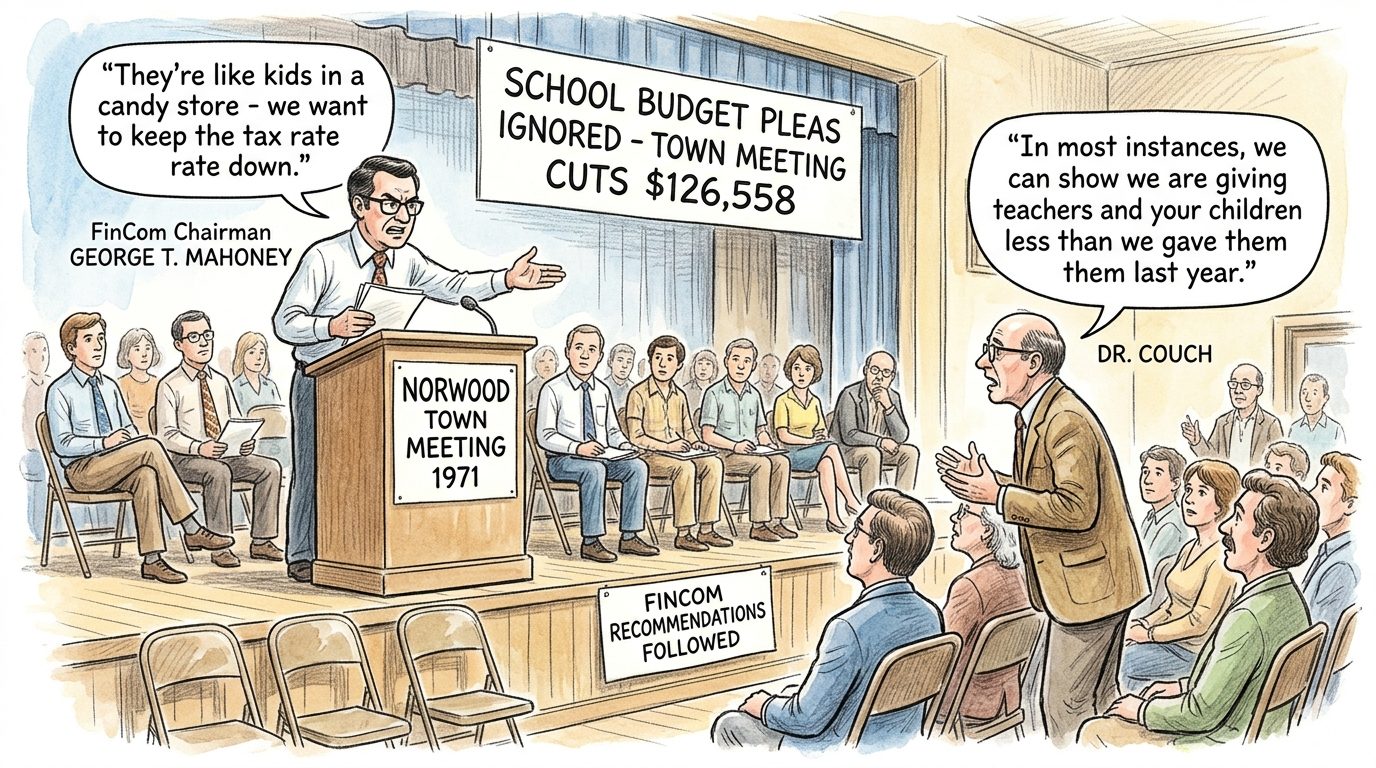
Meeting Ignores School Pleas, Cuts Budget By $126,558-June 15, 1971
A fierce debate over encumbered funds and municipal parity dominates a marathon Norwood Town Meeting session over the town budget.
Discover more from Norwood Historical Society
Subscribe to get the latest posts sent to your email.