
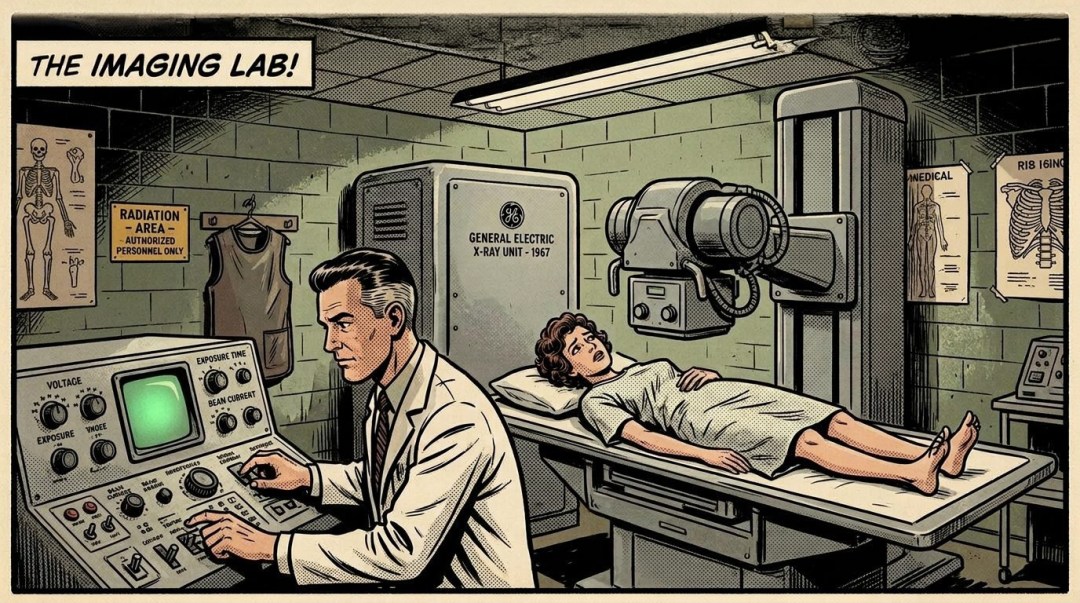
On July 6, 1964, the Norwood Hospital was reported to be at the forefront of medical diagnostics following the installation of a sophisticated Image Intensifier unit.

The device, which had been in operation for eight weeks at the time of the report, represented a significant capital investment of $12,000. This equipment replaced the traditional fluoroscopic unit, promising to enhance the quality of diagnostic care while prioritizing patient comfort and safety.
According to Charles A. Richardson, the hospital administrator, the advantages of the new technology far outweighed its substantial cost. One of the most critical benefits of the Image Intensifier was the reduction of radiation exposure; the system required 60 percent less x-ray energy to perform examinations than previous models. Furthermore, the system operated using a specialized tube that converted x-ray energy into light energy, which was then concentrated through an optical system for viewing on a mirror. This process allowed the radiologist to see a clear, distinct image of a patient’s interior without the need for high levels of radiation.
The shift in technology also provided significant logistical benefits for medical staff. In traditional fluoroscopy, radiologists were required to wear special goggles for 30 to 40 minutes before testing to allow their eyes to adjust to a totally dark room. The Image Intensifier eliminated this necessity, as testing could be performed in subdued light. This transition to a better-lit environment served a dual purpose: it made the experience less apprehensive and more relaxing for the patient, who could see their surroundings throughout the procedure.
The hospital’s modernization efforts were ongoing. At the time of the report, plans were already in place to integrate a television monitor system paired with the Image Intensifier. This addition was projected to provide instantaneous video tapes, which the radiologist could play back for on-the-spot analysis. Unlike the conventional spot-picture method, which required time-consuming film development and manual review, the combination of the Image Intensifier and video recording offered a continuous, dynamic image. This allowed for more immediate and positive diagnostic results, marking a major leap forward in the hospital’s operational capabilities.
Archival Note: This article has been dynamically reconstructed from the original public record print archives of the Patriot Ledger
More Norwood Hospital Stories
-
Norwood Hospital Women’s Aid Celebrates Twenty-Fifth Anniversary With Meeting at Day House-This Day in Norwood History-June 10, 1944
June 10, 1944-Norwood Hospital Women’s Aid Celebrates Twenty-Fifth Anniversary With Meeting at Day House The trustees of the Norwood Hospital, at a meeting held in April 1919 voted that an organization of women from Norwood, Walpole, and Westwood be formed as an auxiliary or aid to the hospital. In June of that year, the Norwood…
-
Hospital Handles More Cases in 1942-This Day In Norwood History-February 5, 1943
44% Of Patients Prove To Be Norwood Residents Topping all previous years in the number of cases handled, the total of 4066 individuals who were treated at the Norwood Hospital in 1942 was greater by 500 than the number treated in any other year, it was revealed in the annual report of Administrator Robert Brown…
-
Hospital Addition Opens On Weekend-This Day in Norwood History-December 25, 1942
Christmas—and Norwood and surrounding communities will this year get about as fine a Christmas present as could be. It comes beautifully packaged, too. To be sure the wrappings are not white paper and red ribbon with a touch of gay holly. They are more. The wrappings are the most modern, up-to-date hospital unit one could…
-
Skidding Autos, Coasting Injury Keep Police Busy-This Day In Norwood History-December 14, 1942
LABOR SHORTAGE SLOWS SNOW CLEARANCE Norwood Police Aid Family Of Eleven Escape In Dedham Fire Sub-freezing weather accompanied winter’s first onslaught In Norwood that left four inches of snow and brought out a depleted war-lime crew of snow shovelers to clean the streets. There were accidents reported to the police and early this morning the…

-
New Blood Bank Located In Basement Of Norwood Hospital-This Day In Norwood History-December 10, 1942
“Best In The Country” For Towns Of Same Size In one of the most progressive medical steps made In the town in years, a blood bank was completed at the Norwood Hospital yesterday and is ready for service, matching anything in the country for a municipality of comparative size. The, bank came about as the…
-
Parade Marks Armistice Day-This Day In Norwood History-November 11, 1942
Veterans organizations Honor Dead Comrades Marching Units In Flag-Draped Streets Inspiring Spectacle Norwood, along with the rest of this warring nation, observed the 21th anniversary of the signing of the Armistice that put an end to World War I, while many of the onlookers at the parade yesterday morning are warriors of World War II…

-
New Emergency Ward Added To Hospital-This Day In Norwood History-September 25, 1942
New Emergency Ward Added To Hospital-This Day In Norwood History-September 25, 1942

-
Norwood Fireman John F. Lydon Dies at Controls of Ladder Truck-This Day In Norwood History-January 1, 1942
Fatally Stricken From Smoke Inhaled at Dwelling Blaze NORWOOD. Jan. 1—Stricken suddenly from smoke inhaled at a fire a short time previously. Ladderman John F. Lydon, 41, of 38 Press av., a member of the local fire department, died early today at the controls of a ladder truck as he was driving back to the…

-
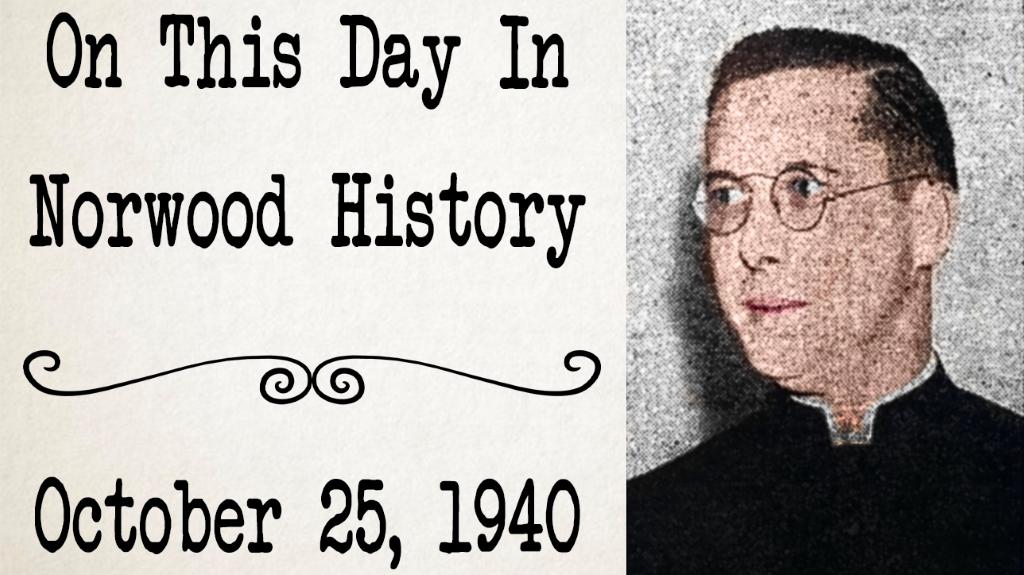
Rev. Robert McAleer of Norwood Dies-This Day in Norwood History-October 25, 1940
Rev. Robert E. McAleer. 38, curate of St. Catherine’s Catholic Church for the last 12 years, died today at the Norwood Hospital. One of the most popular curates the church ever had, Fr. McAleer organized the St. Catherine’s Fife and Drum Corps which for the last two years has won the Cardinal O’Connell trophy as…
-
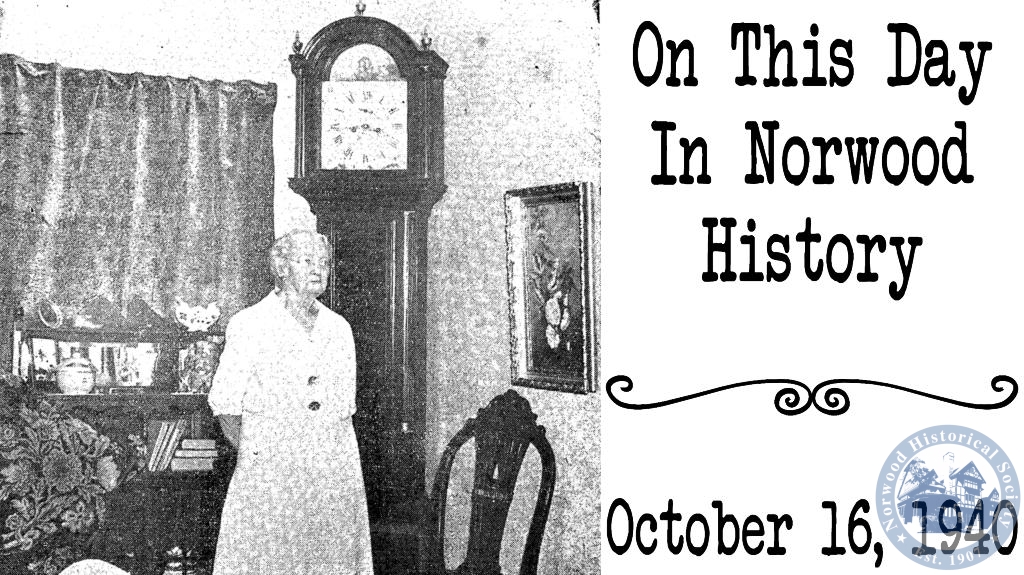
Local Woman Has Many Fine Colonial Antiques-This Day in Norwood History-October 16, 1940
Mrs. Daniel H. Philbrook of 145 Walpole st. has an imposing collection of antiques which date back hundreds of years. In a modest dwelling at 145 Walpole st. unknown to hundreds of local residents, is housed some of the finest Colonial antiques in New England. Thirty-five members of the Congregational church had the privilege of…
Discover more from Norwood Historical Society
Subscribe to get the latest posts sent to your email.