
50 Attend First $25-a-Night Non-Denominational Session Led by Timothy Vaughan and Irving Ross as Selectman Thomas A. Riolo Weighs Reconsidering 3-1 Board Vote
NORWOOD – A prominent Norwood civic leader challenged the Board of Selectmen’s decision to rent a room at the town-owned Norwood Civic Center for Evangelical Christian Bible services, questioning whether permitting religious gatherings inside a municipal facility crossed the constitutional boundary separating church and state. Reported in The Patriot Ledger on Thursday, November 29, 1984, by staff writer Barry N. Smith, the controversy centered on the board’s 3-1 vote two weeks earlier authorizing a non-denominational Christian fellowship group to rent the Civic Center’s upstairs senior citizens’ room for $25 per night.
The first session took place Wednesday evening, November 28, drawing 50 attendees, with follow-up gatherings scheduled for December 5 and December 12, 1984. Leading the service were Timothy Vaughan and Irving Ross, whom Ross described as non-denominational evangelical preachers rather than ordained clergy of a specific church. Originally from Albany, New York, Ross explained that the fellowship of “born-again” Christians focused primarily on New Testament teachings “without putting a denominational tag on it,” and intentionally avoided renting church halls so attendees carrying denominational biases could gather on “neutral territory.” After failing to secure a private hall in Norwood at an affordable rate, the group turned to the Civic Center just as it routinely used public buildings, fraternal lodges, and veterans’ posts elsewhere—insisting, “We don’t believe in mixing” politics and religion.
Raising the constitutional objection was George M. Ruboy, 55, a local attorney, longtime trustee of the Morrill Memorial Library, past president of Norwood’s United Fund, and member of the Republican Town Committee. “I felt it was an inappropriate setting for religious services of this kind,” Ruboy said, prompting Selectmen Chairman Walter J. Dempsey to invite Ruboy to present his concerns at the board’s upcoming Tuesday meeting.
Within the Board of Selectmen, positions quickly shifted. Selectman Thomas A. Riolo, who had voted in favor of the rental two weeks prior, acknowledged receiving complaints from several residents about using the Civic Center for religious purposes and said he was having second thoughts: “I definitely have an open mind, and if I found I made a mistake, I’d reconsider.” Selectman William F. Butters, who had been absent for the original vote, stated he would oppose the rental if brought back for reconsideration, warning, “I think this is an instance of the board not recognizing that very fine line that does divide church and state.” Selectman John F. Kinnaly, who cast the lone dissenting vote initially, maintained that the Civic Center existed “for recreation and the senior citizens” and feared opening the door to other religious groups.
Chairman Dempsey, however, dismissed the uproar as “a puff of smoke,” emphasizing that the town was merely leasing space at $25 a night rather than endorsing or subsidizing worship: “We’re not giving them anything. We’re not supporting them. They’re renting space.” Dempsey also rejected comparisons to a protest a year earlier by a Jewish resident over two town-sponsored nativity scenes—a dispute selectmen had tabled pending the U.S. Supreme Court’s March 1984 ruling upholding a municipal creche display in Pawtucket, Rhode Island.
Archival Note: This article has been dynamically reconstructed from the original public record print archives of the Patriot Ledger
-
Good Neighbor Sunday Coming February 14-This Day in Norwood History-January 28, 1965

COMMITTEE MEMBERS making plans for “Good Neighbor Sunday” on February 14 are (seated): Rev. Allen Keedy, Pastor First Congregational Church, Mrs. John Clarke, John Flaherty, Jr., Mrs. George A. Sullivan, and Roger MacLeod. Standing, Rabbi David Prince, John Bremer, Chairman Social Action Committee, Norwood Council of Churches, Hon. George A. Sullivan, and Eugene Doherty. Committee…
-
New Nazarene Church Site Located On Walpole Street-September 2, 1964

This Day In Norwood History-September 2, 1964-New Nazarene Church Site Located On Walpole Street
-
New Building Dedicated By Evangelical Baptist Church-This Day in Norwood History-July 1, 1964
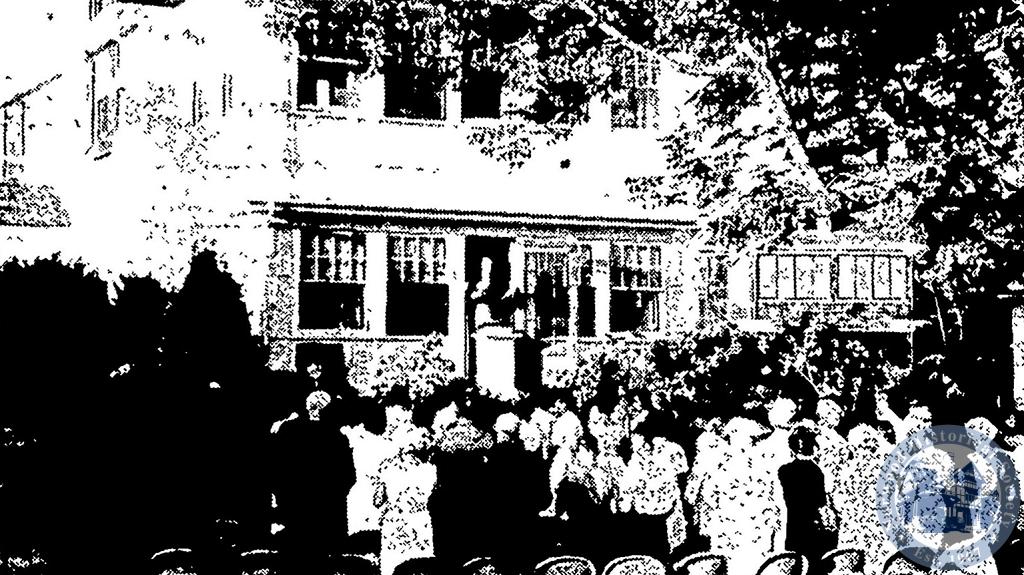
This Day in Norwood History-July 1, 1964-New Building Dedicated By Evangelical Baptist Church
-
Cardinal Cushing Guarded Following ‘Death Threat’-May 1, 1964
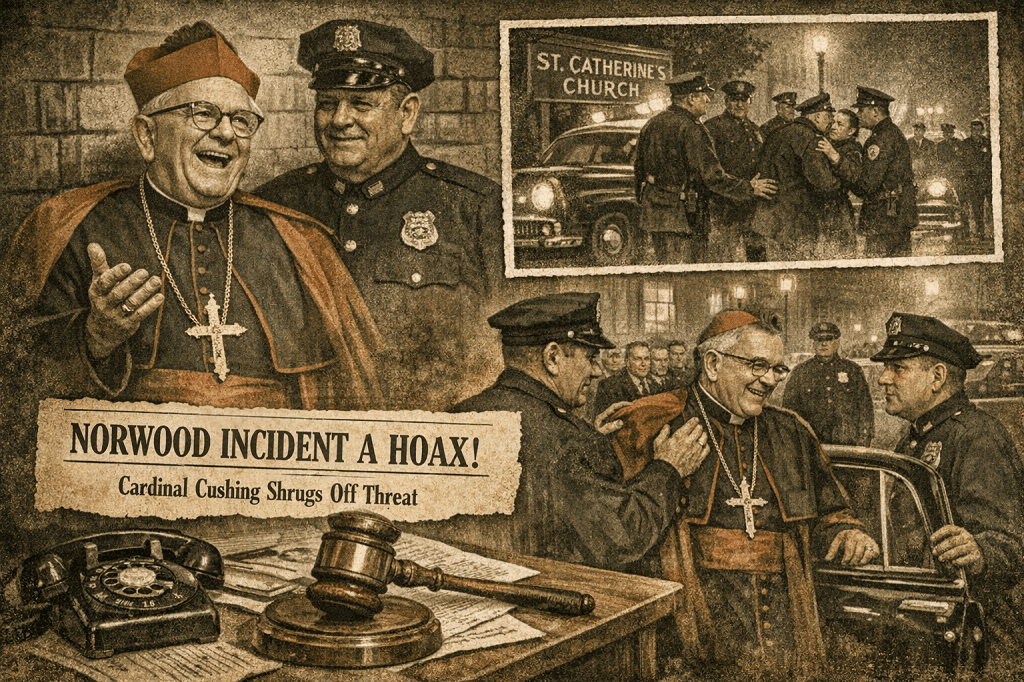
Norwood Incident Apparently Based on Hoax; Churchman Not Worried at All Richard Cardinal Cushing, archbishop of Boston, today dismissed an alleged threat on his life as “a lot of nonsense”. The cardinal was surrounded by armed police In Norwood Thursday night and then was escorted home by two cruiser after the alleged threat. Today just…
-
Knights of Lithuania Honor Mrs. Perednia-March 11, 1964
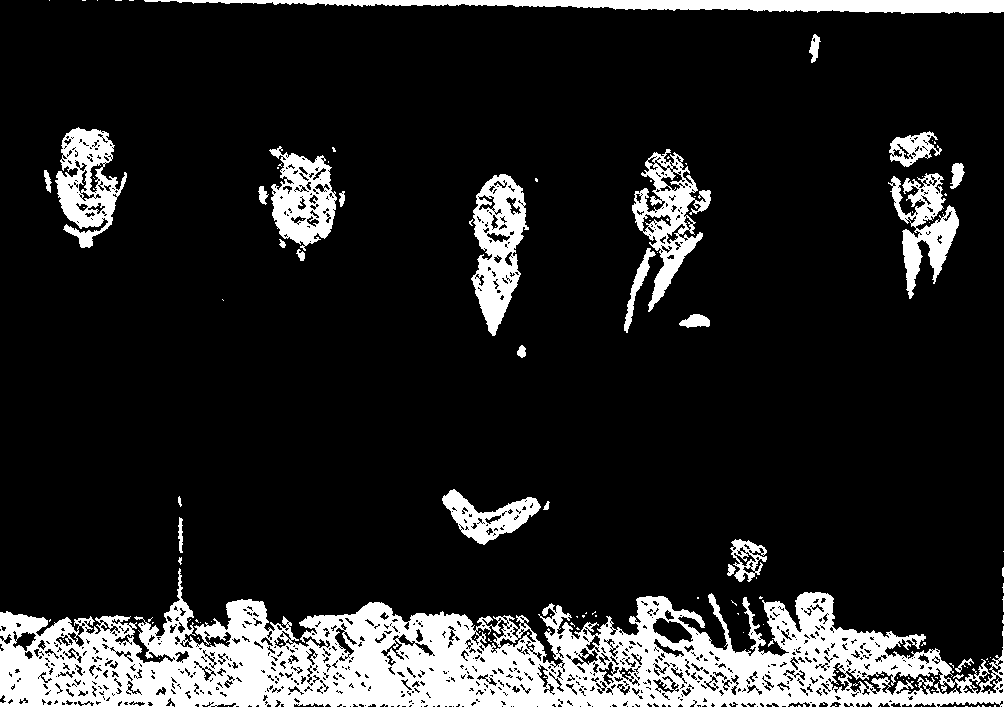
The Knights of Lithuania recently commemorated the feast of St. Casimir, highlighted by the presentation of the Fourth Degree Medal to Mrs. Katherine Perednia. On this occasion, Council President George Barton was presented his First Degree. Both presentations were made by Edward Daniels, Supreme Council Ritual Chairman of all the councils throughout the country. Welcomed…
-
Informal Get Together-This Day in Norwood History-January 9, 1964
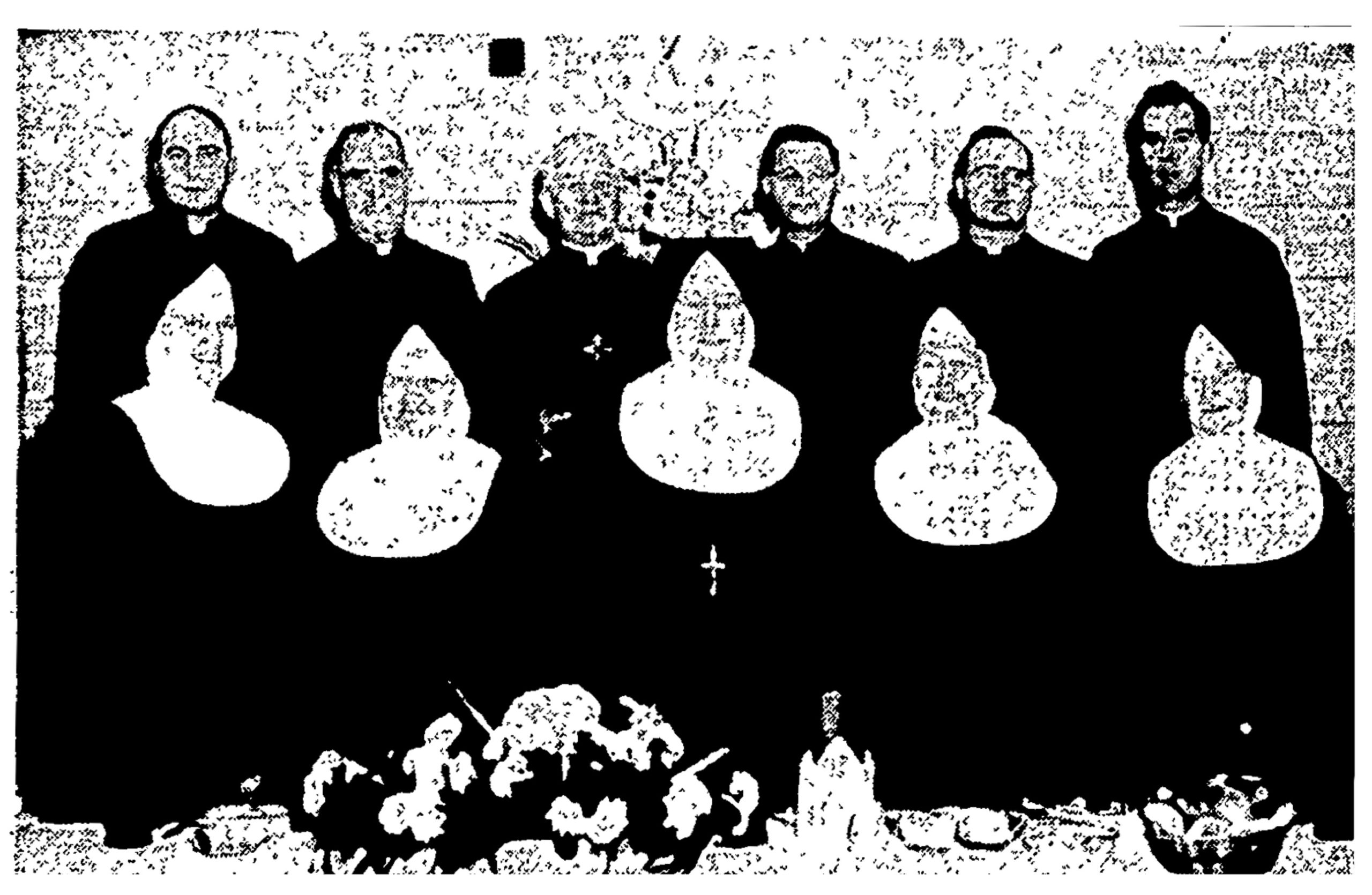
Some 150 nuns were present for an informal get-together on Saturday, December 28, at a luncheon given by Bishop Minihan, at St. Catherine’s in Norwood. Those present included natives of Norwood, and nuns who had taught in St. Catherines since the Bishop was Pastor. Mother Catalina, Mother Superior of the Sisters of St. Joseph attended…
-
Hold Graduation At St. George’s Church School-This Day in Norwood History-July 2, 1963
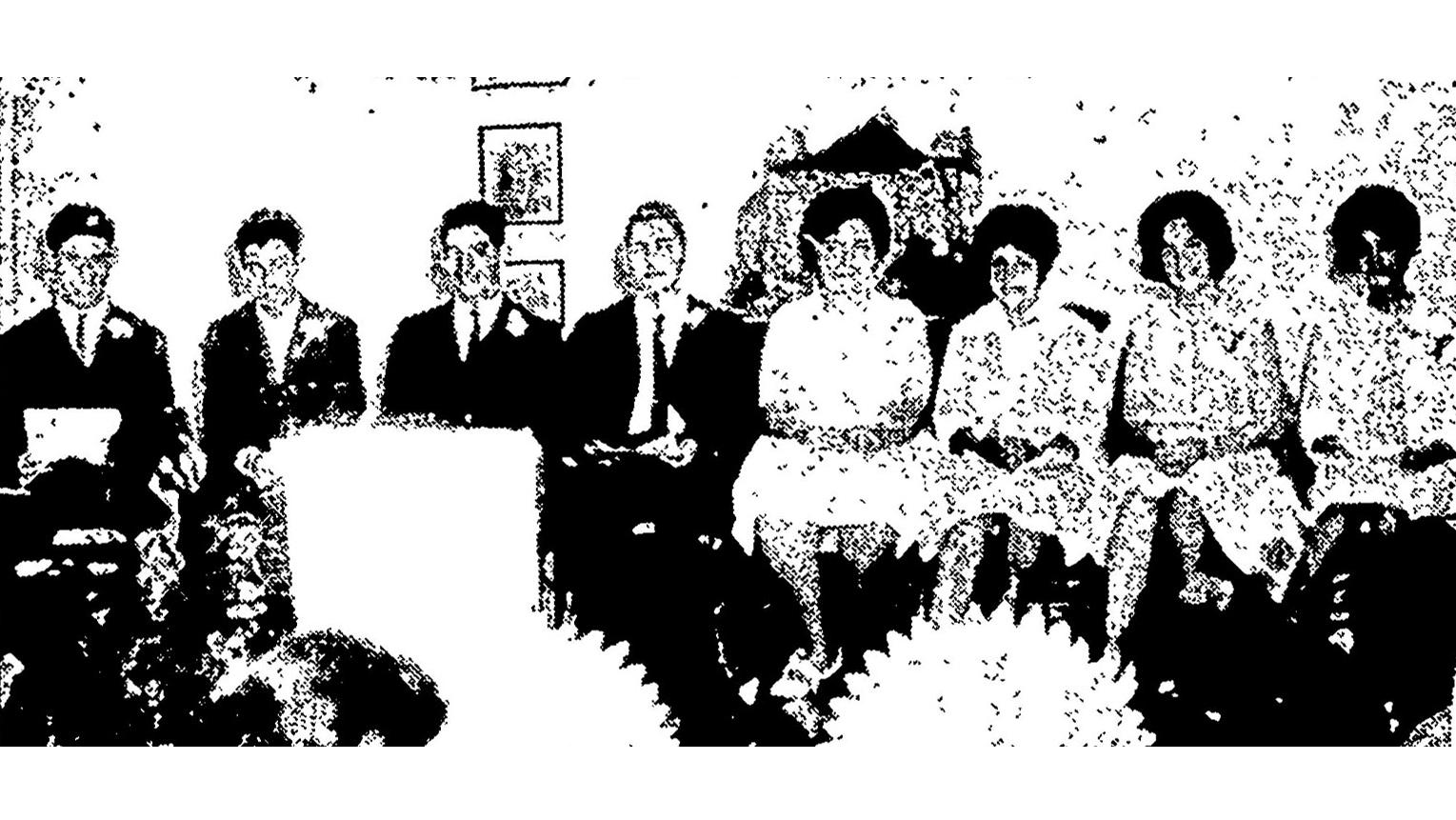
This Day in Norwood History-July 2, 1963-Hold Graduation At St. George’s Church School
-
Syrian Orthodox Youth Organization Celebrates Youth Month With Class Graduation-October 11, 1962
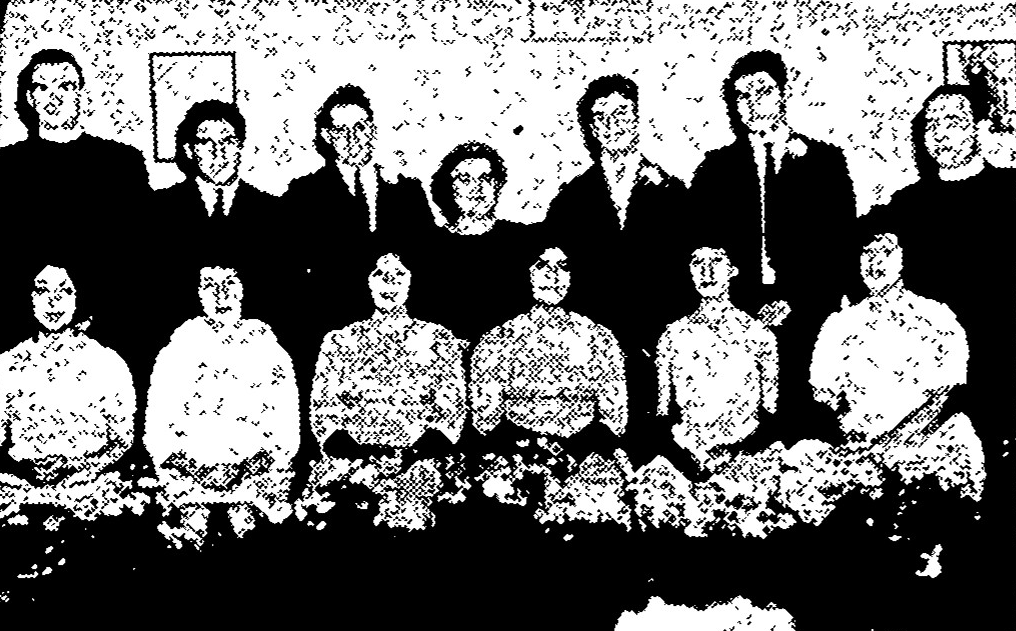
GRADUATES—Members of the graduating Class of St. George’s Syrian Orthodox Church Sunday School are shown on stage at a program held in conjunction, with the observance of Orthodox Youth Month. Seated (left to right) Carol Elias, Gail Purpura, Pamela Howard, Carolyn Howard, Linda Thomas, and Helen Abdallah. Rear row (left to right) Rev. Michael Buben…
-
St. Catherine’s Cafeteria Serves Nutritious Lunches To 1,000 Daily-This Day in Norwood History-January 18, 1962
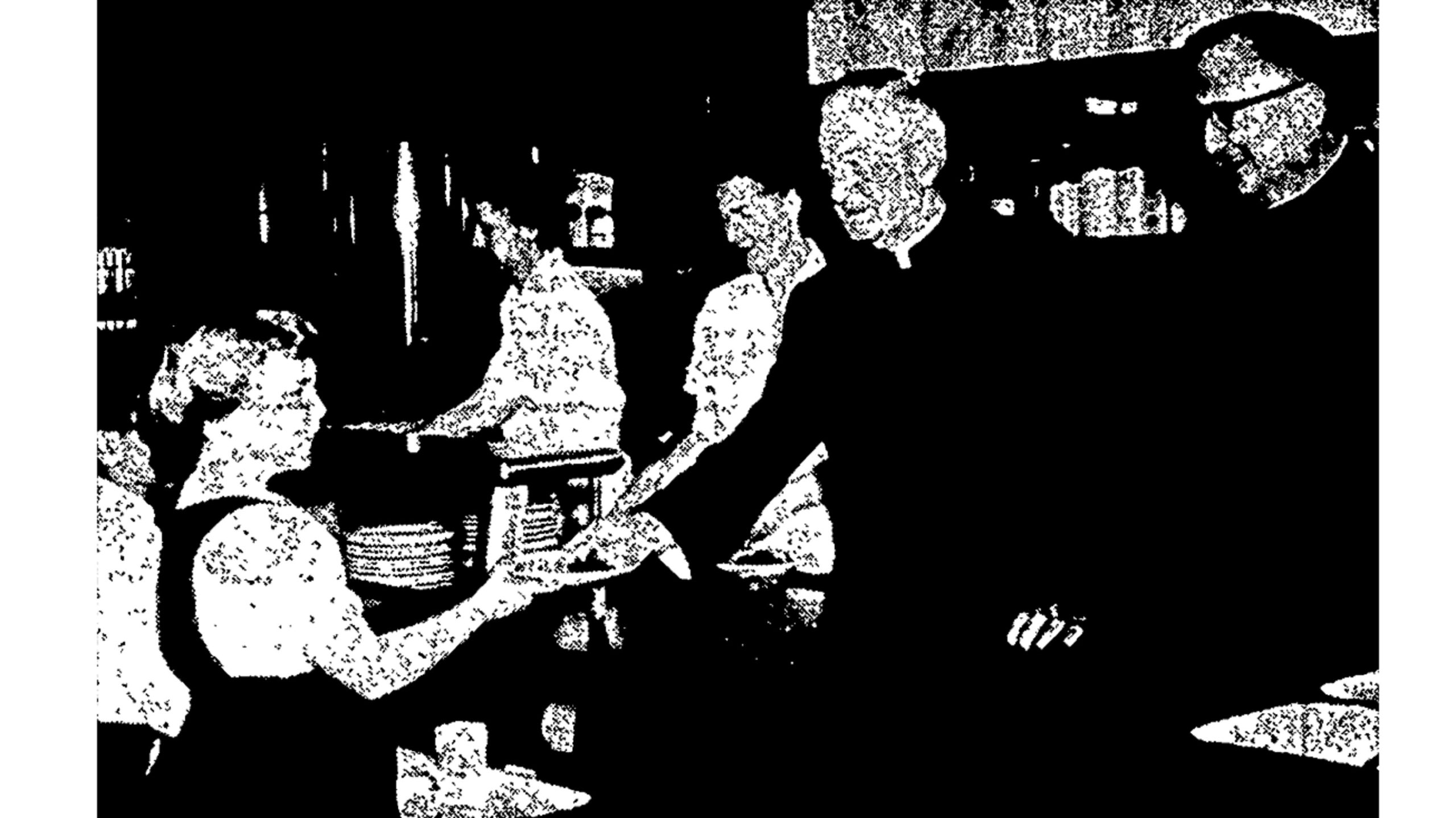
His Excellency, John A. Volpe, Governor of the Commonwealth of Massachusetts has proclaimed the week of January 15-19 as School Lunch Week to emphasize the important role of nutritious school lunches in the development of children’s health. And one of the largest school lunch programs in Massachusetts is at St. Catherine’s School, Norwood. According to…
-
Sketch of New St Timothy’s Church-This Day in Norwood History-January 18, 1962

SKETCH OF NEW ST. TIMOTHY’S CHURCH AND RECTORY to be erected in Norwood at Willett Pond. Site clearance has already begun on the spot and excavation work should begin as soon as weather conditions permit. The contract for the work has been given to the John F. Griffin Company of Boston and it is estimated…
Discover more from Norwood Historical Society
Subscribe to get the latest posts sent to your email.