

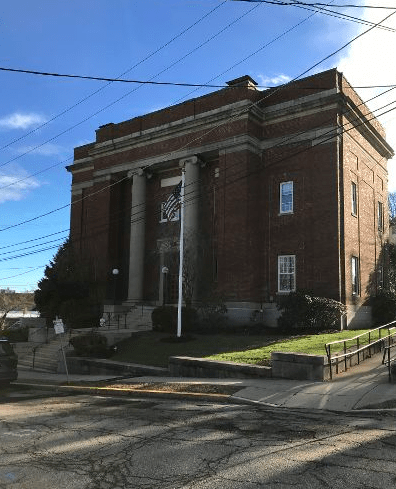
Built is 1916, it is an excellent example of classic Greek Revival style for a public building. It is situated on a residential street, but is just behind a commercial block on Washington Street. The corner stone was laid in January of 1916 and completed in September of 1917, and was built by the Orient Lodge AF & AM. The architect was William G. Upham, a Norwood resident, who was responsible for the design of many of Norwood’s public buildings. It can be argued that his style and foresight is what has made Norwood’s town center beautiful, and transformed Norwood from a rural county village to a vibrant urban town center. The Temple was constructed by Alden A. Appleby, a local commercial builder. This grand building represents the growing wealth and power of many of Norwood’s industrialists as well as the establishment and growth of middle and upper-middle classes in Norwood. A Norwood Messinger article describing the building as a “dignified and impressive structure consists of three stories and a basement contained within an envelope of Harvard red brick with Indiana limestone trimmings.”
Elements of Greek Revival style in the Masonic Temple:
- Parapet
- Symmetrical façade
- Granite foundation
- Ionic columned portico
- Look of Doric pilasters
Back to the Norwood Neighborhood Exhibit main page –>
Discover more from Norwood Historical Society
Subscribe to get the latest posts sent to your email.
One thought on “76 Day Street – The Masonic Temple”
Comments are closed.