

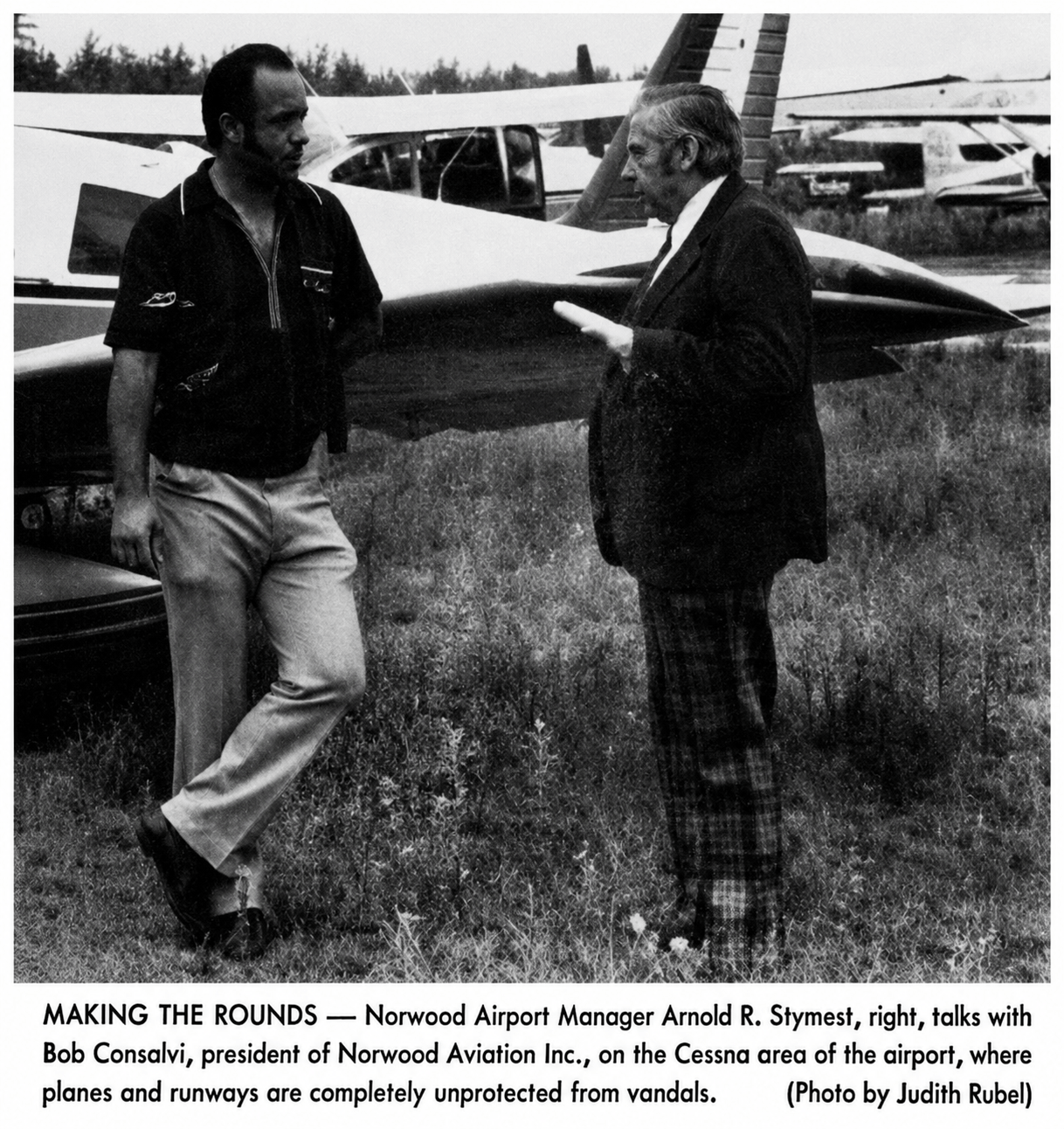
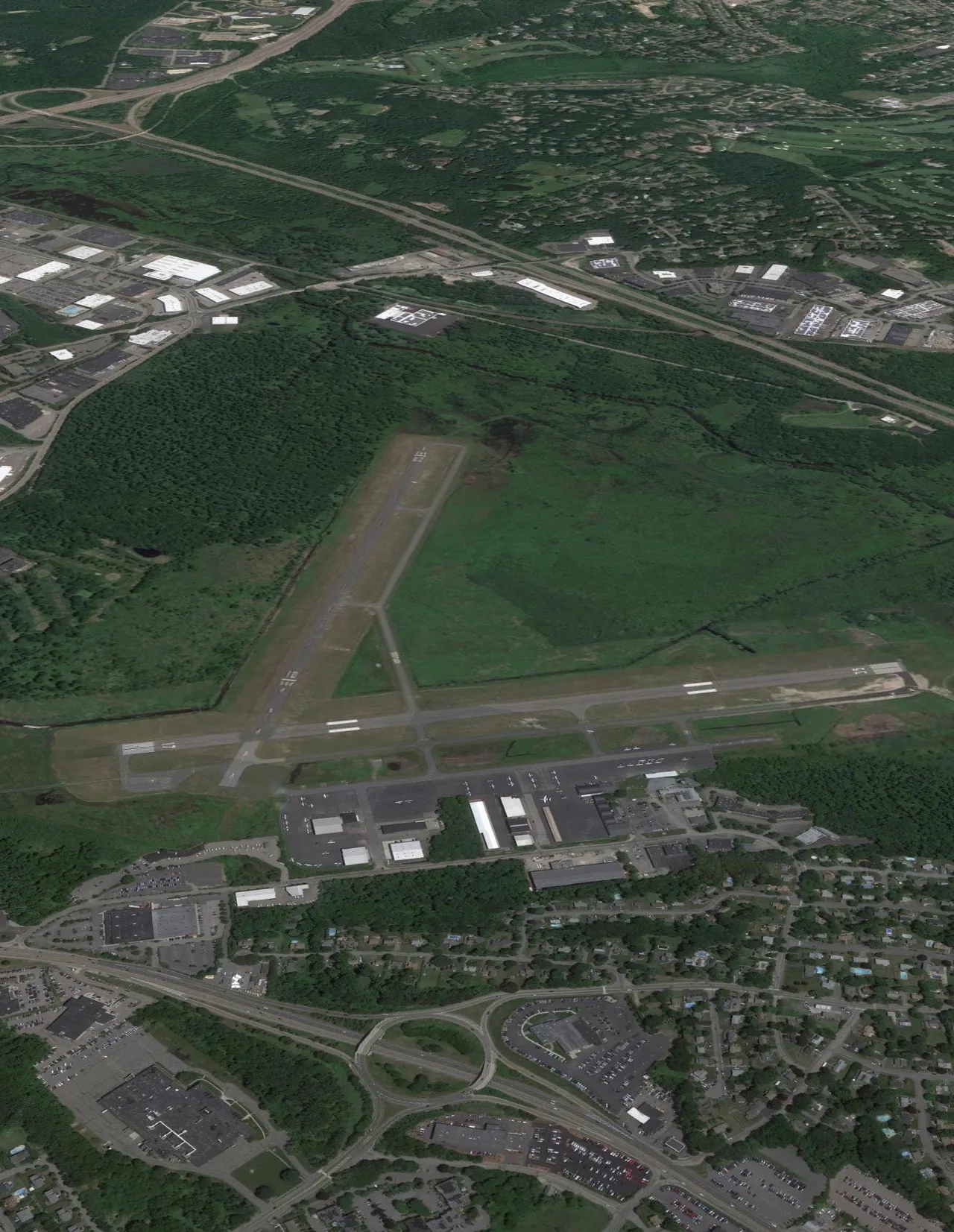
While vandalism has unfortunately become an accepted part of modern life—plaguing everything from local churches to historic cemeteries—such malicious mischief takes on alarming and critical dimensions when directed against aviation infrastructure. For Norwood Airport Manager Arnold Stymest, the constant, gnawing worry that vandalism could trigger a catastrophic aviation accident is an occupational hazard during an otherwise satisfying career. Having cultivated a passion for aviation since earning his pilot’s license in the 1940s, Stymest has managed the facility for seven years, navigating the persistent headache of property damage and equipment tampering.
Among the routine frustrations are recurring attacks on runway lighting. Vandals periodically smash high-intensity approach strobe lights and runway edge lamps, driving repair and replacement costs up to $2,000 annually—a financial burden absorbed by the airport management group, the Boston Metropolitan Airport Corp. More hazardous, however, is tampering with high-voltage lighting panels situated in isolated wooded areas. Despite prominent warning signs highlighting both deadly electrical risks and federal offenses, trespassers have forced open the doors of the Simplified Direction Facility (SDF) housing the runway guidance equipment, ripping out antenna wires and breaking meters. Additionally, vehicle tire tracks frequently scar the grass fields, parking lots suffer damage from partying teenagers utilizing nearby department store lots, and fuel farm equipment has faced isolated acts of vandalism.
The most critical safety vulnerabilities involve navigational aids essential for bad-weather instrument landings. During poor visibility, low-frequency homing beacons—such as the vital radio beacon located in Stoughton—serve as a pilot’s best friend by guiding aircraft from any direction toward the runway approach. If vandals disable the flashing approach lights or knock out the Stoughton beacon, an automated alarm instantly rings at the Stoughton Police Department, prompting a rapid police and managerial response. However, a dangerous window of vulnerability remains before a pilot is notified; a flier navigating on a “dead needle” indicator would see a straight runway-bound course and logically assume the beacon is operational when it is actually off the air. Stymest noted that the ultimate nightmare scenario would involve the simultaneous failure of both the Stoughton beacon and the SDF during a nighttime instrument landing.
Relief is on the horizon, however. Plans are underway for the Federal Aviation Administration (FAA) to decommission the SDF and install a modern localizer instrument to provide precise steering along the middle runway course, while the FAA assumes operational control and security of the Stoughton beacon from the Massachusetts Aeronautics Commission (MAC). Furthermore, Stymest advocates for the installation of a perimeter fence along the entire length of Access Road to curb public trespassing. Despite these stress factors, Stymest maintains a balanced perspective on his profession, occasionally taking to the skies in his aircraft to inspect control tower operations, verify radio signals, and savor the inimitable freedom of soaring over the Neponset Valley. (Reporting by Barry N. Smith, The Patriot Ledger Staff Reporter).
Archival Note: This article has been dynamically reconstructed from the original public record print archives of the Patriot Ledger
More…
-
Norwood Prepares for Airport Takeover-July 28, 1986
Town officials in Norwood weighed the possibility of taking over Norwood Airport from Boston Metropolitan Airport amid growing financial concerns and transparency issues.
-
Norwood Airport Commission Ratifies “Radically Different” Lease Agreement-July 11, 1986
New Lease Agreement for Norwood Airport On July 11, 1986, the Norwood Airport Commission voted 5–0 to approve a “radically different” lease agreement with Boston Metropolitan Airport (BMA), the firm that manages the municipal facility. ⠀ While the commission has spent at least five years negotiating the contract, they have opted to keep the specific…

-
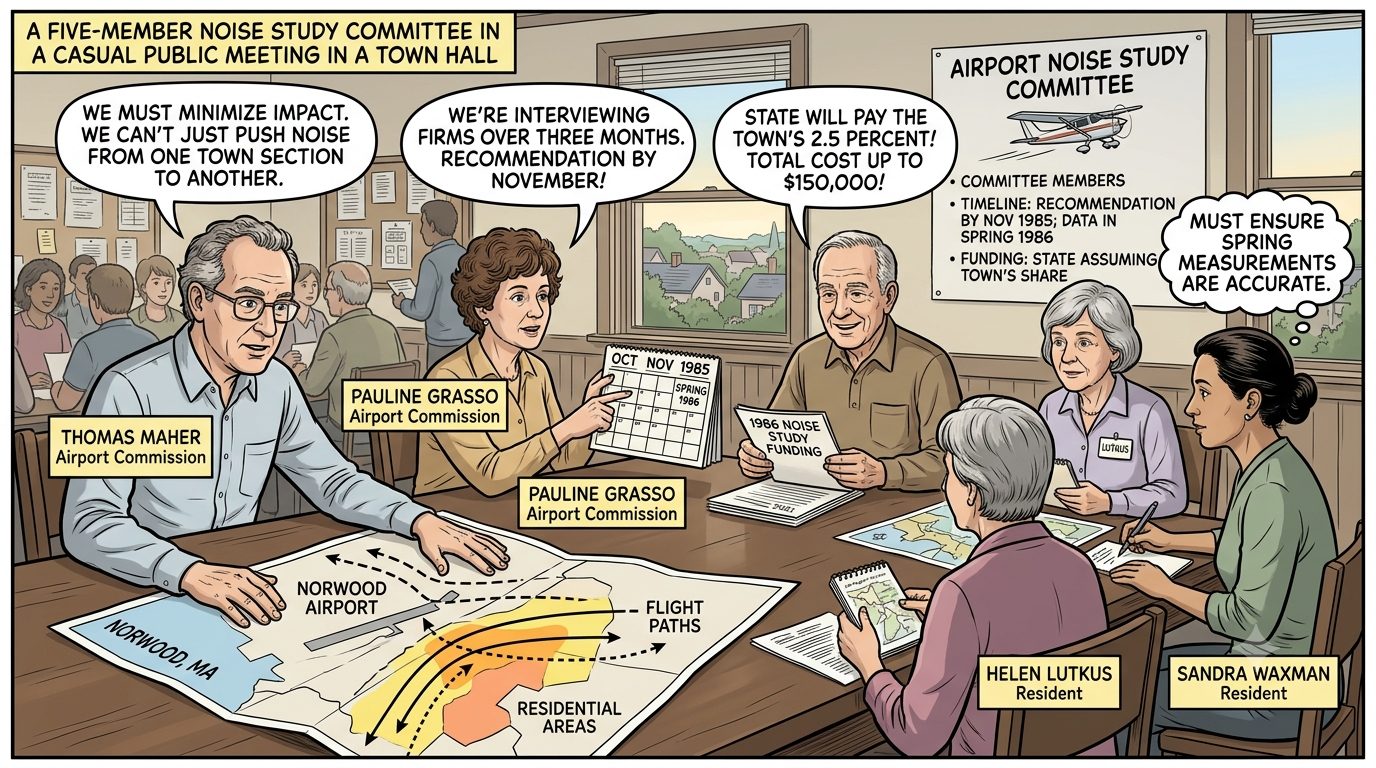
Airport Commission Plans Study of Airplane Noise for 1986-July 17, 1985
The study, planned for the spring of 1986, will assess flight paths and noise levels in response to persistent complaints from residents.
-
Airport Commission Deadlocks on FAA Visual Clearance Proposal as Runway Repairs Loom-September 3, 1981
Tension ran high at the municipal airport commission meeting as members deadlocked in a 3-3 tie vote over a Federal Aviation Administration proposal to reduce minimum visual clearance requirements at Norwood Airport. The FAA suggestion aimed to lower the required pilot visual range from one mile down to three-quarters of a mile once a modernized…
-
Emergency Taxiway Repairs Scheduled to Begin-August 21, 1980
Norwood Airport Commission Chairman Walter J. Grady secures $3,000 for emergency taxiway repairs ordered by the state after a bookkeeping mix-up.
-
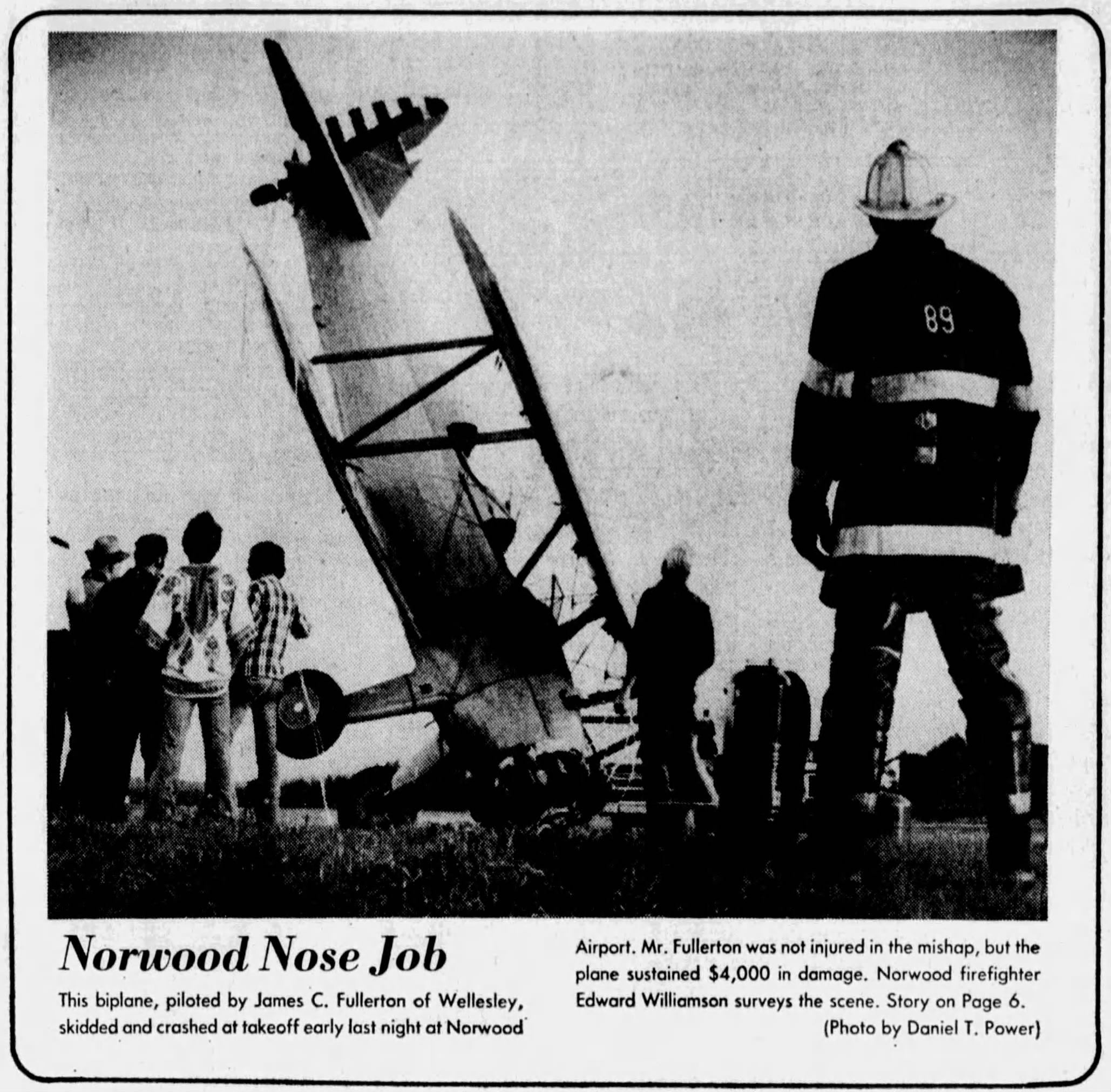
Wellesley Pilot Escapes Uninjured When Classic Biplane Crashes at Norwood Airport-September 10, 1976
Pilot James C. Fullerton escapes injury when his classic Steerman biplane ground-loops and crashes nose-down during takeoff at Norwood Airport, causing $4,000 in damage.
-
Vandalism Poses Constant Safety and Operational Concerns for Airport-August 21, 1976
Managing Norwood Airport comes with the persistent worry of vandalism, as Airport Manager Arnold Stymest contends with damaged runway lights, tampered navigational aids, and federal security risks.
-
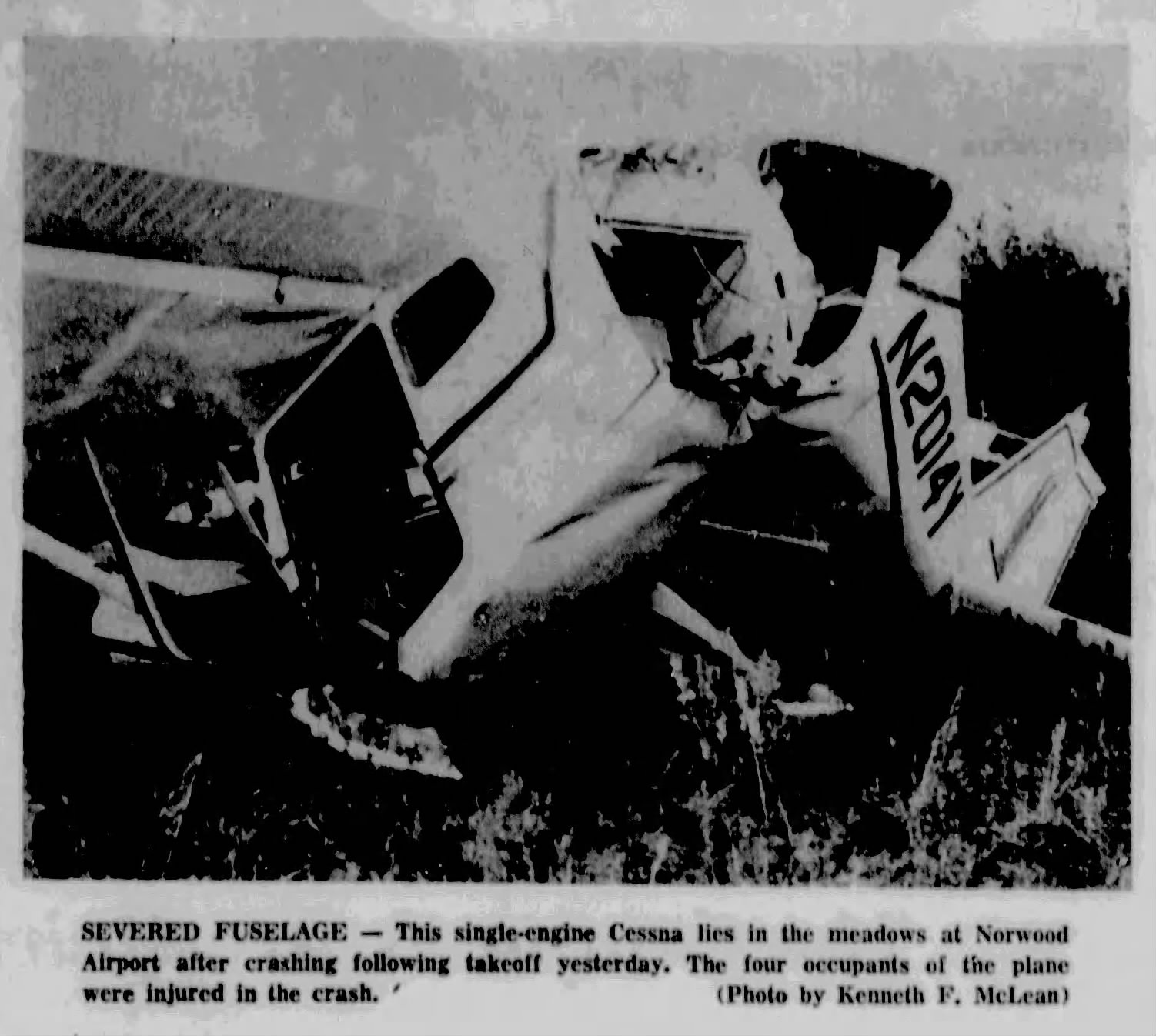
Four Injured in Small Plane Crash on Takeoff at Norwood Airport-October 21, 1974
Crash on Takeoff at Norwood Airport A small single-engine Cessna aircraft piloted by an off-duty state police helicopter pilot crashed shortly before 10 a.m. yesterday while taking off from Norwood Airport, injuring all four occupants on board. The pilot, Donald Cody, 30, of 37 Elm St., Foxboro, was flying his two sons and a family…
-
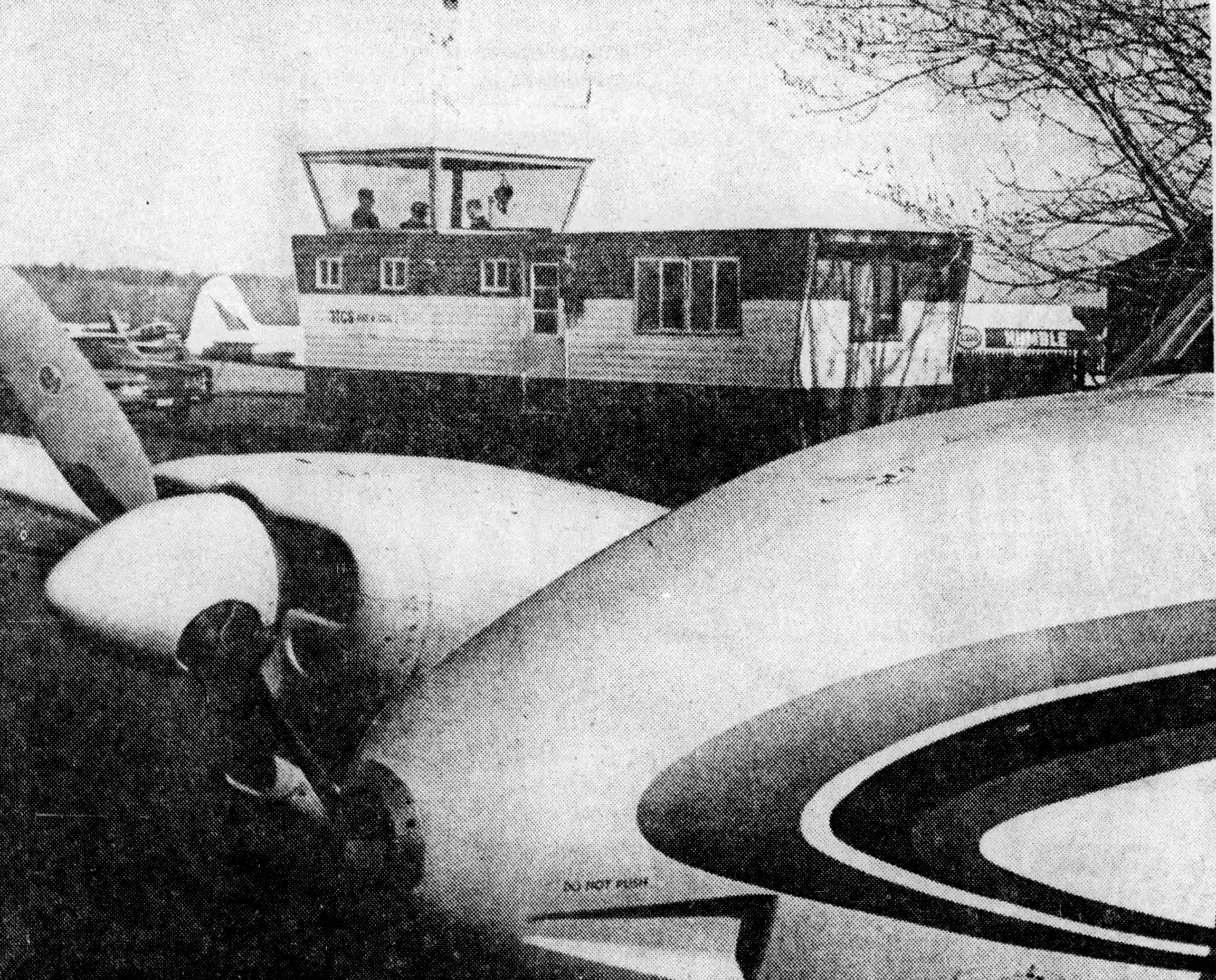
Airport Commission Votes Unanimously to Seek Near-Total Ban on Non-Compliant Jets-September 11, 1973
The Norwood Airport Commission unanimously votes to seek a near-total ban on non-compliant turbo-jet aircraft and debates control tower funding responsibilities.
Discover more from Norwood Historical Society
Subscribe to get the latest posts sent to your email.