
Insect populations around the globe may soon find themselves deeply frustrated if research chemist and inventor Dr. T. William Brooks has his way. Working at Conrel—a specialized research firm located on West Border Road in Norwood—Dr. Brooks is perfecting miniature “chemical time bombs” designed to slowly release synthetic insect odors that disrupt natural patterns of colonization, mating, and species communication. This cutting-edge approach promises to safeguard agricultural crops and forests, drastically reduce the reliance on harsh pesticides, and offer a major breakthrough for environmental ecologists.
Dr. Brooks specializes in insect pheromones, which are volatile organic chemicals naturally produced by insects to communicate via scent with members of their own species. Through collaboration between chemists and entomologists who isolate and synthetically reproduce these specific compounds, Dr. Brooks serves as venture manager to formulate controlled-release delivery mechanisms. He has successfully developed two primary delivery systems: a specialized tape attached to monitoring traps and tiny chopped fibers that can be broadcast across an entire field. In both applications, thread-thin hollow fibers inject the synthetic chemical to slowly release the odor, befuddling target pests. “We have to use just the right amount of the chemical, no more, no less,” Dr. Brooks explained, noting that each pheromone is strictly specific to a single insect pest.
The practical applications of these systems vary by deployment. Tapes attached to traps are primarily utilized to detect the earliest stages of an infestation, allowing farmers and land managers to apply insecticides selectively and intelligently rather than indiscriminately spreading poisons. Conversely, chopped fibers spread over expansive areas are deployed to suppress population growth by scrambling natural mating processes. By flooding an area with synthetic scents, male insects follow false trails instead of locating real females, effectively jamming communication and curbing reproduction. “This is a totally new approach,” Dr. Brooks emphasized. “We are not killing anything, just keeping the size of the population below a level that could be economically damaging. The insects will always be with us. It is only when they become too numerous that they have to be controlled.”
Conrel operates as an offshoot of the FRL fabric research firm in Dedham, with both entities falling under the Albany International conglomerate. The company has partnered extensively with the U.S. Department of Agriculture, academic institutions, and private research enterprises to test its controlled-release pheromone systems in the field. Current trials include widespread government-backed testing against gypsy moths in Massachusetts and Maryland, as well as defense programs protecting cotton crops from boll weevils and fruit orchards from pests attacking apples and pears.
Dr. Brooks noted that the global implications for food production are staggering, pointing out that roughly 50 percent of the world’s food supply is lost to insect damage annually. Furthermore, unlike broad-spectrum pesticides that indiscriminately devastate wildlife and beneficial insects, pheromones preserve the natural ecological balance. A modest inventor who attributes his success to a decade of foundational research in university and government laboratories, Dr. Brooks continues his work in Conrel’s bustling Norwood laboratory—surrounded by precision machinery, tubing, beakers, and creels of hollow fibers—bringing scientific discovery into practical application. While suburban gardeners cannot yet purchase pheromones at local hardware stores due to the large acreage required for effective dispersal, Dr. Brooks predicts that accessible consumer applications will eventually arrive. (Reporting by Nona Dearth, The Patriot Ledger).
Archival Note: This article has been dynamically reconstructed from the original public record print archives of the Patriot Ledger
More…
-
Legionnaire’s Disease Case Confirmed-July 9, 1977
Discover how local medical professionals successfully identified and treated a rare case of Legionnaire’s Disease in 1977, confirming the effectiveness of erythromycin treatment.

-
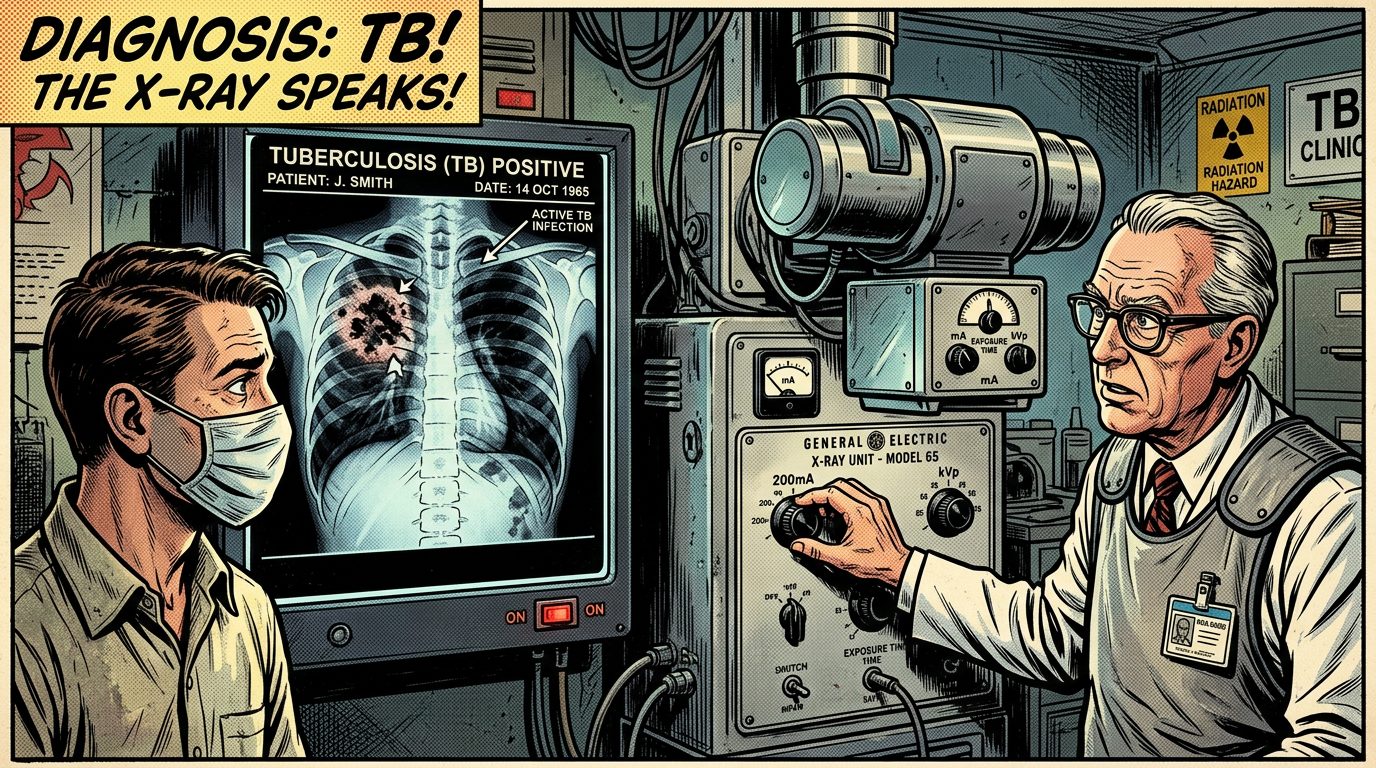
23 Positive TB Tests at High School-June 26, 1974
A massive public health sweep down at the high school tags twenty-three cases for clinical follow-up after an initial custodian exposure scare.
Discover more from Norwood Historical Society
Subscribe to get the latest posts sent to your email.