
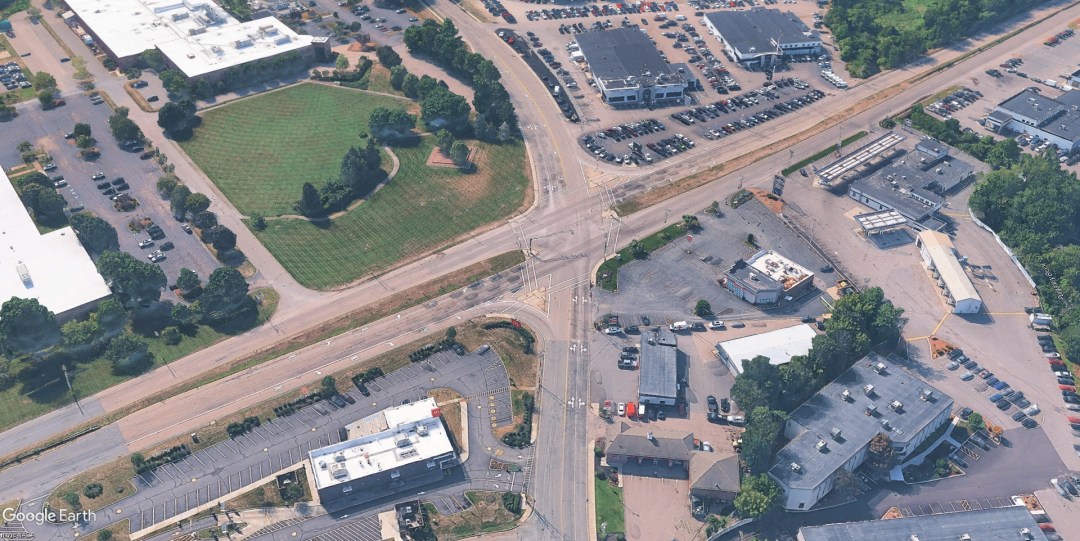
DPW Project Engineer Michael J. Mahoney Projects 20-Year Traffic Capacity Without Full Interchange as Town Seeks Additional Engineer
NORWOOD – Proposed state highway alterations at the intersection of Route 1 and Everett Street would safely accommodate local traffic flows for more than two decades—even with Polaroid Corp. opening a major new industrial complex nearby—state Department of Public Works (DPW) project engineer Michael J. Mahoney assured town and county officials in November 1968. Reported in The Patriot Ledger on Tuesday, November 19, 1968, Mahoney outlined the state’s engineering blueprint during a Monday night public hearing convened by the Norwood Planning Board and attended by selectmen and Norfolk County commissioners.
The hearing stemmed from an $8,000 Town Meeting appropriation passed the previous spring authorizing the Planning Board and selectmen to commission a private traffic safety survey of the corridor, which prompted the state DPW to conduct its own parallel engineering study. Mahoney explained that the state’s Chapter 90 improvement project called for widening Everett Street between Route 1A and Route 1 from its existing 40-foot width to 60 feet—a contract slated to go out to bid within the year—in anticipation of heavy commuter traffic generated by Polaroid’s multi-million-dollar industrial campus then under construction on the former Forbes Estate, once home to former U.S. Ambassador to Japan W. Cameron Forbes.
At the Route 1 junction itself, Mahoney stated that state plans called for a minor land taking on the northwesterly corner of Everett Street and Route 1 to round off the access road onto the highway, relocating existing small traffic islands, and creating dedicated left-turn “loading lanes” on both sides of Route 1. Mahoney dismissed proposals for a full grade-separated highway interchange at Everett Street as unwarranted, noting current traffic stood at roughly 28,000 vehicles daily—less than half the volume required before the state would consider building an interchange. Even after being informed that Polaroid expected to employ at least 1,200 workers at its Norwood complex, Mahoney maintained that widening Everett Street and reconfiguring the intersection would remain adequate “until 1990.”
However, Mahoney identified a major physical bottleneck along the Everett Street corridor: the low railroad bridge spanning Everett Street near Route 1A, which offered just 10.6 feet of vertical clearance whereas heavy commercial trucks required nearly 14 feet. Achieving full truck clearance, he warned, would eventually require the town to lower the street grade beneath the span.
Separately during the session, Town Manager Walter A. Blasenak informed planners that his office would assist the board and the town engineering department in recruiting an additional municipal engineer to help ease the mounting workload on Town Engineer Robert A. Hamilton and his four-man staff. Blasenak noted that recruiting qualified engineers at Norwood’s existing pay scale had proven difficult, setting a minimum starting salary of $12,000 for the new hire and adding that bringing in an engineer at that rate could prompt an upward pay reclassification across the entire engineering department.
1968 Municipal Figures Adjusted to 2026 Dollars & Corridor Legacy
Inflation-adjusted using U.S. Bureau of Labor Statistics CPI data ($1.00 in Nov. 1968 ≈ $9.23 in 2026)
| 1968 Municipal Appropriation / Salary Item | 1968 Amount | 2026 Equivalent |
|---|---|---|
| Minimum Starting Salary for Additional Town Engineer | $12,000 / yr | ~$110,760 / yr |
| Town Meeting Traffic Safety Survey Appropriation | $8,000 | ~$73,840 |
Archival Note: This article has been dynamically reconstructed from the original public record print archives of the Patriot Ledger
More…
-
Broken Water Main Leaves Norwood Hospital Without Sprinkler System for Hours-October 21, 1981
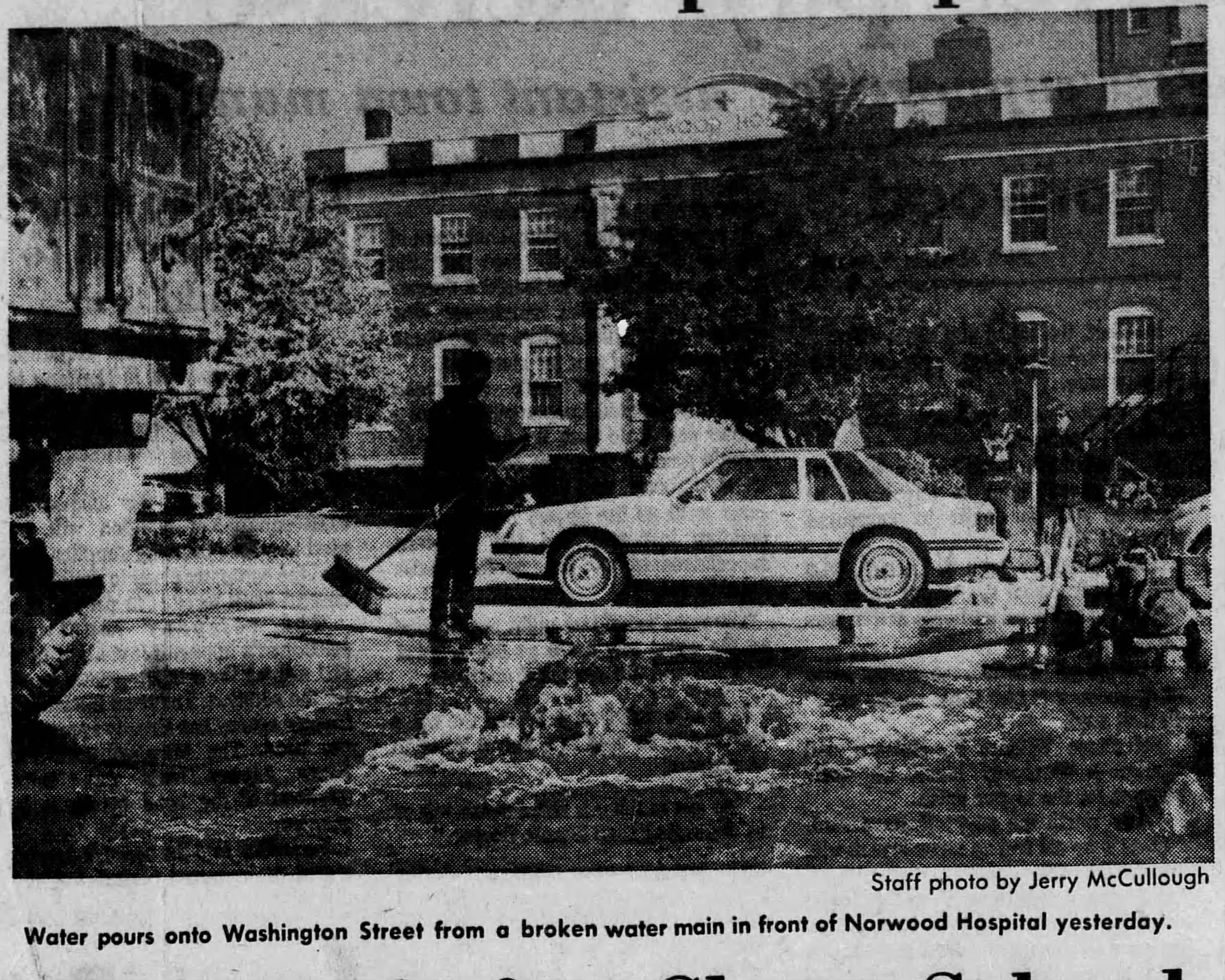
A water main break on Washington Street flooded the area, leaving Norwood Hospital without sprinkler coverage for hours while fire officials maintained a close watch.
-
$1.5 Million Uptown Washington Street Reconstruction and Traffic Improvement Project Scheduled to Begin by Spring 1982-September 10, 1981
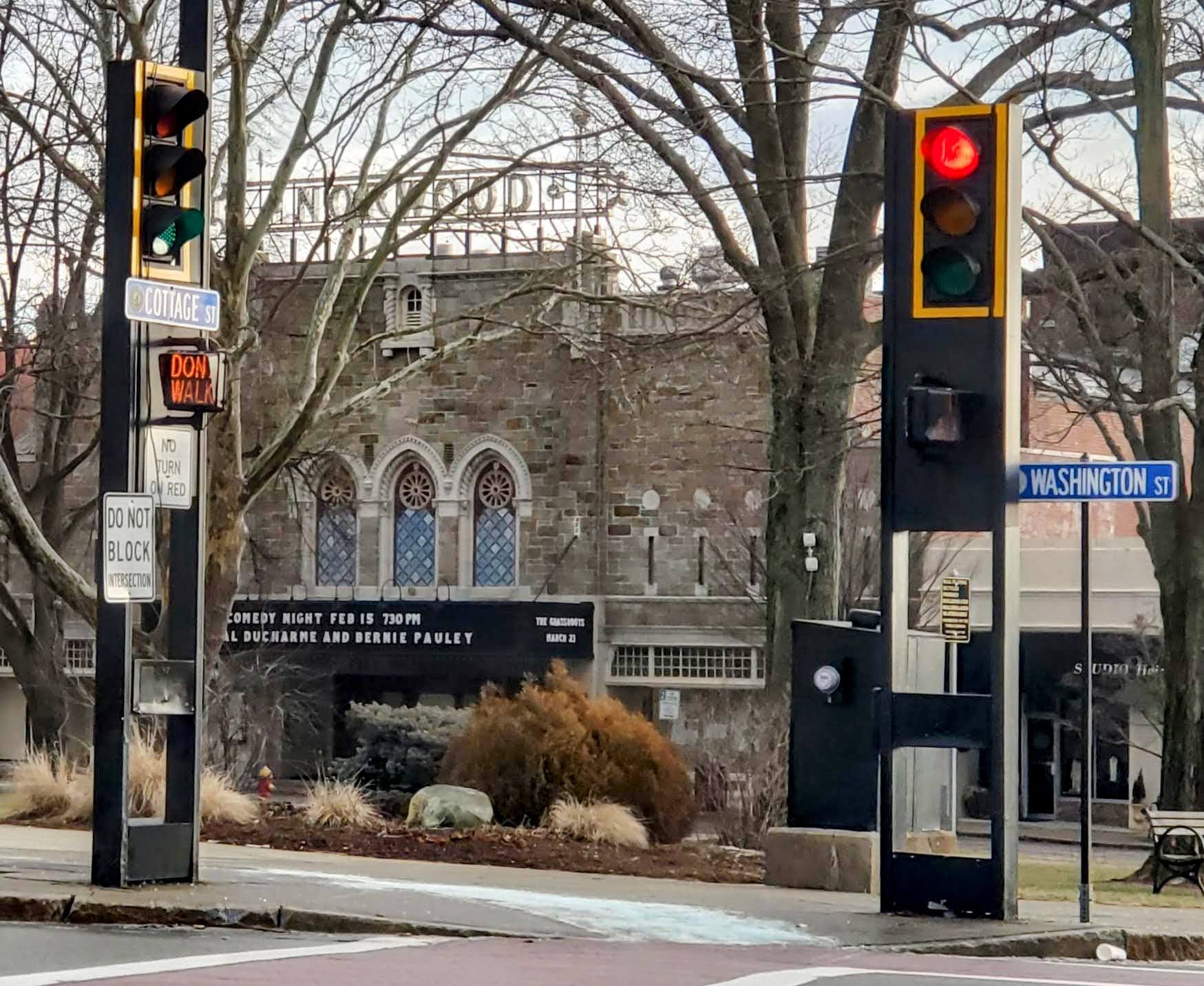
State and local officials outline a $1.5 million Washington Street reconstruction project at a public hearing, targeting spring 1982 construction for traffic and street improvements.
-
South Norwood Committee Seeks Private Funding to Clean Landmark Railroad Bridges-June 26, 1981
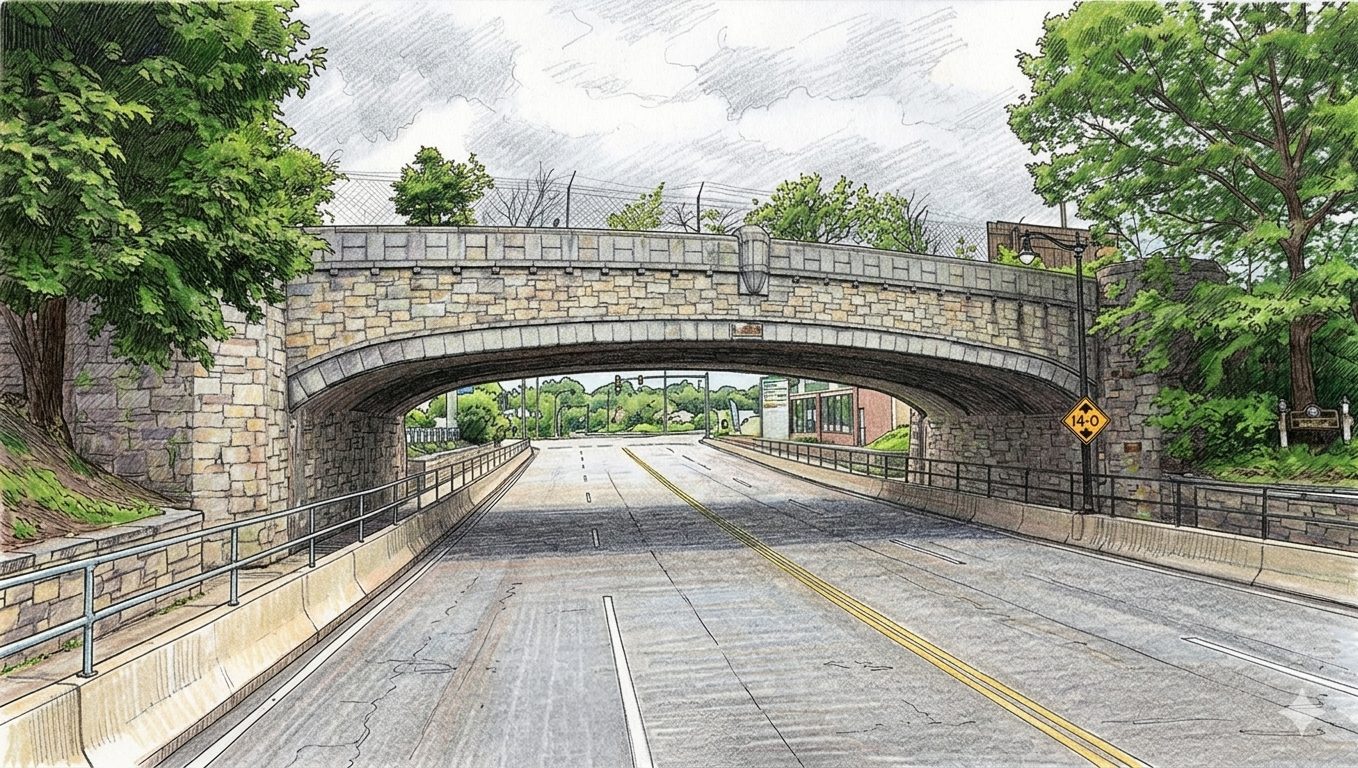
Faced with tight Proposition 2½ limits, South Norwood look to private donors to clean soot and graffiti off historic stone railroad spans.
-
Norwood Tests New Traffic Pattern at Subway Hill Intersection in South Norwood-October 29, 1980
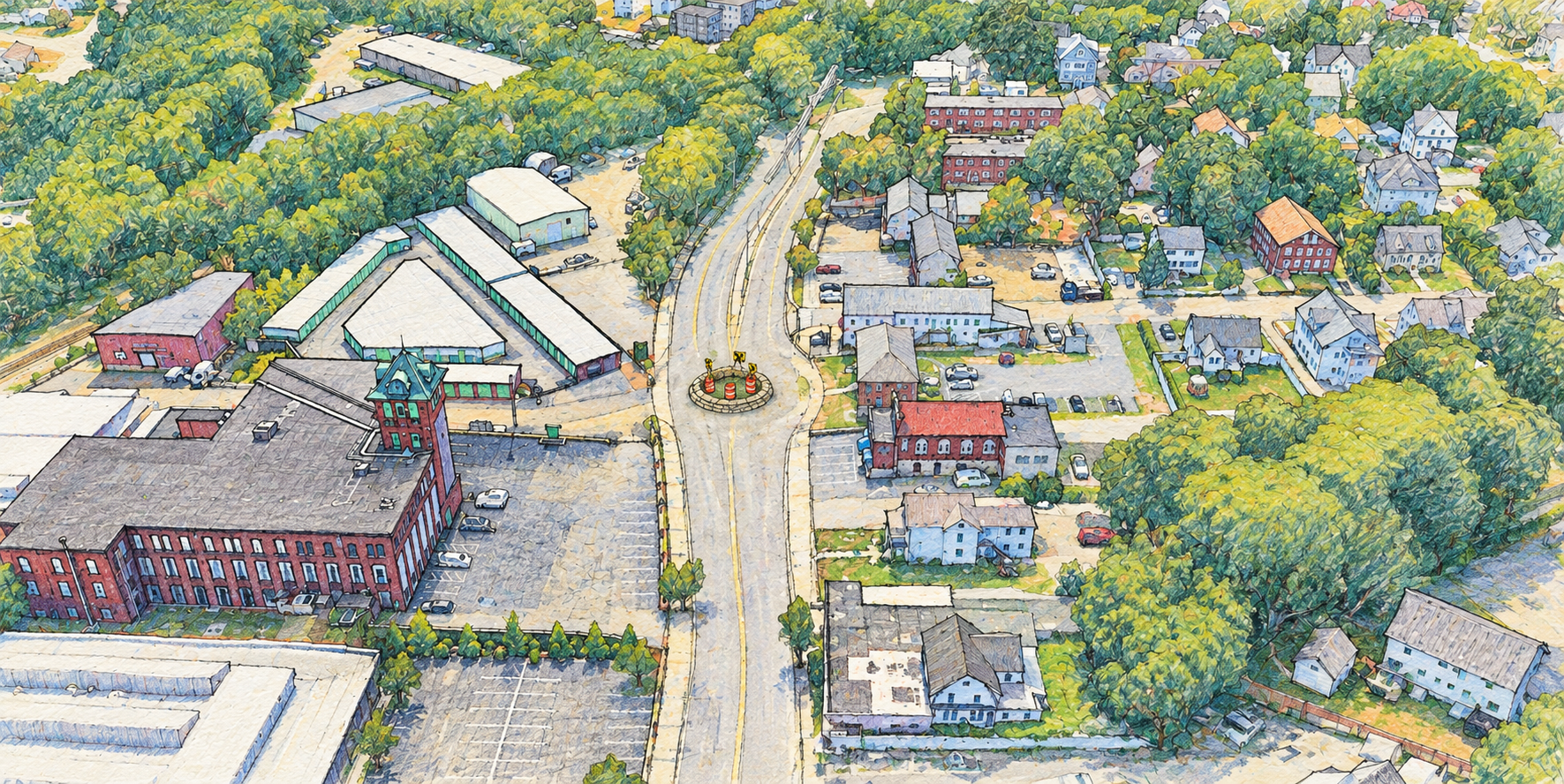
Following recommendations from the South Norwood study committee, selectmen approved a temporary traffic island experiment at Subway Hill to improve safety at Washington and Chapel streets.
-
Guild School Recreation Center Project & Eliot Field Renovation-August 26, 1980
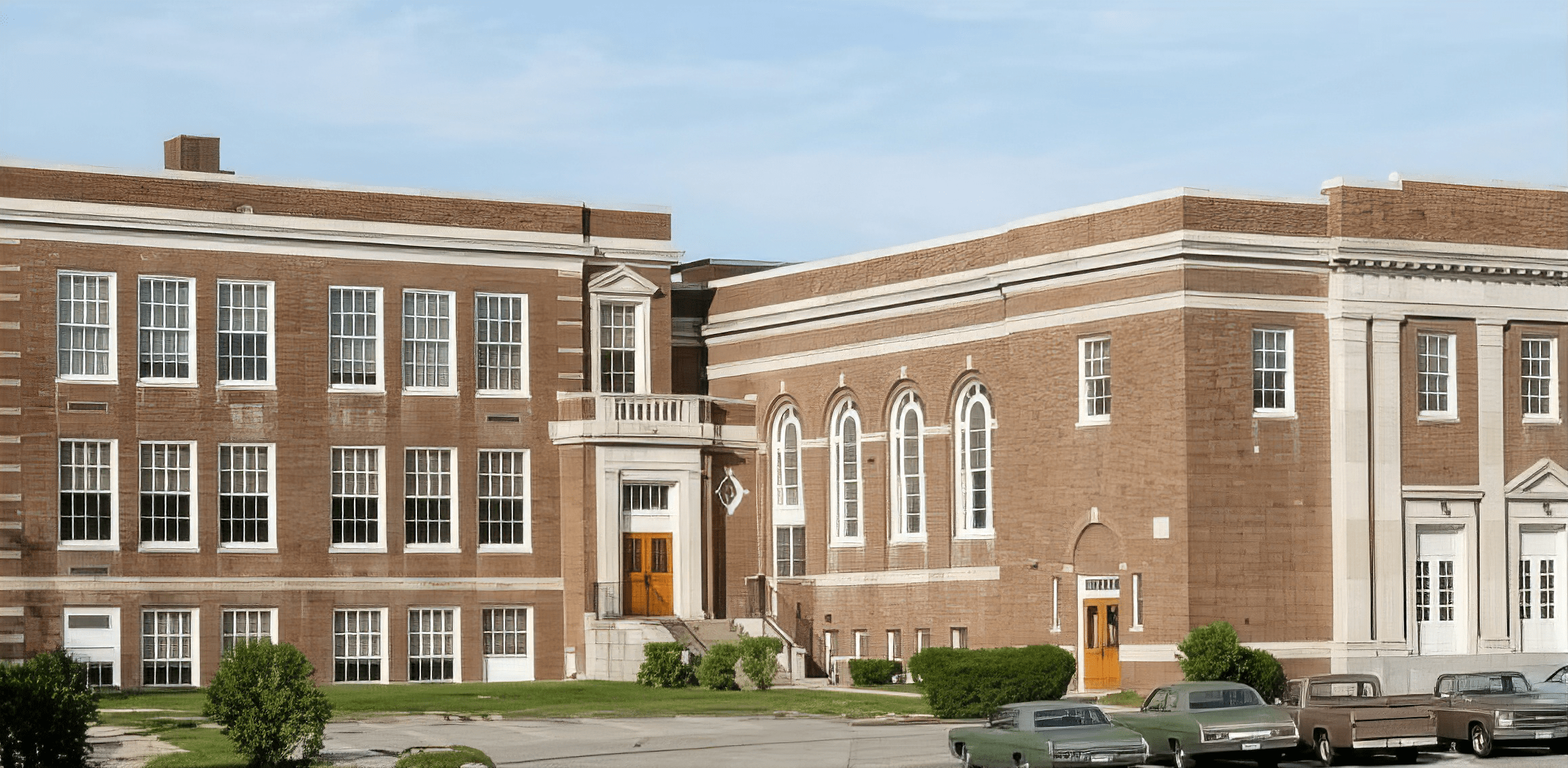
The Norwood Permanent Building Committee selected six architectural firms to interview for the Guild School renovation project, while Norwood Engineering secured the Eliot Field design contract.
-
Armory Still Eyed for Municipal Use-July 9, 1980
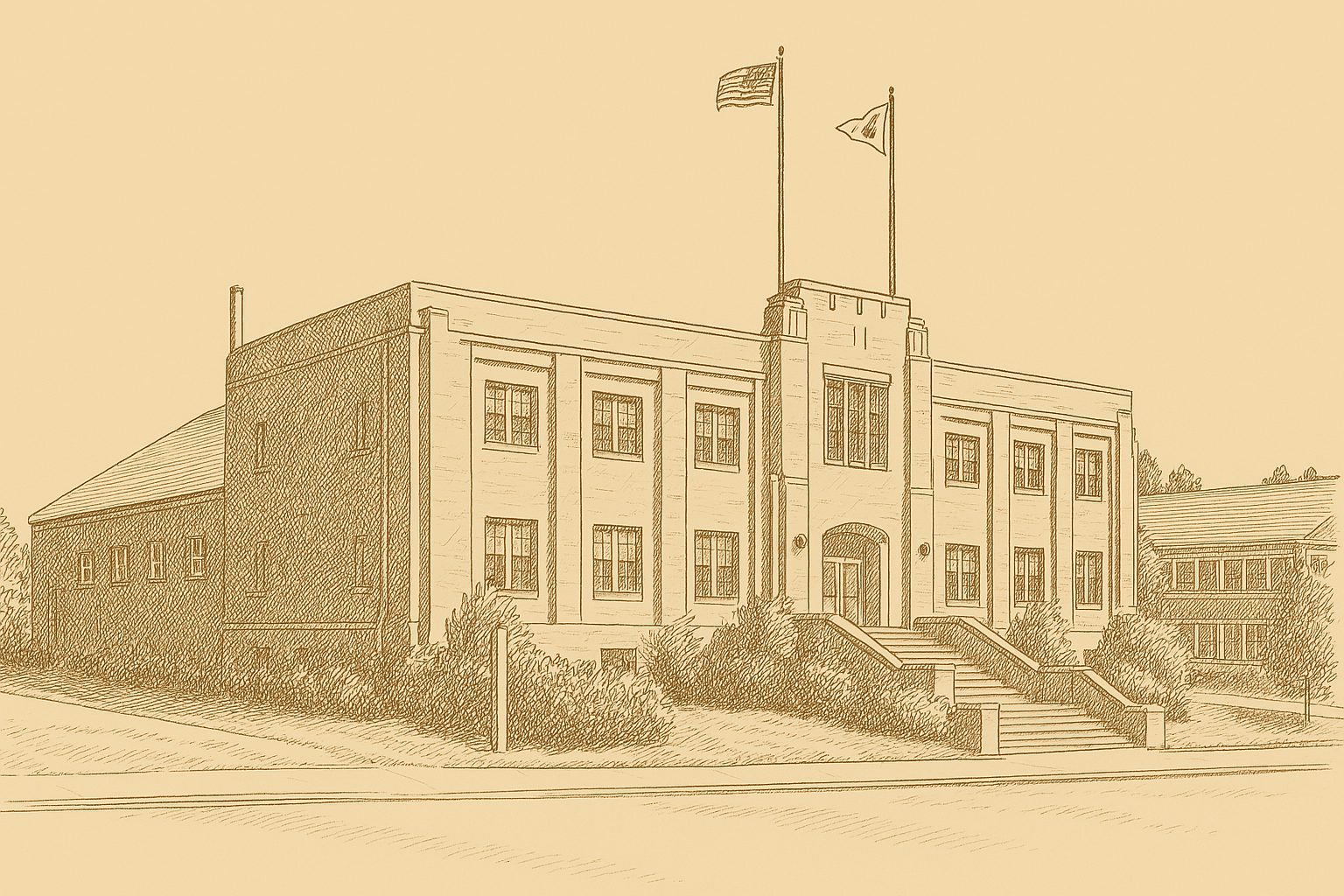
Discover the 1980 efforts by town leadership to acquire the Norwood Armory from the state, following legislative changes and the recent Civic Center location shift.
-
Guild School Picked for Civic Center-July 8, 1980
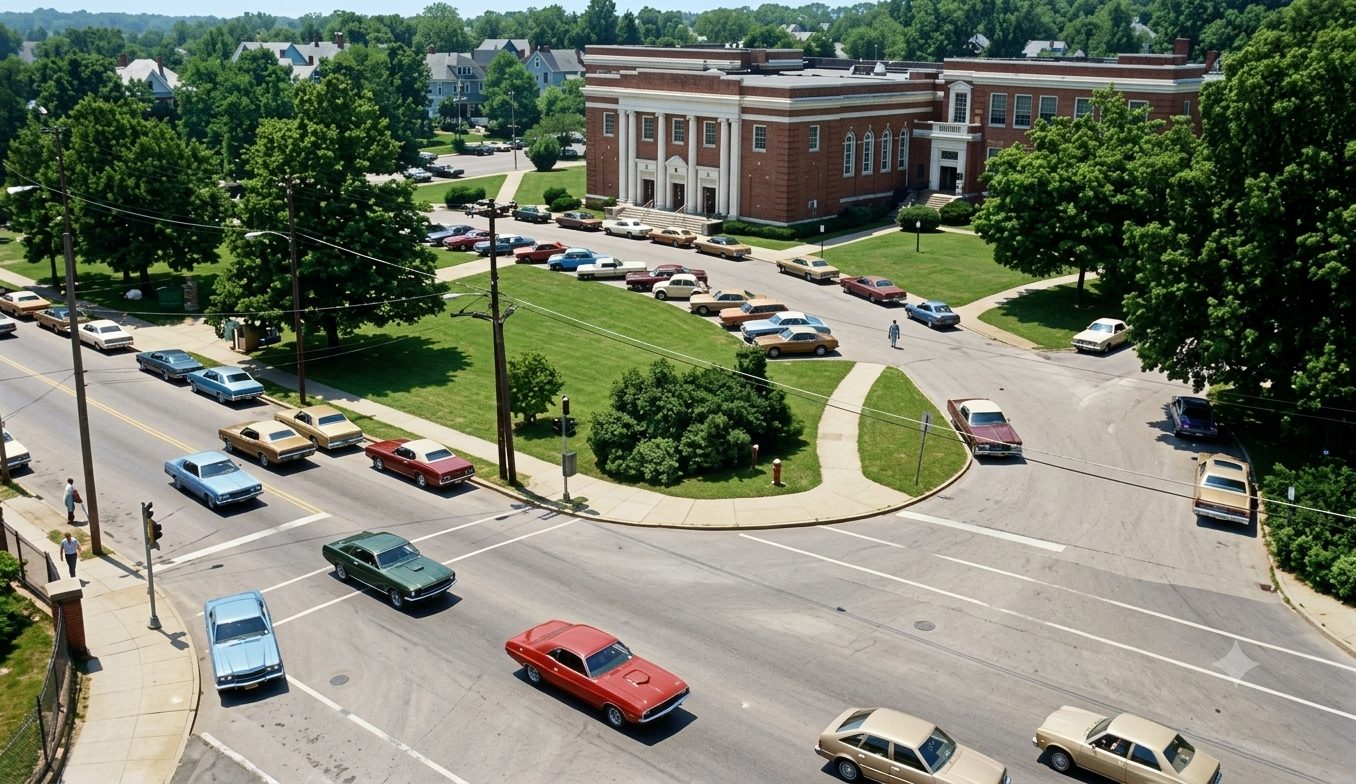
Discover the 1980 decision that transformed the Aaron Guild School into a multi-purpose recreation hub, replacing the former Civic Center sold to Norwood Hospital.
-
Only Two Norwood Intersections Qualify for Right Turns on Red Under New State Law-October 3, 1979
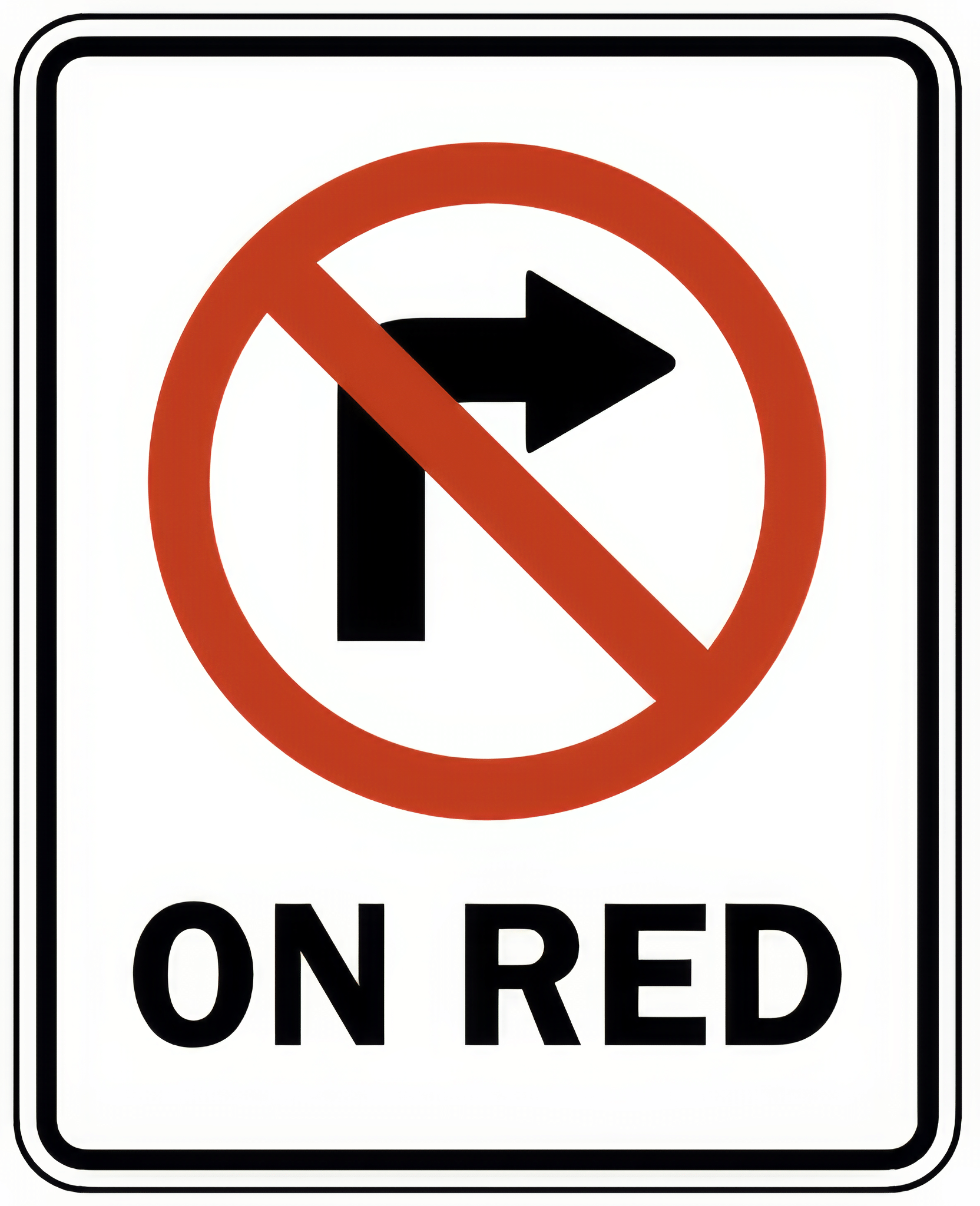
Following a town survey, Town Manager John J. Carroll announces that right-on-red turns will be permitted at only two Norwood intersections when the state law takes effect.
-
Norwood Selectmen Consider One-Way Traffic, Business District Upgrades-August 8, 1979

Building on the Washington Street revitalization project, Town Manager John J. Carroll proposed working with local merchants to secure a second Urban Systems grant for Nahatan Street improvements.
-
Road Resurfacing Project in Norwood-This Day In Norwood History-July 21, 1978

Faced with decades of neglected road maintenance, Norwood officials debated an ambitious $1.9 million resurfacing plan in 1978. While proponents saw it as a path to smooth roads, others questioned the feasibility of the massive effort.
Discover more from Norwood Historical Society
Subscribe to get the latest posts sent to your email.