
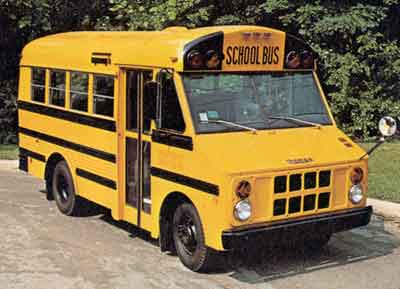
The dispute between the Norwood school committee and Security Transportation Inc., a transportation firm from Medford, Massachusetts, has reached a boiling point.
The company filed a lawsuit against the committee for allegedly improperly denying them the contract to transport special needs students. The controversy centers around the bid specifications, which require each bidder to submit three separate bonds, one for each part of the contract.
Security Transportation Inc., led by President Richard Zimmerman, claims that only one bond should have been required, citing a technicality in the bid process. According to Zimmerman, his firm’s bid was the lowest among all six bidders, with an estimated cost of $174,654 per year to $195,930, depending on the number of vehicles needed.
The school committee, however, awarded the three-year contract to Yellow Cab of Norwood, citing that Security Transportation Inc.’s bid did not meet the bid specifications. School business manager John F. Monahan rejected bids by Security Transportation and Cambridge Taxi due to their alleged failure to submit the required bonds.
Monahan stated that Town Counsel Justin C. Barton advised him that the bid could be rejected because three bonds should have been submitted. Kiessling School Transportation of WalpoleSecurity Transportation Inc. Lawsuit Challenges Norwood School Committee Bus Contract Award-July 31, 1981
⠀
A contentious public procurement dispute unfolded in Norwood as Security Transportation Inc. launched a legal challenge against the School Committee‘s decision regarding lucrative student transportation contracts. Another competing bidder alongside Yellow Cab had formally protested Security‘s initial bid, which might have led to its outright rejection even earlier if attention had not been called to specific administrative details.
The brewing controversy sparked a heated debate among local residents, with many publicly questioning the committee’s decision-making process and transparency. Zimmerman, representing the aggrieved firm, expressed deep frustration, stating that only a very small technicality was used to reject his company’s lower bid, resulting in an estimated loss of $127,000 in potential savings for the town of Norwood. The dispute highlighted the intricate complexities and financial stakes involved in municipal public procurement processes, especially as the school committee ultimately opted to award the contract to Yellow Cab despite Security Transportation Inc. submitting a lower financial bid.
Defending the committee’s broader strategy in an effort to reduce operational costs, School Superintendent Louis J. Taris suggested that consolidating all three parts of the transportation contract under a single firm could lead to more efficient operations and reduced administrative expenses. Meanwhile, Monahan strongly defended Yellow Cab‘s performance during the previous school year, noting that they maintained an excellent track record and did a fantastic job serving the district.
The formal lawsuit filed by Security Transportation Inc. sought to have the disputed contract completely rebid, with the firm additionally requesting that the committee be ordered to pay damages covering the profits they would have earned had they secured the contract. Legal experts noted that the outcome of the dispute would carry significant implications for the town of Norwood and its taxpayers. Observers also pointed to the broader historical context of public procurement in Massachusetts during the early 1980s, where tight municipal budgets and fiscal pressures—heavily influenced by tax limitation measures like Proposition 2 1/2—forced local governments to balance rigorous cost-efficiency with strict fairness, transparency, and adherence to bidding regulations.
Archival Note: This article has been dynamically reconstructed from the original public record print archives of the Patriot Ledger
-
School Committee Discloses Closed-Session Debate Over Elementary School Principalship Merger-August 25, 1967
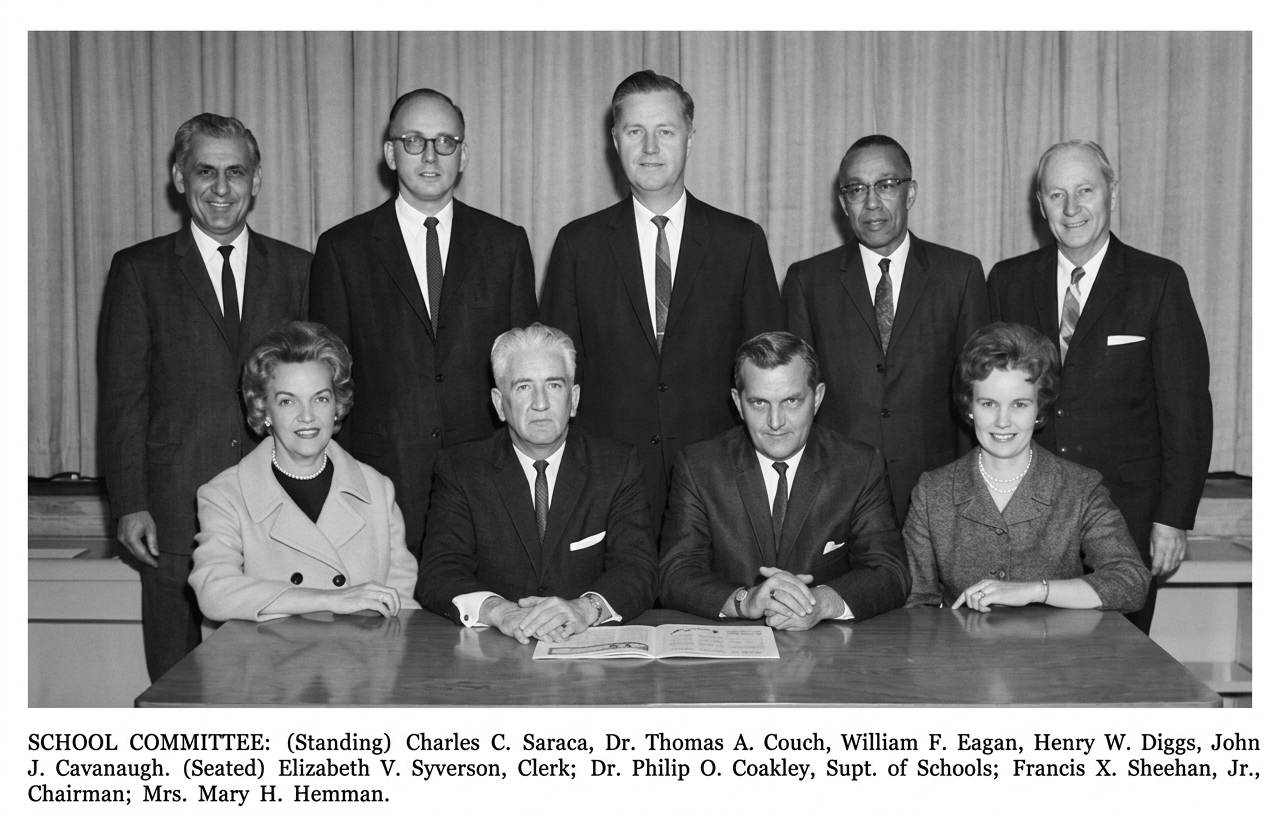
School committee minutes revealed a shelved plan to merge Shattuck and Winslow schools
-
School Committee Considers Sweeping Administrative Reorganization Plan-August 24, 1967
School Committee Chairman Francis X. Sheehan Jr. proposed a sweeping administrative reorganization creating an associate superintendent to streamline Norwood school management
-
Schools Prepare for 5th Annual New Teacher Orientation-August 22, 1967

Superintendent Dr. Philip O. Coakley welcomed 58 incoming educators at the fifth annual teacher orientation institute at Prescott School, introducing new faculty across secondary and elementary schools.
-
School Committee Inspects “Deplorable” Balch School, Demanding Immediate Repairs-October 27, 1966

Following a 90-minute inspection revealing rotting windows, cracked ceilings, and decaying staircases, the School Committee ordered immediate priority repairs for the 50-year-old Balch Elementary School.
-
Norwood Teachers Association Submits $1,000 Pay Increase Proposal-August 18, 1966

The Norwood Teachers Association submitted a $1,000-plus pay raise proposal as the school committee signed its first collective bargaining agreement amid debate led by John J. Cavanaugh and William Egan.
-
Andrew J. Ciarletta Jr. Appointed Principal of Winslow Elementary School-July 27, 1966

The Norwood School Committee appointed Andrew J. Ciarletta Jr. as principal of Winslow Elementary School, succeeding Alan R. Wonson.
-
“Middle School” Configuration Proposed to Address School Overcrowding-November 4, 1965

Norwood School Committee member William Egan proposed establishing a sixth-grade “middle school” and a 2,000-pupil high school to address surging enrollment pressures.
-
Retired Norwood Junior High Vice-Principal Mildred I. O’Donnell Honored at Testimonial Dinner-October 30, 1965
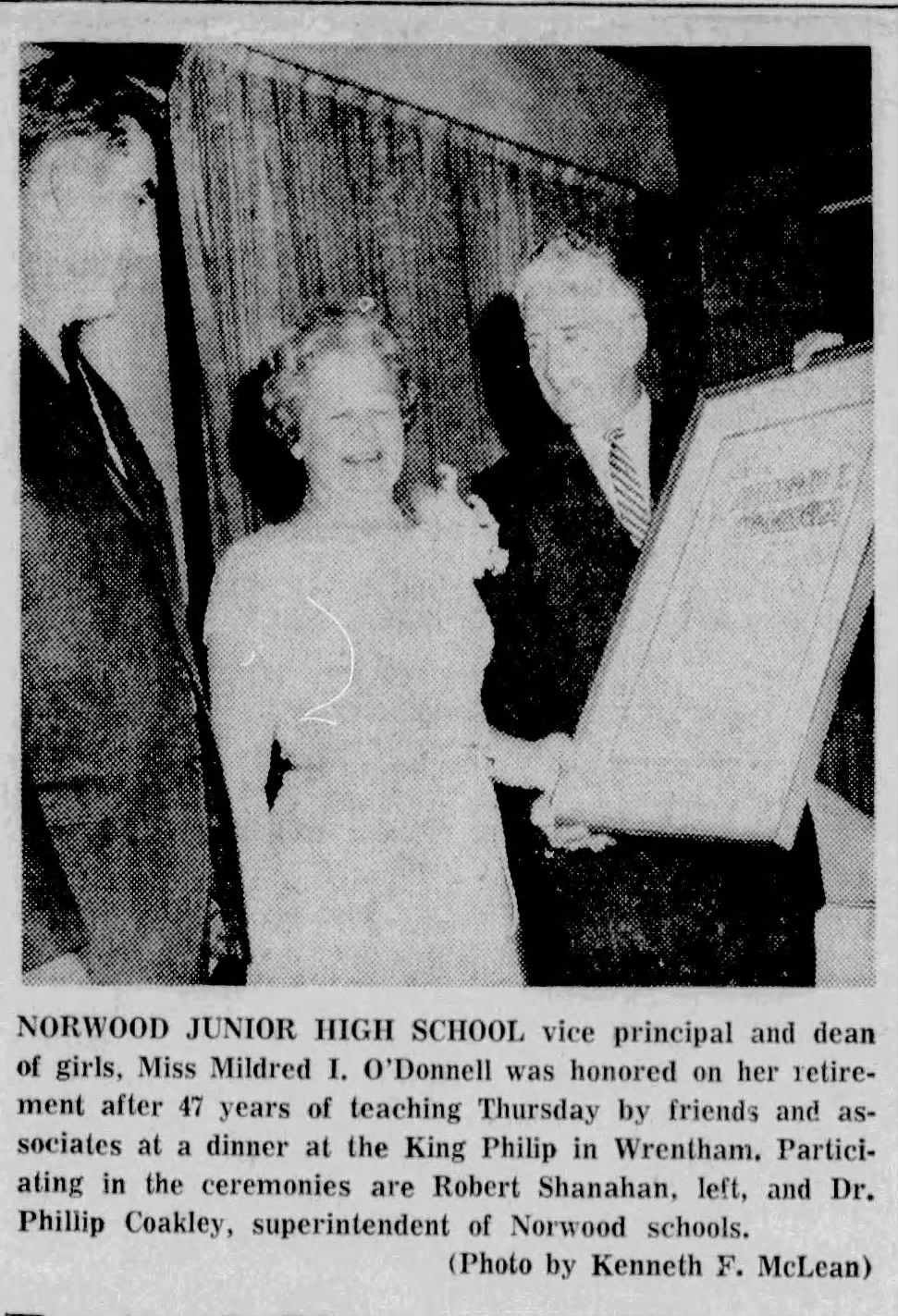
Celebrating a 47-year teaching career, retired Norwood Junior High vice-principal and dean of girls Mildred I. O’Donnell was honored during a testimonial dinner at the King Philip in Wrentham.
-
Superintendent Coakley Tells PTA Council That $4 Million in New School Construction Is Mandatory-September 10, 1965

Dr. Philip O. Coakley tells the PTA Council that $4 million in new school construction—including a new elementary and junior high—is mandatory to handle over-capacity enrollment.
-
Norwood School Committee Reviews Summer School Program and Proposes Token Fees-September 3, 1965

Following the successful completion of Norwood’s first town-sponsored summer school program—which enrolled approximately 330 local students in remedial coursework—the Norwood School Committee is evaluating future administrative structures, including a proposal to institute a nominal student fee. Superintendent Philip O. Coakley presented a comprehensive report detailing the inaugural summer session, noting that progress reports for every…
Discover more from Norwood Historical Society
Subscribe to get the latest posts sent to your email.