
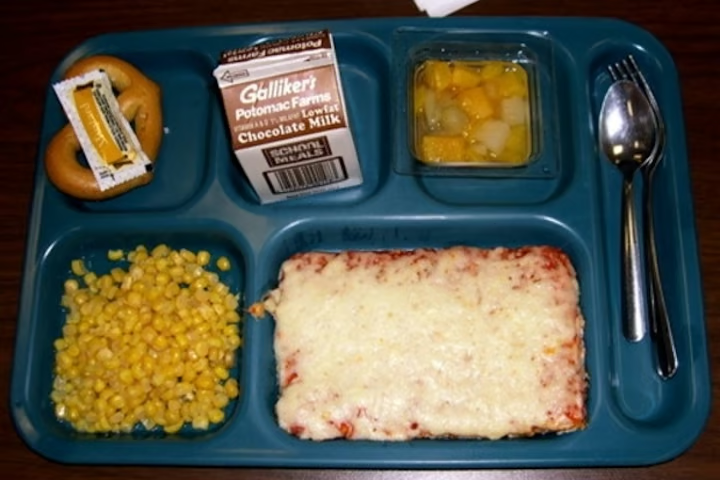
Parents of elementary school students in Norwood will need to continue packing brown-bag lunches for the start of the academic year. School Superintendent Philip O. Coakley announced that the town will fail to meet the state-mandated September deadline for implementing a universal public school hot lunch program, exposing the municipality to potential legal action by the state attorney general’s office.
Supply Delays and Administrative Hurdles
The system-wide lunch initiative—which relies on a satellite system centered at the Balch School, equipped with a walk-in freezer and heating ovens to ferry ready-to-serve meals to other facilities—has stalled due to supply chain issues. A Rhode Island-based firm contracted to supply ovens and refrigerators has experienced severe manufacturing and delivery delays, while the town has yet to officially award a contract to a food service vendor to supply the prepackaged meals.
School Committee Chairman Rudith M. Berkowitz expressed surprise at the equipment delay, speculating that labor strikes or overwhelming regional demand might be to blame. She noted that because the town manager serves as the municipal purchasing agent, the school committee has faced disadvantages in tracking contract bids, despite having completed specifications well before the special town meeting in May appropriated $115,000 for equipment and a transport truck (with 75 percent reimbursable by the federal government, netting a town cost of $29,000).
State Refuses Extensions and Threatens Legal Action
Under a 1970 state law mandating public school lunch programs, John Stalker, food services director for the State Department of Education, stated that the statute contains no provisions for waivers or deadline extensions. Because the law sets a general September target, the department established September 30 as the strict cutoff point.
Stalker warned that names of all non-compliant towns will be forwarded directly to the attorney general’s office for potential legal action. Citing the precedent set with Boston the previous year, Stalker noted the attorney general could threaten a lawsuit or force tardy school systems to purchase cold lunches from outside caterers. Superintendent Coakley confirmed he requested an extension from the state but has received no response.
While existing hot lunch programs at the Senior High School, Junior High North, and Callahan School will resume when classes start on Wednesday, seven elementary schools must wait:
- Winslow School
- Oldham School
- Shattuck School
- Balch School
- Willett School
- Cleveland School
- Prescott School
When asked if parents would be notified of the delay before Wednesday, Chairman Berkowitz remarked, “I hadn’t thought of that. It might be a good idea,” though she expressed belief that most families anticipated packing lunches anyway.
Anticipated Milk Price Hike
Adding to family expenses, Norwood school children who bring lunches from home may face a steep 6-cent increase in the price of milk, jumping from 4 cents to 10 cents per half-pint container. Chairman Berkowitz indicated the hike is driven by rising supplier costs and congressional delays in reauthorizing federal food subsidies, which under current House versions remove price supports for a la carte milk. For a family with two children buying milk daily, the increase would raise annual milk costs from $14.40 to $36.00—or up to $72.00 if recess milk is included. Furthermore, soaring food costs and static federal meal subsidies are forcing Norwood to explore cost-saving measures to preserve the current 30-cent school lunch price.
Archival Note: This article has been dynamically reconstructed from the original public record print archives of the Patriot Ledger
-
Schools Prepare for 5th Annual New Teacher Orientation-August 22, 1967

Superintendent Dr. Philip O. Coakley welcomed 58 incoming educators at the fifth annual teacher orientation institute at Prescott School, introducing new faculty across secondary and elementary schools.
-
School Committee Inspects “Deplorable” Balch School, Demanding Immediate Repairs-October 27, 1966
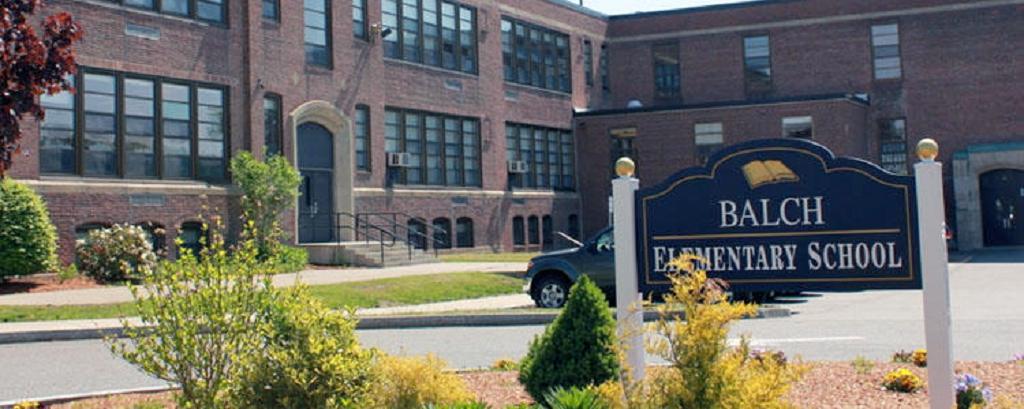
Following a 90-minute inspection revealing rotting windows, cracked ceilings, and decaying staircases, the School Committee ordered immediate priority repairs for the 50-year-old Balch Elementary School.
-
Norwood Teachers Association Submits $1,000 Pay Increase Proposal-August 18, 1966

The Norwood Teachers Association submitted a $1,000-plus pay raise proposal as the school committee signed its first collective bargaining agreement amid debate led by John J. Cavanaugh and William Egan.
-
Andrew J. Ciarletta Jr. Appointed Principal of Winslow Elementary School-July 27, 1966
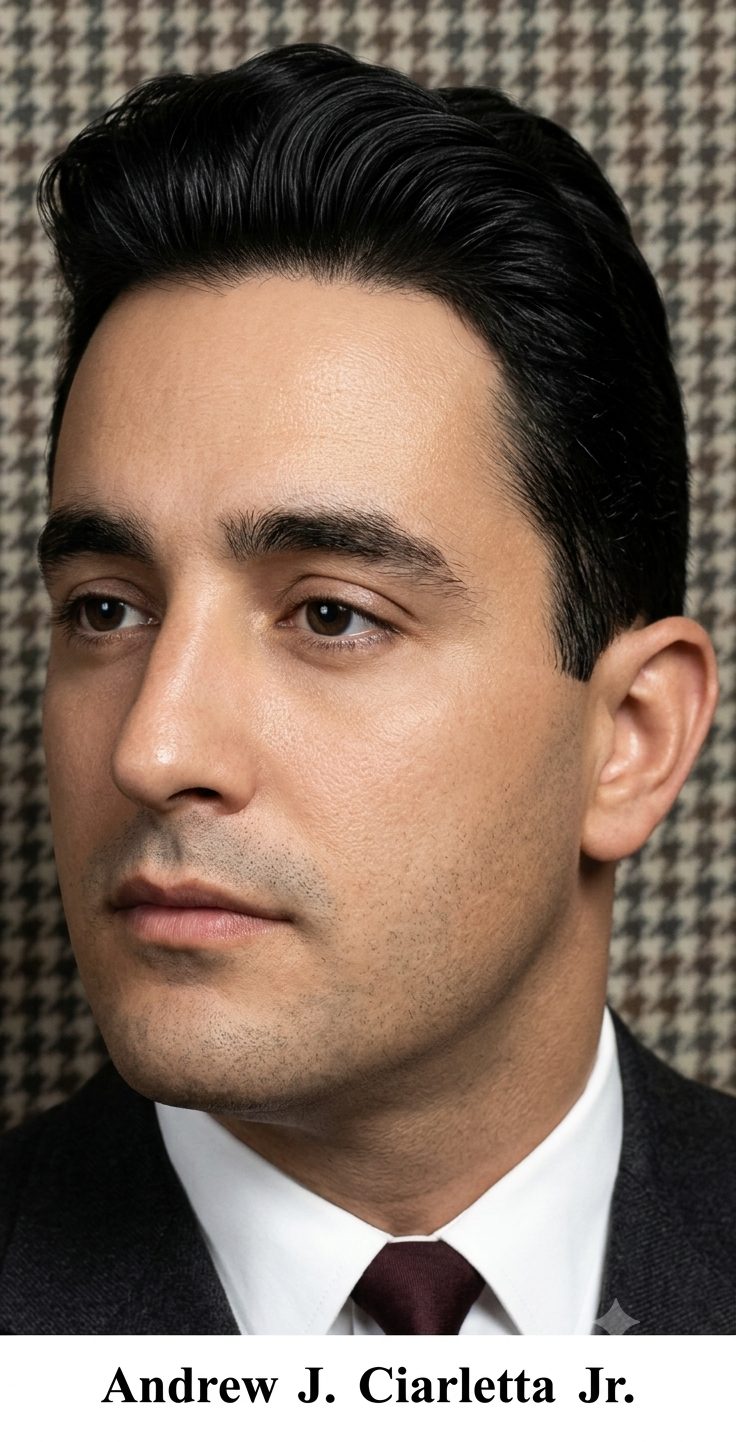
The Norwood School Committee appointed Andrew J. Ciarletta Jr. as principal of Winslow Elementary School, succeeding Alan R. Wonson.
-
Thirteen Norwood High Class of 1965 Graduates Earn College Advanced Placement Honors-November 20, 1965
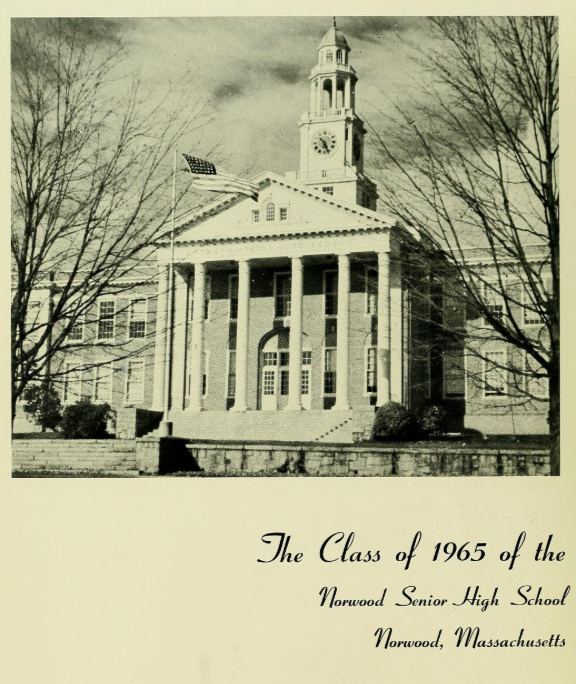
Twelve Norwood High Class of 1965 freshmen at the University of Massachusetts received advanced placement in November 1965, while Gerald Belastock earned sophomore math standing and 20 credits from Carnegie Institute of Technology.
-
“Middle School” Configuration Proposed to Address School Overcrowding-November 4, 1965

Norwood School Committee member William Egan proposed establishing a sixth-grade “middle school” and a 2,000-pupil high school to address surging enrollment pressures.
-
Retired Norwood Junior High Vice-Principal Mildred I. O’Donnell Honored at Testimonial Dinner-October 30, 1965
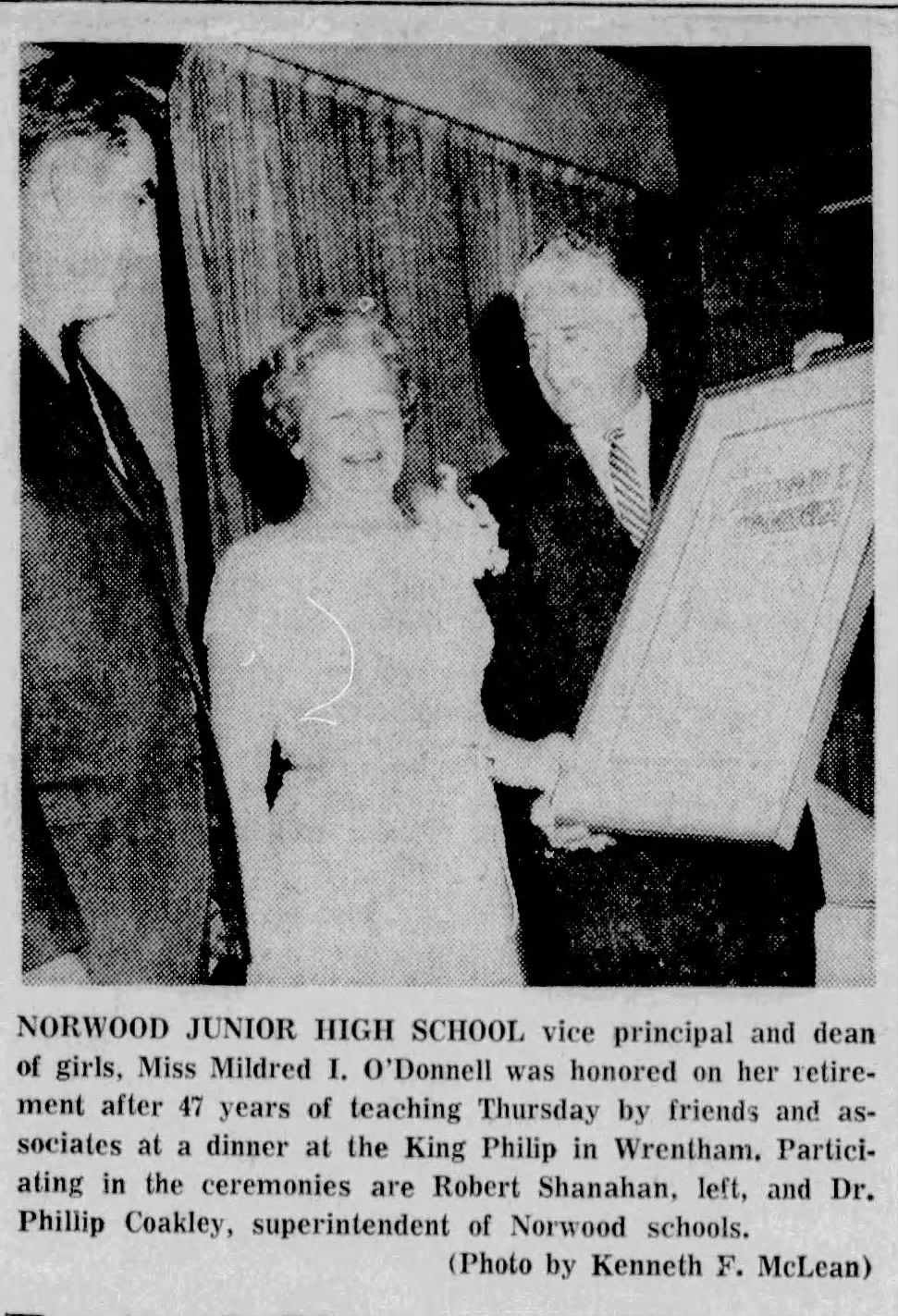
Celebrating a 47-year teaching career, retired Norwood Junior High vice-principal and dean of girls Mildred I. O’Donnell was honored during a testimonial dinner at the King Philip in Wrentham.
-
Superintendent Coakley Tells PTA Council That $4 Million in New School Construction Is Mandatory-September 10, 1965

Dr. Philip O. Coakley tells the PTA Council that $4 million in new school construction—including a new elementary and junior high—is mandatory to handle over-capacity enrollment.
-
Norwood School Committee Reviews Summer School Program and Proposes Token Fees-September 3, 1965

Following the successful completion of Norwood’s first town-sponsored summer school program—which enrolled approximately 330 local students in remedial coursework—the Norwood School Committee is evaluating future administrative structures, including a proposal to institute a nominal student fee. Superintendent Philip O. Coakley presented a comprehensive report detailing the inaugural summer session, noting that progress reports for every…
-
School Wiring Hazard Suspected at Norwood Junior High-September 3, 1965
Expressing deep concern over aging infrastructure, the Norwood School Committee has called for an immediate investigation into potential electrical wiring hazards at the Norwood Junior High School to determine whether emergency repairs are urgently required. The inquiry was initiated after Superintendent of Schools Philip O. Coakley delivered an alarming report on the condition of the…
Discover more from Norwood Historical Society
Subscribe to get the latest posts sent to your email.