
For Francis “Chip” Faulkner, Proposition 212 “is the best answer.” For State Representative Gerald Cohen, it is “a pick and poke program designed for chaos.”
The two figures met in an often-heated debate last night at Norwood Town Hall to spar over the controversial tax limitation ballot initiative. Sponsored by the Democratic Town Committee and open to the public, the forum drew a crowd of about 100 residents.
(Note: Proposition 212 proposed capping property taxes at 2.5 percent of a town’s fair market value, reducing the motor vehicle excise tax to $25 per $1,000, ending school committee fiscal autonomy, and abolishing compulsory binding arbitration for police and fire personnel.)
Proponents Argue Relief is Vital
Faulkner, associate director of Citizens for Limited Taxation—the group backing Proposition 212—opened the debate by attacking the existing property tax structure as “the most regressive and unfair tax we have,” likening it to an annual sales tax paid on a home.
“It is especially unfair to senior citizens living on fixed incomes,” Faulkner argued. “When government is asked to cut back, it wheedles and complains it can’t. But it asks senior citizens and low-income people to cut back another $600 or so.”
Faulkner also blamed high state taxes for driving residents and high-tech industries toward New Hampshire, pointing to waste in welfare spending and hiring. Dismissing critics, he added, “This may not be a perfect bill. We are amateurs. The legislators are professionals. They met, raised your gas tax, gave themselves a raise and went home. That’s professional. Proposition 2 1/2 is the best answer.”
Opponents Warn of Municipal Chaos
Rep. Gerald Cohen—an Andover Democrat and chairman of the House Taxation Committee—strongly countered that the measure was “calculated to create chaos in Norwood.”
“If 20 or 25 percent of the local budget is cut, then the police, fire, and school departments will have to fight it out between themselves to see who gets what. This is no bag full of lollipops,” Cohen warned.
Addressing claims that the state would bail out municipalities with additional local aid, Cohen challenged the premise: “Where do you think that money’s coming from? It’s coming from higher sales taxes and increased fees of every kind, and I will vote against that.” He concluded by calling the measure “the wrong thing at the wrong time” that would hurt vulnerable populations.
Local Questions and Audience Engagement
During the question-and-answer session, Norwood State Representative Gregory Sullivan pressed Faulkner from the audience: “In a town as frugal as Norwood, where would you suggest cuts be made?”
Faulkner replied that he would not presume to dictate cuts, adding, “Every town has its ’empire’ and if you ask people who’ve lived in town 15 or 20 years, they’ll know where it is.”
Another resident, Tom Nutting of 24 Lydon Road, questioned whether Norwood residents—whose property was then assessed at 2.2 percent of full market value—might end up paying higher taxes under the 2.5 percent cap. Faulkner responded that the outcome would depend entirely on where the town chose to implement spending reductions.
Archival Note: This article has been dynamically reconstructed from the original public record print archives of the Patriot Ledger
-
George C. Wallace Brings Presidential Bid To Norwood-July 10, 1968
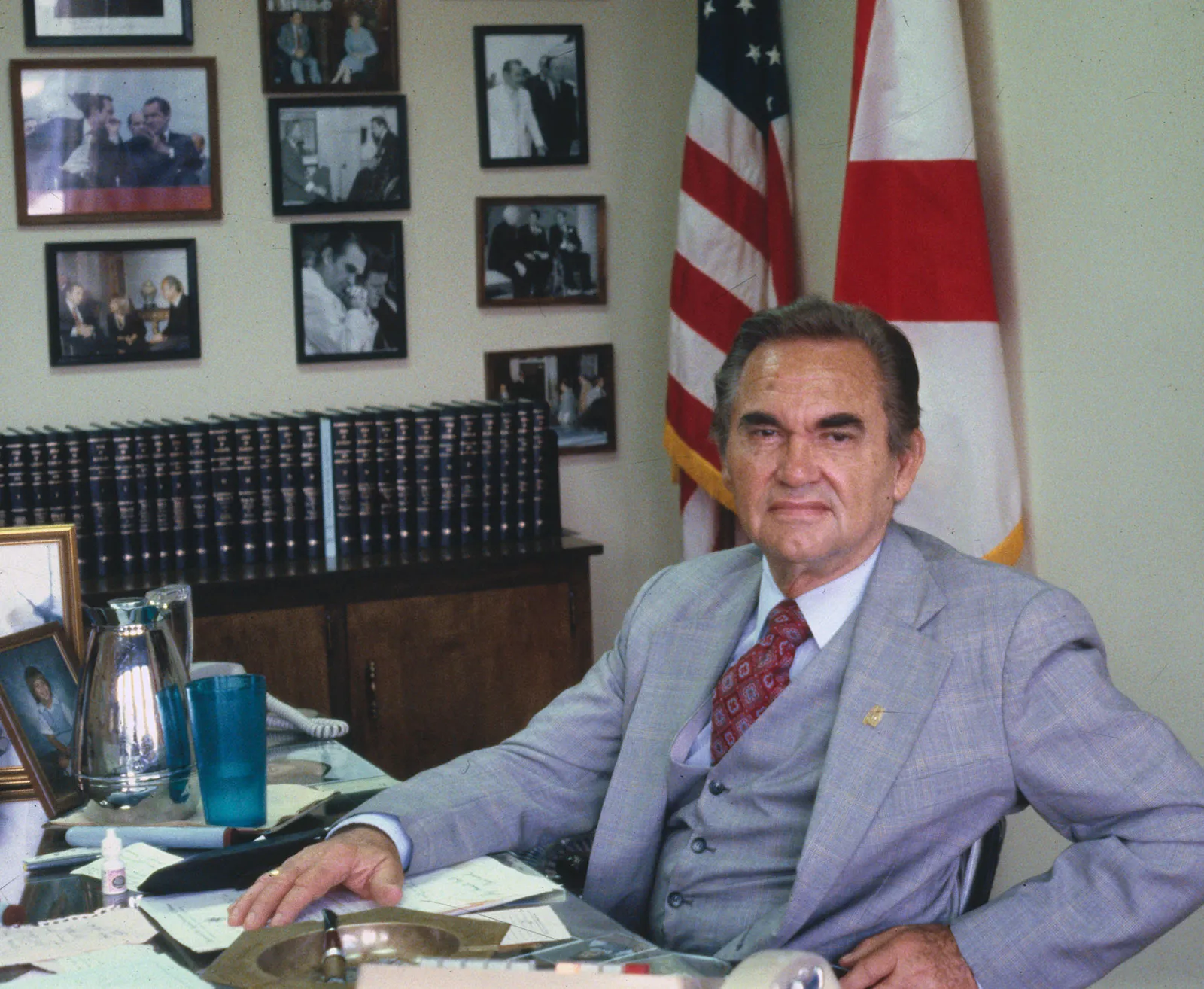
On July 10, 1968, residents of Norwood and surrounding towns prepared for a visit from former Alabama Governor George C. Wallace, who was scheduled to bring his presidential campaign to the region the following day. As part of his effort to secure the 61,238 signatures required to place his name on the state election ballot,…
-
Prominent Norwood Civic Leader and Philanthropist Dr. Lewis J. Danovitch Passes Away at 65-October 21, 1966
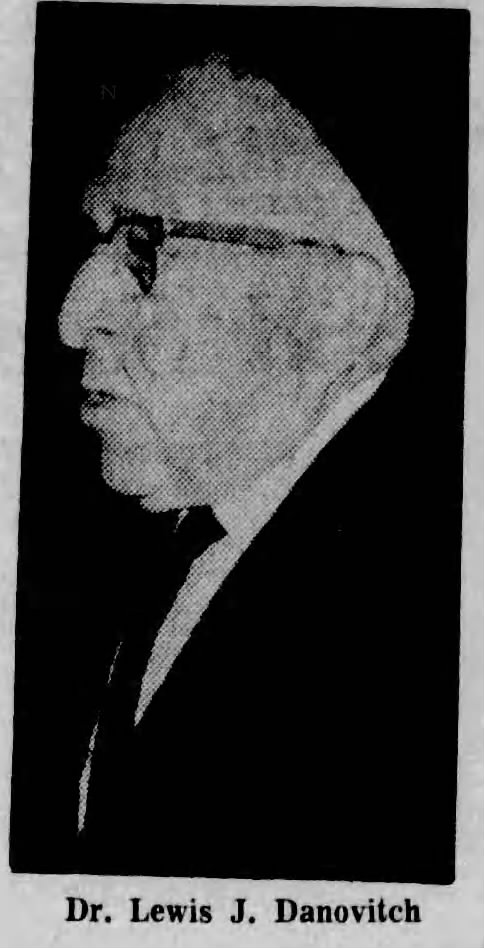
A Lifelong Dedication to Dentistry and Community Leadership Dr. Lewis J. Danovitch, 65, of 62 Walpole St.—a prominent philanthropist, civic leader, and longtime dentist—died yesterday at Norwood Hospital following a brief illness. Born in Boston, Dr. Danovitch practiced dentistry in Norwood for over four decades following his graduation from Harvard Dental School in 1922. A…
-
Governor John A. Volpe Surprises Newlyweds and Greets Shoppers During Norwood Dollar Days Visit-October 17, 1966
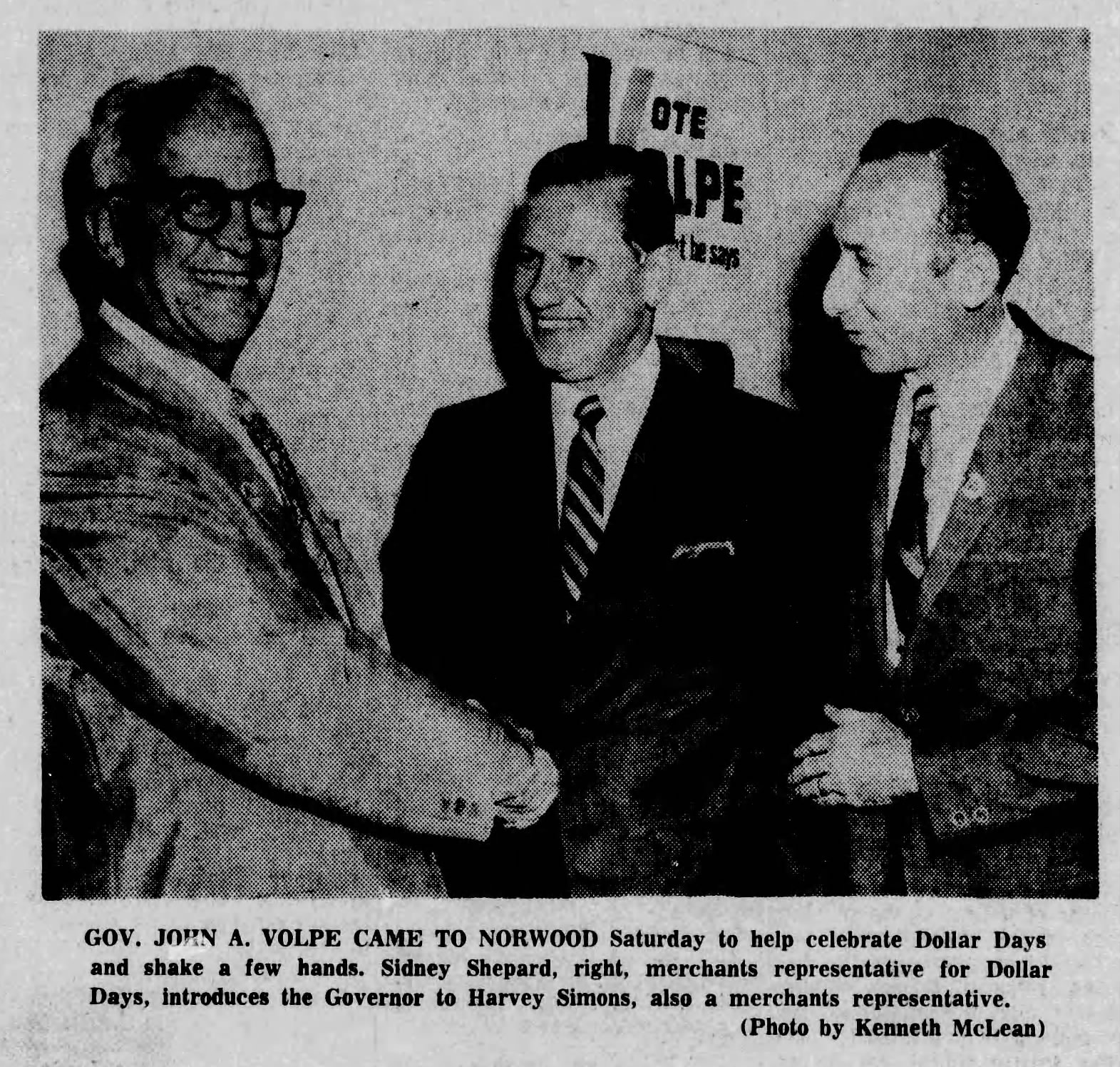
Newlyweds Mr. and Mrs. Carl Pruett received an unexpected addition to their wedding party outside St. Catherine’s Church on Saturday morning when they were greeted on the church steps by an uninvited—though warmly welcomed—guest. Massachusetts Governor John A. Volpe, the Republican incumbent candidate for governor, happened to be in Norwood conducting a nonpolitical stumping tour…
-
Norwood Meeting Bill Passes-July 27, 1966
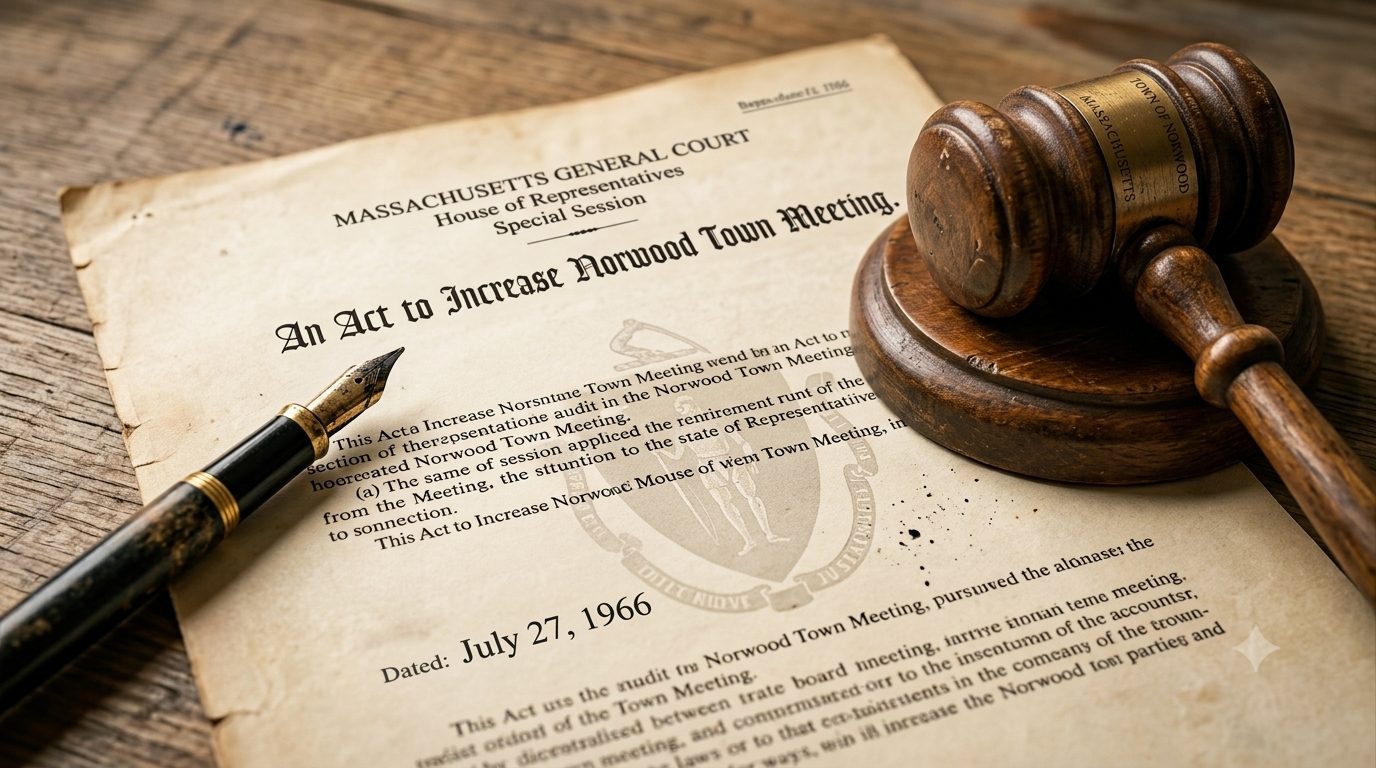
The Massachusetts Legislature passed a bill spearheaded by Rep. William Butters to expand Norwood town meeting membership from 200 to 300.
-
Free Records and Phone Squads Drive Voter Registration Rush in Norwood-October 1, 1964
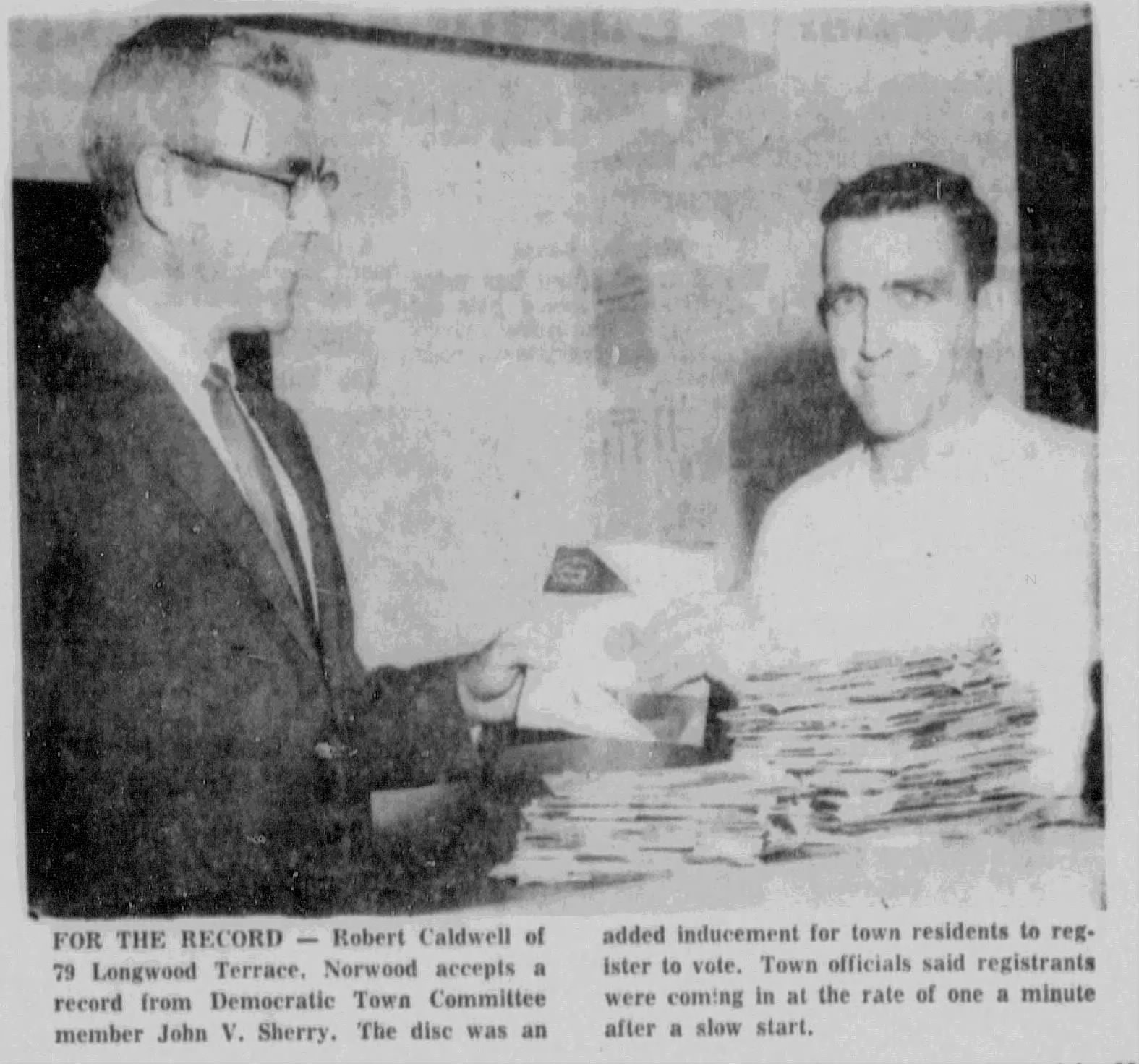
Hospitalized in traction, Norwood Democratic Town Committee member George Hayes launches a record-giveaway phone campaign that drives a massive voter registration rush.
-
Norwood Republican Town Committee Hosts Candidate Presentations-July 17, 1962
The Norwood Republican Town Committee heard from candidates Margaret M. Heckler, John M. Quinlan, and William Francis Nourse.
-
Norwood Young Republican Club Plans Celebrity Dinner-August 25, 1955

The Norwood Young Republican Club finalized plans for a September 28 celebrity dinner at Holman Hall featuring Lt. Gov. Sumner Whittier and regional political leaders.
-
George Willett Seeks Senate Seat-This Day In Norwood History- July 1, 1930
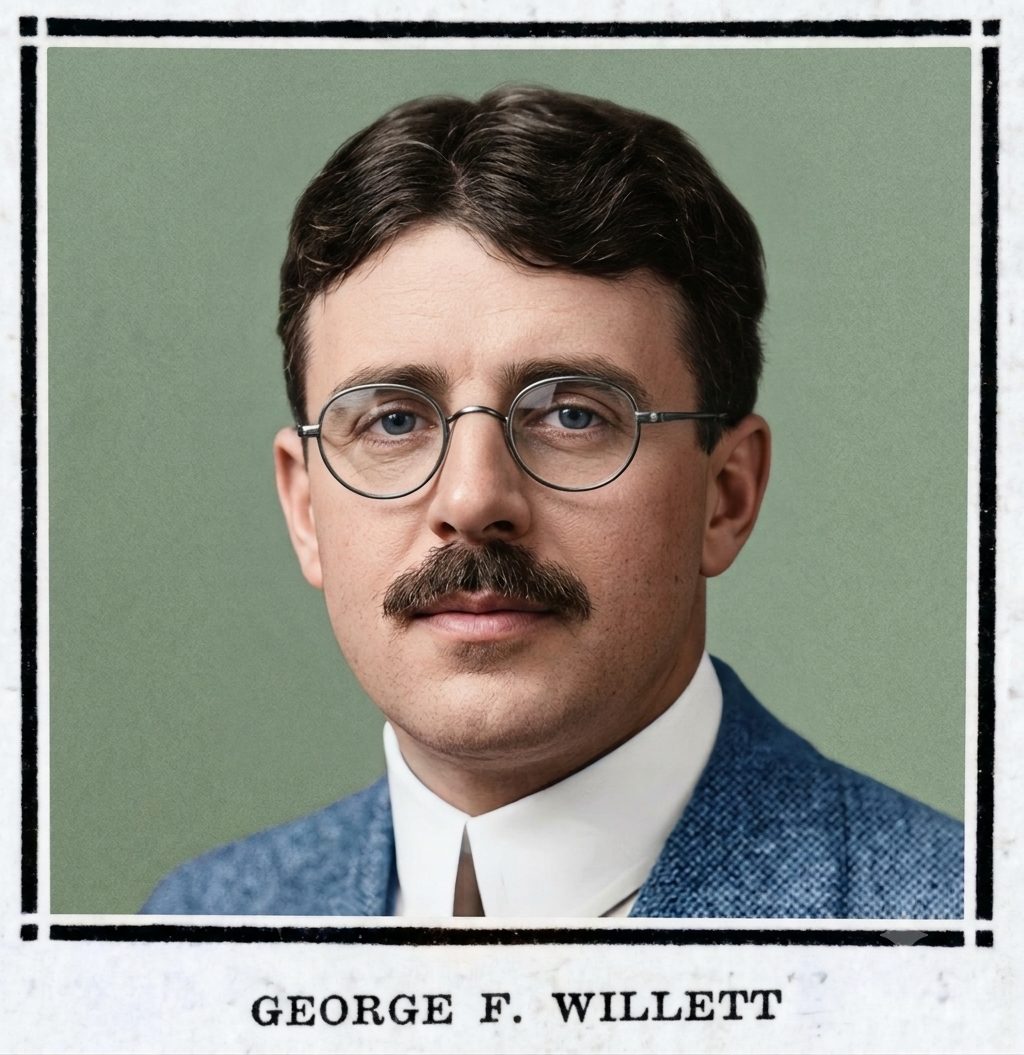
George F. Willett, one of Norwood’s most influential civic figures, surprised the region in 1930 by launching a State Senate campaign.
Discover more from Norwood Historical Society
Subscribe to get the latest posts sent to your email.