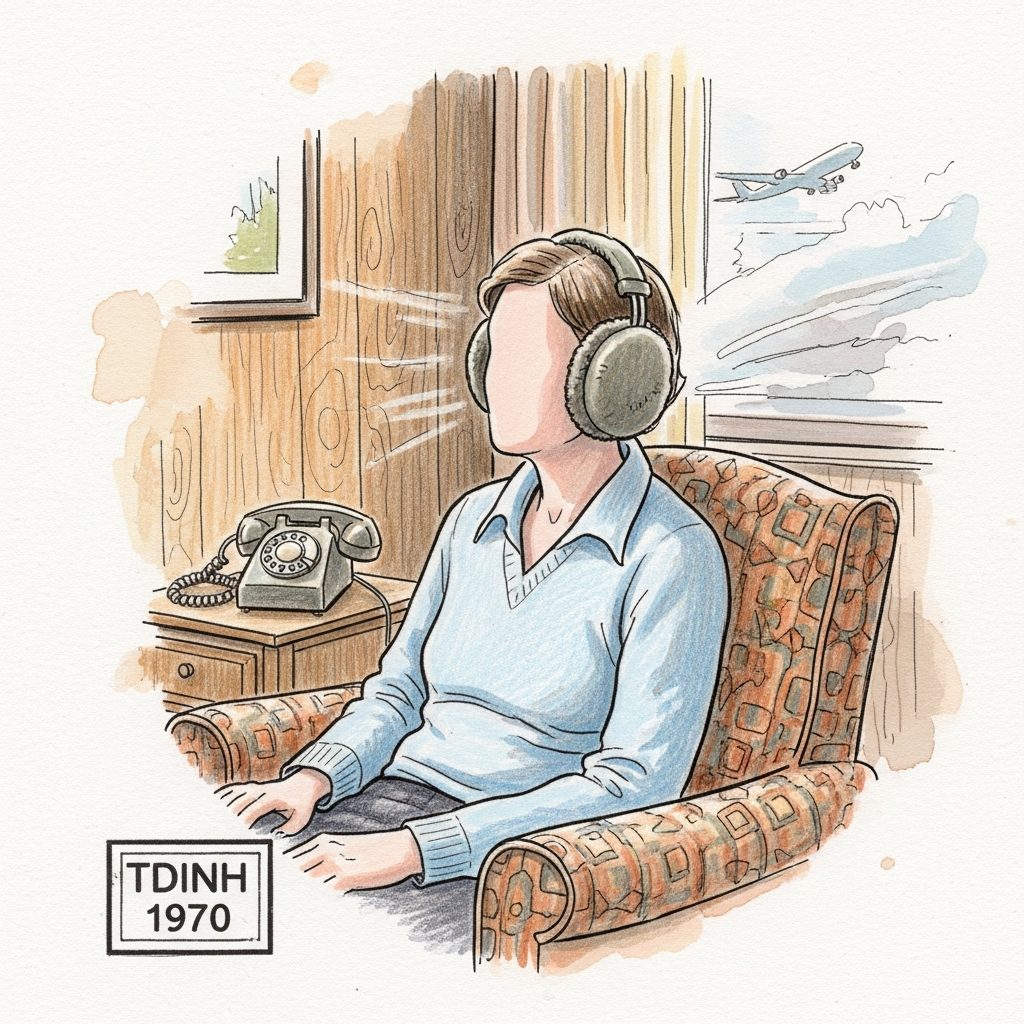
On May 20, 1970, the Norwood Board of Selectmen confronted a familiar but increasingly urgent complaint: the escalating noise from Norwood Airport. This time, the frustration arrived in the form of a sharply worded letter from Milton Safren of 82 Grant Avenue, who reported that the roar of aircraft had grown so overwhelming that he was forced to wear special earmuffs inside his own home.
Safren, who had moved to Norwood only in January, wrote that “thousands of persons in town” were distressed by the constant takeoffs and landings. He blamed what he called “the stupidity of the town fathers” for allowing the situation to persist. While he personally used industrial‑grade hearing protection—equipment typically worn by airport workers—he noted that many residents either did not know such devices existed or “would feel foolish wearing them.”
The Selectmen voted to refer his letter to the Airport Commission, but the exchange underscored a growing tension in 1970: Norwood’s expanding aviation activity was colliding with the expectations of residents who had not anticipated living under a flight path.
The meeting moved briskly through other business. The board:
- approved an electric pole location on Baker Avenue
- set a public hearing for May 26 on a barking dog complaint
- referred a request for road construction in a proposed subdivision to the Planning Board
- received notice of the withdrawal of an application for a common victualer’s license for Papa Gino Restaurant
A lighter moment came when sixth‑grade students were mentioned for presenting a musical program titled “A Sign of the Times,” a fitting name for a year marked by cultural upheaval and shifting civic expectations.
One of the more consequential motions came from Selectman Joseph W. Wall, who proposed waiving fees for building, water, and electric permits associated with the new Little League ballpark under construction behind Endean Playground on Washington Street. The board unanimously approved the waiver, signaling strong municipal support for youth recreation.
Wall also requested that the board place on next week’s agenda a discussion of out‑of‑state travel by town officials, noting that selectmen had not been informed of a recent trip taken by some municipal personnel. His concern hinted at a broader push for transparency and oversight in local government.
In a separate announcement, Charles Parker of the Norwood High School Guidance Department was invited by the United States Naval Academy to spend a week in Annapolis. He was part of a New England delegation of guidance counselors studying curriculum, social programs, and the daily life of midshipmen. His selection reflected Norwood High’s growing engagement with national educational institutions.
The meeting also included several community notices. The Morrill Memorial Library announced its Memorial Day schedule: closed Sunday, May 31, and closed Mondays throughout the summer, with weekday hours from 10 a.m. to 9 p.m. The South Norwood Branch would observe its final Saturday hours of the season on May 30.
Finally, Mrs. Edward F. McKenna of 114 Ridgewood Drive was elected chairman of the Women’s Auxiliary of the Boston Section of the Society of Mechanical Engineers. The daughter of Mr. and Mrs. W. L. Hyland, also of Norwood, her election highlighted the town’s growing presence in regional professional circles.
Text and images may have been created, edited, colorized, or digitally restored using AI tools such as Microsoft Copilot or Google Gemini. All content is reviewed for accuracy and historical integrity before publication by the Norwood Historical Society
Discover more from Norwood Historical Society
Subscribe to get the latest posts sent to your email.