

Assistant Superintendent Roderick Smith Expresses Surprise Over Elementary Results While Social Studies and Reading Remain Bright Spots Across Grades
NORWOOD – Elementary school students in Norwood scored below the statewide average in mathematics and science on a state assessment exam, catching local school administrators off guard. Reported in The Patriot Ledger on Friday, November 25, 1988, by staff writer Lyndsey Layton, the newly released results from the biennial exam—administered every two years to fourth-, eighth-, and 12th-graders to diagnose academic strengths and weaknesses—showed fourth-graders lagging not only behind state benchmarks in math and science, but also trailing comparable neighboring districts across all tested subjects.
“The elementary scores were disappointing,” said Roderick Smith, Norwood’s assistant superintendent of schools. “We didn’t expect that at all. We thought they’d be a lot higher and they weren’t.” Smith acknowledged that school officials were not yet certain why Norwood’s fourth-grade cohort performed below expectations, noting that when measured against peer districts of similar socioeconomic backgrounds, Norwood’s elementary pupils finished behind across every subject area.
Against a statewide average set at 1300 across all disciplines, Norwood’s fourth-graders posted scores of 1300 in reading (matching the state average), 1280 in mathematics, 1290 in science, and 1310 in social studies. High school seniors also dipped slightly in science, with 12th-graders averaging 1290 in science alongside 1310 in reading, 1340 in mathematics, and 1320 in social studies.
By contrast, Norwood’s eighth-graders delivered the district’s strongest overall showing, matching or exceeding the statewide mark in every category with averages of 1340 in reading, 1330 in mathematics, 1300 in science, and 1390 in social studies. Across the entire school system, social studies emerged as Norwood’s standout subject—with all three tested grade levels outscoring the state average—while reading also proved solid, led by above-average performances in grades eight and 12 and an on-par result in grade four.
Source: The Patriot Ledger • Friday, November 25, 1988 • Byline: Lyndsey Layton
“The elementary scores were disappointing. We didn’t expect that at all. We thought they’d be a lot higher and they weren’t.”
| Subject Area (State Avg: 1300) | 4th Grade | 8th Grade | 12th Grade |
|---|---|---|---|
| Reading | 1300 (Avg) | 1340 (+40) | 1310 (+10) |
| Mathematics | 1280 (-20) | 1330 (+30) | 1340 (+40) |
| Science | 1290 (-10) | 1300 (Avg) | 1290 (-10) |
| Social Studies | 1310 (+10) | 1390 (+90) | 1320 (+20) |
Archival Note: This article has been dynamically reconstructed from the original public record print archives of the Patriot Ledger
-
School Committee Considers Sweeping Administrative Reorganization Plan-August 24, 1967
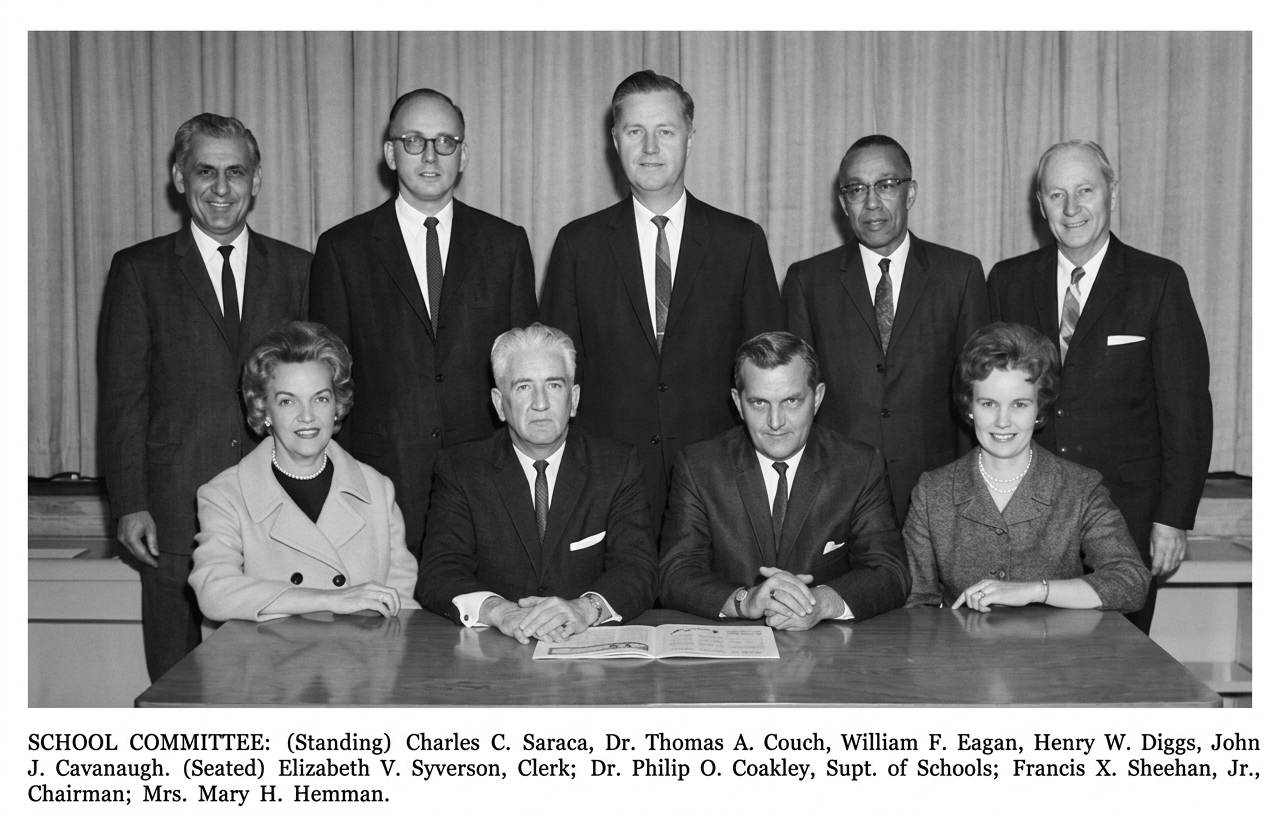
School Committee Chairman Francis X. Sheehan Jr. proposed a sweeping administrative reorganization creating an associate superintendent to streamline Norwood school management
-
Schools Prepare for 5th Annual New Teacher Orientation-August 22, 1967

Superintendent Dr. Philip O. Coakley welcomed 58 incoming educators at the fifth annual teacher orientation institute at Prescott School, introducing new faculty across secondary and elementary schools.
-
School Committee Inspects “Deplorable” Balch School, Demanding Immediate Repairs-October 27, 1966
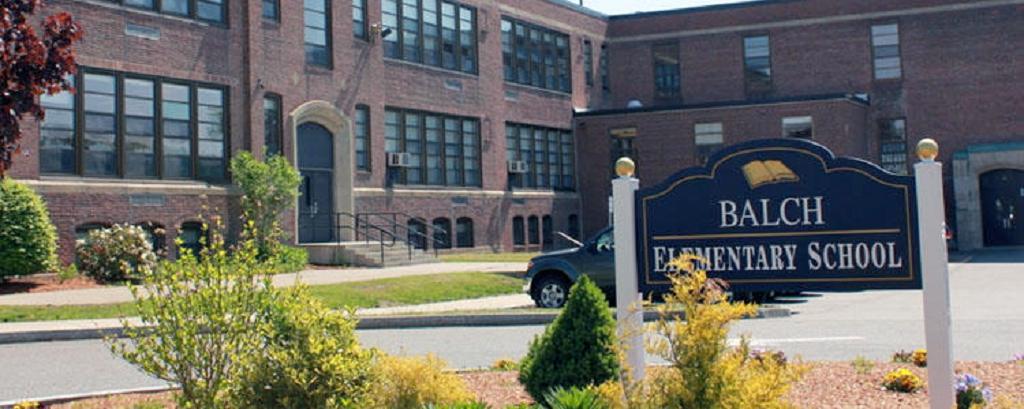
Following a 90-minute inspection revealing rotting windows, cracked ceilings, and decaying staircases, the School Committee ordered immediate priority repairs for the 50-year-old Balch Elementary School.
-
Norwood Teachers Association Submits $1,000 Pay Increase Proposal-August 18, 1966

The Norwood Teachers Association submitted a $1,000-plus pay raise proposal as the school committee signed its first collective bargaining agreement amid debate led by John J. Cavanaugh and William Egan.
-
Andrew J. Ciarletta Jr. Appointed Principal of Winslow Elementary School-July 27, 1966

The Norwood School Committee appointed Andrew J. Ciarletta Jr. as principal of Winslow Elementary School, succeeding Alan R. Wonson.
-
Thirteen Norwood High Class of 1965 Graduates Earn College Advanced Placement Honors-November 20, 1965
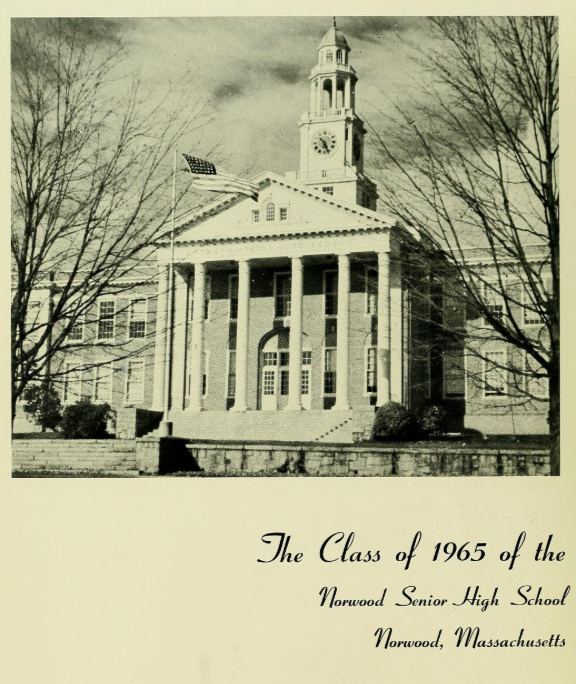
Twelve Norwood High Class of 1965 freshmen at the University of Massachusetts received advanced placement in November 1965, while Gerald Belastock earned sophomore math standing and 20 credits from Carnegie Institute of Technology.
-
“Middle School” Configuration Proposed to Address School Overcrowding-November 4, 1965

Norwood School Committee member William Egan proposed establishing a sixth-grade “middle school” and a 2,000-pupil high school to address surging enrollment pressures.
-
Retired Norwood Junior High Vice-Principal Mildred I. O’Donnell Honored at Testimonial Dinner-October 30, 1965
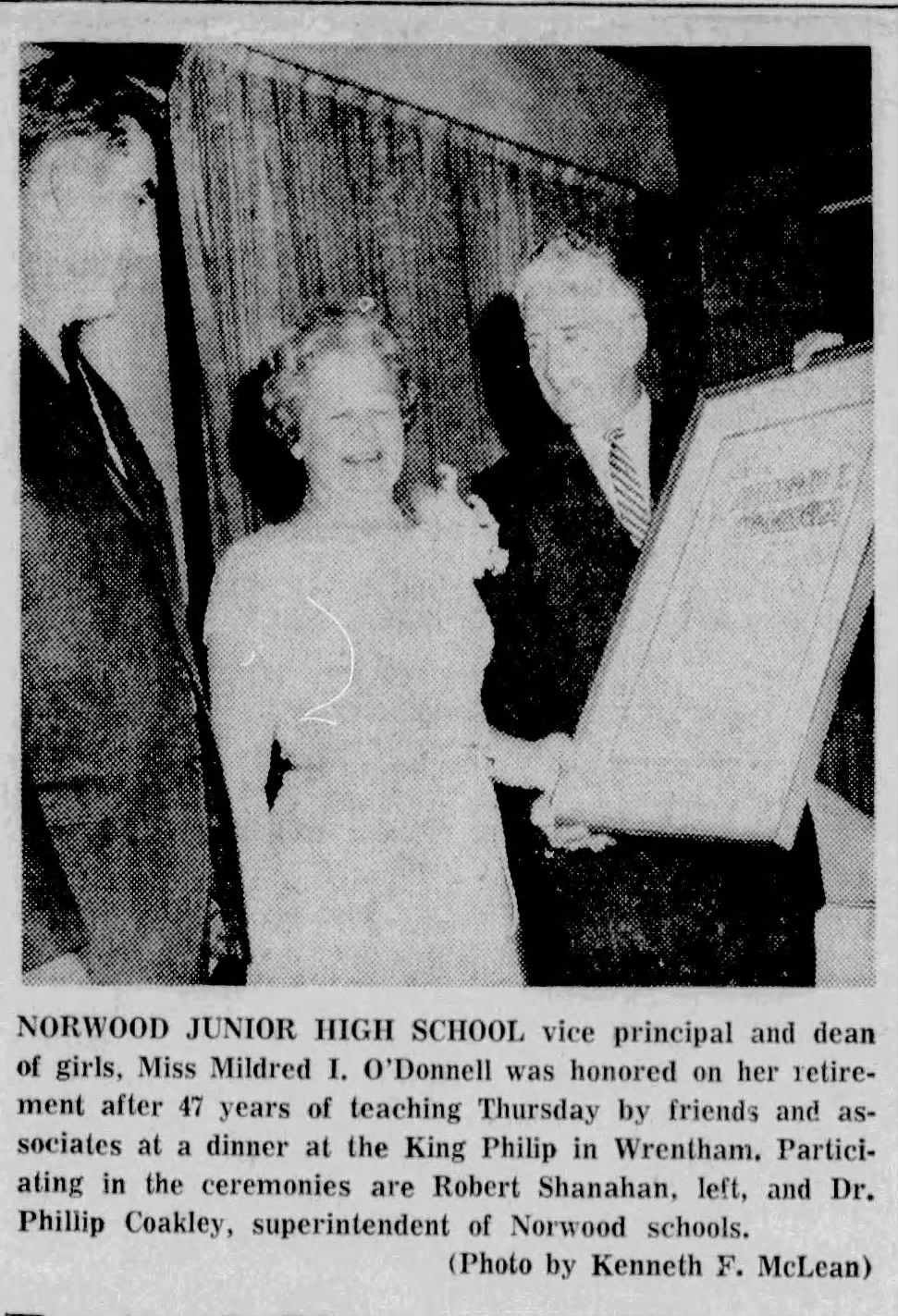
Celebrating a 47-year teaching career, retired Norwood Junior High vice-principal and dean of girls Mildred I. O’Donnell was honored during a testimonial dinner at the King Philip in Wrentham.
-
Superintendent Coakley Tells PTA Council That $4 Million in New School Construction Is Mandatory-September 10, 1965

Dr. Philip O. Coakley tells the PTA Council that $4 million in new school construction—including a new elementary and junior high—is mandatory to handle over-capacity enrollment.
-
Norwood School Committee Reviews Summer School Program and Proposes Token Fees-September 3, 1965

Following the successful completion of Norwood’s first town-sponsored summer school program—which enrolled approximately 330 local students in remedial coursework—the Norwood School Committee is evaluating future administrative structures, including a proposal to institute a nominal student fee. Superintendent Philip O. Coakley presented a comprehensive report detailing the inaugural summer session, noting that progress reports for every…
Discover more from Norwood Historical Society
Subscribe to get the latest posts sent to your email.