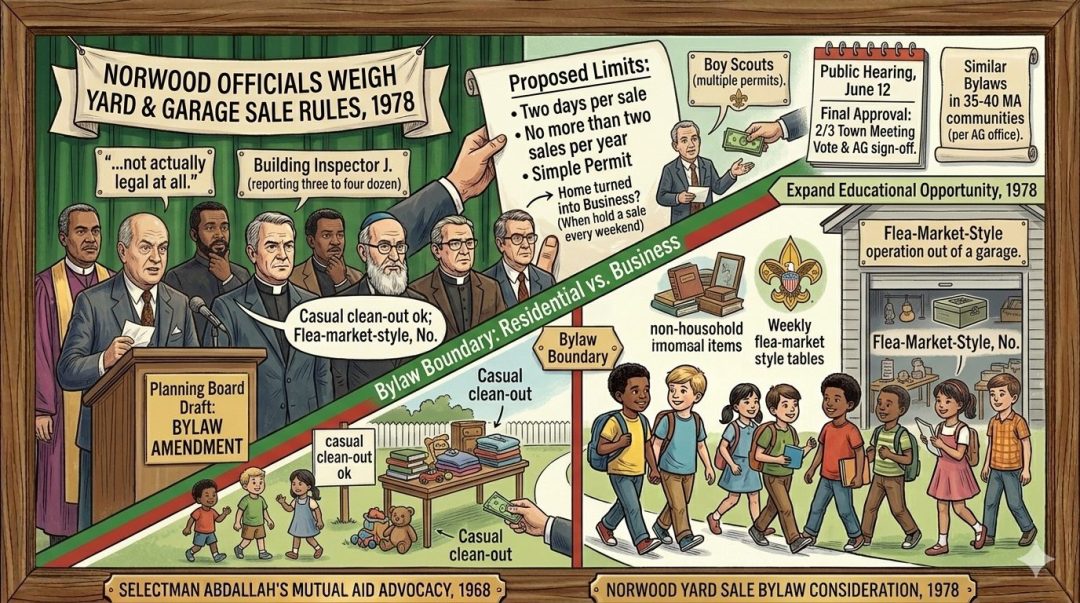
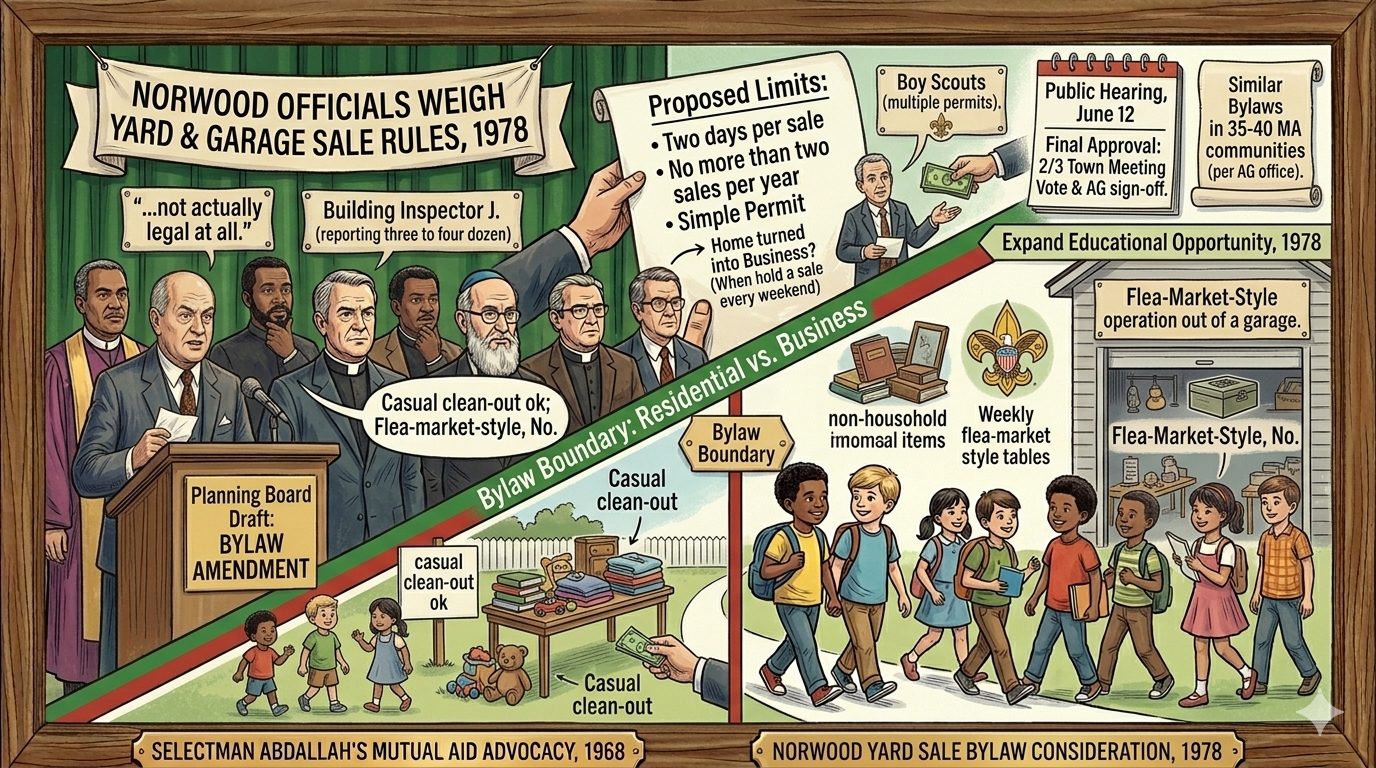
Norwood officials were weighing new rules in 1978 to bring clarity — and some boundaries — to the town’s growing number of yard and garage sales. Although the practice was common, Building Inspector John Grover noted that, under a strict reading of local zoning laws, any business activity in a residential district was technically prohibited, meaning yard sales weren’t actually legal at all.
To fix that contradiction, the Planning Board drafted a bylaw amendment that would legalize yard and garage sales while placing reasonable limits on how often they could be held. Under the proposal, residents would be allowed:
- Two consecutive days per sale
- No more than two sales per year
- A simple permit issued by the Building Inspector
Planning Board chairman Francis Wisgirda said the goal wasn’t to restrict casual clean‑out sales, but to prevent residents from running weekly flea‑market‑style operations out of their garages. Town Manager John Mogan agreed, saying that when a homeowner held a sale every weekend, “we know darn well” merchandise was being brought in from outside — effectively turning a home into a business.
Grover reported receiving three to four dozen complaints a year, often about repeat offenders. While he had the authority to issue cease‑and‑desist orders — and even seek a court injunction — he said he had never needed to take the matter that far.
Local retailers, represented by Uptown Merchants Association president Skip Perry, expressed only mild concern. Perry acknowledged that backyard sales might have a small impact on business but noted that the bigger issue was that informal sellers didn’t collect sales tax.
The Planning Board also considered how the bylaw might affect charitable groups such as the Boy Scouts. Wisgirda said organizations could still hold multiple fundraising sales by having different members apply for individual permits.
A public hearing on the proposal was scheduled for June 12, with final approval requiring a two‑thirds vote at Town Meeting and sign‑off from the state Attorney General. According to the AG’s office, 35 to 40 Massachusetts communities already had similar bylaws on the books.
Source: The Patriot Ledger, May 27, 1978, via Newspapers.com
Text and images may have been created, edited, colorized, or digitally restored using AI tools such as Microsoft Copilot or Google Gemini. All content is reviewed for accuracy and historical integrity before publication by the Norwood Historical Society
Discover more from Norwood Historical Society
Subscribe to get the latest posts sent to your email.