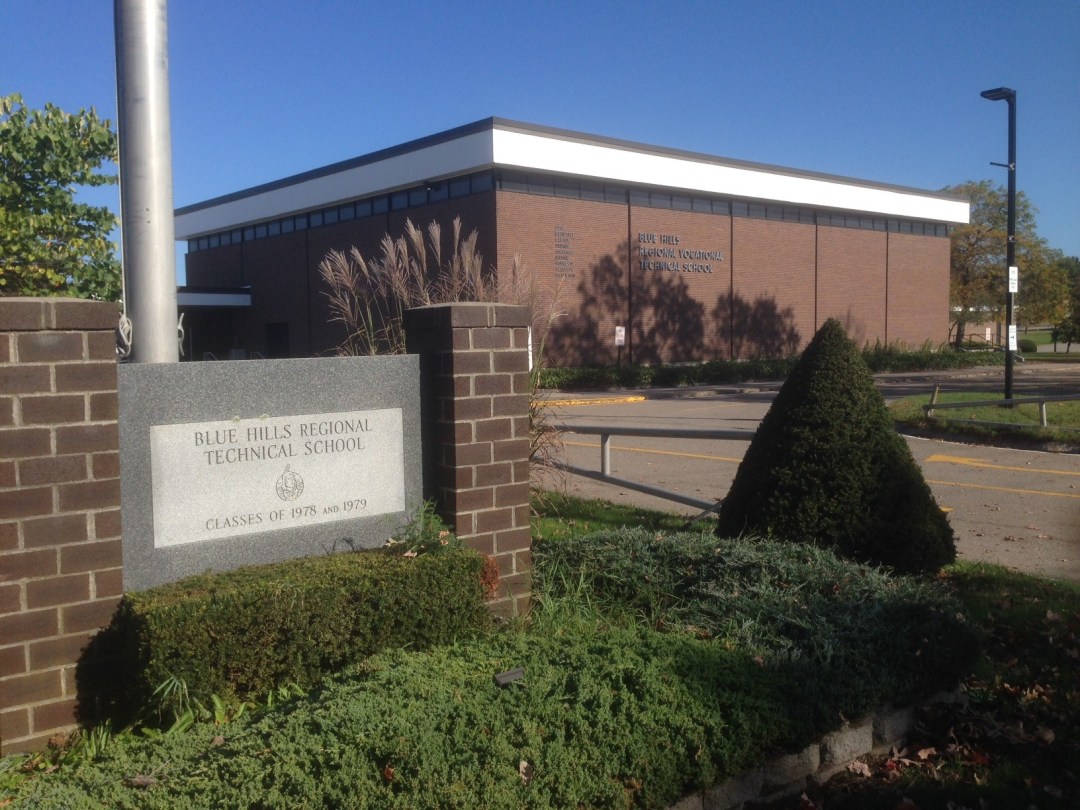
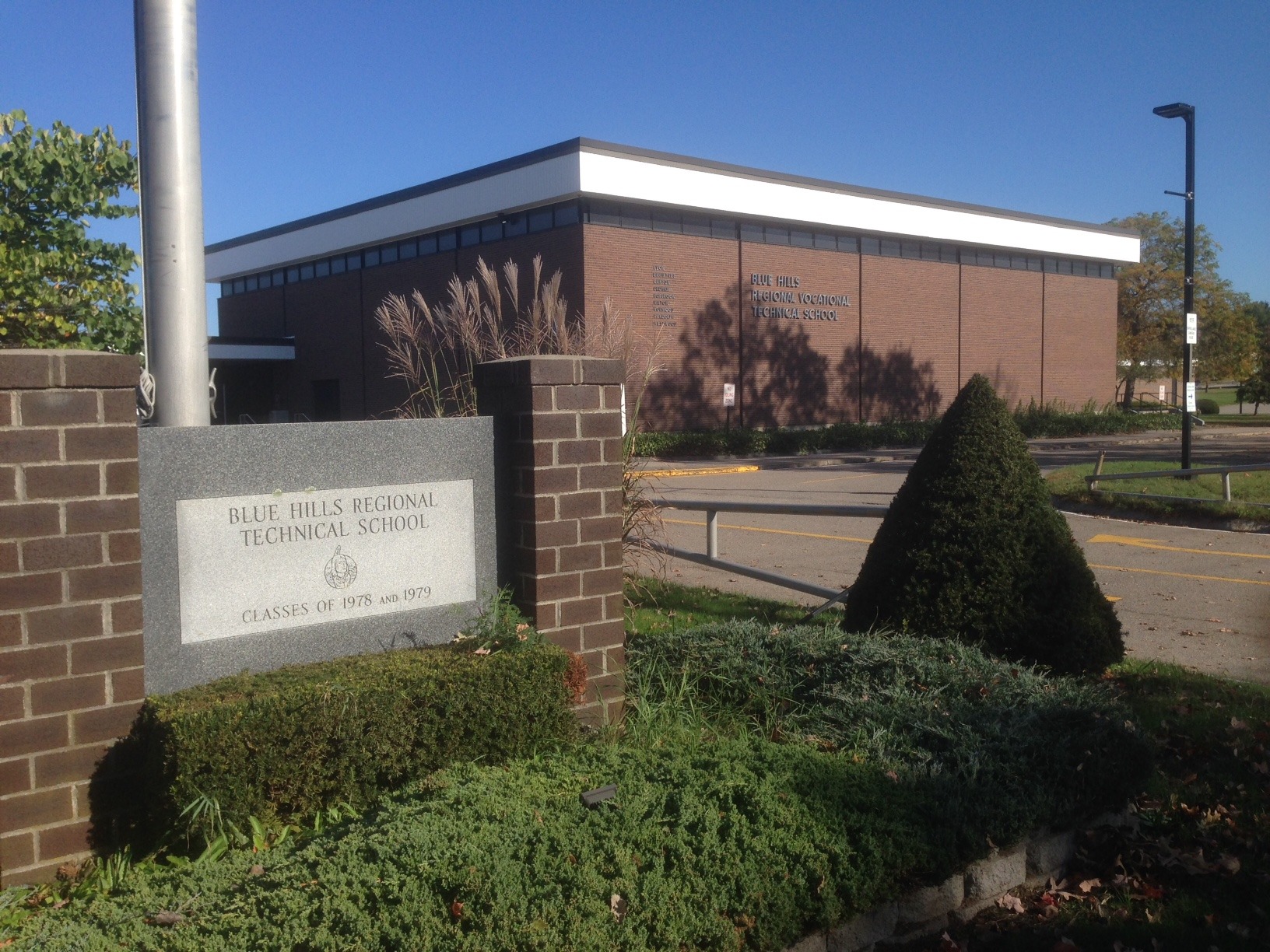
The summer of 1976 was a time of great change and uncertainty for the town of Norwood, Massachusetts. As the nation celebrated its bicentennial, local residents were grappling with issues of education, finance, and community involvement. One such issue that dominated the headlines in July 1976 was the proposed Blue Hills Collaborative, a vocational school program designed to train marginally employable students for jobs in the region.
The Blue Hills Regional Vocational School had been established in 1965 as part of an effort to provide specialized education and training to students in the surrounding towns. However, by the early 1970s, concerns began to arise about the effectiveness and efficiency of the program. In response, a group of educators and administrators proposed the creation of a collaborative program that would bring together local schools and businesses to provide job training and placement services for students with special needs.
The proposal for the Blue Hills Collaborative was met with enthusiasm by some in the community, but it also sparked intense debate and opposition. One of the main objections raised by critics was that the regional school committee had not fully backed the program or funded it. School Superintendent Philip O. Coakley, a vocal critic of the collaborative, argued that the program was essentially a “collaborative within a collaborative,” meaning that it would duplicate existing efforts and create unnecessary bureaucracy.
Coakley’s concerns were echoed by other members of the Norwood school committee, who voted unanimously to reject local participation in the Blue Hills Collaborative. The decision was based on several factors, including the lack of funding from the regional school committee and the perceived duplication of services offered by the program.
However, Coakley’s opposition to the collaborative went beyond mere bureaucratic concerns. He also took issue with the way that the regional school committee had managed its finances, pointing out that a recent state audit had revealed an $820,000 surplus account under the control of the committee. Coakley suggested that this surplus could be used to subsidize programs or provide tax relief to member towns, including Norwood.
Norwood’s contribution to the Blue Hills operating budget was significant, accounting for approximately 27 percent of the total. The audit report, which Coakley cited as evidence of the need for greater transparency and accountability in the regional school committee’s finances, recommended that the committee provide an annual recapitulation of its finances to member towns.
In following Coakley’s recommendation, the Norwood school committee agreed to advise the town’s Finance Commission about the audit report and its recommendations. This decision marked a significant turning point in the debate over the Blue Hills Collaborative, as it highlighted the need for greater transparency and accountability in the management of regional school funds.
Archival Note: This article has been dynamically reconstructed from the original public record print archives of the Patriot Ledger
-
Norwood High School Renovation Plans Scrapped in Favor of New Building-October 15, 2005
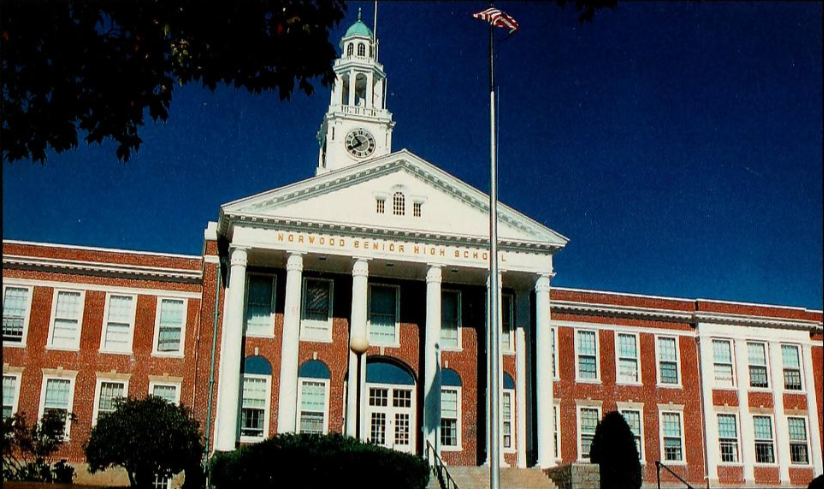
Facing accreditation warnings and failing infrastructure, Norwood’s School Facility Task Force votes overwhelmingly to pursue a new high school building.
-
Norwood Junior High School Honor Rolls for the Last Term-This Day In Norwood History-July 21, 1997

Celebrating Academic Excellence at Norwood Junior High The academic landscape at Norwood Junior High School was highlighted by a formal recognition of student achievement, as the administration released the latest honor rolls for Grade 7 and Grade 6. These lists, comprised of students who attained HIGH HONORS and HONORS status, served as a public commendation…
-
Norwood High School Revives Latin Classes After Nearly a Decade-September 26, 1994
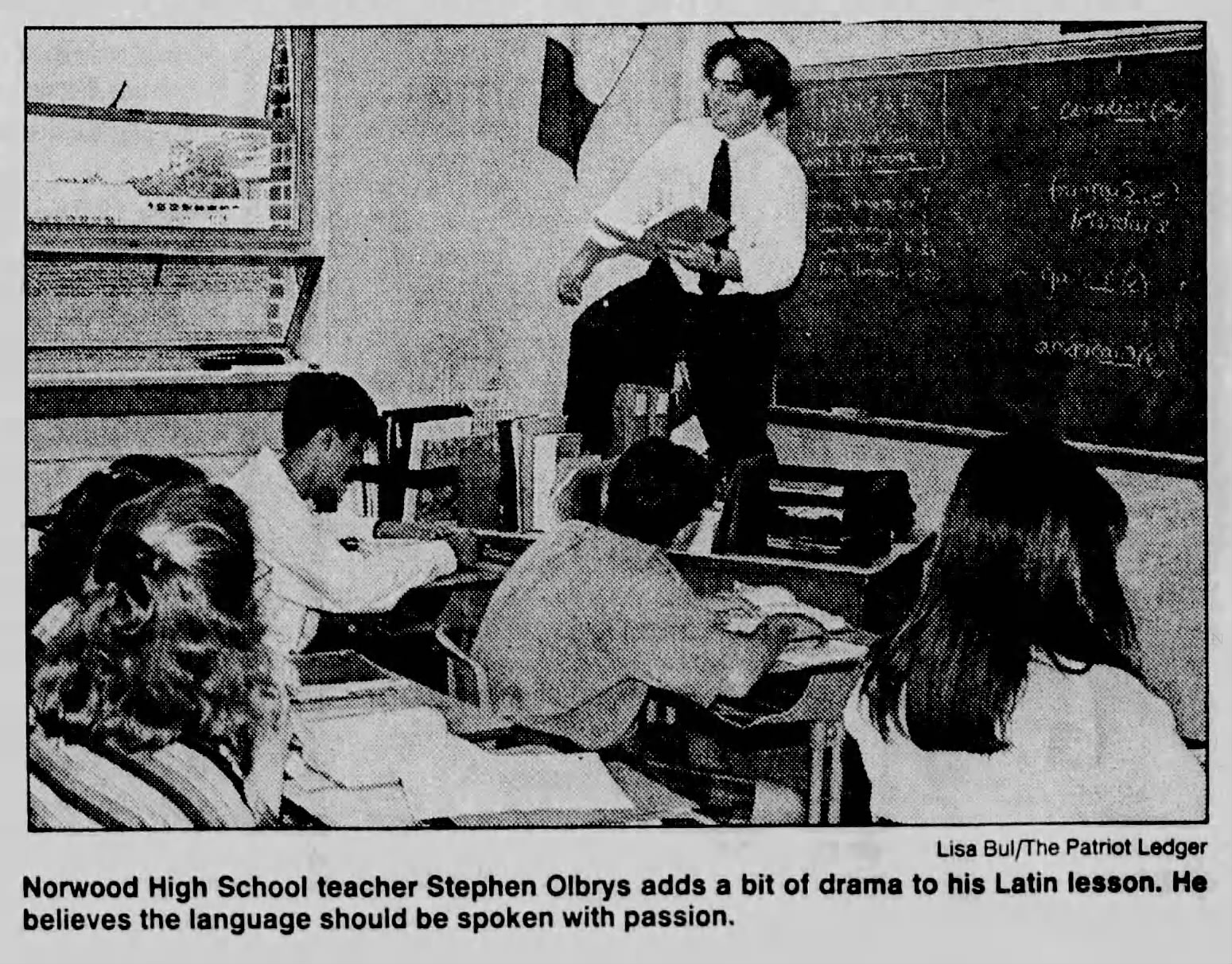
Norwood High School brings back Latin classes for the first time in nearly a decade, led by young instructor Stephen Olbrys to enthusiastic student enrollment.
-
Norwood Elementary Grades Drive Enrollment Increase-September 2, 1993
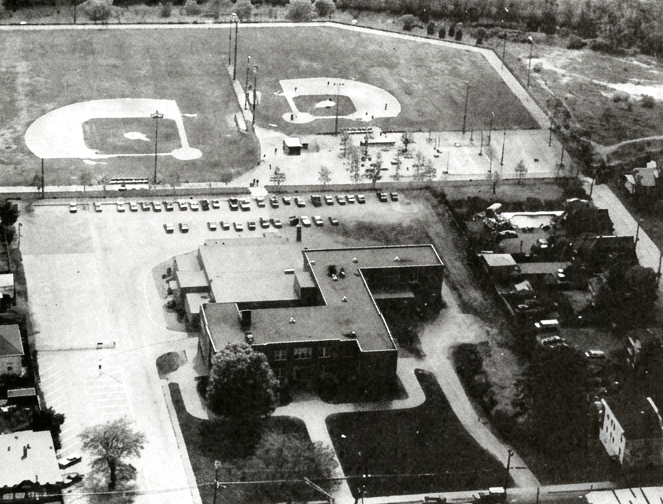
School System Reaches 3,565 Total Students Norwood public schools have experienced an overall enrollment increase of 136 students compared to the previous academic year, bringing total district enrollment to 3,565 students, according to an announcement made by Assistant Superintendent Roderick Smith during a school committee meeting. Enrollment Breakdown by Grade Level The surge is heavily…
-
Summer Education Program Helps Students Stay Sharp-August 12, 1992
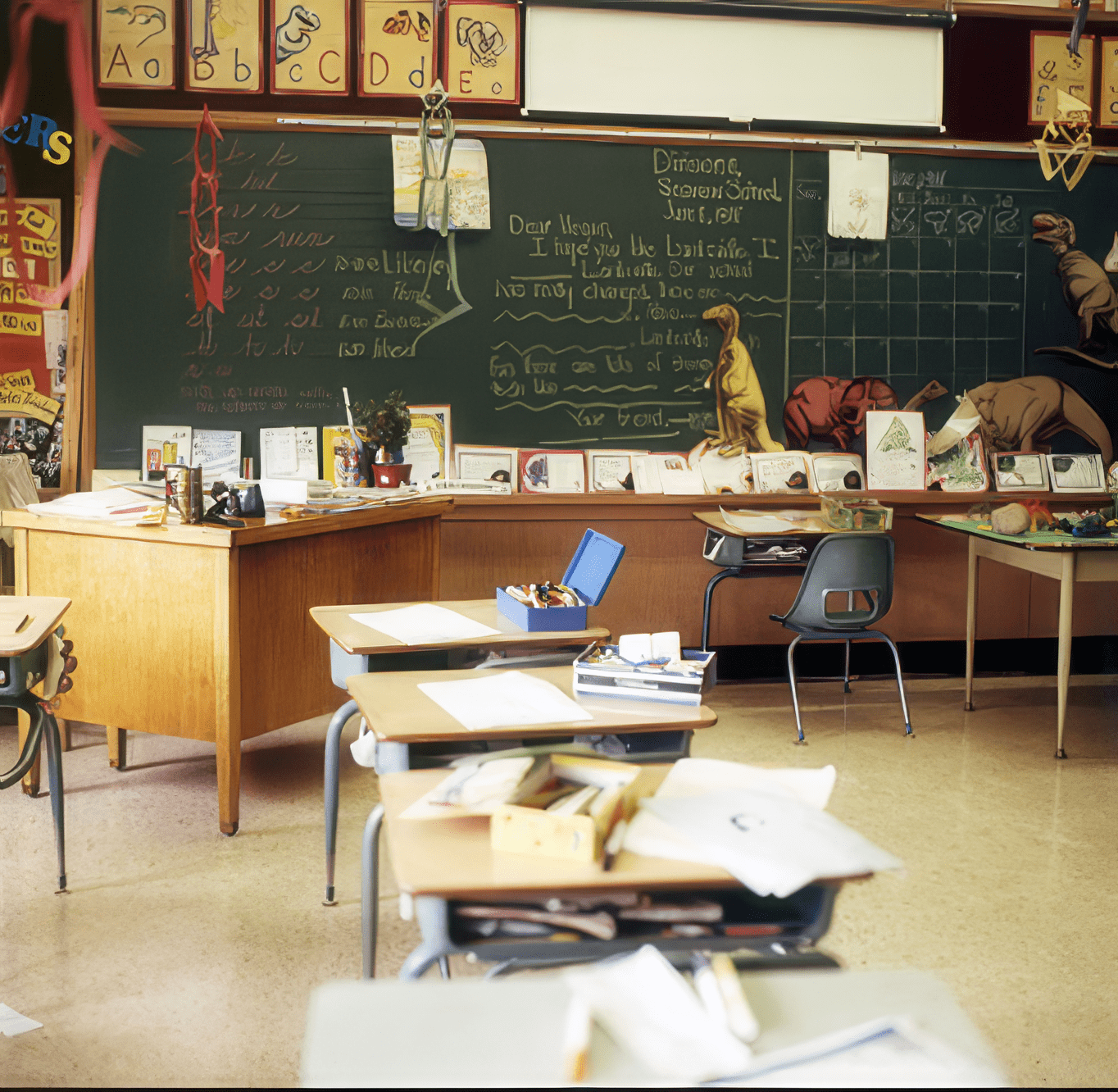
Federal Chapter 1 funding revived Norwood’s summer remedial education program at the Cleveland School, combining academics with local field trips for 48 students.
-
Norwood Parents Music Association: The Dedicated Power Base Behind the High School Band-October 11, 1991

As the fall marching band season kicks into high gear, Joann Pasquantonio is bracing herself for a grueling schedule of long days. There will be days when she boards a school bus at 4:00 p.m. and doesn’t return home until midnight, utterly exhausted after hours of competitions. The catch? Pasquantonio isn’t in the band. She…
-
Prescott Elementary School Parents Urge School Committee to Alleviate Overcrowding-September 12, 1991
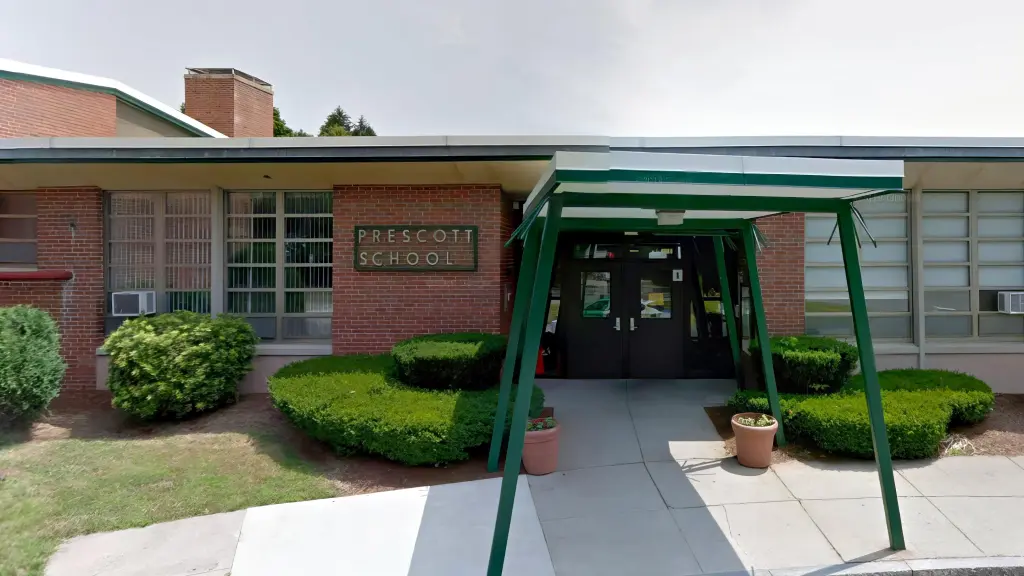
Prescott Elementary School parents petition the Norwood School Committee to hire a part-time teacher to alleviate overcrowded kindergarten classes.
-
Schools Open with Retained Programs Despite Budget Cuts and Staff Reductions-September 3, 1991
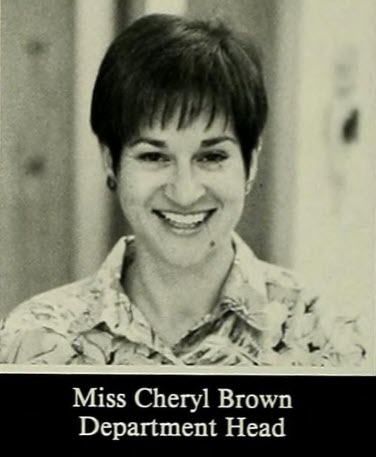
When Norwood students return to classrooms tomorrow for the start of the new academic year, they will encounter a few visible adjustments—including higher cafeteria prices, a smaller teaching staff, and the discontinuation of Latin courses. However, school officials emphasized that despite a roughly $600,000 reduction to the $18 million school budget amid town-wide cutbacks, Norwood…
-
Search for Superintendent Stirs Conflict on Committee-July 24, 1991
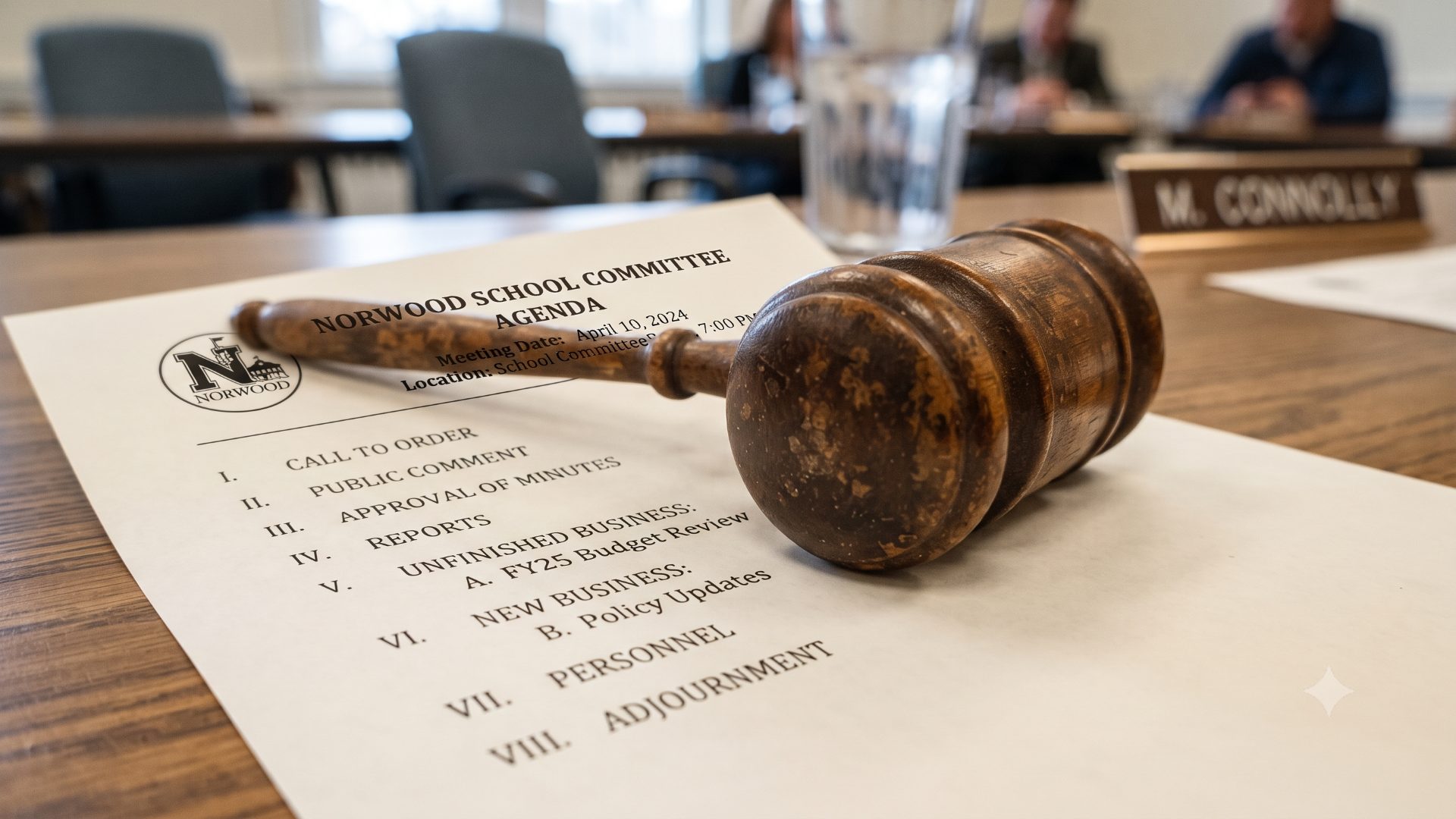
The Norwood School Committee engaged in a tense debate over expanding the superintendent search committee to include PTA representation and broader community voices.
-
Norwood High School to Drop Latin Program Due to Dwindling Enrollment-September 27, 1990

Citing dwindling enrollment and a lack of cost-effectiveness, Norwood High School officials announce that Latin courses will be eliminated from the curriculum after June.
Discover more from Norwood Historical Society
Subscribe to get the latest posts sent to your email.