
Spokeswoman Marjorie Clapprood Warns Trustees Could Veto Deal Ahead of Nov. 29 State Funding Deadline
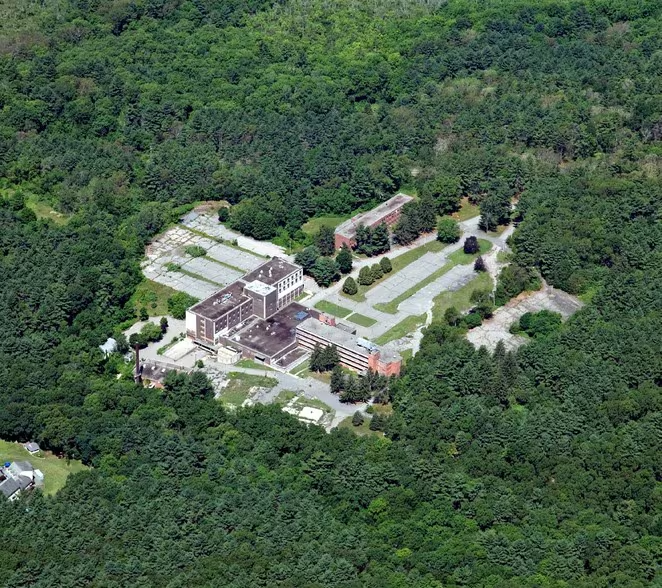
NORWOOD – Tough regulatory and financing hurdles threatened to derail Norwood Hospital’s planned $6.9 million acquisition of the state-owned Pondville Hospital cancer-care facility in neighboring Norfolk in November 1981, according to Norwood Hospital spokeswoman Marjorie Clapprood. Reported by Patriot Ledger staff writer Gordon Greenfield on Friday, November 20, 1981, the warning came just one month after state officials and Norwood Hospital agreed on the $6.9 million purchase price—leaving two critical operational conditions unresolved: how many inpatient beds state regulators would license at Pondville, and how long Norwood Hospital would be permitted to charge higher reimbursement rates to recover start-up costs.
Clapprood stated that unless state regulators granted Norwood’s requests on bed capacity and rate structure, Norwood Hospital would be financially unable to operate Pondville. Even if state officials accepted Norwood’s terms and the Massachusetts Legislature passed—and the governor signed—authorizing legislation for the sale, the transaction still required final approval from Norwood Hospital’s Board of Trustees. “The primary concern of the board of trustees is continuing quality medical care,” Clapprood explained, adding that trustees would veto the acquisition if financing costs endangered care standards at either campus or disrupted Norwood Hospital’s ongoing expansion project.
Hospital administrators were negotiating financing arrangements for the Pondville purchase with B.C. Ziegler, an institutional investment banking firm based in Wisconsin. Meanwhile, Norwood Hospital petitioned the Massachusetts Rate Setting Commission for “new provider status” for five years—a designation allowing higher patient rates to offset initial transition and capital expenses—which state officials contended was too long. At the same time, Norwood requested licensing for 156 beds at Pondville, whereas state health officials indicated they would approve only 113 beds. Clapprood anticipated the bed-count dispute would be settled at a state hearing the following Tuesday, though she described negotiations over new provider status as frustrating.
The standoff unfolded against an urgent fiscal clock in Norfolk. Pondville Hospital had originally exhausted its operating funds the previous Saturday and remained open only through a $225,000 infusion from Governor Edward J. King’s emergency reserve account—money projected to run out on November 29, 1981, forcing the state cancer hospital to close unless Norwood Hospital assumed operations or the Commonwealth provided fresh emergency appropriations. While state officials hoped Norwood could take over by November 29 and hospital leaders expressed readiness to step into the facility as soon as possible, Clapprood reiterated that Norwood could not sustain Pondville’s quality of care without the larger bed complement and five-year rate relief.
1981 Pondville Hospital Purchase & Emergency Funding Adjusted to 2026 Dollars
Inflation-adjusted using U.S. Bureau of Labor Statistics CPI data ($1.00 in Nov. 1981 ≈ $3.51 in 2026)
| 1981 Hospital Acquisition & State Emergency Figures | 1981 Amount | 2026 Equivalent |
|---|---|---|
| Agreed Pondville Hospital Purchase Price | $6,900,000 | ~$24,219,000 |
| Gov. Edward J. King Emergency Operating Reserve Grant | $225,000 | ~$789,750 |
Archival Note: This article has been dynamically reconstructed from the original public record print archives of the Patriot Ledger
More Norwood Hospital Stories
-
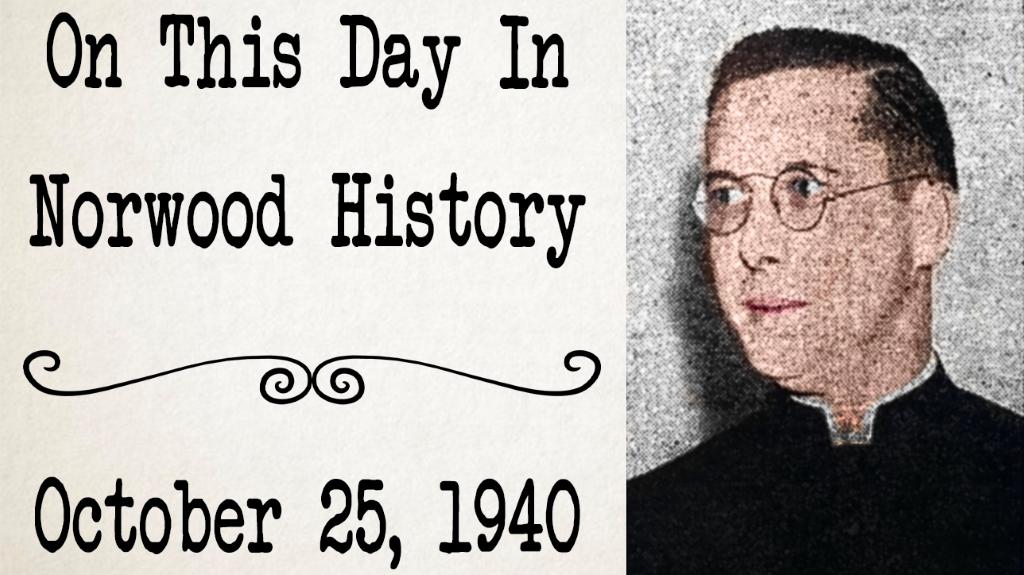
Rev. Robert McAleer of Norwood Dies-This Day in Norwood History-October 25, 1940
Rev. Robert E. McAleer. 38, curate of St. Catherine’s Catholic Church for the last 12 years, died today at the Norwood Hospital. One of the most popular curates the church ever had, Fr. McAleer organized the St. Catherine’s Fife and Drum Corps which for the last two years has won the Cardinal O’Connell trophy as…
-
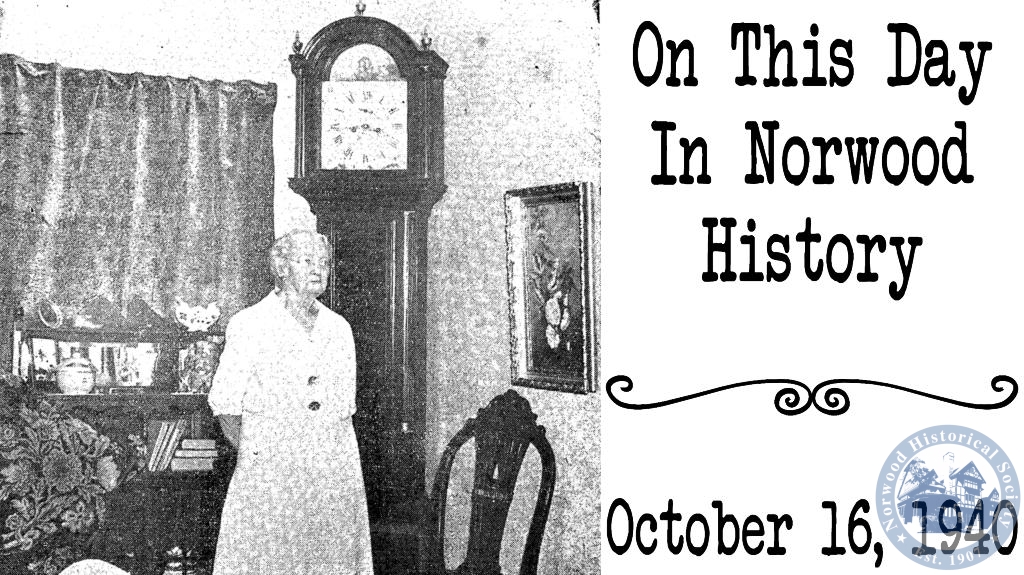
Local Woman Has Many Fine Colonial Antiques-This Day in Norwood History-October 16, 1940
Mrs. Daniel H. Philbrook of 145 Walpole st. has an imposing collection of antiques which date back hundreds of years. In a modest dwelling at 145 Walpole st. unknown to hundreds of local residents, is housed some of the finest Colonial antiques in New England. Thirty-five members of the Congregational church had the privilege of…
-
Norwood Man Near Death After Ax Attack, Friend Held-This Day in Norwood History-September 20, 1934
Norwood Man Near Death After Ax Attack, Friend Held-This Day in Norwood History- September 20, 1934

-
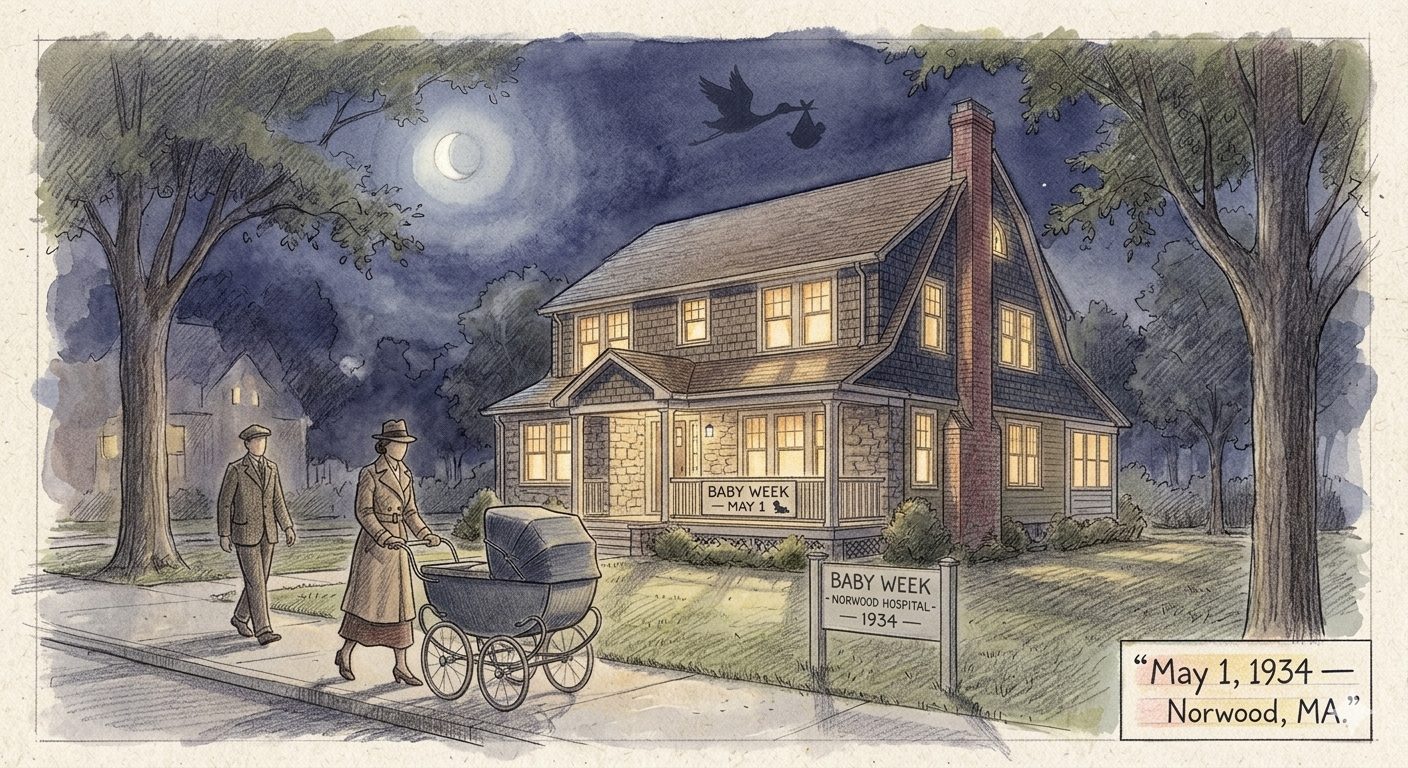
Lucky Girl Born to Norwood Couple-This Day In Norwood History-May 1, 1934
In the earliest minutes of May 1, 1934, Norwood welcomed a new resident under circumstances as charming as they were competitive. At precisely 12:40 a.m., the “stork” paid a visit to the home of Mr. and Mrs. William Dequette of 21 Folan Avenue, delivering an eight‑pound baby girl who instantly became the talk of the…
-
Pamela W. Childs First Co-Ed Admitted to Northeastern University College of Pharmacy-This Day in Norwood History-January 4, 1962
Miss Pamela W. Childs, 25 Florence Avenue, Norwood, has been accepted as the first co-ed student in the Northeastern University College of Pharmacy, it was announced today by Dr. Gilbert C. Garland, N.U. Dean of Admissions. In her last year at Norwood Senior High School, Miss Childs, the daughter of Mr. and Mrs. Stephen M.…

-
This Day In Norwood History-May 6, 1931-Everett School Lot Seems to Be Favored For Post Office Site
Forty prominent citizens of the town assembled in Memorial Hall yesterday afternoon to discuss before representatives from Washington the location for the new Post Office building. Ernest F. Sharp, from the Post Office Department at Washington, and Jerome J. Lawlor, from the Treasury Department will make their report to Washington.Postmaster Albin K. Parker presided. James…
-
George Willett Seeks Senate Seat-This Day In Norwood History- July 1, 1930
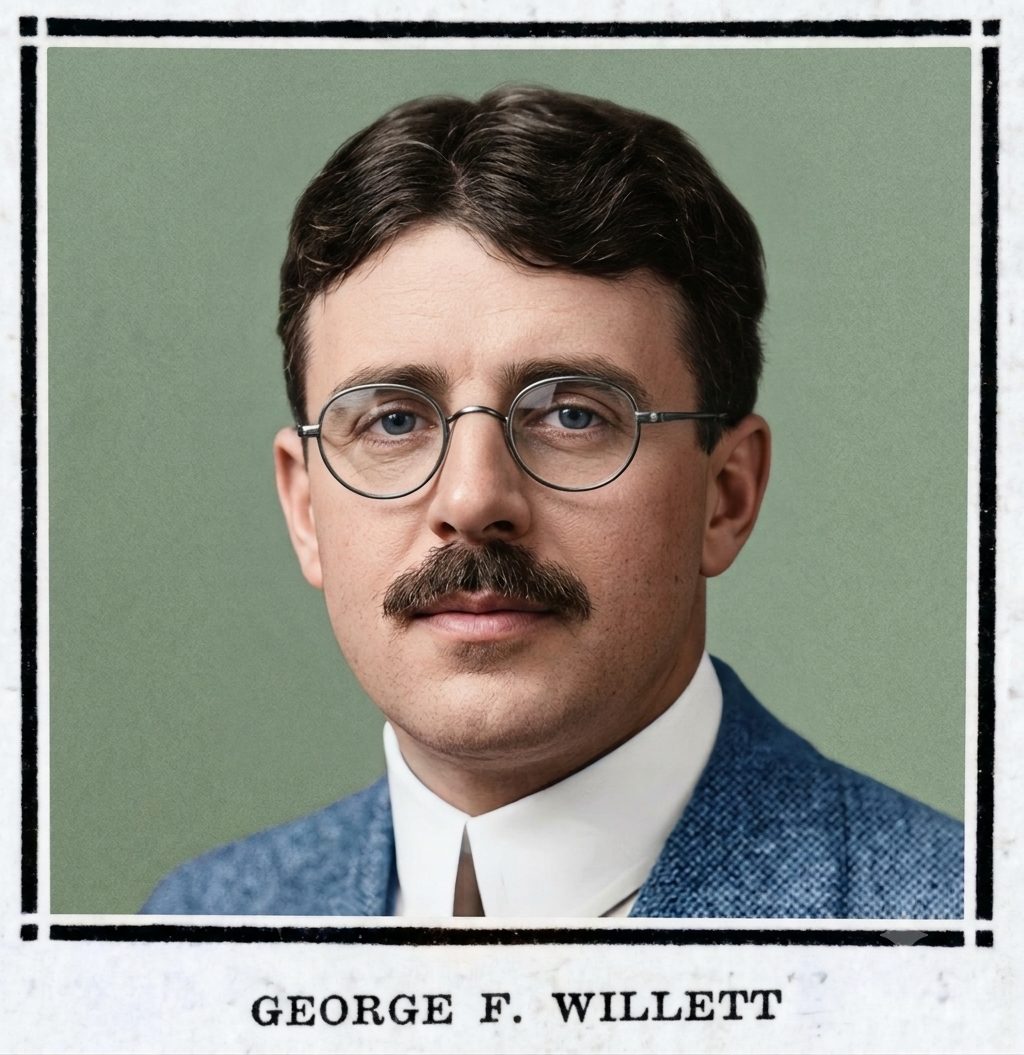
George F. Willett, one of Norwood’s most influential civic figures, surprised the region in 1930 by launching a State Senate campaign.
-
Town Considers Buying Civic Property-This Day In Norwood History-April 22, 1930
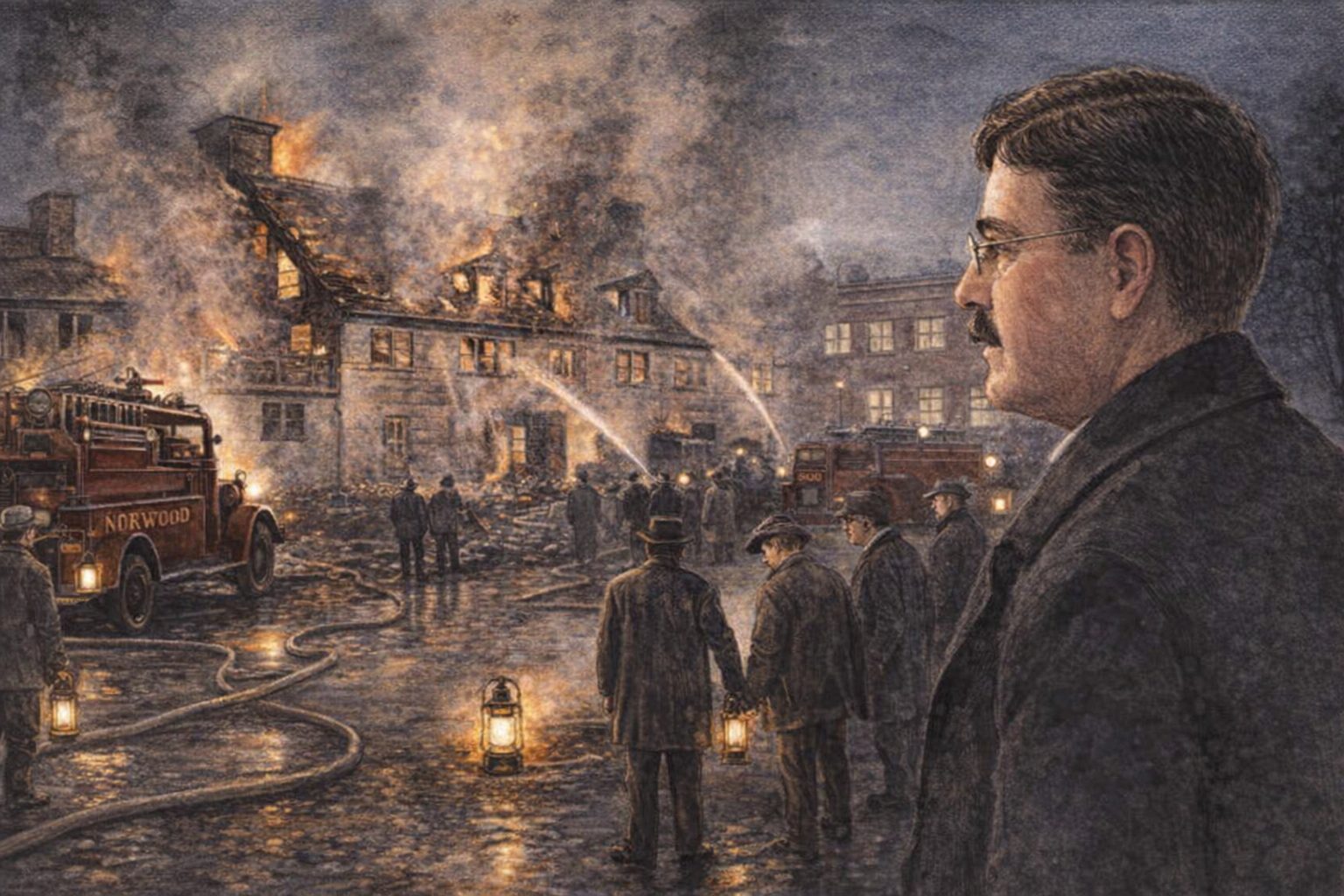
Norwood awoke on April 22, 1930, to the smoldering remains of one of its proudest civic landmarks. The Norwood Civic Association complex, a six‑building group gifted to the town years earlier by philanthropist George F. Willett, was gutted by a fire that began the previous afternoon and raged into the night. Four of the six structures—Everett Hall, the gymnasium, the office building,…
-
Gives Administration Building To Norwood Hospital-This Day In Norwood History-February 24, 1928
ADMINISTRATION BUILDING OF NORWOOD HOSPITAL NORWOOD, Feb 24—The new administration building of Norwood Hospital was opened Wednesday for the first time for inspection. About 800 persons were present at the opening exercises. There remain two weeks for visitation by the public. The new building is the gift of Herbert Mosley Plimpton. Mr. Plimpton has always…
-
More Than 2500 Attend Norwood Hospital Opening-This Day in Norwood History-September 2, 1926
This Day in Norwood History- September 2, 1926- More Than 2500 Attend Norwood Hospital Opening

Discover more from Norwood Historical Society
Subscribe to get the latest posts sent to your email.