

Comprehensive Smoke Detector Subsidy Defeated 87-56 at Town Meeting
Selectman Walter J. Dempsey saw his ambitious proposal to provide a battery-operated smoke detector to every household in Norwood soundly defeated at Wednesday’s town meeting. Billed by Dempsey as a way to “aid luck a bit” and enhance community fire safety across roughly 9,500 to 10,000 local homes and apartments, the full $190,000 town subsidy was rejected by a decisive 87-56 margin, effectively shelving the initiative for the foreseeable future.
The proposal had originated during Dempsey’s political comeback campaign a year prior and earned backing from key town officials, including the fire protection commission, four of five finance commissioners, Fire Chief Leo Coughlin, and Building Inspector John E. Grover. Despite lining up support by calling roughly 50 town meeting members beforehand, Dempsey concluded that opinions were already solidified when members walked through the door.
Reflecting philosophically on the defeat after 25 years in office across three decades, Dempsey quoted Frank Sinatra lyrics: “Life keeps going in cycles.” While acknowledging potential backlash from political adversaries, he expressed disappointment over the safety implications rather than personal pride. “I’m just disappointed everyone in Norwood won’t have a smoke detector,” Dempsey said. “I hope very sincerely that we wouldn’t have any tragedy in Norwood that might reflect back to that night. I wouldn’t want to be right like that.”
Floor Debate, Equity Concerns, and Opposition Blocks
During the floor debate, Dempsey found it unusual that a Norwood firefighter serving as a town meeting member spoke against the subsidy while Chief Coughlin advocated for it from across the auditorium. He also lamented arguments that drew distinctions between average homeowners and residents of apartment complexes like Windsor Gardens. Noting that Windsor Gardens was assessed at $10.6 million and contributed $455,800 in municipal taxes that fiscal year, Dempsey maintained, “They’re all the same and I represent all of them. I value them all and they’re all equal.”
Town Moderator William J. Plasko identified three primary blocks of opposition that sank the measure:
- Town Liability: Some members raised legitimate questions regarding municipal liability if a device malfunctioned after installation.
- Planning Concerns: Another group viewed it as a favorable concept but felt the implementation logistics lacked thorough preparation.
- Government Overreach: A third bloc opposed using public tax subsidies for what they considered an individual’s personal responsibility for self-protection.
Although Joseph M. Pentowski of District 1 suggested referring the proposal to a committee for further study—a move Plasko noted could have kept the plan alive—the suggestion was never formally motioned. Fire Prevention Commission Chairman Paul E. Cotton, who originally backed the plan despite reservations about a full town subsidy, doubted the commission would independently reintroduce the measure. While Dempsey received calls from trade professionals offering assistance, he ruled out bringing the smoke detector question forward again himself, stating any future push would need to originate from the general public.
Archival Note: This article has been dynamically reconstructed from the original public record print archives of the Patriot Ledger
More Town Meeting Stories
-
Referendum Drive Seen Well Underway-June 23, 1981

A rapid grassroots signature campaign aims to stall a major town development project through a public ballot referendum.
-
Civic Center Future Up For Vote-June 15, 1981
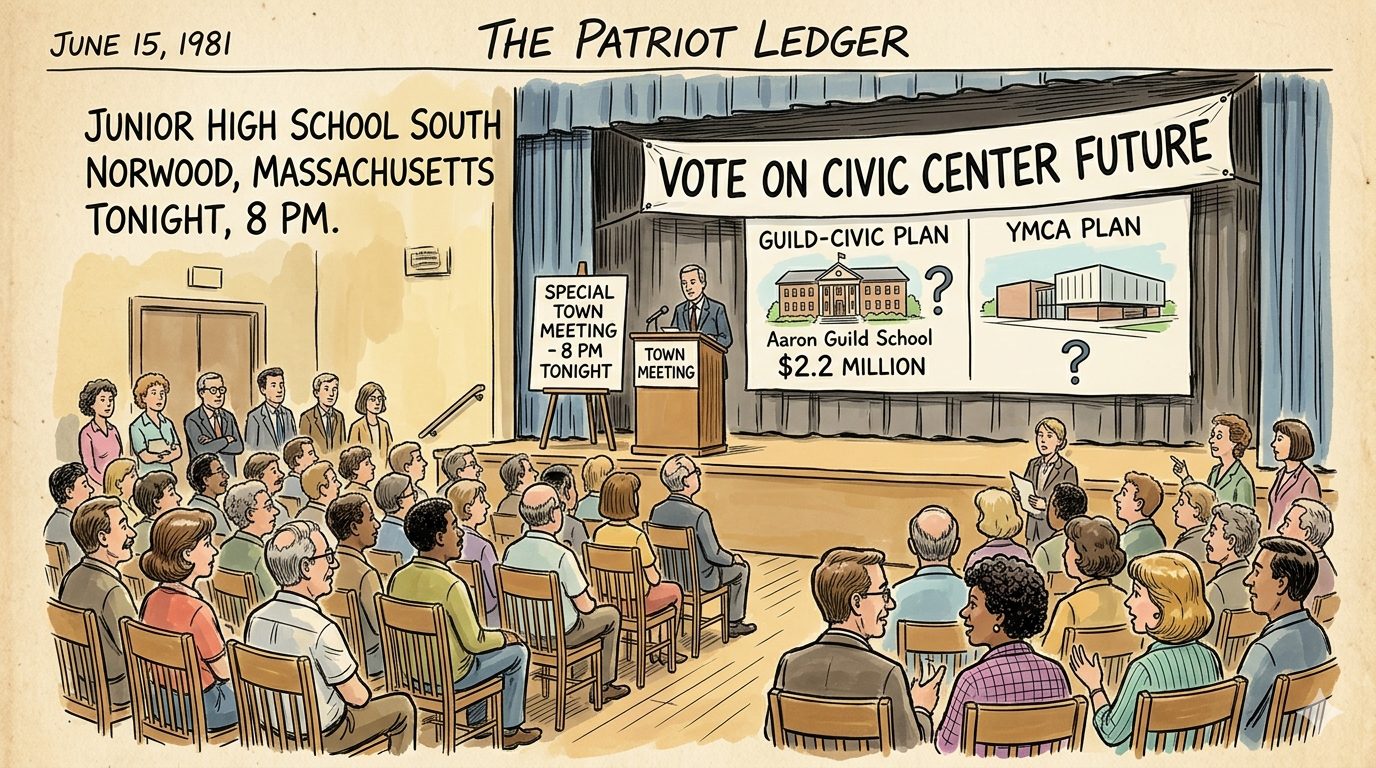
A high-stakes special town meeting agenda features a multi-million dollar Civic Center relocation choice and the $325,250 sale of Winslow School.
-
Special Town Meeting for Civic Replacement Pushed to January ’81-September 11, 1980
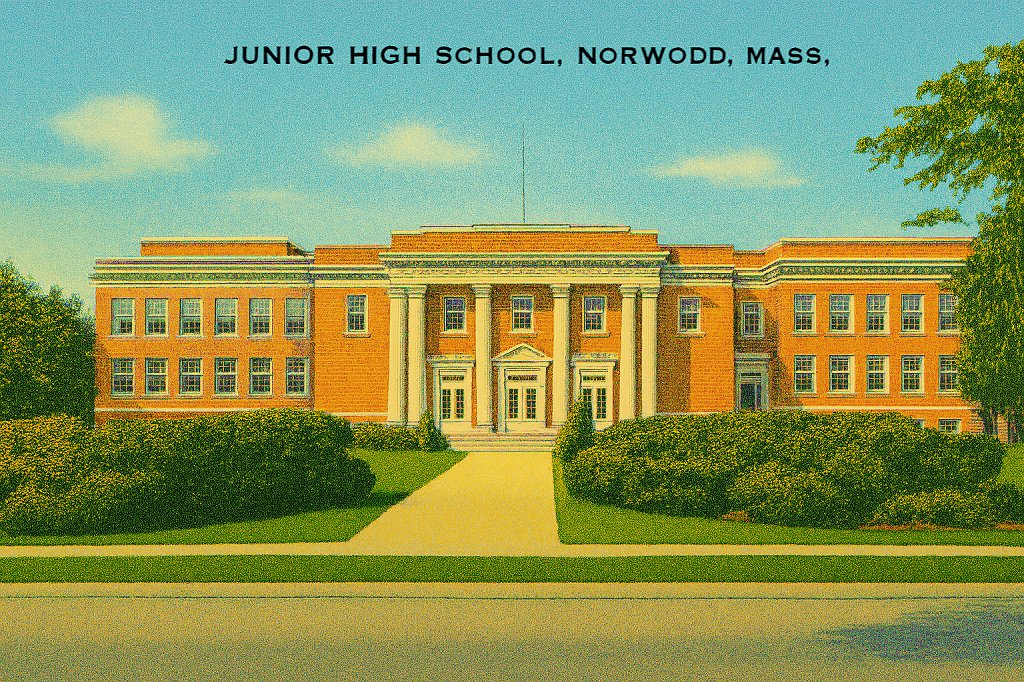
Permanent building construction committee reviews architectural proposals for a new Civic Recreation Center and Olympic-size pool, delaying town meeting funding to January 1981.
-
Norwood Assessors Seek Funds for Mandatory Property Revaluation-July 12, 1979
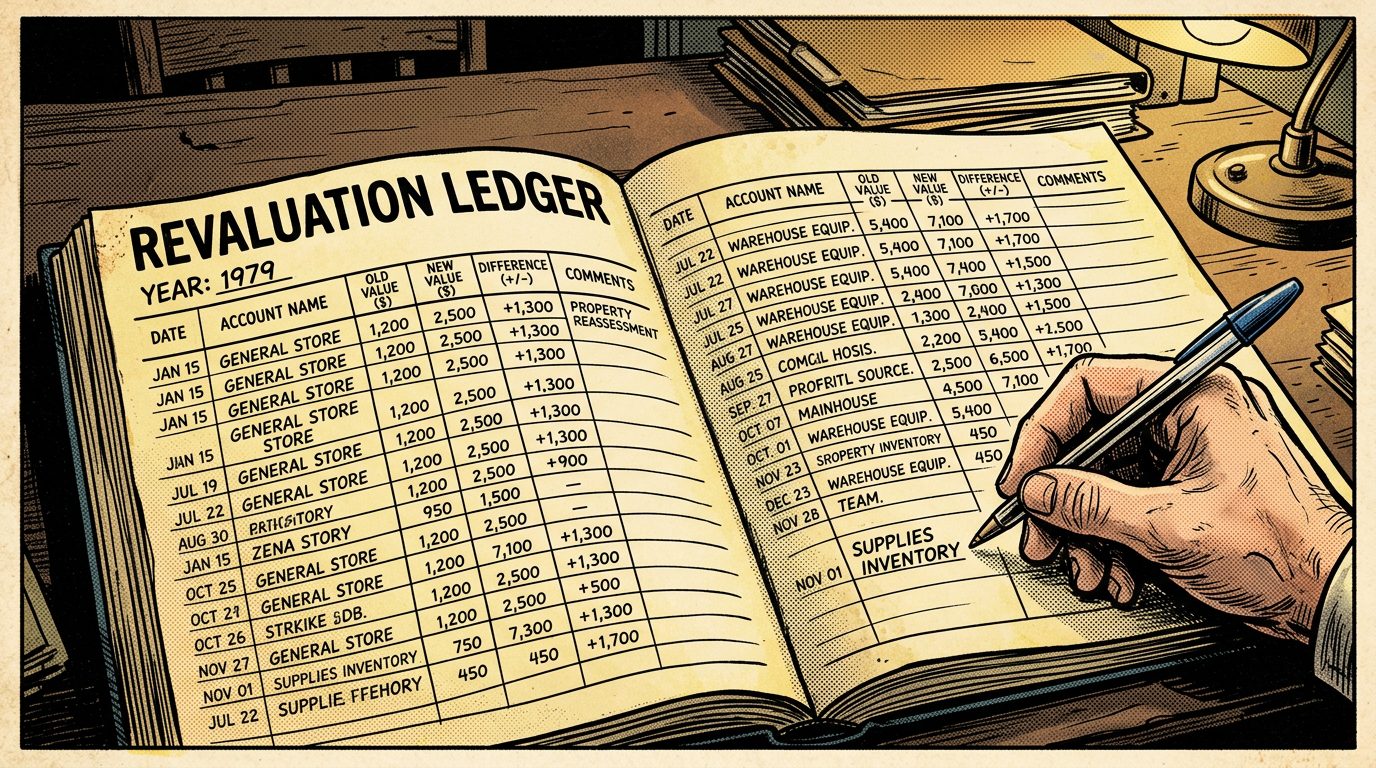
Faced with noncompliance penalties, Norwood officials are moving to revalue properties to 100 percent of market value to maintain local fiscal control.
-
School Board Recall Urged-July 8, 1978
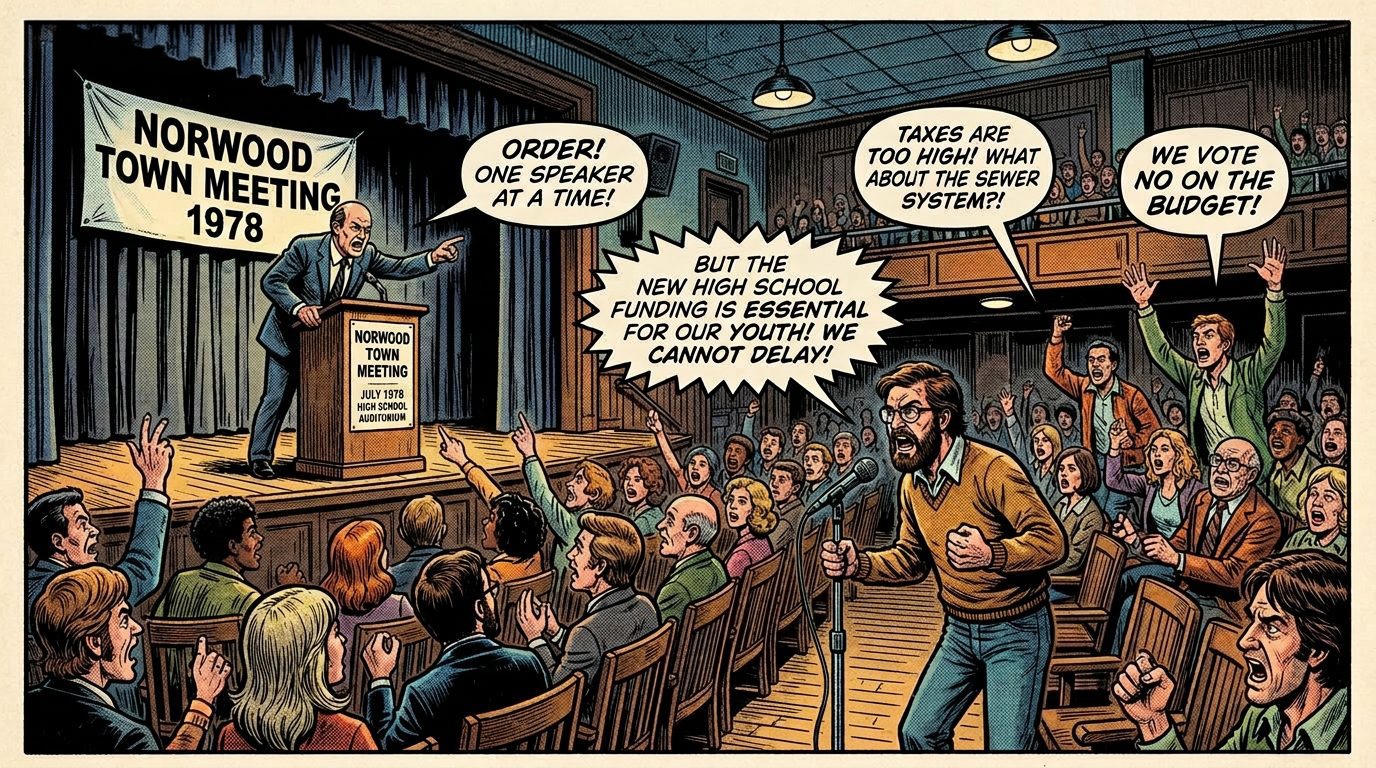
Discover the 1978 budget battle in Norwood, where deep cuts to the school district’s $11.3 million budget led to a controversial recall effort and a lawsuit involving the Massachusetts Teachers Association.
-
High-Stakes Overhaul for the Historical Village Inn-This Day in Norwood History-June 28, 1978

A 1978 town hall showdown unloads a $100,000 renovation plan for The Village Inn amidst a staggering $700,000 municipal energy deficit.
-
Tight-Fisted Town Meeting Holds Firm On School Department Budget Cuts-June 22, 1978
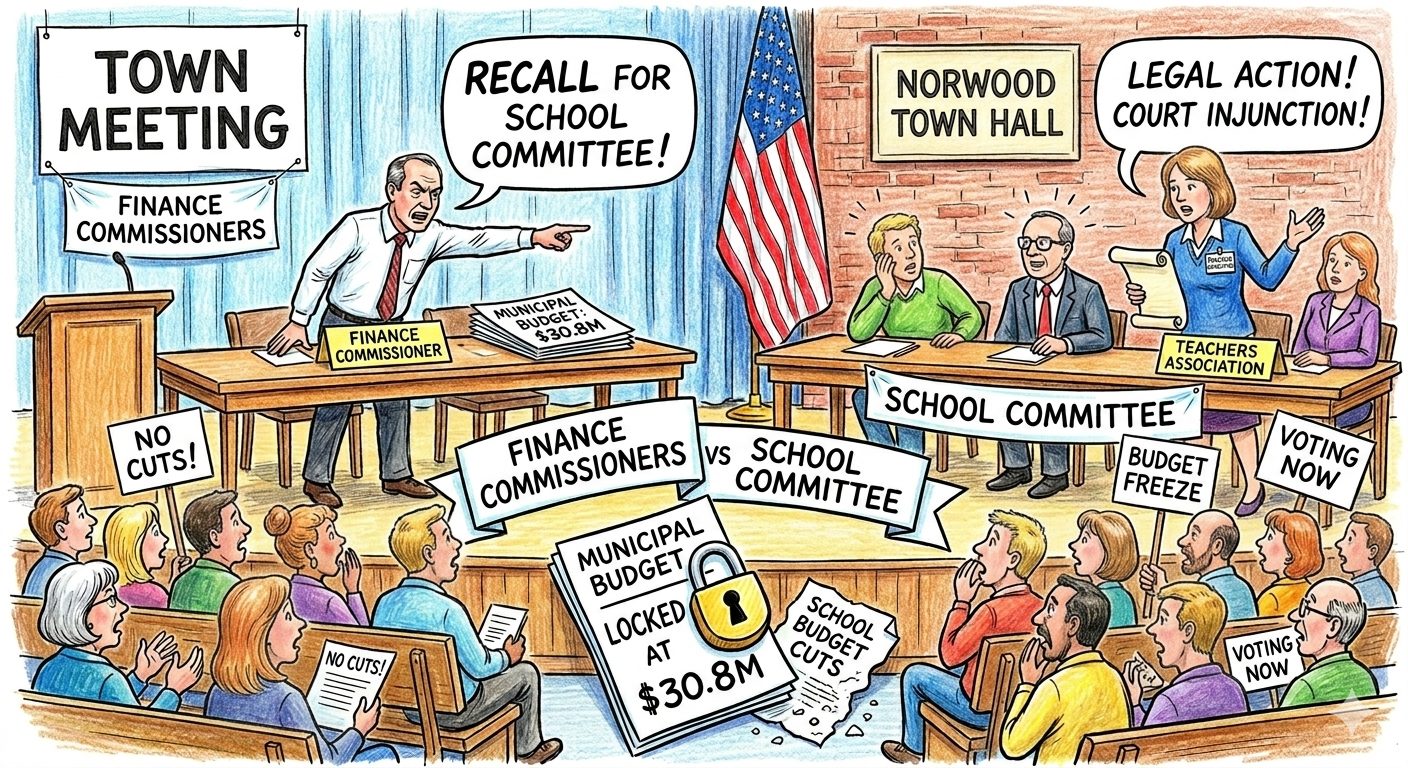
A deadlocked floor fight over a massive school funding reduction brings threats of lawsuits, board recalls, and a complete municipal showdown.
-
Town Meeting Slashes General School Budget But Restores Athletic and Band Funding-June 21, 1978

A historic five-session town meeting sparks fierce debates over elementary school closings and safety gear lines.
-
Acting Fire Chief Warns Town Meeting of Impending Court Mandates Over Shift Understaffing-June 17, 1978
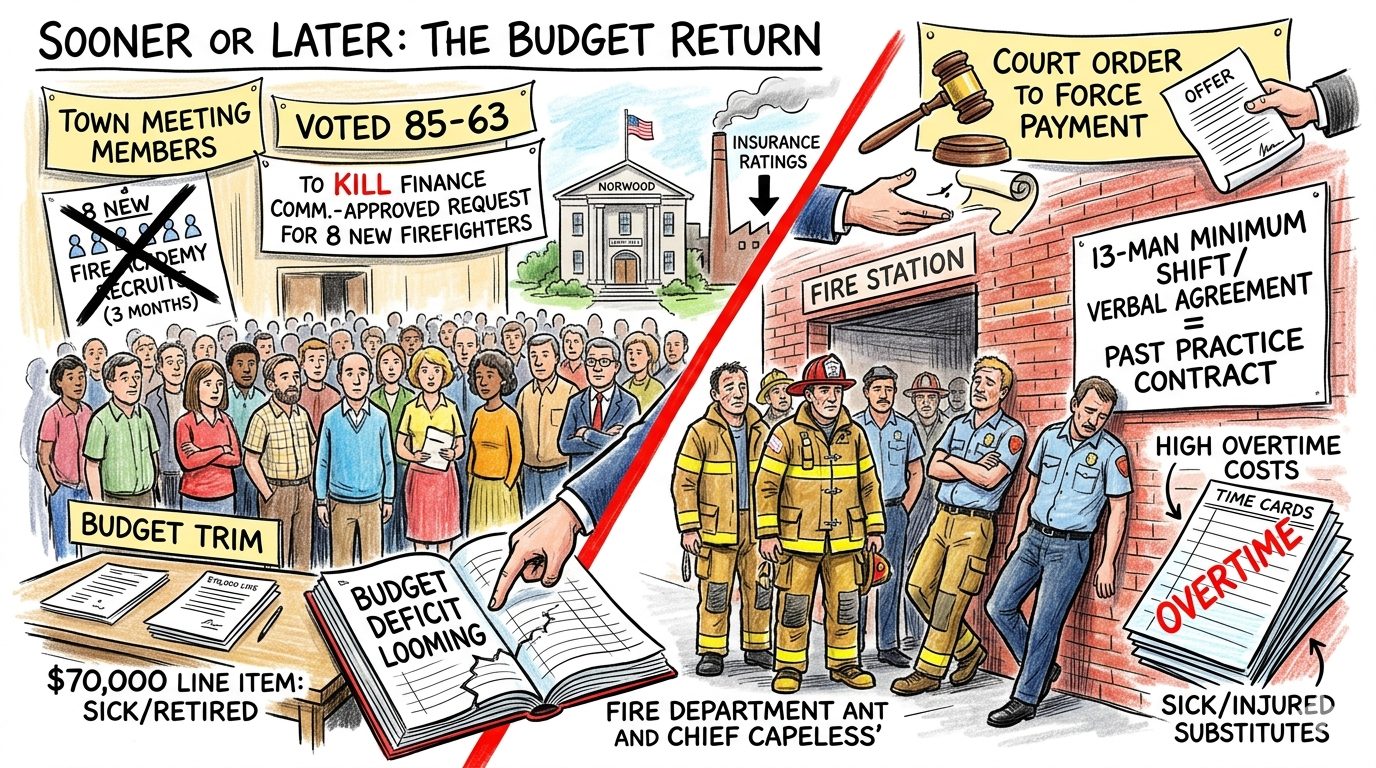
A contentious town meeting vote rejecting eight new firefighters setup a fiscal standoff at Town Hall.
-
Norwood Considers Limits on Yard and Garage Sales-This Day in Norwood History-May 27, 1978
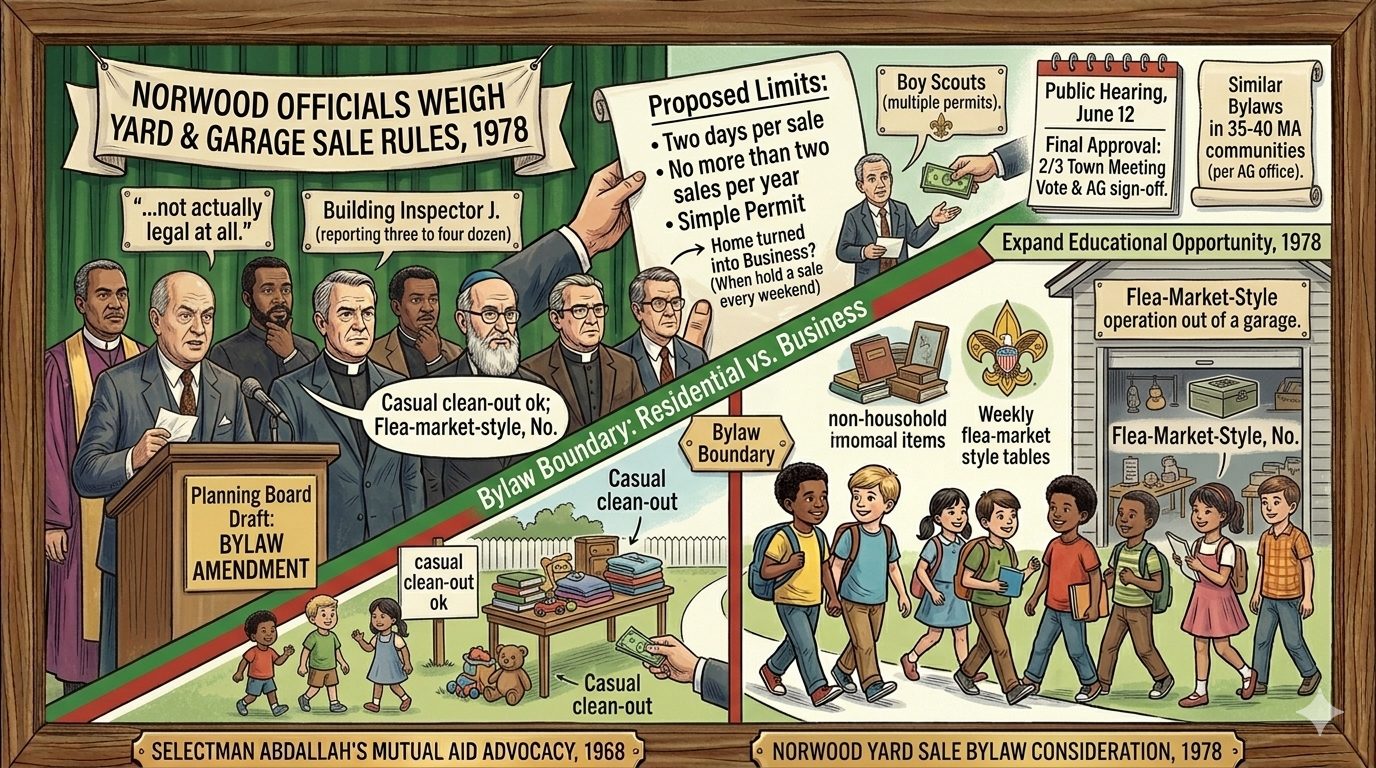
Did you know that backyard yard sales were technically illegal in Norwood under a strict reading of 1970s zoning laws? To resolve a wave of neighbor complaints about perpetual weekend flea markets, town officials stepped in to draft a new permit system. Discover how close Norwood came to capping your summer garage sale finds.
Discover more from Norwood Historical Society
Subscribe to get the latest posts sent to your email.