
Fire Chief Thomas J. Barry and Postal Supervisor John Nagle Explain How First Responders and Veteran Carriers Navigate Twin Thoroughfares and Sound-Alike Roads
NORWOOD – What is in a street name? In Norwood, the answer could easily be confusion—particularly for an out-of-town visitor searching for one of the 16 street names across town that do double duty on different roadways. Reported in The Patriot Ledger on Thursday, November 24, 1983, by staff writer Barry N. Smith, Norwood’s map featured sixteen shared root names—Baker, Beacon, Berwick, Cedar, Chapel, Douglas, Everett, Johnson, Lenox, Mayfair, Morse, Nahatan, Pleasant, Prospect, Rock, and Walnut—each attached to more than one street, lane, road, or traveled way.
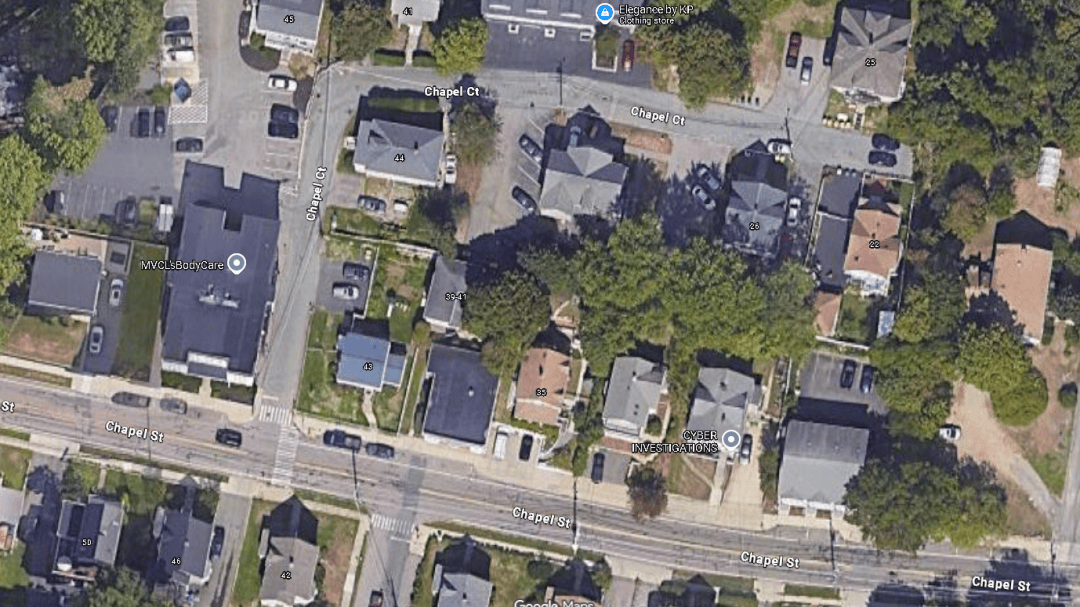
In several cases, the paired names shared a logical geographic connection: Mayfair Circle branched directly off Mayfair Street, just as Chapel Court led off Chapel Street. Elsewhere, however, similarly named ways sat in entirely different parts of town. Berwick Place did not connect to Berwick Street, instead running in opposite directions on opposite sides of Walpole Street. Morse Street lay nowhere near Morse Avenue, and Baker Street near the town center stood miles apart from Baker Avenue in South Norwood.
Because several of the duplicate-named ways contained only a handful of homes, the overlap rarely disrupted daily routines—until a Baker Avenue resident lodged a formal complaint that reached the Board of Selectmen. The resident reported that a salesman trying to reach his home had stopped at both the police and fire stations for directions, only to find neither department able to tell him where Baker Avenue was located. Raising alarm over whether emergency vehicles could reach the two-home street in a crisis, the resident later confirmed the issue was resolved after selectmen wrote back assuring him that both police and fire personnel knew the distinction between the two Baker roadways.
Norwood Fire Chief Thomas J. Barry—who had arrived in Norwood five years earlier from El Cerrito, California—dismissed the “off-the-wall” complaint bluntly. “They damn well know the difference,” Barry said. “Even the chief knows.” While acknowledging that Norwood had the worst case of street-name duplication of any municipality where he had served, Barry maintained that duplicate names rarely tripped up firefighters (“That stuff is pretty well known to us”). Instead, he explained, dispatchers faced greater difficulty with sound-alike street names spoken over the telephone—such as Barberry and Jayberry lanes, or Day Street and Gay Street. Whenever doubt arose during an emergency call, dispatchers asked callers to spell the street name rather than repeating what the dispatcher thought was heard, since callers under stress tended to agree automatically.
Even with 16 duplicate street names on the books, Barry strongly advised against renaming existing streets. “The aggravation is not worth the end result,” he said. “I saw it done a few times and I thought there’d be a full-scale riot.” Recalling his prior tenure as fire chief in Acton, where officials renamed streets originally named after a contractor’s family, Barry noted that updating fire department maps alone cost $600. Rather than retroactively changing established names, Norwood focused on preventing future conflicts by having the Planning Board consult Chief Barry before approving new street names—though Barry noted he still had one unresolved objection: the proposed Queen’s Court apartment complex on Wilson Street, which sounded too similar to Queensboro Court, a row of townhouses off Nahatan Street.
At the Norwood Post Office, John Nagle, supervisor of delivery and collections, likewise characterized the duplicate street names as a “very small problem.” Although senders occasionally omitted “Street” or “Avenue” on envelopes, Nagle noted that Norwood’s seasoned letter carriers—averaging roughly 15 years of service—knew the residents along their routes, backed by experienced sorting clerks who kept the mail moving smoothly.
Source: The Patriot Ledger • Thursday, November 24, 1983 • Byline: Barry N. Smith
“The aggravation is not worth the end result. I saw it done a few times and I thought there’d be a full-scale riot.”
| 1983 Reference Cost | 1983 Amount | 2026 Equivalent |
|---|---|---|
| Fire Department Map Updates After Renaming Streets in Acton | $600 | ~$1,920 |
-
Market and Central Street Relocation
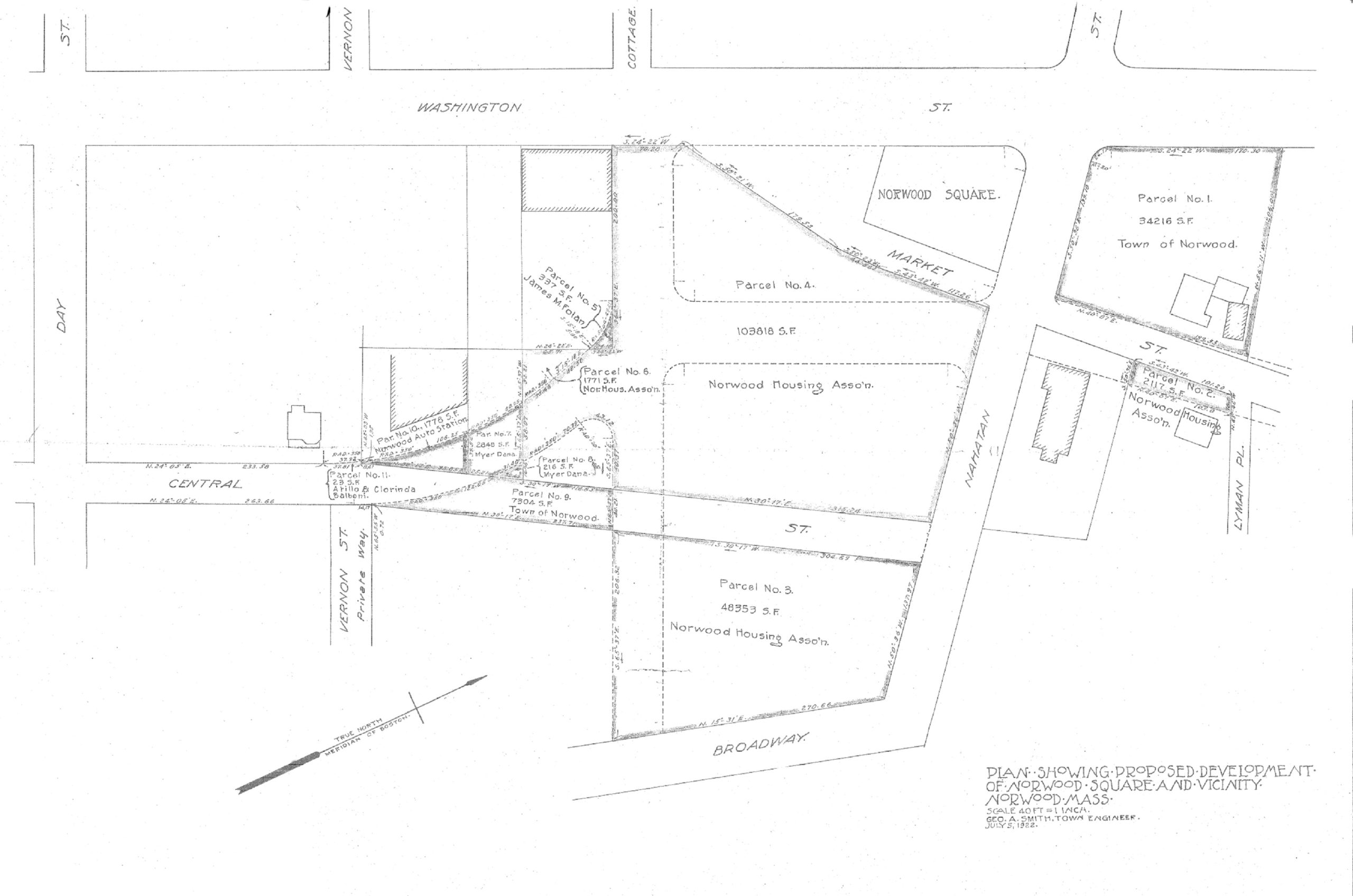
This September 1910 plan of John E. Smith’s Estate shows a very different downtown area than we recognize today. At that time, Market street ran from Old Parish Cemetery to Nahatan st, then turned diagonally Westward toward Washington street, cutting across the lot where the Town Common is now and ending close to the present-day…
-
The Battle Over Norwood’s “Last Large Subdivision”-June 2, 1969
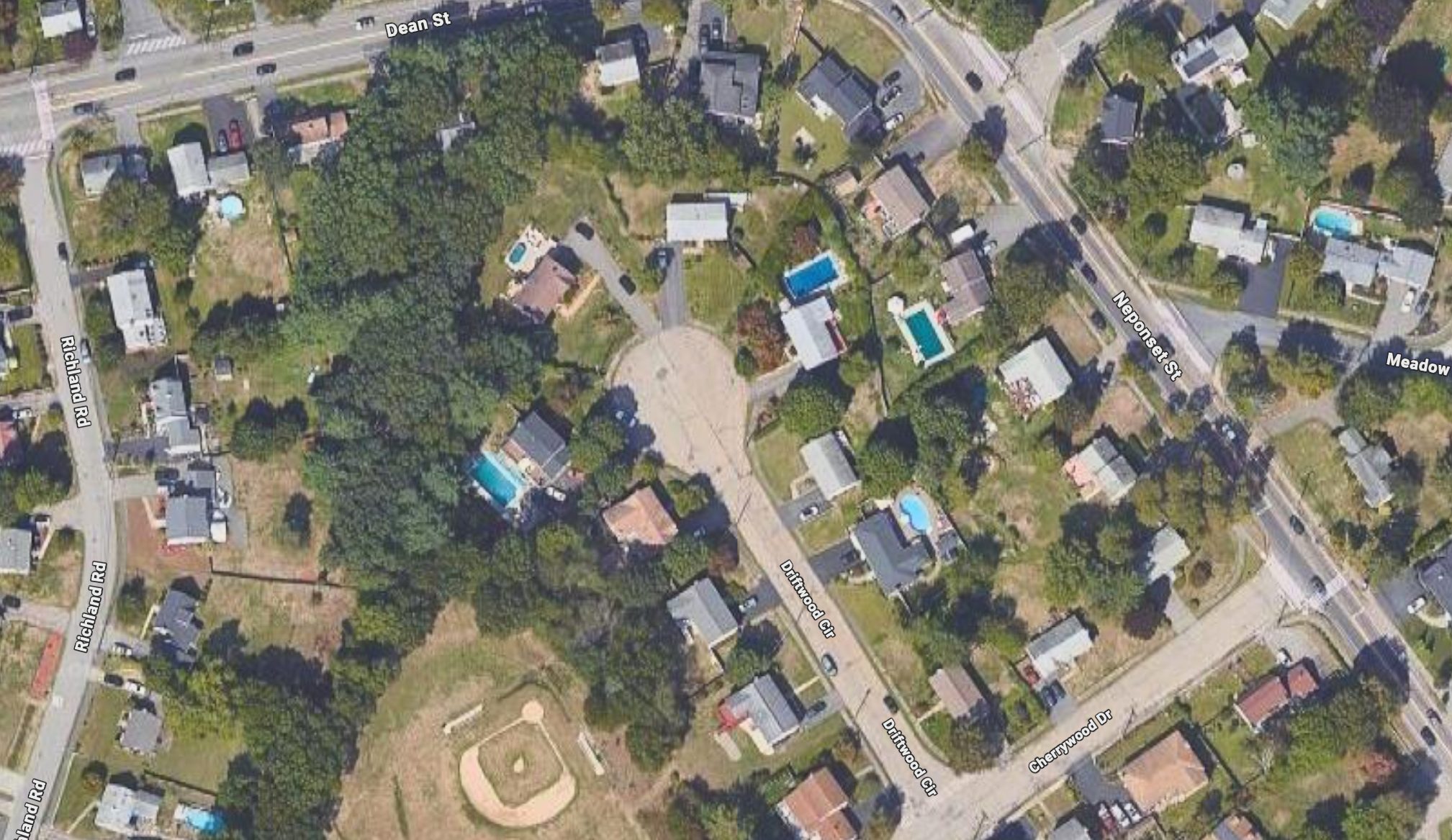
By the late 1960s, the post-war housing boom that had rapidly transformed the landscape of Norfolk County was rapidly running out of room. In Norwood, a town long characterized by its tightly knit neighborhoods and industrial grit, municipal planners were staring down a major milestone: the imminent vanishing of open residential space. When the Norwood…
-
Town Meeting Approves New Street After Heated Debate-This Day In Norwood History-April 2, 1900
A special town meeting held this evening at 7 p.m., followed by an adjourned session at 8, resulted in several major appropriations and a contentious vote over the acceptance of a newly laid‑out street. At the special meeting, voters approved $3,950 in appropriations and accepted a statute permitting towns to issue bonds for waterworks…
Discover more from Norwood Historical Society
Subscribe to get the latest posts sent to your email.