
By the late 1960s, the post-war housing boom that had rapidly transformed the landscape of Norfolk County was rapidly running out of room. In Norwood, a town long characterized by its tightly knit neighborhoods and industrial grit, municipal planners were staring down a major milestone: the imminent vanishing of open residential space.
When the Norwood Planning Board gathered on Monday, June 2, 1969, the central item on the docket was a housing proposal that planners openly called “the last large subdivision in this town.”
Showdown on the Old Stitt Property
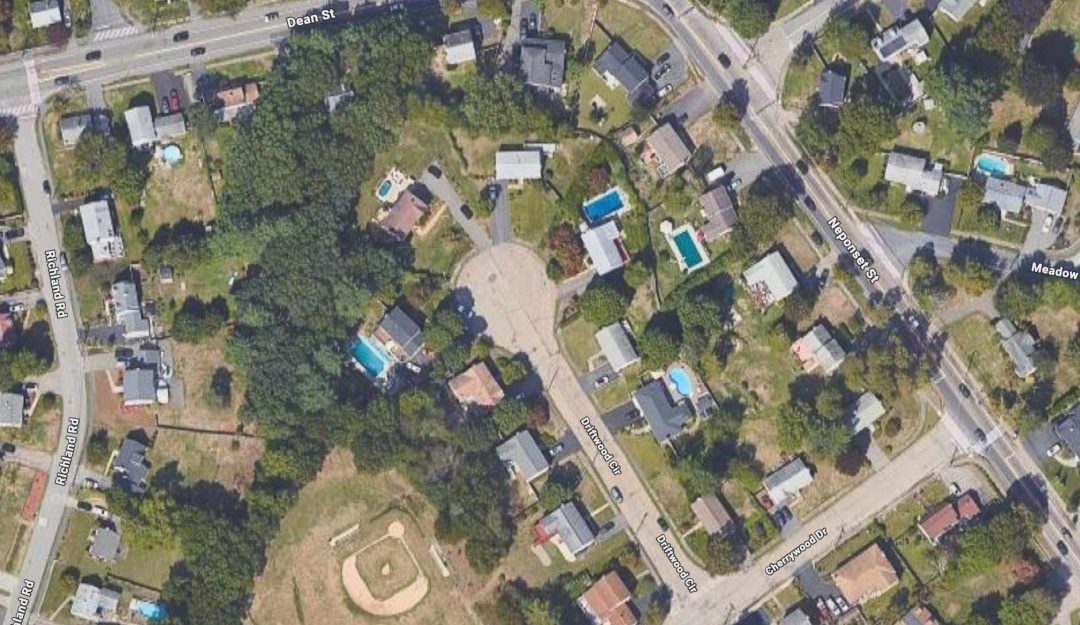
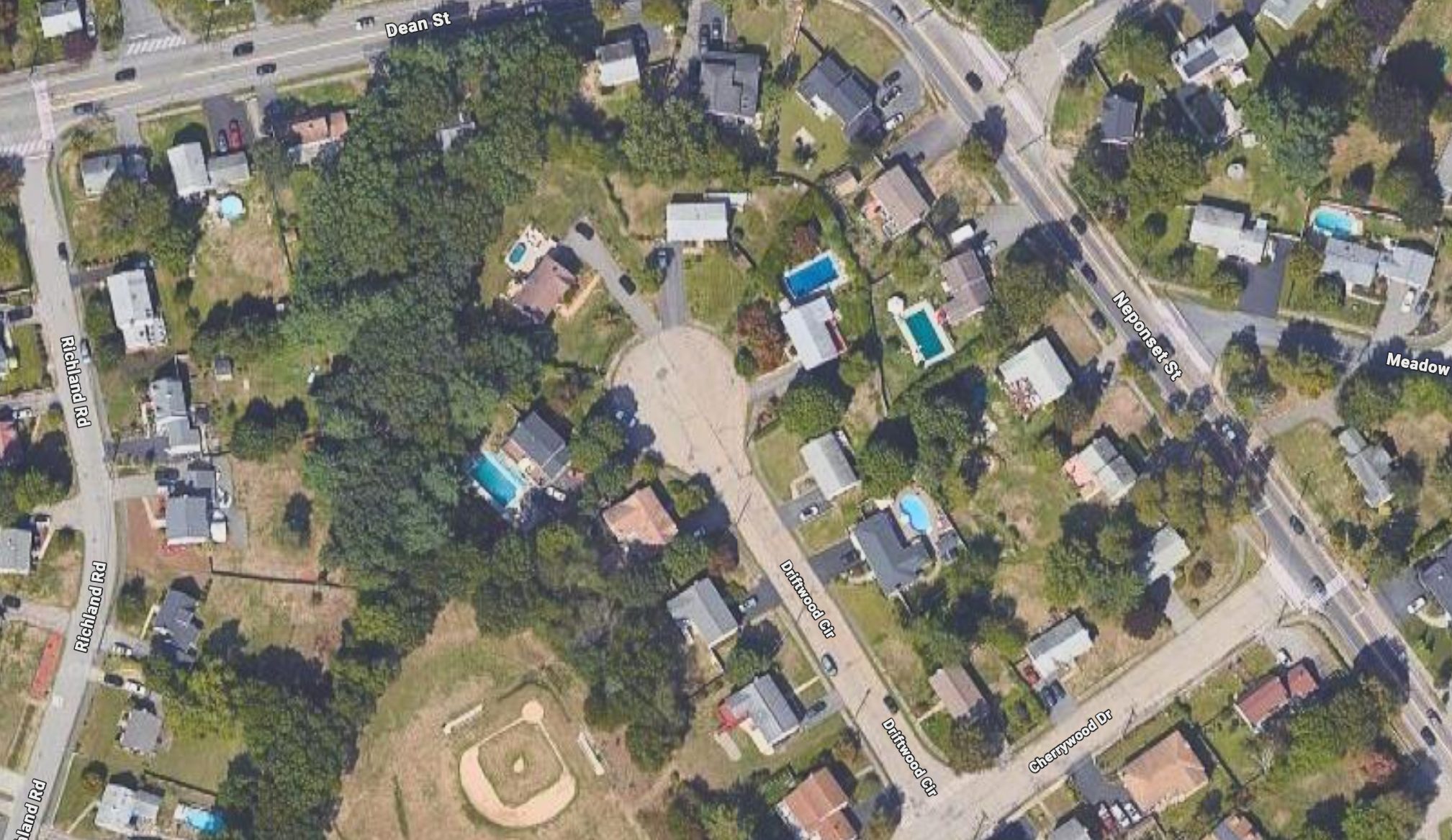
The proposal came from prominent local builder Frank J. Simoni, who sought approval to construct approximately nine single-family homes on a tract of land bordered by Prescott Road (Cherrywood Drive), Dean Street, and Neponset Street—historically known to locals as the “old Stitt property.” According to the board, this was the final remaining large plot of open land within Norwood’s borders that could be subdivided for a residential neighborhood.
However, the hearing quickly hit a procedural roadblock. Because several direct abutters to the property had not been properly notified, and a formal recommendation report from the town engineer was still outstanding, the board voted to defer any official action until their upcoming June 16 meeting.
Despite the delay, the brief discussion exposed the immediate neighborhood anxieties surrounding the project:
- The Dust & Dirt Compromise: Prescott Road was entirely unpaved in 1969, a constant source of frustration for current residents who frequently complained about excessive dirt and choking dust. In a bid to win over the board and neighbors, Simoni offered a trade-off: he would personally pave a 50-foot stretch of Prescott Road (at a width of 26 feet) if the planners agreed to waive the standard municipal requirements for concrete curbing and sidewalks within the new development.
- The Traffic Grievance: Abutter Joseph Mulligan stepped forward to aggressively object to the new development using Prescott Road as an access point. Mulligan warned that funneling construction vehicles and future residents down the street would severely aggravate the already intolerable dust conditions.
- The Sewerage Question: Infrastructure capacity was a major concern for a development of this size. Bartley J. King, representing the Board of Health, stepped into the debate to suggest that the town’s main sewer line on Neponset Street would need to be formally extended to properly service the new subdivision.
Other Planning Board Business: Route 1 Car Dealer & University Ave
While the Simoni subdivision dominated the evening’s philosophy, the Planning Board moved quickly through several other high-profile commercial and residential development items shaping the town’s tax base:
1. Special Town Meeting Warrant Articles
The board accepted six separate zoning articles to be printed in the warrant for the upcoming June Special Town Meeting. While the board noted this was a procedural inclusion and did not indicate their official approval or disapproval, the articles signaled massive changes on the horizon:
- A request by Carl A. Johnson to rezone a prime tract of land on Route 1 near the overpass from residential to manufacturing for a proposed new automobile dealership.
- A request to rezone Washington Street property near Water Street to general residence.
- A cluster of four separate articles seeking to rezone land near Fisher Gardens on Neponset Street from general residence to multi-family residence, opening the door for apartment styles.
2. Commercial Delays on Route 128
Planners abruptly sent back a request for plan approval for a major commercial lot sitting off University Avenue. The plans were drawn up to accommodate a massive new warehouse for the National Lead Company, but the board rejected the paperwork because the developer had completely omitted the lot’s precise street frontage measurements.
3. Union Street Expansion
Preliminary plans submitted by John Lanzoni for a smaller, four-lot subdivision of single-family homes on Union Street were officially reviewed. To ensure safety and neighborhood compliance, the board voted to demand formal inspection reports from both the Fire Department and the Board of Health. Lanzoni noted that as part of the infrastructure adjustments, an existing municipal fire hydrant would be fully moved and reinstalled at his own expense.
Did you grow up around Prescott Road (Cherrywood Drive), Dean Street, or Neponset Street, or do you live in the neighborhood built on the old Stitt property? We are actively documenting how Norwood’s neighborhoods transformed as the town reached its development limits. Share your memories, map plots, or neighborhood lore with us at norwoodhistoricalsociety.org!
Discover more from Norwood Historical Society
Subscribe to get the latest posts sent to your email.