
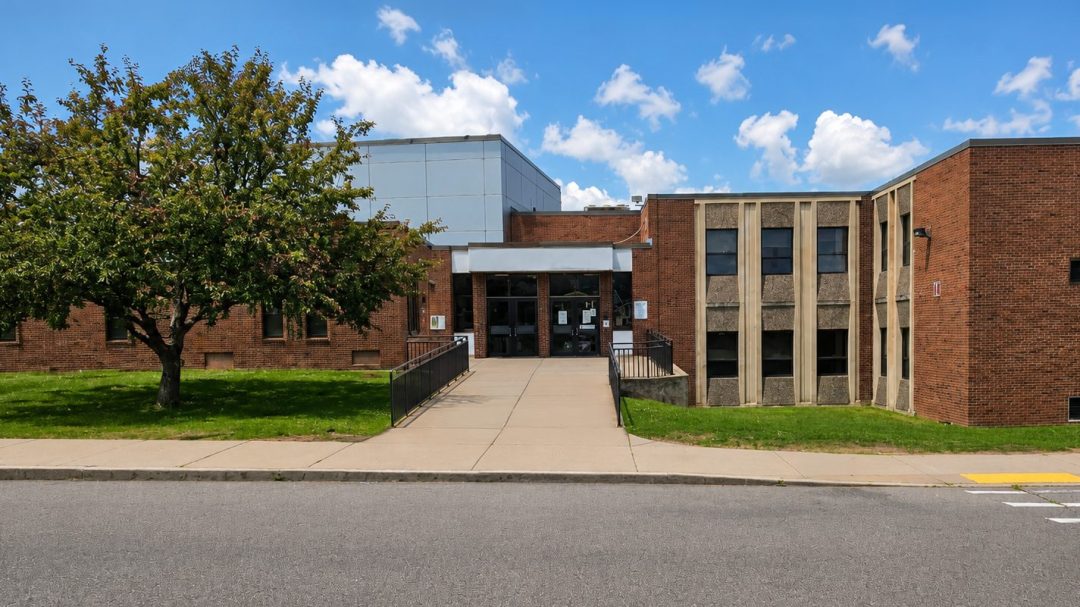
School Committee and Selectmen Press Bonding Company Over Persistent Leaks
Town officials are aggressively investigating options to replace the chronically leaky roof at Junior High School South before its 10-year warranty expires in 1984. The school department has formally urged the Board of Selectmen to demand that the bonding company insuring the roof either fund a complete replacement or grant an extended warranty.
School Committee member Roger M. Pelletier—who also serves on the permanent building construction committee—revealed that the roof has leaked persistently almost since the day the school was constructed. While the bonding company has acknowledged the defects and covered the costs of frequent patchwork over the years, Pelletier emphasized that patching is no longer sufficient: “We’ve got to cover ourselves now. The roof hasn’t performed well to any degree.”
Pelletier explained that waterproof insulation frequently breaks loose, allowing water to penetrate and damage interior ceiling tiles and walls—a destructive cycle that worsens when trapped water freezes and causes further insulation to fracture. Although the exact root cause remains undetermined, Pelletier noted that the bonding company closely supervised the original construction to ensure proper installation standards were met. If the warranty is not extended to cover a replacement, the town would face substantial out-of-pocket repair costs, though total estimates have not yet been calculated.
Mystery Surrounds High Utility Costs at Junior High School South Versus North
In addition to the roofing crisis, Pelletier called for a comprehensive municipal study to determine why utility costs at Junior High School South are nearly double those of Junior High School North, despite the two educational facilities being nearly identical in architecture.
The significant cost discrepancy has baffled town officials for several years. While Junior High School South features central air-conditioning and lighted athletic ballfields, Pelletier noted that those factors account for only a small fraction of the vast utility expenditure gap between the twin buildings.
Archival Note: This article has been dynamically reconstructed from the original public record print archives of the Patriot Ledger
More…
-
Norwood Voters Approve Tax Increase To Build New Coakley Middle School-April 10, 2022
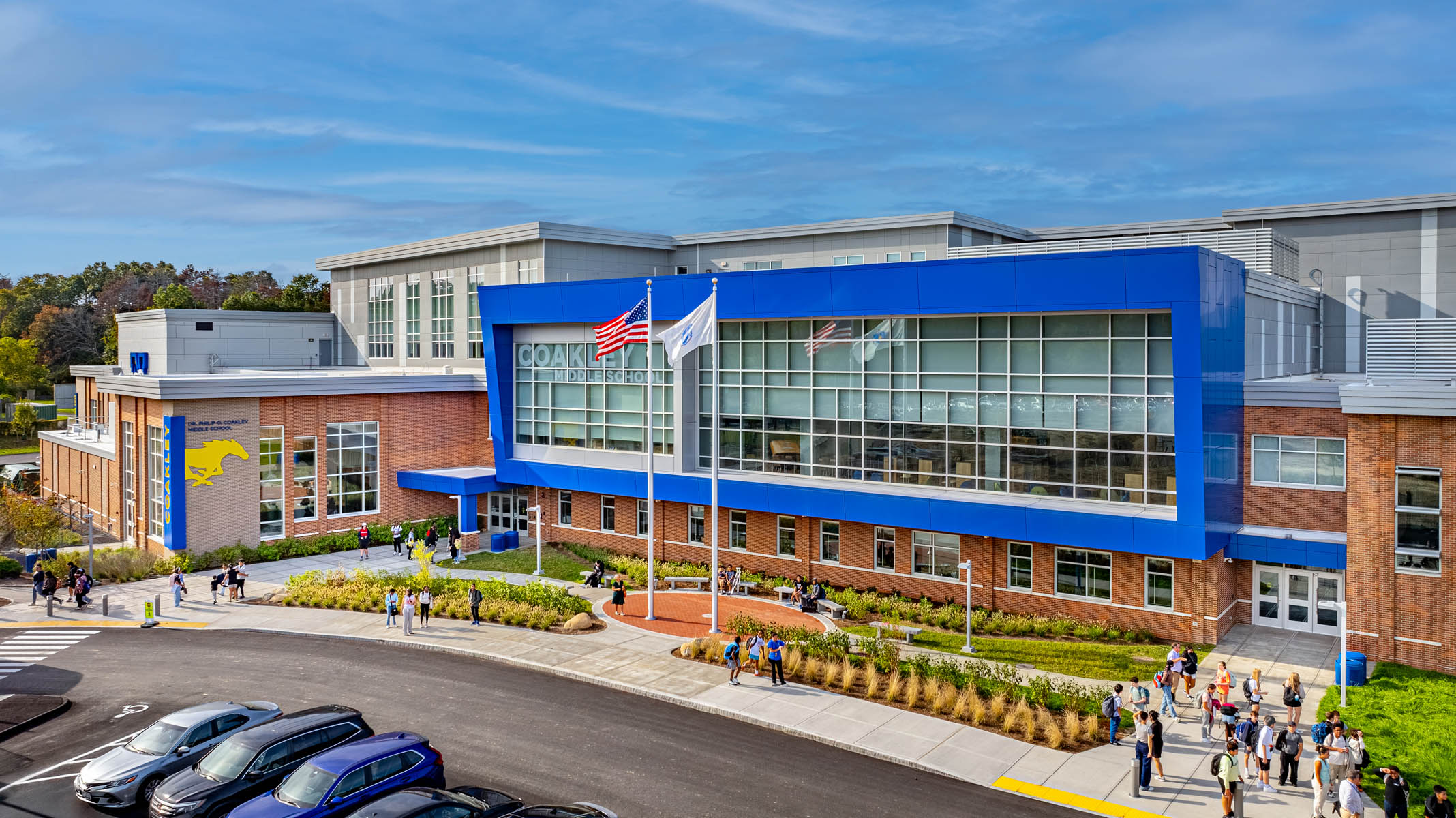
Norwood residents delivered a decisive vote, choosing to raise local taxes in order to fund a long‑awaited new middle school. The ballot question passed by a wide margin — 2,365 to 831 — clearing the final hurdle required under Proposition 2½ for the town to take on additional debt. The vote followed a Special Town…
-
Voters Approve New Norwood High School-April 12, 2009

Norwood High School Project Faces Delay Despite Overwhelming Voter Support On April 12, 2009, Norwood found itself at a dramatic crossroads — one defined by overwhelming civic unity on the one hand, and a sudden, unexpected construction setback on the other. Just days earlier, Norwood residents had delivered one of the most decisive votes in…
-
Norwood Adopts Whitman-Hanson School Prototype Model to Save Time and Money on New High School Construction-September 13, 2008
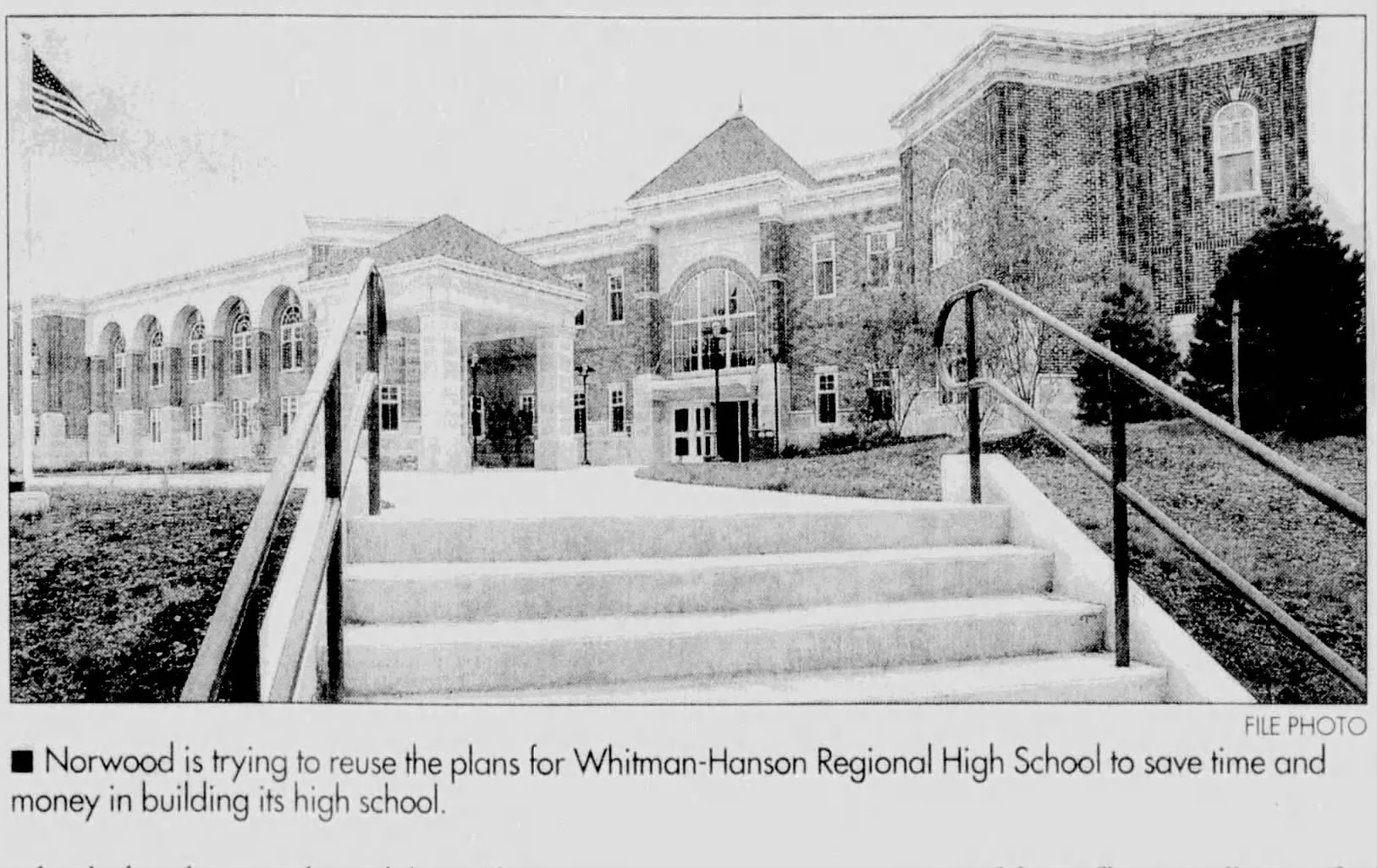
Norwood attempts to save time and money on its new high school construction project by reusing the architectural blueprints of Whitman-Hanson Regional High School.
-
Norwood High School Renovation Plans Scrapped in Favor of New Building-October 15, 2005
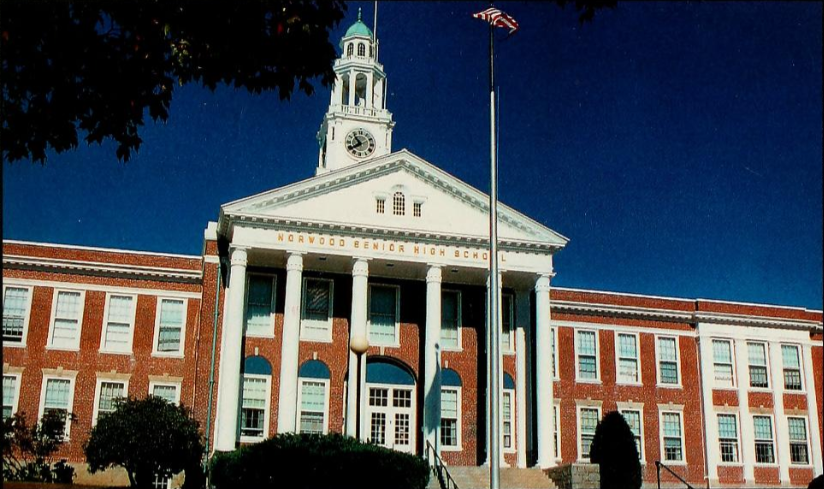
Facing accreditation warnings and failing infrastructure, Norwood’s School Facility Task Force votes overwhelmingly to pursue a new high school building.
-
Norwood School Officials Weigh Alternatives as Renovation Delays Threaten High School Opening-August 8, 1985
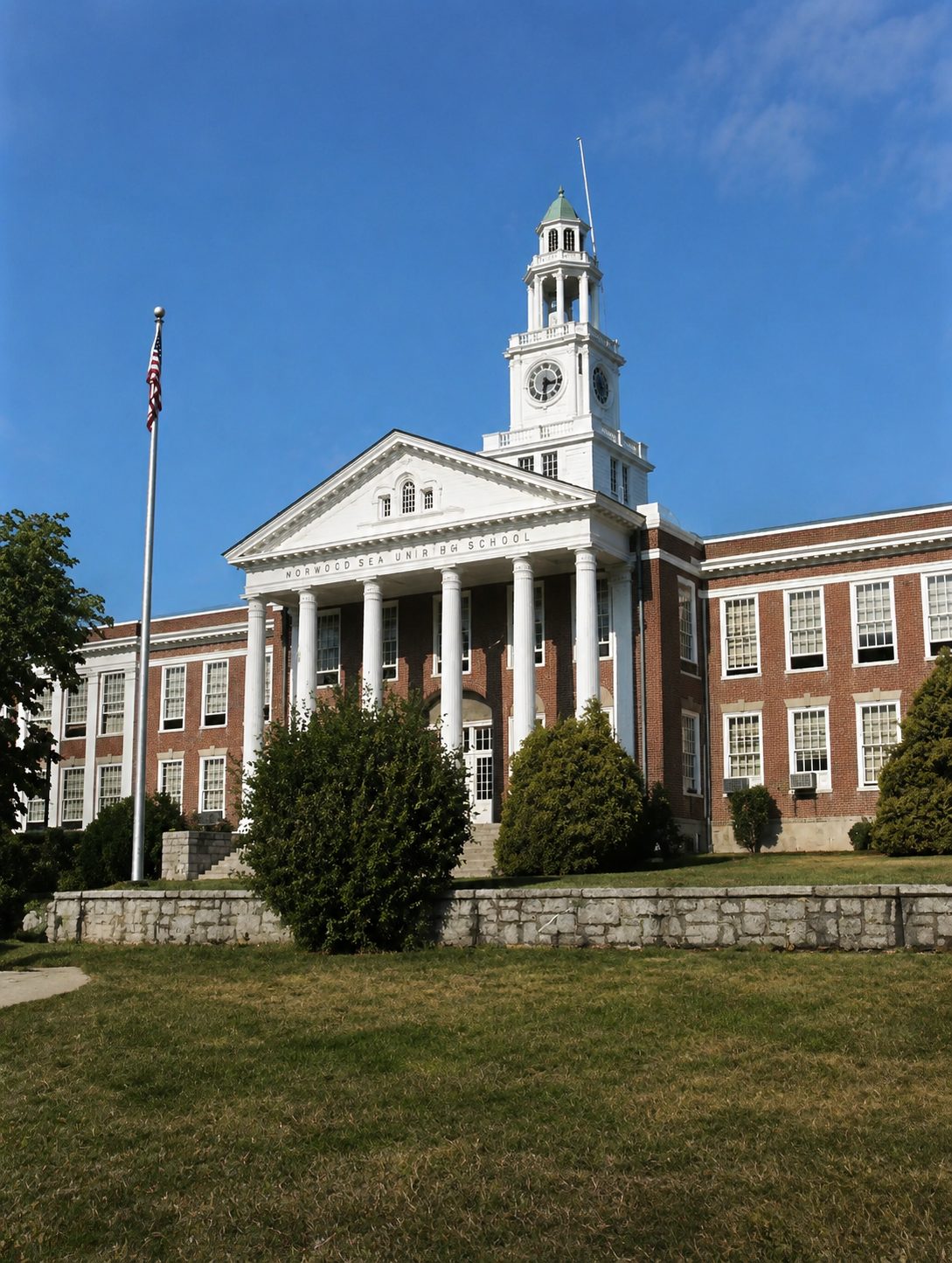
Norwood school officials discussed seven alternatives for opening day if $5 million high school renovations are not finished, while firmly rejecting double sessions.
-
Completion of Norwood High School Renovation Remains Uncertain-July 18, 1985
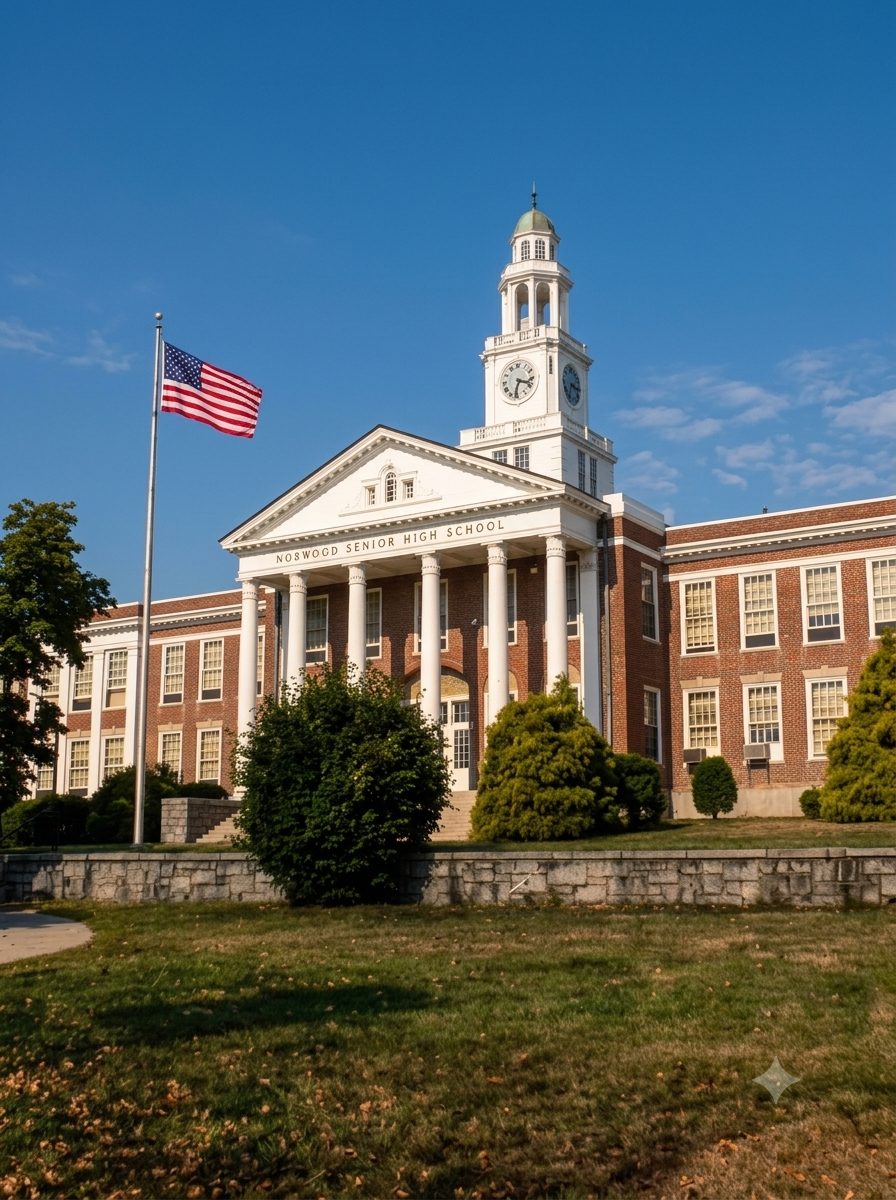
Town officials are uncertain if the $5 million Norwood High School renovation will be finished before the start of the fall semester.
-
Incomplete Sprinkler System Threatens Extended Half-Day Sessions at Norwood High School-September 9, 1976
Norwood High School may remain on half-day sessions due to incomplete sprinkler installation by ABC Sprinkler Co., prompting school committee threats of legal action.
-
Prospects Improve for On-Schedule Opening of Junior High South-July 26, 1974
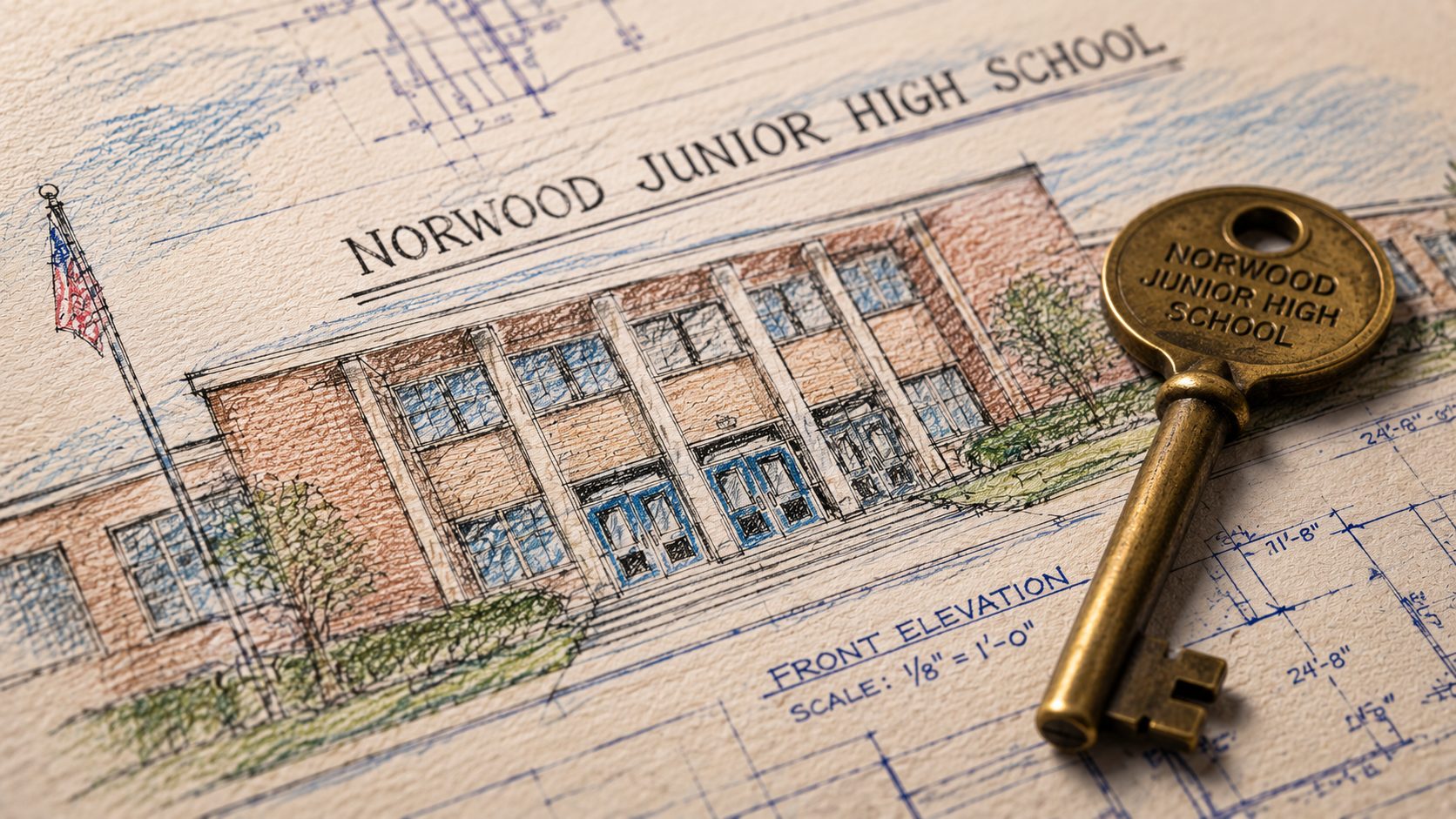
Norwood’s Permanent Building Construction Committee received encouraging updates regarding material deliveries, clearing the path for Junior High South to open on schedule.
-
Uncertainty Looms Over Norwood Junior High South Opening Date-July 12, 1974
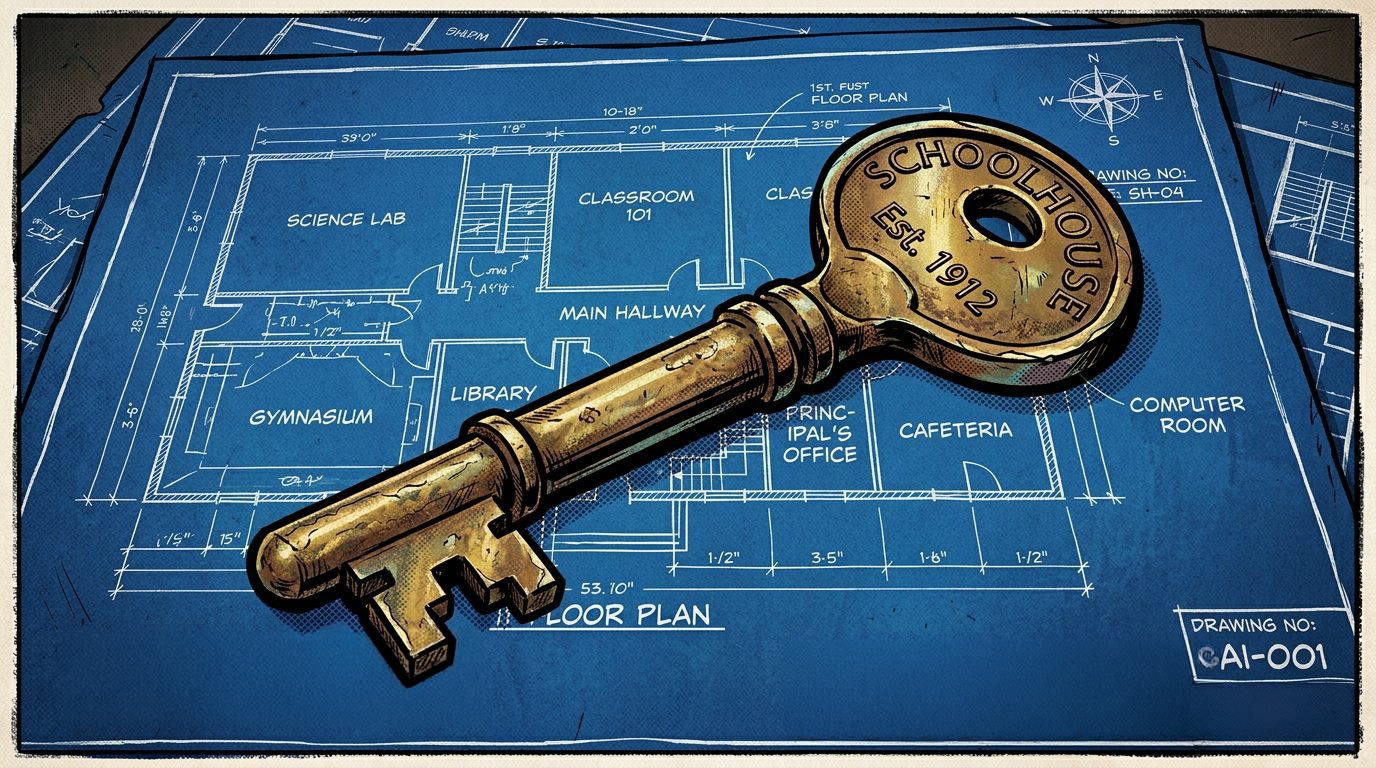
After three years of double sessions following a 1971 fire, Norwood officials faced the possibility of further delays for the new Junior High South.
-
Unfinished Junior High To Open On Schedule-July 8, 1974

Discover the construction history of the $4.5 million Junior High South project in 1974, detailing the challenges faced during the transition from the old Washington Street school.
Discover more from Norwood Historical Society
Subscribe to get the latest posts sent to your email.