Here Come the Bluebirds: Daily Rounds in Norwood-October 19, 1962
“Here come the bluebirds,” smiled an elderly Norwood resident as the town’s two visiting nurses arrived to help her out of bed. For many isolated seniors living alone, that warm greeting reflects a daily reality. As Mrs. Edwin Herig and Mrs. Marion O’Neil make their rounds across town, they serve as far more than medical professionals—they are vital lifelines to the outside world.
“To some of the older people who live alone, we are the only people from the outside and they rely upon us for news,” Mrs. Herig explained.
Mrs. O’Neil and Mrs. Herig combine the duties of the town’s visiting nurses and public health nurses, a streamlined partnership established years earlier when town leaders realized the two agencies were performing nearly identical work. Under the joint arrangement, the town covers nurses’ salaries, while the Visiting Nurses Association (VNA) provides the vehicle and medical supplies. Fees collected are funneled back to the VNA, which also funds relief nurses when demand peaks.
A Typical Day on the Move-October 19, 1962
A typical workday begins promptly at 8:30 a.m. when the women collect orders and pick up supplies at Norwood Hospital. Their service area covers every corner of town, handling everything from routine injections to rare pediatric calls—such as an infant home delivery service billed at $5.
By 9 a.m., Mrs. O’Neil drops Mrs. Herig off to bathe an elderly woman confined to a chair—whose affection for the nurse prompted the plea, “Don’t have anyone come in until you get back from your vacation.” Meanwhile, Mrs. O’Neil completes six injections and changes a dressing. Her morning calls offer a rich tapestry of local life:
- At one home, she dispenses advice on operating a new stove while sharing a cup of tea.
- Visiting Mr. T., a multiple sclerosis victim, she administers a shot while listening to his political musings that “Massachusetts politicians are not all crooked.”
- Visiting Mrs. B., she administers an injection, walks the cheery Irish patient to the kitchen, and trims her nails—having previously styled her hair as well.
- Another 70-year-old patient, philosophizing about slow-healing wounds, offers a practical life lesson: “Life is too short to spend cleaning house. I have learned to sit when ironing and peeling vegetables.”
After finishing a swift string of morning calls, the nurses reunite for a coffee—or bacon and egg—break before tackling afternoon appointments, which often conclude with a visit to the patient who affectionately nicknamed them “bluebirds.” “She hates shots and one of us has to keep her distracted while the other gives the shot,” they laughed.
Office Hours and Community Public Health-October 19, 1962
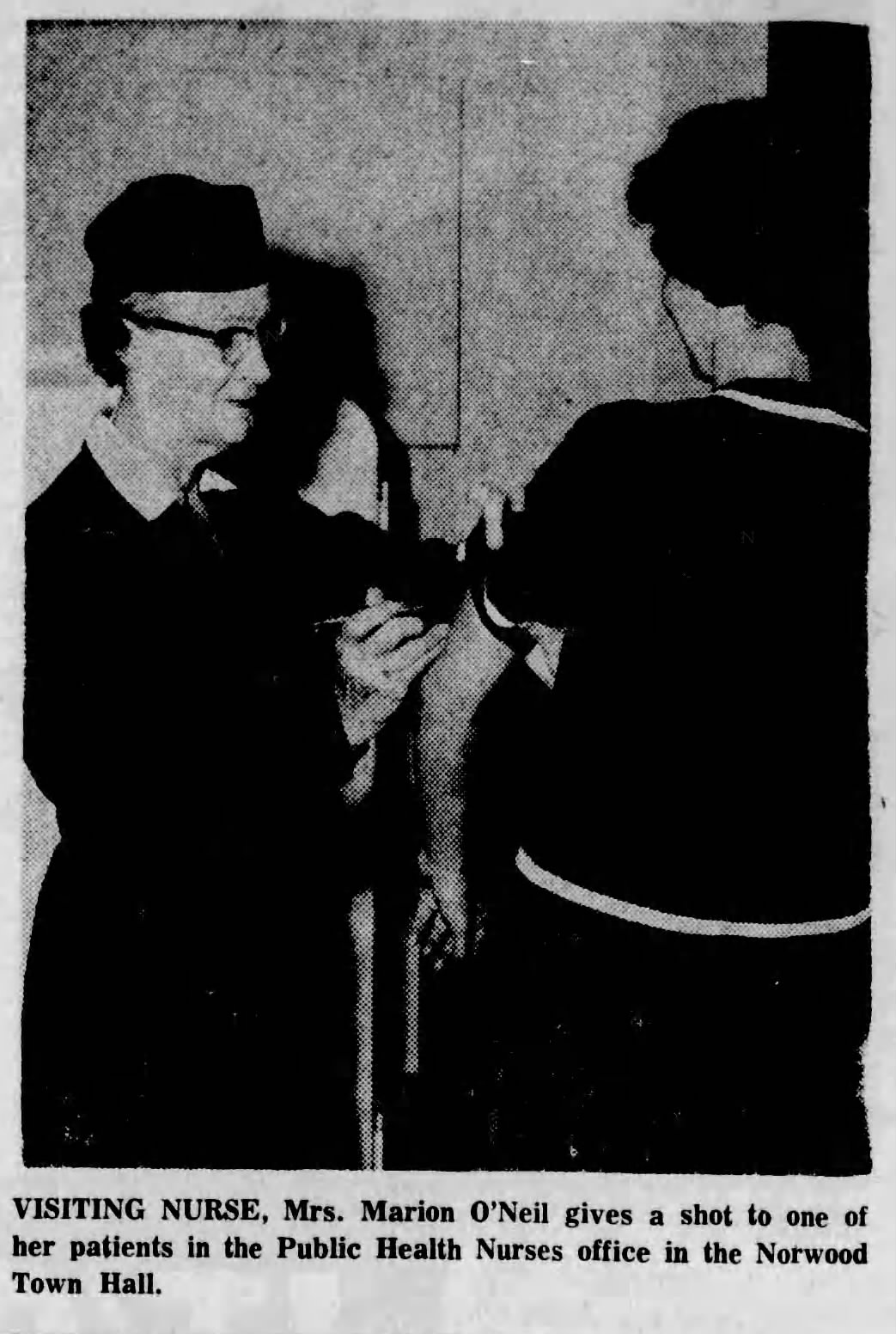
Following a 45-minute lunch break, the nurses return to their headquarters in the Norwood Town Hall—where Mrs. Marion O’Neil was photographed administering an injection to a patient in the Public Health Nurses office. The afternoon is dedicated to paperwork, medical instrument sterilization, and patient counseling, interspersed with walk-in visitors seeking injections before heading out for a final round of afternoon house calls.
Operating out of the town hall, the nurses manage a weekly roster of 68 patients ranging in age from 14 to 92, with weekend coverage maintained on a rotating basis. Beyond home visits, their public health mandate includes free newborn checkups for all first babies, monthly tuberculosis clinics for patients and contacts, and seasonal polio immunization clinics for pre-schoolers and early-grade students. During the previous year, the dedicated duo logged 3,842 home visits and welcomed 316 ambulatory patients to their town hall office.
Archival Note: This article has been dynamically reconstructed from the original public record print archives of the Patriot Ledger
More Norwood Hospital Stories
-
Norwood Poles Attacked by Armed Countrymen-This Day in Norwood History-October 30, 1916
Norwood Poles Attacked by Armed Countrymen-This Day in Norwood History-October 30, 1916

-
New Hospital Open-October 5, 1916
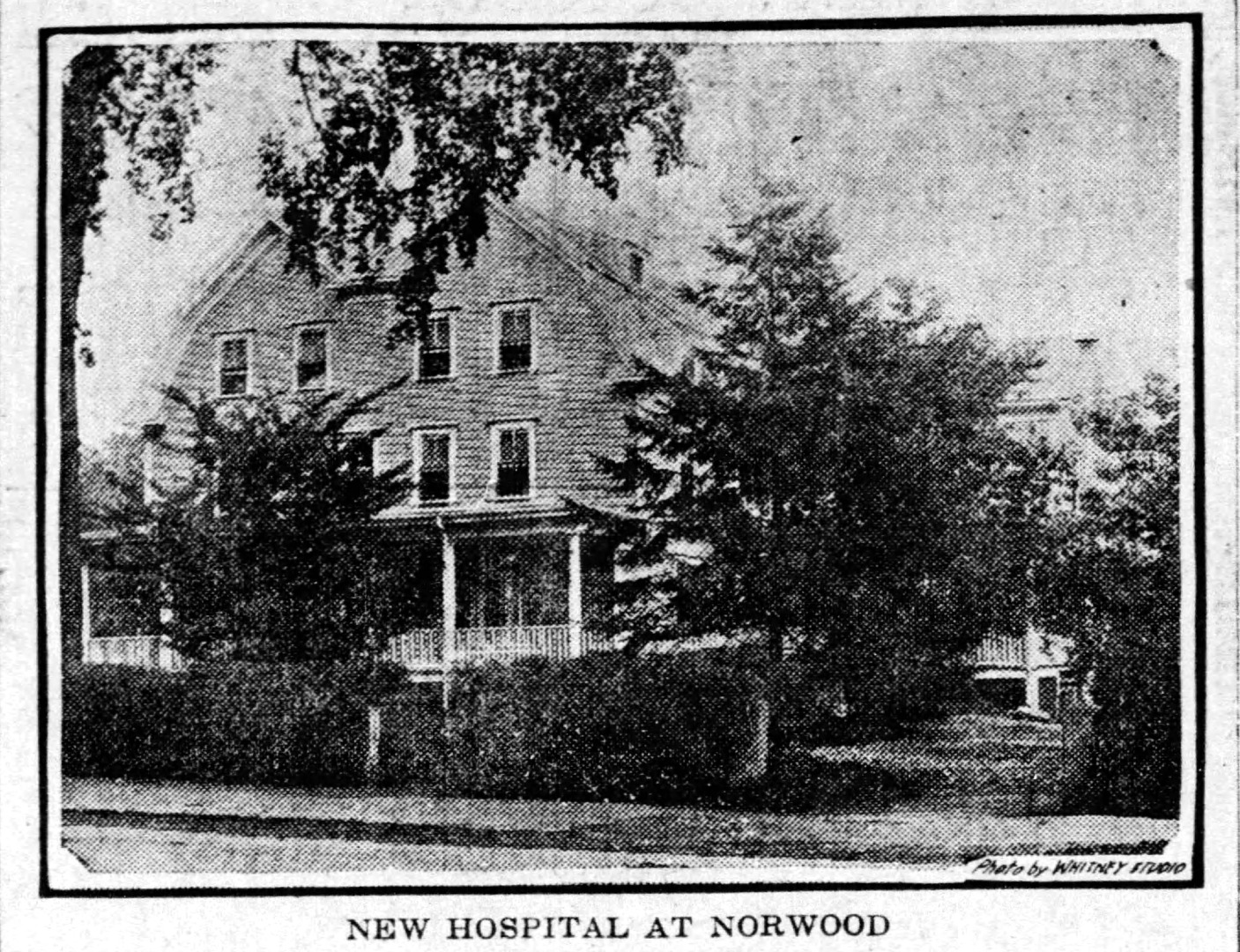
Hundreds Inspect the Equipment to be Put in Use At Once Corner House to be Moved The new hospital was opened to the public today, with hundreds inspecting the plant. Expressions of surprise were general over the completeness of the equipment. There are about 30 beds, including the nursery and seven private rooms. The men’s…
-
George Willett Opens Old Corner House, Precursor to Norwood Hospital-This Day in Norwood History- September 1, 1913
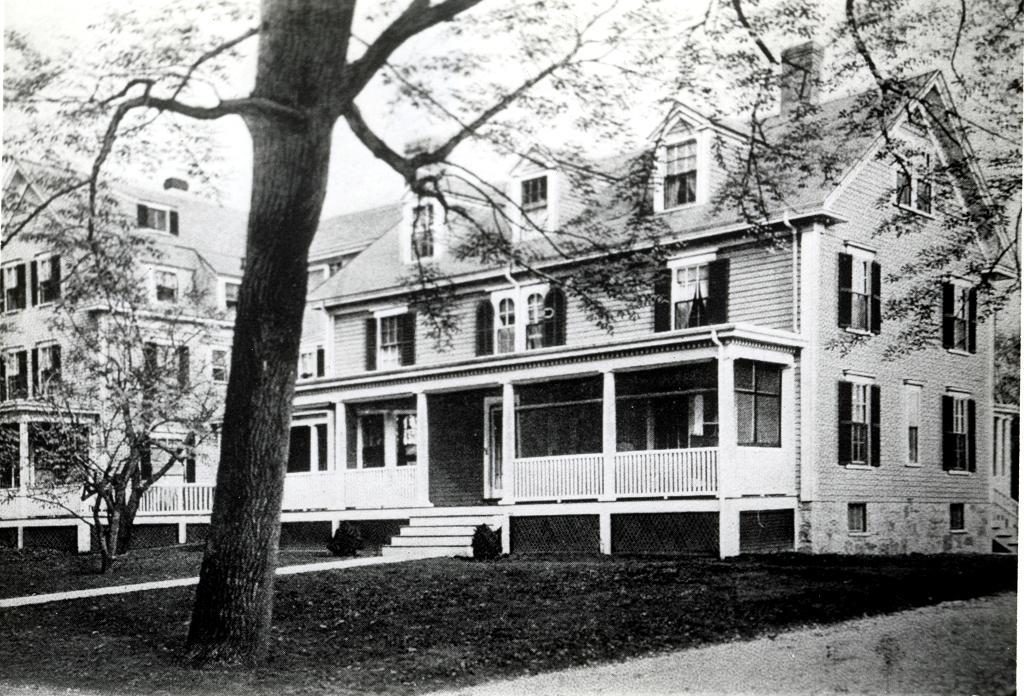
CORNER HOUSE TO OPEN. Norwood Civic Association’s Novel Feature Will Be Officially Dedicated Tomorrow. Aug 30, 1913—One of the notable Innovations of the Norwood Civic Association will begin its work Monday, Sept 1, when the building known as the Corner House will be opened officially. The Corner House is believed to be the only thing…
-
All Physicians of Norwood Endorse the Plan For Town Hospital-This Day In Norwood History-November 28, 1910
Chairman J. M. Folan Believes This Assures Success of Project. NORWOOD. Nov 27—The members of the committee on town hospital appointed by the Norwood business association are much gratified at receiving an endorsement of the proposed hospital from the physicians of the town. The indorsement, which is signed by all the physicians of Norwood, is…
-
Hospital Planned For Norwood-This Day In Norwood History-November 15, 1910
Hospital Planned For Norwood-This Day In Norwood History-November 15, 1910
Discover more from Norwood Historical Society
Subscribe to get the latest posts sent to your email.