
Moderator William C. Plasko Adjourns Session at 103 Members—One Short of Quorum—During Heated Reconsideration Over $12,960 Lunchroom Supervisor Request
NORWOOD – Norwood’s Special Town Meeting was stopped in its tracks on Monday night, November 24, 1975, roughly an hour after a bare quorum of 104 town meeting members braved snow and sleet to convene at Junior High School South in hopes of completing action on a 22-article special warrant. Reported across Pages 1 and 6 of The Patriot Ledger on Tuesday, November 25, 1975, the session ended abruptly when a floor count ordered by Moderator William C. Plasko showed that enough members had slipped out of the auditorium to drop attendance to 103—one short of a legal quorum—forcing Plasko to adjourn the meeting until December 3 at 8:00 p.m.
Before the quorum count halted business, Town Meeting approved a $71,106 appropriation granting pay raises to most of the school department’s non-teaching personnel, excluding only cafeteria workers and junior custodians. The school committee’s raise package had been pared down from its original $108,637 request—defeated at the previous week’s opening session—by removing appropriations for the two employee groups with whom the committee had not yet reached contract terms. Most of the approved increases amounted to 6 percent over prior-year salaries, though several middle-level administrators received higher adjustments: Athletic Director Arthur M. Gulla received 7.9 percent, Music Director Paul Alberta received 8.6 percent, and Administrative Assistant for Student Affairs George S. Usevich—who also served as a Norwood Selectman—received 8.9 percent.
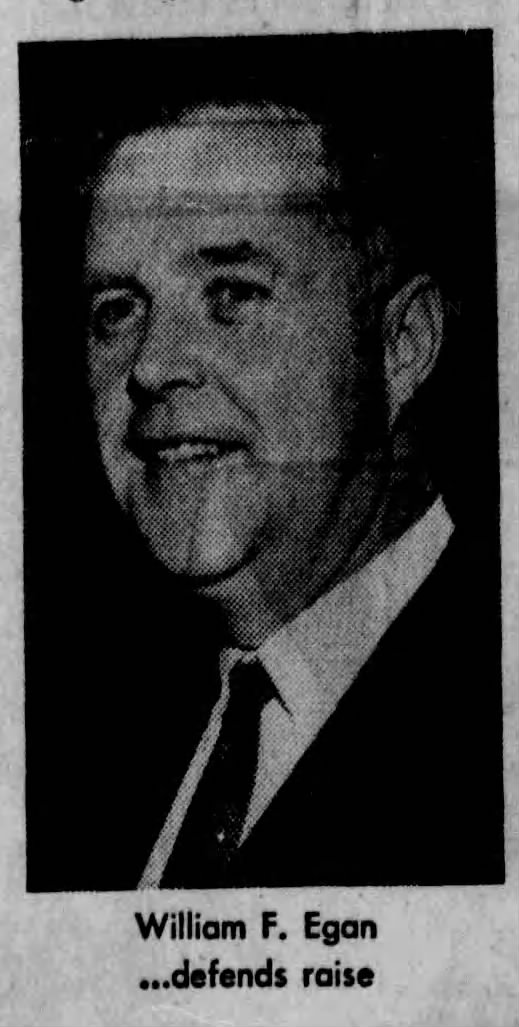
The evening’s sole policy battle revolved around an 8 percent raise for School Superintendent Dr. Philip O. Coakley, his first salary increase in two years. District 9 representative Thomas DiFrancia moved to trim Dr. Coakley’s raise to 6 percent to match other central administration personnel, arguing, “I don’t feel that anyone should be above anyone else.” School Committee Chairman William F. Egan countered that even with the 8 percent boost, Dr. Coakley’s $31,300 salary remained below that of most superintendents in comparable Bay State League school systems. “If we had to go out and hire a new superintendent next week,” Egan warned, “I guarantee you we’d have to pay more for him.” Dr. Coakley sat silent throughout nearly the entire 15-minute debate, breaking his silence only once to remark to those seated nearby, “There’s got to be a better way of making a living than this.” DiFrancia’s amendment was defeated on a voice vote, and the $71,106 appropriation passed.
Procedural turmoil broke out moments later when Egan moved to reconsider a $12,960 appropriation for school lunchroom supervisors. Instead of arguing the motion himself, Egan attempted to turn the floor over to Faye Pellett, president of the Norwood Teachers’ Association. Moderator Plasko ruled the maneuver out of order and called a voice vote that appeared to defeat reconsideration; several members protested Plasko’s ruling, but a subsequent vote of the body upheld the chair. District 3 representative Robert Wohler then moved reconsideration a second time, stating the funds were needed to maintain discipline in the schools. When a voice vote proved too close to call, Plasko ordered a standing count that carried by a 49-48 margin to reopen debate.
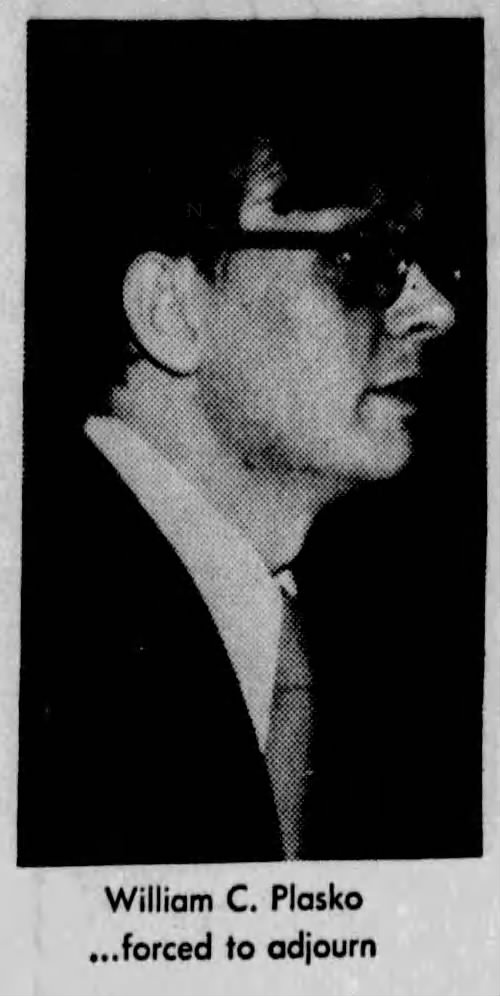
At that point, DiFrancia called for a quorum count, only to withdraw his request after Plasko and several members urged him to relent. No sooner had DiFrancia withdrawn it, however, than District 6 representative Richard A. Giordano demanded a quorum count of his own. Despite appeals from Plasko and District 4 representative George M. Ruboy to drop or ignore the call, Plasko said parliamentary rules required him to recognize it. After corridor stragglers and abstainers were tallied, the house totaled just 103 members. Following adjournment, Plasko noted that a special Town Meeting study committee under his chairmanship would examine house rules to prevent similar abrupt halts, while District 1 representative Willard Krasnow, president of the Town Meeting Members Association, remarked that while the right to call a quorum was basic, “it’s kind of an unwritten thing that you don’t call a quorum at 9:30 when it’s so close.” Pellett, who never got the chance to address the floor, warned afterward that if Town Meeting failed to approve the lunchroom funds—already being paid under a current-year contract clause for teacher volunteers—the school department would run short of money and likely face a teachers’ union lawsuit.
Source: The Patriot Ledger • Tuesday, November 25, 1975 (Pages 1 & 6) • Staff Report
“There’s got to be a better way of making a living than this.”
| 1975 School Appropriation / Salary Item | 1975 Amount | 2026 Equivalent |
|---|---|---|
| Approved School Non-Teaching Pay Raise Package | $71,106 | ~$423,080 |
| Original School Raise Request (Before Contract Exclusions) | $108,637 | ~$646,390 |
| Superintendent Dr. Philip O. Coakley’s Salary (With 8% Raise) | $31,300 | ~$186,235 |
| Tabled School Lunchroom Supervisors Appropriation | $12,960 | ~$77,110 |
Archival Note: This article has been dynamically reconstructed from the original public record print archives of the Patriot Ledger
More Town Meeting Stories
-
Referendum Drive Seen Well Underway-June 23, 1981

A rapid grassroots signature campaign aims to stall a major town development project through a public ballot referendum.
-
Civic Center Future Up For Vote-June 15, 1981
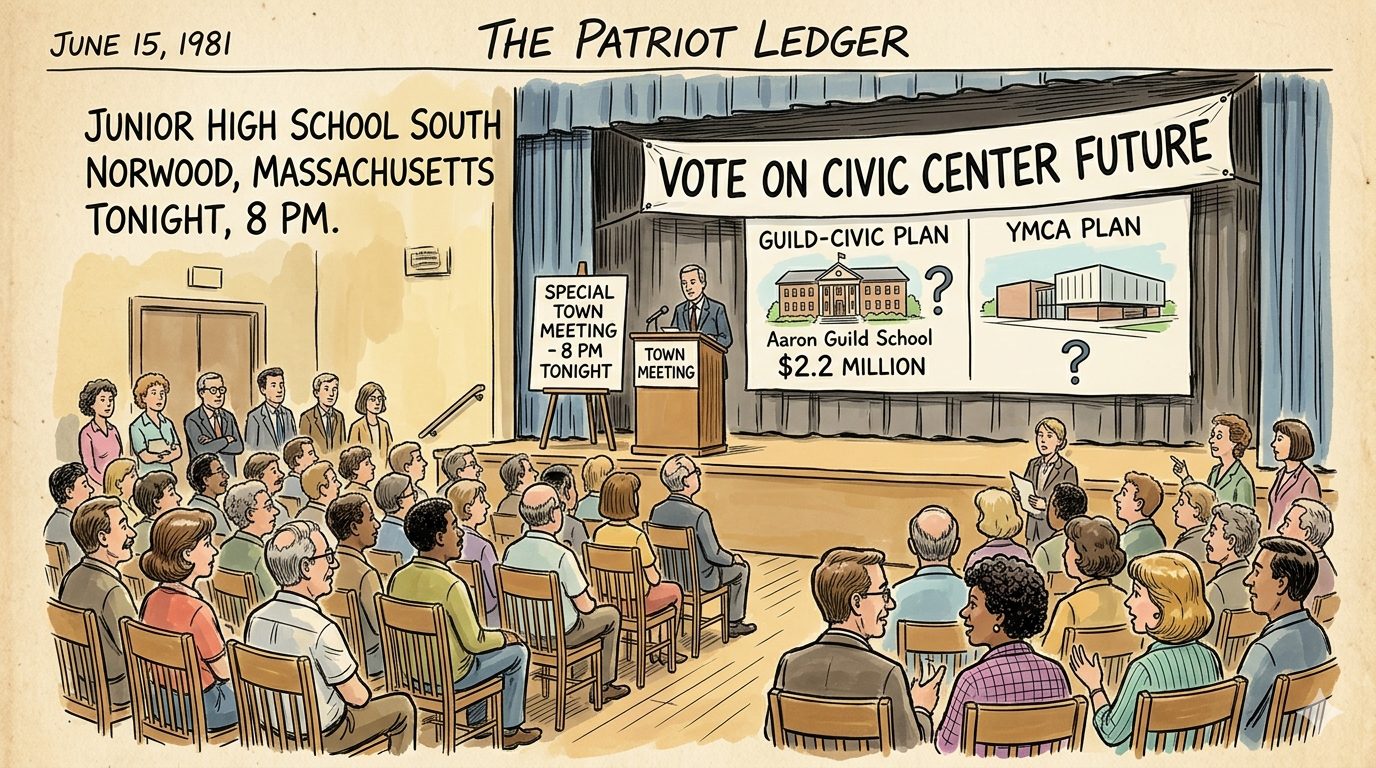
A high-stakes special town meeting agenda features a multi-million dollar Civic Center relocation choice and the $325,250 sale of Winslow School.
-
Special Town Meeting for Civic Replacement Pushed to January ’81-September 11, 1980
Permanent building construction committee reviews architectural proposals for a new Civic Recreation Center and Olympic-size pool, delaying town meeting funding to January 1981.
-
Norwood Assessors Seek Funds for Mandatory Property Revaluation-July 12, 1979
Faced with noncompliance penalties, Norwood officials are moving to revalue properties to 100 percent of market value to maintain local fiscal control.
-
School Board Recall Urged-July 8, 1978
Discover the 1978 budget battle in Norwood, where deep cuts to the school district’s $11.3 million budget led to a controversial recall effort and a lawsuit involving the Massachusetts Teachers Association.
-
High-Stakes Overhaul for the Historical Village Inn-This Day in Norwood History-June 28, 1978

A 1978 town hall showdown unloads a $100,000 renovation plan for The Village Inn amidst a staggering $700,000 municipal energy deficit.
-
Tight-Fisted Town Meeting Holds Firm On School Department Budget Cuts-June 22, 1978
A deadlocked floor fight over a massive school funding reduction brings threats of lawsuits, board recalls, and a complete municipal showdown.
-
Town Meeting Slashes General School Budget But Restores Athletic and Band Funding-June 21, 1978

A historic five-session town meeting sparks fierce debates over elementary school closings and safety gear lines.
-
Acting Fire Chief Warns Town Meeting of Impending Court Mandates Over Shift Understaffing-June 17, 1978
A contentious town meeting vote rejecting eight new firefighters setup a fiscal standoff at Town Hall.
-
Norwood Considers Limits on Yard and Garage Sales-This Day in Norwood History-May 27, 1978
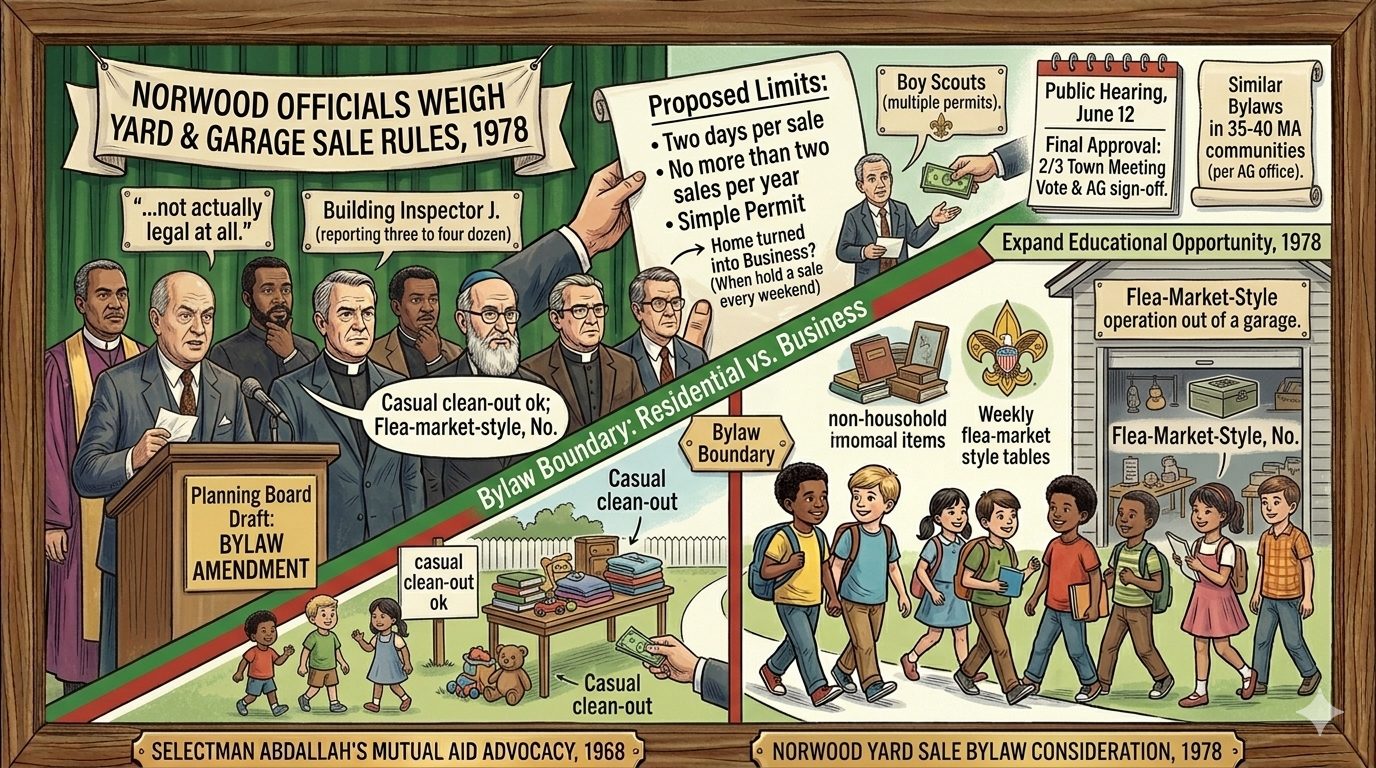
Did you know that backyard yard sales were technically illegal in Norwood under a strict reading of 1970s zoning laws? To resolve a wave of neighbor complaints about perpetual weekend flea markets, town officials stepped in to draft a new permit system. Discover how close Norwood came to capping your summer garage sale finds.
Discover more from Norwood Historical Society
Subscribe to get the latest posts sent to your email.