
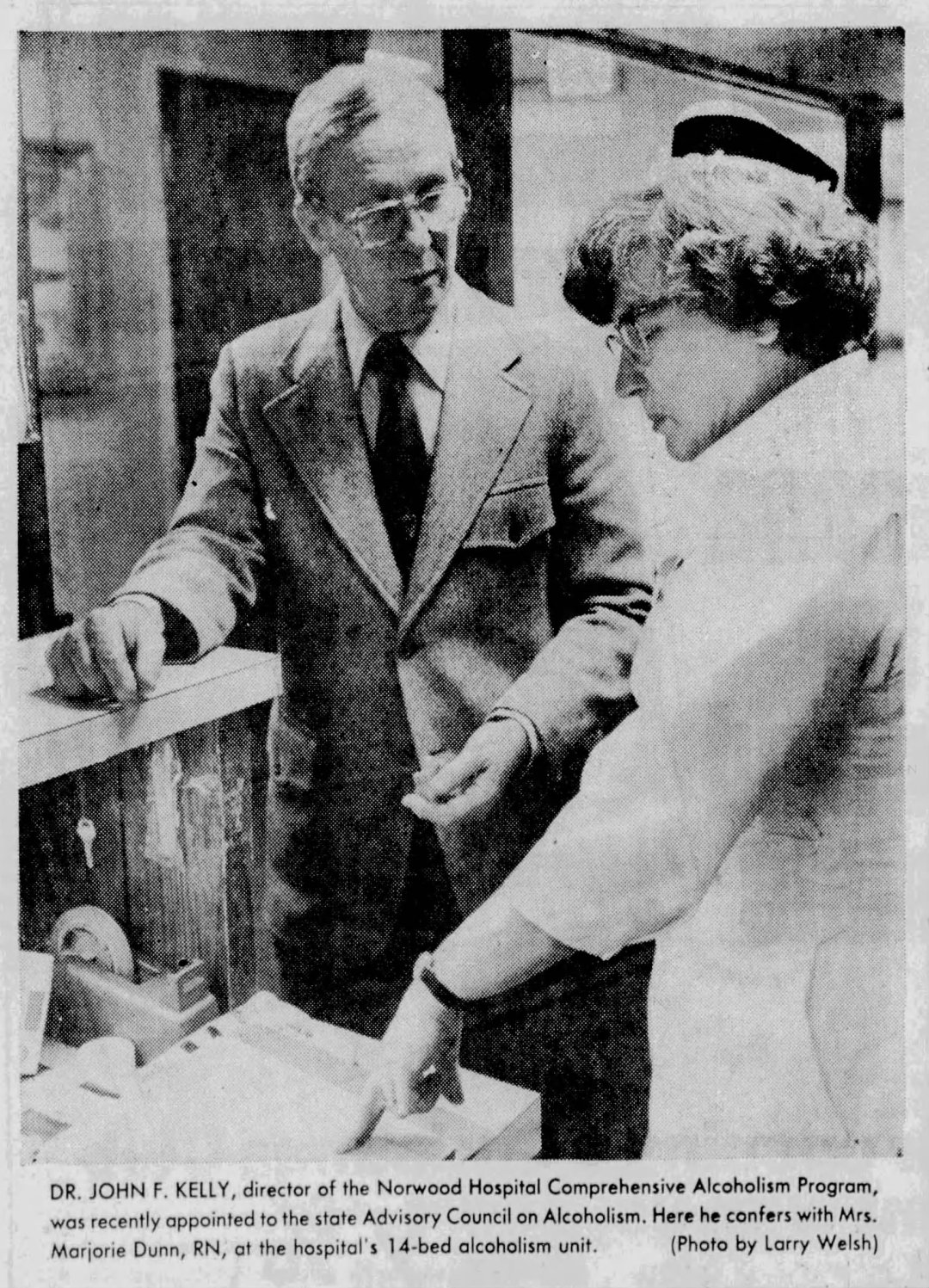
Appointed by Gov. Michael S. Dukakis to the State Advisory Council on Alcoholism, the Norwood Hospital Program Director Urges School Education and Family Therapy
NORWOOD – Alcoholism—what Dr. John F. Kelly called “this horrible disease”—was no longer an illness that society could afford to sweep under the rug, and as administrative director of the Norwood Hospital Comprehensive Alcoholism Program, Dr. Kelly was working to make it a priority of public concern through classroom education and expanded therapy. Featured in The Patriot Ledger on Friday, November 25, 1977, by staff reporter Nona Dearth—accompanied by a photograph by Larry Welsh showing Dr. Kelly conferring with Mrs. Marjorie Dunn, RN, inside Norwood Hospital’s 14-bed alcoholism unit—the report examined Kelly’s mission following his appointment by Governor Michael S. Dukakis to the Massachusetts Advisory Council on Alcoholism.
Bringing local clinical leadership to the statewide council, Dr. Kelly emphasized both the massive economic burden of alcohol abuse and its far deeper human toll. Nationally, alcoholism was estimated to cost American industry at least $8 billion annually in lost productivity through absenteeism, inefficiency, and workplace accidents, with 5 to 10 percent of the workforce experiencing an alcohol problem. Yet as Dr. Kelly noted, financial figures told only part of the story; the human cost in fractured families, broken homes, and lost personal pride was immeasurable. Across Massachusetts, roughly 300,000 individuals suffered from alcoholism—representing approximately one million residents when including family members needing support to rebuild their lives—a figure growing as teenagers and youngsters as young as the sixth grade increasingly turned to alcohol “for kicks.”
“To make any inroads into this problem of alcoholism, we have to get into primary prevention,” Dr. Kelly stated. “This means going into the schools, training teachers how to handle it, reaching the kids even down to kindergarten. It’s a very subtle program.” Alongside primary prevention in public schools, Kelly advocated vigorously on the state council for early intervention—reaching individuals with drinking problems and their relatives long before family life became unbearable. In doing so, he sought to dispel pervasive myths surrounding alcoholism, particularly the belief that a person had to “hit bottom” before stopping drinking.
“In 90 percent of the families that come to us at Norwood Hospital the alcoholic is still drinking and functioning to a degree,” Dr. Kelly explained. “But early intervention is not a question of just reaching the drinker but also reaching the family so they can cope with this horrible disease.” Whereas earlier generations of medical and social professionals focused almost solely on “treat[ing] the casualties,” Norwood’s comprehensive approach treated the physical and emotional injuries suffered by family members as an equally urgent priority. “Early intervention can prevent a lot of suffering,” Dr. Kelly observed. “But the long range effort has to be a decrease in drinking problems. You have to teach the youngsters the importance of responsible drinking, if they are going to drink.”
Although the 1973 decriminalization of alcoholism in Massachusetts had opened the door for the Advisory Council to introduce modern treatment programs, Dr. Kelly pointed out sharp funding constraints. For 1978, the council operated on an $8.2 million budget, with $5.8 million directed toward statewide detoxification centers—where patients remained for an average of three days to “dry out,” an approach Kelly warned held limited long-term value without a structured, family-involved outpatient program—and the balance funding halfway houses and similar facilities. Almost no funding remained for primary prevention after state officials turned down a $95,000 primary prevention request. “Compared to the taxes the state takes in on the sale of alcohol, what we get is peanuts,” Dr. Kelly commented. Despite the funding shortfall, having witnessed genuine rehabilitation among patients treated at Norwood Hospital’s 14-bed alcoholism unit through therapy and compassionate support, he remained optimistic and determined not to give up on conquering “this horrible disease.”
Source: The Patriot Ledger • Friday, November 25, 1977 • Byline: Nona Dearth • Photo: Larry Welsh
“In 90 percent of the families that come to us at Norwood Hospital the alcoholic is still drinking and functioning to a degree. Early intervention is not a question of just reaching the drinker but also reaching the family so they can cope with this horrible disease.”
| 1977 Public Health & Budget Figure | 1977 Amount | 2026 Equivalent |
|---|---|---|
| Estimated Annual U.S. Industrial Losses From Alcoholism | $8,000,000,000 | ~$42,400,000,000 |
| 1978 Massachusetts Advisory Council on Alcoholism Budget | $8,200,000 | ~$43,460,000 |
| State Allocation for Detoxification Centers (1978 Budget) | $5,800,000 | ~$30,740,000 |
| Rejected State Primary Prevention Program Request | $95,000 | ~$503,500 |
Archival Note: This article has been dynamically reconstructed from the original public record print archives of the Patriot Ledger
More Norwood Hospital Stories
-
Student Nurses at Norwood Hospital-This Day in Norwood History-January 20, 1955
STUDENT NURSES who «r» taking a three-month pro-clinical course at the Norwood Hospital. Front row (left to right) Mrs. Ellyson, Miss Ferry, Miss Phelps, Miss Vergnant, and Miss Chang. Standing (left to right) Miss Goldie Barton, R.N. Instructor, Miss Nutter, Mrs. Howell, Mrs. Smith, Miss Josephs, Mrs. Gullbault, and Miss Mabel Stevens, R.N. Instructor. (McLean…
-
6 Other Attacks on Girls Recently in Norwood-This Day in Norwood History-November 5, 1954
6 Other Attacks on Girls Recently in Norwood-This Day in Norwood History-November 5, 1954
-
Norwood Pupils Risk a Scolding to See Cisco Kid-October 24, 1952
Norwood Pupils Risk a Scolding to See Cisco Kid-This Day in Norwood History-October 24, 1952
-
Former Massachusetts Governor Frank G. Allen Dead at 76-This Day in Norwood History-October 10, 1950
Former Massachusetts Governor Frank G. Allen Dead at 76-This Day in Norwood History-October 10, 1950

-
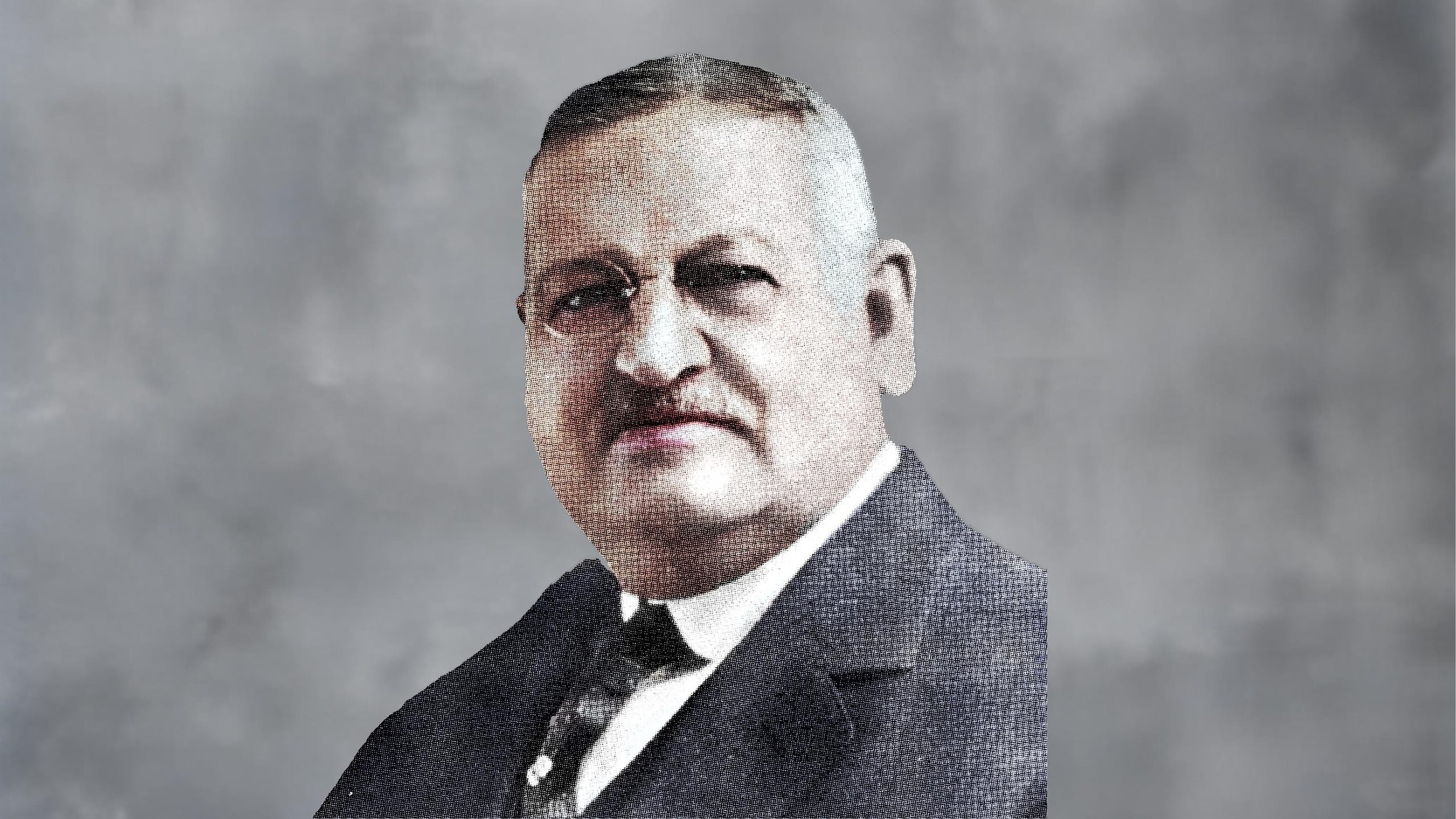
Walter F. Tilton, Norwood Banker, Philanthropist, Dies at 93-This Day in Norwood History-August 29, 1950
This Day in Norwood History- August 29, 1950-Walter F. Tilton, Norwood Banker and Philanthropist, Dies at 93
-
New Eight-Bed Ward Is Opened At Norwood Hospital-February 16, 1950
To meet the increasing demand for accommodations, the Hospital announces the opening of a new eight-bed Ward. This Ward is located in the area formerly occupied by the laundry and consists of eight adult beds, a diet kitchen, a utility room, and a nursing station. The walls are attractively decorated in a soft shade of…

-
Norwood Hospital Sign Warns Motorists-This Day In Norwood History-March 10, 1949
THE WARNING SIGN FOR MOTORIST outside the Norwood Hospital is attracting a great deal of attention and carries a message that every motorist’ might heed to his advantage. It is true that there are enough people ill and in need of hospitalization without having the hospital beds occupied with the maimed and broken bodies of…

-
Hospital Marks 30 Years of Service to Norwood Area-This Day in Norwood History-February 3, 1949
Edmund F. Murphy, Sture Nelson Are Elected To Board Of Trustees Incorporated in 1919, the Norwood Hospital, which now serves over 60 000 residents of Norwood and the surrounding towns, is observing its thirty years of progress and at a meeting of the Norwood Hospital Corporation held in the Plimpton Building last Thursday, figures released…

-
New Hospital Plant Grows-This Day In Norwood History-August 6, 1948
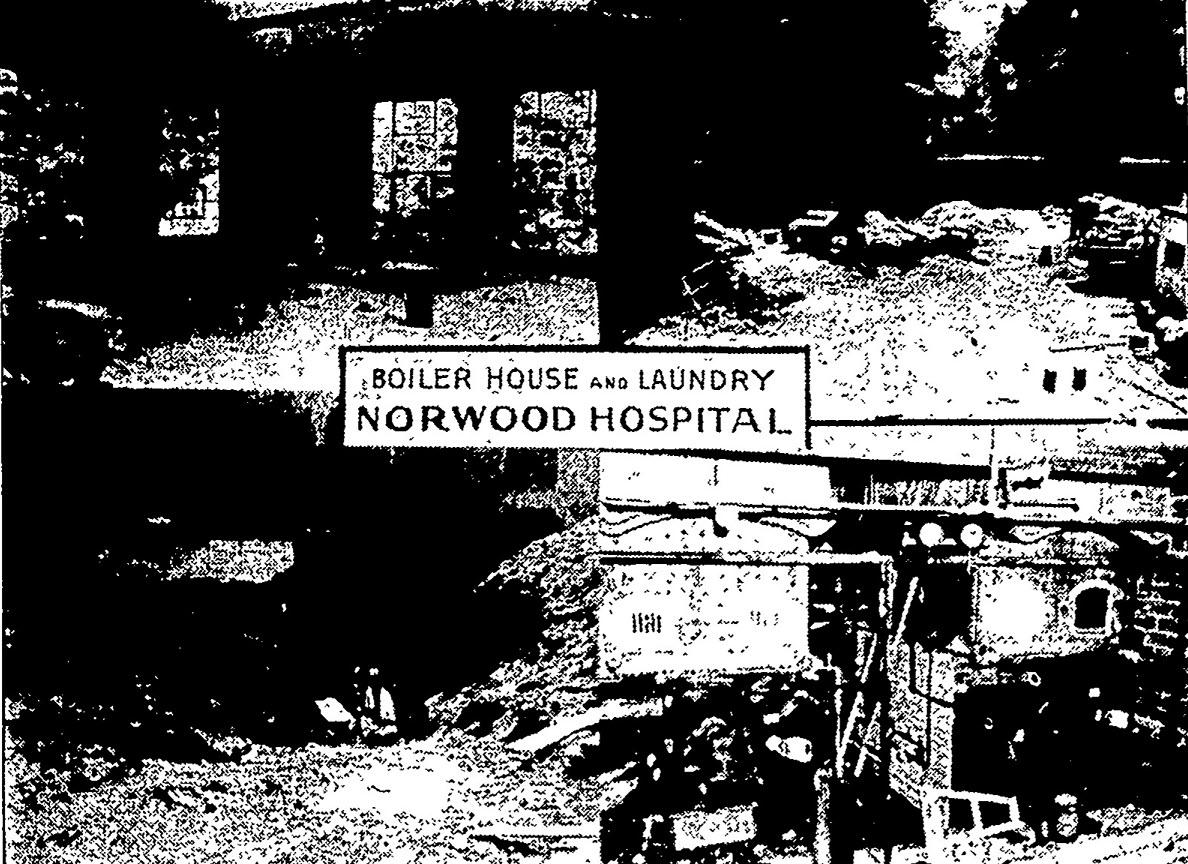
New Building At Norwood Hospital Ready Next Month Work Rapidly Nearing Completion On Modern Boiler House, Laundry Attractively designed in modernistic style with large windows that add to its spacious appearance, the new boiler house and laundry building at the rear of the Norwood Hospital is rapidly nearing completion and will be ready for occupancy…
-
Feathered Families Choose Norwood Hospital for Blessed Events-This Day In Norwood History-May 21, 1948
The Norwood Hospital’s daily report of “New Citizens” took an unexpected and delightful turn yesterday with the announcement of triplets, quadruplets, and a new arrival—all feathered, all healthy, and all delivered without the benefit of a maternity ward. Although no beds were available for the mothers, the stork was undeterred. Three bird families—Mrs. Robin, Mrs.…

Discover more from Norwood Historical Society
Subscribe to get the latest posts sent to your email.