
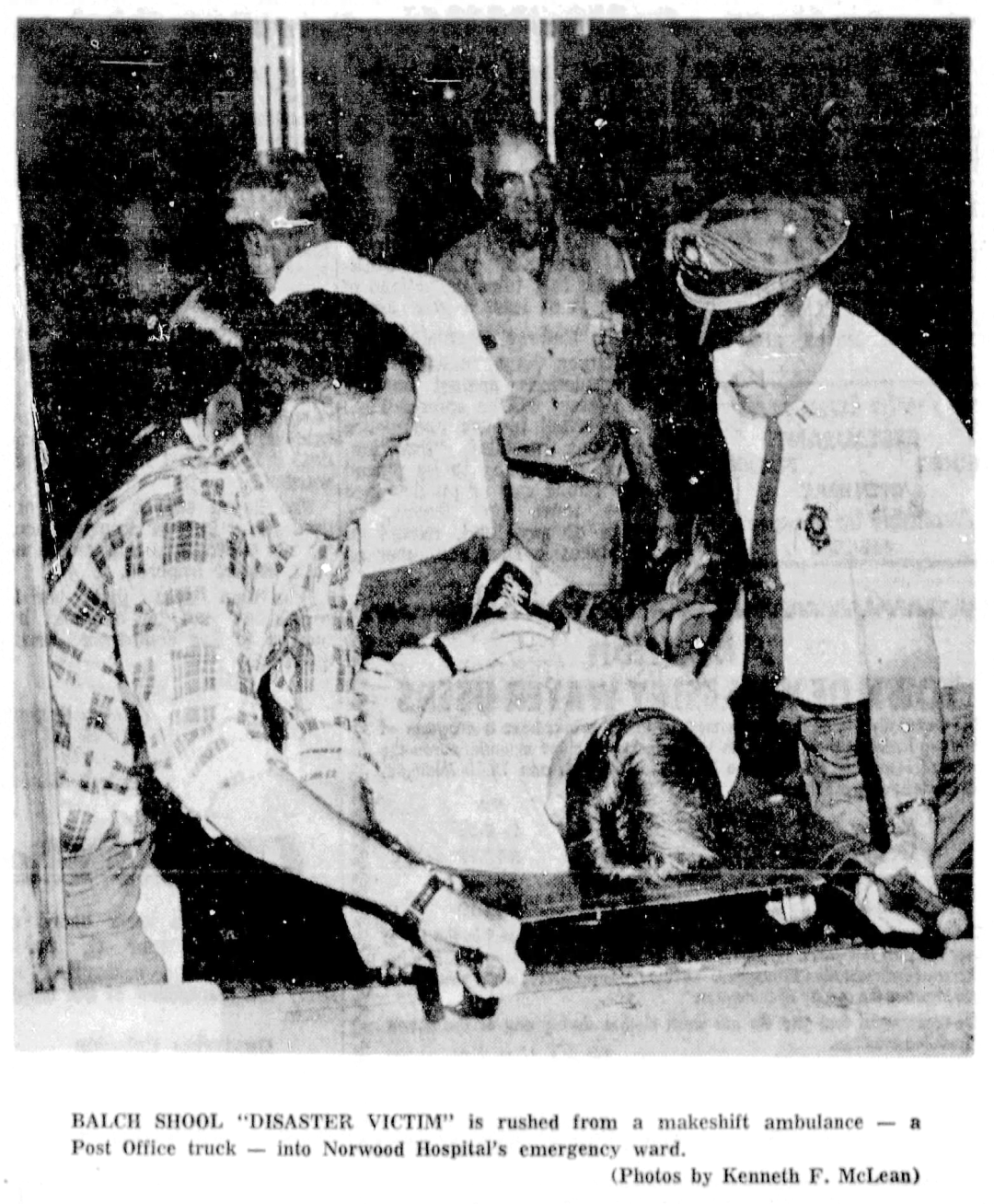
For most people, Thursday afternoon began normally and calmly. But at 3:21 p.m., the report came across the wire: the Balch School on Washington Street had suddenly collapsed, leaving 20 elementary school students with severe simulated injuries requiring immediate medical intervention.
Fortunately, the crisis was entirely fictitious—a carefully plotted surprise mass-casualty drill designed by the hospital administration to satisfy a Joint Commission on Accreditation of Hospitals requirement for a written disaster plan and regular operational rehearsals.
Mobilizing the Emergency Response
As soon as Civil Defense Director Joseph McAuliffe notified local authorities, the hospital shifted immediately into a “Code 11” disaster plan. Public nurses, administrative clerks, janitors, security police, and laboratory technicians raced to man their assigned alert posts.
Transporting the “victims” required a coordinated fleet, including a police ambulance, two Post Office trucks, a Red Cross vehicle, and the Norwood Recreation Department station wagon. Captain John P. Souza directed security personnel as they picked up the casualties from the disaster site at five-minute intervals, rushing them to the hospital’s emergency entrance.
Volunteers Play Their Parts
The volunteer “victims” were 20 members of Boy Scout Troop 83, who had assembled earlier at 3:00 p.m. at the Balch School to be outfitted with realistic masks, splints, bandages, and theatrical makeup applied by McAuliffe and an assistant.
Once inside the emergency ward, experienced doctors and nurses stood ready to triage. Women from the medical records department rushed out with index cards to tag the youngsters and record vital details. While most scouts maintained solemn expressions—including one boy whose face featured a chillingly realistic simulated wound with congealing blood—others couldn’t resist a bit of banter.
Eleven-year-old Mark Maienza, strapped into a chair after joking he had a broken back, tried to talk his way into keeping his makeup mask: “Halloween is coming,” he cajoled. Another scout, rolled through on a stretcher, yelled to a friend, “Hey, Bob. Hi. They already fixed me,” to which his companion cheerfully shouted back about imaginary internal pains before being dispatched straight to the operating room.
Smooth Execution and Sweet Rewards
Medical oversight for the drill was managed by co-chairmen Drs. Arthur Klein, Louis A. Sieracki, and Martin L. Bradford, while assistant hospital administrator Donald S. Broas served as co-coordinator alongside McAuliffe. Broas noted that while staff knew a drill was expected sometime that day, only a few key personnel knew the exact timing.
The medical staff performed efficiently: even Walpole physician Dr. Jan Skancky rushed from his crowded office upon hearing the emergency alert, checked in, and then returned to his patients once his role was complete. By 3:45 p.m., all mock victims had been completely evacuated from the Washington Street area, and by 4:05 p.m., every participant had been diagnosed, treated, and processed.
Declaring the exercise an absolute success, Broas remarked, “The real purpose of this drill is to teach people to move and to fill out forms… Of course we’re better under real conditions, like the Walpole riot last year. But the drill was a success.”
With their mission officially completed at 4:15 p.m., the hardworking Boy Scouts were treated to a well-earned reward in the hospital cafeteria: ice cream and cookies.
Archival Note: This article has been dynamically reconstructed from the original public record print archives of the Patriot Ledger
More Norwood Hospital Stories
-
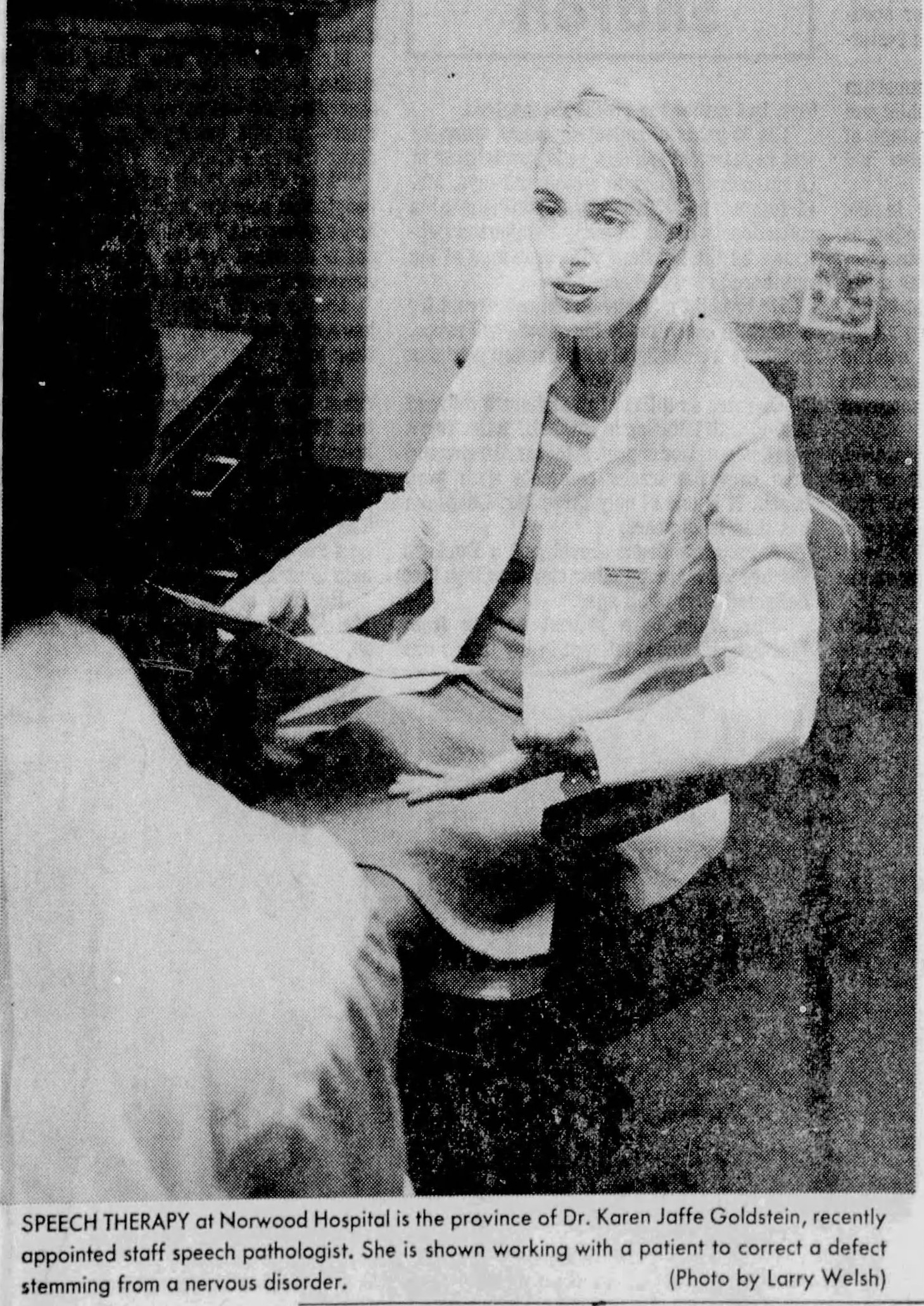
Dr. Karen Jaffe Goldstein Joins Norwood Hospital Staff as Speech Pathologist-October 31, 1977
Newly appointed Norwood Hospital speech pathologist Dr. Karen Jaffe Goldstein is helping stroke, neurological, and cleft palate patients recover their ability to communicate.
-
Citizens’ Group Keeps Recall Threat “On Hold” Awaiting Action on Civic Center Replacement-September 9, 1977
Opposition leaders Ambrose J. Kelly and Jeannette M. Troiano state that a recall petition drive against Norwood selectmen remains an active option if replacement Civic Center plans stall.
-
Norwood Hospital Outlines Traffic Solutions for Linden Street-July 11, 1977
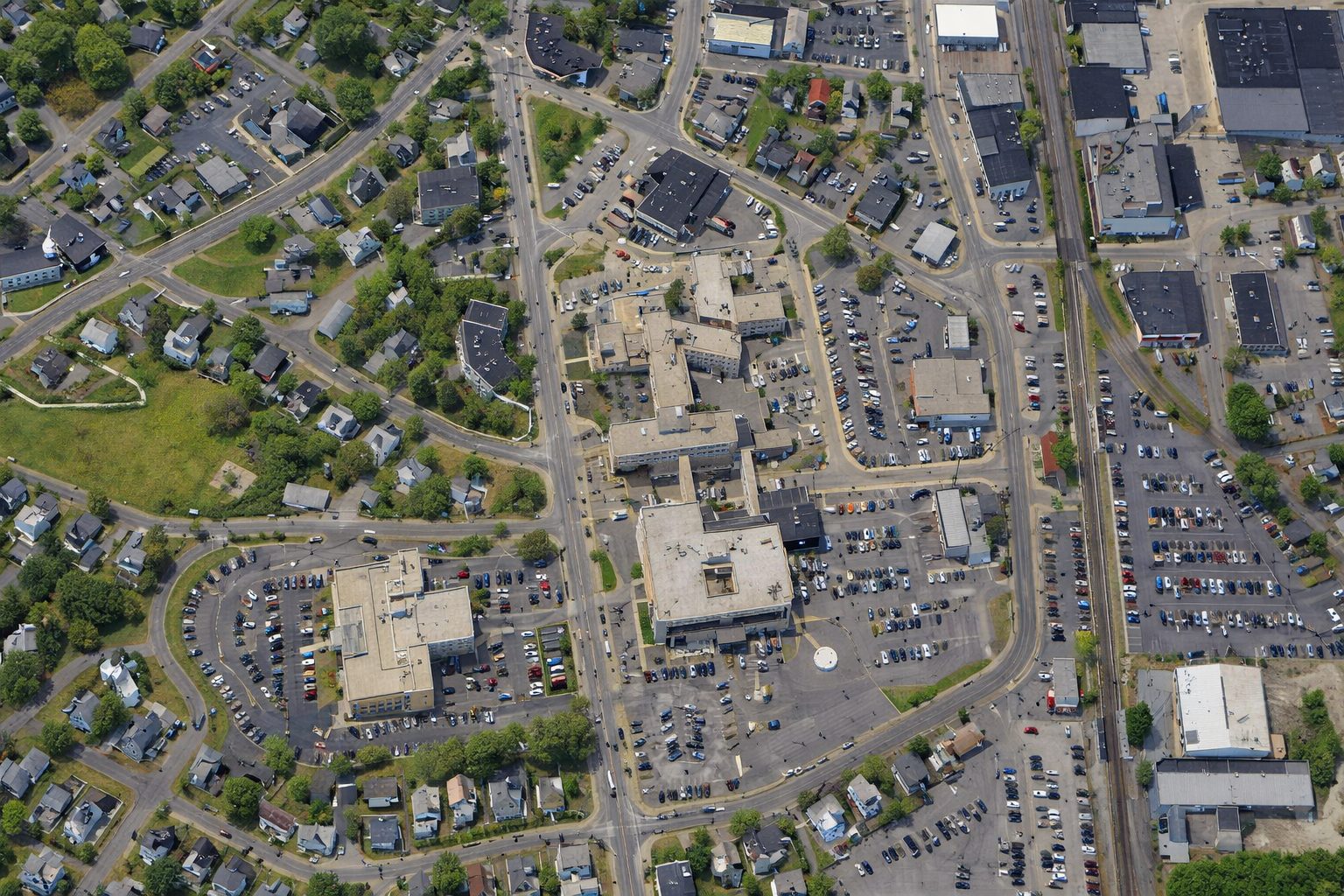
Norwood Hospital Expansion and Linden Street Traffic ⠀ On July 11, 1977, Norwood Hospital administration addressed growing concerns among Linden Street residents regarding how future hospital expansion might disrupt local traffic patterns. With the hospital moving forward with its acquisition of Winter Street—which previously provided a thoroughfare between the hospital and the town civic center—residents…
-
Legionnaire’s Disease Case Confirmed-July 9, 1977
Discover how local medical professionals successfully identified and treated a rare case of Legionnaire’s Disease in 1977, confirming the effectiveness of erythromycin treatment.

-
Medical Building Still Empty-July 8, 1977
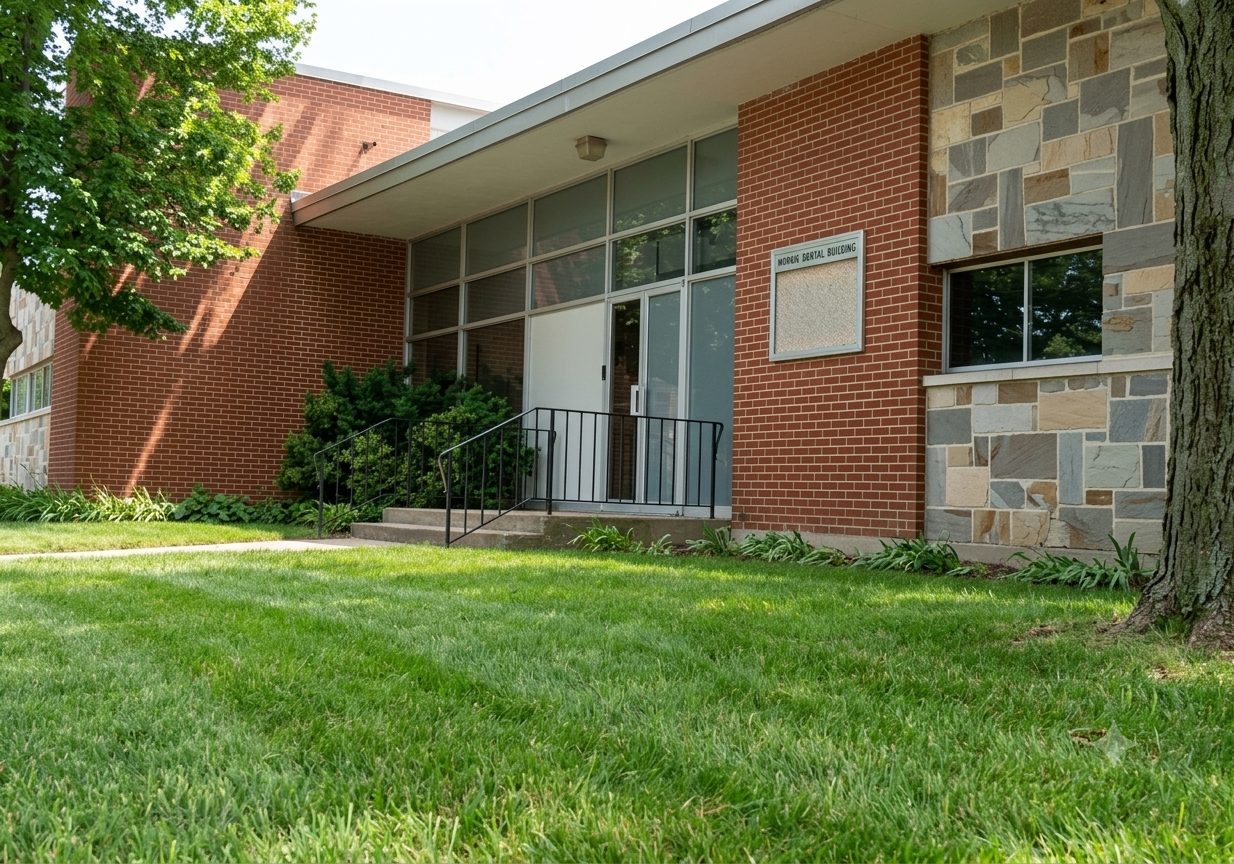
Discover the story behind 480 Washington Street, once the town’s premier medical hub in 1959, and the 1977 efforts to reconcile its high market price with local demand for office space.
-
In Memoriam – Walter Blasenak
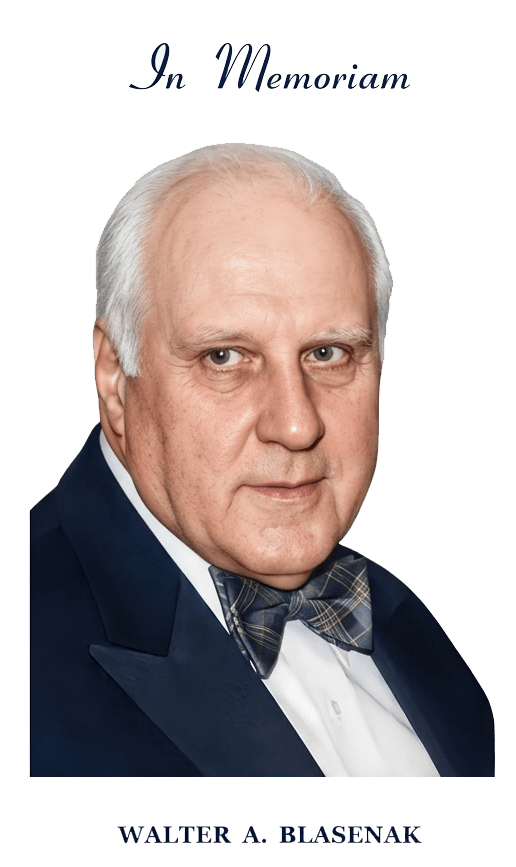
Former Norwood Town Manager, Dead At 71 Funeral services will be held Wednesday at 2 p.m. at the United Church of Norwood for Walter A. Blasenak, who was Norwood town manager for more than 14 years, from 1957 to 1971. Mr. Blasenak, 71, of 28 Nottingham Dr., died in Norwood Hospital yesterday after a long…
-
Norwood Selectmen Place Hospital Civic Center Sale on Special Town Meeting Warrant-November 17, 1976
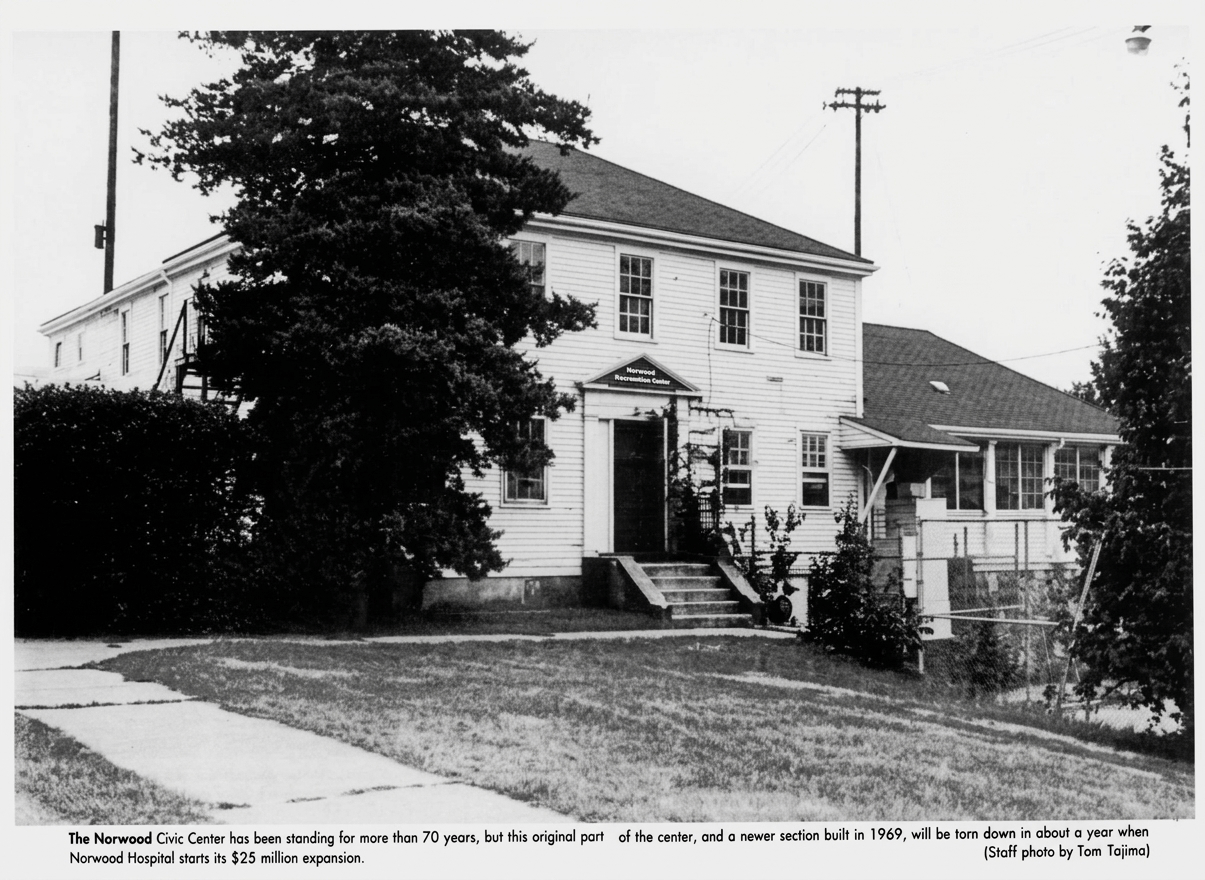
Norwood selectmen placed the sale of the Civic Center to Norwood Hospital on a Dec. 13, 1976 special town meeting warrant while debating how to plan replacement recreation facilities.
-
Planning Board Member Francis Wisgirda Urges Neighboring Towns to Share Hospital Tax Burden-November 16, 1976
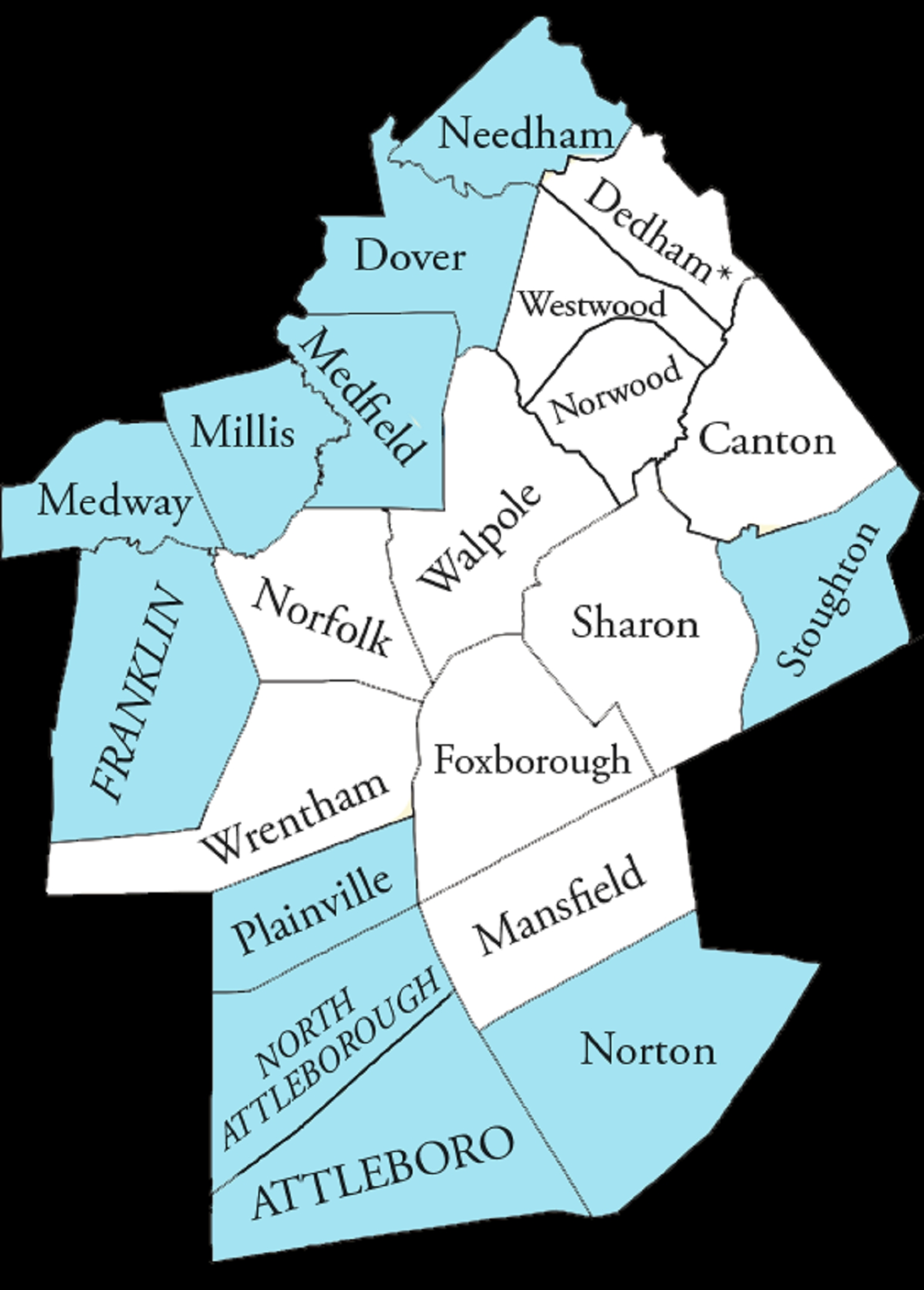
As the Norwood Planning Board endorsed Norwood Hospital’s expansion onto the Civic Center site, Francis Wisgirda urged neighboring towns to offer voluntary contributions
-
Growing Support Indicated for Norwood Hospital Expansion Onto Civic Center Property-November 15, 1976
Early questionnaire returns from town meeting members show strong support for Norwood Hospital’s proposed expansion onto the Civic Center site, pending veteran agreements and replacement plans.
-
Norwood Kiwanis Club Celebrates Fifth Anniversary with Regional Luncheon at Harp and Bard Restaurant-November 15, 1976
The Norwood Kiwanis Club marked its fifth anniversary with a luncheon at the Harp and Bard Restaurant and co-sponsored a diabetes nutrition seminar at Norwood Hospital.
Discover more from Norwood Historical Society
Subscribe to get the latest posts sent to your email.