
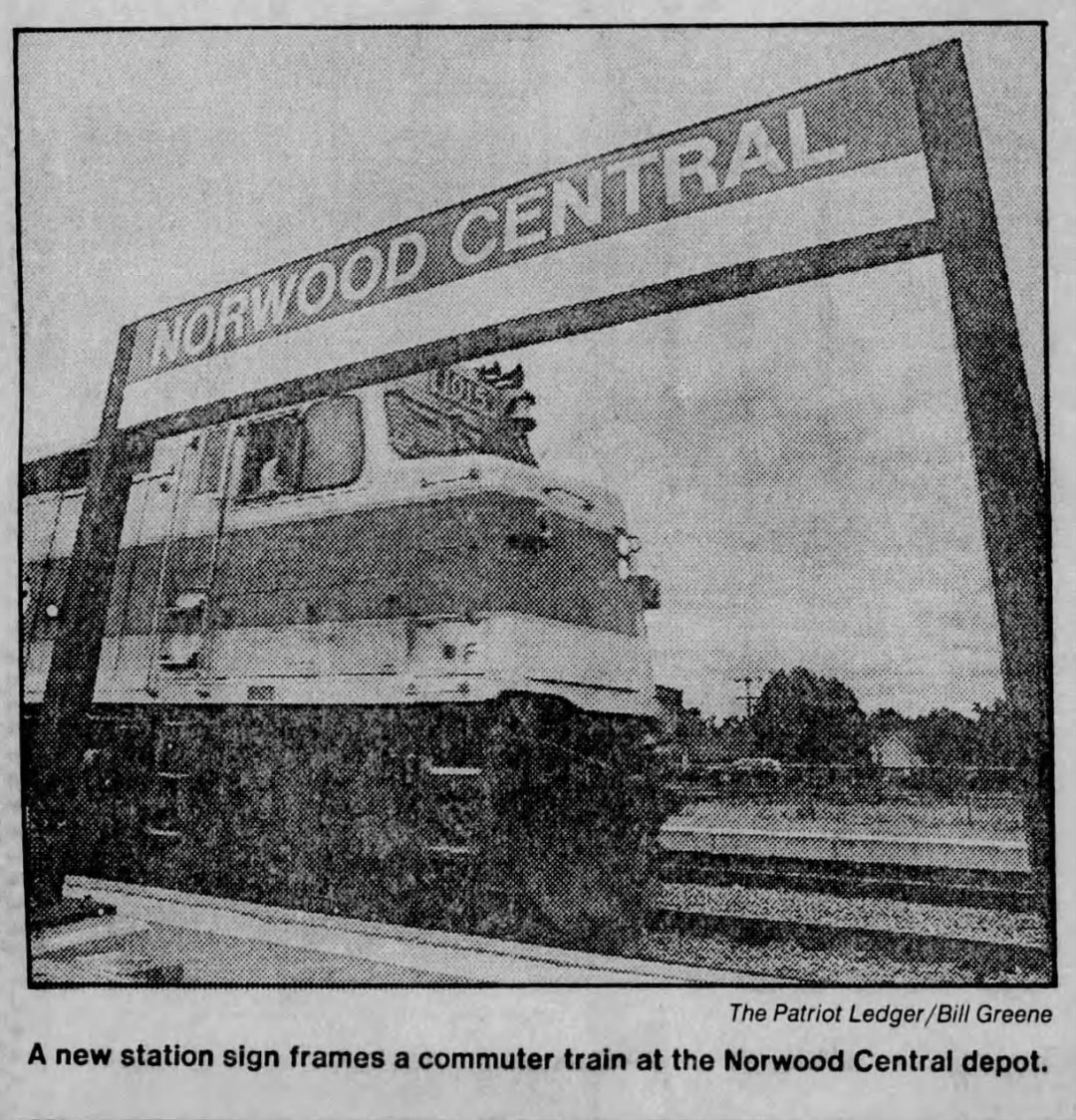
Citizens for Improvement of Commuter Rail Grows From 150 to 2,000 Members in Six Years as State Rep. Gregory Sullivan Credits Group With Sparking South Side Transit Upgrades
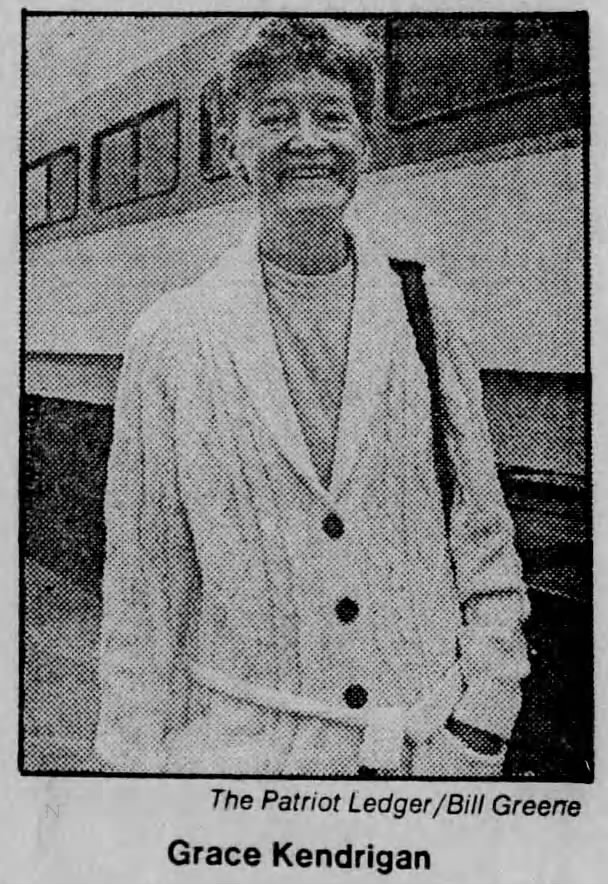
NORWOOD – The more people who ride the train, the better—a conviction Grace “Rusty” Kendrigan of Norwood championed across nearly a decade of grassroots advocacy for Massachusetts commuter rail riders. Profiled in The Patriot Ledger on Monday, November 26, 1984, alongside a photograph by Bill Greene showing passengers walking toward their parked cars after disembarking at Norwood Central depot, the 61-year-old corporate attorney and treasurer of Citizens for Improvement of Commuter Rail (CICR) looked back with satisfaction on how organized rider pressure transformed rail service south of Boston.
“Increasing ridership doesn’t help just commuter rail. It helps everybody, because it gets cars off the road,” Kendrigan explained. Over just six years, the citizen-led coalition had expanded dramatically from 150 to 2,000 dues-paying members, maintaining constant vigilance over train schedules, equipment conditions, and state capital investments. State Rep. Gregory Sullivan (D-Norwood)—whom the group credited with championing its priorities inside the State House—gave CICR direct credit for pushing modernization forward. “Citizens for Improvement of Commuter Rail really has been the spark behind the renovations,” Sullivan said. Recalling the group’s relentless lobbying during deliberations over a 1980 state transportation bond issue, Sullivan laughed: “One secretary called me up and said, ‘Call off the hounds.'”
Kendrigan’s activism began in 1975, ignited by the decision to close Back Bay Station during the massive Southwest Corridor Project—the multi-year undertaking to rebuild the railroad main line and relocate the MBTA’s Orange Line. While Kendrigan rode Franklin Line commuter trains giving impromptu speeches urging fellow passengers to demand better service, Hugh Jones—a former Norwood resident and engineer at Stone & Webster Inc. in Boston—was organizing riders along the Needham Branch. *”Hugh called me one evening and said, ‘Let’s join forces,'” Kendrigan recalled. “I said that was a splendid idea.” Together they launched Citizens for Improvement of Commuter Rail, and the campaign so reshaped Jones’s life that he left Stone & Webster to become an engineer for Amtrak.
By late 1984, Kendrigan felt riders had far more to celebrate than criticize. “I don’t think anyone could criticize anything about the Franklin line. Everything is greatly improved from five years ago, and the proof is in the ridership,” she observed, noting that South Side commuter lines had received upgrades ahead of North Shore routes specifically because CICR concentrated its early organizing south of the city. The coalition’s sole setback had been the temporary suspension of Needham Branch train service during Southwest Corridor construction—service scheduled to return once the corridor project wrapped up in two years.
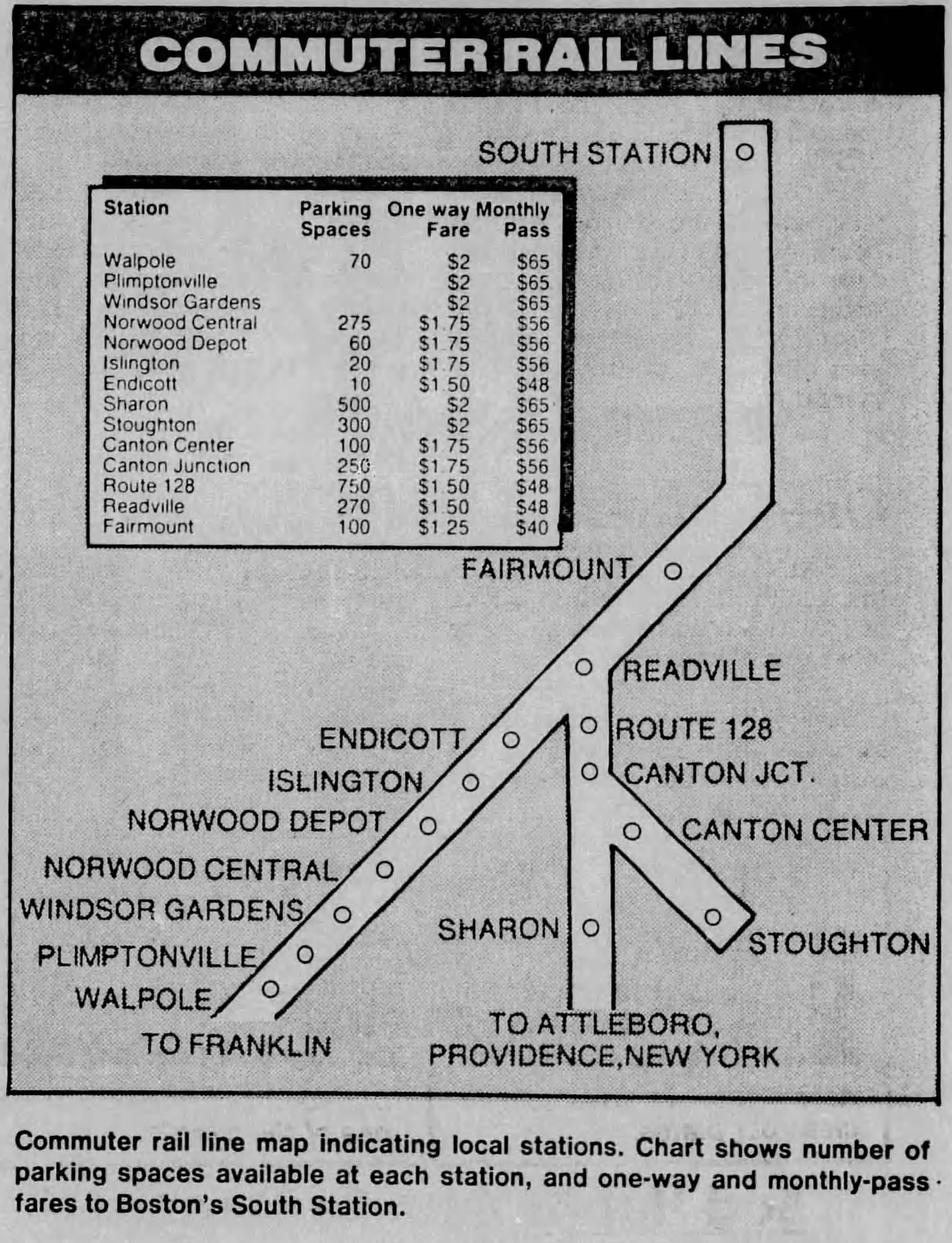
Meanwhile, CICR’s reputation had spread far beyond Norfolk County, drawing members from as far north as Maine and New Hampshire willing to pay the $2 annual dues in hopes of restoring passenger rail in their own communities. “We will do anything we can for any train anywhere,” Kendrigan declared.
Source: The Patriot Ledger • Monday, November 26, 1984 • Photo: Bill Greene
“Increasing ridership doesn’t help just commuter rail. It helps everybody, because it gets cars off the road. We will do anything we can for any train anywhere.”
Archival Note: This article has been dynamically reconstructed from the original public record print archives of the Patriot Ledger
More…
-
The New Railroad Station-This Day In Norwood History-July 26, 1897
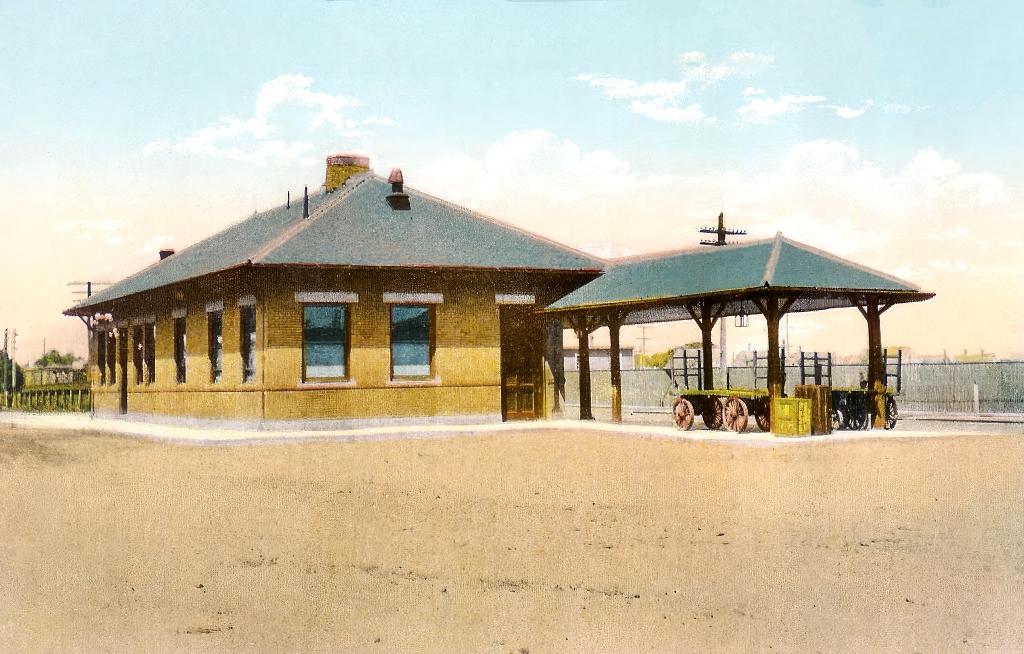
Directors of the New England Railroad inspected sites in town alongside local prominent leaders like Edmund J Shattuck, George F Willett, and Charles T Wheelock, sparking local debate over whether to move the Norwood Central Station west and place a depot at Nahatan Street or stick to consolidating stations at Day Street.
-
Norwood Citizens Debate a Route for Electric Trolley-November 16, 1895
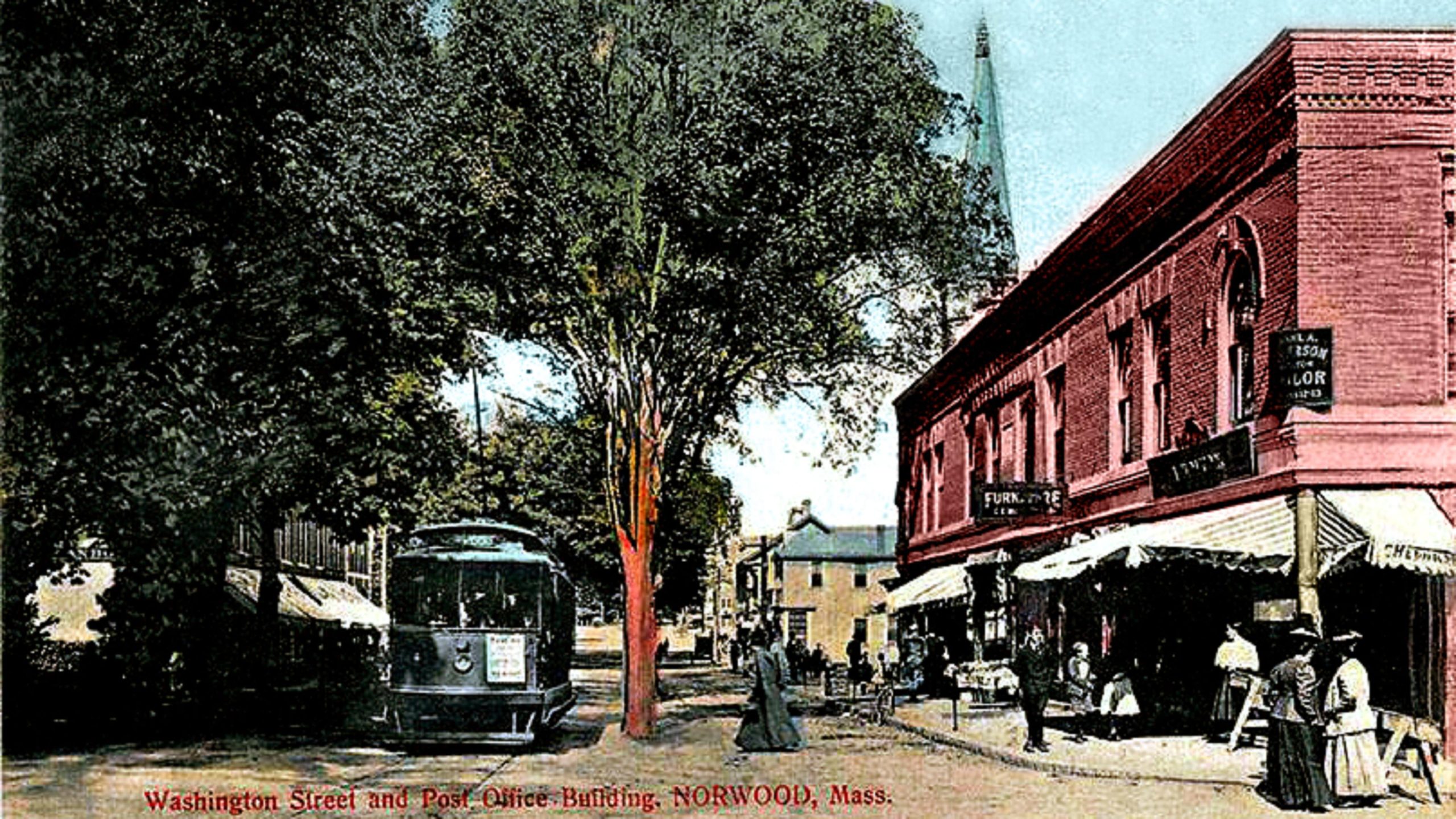
SELECTMEN SIT AS JUDGES. Village hall, which seats 600 people, was crowded by the largest and liveliest party of citizens who have been in it for many a day, last night, upon the occasion of the duly advertised hearing upon the petition of the Norfolk Central street railway company for a location of its tracks…
-
Grade Crossing Matter to be Referred by Court to a Master-This Day In Norwood History-March 25, 1892
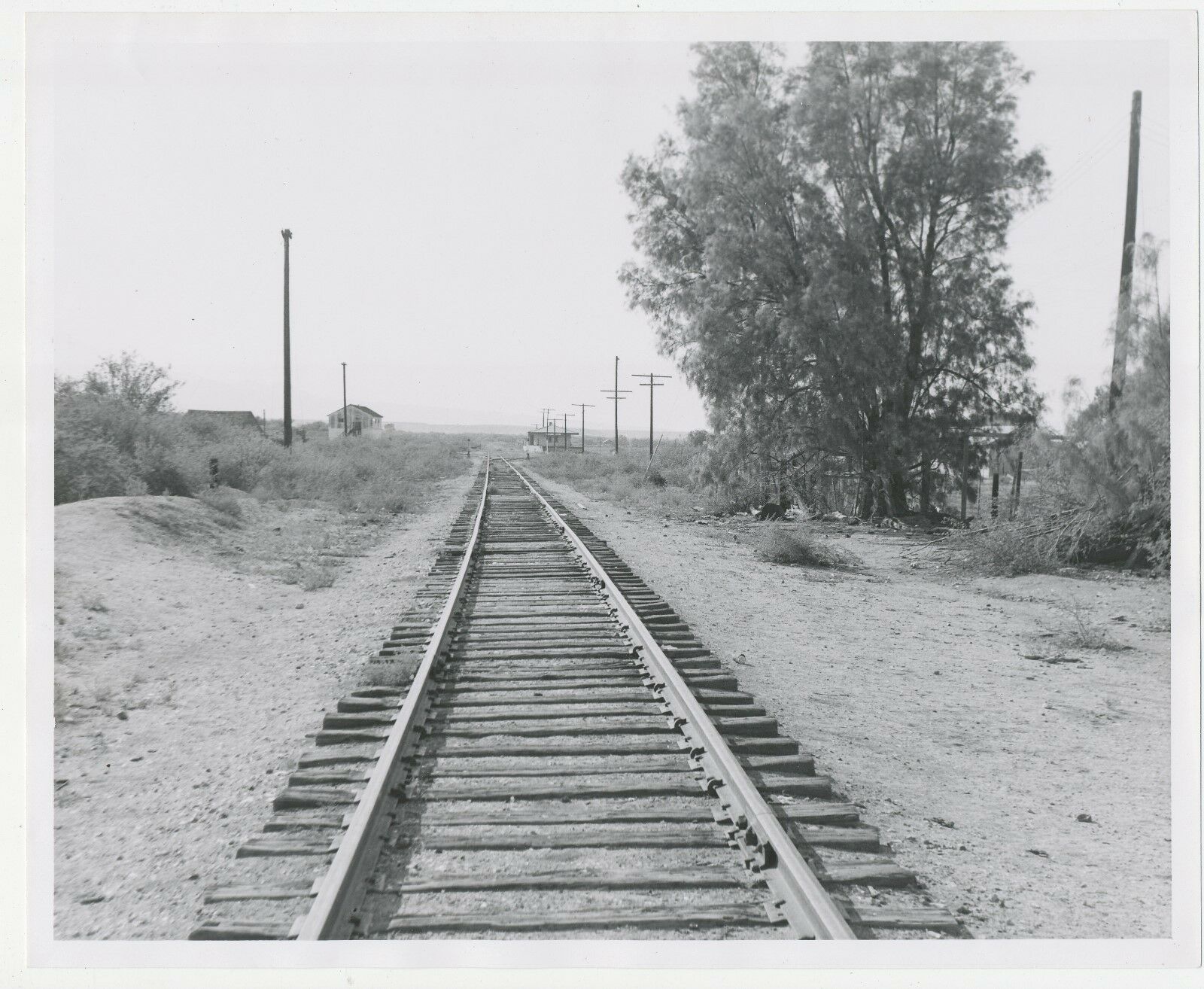
COSTLY CHANGES IN NORWOOD. After a lengthy discussion between counsel for the New York & New England Railroad Company and counsel for the town of Norwood, the objections filed by the railroad company to the acceptance of the report of commissioners in relation to the abolition of four-grade crossings in Norwood, were referred by Justice…
-
Winslow Train Station Abolished, Leading to Construction of Subway Hill-This Day In Norwood History- July 17, 1891
This Day In Norwood History- July 17, 1891-Winslow Train Station Abolished, Leading to Construction of Subway Hill

Discover more from Norwood Historical Society
Subscribe to get the latest posts sent to your email.