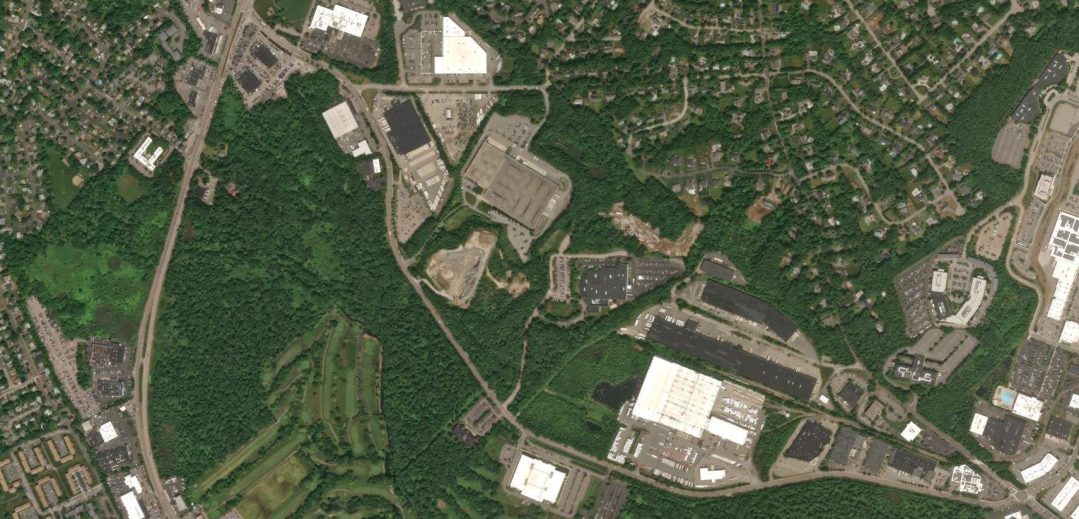
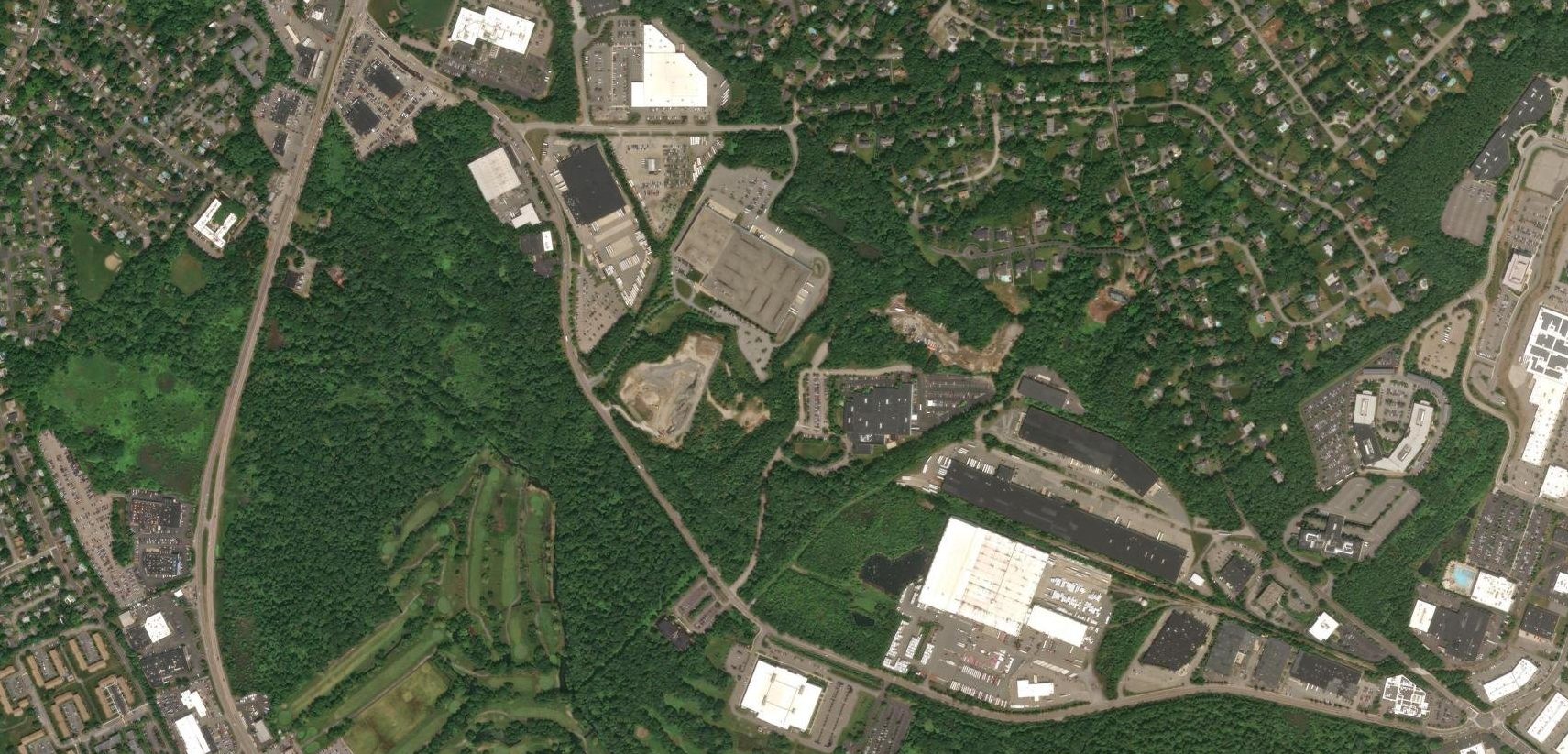
On May 25, 1966, the future of the Norwood Industrial Park hung in the balance as the Norwood and Westwood Boards of Selectmen met jointly to discuss a critical—and increasingly urgent—question: whether Westwood would support a grade‑level rail crossing on Canton Street to serve the expanding industrial zone along University Avenue.
At the center of the issue was Plimpton Press, Norwood’s largest employer, which was preparing to choose a new site for a major warehouse and production facility. The company’s decision, expected by the end of the week, depended heavily on whether a rail spur could be installed to move the massive paper rolls essential to its operations.
A Regional Decision With Local Stakes
Norwood Selectman Walter Dempsey explained that the company’s logistics made rail access essential. Without a spur, Plimpton would face an estimated $20,000 per year in additional trucking costs—an expense that could jeopardize its ability to remain in Norwood.
“It is economically good for all of us to keep the firm here,” Dempsey emphasized, noting that 520 Norwood residents, 45 Westwood residents, and additional workers from Dedham and Walpole depended on the company.
But Westwood’s selectmen were not ready to commit.
Westwood Requests More Time
Westwood Selectman Robert Smith said his board had not had sufficient time to study the proposal’s “ins and outs,” and could not meet Norwood’s suggested 30‑day decision window. He also questioned whether the Department of Public Utilities commissioners would even grant a hearing on the matter.
Dempsey acknowledged that Norwood had not yet spoken directly with the commissioners, explaining that the board had waited to hear Westwood’s position before proceeding.
A $300,000 Question
The Westwood Planning Board had already expressed opposition to a ground‑level grade crossing, citing safety and long‑term control concerns. Alternatives included:
- a bridge over Canton Street
- a tunnel beneath it
But both options carried a staggering price tag—estimated at $300,000, a cost neither town nor the developers were eager to shoulder.
Dempsey argued that such an expense was unnecessary:
“As a layman, I would guess it would be a waste of money… there will only be one train traveling at five miles per hour, with adequate safety signals.”
Developers Also Waiting
The stakes extended beyond Plimpton Press. Cabot, Cabot & Forbes, developers of the 400‑acre industrial site, were also interested in acquiring 100 acres for future industrial construction—but only if rail access could be guaranteed.
Norwood Selectman Charles Rich stressed the urgency:
“The Plimpton Press feels they must break ground this fall. The first order of business is the warehouse, which can do without the rail spur—but the rest cannot.”
A Regional Committee Proposed
To break the impasse, Norwood proposed forming a regional committee with representatives from:
- Norwood
- Westwood
- Canton
Both boards agreed to the idea, recognizing that the industrial corridor’s future would affect all three communities.
But Westwood still declined to give an immediate answer.
Selectman James Lowell of Norwood noted that on a 400‑acre site, the $300,000 cost amounted to “less than $1,000 an acre”—a small figure compared to the long‑term economic benefits.
Still, Westwood Selectman Ritchie said it would be “unfair” to expect a decision that night.
Rich replied with measured urgency:
“We are trying to impress upon you the urgency of the situation.”
The meeting ended without resolution, leaving the future of the rail spur—and the industrial park—uncertain.
Discover more from Norwood Historical Society
Subscribe to get the latest posts sent to your email.