
Developer Seeks State Override of Local Denial While Postponing Resident-Backed 120-Unit Condominium Rezoning Proposal Past December 6 Special Town Meeting
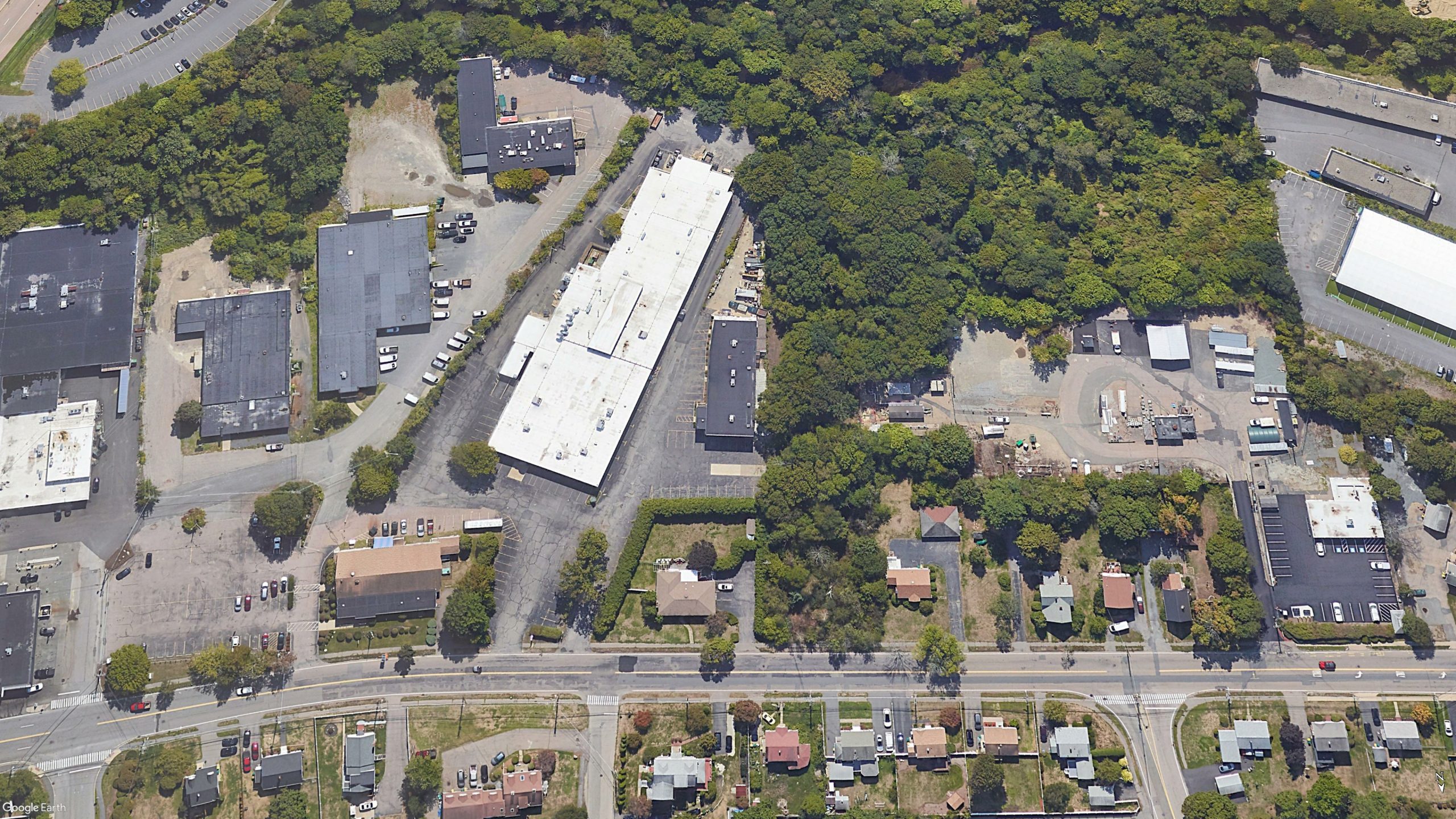
NORWOOD – A major residential development dispute along Walpole Street escalated to the state level on Friday, November 26, 1971, as Norwood builder Frank B. Simoni prepared to petition the Massachusetts Department of Community Affairs under the state’s “anti-snob zoning” statute (Chapter 774) to authorize construction of approximately 150 units of low- and moderate-income housing on a 10-acre parcel. Reported on the front page and continued on Page 18 of The Patriot Ledger on November 26, 1971, the state appeal followed a decision earlier in November by the Norwood Zoning Board of Appeals denying Simoni a local comprehensive permit for the subsidized apartment project.
Simoni’s attorney, Lawrence J. Madfis, confirmed that the formal appeal would be submitted that day seeking a state order reversing the local board’s denial. Under Chapter 774 of the Massachusetts General Laws—widely referred to as the anti-snob zoning law—public agencies, nonprofit sponsors, or limited-dividend corporations could bypass traditional local zoning rules by applying directly to a town’s zoning board of appeals for a single comprehensive permit after one public hearing, with the right to appeal any local rejection to the state Department of Community Affairs. “I don’t know if the state will grant the appeal or not,” Simoni remarked, citing recent state rulings that overturned local zoning boards in Concord and Brookline. “They are realizing we have got to build more housing.”
In its written decision earlier in the month, Norwood’s Zoning Board of Appeals had pointed to technical subdivision deficiencies involving curbs, drainage systems, sidewalks, off-street parking spaces, and interior road widths. Yet Planning Board member Francis Wisgirda observed that nearly all of the board’s objections represented “curable items” that could be corrected simply by redrawing the engineering plans. “It’s not as if changes in the law were required,” Wisgirda explained. “All the objections could be cured just by redrawing some items in the plan.”
Meanwhile, a competing neighborhood-backed proposal to rezone the single-residence tract for privately owned condominiums instead of subsidized rental housing was temporarily shelved ahead of Town Meeting. Once residents living near the Walpole-Wilson Street corridor learned that low- and moderate-income apartments were planned for the site, 10 area landowners petitioned the Planning Board to add a multifamily rezoning article to the December 6 Special Town Meeting warrant. At a November 2 public hearing, residents submitted 170 signatures supporting the condominium rezoning, prompting the Planning Board to vote 3-2 in favor of placing the article on the warrant—a mandatory step under town rules because a similar rezoning bid for high-rise apartments had been voted down at Town Meeting the previous year.
At Simoni’s request, however, the condominium article was withdrawn from the December 6 warrant so he would have additional time to prepare detailed condominium blueprints and secure a fair hearing away from a heavily congested agenda. “There were so many controversial articles already on the Dec. 6 warrant that it would be much better to wait for another meeting so we could have more time and an impartial hearing,” Simoni stated. A spokeswoman for the 10 resident petitioners confirmed that neighbors agreed to postpone the measure until the next Town Meeting. Wisgirda noted that while the Planning Board rarely withdrew a petitioned article, it accommodated Simoni because he was the sole owner of the 10-acre parcel and the only party affected by the delay—adding that Town Counsel had ruled neither a second public hearing nor another Planning Board vote would be required when Simoni asked selectmen or the Planning Board to resubmit the article later.
Even while filing his Chapter 774 appeal with the state, Simoni emphasized that he had not chosen between the two housing formats and reiterated his longtime support for private homeownership: “I can’t say at this time whether I favor one over the other (condominiums or low-income housing) but, as I have said in the past, I favor private home ownership.” Simoni estimated that a condominium development on the parcel would encompass roughly 120 privately owned units priced in the $20,000 range, tailored for older couples whose children had grown as well as young newlywed couples unable to afford a detached single-family house. Having already fielded more than 12 inquiries from prospective buyers, Simoni concluded, “The interest and desire for condominiums is here. It’s just up to the town to decide.”
Source: The Patriot Ledger • Friday, November 26, 1971 (Pages 1 & 18) • Staff Report
“I don’t know if the state will grant the appeal or not. But in Concord and Brookline the state has recently overruled the local board. They are realizing we have got to build more housing.”
| 1971 Norwood Housing Proposal | 1971 Price | 2026 Equivalent |
|---|---|---|
| Estimated Unit Price for Proposed Walpole St. Condominiums | ~$20,000 | ~$156,000 |
- Scale: ~150 low- and moderate-income units
- Zoning Path: Bypasses local single-residence zoning via state Chapter 774 comprehensive permit
- Status: Denied by Norwood ZBA; appealed Nov. 26, 1971 to Dept. of Community Affairs
- Scale: ~120 privately owned units (~$20,000 each)
- Zoning Path: Requires Town Meeting approval to rezone from single-residence to multifamily
- Status: Backed by 170 neighbor signatures; withdrawn from Dec. 6 warrant for future Town Meeting
Archival Note: This article has been dynamically reconstructed from the original public record print archives of the Patriot Ledger
More…
-
Comprehensive Route 1 Zoning Overhaul Proposed Following Impact Study-June 11, 1971
Massive commercial shifts are coming to Route 1. The Planning Board prepares to unveil a sweeping zoning plan designed to regulate growth near the new stadium.

-
Two Public Housing Complexes Planned to Meet Growing Local Need-May 29, 1970
In 1970, the Norwood Housing Authority advanced two major projects—80 elderly units on Nahatan Street and 20 family units at a new site—while state bond delays and zoning changes shaped the timeline.
-
Norwood Voters To Consider Lighting Funds-June 26, 1968
The Finance Commission backs the utility expansion alongside a $163,000 sewer construction article, while the town master plan is deferred.

-
Norwood Planners To Postpone Article On Master Plan-June 25, 1968
Planners vote unanimously to defy a Finance Commission veto, taking an eight-thousand-dollar intersection study request straight to town meeting.
-
Planners Interpret Space Needs Of Proposed Apartment Complex-June 25, 1968
The zoning interpretation backs neighborhood abutters as Appeals Board Chairman James J. Drummey reviews demands to revoke the project’s permits.
-
Dean Street Residents Protest Business Encroachment-July 11, 1967
Dean Street Residents Protest Zoning Change On July 11, 1967, tensions escalated on Dean Street as more than 20 local residents attended a Planning Board hearing to protest a proposed zoning change that they argued would further erode their residential neighborhood. ⠀ The petition was submitted by Alexander Rossi, a contractor living at 181 Dean…
-
Norwood Planning Board Approaches Route 1 Zoning Solution-July 11, 1967
Planning Board Addresses Route 1 Zoning Violations On July 11, 1967, the Norwood Planning Board held a productive meeting with local residents to address long-standing zoning violations along Route 1. ⠀ The proposed resolution, introduced by Town Engineer Robert A. Hamilton, involves rezoning all commercially owned properties situated between East Cross Street and Dean Street…

-
Star Market Breaks Ground For Norwood Distribution Center-June 14, 1967
A grocery powerhouse selects a prime 55-acre parcel near Route 1 and the railroad, launching a massive development project that required 50 town meetings to approve.

-
Planning Board Considers Windsor Gardens Expansion-October 13, 1966
Windsor Gardens proposes a 239-unit expansion, Washington Street rezoning is debated, and American Steel and Aluminum announces a new industrial facility in Norwood.
-
Polaroid Seeking To Work With Neighbors-October 7, 1965
Polaroid Seeking To Work With Neighbors-This Day In Norwood History-October 7, 1965

Discover more from Norwood Historical Society
Subscribe to get the latest posts sent to your email.