


Tensions flared between municipal fiscal boards and public safety leadership as the Norwood Finance Commission (FinCom) pressured Fire Chief Thomas J. Barry to implement a formal policy regulating the department’s “vacation-at-will” practice.
The showdown occurred after the FinCom sharply rejected the chief’s request for a $15,000 reserve fund transfer to the overtime substitution account, opting instead to authorize a modest $4,000 transfer to shore up the rapidly dwindling vacation leave account.
Chief Barry explained that the vacation leave account—originally appropriated at $33,390—had plummeted to a balance of less than $3,000 due to a heavy wave of personnel taking time off during the popular summer months. Vacation substitution proves exceptionally costly; when four firefighters on a shift take vacation simultaneously, four replacement workers must be brought in at overtime rates, draining roughly $4,000 a week from the account to maintain the required minimum shift strength of 13 men. While Chief Barry defended his $15,000 request by citing an underestimation of seasonal costs and delays in deploying four new firefighters currently completing academy training, the FinCom insisted that scheduling vacations is a fundamental management prerogative. Although the chief noted that the current firefighters’ union contract does not explicitly require advance notice for taking vacation leave, the FinCom demanded that Chief Barry and the union produce a structured vacation schedule through September 15, at which point the new academy graduates will join active shifts and alleviate staffing pressures.
FinCom member Peter Bamber clarified that the board did not expect firefighters who had already rented summer cottages or made firm reservations to cancel their plans, but urged cooperation to prevent clustering all time off during peak summer weeks. Other board members offered alternative cost-saving measures: Joseph R. Adakonis suggested capping summer leave at two weeks per man during July and August, while FinCom Chairman Allan D. Howard—who dissented even against the $4,000 transfer—advocated temporarily lowering the minimum manning requirement during the summer. Countering that suggestion, Norman E. Rickard predicted that minimum manning levels would soon be formally codified into the next collective bargaining agreement, removing it from debate as a tool to curb overtime. Weighing in on the FinCom’s rejection of the $15,000 request, Selectmen Chairman Joseph F. Curran remarked critically, “If that’s the way they’re going to play the game, he’s just going to have to live with it.”
In addition to the vacation overtime dispute, the FinCom denied Chief Barry’s request for additional funds to pay three firefighters an extra $1,000 a year to serve as part-time mechanics. Chief Barry warned that the department was failing to perform critical preventive maintenance, which has plagued the agency for years. In response, FinCom members Bamber and Adakonis urged the Board of Selectmen to explore establishing a centralized municipal maintenance facility to service all town vehicles, while inviting the chief to compile a prioritized list of current apparatus repairs so work could be outsourced to private contractors.
Archival Note: This article has been dynamically reconstructed from the original public record print archives of the Patriot Ledger
More Norwood Fire Stories
-
Three Hurt After Falling Off Ladder at Norwood Apartment Complex-July 16, 2021
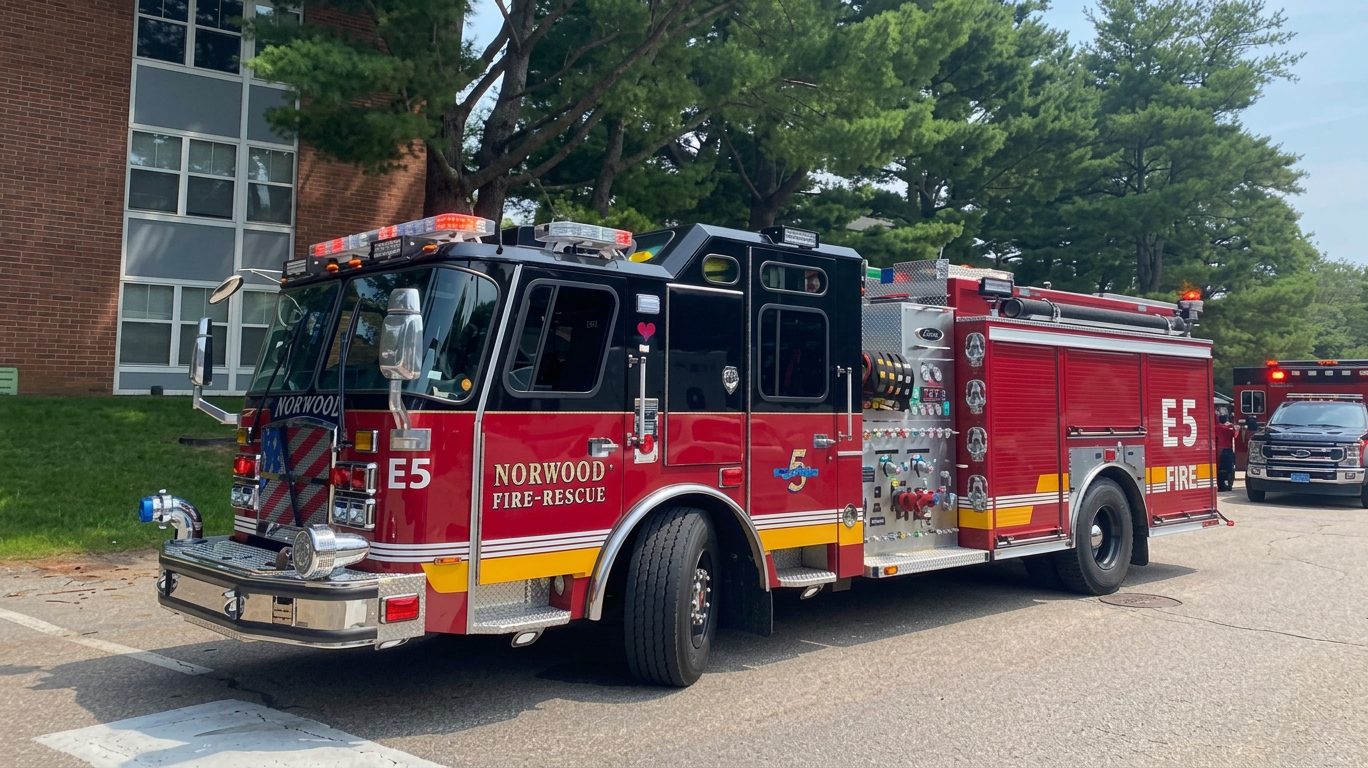
A construction accident at the Windsor Gardens apartment complex in Norwood, Massachusetts, left three people seriously injured on July 16, 2021. The incident highlights the importance of workplace safety and the need for proper training and equipment in construction sites.
-
Army Reservist Dennis Mawn Returns to Norwood Fire Department After a Year in Iraq-February 13, 2012

Norwood firefighter Dennis Mawn, returned in December after serving on a second tour of duty in Iraq. Dennis Mawn returned to work at the Norwood Fire Department with two tours of duty under his belt and a new honor: the Defense Meritorious Service Medal. Army Master Sgt. Mawn, 43, served with Joint Forces Special Operations…
-
Selectmen Approve Three New Firefighters and Overtime Increase-August 11, 1993

Following sweeping early retirements across town departments, Fire Chief William Sullivan received unanimous approval from selectmen to hire three new firefighters and increase the department’s overtime account.
-
Live Shotgun Shells Scattered Across Norwood Play Areas-August 12, 1986
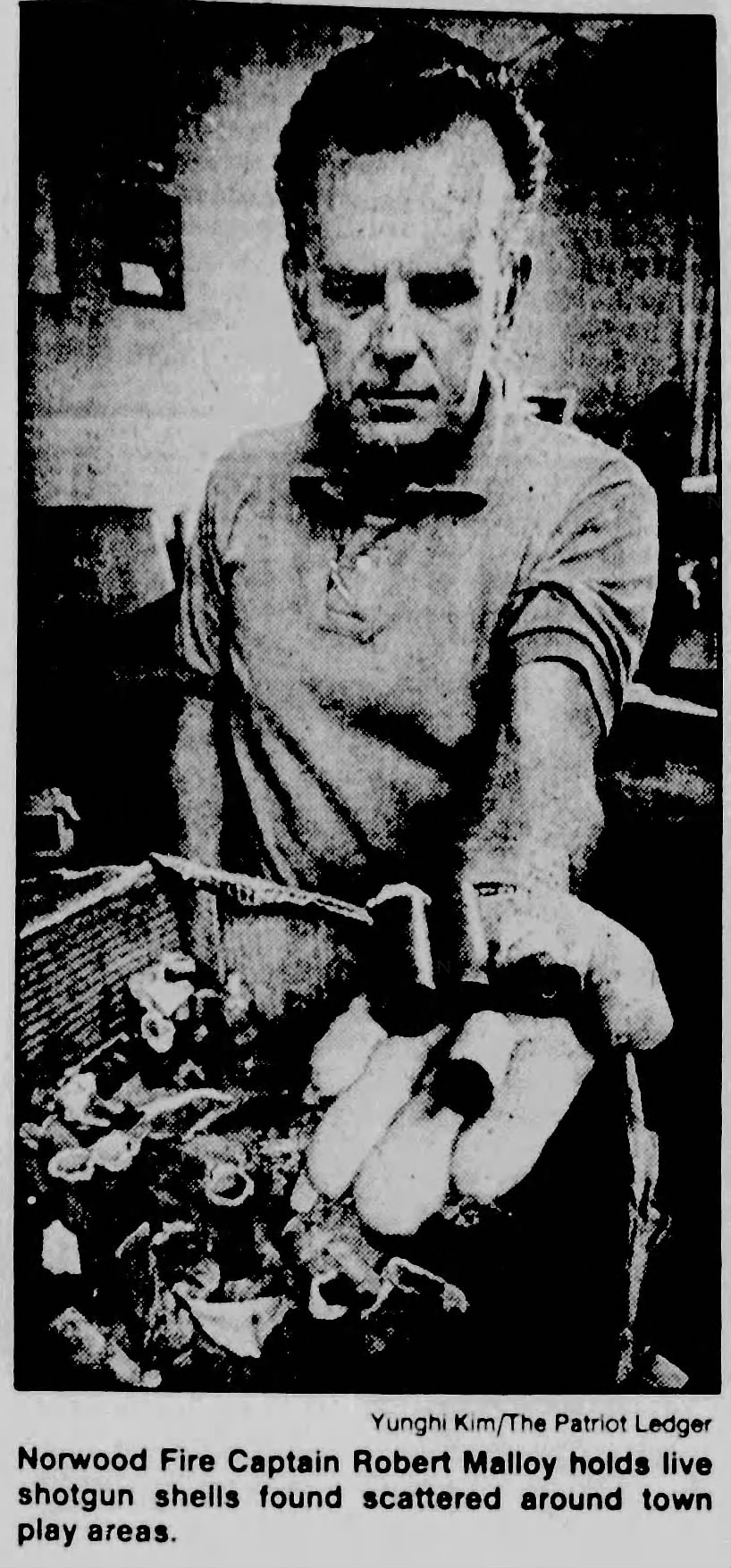
Fire Captain Robert Malloy issued a safety warning after 150 live 1942 military surplus shotgun shells were scattered by teenagers across Norwood playgrounds and cemeteries.
-
Norwood Selectmen Demand Immediate Action on Faulty Fire Hydrants-August 21, 1985

Norwood selectmen demand immediate action on faulty hydrants following a Walnut Avenue fire where firefighters were hampered by three broken plugs.
-
Fire closes Norwood Star Market-May 28, 1985

The Star Market on Nahatan Street was closed this morning because of possible food contamination caused by smoke from an early morning fire in a storeroom. Town Health Inspector Phyllis Boucher ordered the store closed and called in a state health inspector to survey the damage to food supplies. “I can’t say how long the…
-
Fire Chief Reports Worn Equipment As Maintenance Dispute Simmers-September 5, 1979
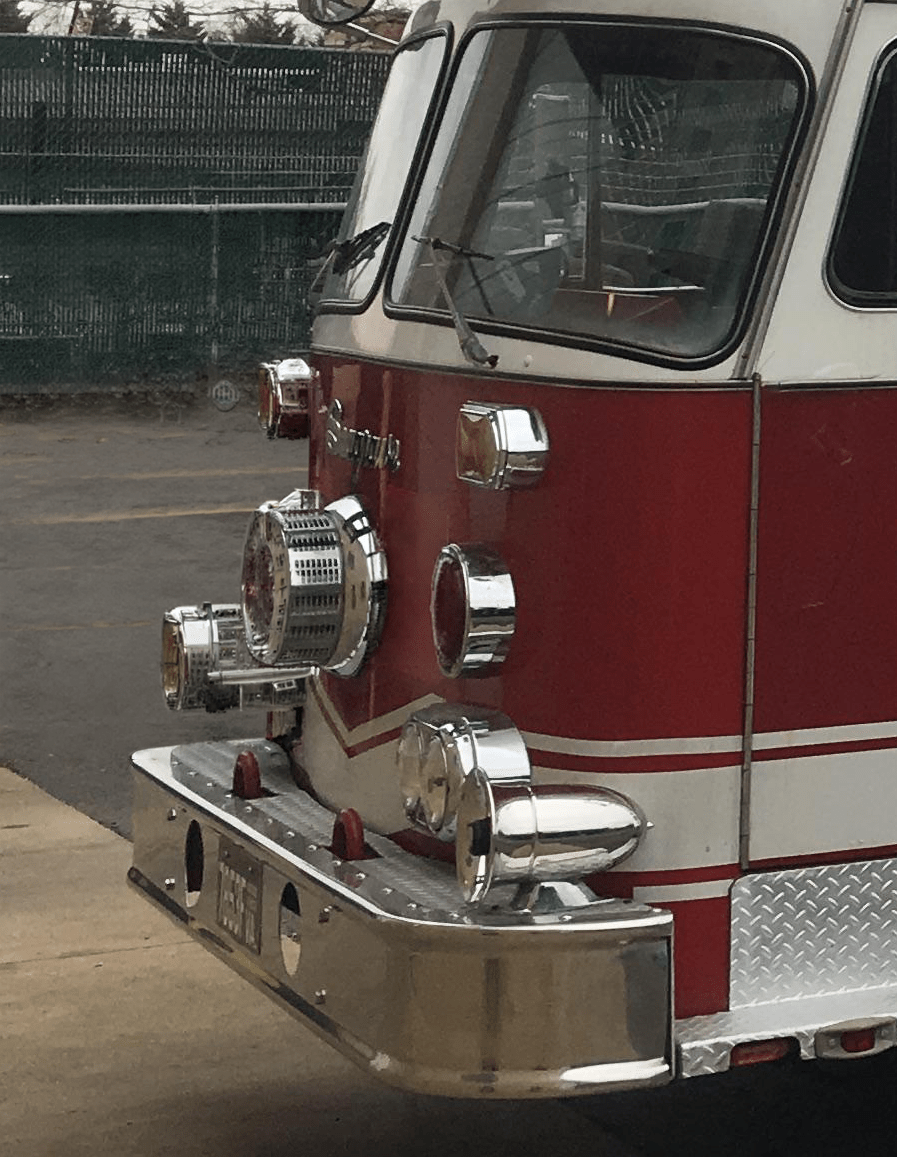
Fire Chief Thomas J. Barry Jr. delivered a frank status report to selectmen on the condition of the town’s firefighting fleet, describing the eight department vehicles—averaging 14 years in age—as heavily worn and difficult to maintain following the recent resignation of the department’s sole in-house mechanic. Chief Barry addressed recent concerns after two frontline trucks…
-
Norwood Selectmen Uphold Fire Department Staffing Levels Amid Labor Disputes-July 12, 1978
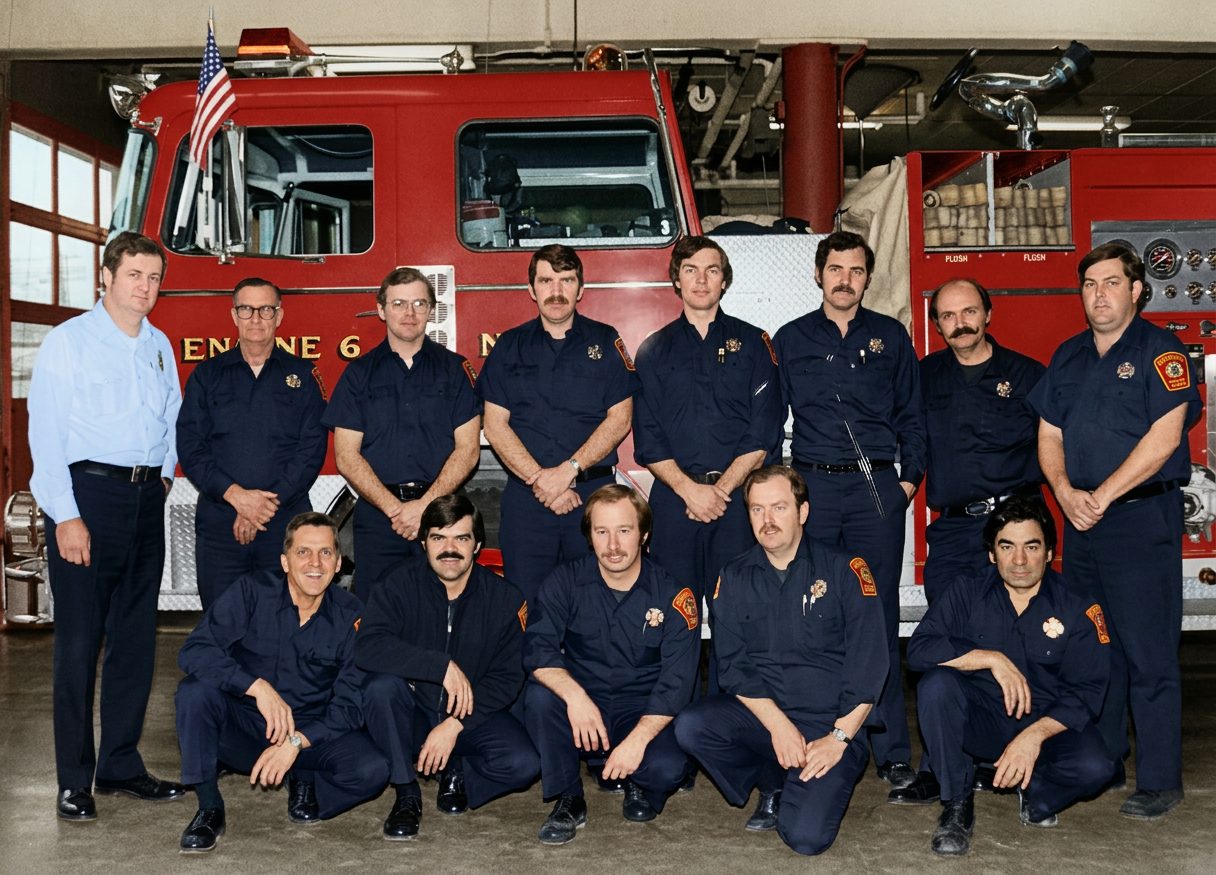
Fire Department Manning Shifts and Physical Exam Standoff On July 12, 1978, the Norwood Board of Selectmen stepped directly into a complex municipal and labor dispute, voting 3–1 to reaffirm a long-established minimum manning policy of 13-man shifts within the Norwood Fire Department. The decision effectively determined that any budgetary economies or cost-cutting measures targeted…
-
Fire Department Labor Dispute and Election Litigation-July 5, 1978

The summer of 1978 brought unrest to Norwood, characterized by a firefighter strike against mandatory health programs and a tense court challenge over local election results.
-
Fire Contract Talks Stall; Mediator to Step In-May 27, 1978
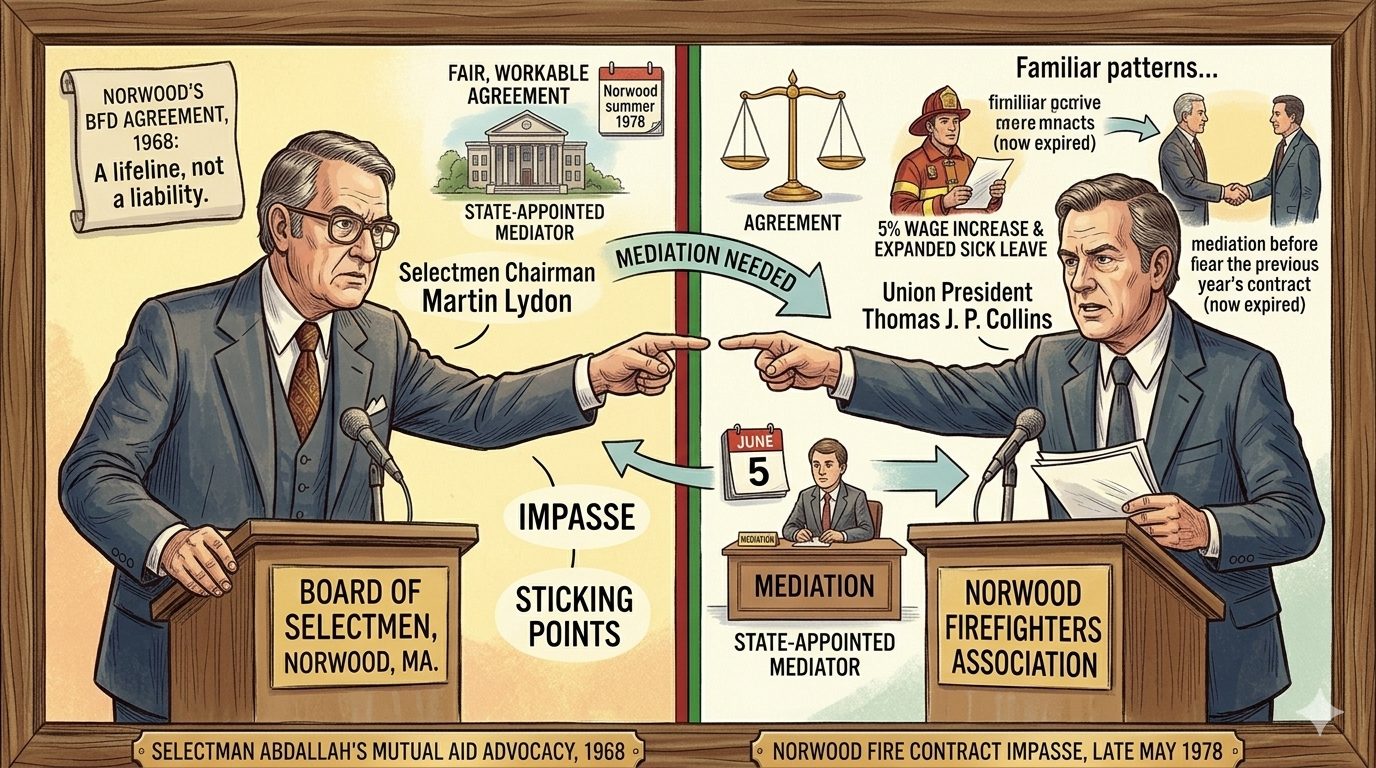
History repeats itself at the negotiating table. Contract talks between town officials and the Norwood Firefighters Association officially ground to a halt in May 1978, reviving a familiar public-safety deadlock. Take a look back at the quiet high-stakes standoff that sent both sides back to a state mediator.
Discover more from Norwood Historical Society
Subscribe to get the latest posts sent to your email.