
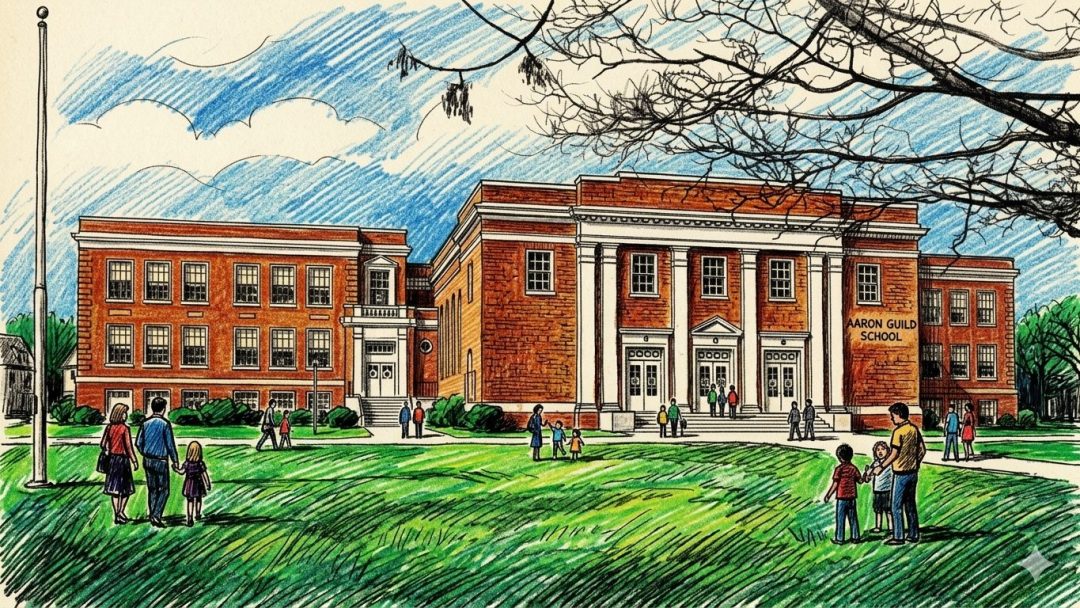

On a summer evening in July 1977, the future of the Aaron Guild School became the focus of civic debate in Norwood. The surplus school building, three floors tall and centrally located, was suddenly at the center of competing visions: short‑term leasing for immediate revenue, or long‑term planning as a replacement site for the Norwood Civic Center.
The Board of Selectmen called for a public hearing at Memorial Hall to discuss both immediate and future uses of the building. Town Manager John J. Carroll had proposed leasing the Guild School to two tenants — the Norwood CETA consortium and the Educational Collaborative of Greater Boston (EDCO) — for a net income of $72,000 in the current fiscal year. The Aaron Guild study committee, chaired by Joan H. Cuff, unanimously supported Carroll’s plan, calling it “a viable, sensible arrangement for the town to consider, on an interim basis only.”
Yet the selectmen hesitated. Chairman Joseph F. Curran preferred to wait until August 14, when Norwood Hospital was expected to learn the final state decision on its expansion into the Civic Center. Curran reaffirmed the pledge to replace the Civic Center’s recreation facilities and said he personally “leans” toward the Guild School as the replacement site. Under the terms of a $2 million sale agreement, the town would have only two years to vacate the Civic Center if the hospital won approval.
The debate revealed sharp differences. Walter J. Grady, chairman of the Civic replacement committee, supported CETA as a tenant on the upper two floors but opposed EDCO, fearing it would interfere with a smooth relocation of Civic facilities to the Guild. Grady argued the town could save more than $320,000 by vacating the Civic in one year: $200,000 in annual inflation on construction costs plus a $10,000 monthly incentive the hospital had tentatively offered for each month sooner than 24 months the town vacated.
Carroll countered that many Civic facilities could be transferred to the Guild’s gym, cafeteria, and other spaces, though he admitted the swimming pool could not be replaced in less than a year. He insisted that short‑term leases did not preclude the town from taking advantage of any incentive bonus the hospital might offer.
Another issue was whether the Guild School should become the new police headquarters. The selectmen voted 4‑1 against relocating the police department there. The motion was made by Selectman Martin J. Lydon, who had returned to duty just three weeks after suffering a heart attack.
The hearing promised to be contentious. On one side were advocates of immediate leasing to generate revenue and keep the building in use. On the other were those who saw the Guild School as the logical long‑term replacement for the Civic Center, especially if the hospital expansion went forward. At stake was not only the fate of a surplus school building but also the future of Norwood’s recreational and civic life.
Archival Note: This article has been dynamically reconstructed from the original public record print archives of the Patriot Ledger
-
School Long-Range Planning Panel to Deliver Progress Report-August 24, 1982

Facing declining enrollments, Norwood’s school planning panel will deliver a progress report in October and final recommendations on grade configurations and potential school closures in January.
-
Norwood School Committee to Ask Teachers to Renegotiate Contracts-August 20, 1982

Citing finance commission opposition and Proposition 2 1/2 limits, the school committee will ask teachers to renegotiate 8 percent pay raises or face town meeting review on September 20.
-
Norwood School Committee Narrows Superintendent Search to Three Finalists, Including Junior High North Principal James R. Savage-August 11, 1982
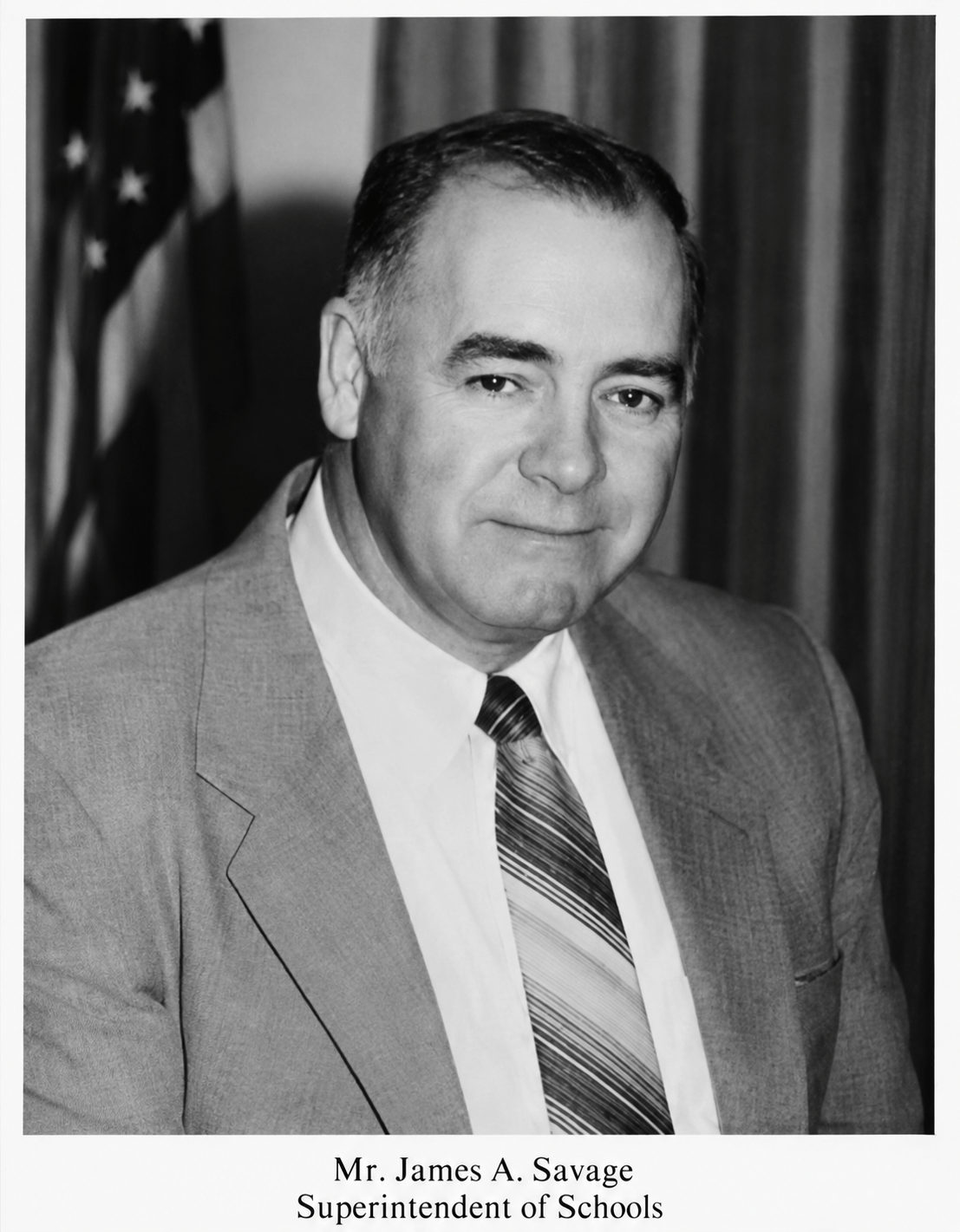
Junior High North Principal James R. Savage was named one of three finalists for Norwood superintendent of schools, alongside Arlington assistant superintendent William J. Birmingham and Rhode Island administrator Nora M. Walker.
-
Peabody School Graduates Told Of Obligation To Support Education-June 25, 1982

School officials emphasize community obligations and moral commitments to public education during exercises at Junior High School South.
-
Norwood High School 1962 Addition Cleared of Asbestos Hazards in State Safety Survey-November 3, 1981
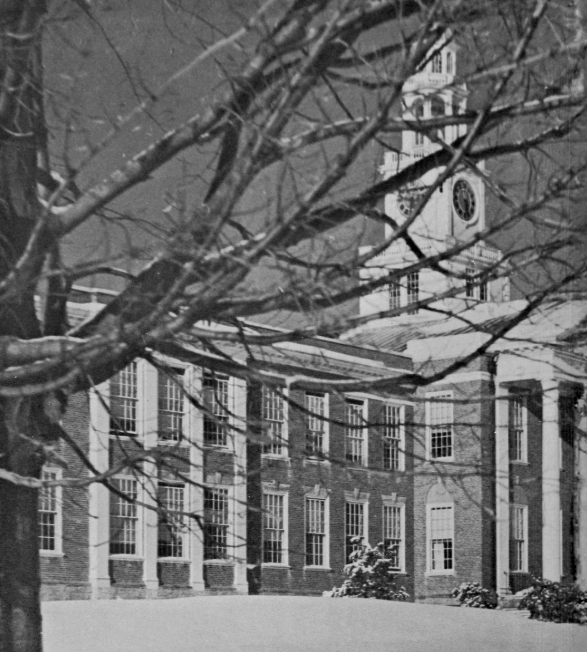
Following state inspections of regional schools built between 1946 and 1972, Norwood High School has been cleared of asbestos hazards, with reinspection set for next year.
-
Junior High South Approves ‘Project Adventure’ Obstacle Course Gym Class-October 15, 1981

Junior High South introduces “Project Adventure,” an outdoor physical education obstacle course designed to build teamwork and move away from competitive sports.
-
Norwood High School Senior Edward J. Skricki Named Merit Scholarship Semi-Finalist; Three Peers Commended-October 13, 1981

Norwood High senior Edward J. Skricki achieves National Merit Scholarship semi-finalist standing, joined by commended classmates Judith Martowska, Susan O’Brien, and Joseph Petrie Jr.
-
Superintendent Taris Seeks to Curb Rising Costs of After-Hours School Building Use-September 4, 1981

Superintendent of Schools Louis J. Taris is pushing to rein in the surging volume of outside organizations utilizing school facilities during evening and weekend hours, citing mounting financial burdens on the school department. Dr. Taris informed the school committee that dozens of local organizations currently utilize school buildings after hours, frequently without paying any rental…
-
Norwood School Committee Votes Eliminate Youth Hangout-July 31, 1981

Following rampant vandalism, late-night drinking, and brush fires near Callahan Elementary School, the Norwood School Committee voted to fund a $6,000 clearing project to eliminate a notorious youth hangout.
-
School Committee Awards New Transportation Contracts-July 16, 1981

After a difficult budget cycle in 1980, the committee avoided controversy by budgeting accurately and selecting trusted local transportation providers.
Discover more from Norwood Historical Society
Subscribe to get the latest posts sent to your email.