
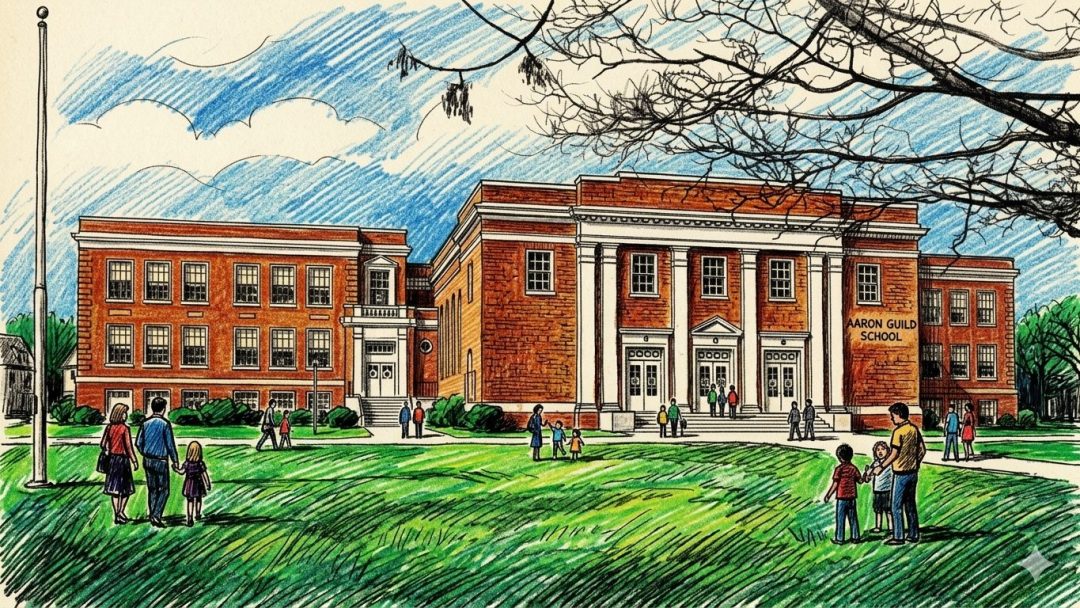
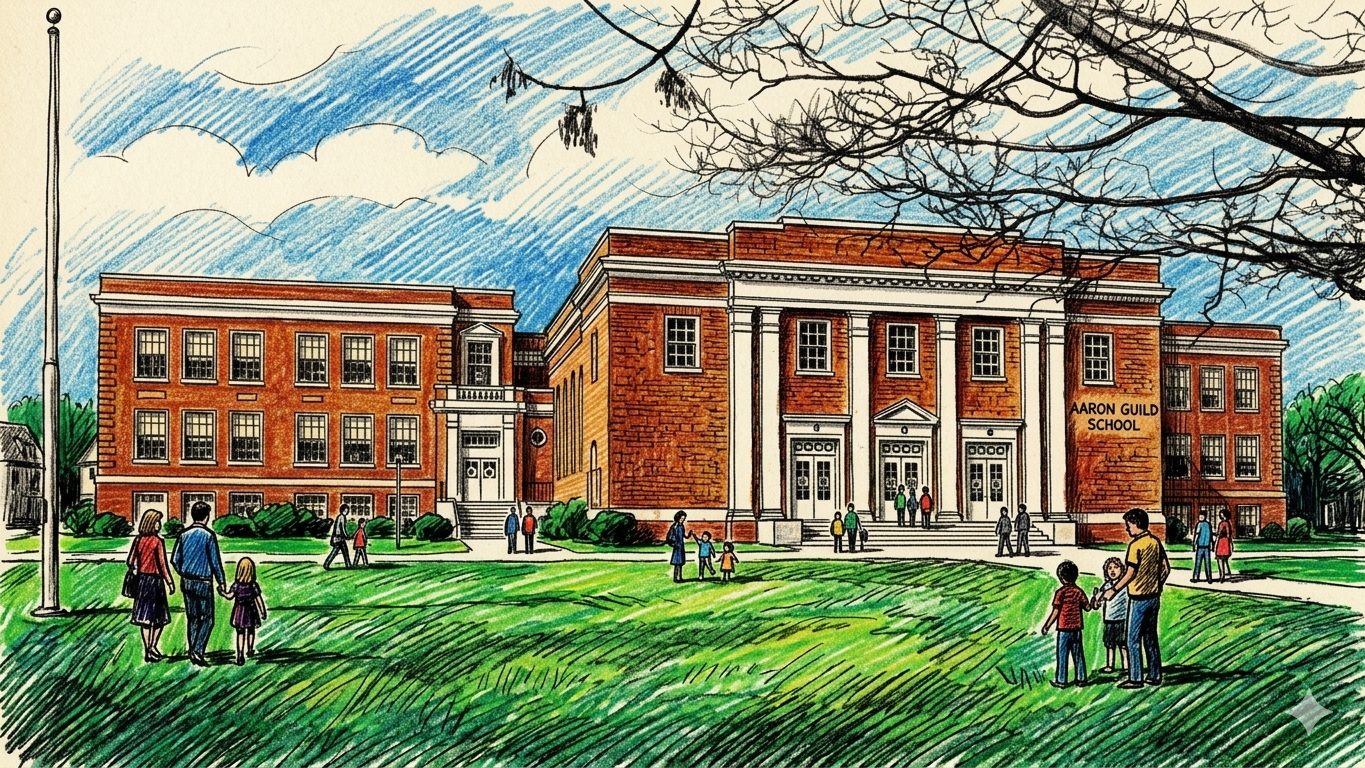
On a summer evening in July 1977, the future of the Aaron Guild School became the focus of civic debate in Norwood. The surplus school building, three floors tall and centrally located, was suddenly at the center of competing visions: short‑term leasing for immediate revenue, or long‑term planning as a replacement site for the Norwood Civic Center.
The Board of Selectmen called for a public hearing at Memorial Hall to discuss both immediate and future uses of the building. Town Manager John J. Carroll had proposed leasing the Guild School to two tenants — the Norwood CETA consortium and the Educational Collaborative of Greater Boston (EDCO) — for a net income of $72,000 in the current fiscal year. The Aaron Guild study committee, chaired by Joan H. Cuff, unanimously supported Carroll’s plan, calling it “a viable, sensible arrangement for the town to consider, on an interim basis only.”
Yet the selectmen hesitated. Chairman Joseph F. Curran preferred to wait until August 14, when Norwood Hospital was expected to learn the final state decision on its expansion into the Civic Center. Curran reaffirmed the pledge to replace the Civic Center’s recreation facilities and said he personally “leans” toward the Guild School as the replacement site. Under the terms of a $2 million sale agreement, the town would have only two years to vacate the Civic Center if the hospital won approval.
The debate revealed sharp differences. Walter J. Grady, chairman of the Civic replacement committee, supported CETA as a tenant on the upper two floors but opposed EDCO, fearing it would interfere with a smooth relocation of Civic facilities to the Guild. Grady argued the town could save more than $320,000 by vacating the Civic in one year: $200,000 in annual inflation on construction costs plus a $10,000 monthly incentive the hospital had tentatively offered for each month sooner than 24 months the town vacated.
Carroll countered that many Civic facilities could be transferred to the Guild’s gym, cafeteria, and other spaces, though he admitted the swimming pool could not be replaced in less than a year. He insisted that short‑term leases did not preclude the town from taking advantage of any incentive bonus the hospital might offer.
Another issue was whether the Guild School should become the new police headquarters. The selectmen voted 4‑1 against relocating the police department there. The motion was made by Selectman Martin J. Lydon, who had returned to duty just three weeks after suffering a heart attack.
The hearing promised to be contentious. On one side were advocates of immediate leasing to generate revenue and keep the building in use. On the other were those who saw the Guild School as the logical long‑term replacement for the Civic Center, especially if the hospital expansion went forward. At stake was not only the fate of a surplus school building but also the future of Norwood’s recreational and civic life.
Archival Note: This article has been dynamically reconstructed from the original public record print archives of the Patriot Ledger
-
Uncertainty Looms Over Norwood Junior High South Opening Date-July 12, 1974
After three years of double sessions following a 1971 fire, Norwood officials faced the possibility of further delays for the new Junior High South.
-
Unfinished Junior High To Open On Schedule-July 8, 1974

Discover the construction history of the $4.5 million Junior High South project in 1974, detailing the challenges faced during the transition from the old Washington Street school.
-
School Board Rejects ‘Floating Principal’ Proposal-July 03, 1974

The Norwood School Committee held a contentious session on the evening of July 2, 1974, where, following two weeks of deliberation and a lengthy 90-minute executive session, the board voted 5-1 to reject a proposal to create a new administrative position titled “floating principal.“ The concept, initially championed by Committee Member Joseph M. Pentowski, was…
-
School Drop-In Centers Possible In Fall-June 24, 1974
Citing summer custodial constraints and a lack of air conditioning, town officials vote to survey local youths during the summer to prepare for a fall launch.
-
Superintendent Philip O. Coakley Reacts to NTA Grievance Statement Regarding Cleveland School Postings-November 15, 1973
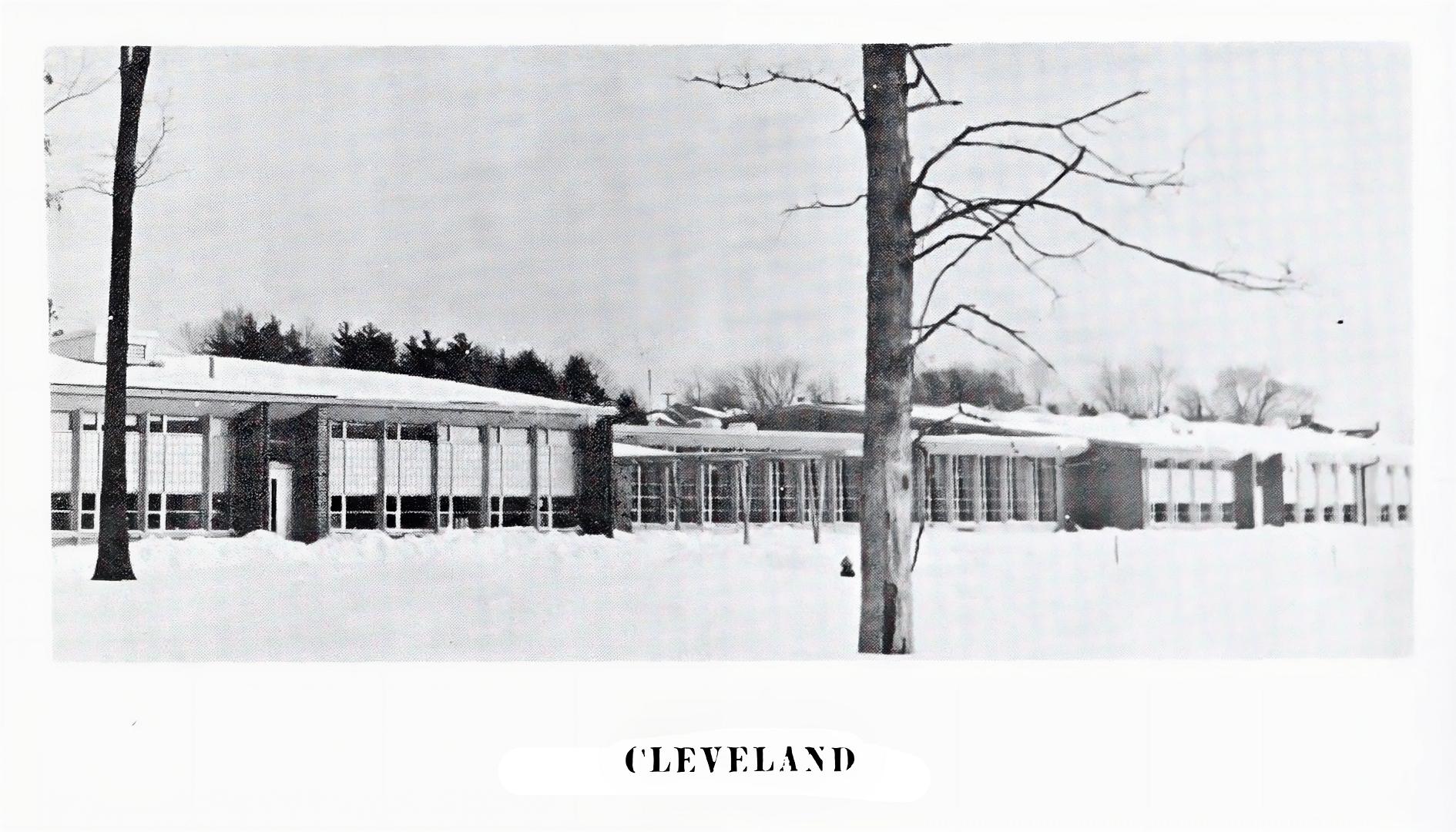
School Superintendent Objects to Public Characterization of Contract Settlement Concerning Unposted Faculty Vacancies NORWOOD – Tensions surfaced between the school administration and teachers’ representatives following a recent grievance settlement issued by David Reagon, chairman of the professional rights and responsibilities committee of the Norwood Teachers Association (NTA). Reacting during a school committee meeting on Tuesday…
-
School Committee Unanimously Approves Period of Silent Meditation Following State Legislative Act-October 25, 1973

Acting on a new state law permitting voluntary reflection, the Norwood School Committee unanimously approved a daily period of silent meditation for local students and teachers.
-
Proposal Would Combine High School and Henry O. Peabody School Facilities-October 4, 1973

The School Committee reviews a preliminary proposal to combine Norwood High School and Henry O. Peabody School facilities for a new career development and vocational program.
-
Public Schools Face Delays and Possible State Action on Mandatory Hot Lunch Program-August 31, 1973

Parents of elementary school students in Norwood will need to continue packing brown-bag lunches for the start of the academic year. School Superintendent Philip O. Coakley announced that the town will fail to meet the state-mandated September deadline for implementing a universal public school hot lunch program, exposing the municipality to potential legal action by…
-
Norwood High School Refines Open Campus Program in Second Year of Operation-October 2, 1972

Entering its second year, Norwood High School’s open campus system sees tighter corridor rules, sophomore restrictions, and expanded academic seminars while undergoing state-mandated evaluation.
-
Andy Scafati Recalls 40 Seasons in Athletics Ahead of Norwood Retirement-September 7, 1972
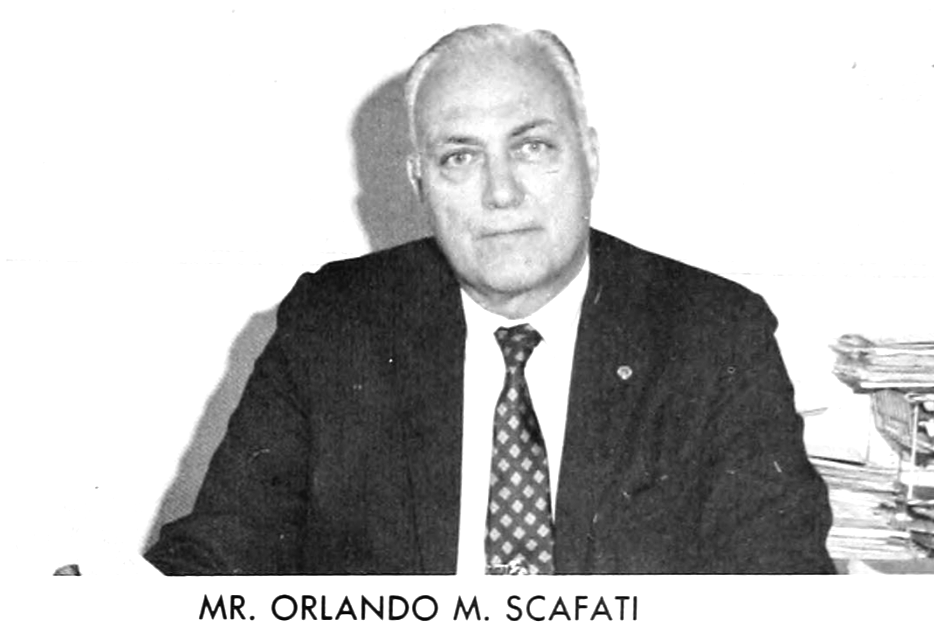
Longtime Norwood High School athletic director Andy Scafati reflects on 40 years in sports and the remarkable expansion of the town’s athletic programs as he prepares to step down.
Discover more from Norwood Historical Society
Subscribe to get the latest posts sent to your email.