
Official Recommends Exploring Mechanical Voting Machines Over Punch-Card Tabulators to Replace Norwood’s Paper Ballots
NORWOOD – Following an official fact-finding trip to observe Newton’s newly installed electronic voting system during its November 7, 1967 municipal election, Norwood Town Clerk Bartley W. Connolly reported on Thursday, November 16, 1967, that he was unimpressed by computerized punch-card balloting—though he emphasized that Norwood urgently needed to replace its increasingly obsolete hand-counted paper ballots. Accompanied on the Newton inspection by Town Manager Walter A. Blasenek and two additional members of the selectmen’s committee studying modern voting techniques, Connolly concluded that mechanical voting machines represented a far more reliable investment if the town could resolve cost and storage hurdles.
According to Connolly, equipping Norwood to handle its 14,000 registered voters would require purchasing approximately 40 mechanical voting machines at an estimated cost of $1,900 apiece—a total capital outlay of roughly $76,000. Beyond the purchase price, Connolly pointed out a logistical challenge: because the Norwood Armory lacked sufficient floor space to house 40 bulky machines between elections, the municipality would need to rent dedicated storage facilities.
Concerns Over Accuracy and Overnight Delays in Newton’s Punch-Card Trial
While acknowledging that the compact punch-card apparatus—which he described as “more like a small desk blotter made of plastic” where voters turned cellophane ballot pages and punched holes with a stylus for computer tabulation—presented zero storage problems and enjoyed smooth voter acceptance in Newton, Connolly warned that the underlying technology remained unproven. Prior to Newton’s rollout, the system had only been tested once locally on a very small scale in Braintree.
Connolly cited serious accuracy and efficiency problems witnessed firsthand during Newton’s ballot count. “I didn’t think it was impressive. It didn’t even seem to be wholly accurate,” Connolly stated. “Not only did it take them until three in the morning to count the votes, but they also got different answers on several tabulations.” Refusing to adopt an untested system prematurely, he cautioned, “I don’t want to jump from the frying pan into the fire.”
At the same time, Connolly stressed that sticking indefinitely with hand-counted paper ballots posed its own threat to election integrity as Norwood’s population expanded. “You can’t be accurate either if you have to stay up all night counting paper ballots,” he observed. “Norwood is growing all the time. It would be wise to find a new method of counting the votes before we lose accuracy because we have to stay up all night.”
1967 Voting Machine Costs Adjusted to 2026 Dollars & Modern Elections
Inflation-adjusted using U.S. Bureau of Labor Statistics CPI data ($1.00 in Nov. 1967 ≈ $9.66 in 2026)
| 1967 Equipment Estimate | 1967 Cost | 2026 Equivalent |
|---|---|---|
| Single Mechanical Voting Machine (Unit Price) | $1,900 | ~$18,354 |
| Full Fleet of 40 Machines (For 14,000 Voters) | $76,000 | ~$734,160 |
Archival Note: This article has been dynamically reconstructed from the original public record print archives of the Patriot Ledger
-
Norwood Young Republican Club Plans Celebrity Dinner-August 25, 1955

The Norwood Young Republican Club finalized plans for a September 28 celebrity dinner at Holman Hall featuring Lt. Gov. Sumner Whittier and regional political leaders.
-
George Willett Seeks Senate Seat-This Day In Norwood History- July 1, 1930
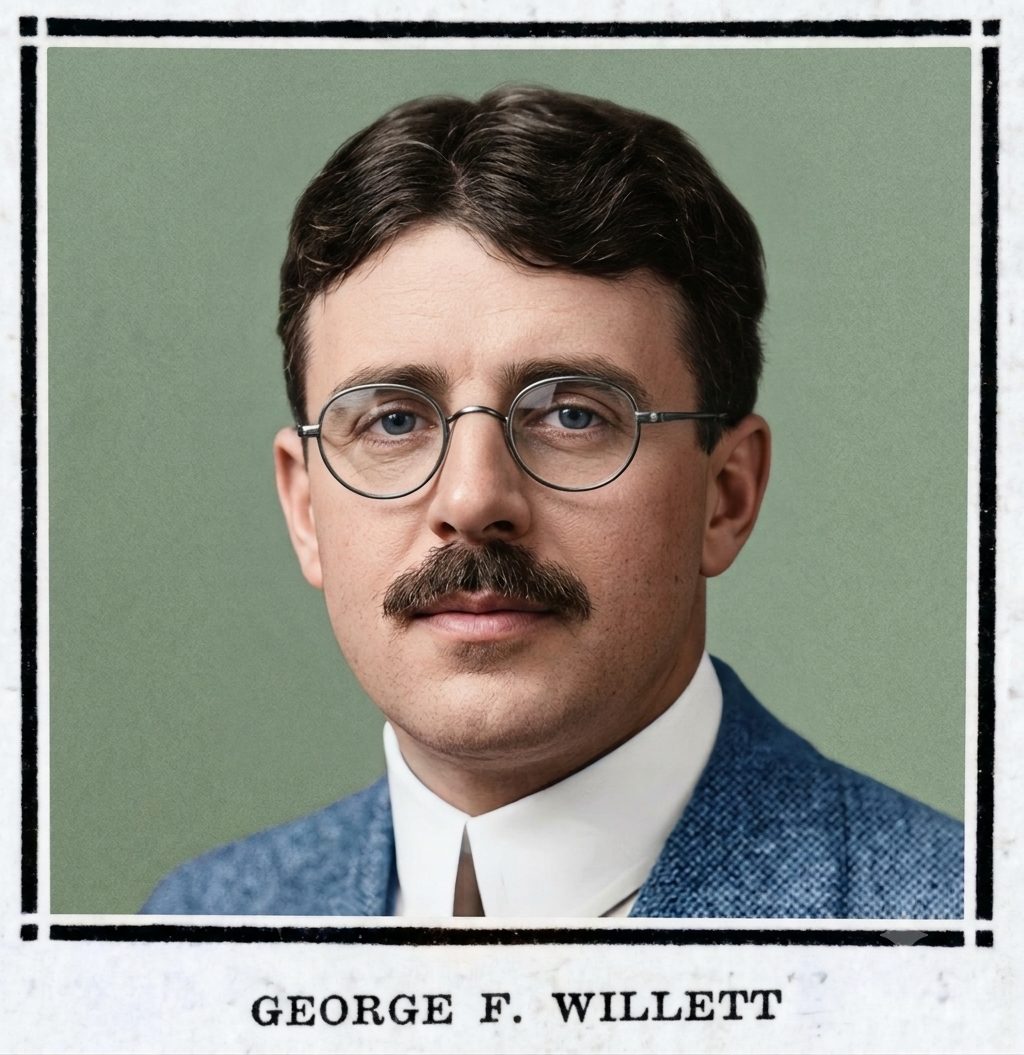
George F. Willett, one of Norwood’s most influential civic figures, surprised the region in 1930 by launching a State Senate campaign.
Discover more from Norwood Historical Society
Subscribe to get the latest posts sent to your email.