

Official Recommends Exploring Mechanical Voting Machines Over Punch-Card Tabulators to Replace Norwood’s Paper Ballots
NORWOOD – Following an official fact-finding trip to observe Newton’s newly installed electronic voting system during its November 7, 1967 municipal election, Norwood Town Clerk Bartley W. Connolly reported on Thursday, November 16, 1967, that he was unimpressed by computerized punch-card balloting—though he emphasized that Norwood urgently needed to replace its increasingly obsolete hand-counted paper ballots. Accompanied on the Newton inspection by Town Manager Walter A. Blasenek and two additional members of the selectmen’s committee studying modern voting techniques, Connolly concluded that mechanical voting machines represented a far more reliable investment if the town could resolve cost and storage hurdles.
According to Connolly, equipping Norwood to handle its 14,000 registered voters would require purchasing approximately 40 mechanical voting machines at an estimated cost of $1,900 apiece—a total capital outlay of roughly $76,000. Beyond the purchase price, Connolly pointed out a logistical challenge: because the Norwood Armory lacked sufficient floor space to house 40 bulky machines between elections, the municipality would need to rent dedicated storage facilities.
Concerns Over Accuracy and Overnight Delays in Newton’s Punch-Card Trial
While acknowledging that the compact punch-card apparatus—which he described as “more like a small desk blotter made of plastic” where voters turned cellophane ballot pages and punched holes with a stylus for computer tabulation—presented zero storage problems and enjoyed smooth voter acceptance in Newton, Connolly warned that the underlying technology remained unproven. Prior to Newton’s rollout, the system had only been tested once locally on a very small scale in Braintree.
Connolly cited serious accuracy and efficiency problems witnessed firsthand during Newton’s ballot count. “I didn’t think it was impressive. It didn’t even seem to be wholly accurate,” Connolly stated. “Not only did it take them until three in the morning to count the votes, but they also got different answers on several tabulations.” Refusing to adopt an untested system prematurely, he cautioned, “I don’t want to jump from the frying pan into the fire.”
At the same time, Connolly stressed that sticking indefinitely with hand-counted paper ballots posed its own threat to election integrity as Norwood’s population expanded. “You can’t be accurate either if you have to stay up all night counting paper ballots,” he observed. “Norwood is growing all the time. It would be wise to find a new method of counting the votes before we lose accuracy because we have to stay up all night.”
1967 Voting Machine Costs Adjusted to 2026 Dollars & Modern Elections
Inflation-adjusted using U.S. Bureau of Labor Statistics CPI data ($1.00 in Nov. 1967 ≈ $9.66 in 2026)
| 1967 Equipment Estimate | 1967 Cost | 2026 Equivalent |
|---|---|---|
| Single Mechanical Voting Machine (Unit Price) | $1,900 | ~$18,354 |
| Full Fleet of 40 Machines (For 14,000 Voters) | $76,000 | ~$734,160 |
Archival Note: This article has been dynamically reconstructed from the original public record print archives of the Patriot Ledger
-
Amedio DeFlaminis Marks 50 Years as an Election Poll Worker in Norwood-November 1, 1982
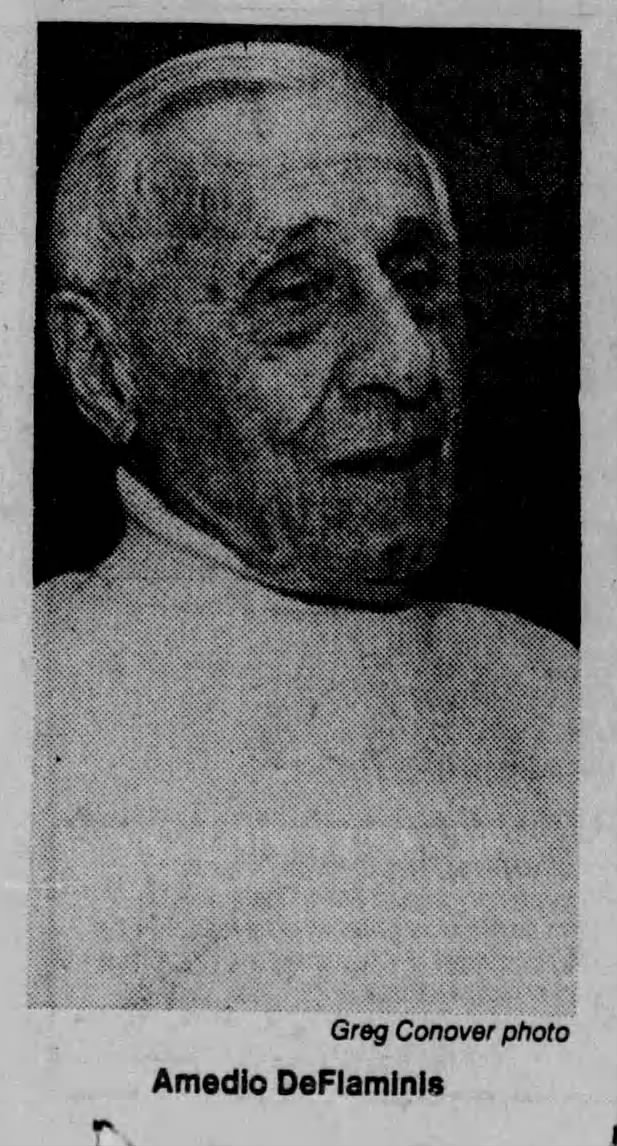
Celebrating 50 years working at Norwood’s election polls, Precinct E warden Amedio DeFlaminis shares memories of a half-century serving voters at the Callahan School.
-
Civic Recreation Center Plans Survive Referendum Challenge, Water and Sewer Rate Hikes Debated, and Murray Field Lights Set for Removal-September 16, 1981

Plans for a $2.2 million civic recreation center at the former Aaron Guild School survive a referendum test, while selectmen debate utility rate hikes and Murray Field lights.
-
Norwood Voters Visit Armory for Last Time-November 6, 1968
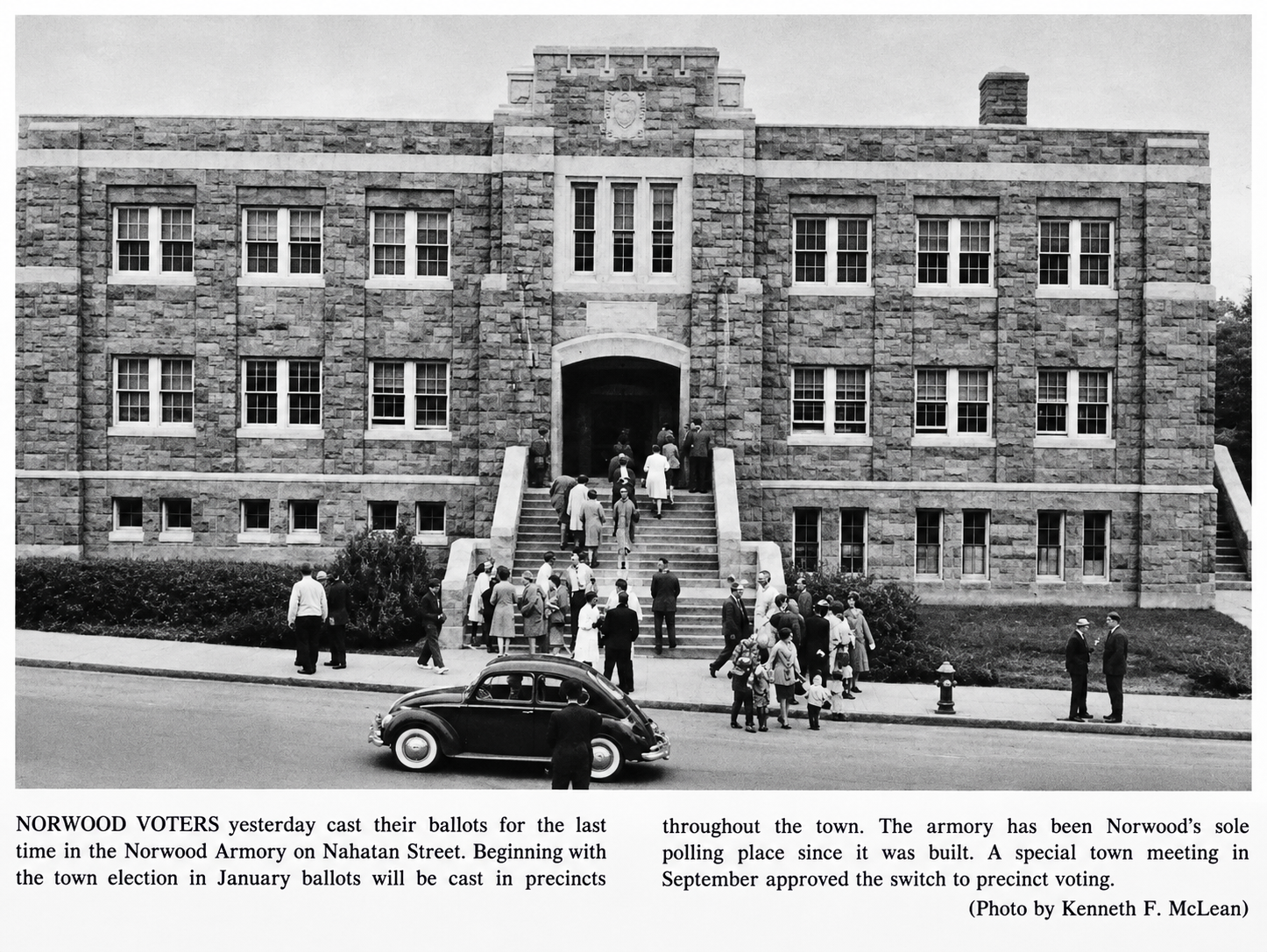
Marking the final election held at the historic Nahatan Street Armory, 90 percent of Norwood voters cast ballots to re-elect state representatives, back national tickets, and approve precinct-based voting.
-
Proposition 2 1/2 Debate at Town Hall Sparks Heated Clash Over Tax Reform-October 2, 1980
Francis “Chip” Faulkner and State Rep. Gerald Cohen clash in a heated debate at Norwood Town Hall over the tax-cutting ballot initiative Proposition 2 1/2.
-
Norwood Voters to Test Computerized Punch-Card Ballots in State Primary Election-September 12, 1980
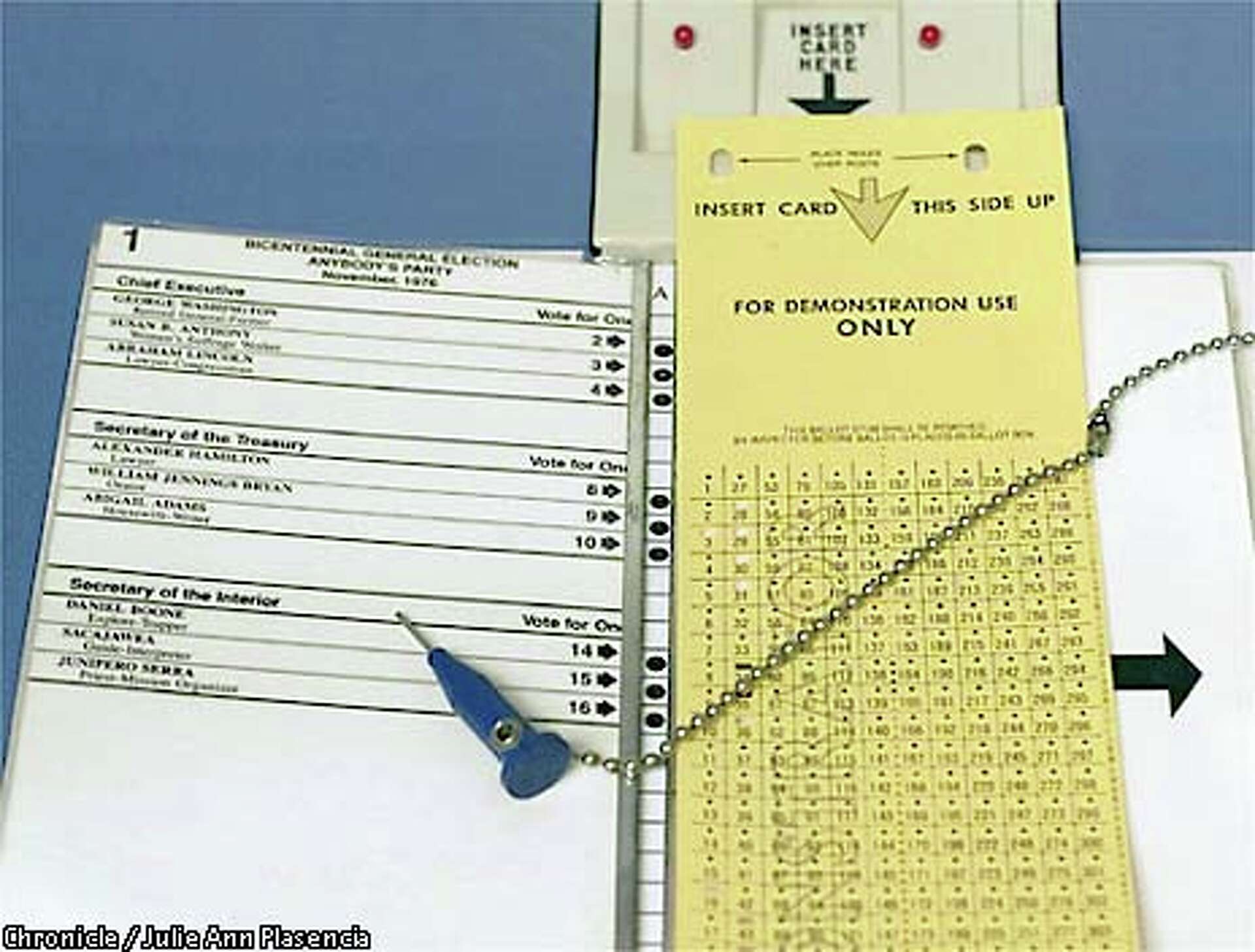
Norwood voters will use a new computerized punch-card ballot system provided by Factory Mutual Engineering Company for the upcoming state primary election.
-
Town Officials Warn of Disastrous Cuts from Proposed Proposition 2 1/2-August 20, 1980
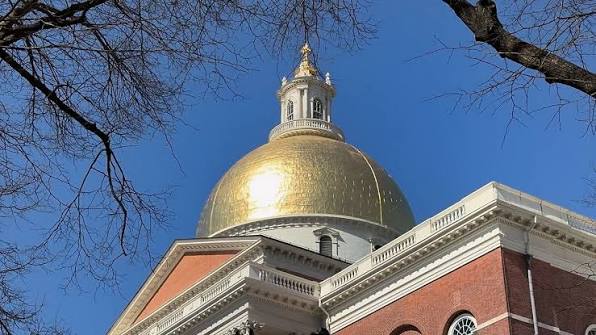
Facing a potential $3 million budget shortfall, Norwood town officials are mobilizing an educational campaign to warn residents about the severe municipal cuts threatened by Proposition 2 1/2.
-
State DPW Commissioner John J. Carroll Appointed Norwood Town Manager-November 1, 1978
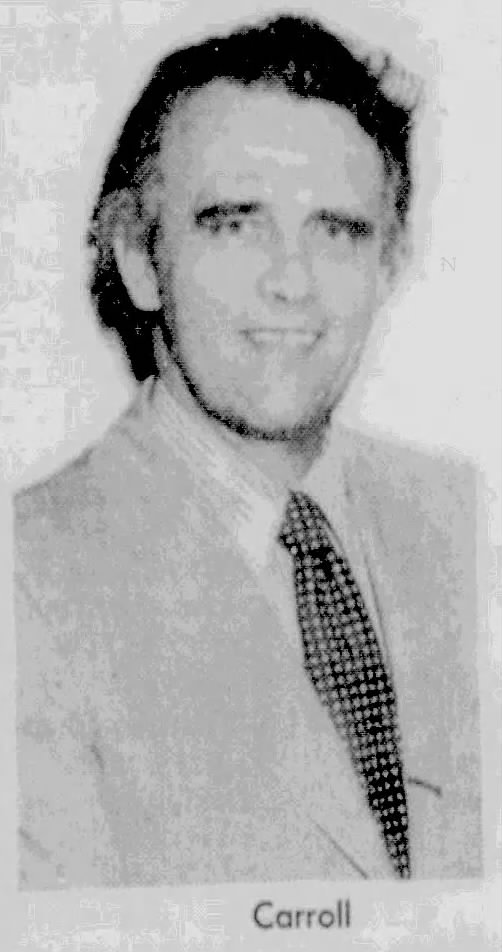
Leaving the outgoing Dukakis administration, State DPW Commissioner John J. Carroll was appointed Norwood’s new town manager by a 4-1 vote of the Board of Selectmen.
-
Retiring Congressman James Burke Bids Farewell to Federal Retirees at Norwood VFW Hall-October 31, 1978
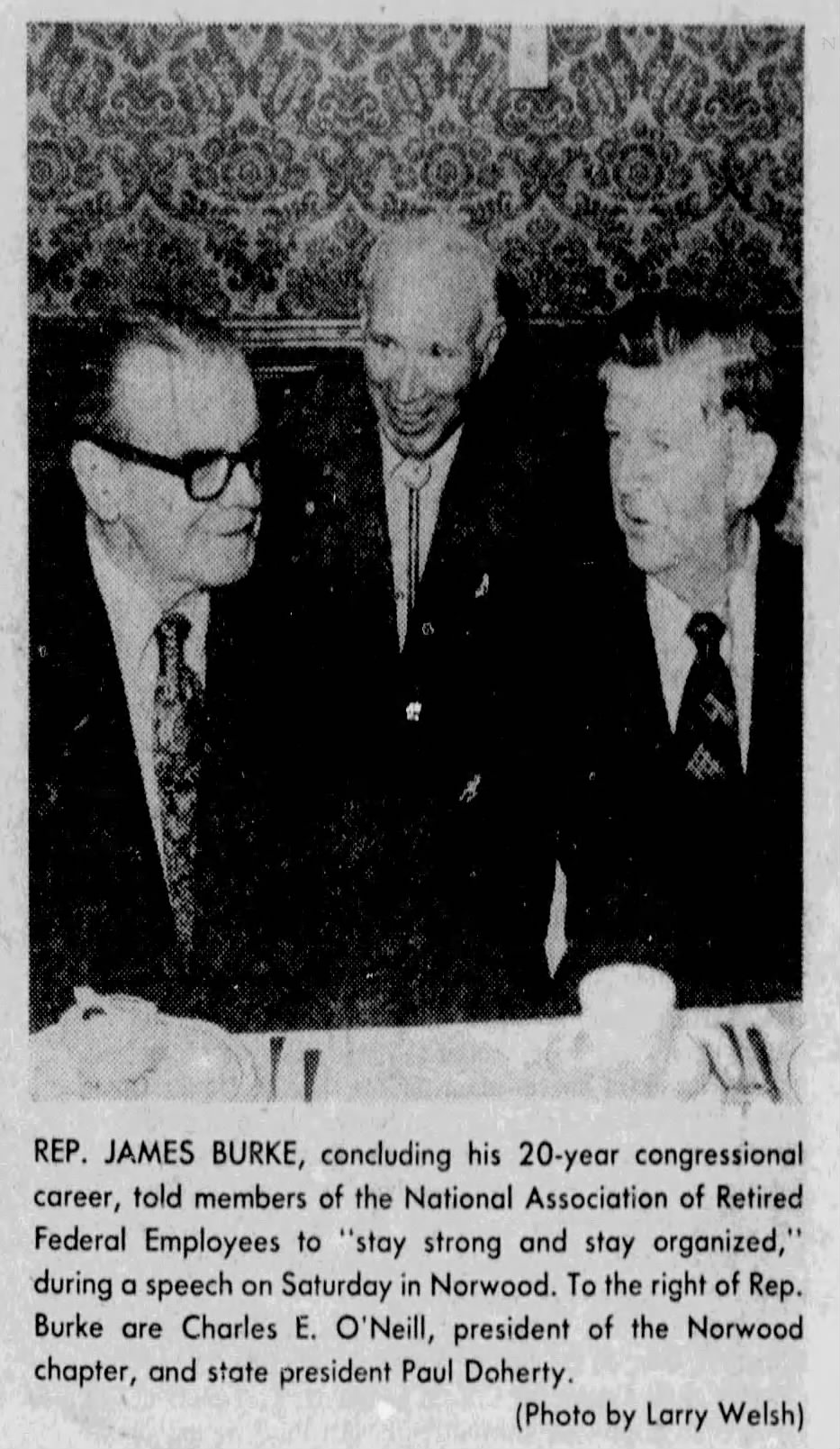
Retiring 11th District U.S. Rep. James Burke reflected on his 20-year career, Medicare battles, and advocacy for seniors during an emotional farewell address to federal retirees in Norwood.
-
Republican Town Committee Delays Nominations for Board of Registrars-October 24, 1978

The Republican Town Committee delayed nominations for the Board of Registrars by one week to review candidate qualifications and procedures following A. Franklin Swift’s departure due to office-holding conflicts.
-
Property Taxes Dominate Norwood’s 1978 Special Election Amid School Committee Recall and Selectman Race-October 23, 1978
Soaring property taxes take center stage in Norwood’s special municipal election, featuring a high-stakes school committee recall, a four-way selectmen race, and a finance commission contest.
Discover more from Norwood Historical Society
Subscribe to get the latest posts sent to your email.