Trolley History and Nostalgia Remembered by Lifelong Resident Carl L. Smith

⠀
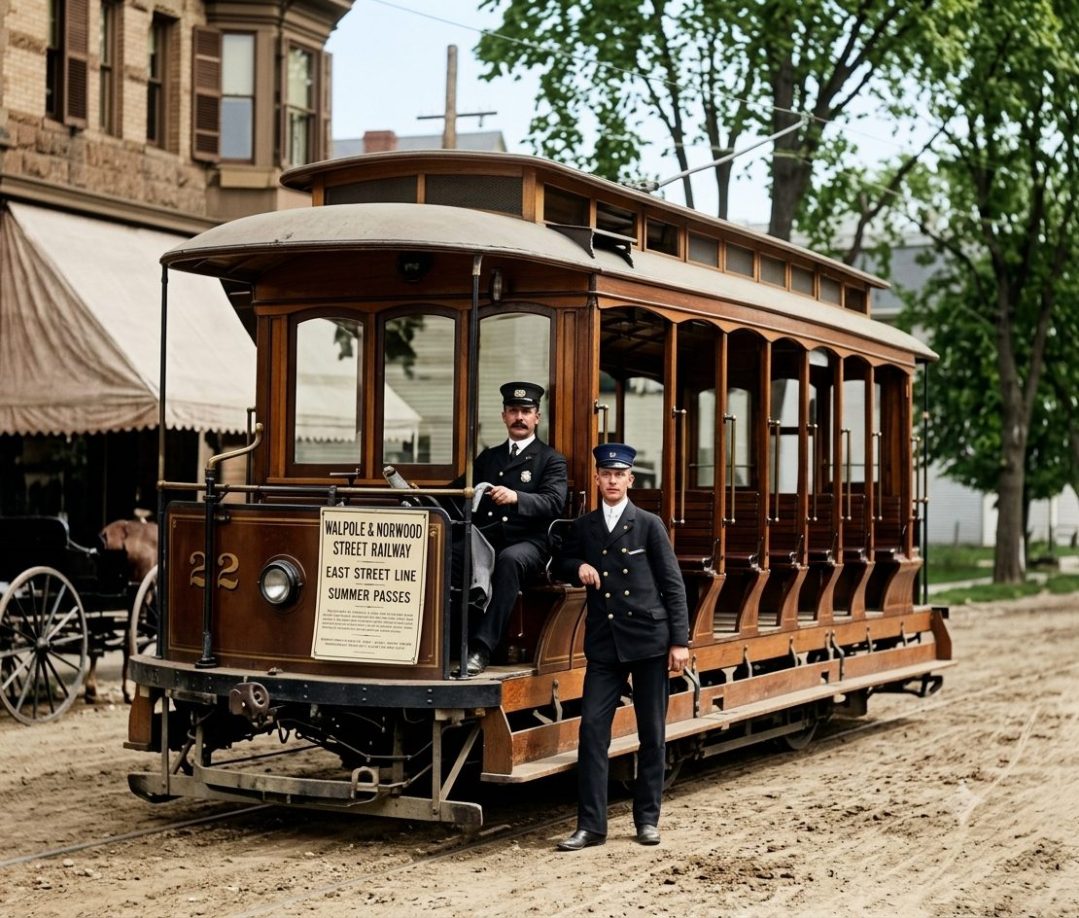
Ah, the good old days! Eat your hearts out, gas guzzlers. It cost only eighteen cents with a multiple-zone ticket at the turn of the century and later to ride the old trolleys from the Boston and Dedham line to East Walpole, traveling straight through Norwood.
Over a period of time, as the volume of traffic went up, the fares actually went down. It was possible to ride all the way from Nashua, N.H., to Newport, R.I., by trolley, changing cars at key points from one line to another. About 1,000 miles of electric trolley track were merged into the Bay State Street Railway. It was possible to ride all day for a dollar on the Eastern Massachusetts Street Railway, going for instance from Boston to Lowell or from Quincy to Providence, R.I.
Many went on the trolley just for the ride. A favorite trip took passengers to New York City by trolley and sea, going to Fall River or Providence to pick up the New York boat. It was even possible to go from Boston to New York entirely by trolley, though that took two or more days because of the numerous line changes.
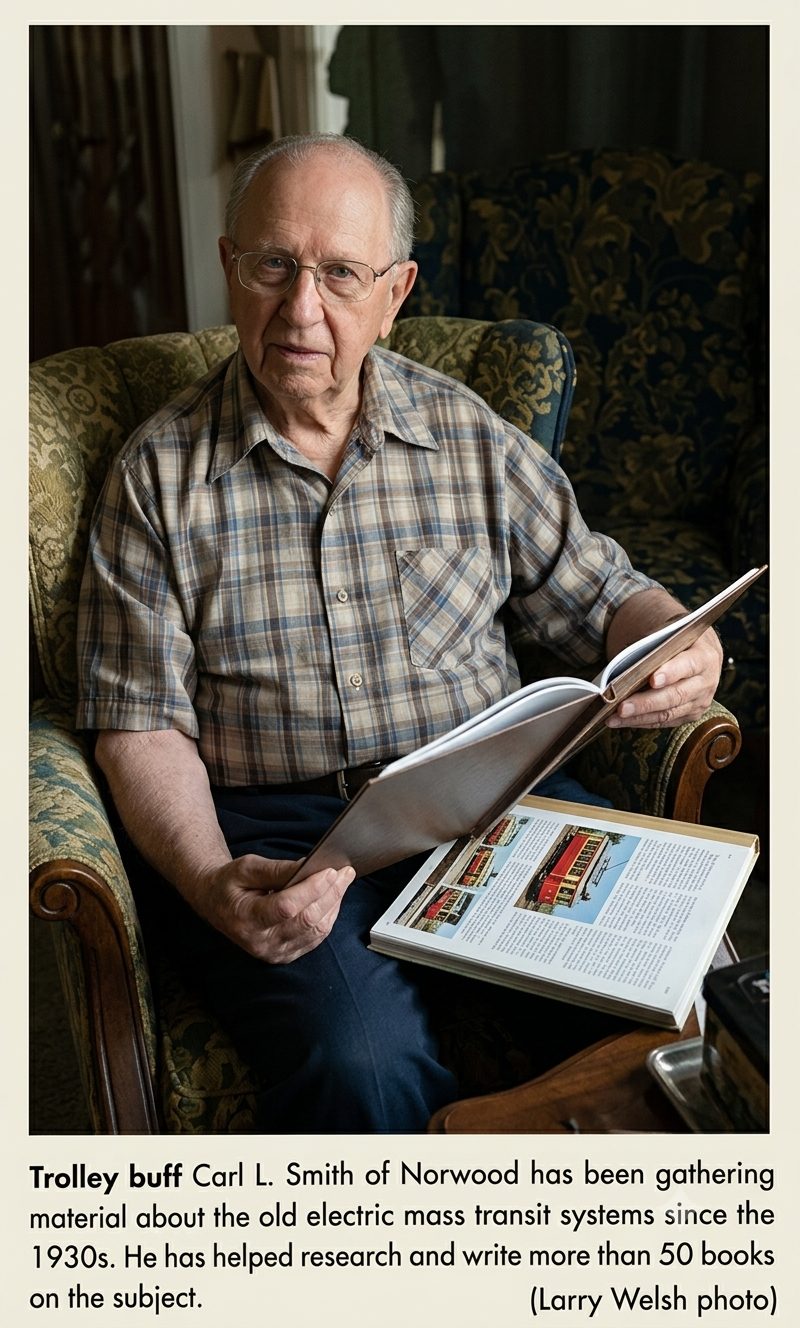
These gems of nostalgia are from the voluminous knowledge gathered over the years by Carl L. Smith, who came to Norwood as a child and spent a good part of seventy-five years here.
A 1915 graduate of Norwood High School, he noted that he was always mechanically inclined and possessed a special fondness for trolleys. I always felt that public transportation like trolleys was a good thing, Carl L. Smith said. When the authorities decided to change over to buses, I didn’t think they would be successful.
Now retired, Carl L. Smith has worked as a pianist and organist, a traveling salesman, and an office worker, while simultaneously devoting a large part of his life to being a passionate trolley buff. Since 1938, he has helped research and write about fifty books on the background and history of various electric trolley systems, all published by the Connecticut Valley Chapter of the National Railway Historical Society. Carl L. Smith belongs to the Boston chapter of the National Railway Historical Society, the Seashore Trolley Museum in Kennebunkport, Maine, and the Boston Street Railway Association. He is also a member of the Norwood, Dedham, and Stoughton historical societies and served as president of the Stoughton group for more than eight years, speaking frequently to public gatherings about the golden age of mass transit.
One of his favorite tales of nostalgia is about the electric trolley express and freight cars that sped through the night delivering products, produce, and other items to local business firms or to major points of departure. The express cars covered practically all the South Shore, Carl L. Smith said, and many companies used the rapid delivery trolleys which met the New York boat to get New England products down to the big city. There was even an express trolley from the Commonwealth Fish Pier in Boston that would carry fresh fish directly to stores in Newport, R.I., he added.
It was also general practice for mass transit systems to build amusement parks at the end of the line, luring passengers out into the country for a weekend outing. During the summer months, decorative open cars were packed with men, women, and children riding out to stroll in the park, try their hands at games of skill, and watch free vaudeville acts. In the local area, trolleys carried passengers to recreation parks in Westwood, Foxboro, Avon, Rockland, Randolph, Norwell, and Abington, with most remaining popular attractions until the 1930s. Reflecting on the evolution of transit, Carl L. Smith looked back in time, then pulled himself into the present and shook his head. I do miss the old trolleys, he said, but now that the authorities are taking more notice of mass transportation, maybe there will be an improvement in what we have. I would like to see more use of the rights of way that already exist.
Archival Note: This article has been dynamically reconstructed from the original public record print archives of the Patriot Ledger
More…
-
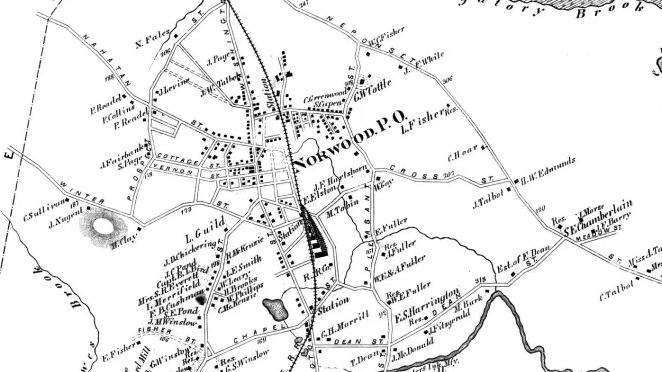
Norwood in 1876: What the Old Map Reveals
1876 Map of Norwood
-
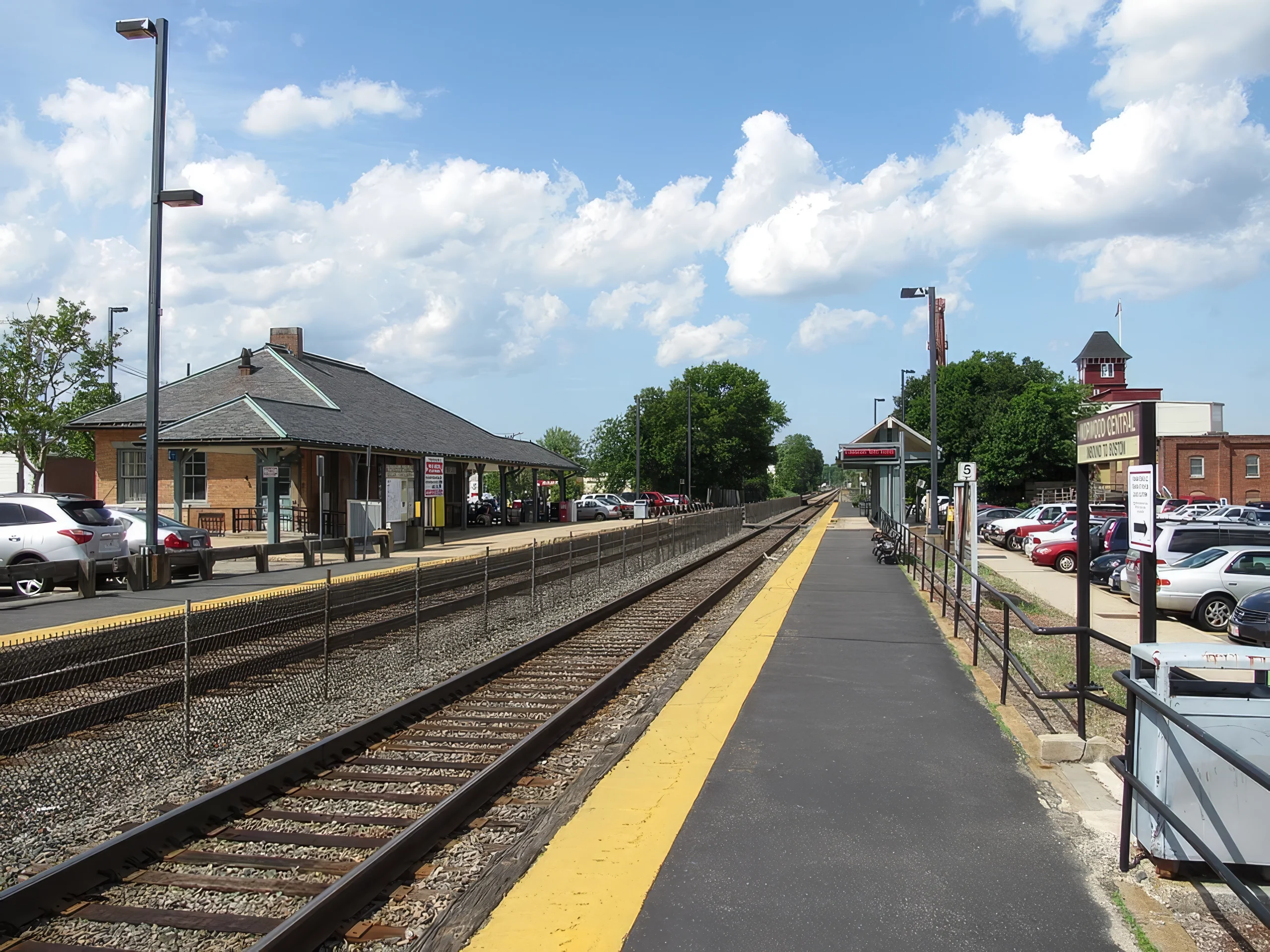
MBTA Adding Long-Awaited Wheelchair Accessibility to Norwood Central-August 24, 1989
Following years of advocacy and a dramatic protest by Robert Haskell, the MBTA signed a $1.4 million contract to build a wheelchair ramp and renovate the Norwood Central commuter rail station.
-
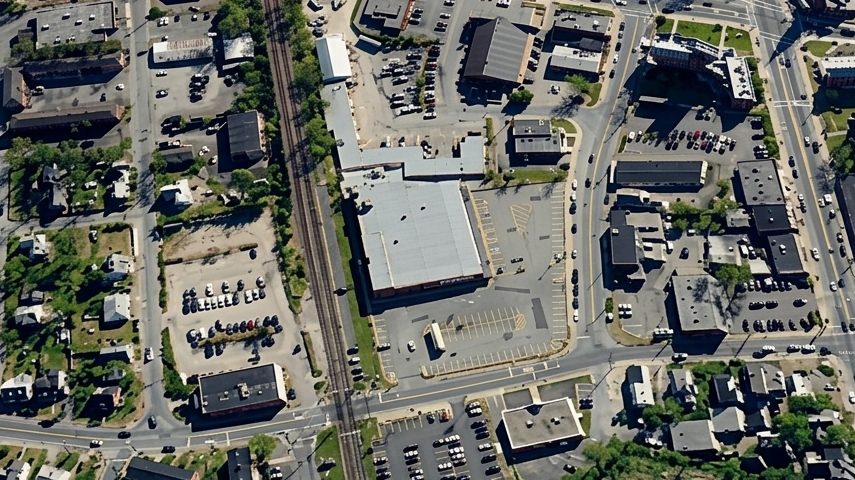
Selectmen Oppose MBTA Plans for Parking at Ex-Stop & Shop-July 13, 1988
The Patriot Ledger’s July 13, 1988 edition carried a significant story that highlighted the concerns of Norwood selectmen regarding the Massachusetts Bay Transportation Authority (MBTA) plans to establish a commuter parking lot at the site of the former Stop & Shop store in Norwood Center. The proposal, which aimed to provide 315 spaces for commuters,…
-
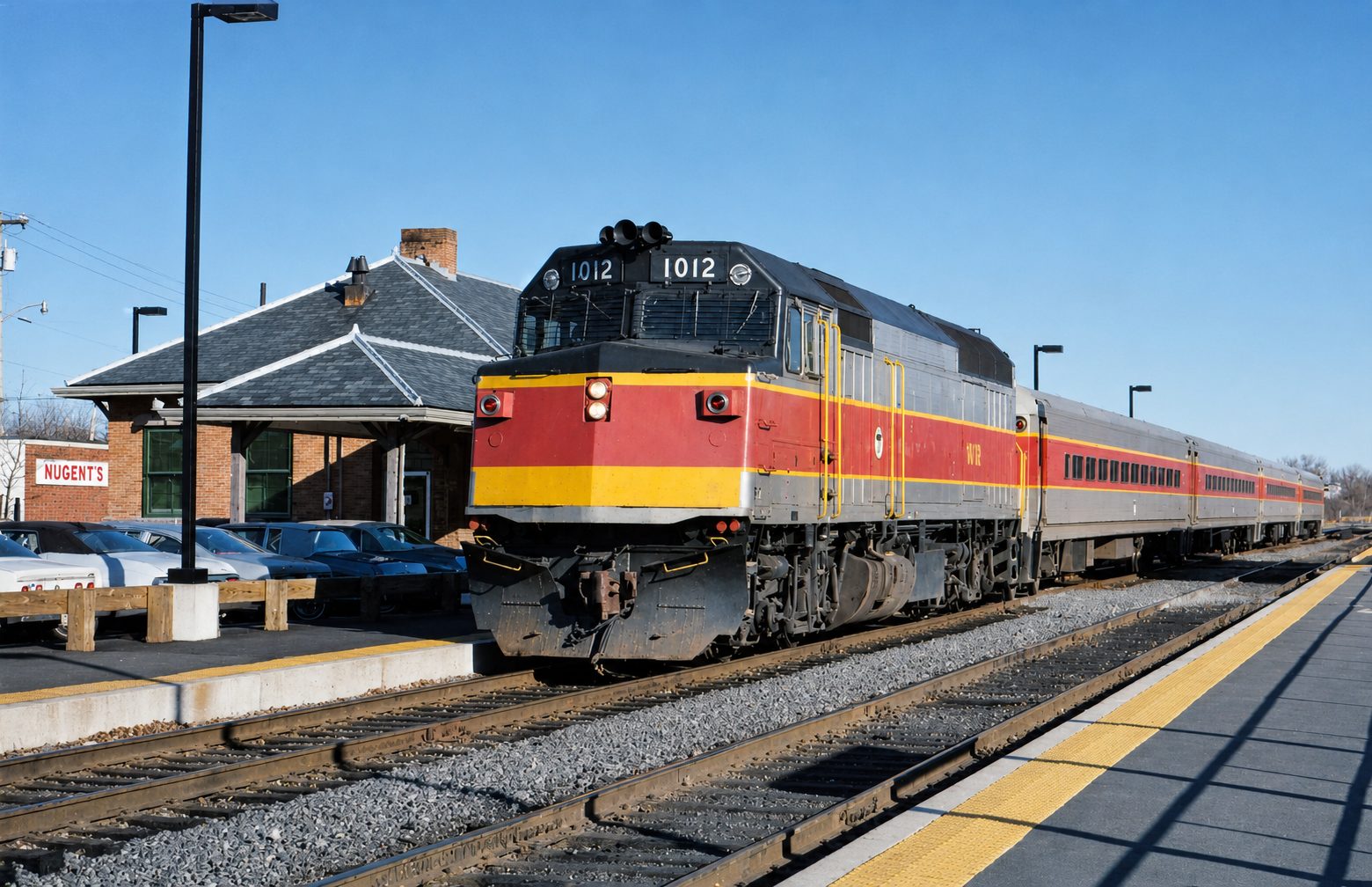
Norwood Commuters Don’t Cut Train-June 24, 1981
Transit officials lay out a proposal reducing the Norwood line to six daily runs each way while pushing one-way ticket prices up to $1.75.
-
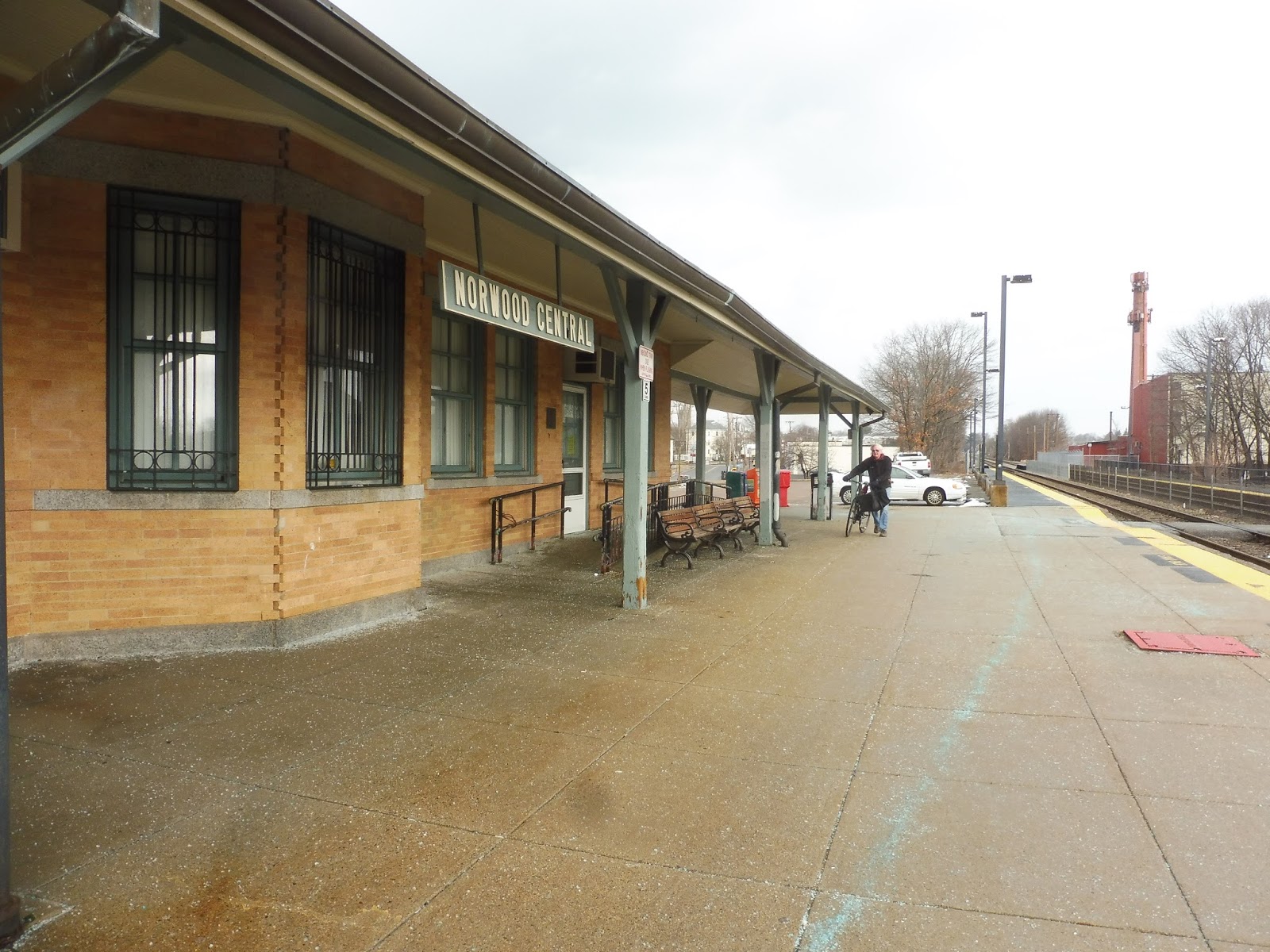
Railroad Tracks Through Norwood Center Become a “No-Man’s Land” of Vandalism and Frustration-October 8, 1979
Railroad tracks running through Norwood center become a magnet for vandals, costing local businesses thousands in property damage and prompting police intervention.
-
The Good Old Days on the Trolley-July 28, 1979
Lifelong Norwood resident and trolley historian Carl L. Smith reflected on the golden age of electric street railways, scenic cross-country routes, and freight delivery.
-
Norwood Commuting Hearing Requested-June 26, 1968
Planners present data showing a two-dollar weekly savings per rider, while state lawmakers scramble to pass emergency MBTA subsidy extensions.

-
New York Express Jumps Track at Norwood, But None Injured-This Day In Norwood History-June 26, 1920
SCENE IMMEDIATELY AFTER THE TRAIN WRECK IN NORWOOD ON THE NEW HAVEN. More than 135 passengers escaped serious injury yesterday when the 11:21 train from Boston for Hartford and New York on the Midland Division, jumped the rails at Winslow station in Norwood. The steel cars prevented a big loss of life. The photo shows…

-
The New Railroad Station-This Day In Norwood History-July 26, 1897
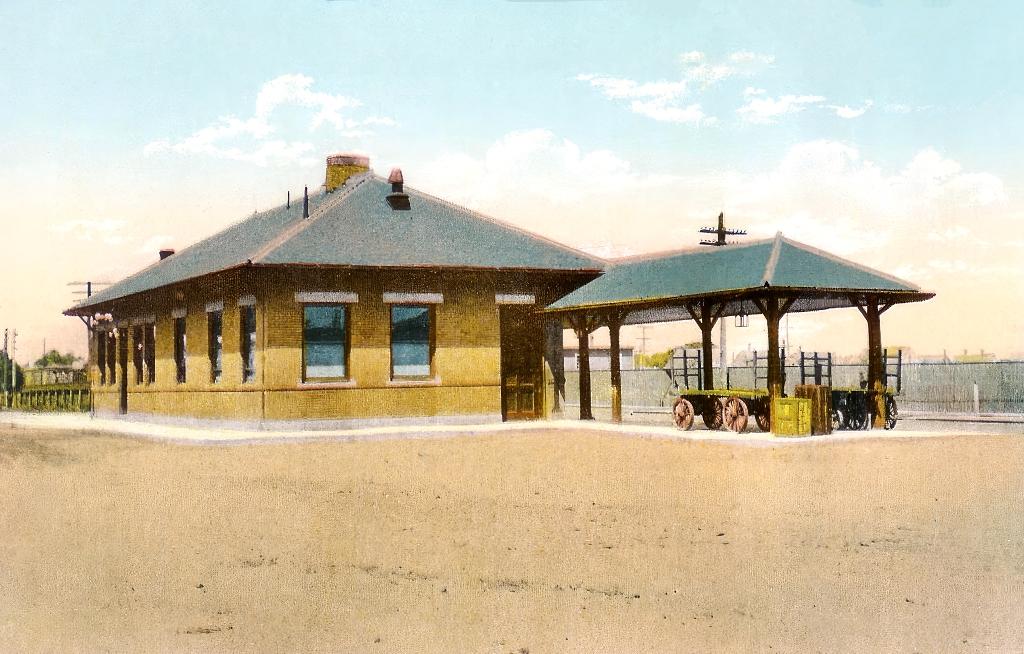
Directors of the New England Railroad inspected sites in town alongside local prominent leaders like Edmund J Shattuck, George F Willett, and Charles T Wheelock, sparking local debate over whether to move the Norwood Central Station west and place a depot at Nahatan Street or stick to consolidating stations at Day Street.
-
Grade Crossing Matter to be Referred by Court to a Master-This Day In Norwood History-March 25, 1892
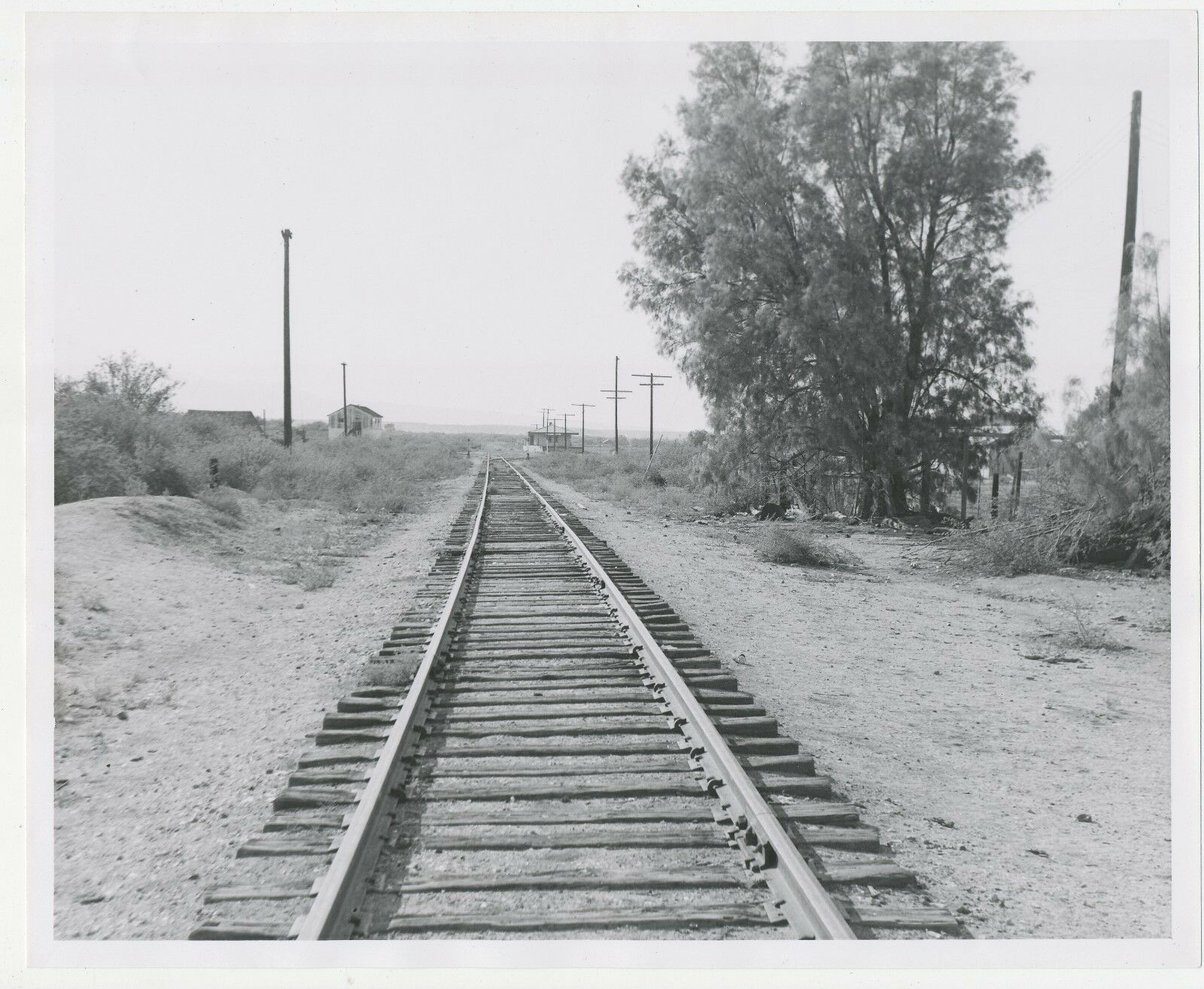
COSTLY CHANGES IN NORWOOD. After a lengthy discussion between counsel for the New York & New England Railroad Company and counsel for the town of Norwood, the objections filed by the railroad company to the acceptance of the report of commissioners in relation to the abolition of four-grade crossings in Norwood, were referred by Justice…
Discover more from Norwood Historical Society
Subscribe to get the latest posts sent to your email.