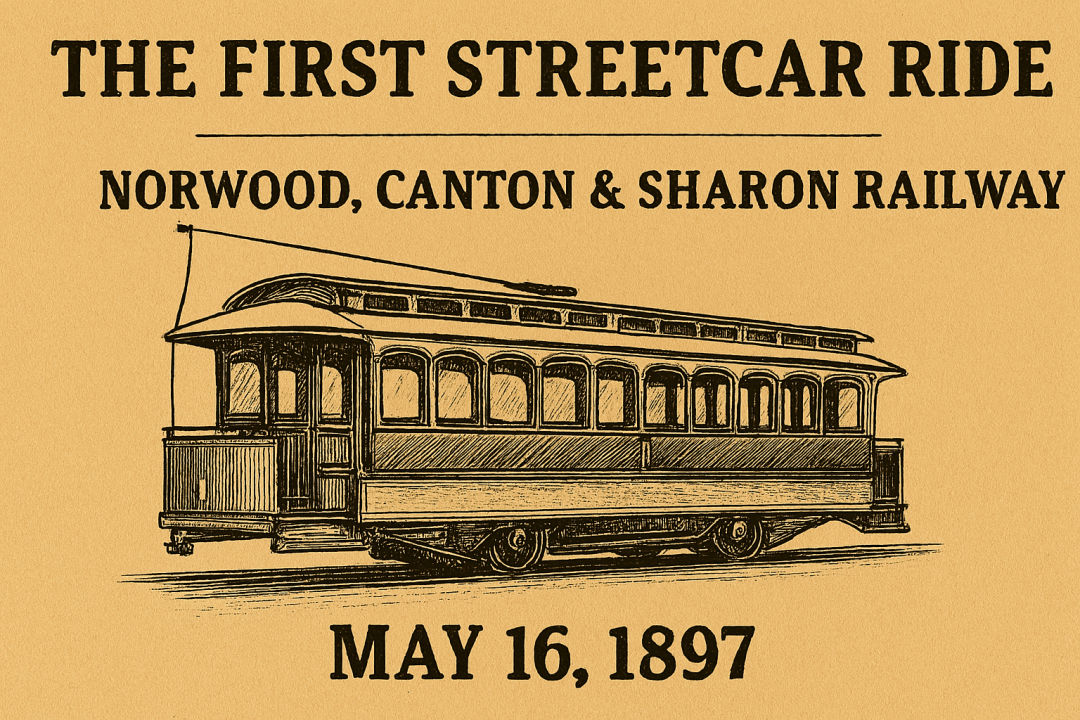
🚋 The First Street The First Streetcar Ride: Norwoodcar Ride: Norwood, Canton & Sharon, Canton & Sharon Railway
How a Bell’s Clang Marked a New Era in Civic Connectivity
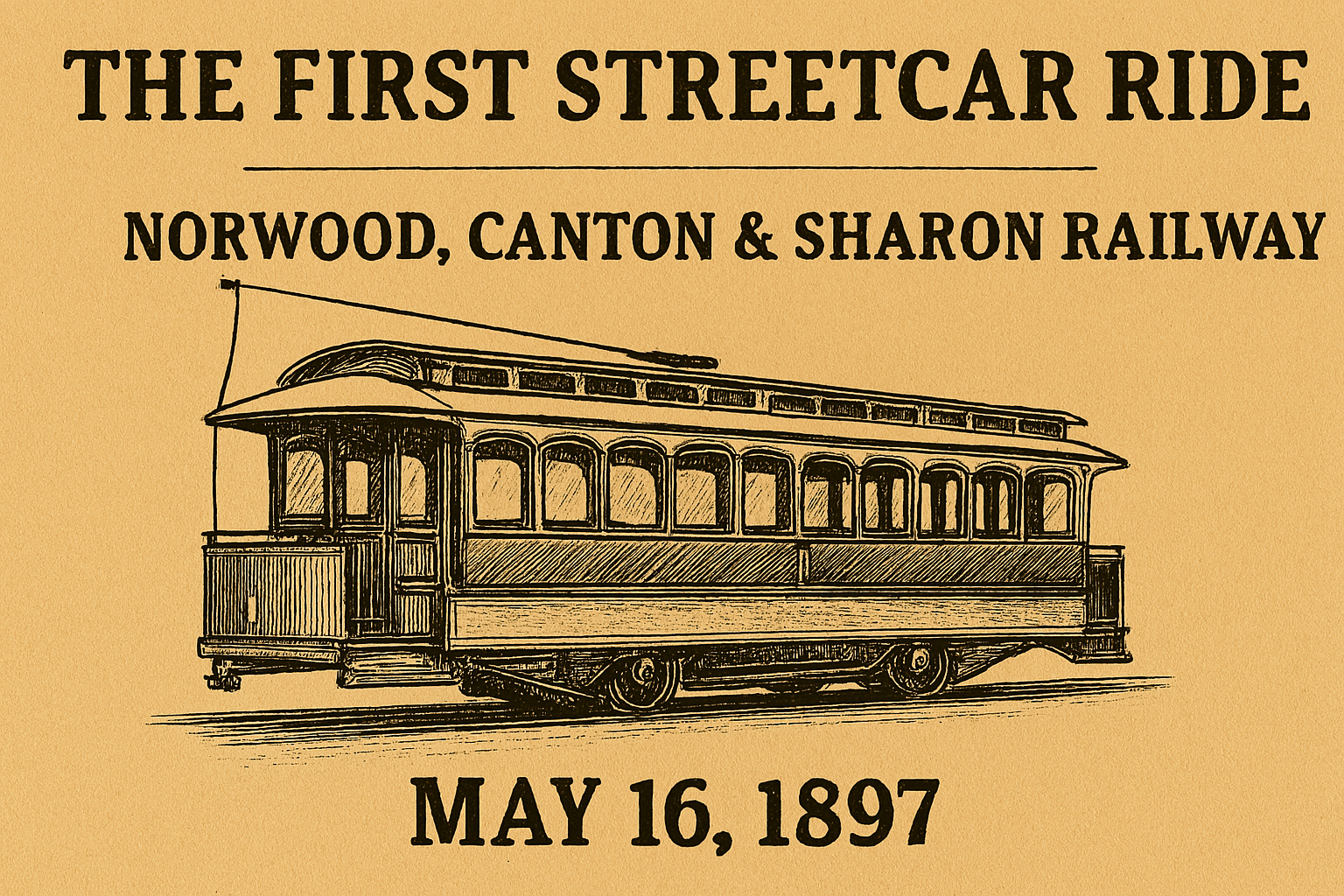
On a crisp September day in 1901, the streets of Norwood echoed with a new sound—the clang of a streetcar bell.
The Norwood, Canton & Sharon Street Railway had officially begun operations, marking a transformative moment in local transportation and civic connectivity.
“The first trial run of the Norwood, Canton & Sharon street railway was made this week,” reported the Norwood Advertiser on September 6, 1901. “The car ran from the car barn on Day Street to the Canton line and back.”
This modest announcement belied the significance of the event. For the first time, Norwood residents could travel by electric streetcar to neighboring towns—a leap forward in mobility, commerce, and regional identity.
🛤️ A Railway Born of Ambition
Incorporated in March 1900, the Norwood, Canton & Sharon Street Railway was part of a broader movement to electrify and connect suburban Massachusetts. By May 1901, service between Norwood and Canton was underway, and by September, the line extended to Sharon Heights via Cobb’s Corner and Lake Massapoag.
The route began at Washington and Day Streets in Norwood, crossed the Neponset River into Canton, and continued along tracks leased from the Blue Hill Street Railway Company. From East Sharon, the company’s own tracks led to Sharon Heights—a scenic terminus nestled among rolling hills and summer cottages.
⚡ Powering the Ride
Unlike some streetcar companies of the era, the Norwood, Canton & Sharon Railway did not generate its own electricity. Instead, it purchased power from the Blue Hill Street Railway, which operated a larger network connecting Boston to Milton, Canton, Stoughton, Sharon, and Norwood.
Management of the line was contracted to the Norfolk and Bristol Street Railway Company, reflecting the complex web of partnerships that defined early 20th-century transit systems.
🏙️ Impact on Norwood
The arrival of the streetcar transformed daily life in Norwood:
- Commuting: Residents could now reach jobs, schools, and shops in neighboring towns without relying on horse-drawn carriages or long walks.
- Commerce: Local businesses benefited from increased foot traffic and regional visibility.
- Leisure: Families could easily visit Sharon’s lakeside retreats or Canton’s Blue Hills Reservation.
The streetcar also symbolized Norwood’s emergence as a modern town—one with paved sidewalks, electric lighting, and civic ambition.
📉 Decline and Legacy
Despite its promise, the Norwood, Canton & Sharon Street Railway struggled financially. By the late 1910s, it had entered receivership, and operations ceased in March 1918. A brief revival occurred in August 1919 when the Sharon Street Railway reopened the line between Cobb’s Corner and Sharon Heights.
Today, little remains of the tracks or infrastructure, but the legacy endures. The streetcar era helped shape Norwood’s layout, economy, and identity—connecting it to a broader narrative of progress in New England.
Sources:
- Excerpt from the Norwood Advertiser (Sept. 6, 1901)
Text and images may have been created, edited, colorized, or digitally restored using AI tools such as Microsoft Copilot or Google Gemini. All content is reviewed for accuracy and historical integrity before publication by the Norwood Historical Society
Discover more from Norwood Historical Society
Subscribe to get the latest posts sent to your email.