
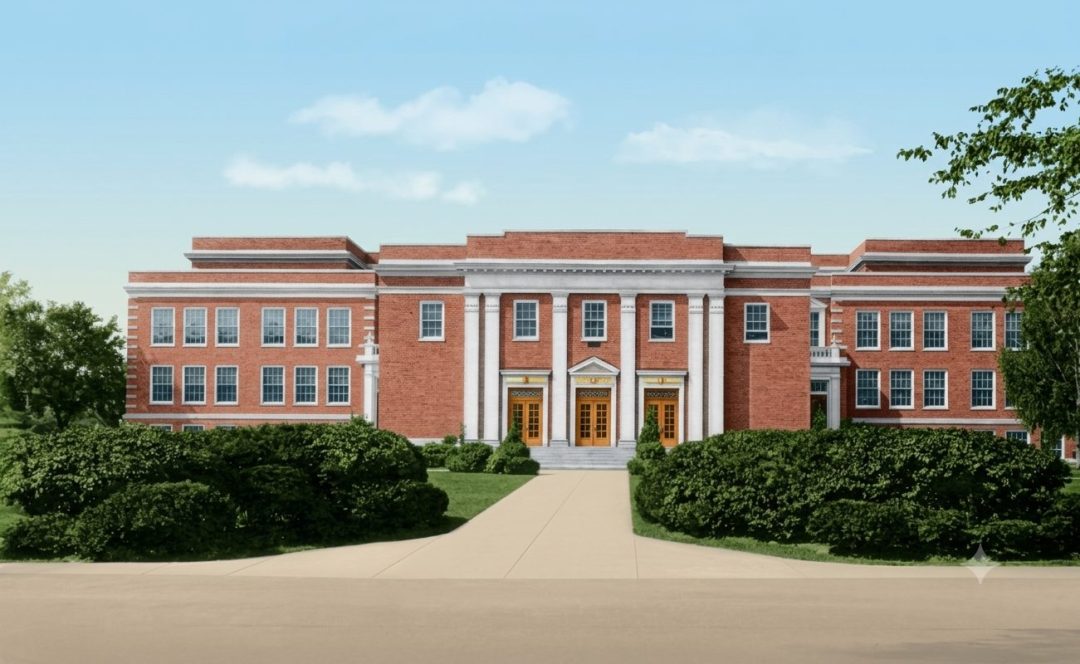
Addressing roughly 30 representatives and officials from the town’s PTA organizations and schools, Superintendent of Schools Dr. Philip O. Coakley declared that approximately $4 million in new school construction is urgently mandatory if Norwood wishes to maintain its standard of quality education.
Ten-Year Projections and Crowded Facilities
Dr. Coakley pointed out that a comprehensive 10-year projection prepared by the school committee in 1961 accurately mapped out the town’s educational housing needs but has repeatedly failed to secure full support from town meeting. Highlighting extreme capacity pressures across the district, the superintendent noted that peak enrollment levels have already been reached, with some schools operating at an astounding 116 percent utilization rate through creative scheduling to handle capacity student crowds.
To resolve the housing crisis and finalize basic educational infrastructure, Coakley outlined needed projects totaling $4 million, which would include a new elementary school, a new junior high school, and an addition to the senior high school. Coakley urged PTA members to “storm the walls” of the Norwood Junior High School when town meeting considers the school housing warrants, expressing hope that action could be taken at a special town meeting before December.
Internal School Board Debate Over Elementary Additions
Discussions at the PTA meeting also underscored internal disagreements between the school committee and the school housing study committee regarding the scale of elementary expansion:
- Superintendent’s Stance: Dr. Coakley advocated for a “basic 12” classroom elementary school structure designed to accommodate approximately 500 students, arguing it is more easily administered, avoids overcrowding, and fosters a more favorable social atmosphere for young children. He noted that previous town meeting resistance occurred when voters were only offered a single proposal without alternatives.
- Study Committee and Board Counterproposals: School Committeeman Joseph Curran previously warned that the school board must adopt an alternative to the strict “basic 12” philosophy, arguing that an 18- or 20-classroom structure would be more serviceable and offset surging enrollments more effectively. Francis X. Sheehan and William Egan, representing the school housing study committee, concurred that unified agreement between the school board and study committee is essential. Egan noted that presenting larger, multi-year solutions to town meeting might prove more favorable than piecemeal requests.
Archival Note: This article has been dynamically reconstructed from the original public record print archives of the Patriot Ledger
More…
-
Permanent School Building Construction Committee Votes to Proceed with Permanent Roof Plans for Burned-Out Junior High South and Aaron Guild School-September 15, 1972
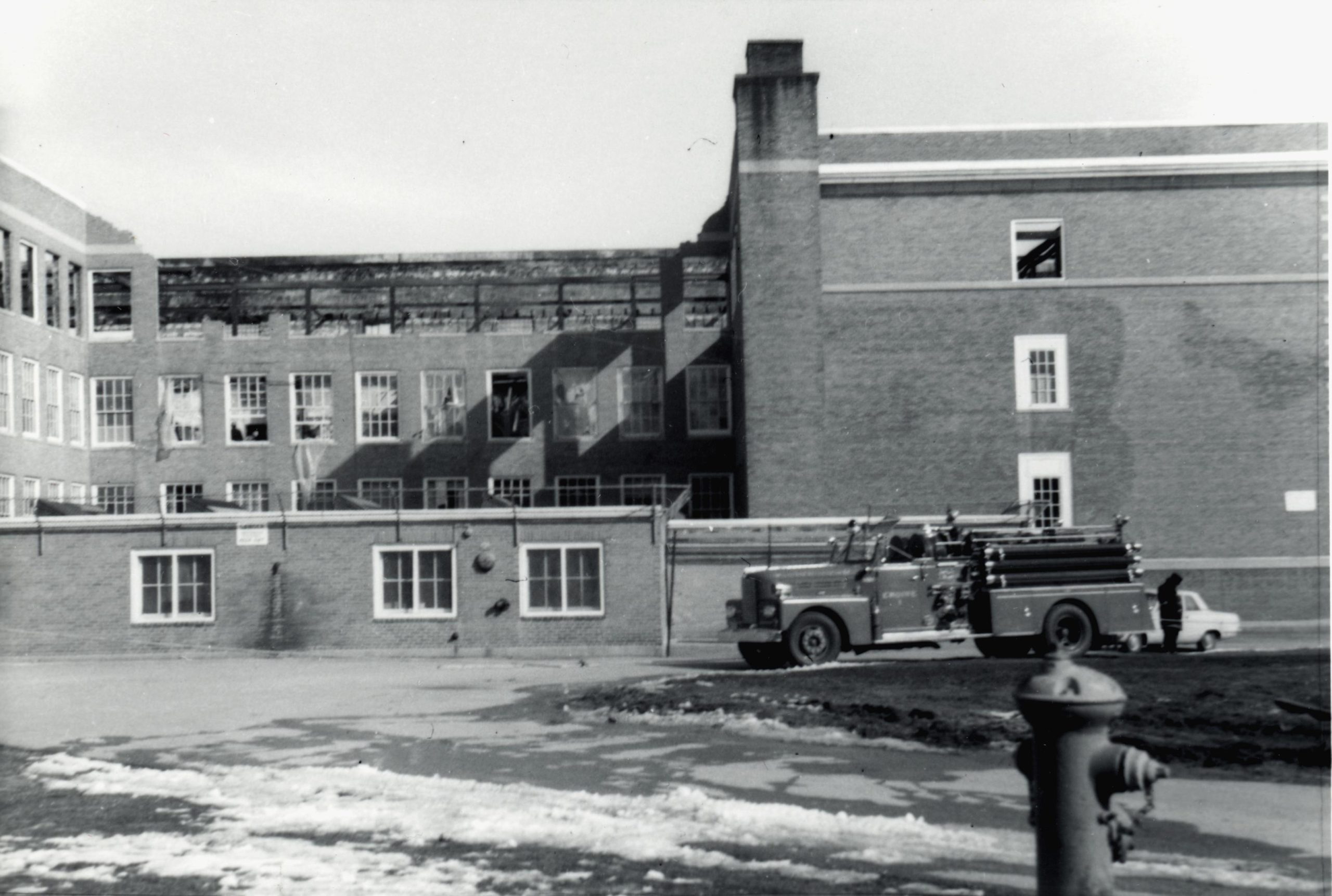
School building construction committee votes to proceed with permanent roof plans for Junior High South and Aaron Guild School, while Endean Park junior high plans secure SBAB approval.
-
Committee Votes to Reroof Aaron Guild School Ahead of Winter Months-September 8, 1972
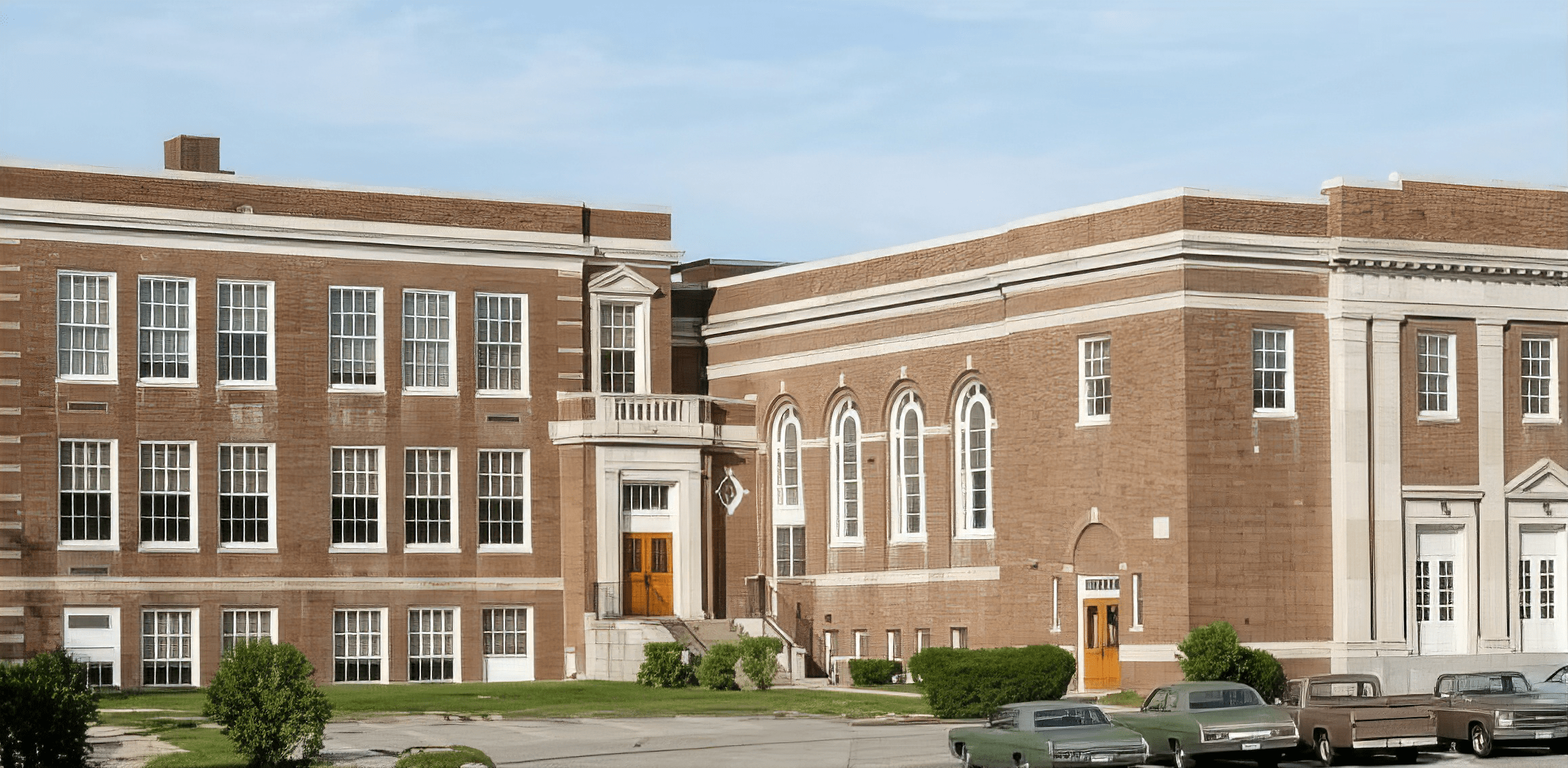
Norwood’s building committee votes to undertake immediate reroofing of the Aaron Guild School, eliminates skylights, and reviews Endean Park school construction and athletic field costs.
-
Gridlock Over $6-Million Junior High Rebuilding Plan and Norwood Arena Noise-This Day in Norwood History-June 27, 1971
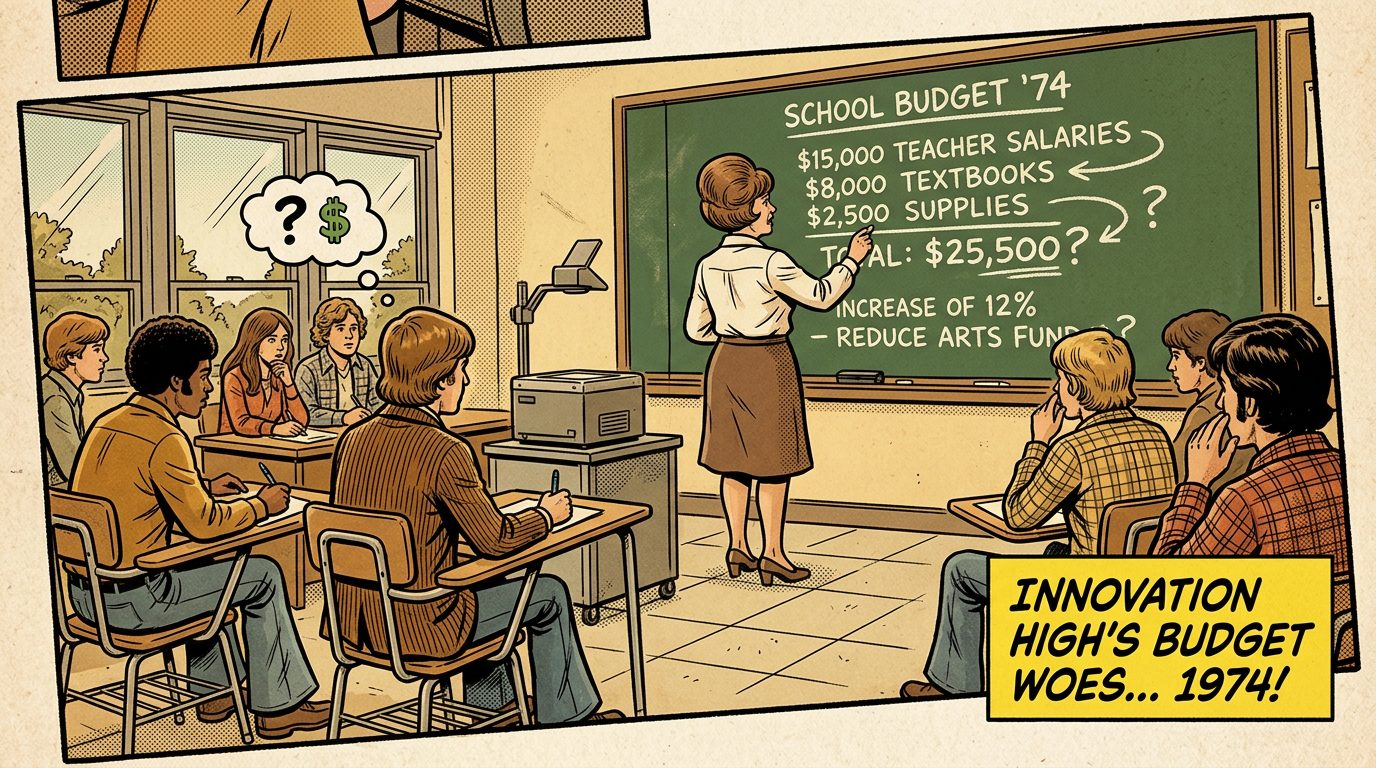
A dual crisis hits Norwood in 1971 as a $6-million junior high deficit triggers political warfare and state experts condemn racetrack noise.
-
Work Under Way At Junior High North-May 29, 1970
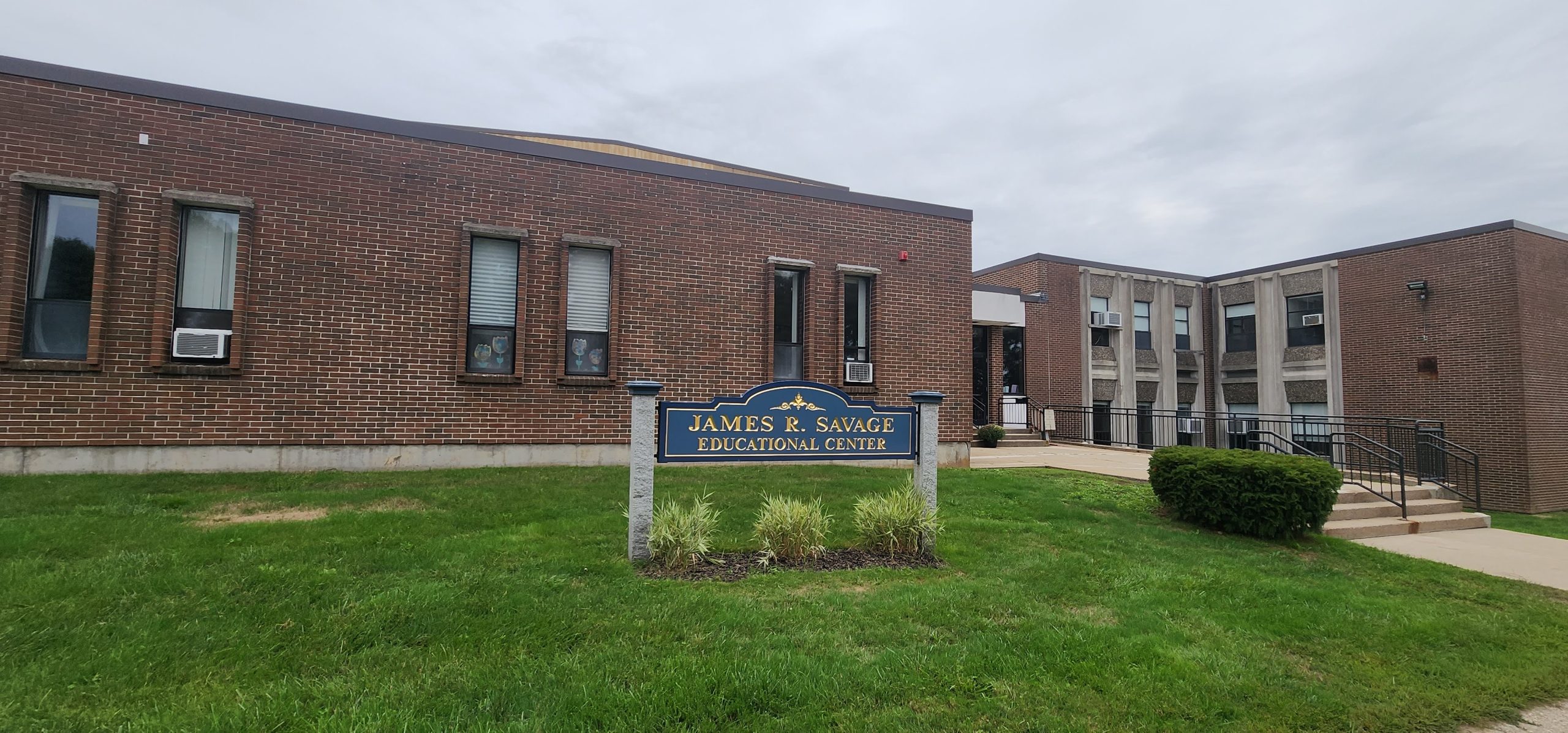
In 1970, Norwood Junior High North saw new fencing, repaving, and drainage improvements while a major school facilities survey moved toward completion, shaping long‑term planning.
-
Norwood Kills Funds For School Addition-June 26, 1969
Voters approve a $1,000 Endean Park drainage compromise and reverse a zoning rule to relocate Carl A. Johnson’s Norwood Cadillac Co. along Route 1.
-
Strikes And Weather Delay North Junior High School Construction-June 17, 1969
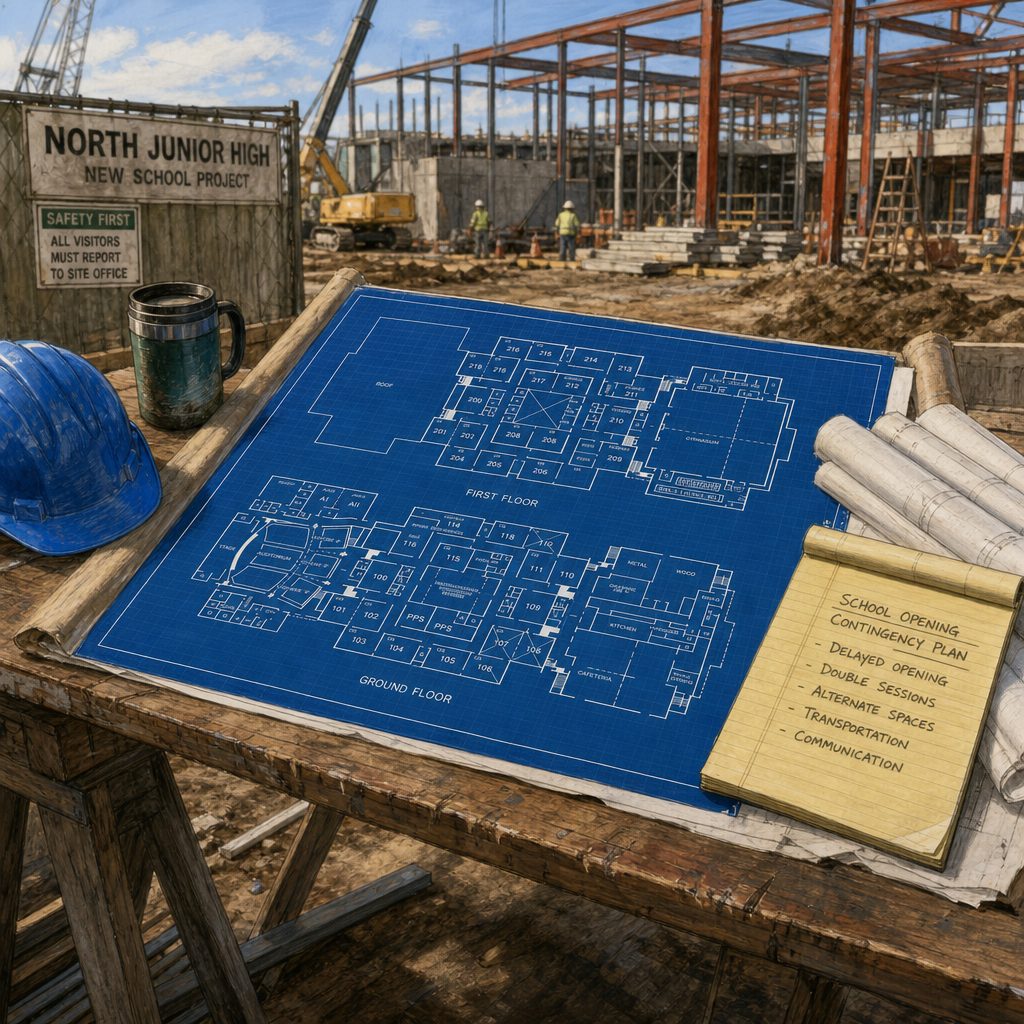
Superintendent Warns Of Possible Double-Session Classes If Washington Street Facility Openings Fail A steel strike at the end of last summer halted installation of metal decking for the roof and delayed the roofer. Snow and freezing weather further hampered the project before the roof could be completed at the new school site. Without a roof,…
-
Parents Challenge Junior‑High Redistricting Plan-June 12, 1969
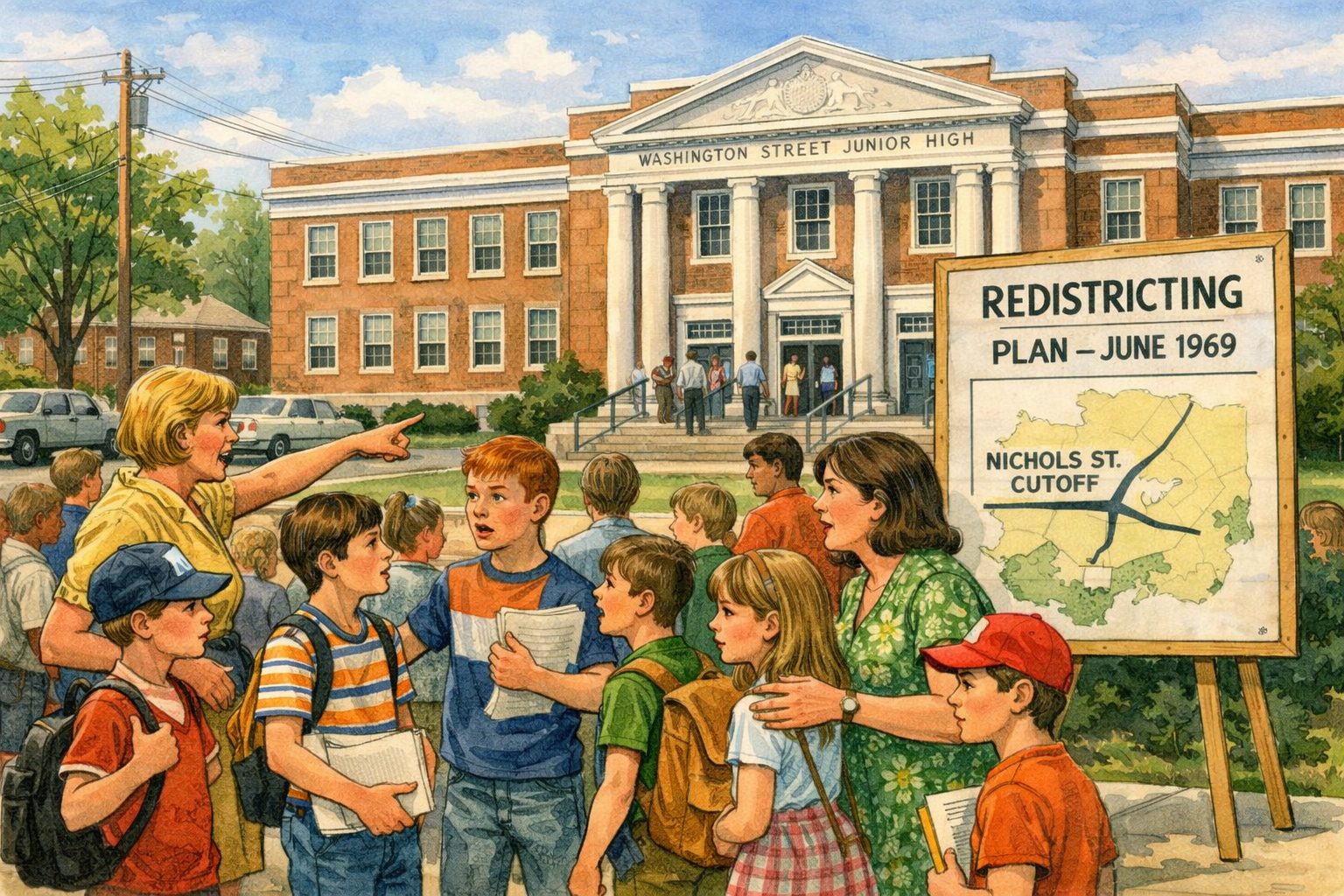
In June 1969, furious Cleveland School families took their grievances directly to town leaders, sparking a tense debate over school enrollment, modern facilities, and neighborhood identity.
-
Willett School Wiring Dispute Adds $9,000 to Construction Costs Ahead of September Opening-July 28, 1968

⠀ The Norwood Permanent Building Construction Committee last night voted to approve the installation of additional circuit breaker panels so that the Willett School can open on schedule in September. The cost of the electrical installation is estimated at approximately $9,000. William J. Kates, supervisor of the Municipal Light Department and inspector of wires, advised…
-
Ground Broken for $1.23 Million George F. Willett Elementary School-August 11, 1967
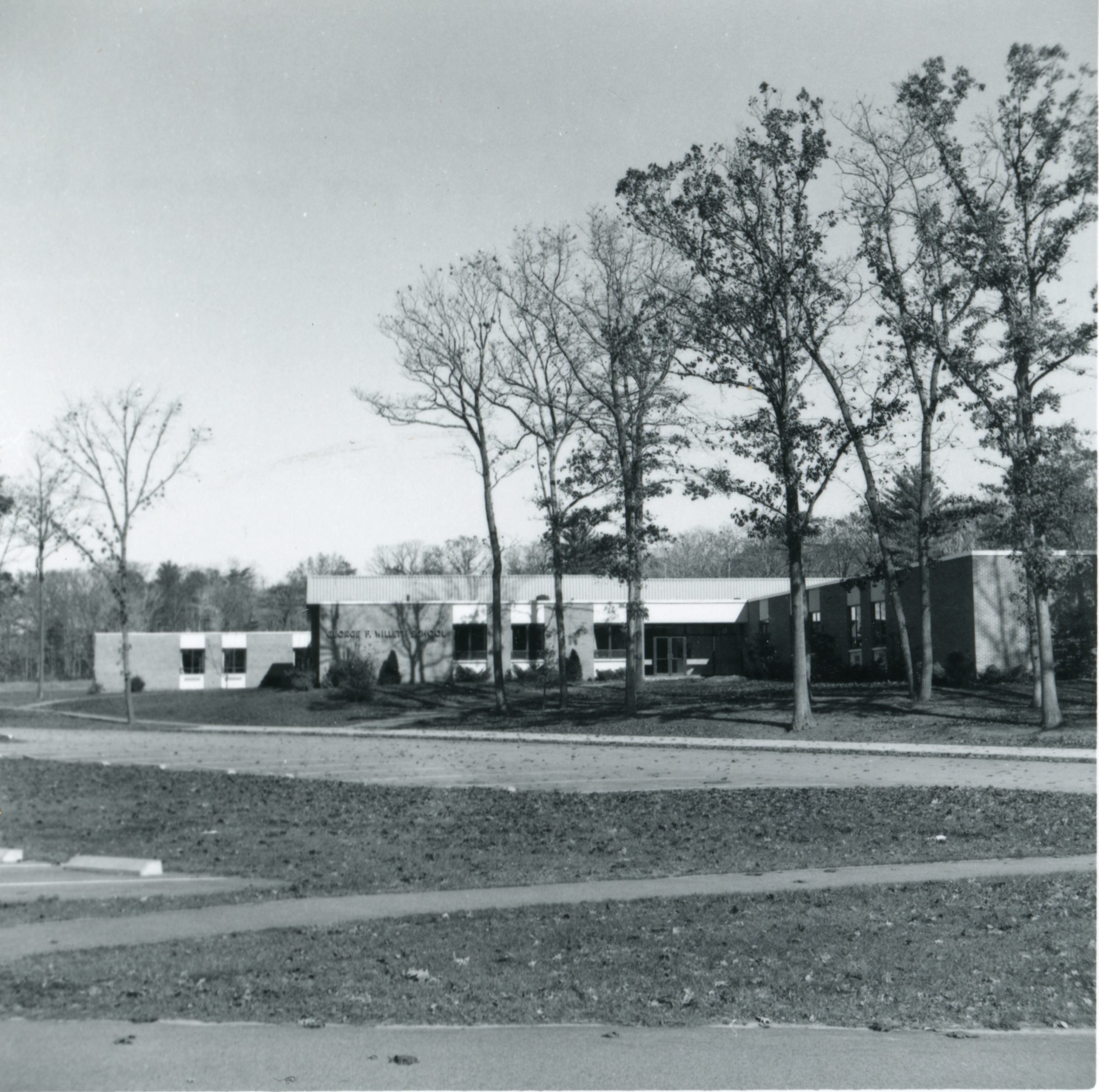
Following a $1.04 million contract award and emergency state borrowing approval, Rocheford Construction Co. broke ground on the 16-classroom George F. Willett Elementary School.
-
Norwood Voters To Act On 12‑Article Warrant-July 25, 1967

Norwood residents debated parking, schools, cemetery expansion, and land transfers at a 1967 town meeting.
Discover more from Norwood Historical Society
Subscribe to get the latest posts sent to your email.