
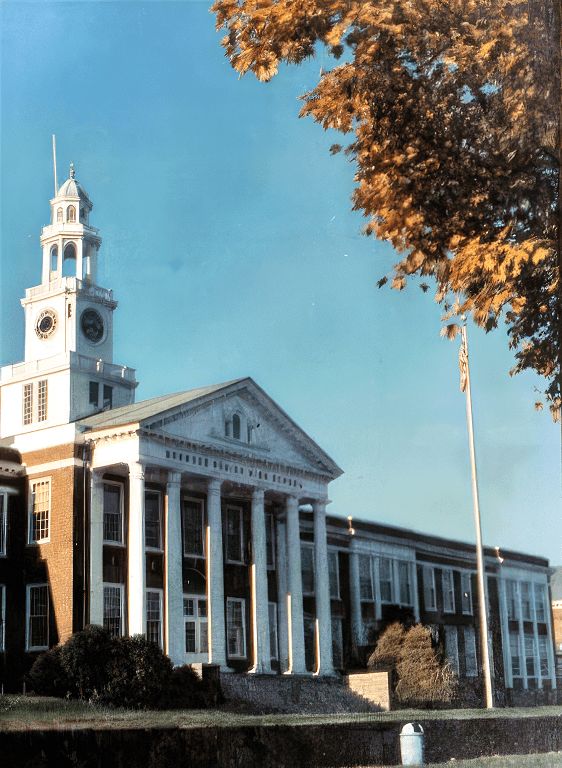
Retroactive School Building Reimbursement Provision Wins Initial House Approval as School Board Weighs $18,000 Teacher Minimum and Proposition 2½ Impacts
NORWOOD – Taxpayers in Norwood stood to save more than $500,000 on the town’s proposed $4.4 million to $5.1 million Norwood High School renovation project under a legislative amendment authored by State Representative Gregory W. Sullivan, D-Norwood, and adopted as part of a sweeping Massachusetts education reform bill that won initial House approval on Monday, November 19, 1984. Reported by Patriot Ledger staff writer Paul Karon on Tuesday, November 20, 1984, the reform package proposed boosting state reimbursement for local school construction and renovation projects from the existing 50 percent rate up to 90 percent of total project costs.
While the underlying legislation had originally set a July 1985 eligibility cutoff for the higher reimbursement tier, Sullivan’s amendment retroactively extended eligibility to school renovation projects approved by the state after October 1, 1984—directly capturing Norwood High School’s planned overhaul. The bill still faced a second reading vote in the House, Senate passage, and the governor’s signature before becoming law, though Sullivan noted a separate State Department of Education school-building bill also pending in the Legislature would serve as a “backup” if the broader reform package stalled. “It’s very likely the taxpayers of Norwood will save more than a half-million dollars if the bill is approved (in its current form),” Sullivan said.
Norwood’s renovation plan called for extensive interior and exterior building repairs, alongside optional upgrades to redesign athletic fields, complete a partial fire sprinkler system, and wire classrooms for closed-circuit cable television. The project had previously suffered several delays—most recently when municipal officials rejected all initial construction bids and re-advertised the contract—with the Permanent Building Construction Committee aiming to present a final construction contract to Town Meeting in February 1985.
School Committee Chairman Richard Kief welcomed Sullivan’s amendment—“I’m very pleased that (Sullivan) took this approach on it. Hopefully, it will proceed all the way through the various stages of the House and Senate”—but voiced lingering reservations over unfunded mandates and state encroachment on local school boards, particularly a provision raising minimum starting teacher salaries to $18,000. Kief and fellow members feared Norwood would be forced to absorb the costly “ripple effect” of raising veteran teachers’ pay scales accordingly. Sullivan countered that repeated House amendments had strengthened local protections by trimming state control and obligating the Commonwealth to fund ripple-effect salary costs: “The bill is being diluted — which means it’s being strengthened. This education reform bill is going to pass. The point is not to argue against the bill, but to improve the bill.”
School Committee member Roger Pelletier echoed concerns that the formula favored struggling urban systems at the expense of stable suburban districts like Norwood: “What good is 90 percent reimbursement on the high school renovation going to be if we have to ask town meeting for an override for proposition 2½?” Even so, Pelletier acknowledged that higher starting pay could help Norwood stem teacher attrition to private industry and ease a growing shortage of substitute teachers—and suggested that 90 percent state reimbursement could persuade Town Meeting voters to approve the entire renovation package, including the athletic fields, sprinklers, and closed-circuit television wiring.
1984 High School Renovation & Teacher Salary Figures Adjusted to 2026 Dollars
Inflation-adjusted using U.S. Bureau of Labor Statistics CPI data ($1.00 in Nov. 1984 ≈ $3.10 in 2026)
| 1984 Norwood High School & Education Reform Item | 1984 Amount | 2026 Equivalent |
|---|---|---|
| Norwood High School Renovation Project Estimate | $4.4M – $5.1M | ~$13.64M – $15.81M |
| Projected Town Taxpayer Savings via Sullivan Amendment | $500,000+ | ~$1,550,000+ |
| Proposed State Minimum Starting Teacher Salary | $18,000 / yr | ~$55,800 / yr |
Archival Note: This article has been dynamically reconstructed from the original public record print archives of the Patriot Ledger
More…
-
Permanent School Building Construction Committee Votes to Proceed with Permanent Roof Plans for Burned-Out Junior High South and Aaron Guild School-September 15, 1972
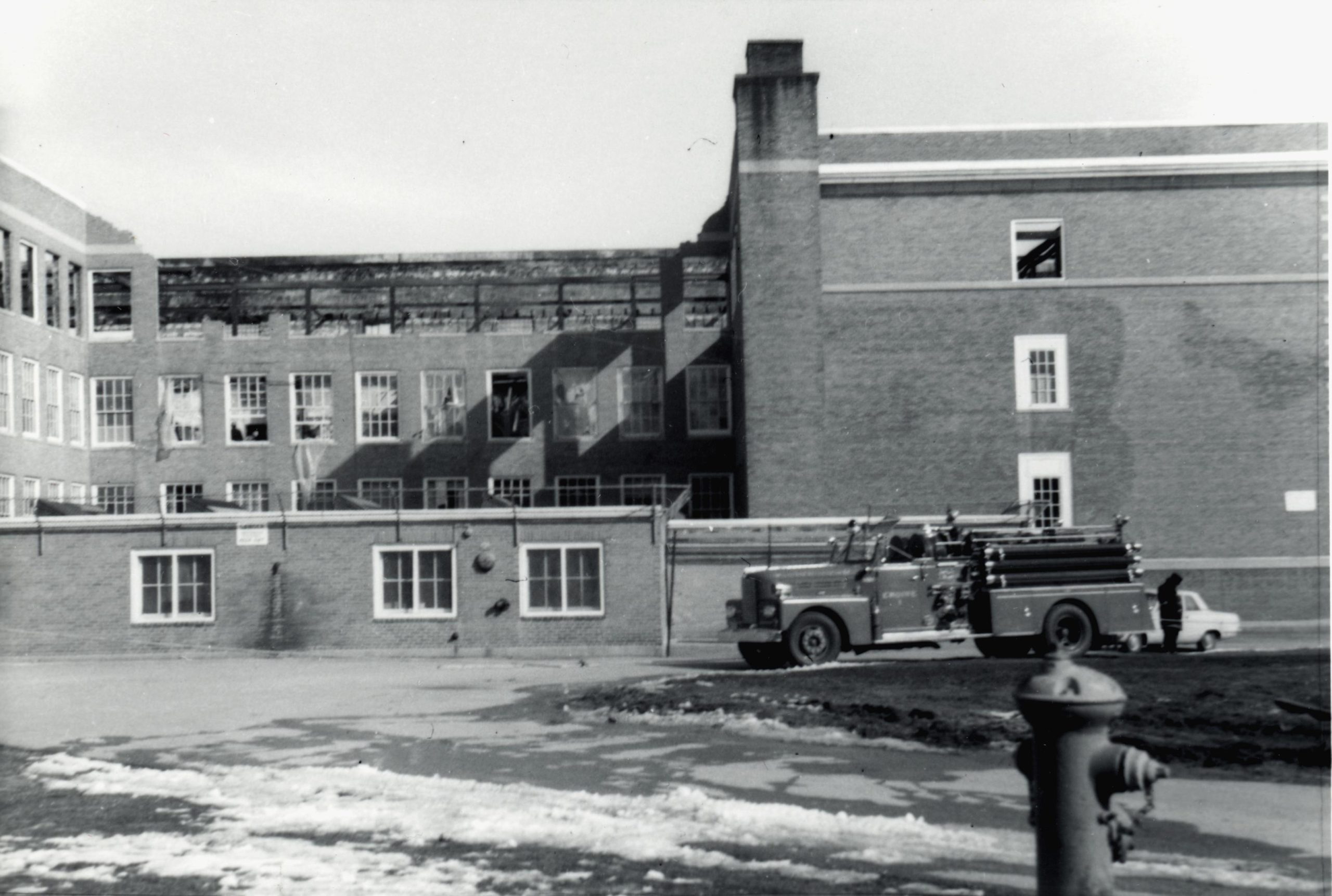
School building construction committee votes to proceed with permanent roof plans for Junior High South and Aaron Guild School, while Endean Park junior high plans secure SBAB approval.
-
Committee Votes to Reroof Aaron Guild School Ahead of Winter Months-September 8, 1972
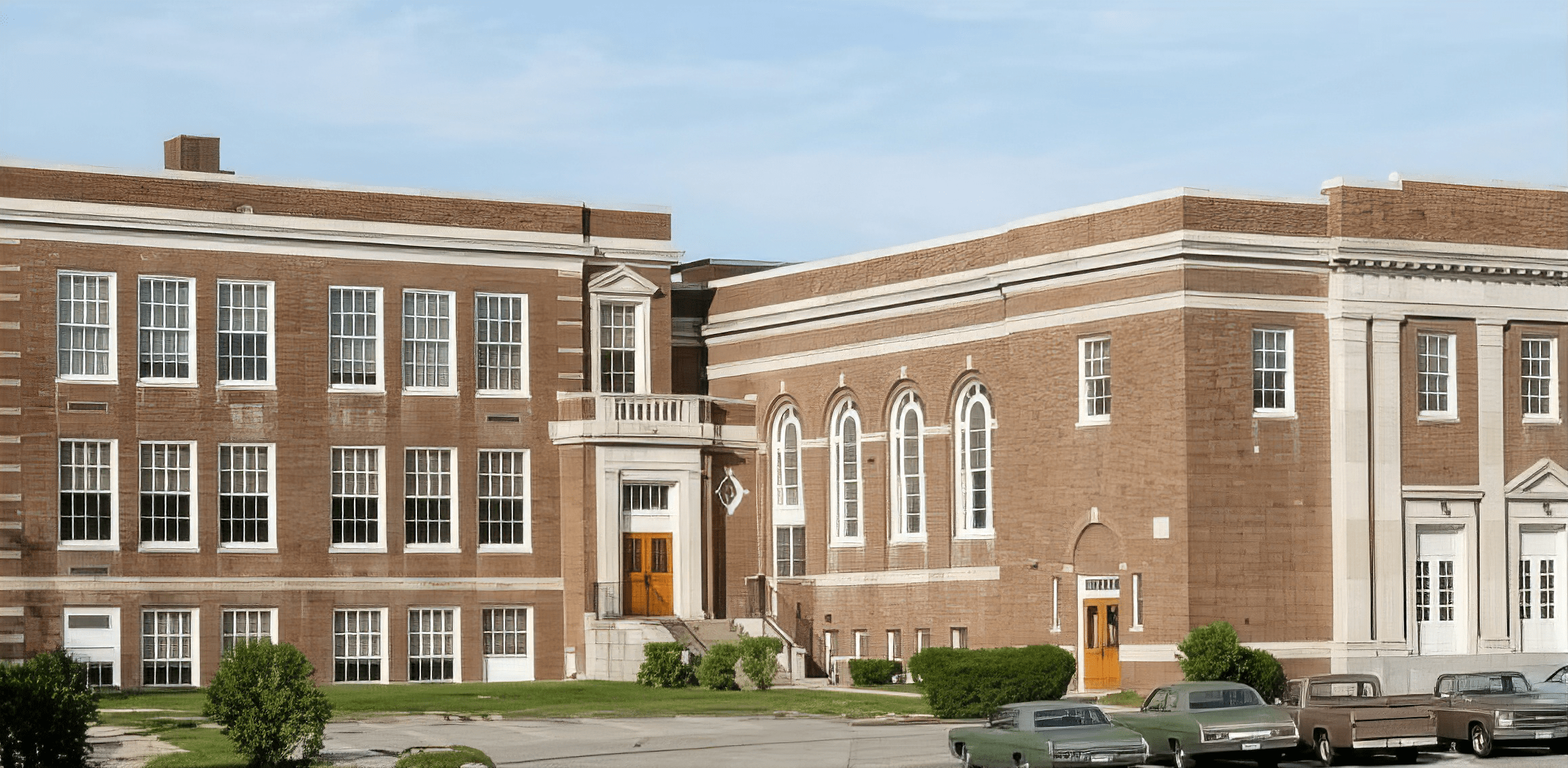
Norwood’s building committee votes to undertake immediate reroofing of the Aaron Guild School, eliminates skylights, and reviews Endean Park school construction and athletic field costs.
-
Gridlock Over $6-Million Junior High Rebuilding Plan and Norwood Arena Noise-This Day in Norwood History-June 27, 1971
A dual crisis hits Norwood in 1971 as a $6-million junior high deficit triggers political warfare and state experts condemn racetrack noise.
-
Work Under Way At Junior High North-May 29, 1970
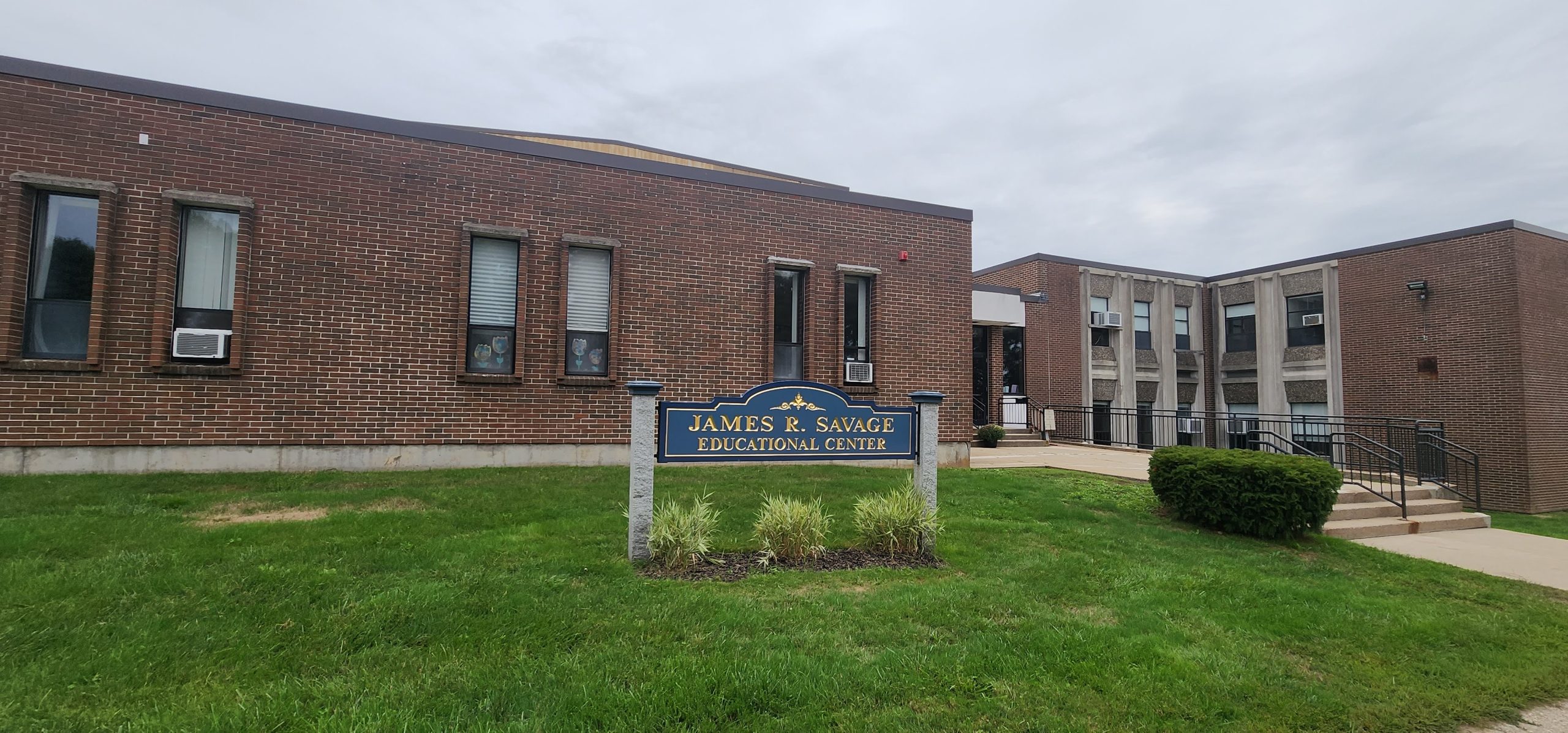
In 1970, Norwood Junior High North saw new fencing, repaving, and drainage improvements while a major school facilities survey moved toward completion, shaping long‑term planning.
-
Norwood Kills Funds For School Addition-June 26, 1969
Voters approve a $1,000 Endean Park drainage compromise and reverse a zoning rule to relocate Carl A. Johnson’s Norwood Cadillac Co. along Route 1.
-
Strikes And Weather Delay North Junior High School Construction-June 17, 1969
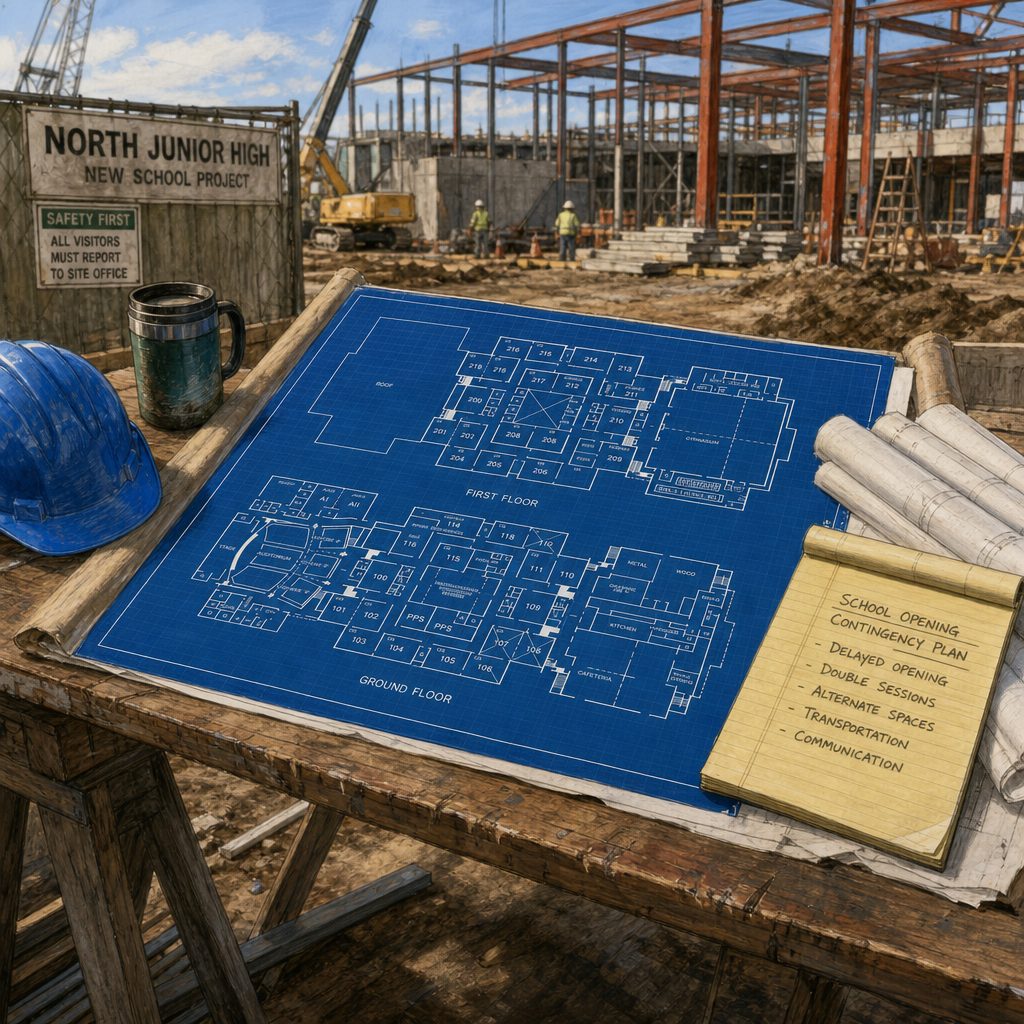
Superintendent Warns Of Possible Double-Session Classes If Washington Street Facility Openings Fail A steel strike at the end of last summer halted installation of metal decking for the roof and delayed the roofer. Snow and freezing weather further hampered the project before the roof could be completed at the new school site. Without a roof,…
-
Parents Challenge Junior‑High Redistricting Plan-June 12, 1969
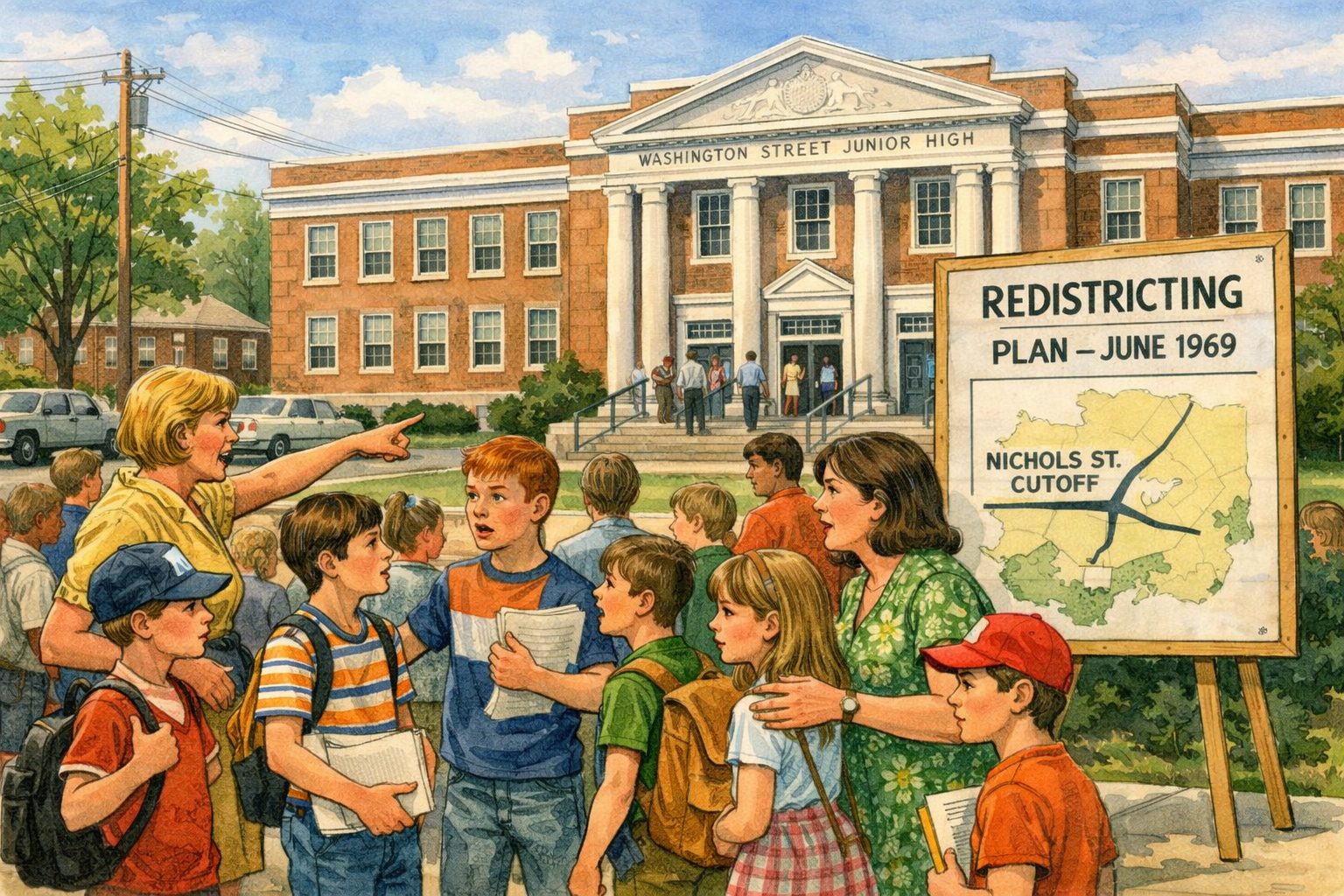
In June 1969, furious Cleveland School families took their grievances directly to town leaders, sparking a tense debate over school enrollment, modern facilities, and neighborhood identity.
-
Willett School Wiring Dispute Adds $9,000 to Construction Costs Ahead of September Opening-July 28, 1968
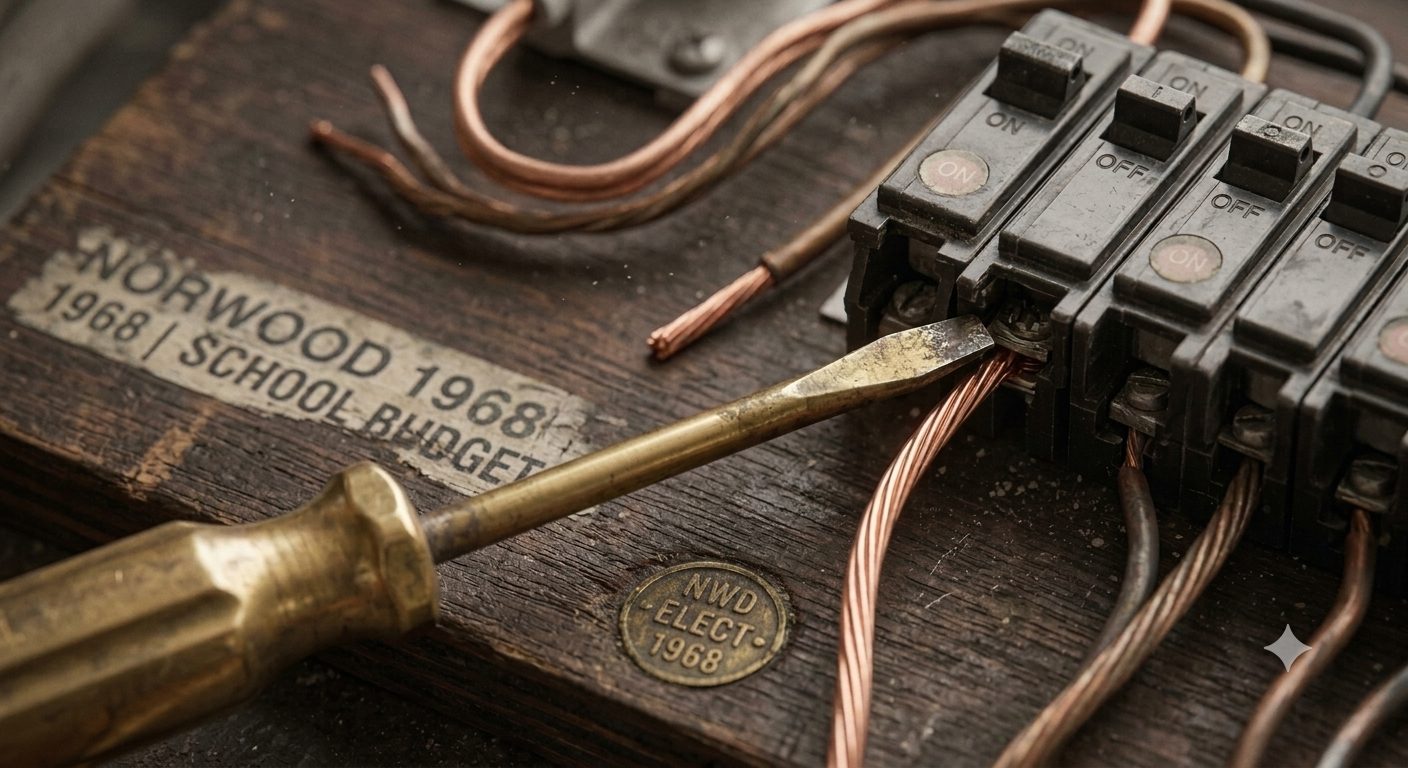
⠀ The Norwood Permanent Building Construction Committee last night voted to approve the installation of additional circuit breaker panels so that the Willett School can open on schedule in September. The cost of the electrical installation is estimated at approximately $9,000. William J. Kates, supervisor of the Municipal Light Department and inspector of wires, advised…
-
Ground Broken for $1.23 Million George F. Willett Elementary School-August 11, 1967
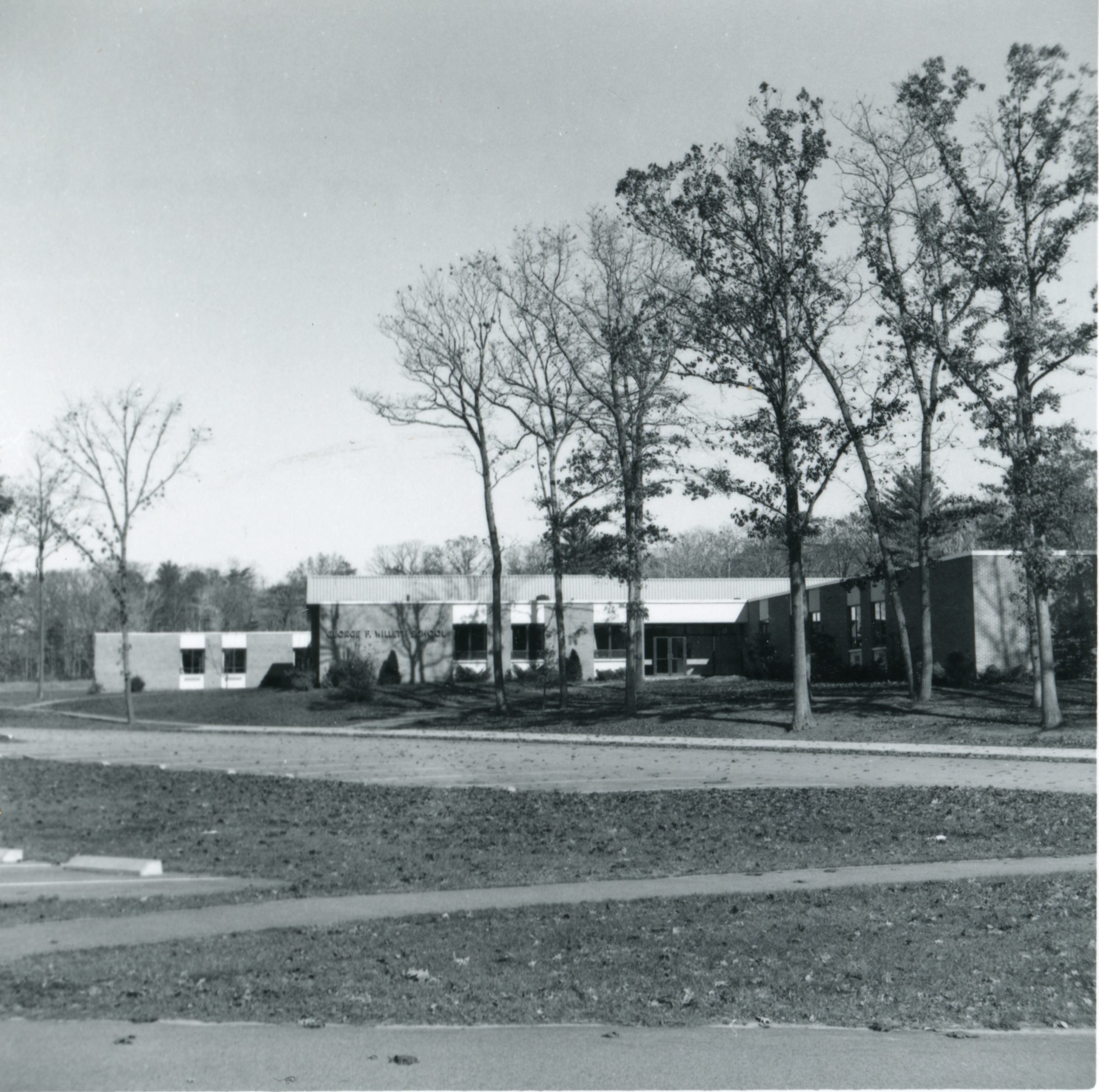
Following a $1.04 million contract award and emergency state borrowing approval, Rocheford Construction Co. broke ground on the 16-classroom George F. Willett Elementary School.
-
Norwood Voters To Act On 12‑Article Warrant-July 25, 1967

Norwood residents debated parking, schools, cemetery expansion, and land transfers at a 1967 town meeting.
Discover more from Norwood Historical Society
Subscribe to get the latest posts sent to your email.