
Berkowitz Urges Moratorium at Public Hearing on Nahatan Street Apartments
Voicing sharp frustration over rapid development, Norwood Planning Board member Rudith Berkowitz called for a townwide building moratorium last night as an essential first step toward halting what she termed “out-of-control growth.”
Berkowitz’s impassioned remarks came during a heated public hearing regarding a proposal by Telco Systems of Norwood and private developers to construct a 122-unit apartment complex on vacant land adjacent to the Telco property at 63 Nahatan St.
“We’re always getting threatened by developers with either apartments or factories because of the poor planning in this town,” Berkowitz declared. “We could use either a moratorium on building or something to slow down the out-of-control growth. We have more apartments than any other town in the area. Who knows when we’ll be able to find and hire a town planner. We haven’t done what we should do.”
While acknowledging she did not plan to spearhead a formal petition drive—noting, “I heard that a moratorium would be illegal, but at least it would show where this town stands on growth”—her comments underscored mounting anxieties. Town zoning maps date back to the late 1920s when Norwood was heavily industrial; although many factories have since given way to residential neighborhoods, zoning codes have remained largely unchanged. Although town meeting voted in the spring to fund a professional town planner to redraw the map and separate incompatible manufacturing uses from residential zones, the planning board was still actively advertising for candidates. Growth had quickly become the town’s defining political issue, propelling Berkowitz into office in April after defeating former board chairman Alfred Porro on a platform centered on curbing expansion.
Developer Proposes Rezoning 30-Acre Parcel for Multi-Family Housing-October 20, 1987
Before the proposed 122-unit apartment complex can move forward, the developer, Telcross Associates—which purchased the 30-acre site in 1985—must secure a zoning change from manufacturing to multiple dwelling use at the upcoming October 28 special town meeting.
Attorney Helen Donohue, representing the developers, warned neighborhood residents at the hearing of the alternative: “Truck terminals, laundries, factories could be in there instead of four buildings with three floors. If town meeting doesn’t approve this, next time it’s going to be a manufacturing use.”
According to Donohue, the project would feature four three-story buildings with dedicated off-street parking and substantial buffer zones ranging from 100 to 140 feet between the structures and nearby residences. She stressed that the rezoning request applied strictly to the 30-acre parcel, preventing any spillover apartment development in the area. Rents were projected between $700 and $750 with no subsidized housing units planned, and developers had no intention of converting the units into condominiums.
Neighborhood Opposition and Infrastructure Concerns-October 20, 1987
Area residents expressed deep skepticism regarding the project and the town’s capacity to handle additional density.
“I hope no development can go in that area because we have enough problems,” protested Pauline Grasso of 80 Oliver St.
Esther O’Connell of Winfield Street echoed those concerns, stating, “We have all these apartments here already. I wonder if we need any more in the area.” Many residents also raised alarms over whether local sewer infrastructure could handle the heavy wastewater volume generated by a large multi-family complex.
With the planning board scheduled to vote the following week on whether to recommend the rezoning to town meeting—where a two-thirds majority is required for passage—the debate over Norwood’s development trajectory reached a fever pitch.
Archival Note: This article has been dynamically reconstructed from the original public record print archives of the Patriot Ledger
More…
-
Neighbors Ask Zoning Board to Approve Variances for Winter Street Condominium Project-September 2, 1987
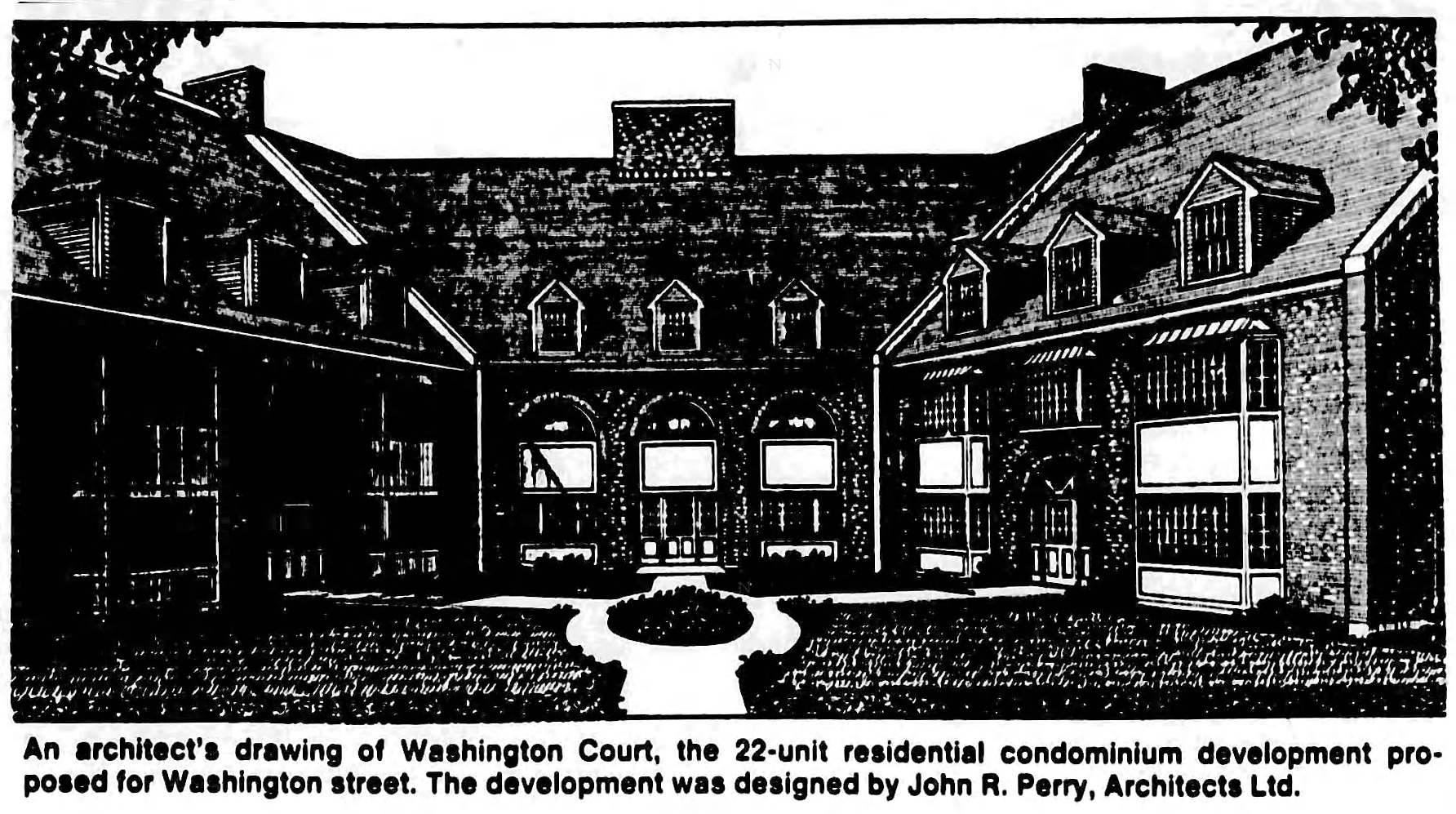
In an unusual display of consensus, residents from the Winter Street area appeared before the Zoning Board of Appeal to urge approval of zoning variances allowing developer James Brolly to construct a 22-unit residential condominium complex just three feet from adjacent property lines, well short of the normally required 25-foot buffer zone. Neighborhood Compromise Over…
-
McDonald’s Requests Special Permit for Broadway Drive-Through Window-September 2, 1987
An attorney representing the McDonald’s restaurant located at 32 Broadway in Norwood Center appeared before the Zoning Board of Appeal to request a special permit for the installation of a drive-through window. If approved, it would become the fourth drive-through facility established at local fast-food establishments following a contentious town meeting vote in May that…

-
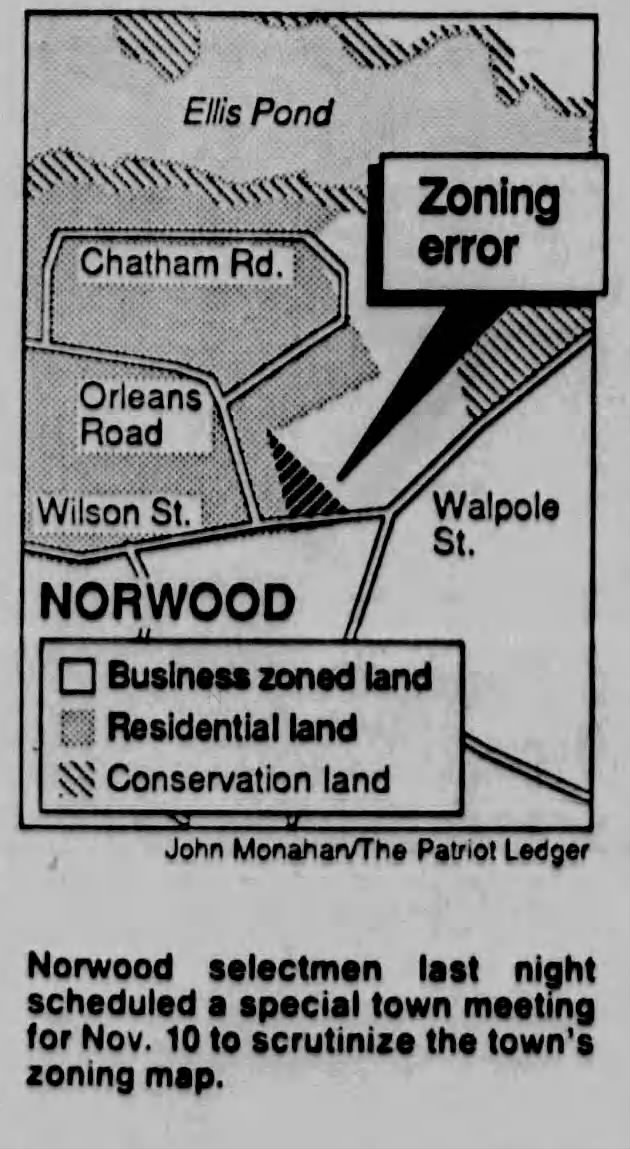
Zoning Map Error Threatens to Mix Homes and Businesses in South Norwood Neighborhood-October 9, 1986
A decades-old zoning map mistake sparks outrage among Orleans Road residents in South Norwood, prompting selectmen to call a special town meeting to prevent commercial encroachment.
-
Owner of Norwood Site Says He Was Unaware of Gravel Removal-July 24, 1985
The Norwood Zoning Board of Appeals clashed with property owner Paul C. Balboni over unpermitted gravel excavation at a University Avenue site flagged by Building Inspector John Grover.

-
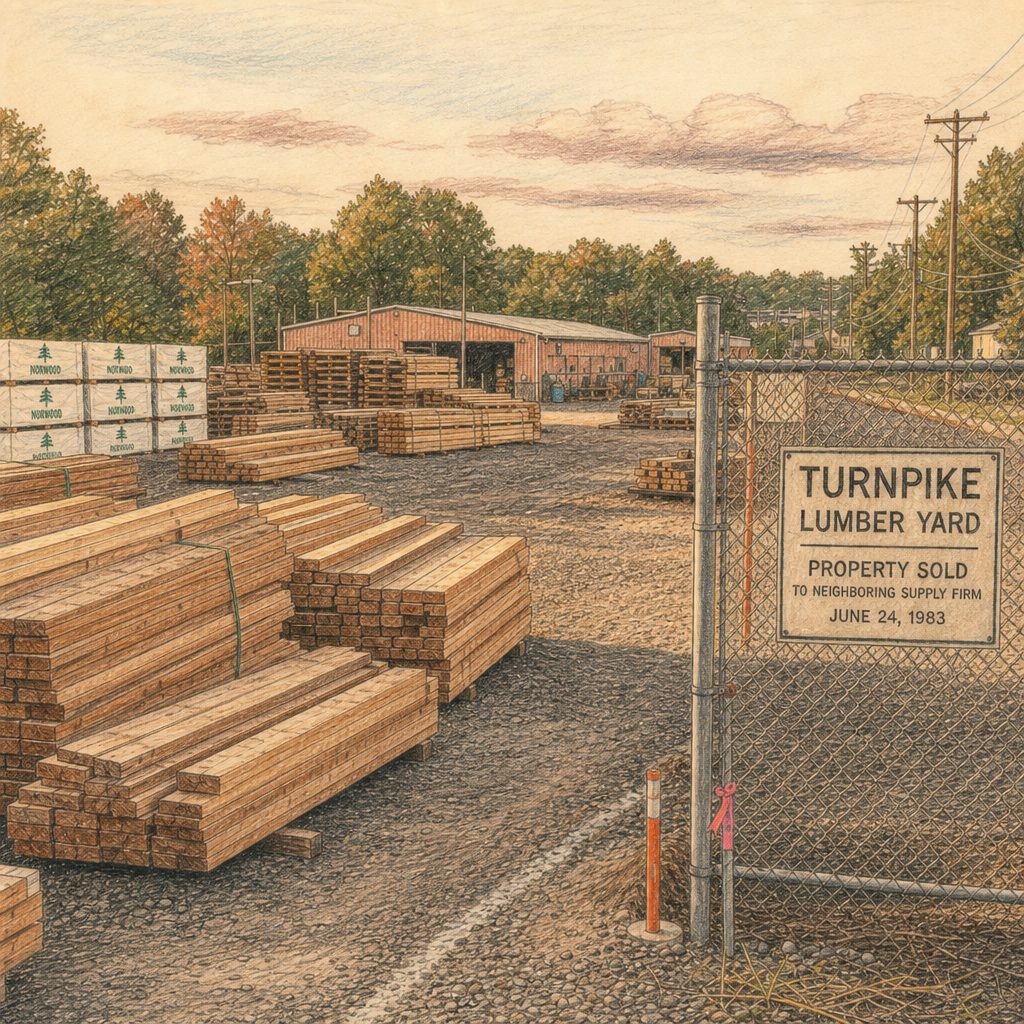
Turnpike Lumber Yard Property Sold to Neighboring Supply Firm-June 24, 1983
The commercial expansion follows two destructive, suspected arson fires that completely leveled the historic lumber yard buildings last year.
-
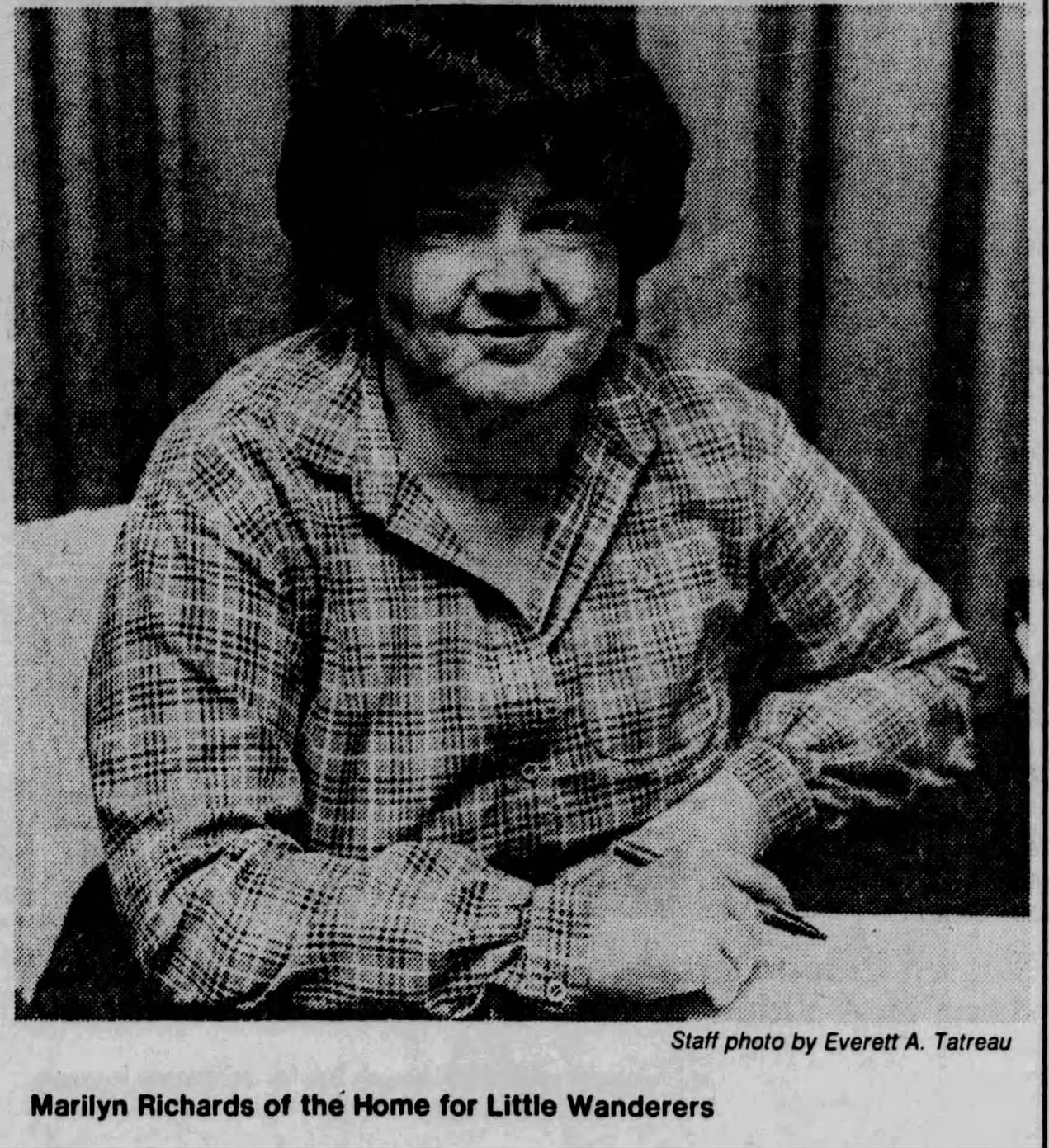
New England Home for Little Wanderers Fights to Keep Norwood Foster Program for Teenage Girls-October 15, 1982
Facing a cease and desist order from the building inspector, the New England Home for Little Wanderers appeals to keep its teenage foster home on Walpole Street.
-
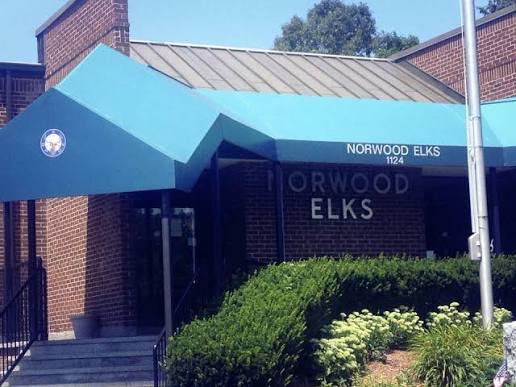
Norwood Briefs: Taxi Subsidy, East Hoyle Street Grant, Elks Parking, and Senior Activities-August 26, 1982
Norwood prepares to launch a taxi subsidy program for seniors and handicapped residents, receives a state grant to widen East Hoyle Street, and denies the Elks Club parking expansion.
-
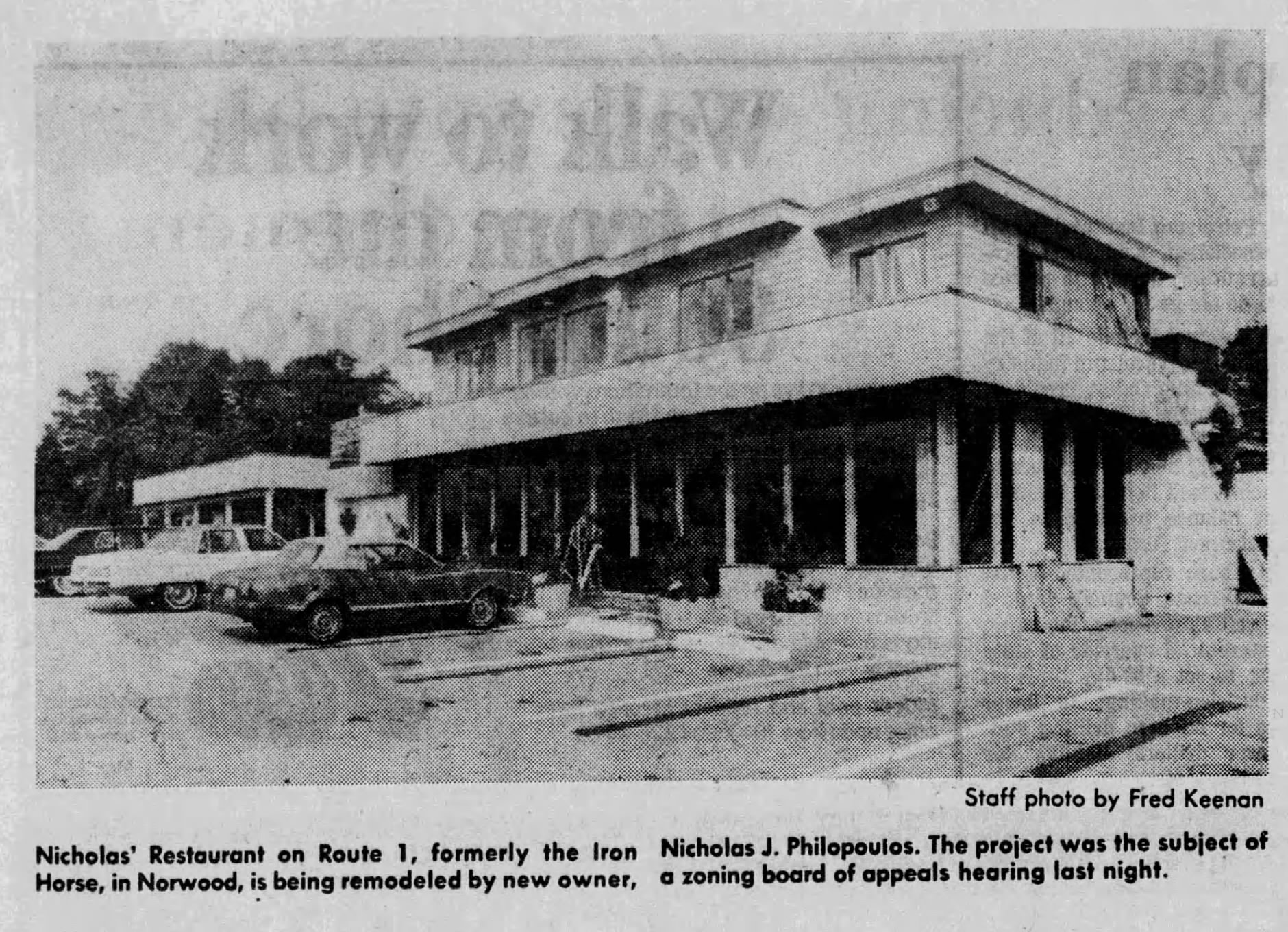
Building Inspector Takes Blame for Permit Snafu as Restaurant Expansion and Solar Home Plans Come Before Board—September 23, 1981
Norwood building inspector takes blame for a restaurant remodeling permit oversight, while the zoning board reviews expansions for The Nicholas and a novel solar home.
-
Star Market Withdraws Storage Permit Request Following Major Cardboard Warehouse Fire-July 29, 1981
Following a massive fire that took firefighters over 12 hours to extinguish, Star Market withdrew its permit request to store recycled cardboard at University Avenue.

-
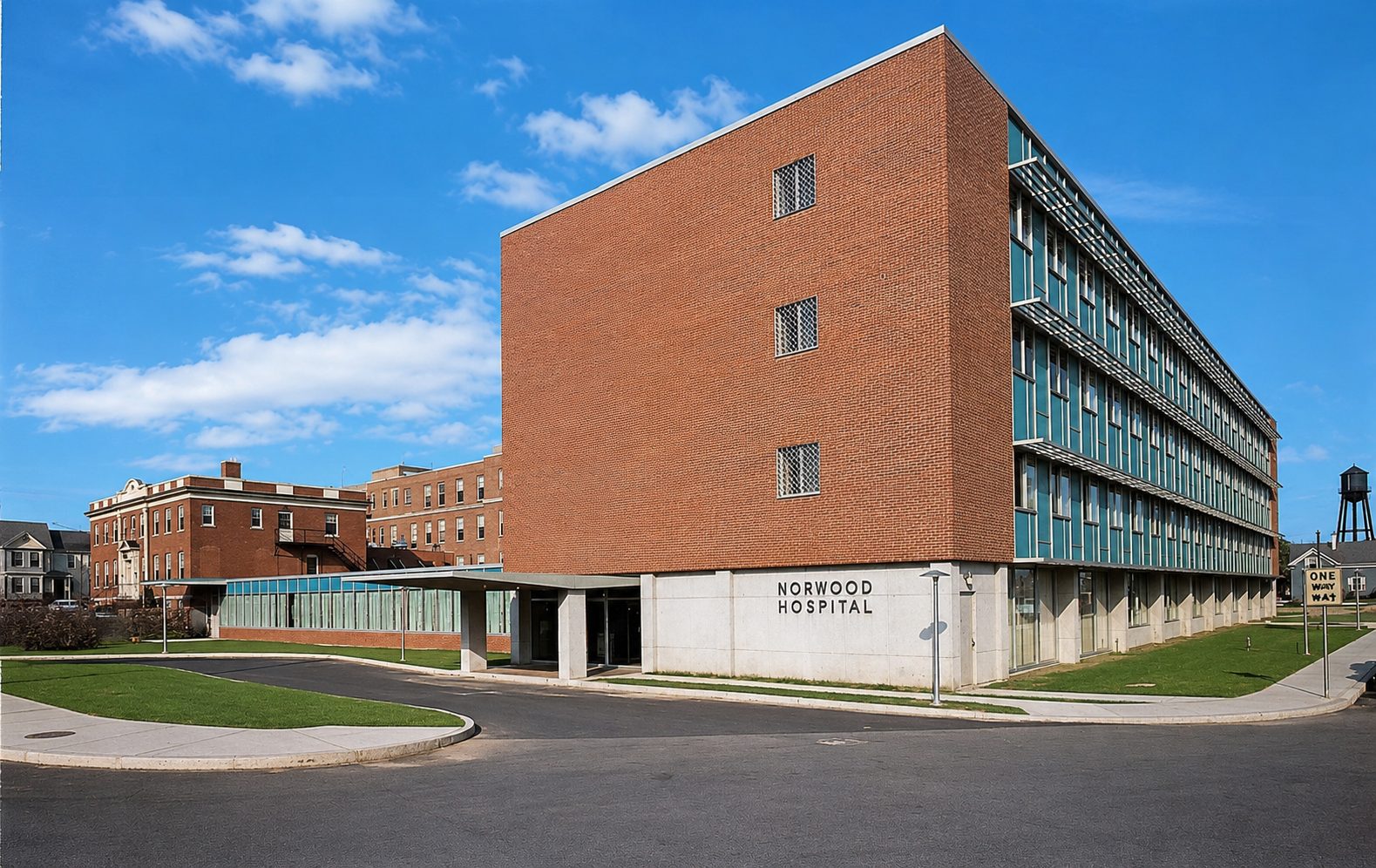
Zoning Board Approves Phase II of Norwood Hospital Expansion-June 24, 1981
A heated dispute erupts between board members and Building Inspector John E. Grover over a lack of formal advisory feedback on preliminary plans.
Discover more from Norwood Historical Society
Subscribe to get the latest posts sent to your email.