
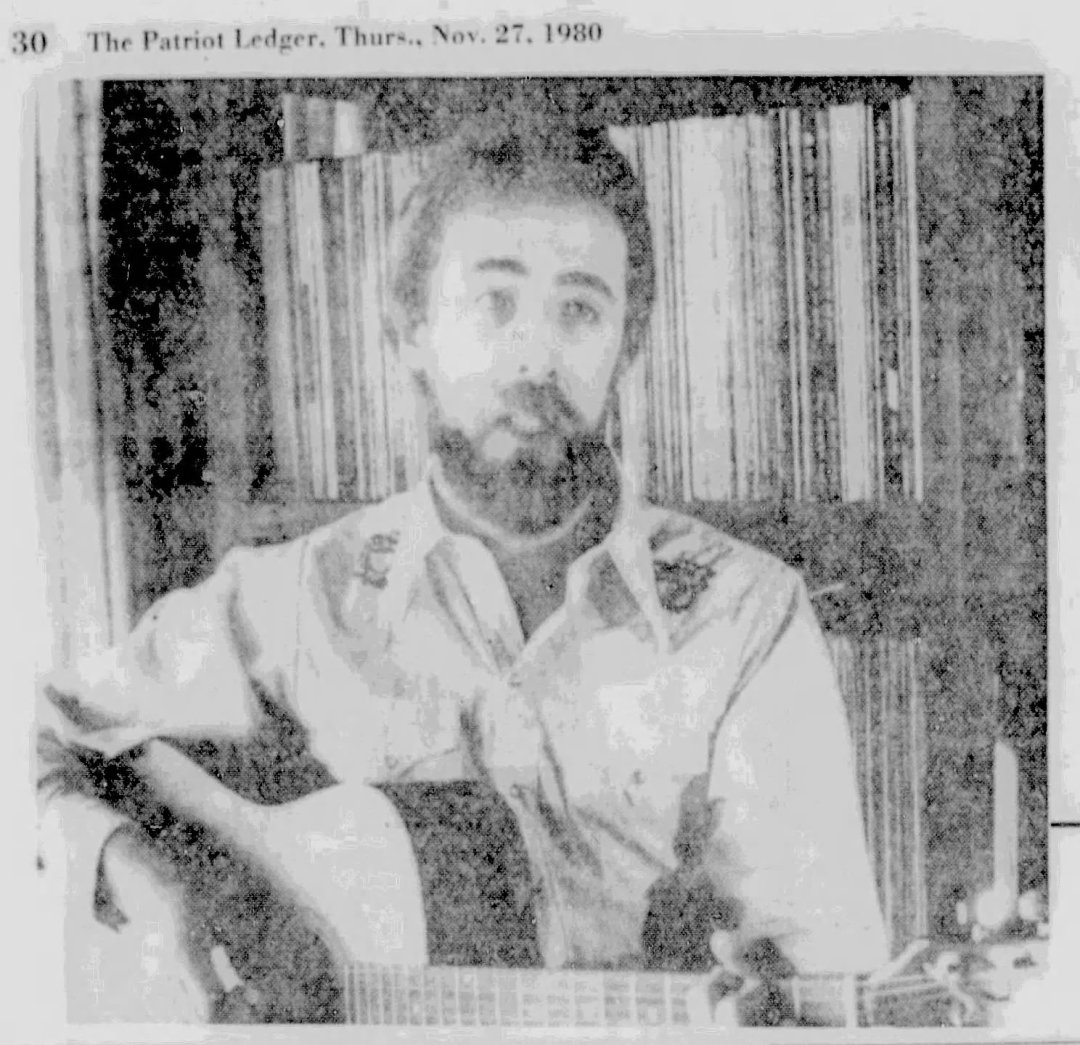
After 200,000 Miles on the Pub Circuit and Merchant Marine Voyages, Windsor Gardens Folk and Country-Rock Troubadour Prepares $3,000 Demo ‘High School Heartbreaker’ for January 45 RPM Release
NORWOOD – Dennis Michael O’Rourke, singer-songwriter—that was the full stage name the 32-year-old Norwood musician hoped audiences would come to know and remember, having been advised that including his middle name lent a pleasing cadence to his distinctly Irish surname. Profiled in The Patriot Ledger on Thursday, November 27, 1980, by staff reporter Barry N. Smith, alongside an archival photograph capturing O’Rourke working diligently on his recording career, the affable, bearded troubadour had recently made a bold leap of faith: quitting his steady job as an EKG technician at Norwood Hospital “to go all out” in promoting his music.
With his bank account nearly empty and his 1975 Pontiac station wagon running on its last legs, O’Rourke was staking everything on his determination to prove “that you’ve got the talent other people can enjoy—to move them.” Over recent years, he estimated he had logged roughly 200,000 miles playing guitar and dulcimer and singing in clubs and pubs stretching from Maine to Florida and as far west as Davenport, Iowa. Along the way, he had lived in Dublin, Liverpool, and Florida, spent a brief sojourn in California, and—as “that rare creature—a folk singer who’s actually been to sea”—worked aboard freighters and tankers in the Far East. As O’Rourke explained, quoting author Somerset Maugham: “If you’re going to make comments on life and living, it’s best that you do some.”
Performing three to five nights a week across New England’s pub circuit, O’Rourke blended folk and country-rock standards with his own original compositions, earning enough to cover his apartment rent at Windsor Gardens in Norwood. Yet he held no romantic illusions about life on stage. “I’ve stopped calling it ‘playing,’ a couple of years ago. You’re being paid to do a job up there,” he told Smith. “Entertaining in public is very difficult.”
Alongside music, O’Rourke pursued fiction writing, having already completed two novels. While commercial breakthroughs in both fields remained elusive, major record labels and book publishers had begun scribbling encouraging handwritten notes onto otherwise routine rejection slips. One of his original ballads, “Flowers, Fools and Dreams,” had recently captured an honorable mention in the international songwriting competition of The American Song Festival.
Now, O’Rourke pinned his hopes for a commercial breakthrough on “High School Heartbreaker,” an original track he recorded with professional studio musicians on a $3,000 demo tape. He planned to press the single onto a 45 r.p.m. record in January 1981, bolstered by commitments from two radio stations—in Waltham, Massachusetts, and Portland, Maine—to give the record airplay. Realistically assessing the uphill battle to convince record executives that he could move units, O’Rourke noted, “The overwhelming fact of both publishing and music is that the romance is gone out of both of them. If indeed there ever was any. It’s a business, period.” Promotion meant hustling the 45 onto local jukeboxes, booking regional talk shows, and grinding through New England pubs featuring performers “on the way up or way down.”
Blessed with the warm, approachable baritone of a classic balladeer—often compared by listeners to Cat Stevens or Burl Ives—O’Rourke drew primary country inspiration from Hank Williams Sr. and Johnny Cash, while admiring The Beatles as “challenging but intimidating. They were so good. Their music makes you feel so happy and alive.” Refusing to merely imitate his idols, he worked steadily to forge a voice of his own. Drawing encouragement from Willie Nelson, who spent 15 to 20 years honing his craft before achieving mainstream stardom, O’Rourke remained optimistic—knowing that even if commercial stardom eluded him, he could happily return to medical work while continuing to write songs, novels, and a planned Merchant Marine book and musical screenplay simply because creative expression made him feel alive.
Archival Note: This article has been dynamically reconstructed from the original public record print archives of the Patriot Ledger
-
Wonderful Women (or Girls) of Norwood-The Norwood Debonnaires
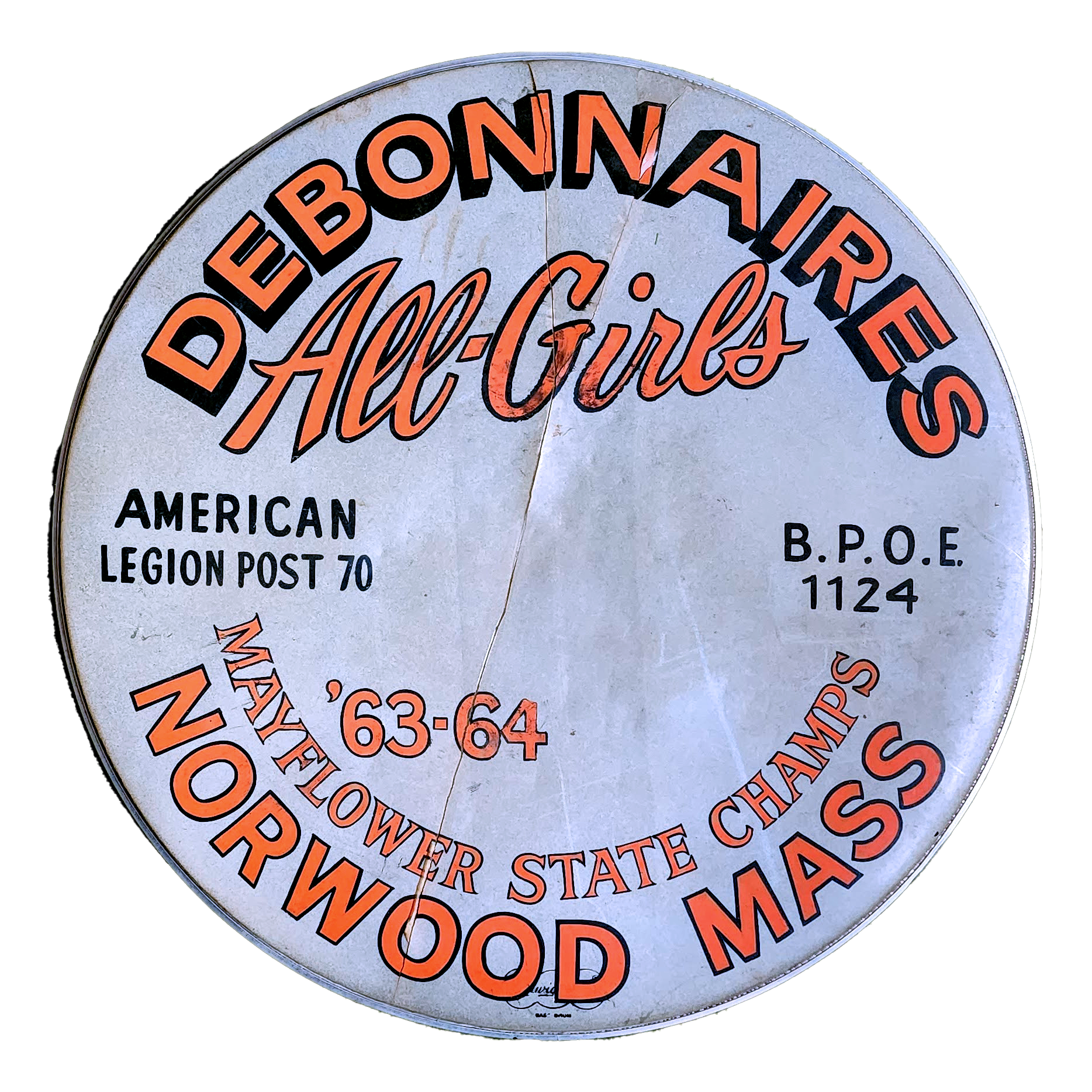
Wonderful Women (or Girls) of Norwood-The Norwood Debonnaires
-
J. Stearns Cushing Pens Letter In Support of Norwood Brass Band-This Day in Norwood History-May 20, 1899

This Day in Norwood History-May 20, 1899-J. Stearns Cushing Pens Letter In Support of Norwood Brass Band
-
History of the First 25 Years of the Norwood Brass Band-This Day in Norwood History-May 31, 1891
Striking up the band! Published in 1891, this retrospective looks back at the first 25 years of the organization known today as the Norwood Brass Band. From its humble 1866 beginnings at the South Dedham engine house to playing Boston’s St. Patrick’s Day parades and purchasing $50 uniforms, discover the evolution of a local musical…
Discover more from Norwood Historical Society
Subscribe to get the latest posts sent to your email.