
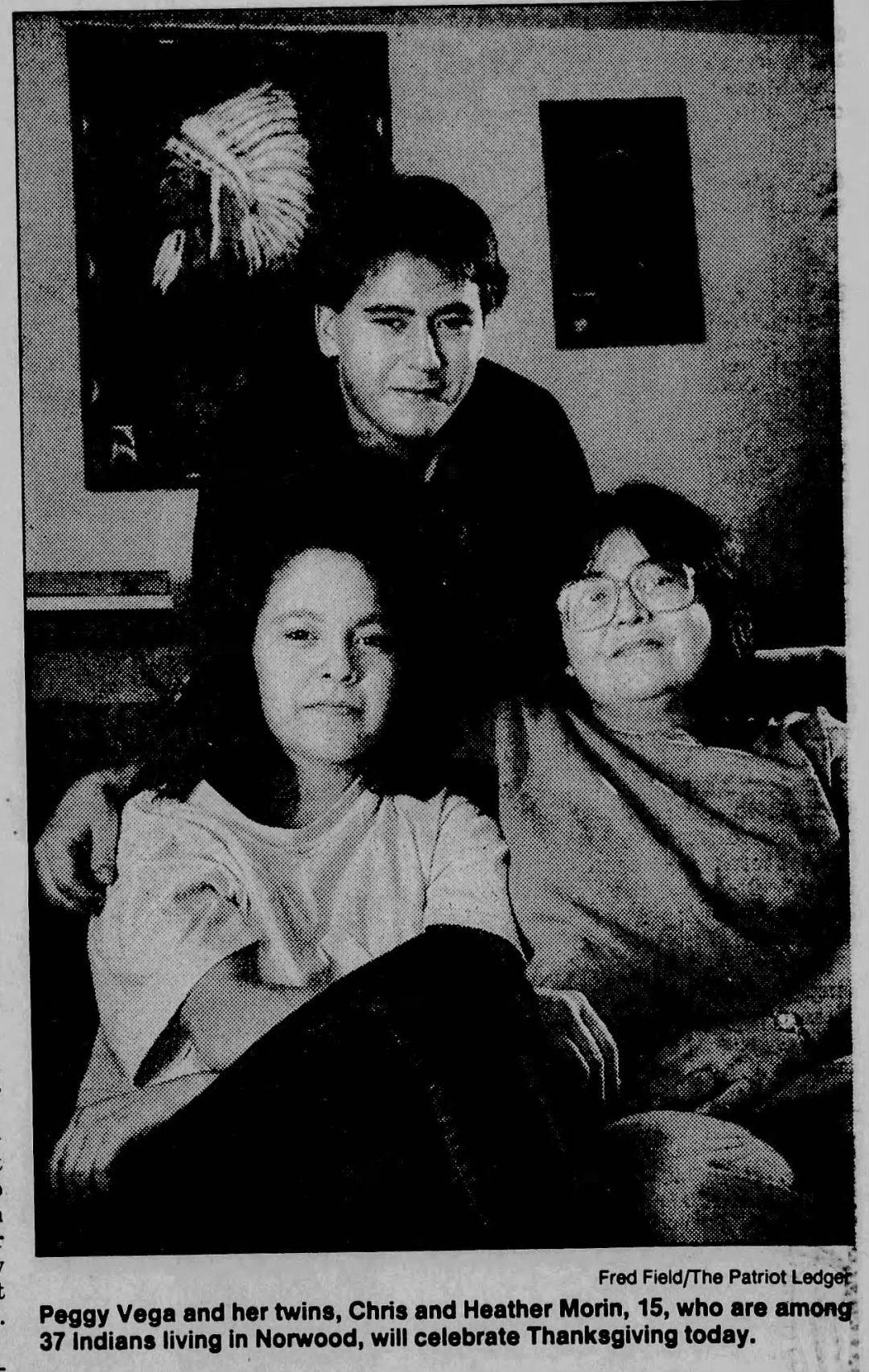
Raised Partly on North Dakota’s Turtle Mountain Reservation, 15-Year-Old Siblings and Their Mother Peggy Vega Share a Holiday Blending Turkey, Puerto Rican Dishes, and Traditional Fry Bread
NORWOOD – For Chris and Heather Morin’s great-grandparents, Thanksgiving had never been a day of celebration; rather, it served as a somber reminder of centuries of loss and upheaval endured by Indigenous peoples. Yet on Thanksgiving Day, Thursday, November 28, 1991, the 15-year-old twins—the only American Indian students attending Norwood High School—celebrated the holiday alongside their classmates. Reported in The Patriot Ledger on November 28, 1991, by staff writer Lyndsey Layton—accompanied by a family portrait photographed by Fred Field—the brother and sister, who were of Chippewa heritage, reflected on generational change, blended family traditions, and staying connected to their roots.
“We have a turkey and all the trimmings,” explained Chris, whose family had lived on a North Dakota reservation before moving east six years earlier and settling in Norwood roughly two years before the interview. “We just give thanks for what we have and say a prayer that homeless people will get the same things soon.” Relating the traditional classroom account of the Pilgrims and Native Americans sharing a harvest feast, Chris added, “When the Pilgrims first were here, the Indians taught them to fish and live and survive. So what the Pilgrims did was show their thanks.”
Their mother, Peggy Vega—who grew up on the Turtle Mountain Reservation in North Dakota near the Canadian border—noted that feelings surrounding the holiday had softened across generations. “For my grandfather and grandmother, it was a time of sorrow. It marked the change,” Vega said. “But they came to realize that they can’t change it, so they must go with it. Now, we don’t feel sorrow at all.” After divorcing and remarrying when the twins were young, Vega married Norwood police officer Milton Vega. That Thanksgiving, the family gathered at Milton Vega’s mother’s home in Boston for a festive dinner pairing roast turkey with an eclectic spread of Puerto Rican specialties and American Indian side dishes, including traditional fried bread known as “bangs.”
According to 1990 U.S. Census figures cited in the report, Chris, Heather, and their mother accounted for three of just 37 American Indian residents in Norwood out of a total town population of 28,700. At Norwood High, most classmates did not realize the twins were Native American, often assuming they were Puerto Rican; once told, peers generally reacted either with genuine curiosity or sudden awkwardness. “The reaction is kind of weird,” observed Heather, a soft-spoken student with an affinity for mathematics and ambitions of becoming an accountant.
Outside the classroom, the twins led everyday suburban teenage lives—babysitting after school, hanging out at the Walpole Mall, listening to Luther Vandross cassette tapes with friends in Heather’s case, and building model ships or watching Arnold Schwarzenegger movies in Chris’s. Because they had spent only one year on the Turtle Mountain Reservation during fourth grade, their memories of reservation life were limited, prompting them to telephone their grandmother in North Dakota whenever questions arose about their heritage. Even so, Chris recalled firsthand that buffalo were gentle animals, Heather crafted beaded jewelry, and every year the twins attended an annual powwow in Walpole to watch Native dancers and storytellers. Though neither knew the traditional dances nor spoke their ancestral language, Heather described an unmistakable connection: “I love to go, it’s just so much fun to be there. It’s a feeling you get.”
Source: The Patriot Ledger • Thursday, November 28, 1991 • Byline: Lyndsey Layton • Photo: Fred Field
“For my grandfather and grandmother, it was a time of sorrow. It marked the change. But they came to realize that they can’t change it, so they must go with it. Now, we don’t feel sorrow at all.”
Archival Note: This article has been dynamically reconstructed from the original public record print archives of the Patriot Ledger
-
St James Avenue to St George Avenue
South Norwood Photo Studio —1 St James Avenue (now gone) John Klukas was one of two photographers who operated photo studios in South Norwood. Alexander Lapinsky had a studio around the corner at 1084 Washington. Many of Norwood’s immigrant population liked to have their pictures taken, as it was an affordable way to memorial important…
-
Oolah Avenue to St. James Avenue
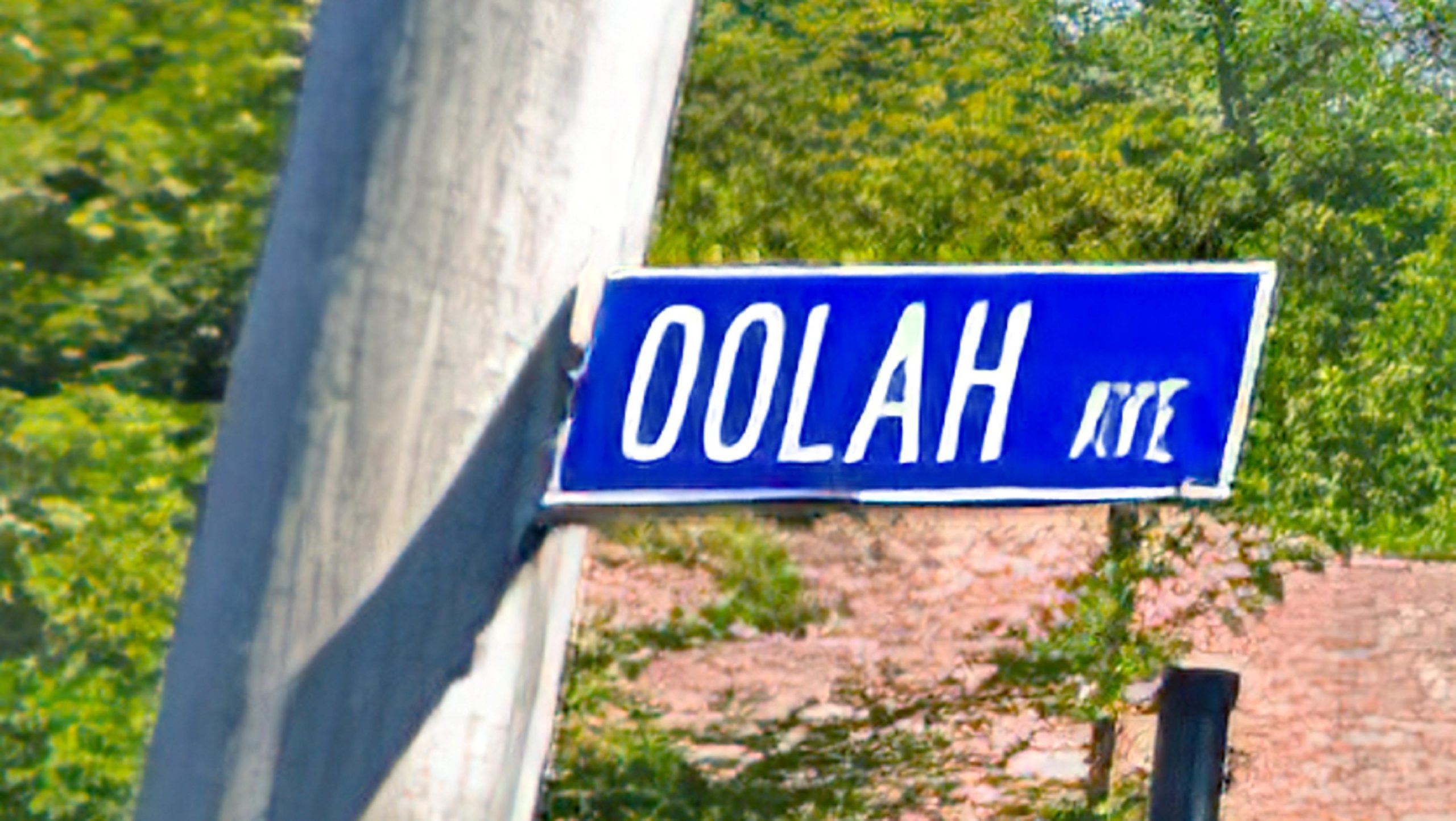
Oolah Avenue Named after the Abdallahs – “Oolah” is Syrian for Nicholas. Over the years, this street has been the home to waves of immigrants – Irish, Polish, Lithuanian, Italian, Portuguese, Brazilian, Egyptian, and Ecuadorian called this street home. At one time, Matt Drummey lived here and was known for the cellos he made by…
-
Dean Street to Oolah Avenue
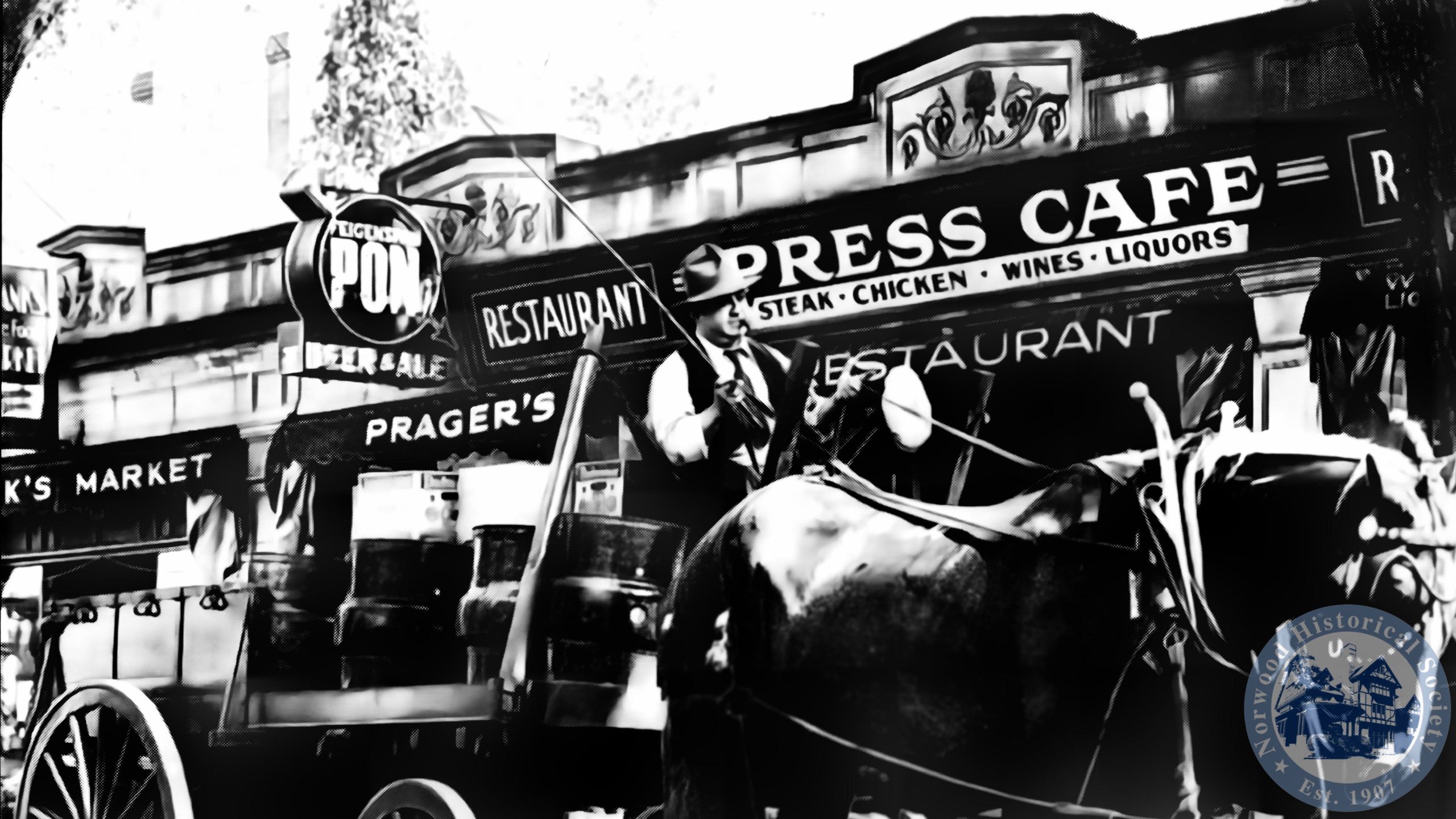
Temple Shaare Tefilah – 935 Washington Street Although this building is located about a quarter of a mile north of Dean Street, it was an important place for many of South Norwood’s Jewish population. In 1908, seventeen Jewish families purchased a Torah and organized this temple. Initially they did not have a building of their…
-
Norwood’s Polish Immigrants
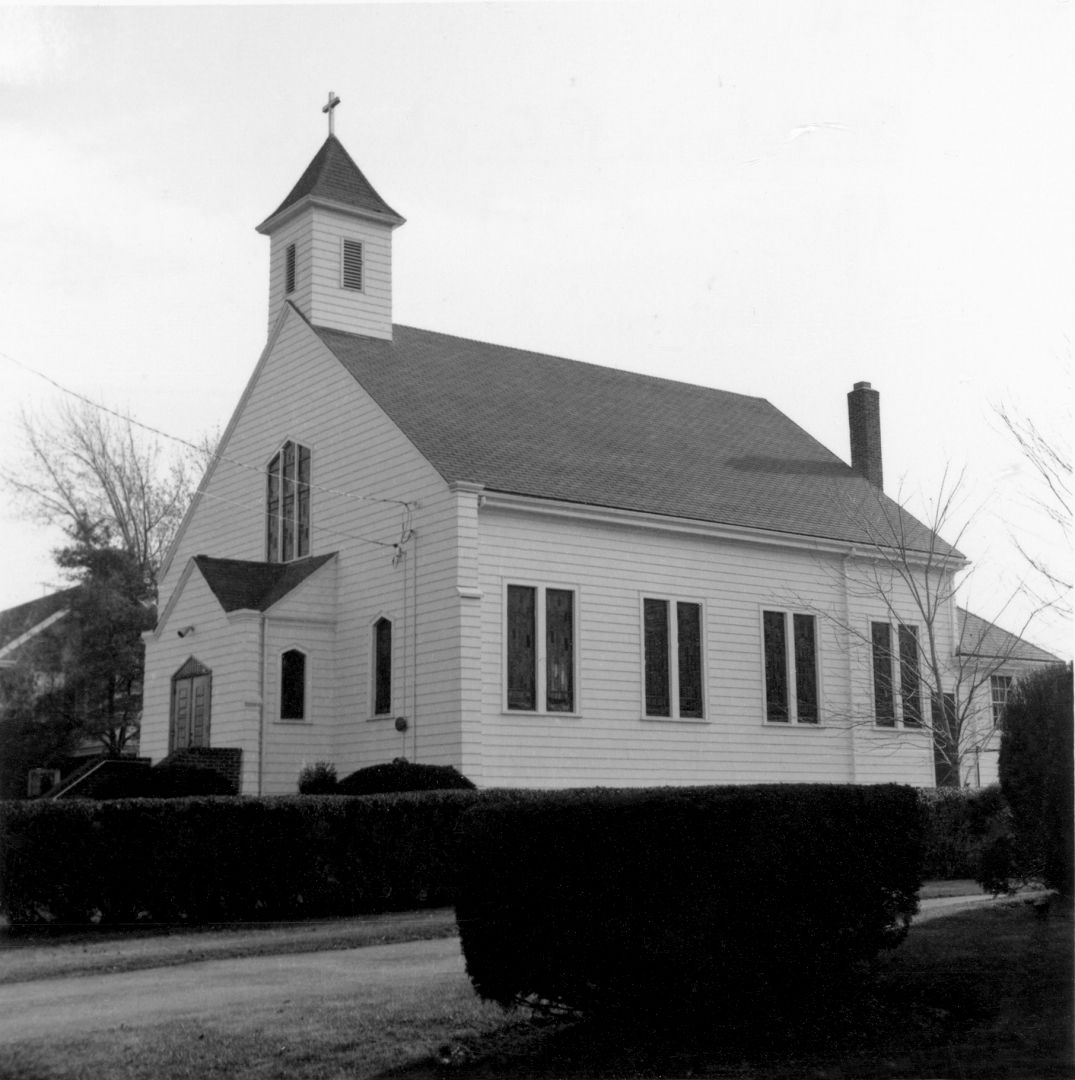
The Polish share much of their history and culture with the Lithuanians. Their long connection started in 1386 Lithuania’s Grand Duke Jogaila married Queen Jadwiga, of the Kingdom of Poland, then in 1569, the Polish-Lithuanian Commonwealth was formally formed. This Commonwealth was initially known for its ethnic diversity as well as religious freedom, but as…
-
Norwood’s Italian Immigrants

In over forty years, between 1880 and 1920 over four million Italians began arriving in The United States, many coming from the poor agricultural towns located in Mezzogiorno region (the “boot” area). Those who came to Boston settled in the North End. As early as 1905, Italian immigrants were settling in South Norwood. Like the…
-
Norwood’s Lebanese-Syrian Immigrants
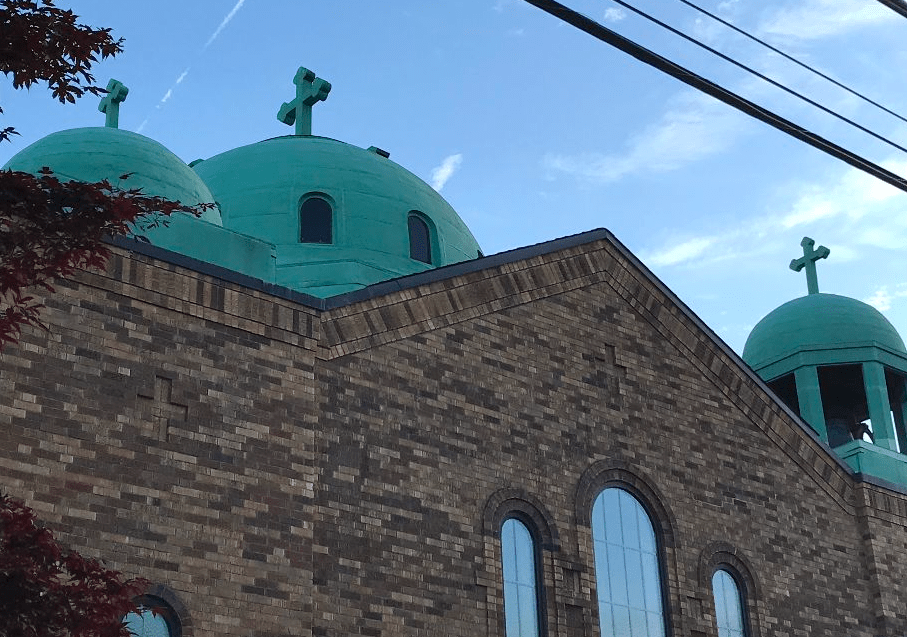
Syrians had been arriving in Massachusetts since the late 1880s. Many came from what is today, the countries of Lebanon and Syria, and these immigrants were mostly Christian. Traditionally, this area was a largely agricultural region. They settled in Boston where they found work as peddlers, lace makers, and in many of the area’s manufacturing…
-
Norwood’s Lithuanian Immigrants
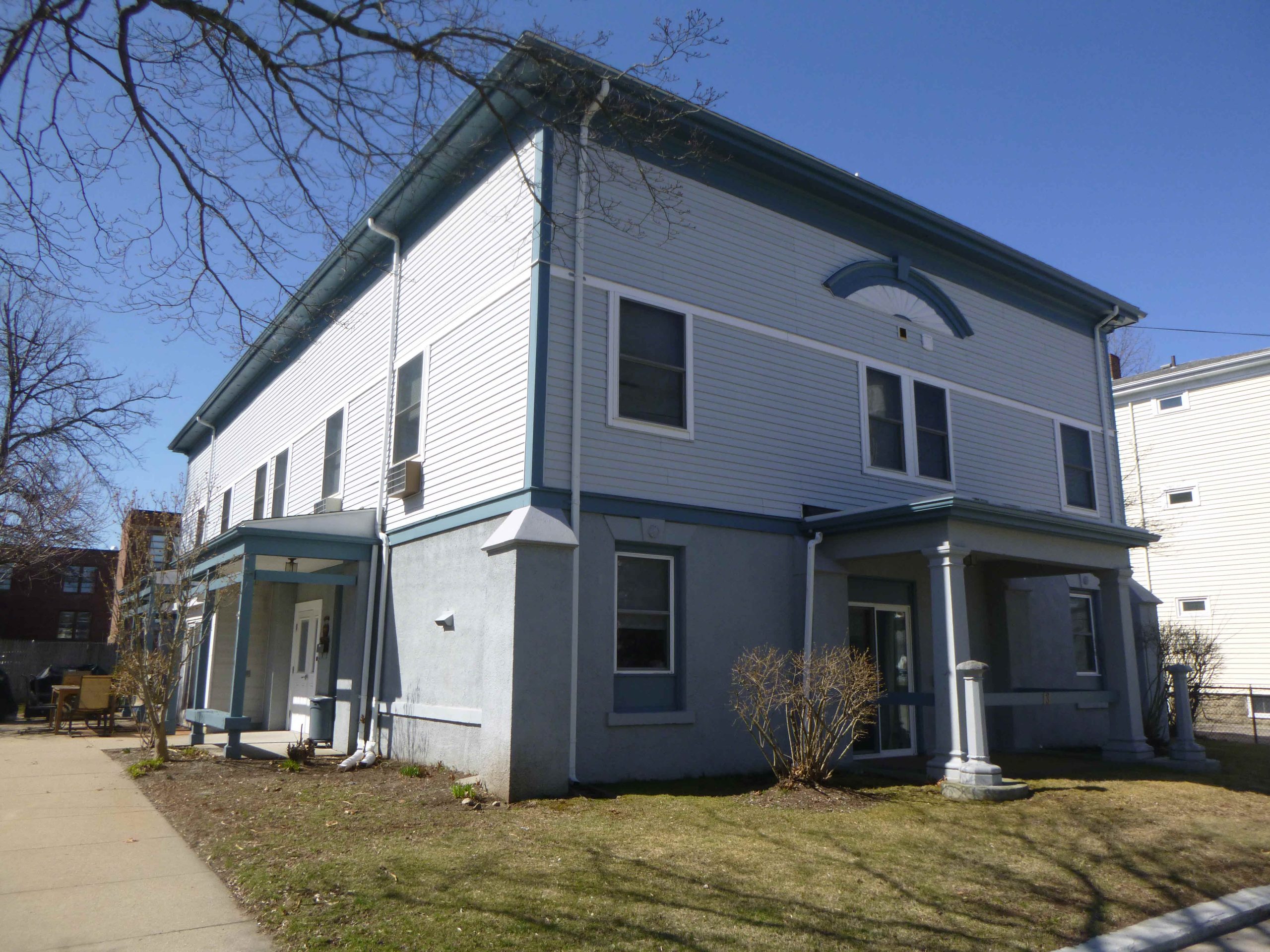
The history of Lithuania is long and complicated, but it needs to be understood as its roots illustrate when and why Lithuanians came to the United States. In 1795, The Polish-Lithuanian Commonwealth fell and was incorporated into Russia. The Commonwealth, which was made up of the Kingdom of Poland and the Grand Duchy of Lithuania,…
-
Norwood’s Portuguese Immigrants

The Portuguese began arriving in Massachusetts in the late 1800s, many coming from fishing villages in the Azores. They created Portuguese communities in Boston and Cambridge. In the late 1950s, Portuguese immigrants began settling in South Norwood, many finding homes in some of the triple-deckers in the area, but most arrived in the early 1970s.…
Discover more from Norwood Historical Society
Subscribe to get the latest posts sent to your email.