
“Generally, the program this year is running much more smoothly than last year,” administrative assistant for student affairs George Usevich said of Norwood High School’s open campus system as it enters its second year.
To an outside observer, the school of 1,724 students appears to be operating efficiently, with pupils busily moving between classes or congregating on the front steps. However, whether the term “open” accurately applies to the campus is increasingly debatable as administrators tighten regulations and structure.
Tightened Rules and Corridor Restrictions
Last year’s open campus plan—an extended-day arrangement designed to maximize facility use by adding two daily periods and granting students greater responsibility for their personal and educational development—encountered growing pains, particularly regarding hallway congestion.
To combat this, the school administration compiled some 65 improvement proposals over the summer, several of which have already been implemented:
- Corridor Bans: Main corridors are now strictly off-limits to students except for a five-minute window at the beginning and end of each class period. Teachers are assigned specific corridor duty to challenge lingering students. The rule is partially lifted only during inclement weather. Usevich noted that this policy has successfully resulted in “less commotion, less distraction to teachers.”
- Sophomore Restrictions: Sophomores have been virtually eliminated from open campus privileges by having their classes scheduled exclusively during periods three through nine, though they may attend morning school activities. A special orientation day was held for sophomores this year, featuring addresses by faculty, student council members, and guidance officers, alongside a detailed review of the mandatory student-parent open campus contracts.
- Discipline and Attendance: While disciplinary restriction times have been reduced in some cases, a strict new attendance policy denies course credit to any student missing 25 percent of class meetings unless absences are explicitly substantiated by a doctor. The policy has created a heavy record-keeping load currently under review by assistant principals.
Student reaction to the tightened controls is mixed. While some appreciate the order, a senior remarked, “The kids think it’s stupid,” while a junior added, “I kind of resent it because I don’t really need to be controlled like that. But I guess it is easier on the teachers.”
Parking remains an ongoing headache, with student parking restricted to an inadequate area near the tennis courts. Nonetheless, Usevich expressed sympathy for student drivers: “With 1,724 kids, an element in the school population definitely needs cars, for work, to get home, to do errands.”
Expanded Seminars, Film Programs, and Community Involvement
Despite increased regulation, the academic and enrichment programs have expanded significantly:
- Seminars Replacing Minicourses: Last year’s minicourses have returned under the new name “seminars,” running continuously during periods three through eight. Offerings include an accounting seminar featuring Gus Sacre of Bird and Son, a stock market investing seminar paired with economics, a law enforcement seminar linked with law and sociology, and an auto mechanics course in conjunction with industrial arts.
- Cultural and Contemporary Programs: A packed schedule of enrichment events includes a visit from a United Farm Workers speaker and the screening of “Decision at Delano”, musical performances by the Navy and Army bands, and informational visits from all military branches on Armed Forces Day. Film programs shown in the auditorium feature sports, travel, and animal shorts—though a classic Charlie Chaplin movie proved to be the most popular drawing card.
- Student Council Reform: Student council elections have been modified so that all delegates are elected at large, with any interested student permitted to place their name in nomination—a change Usevich said has fostered a more committed council membership.
As part of the state Department of Education’s annual evaluation mandate, the school has formed 12 committees to review various aspects of the program. The first Open Campus Evaluation Day is scheduled for October 20 from 1:00 to 3:00 p.m. at the high school, with history teacher Theodore A. Curtin serving as evaluation day chairman.
Archival Note: This article has been dynamically reconstructed from the original public record print archives of the Patriot Ledger
-
Norwood School Committee Votes to Relocate School Administration Offices-August 1, 1974
The Norwood School Committee voted 5-2 to relocate central school administration offices to the Winslow School, pending cost estimates from Superintendent Philip O. Coakley.
-
Uncertainty Looms Over Norwood Junior High South Opening Date-July 12, 1974

After three years of double sessions following a 1971 fire, Norwood officials faced the possibility of further delays for the new Junior High South.
-
Unfinished Junior High To Open On Schedule-July 8, 1974

Discover the construction history of the $4.5 million Junior High South project in 1974, detailing the challenges faced during the transition from the old Washington Street school.
-
School Board Rejects ‘Floating Principal’ Proposal-July 03, 1974

The Norwood School Committee held a contentious session on the evening of July 2, 1974, where, following two weeks of deliberation and a lengthy 90-minute executive session, the board voted 5-1 to reject a proposal to create a new administrative position titled “floating principal.“ The concept, initially championed by Committee Member Joseph M. Pentowski, was…
-
School Drop-In Centers Possible In Fall-June 24, 1974
Citing summer custodial constraints and a lack of air conditioning, town officials vote to survey local youths during the summer to prepare for a fall launch.
-
Superintendent Philip O. Coakley Reacts to NTA Grievance Statement Regarding Cleveland School Postings-November 15, 1973
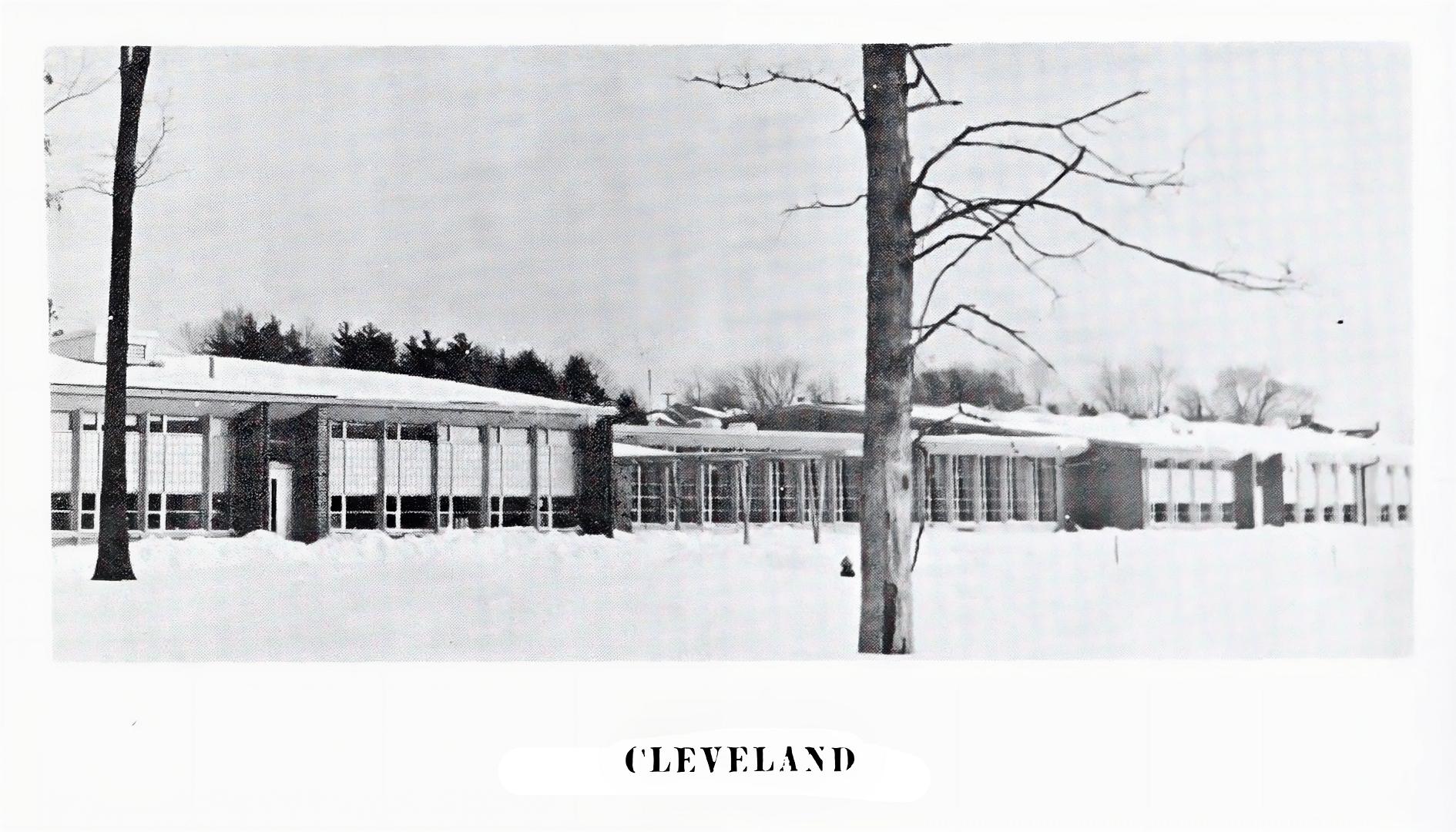
School Superintendent Objects to Public Characterization of Contract Settlement Concerning Unposted Faculty Vacancies NORWOOD – Tensions surfaced between the school administration and teachers’ representatives following a recent grievance settlement issued by David Reagon, chairman of the professional rights and responsibilities committee of the Norwood Teachers Association (NTA). Reacting during a school committee meeting on Tuesday…
-
School Committee Unanimously Approves Period of Silent Meditation Following State Legislative Act-October 25, 1973

Acting on a new state law permitting voluntary reflection, the Norwood School Committee unanimously approved a daily period of silent meditation for local students and teachers.
-
Proposal Would Combine High School and Henry O. Peabody School Facilities-October 4, 1973

The School Committee reviews a preliminary proposal to combine Norwood High School and Henry O. Peabody School facilities for a new career development and vocational program.
-
Public Schools Face Delays and Possible State Action on Mandatory Hot Lunch Program-August 31, 1973

Parents of elementary school students in Norwood will need to continue packing brown-bag lunches for the start of the academic year. School Superintendent Philip O. Coakley announced that the town will fail to meet the state-mandated September deadline for implementing a universal public school hot lunch program, exposing the municipality to potential legal action by…
-
Norwood High School Refines Open Campus Program in Second Year of Operation-October 2, 1972

Entering its second year, Norwood High School’s open campus system sees tighter corridor rules, sophomore restrictions, and expanded academic seminars while undergoing state-mandated evaluation.
Discover more from Norwood Historical Society
Subscribe to get the latest posts sent to your email.