
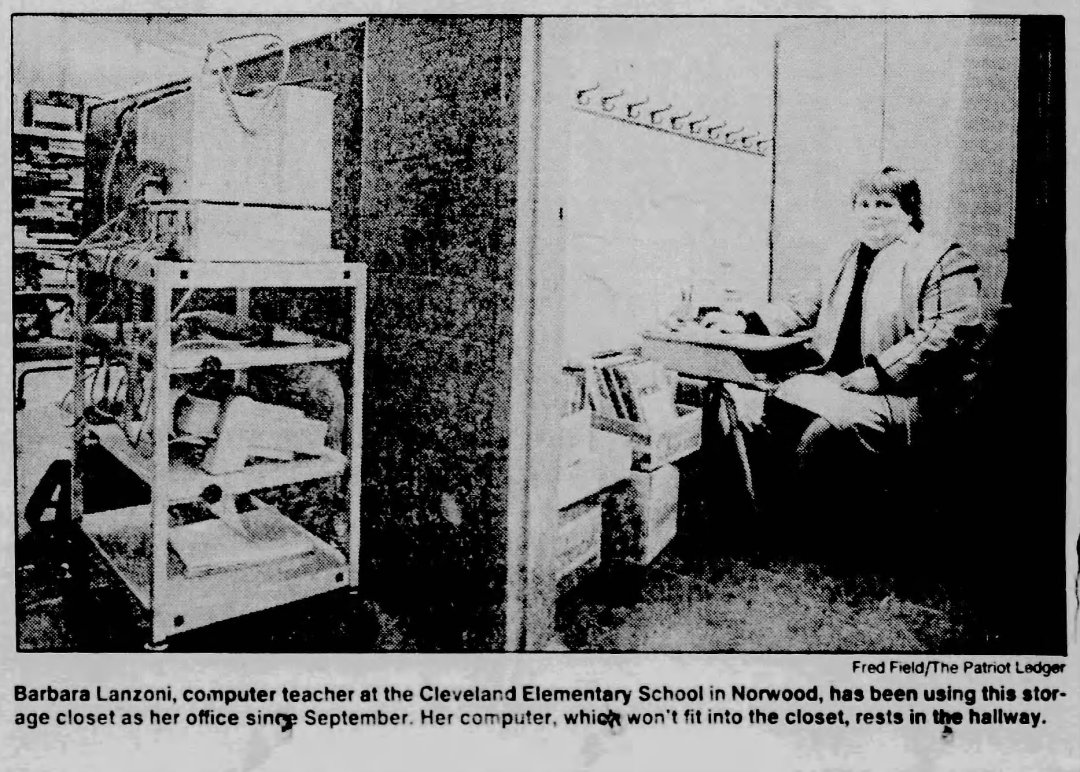
Computer Teacher Operates Out of Converted Storage Closet at Cleveland School
Overflowing classrooms and creative space conversions have become the norm across Norwood’s elementary school system, exemplified by Barbara Lanzoni, computer teacher at the Cleveland Elementary School. As reported by Patriot Ledger staff reporter Stephen Walsh (with photography by Fred Field), Lanzoni has been forced to use a converted storage closet as her office since September. Because her computer will not fit inside the tiny space, the machine sits out in the hallway.
“It’s either the computer or me,” Lanzoni joked, noting she must step out of the closet into the hallway to teach. “I get jokes all the time, everyone always kidding me about coming out of the closet. I’m lucky to have it; it seems there’s no space in any elementary school.”
A tour of the 29-year-old, single-story brick and cinderblock Cleveland School—the largest of the town’s five elementary facilities—revealed space at an absolute premium. In one wide hallway, makeshift partitions braced by file cabinets have been erected to carve out areas for the gifted and talented student program, the music office, a preschool, physical therapy, and remedial education.
Staff members acknowledged the drawbacks of the layout. Early childhood specialist Marcia Krasnow noted, “The partitions don’t work as well as walls. The sound certainly carries farther. Partitions are used in large areas, but the noise can be distracting.” Cleveland Principal William Kenny explained that staff carefully positioned the partitions and file cabinets to give students receiving remedial or physical therapy as much privacy as possible. Nevertheless, ambient noise from band practice and neighboring classes frequently filters through. Band director Daniel Troderman added, “In years past, we had a room to ourselves, but now we’re out in the open, and the sound can travel… The kids don’t notice the overcrowding. The teachers notice the effects [of] any distractions.”
System-Wide Space Crunch and Sixth-Grade Debate
Overcrowding is not isolated to the Cleveland facility:
- Oldham Elementary School: Will require 17 classrooms next September, up from its current 16.
- Callahan Elementary School: Utilizes all 15 classrooms, forcing the school nurse and another staffer to continue sharing the secretary’s office, with zero space available for computer instruction or instrumental music.
- Prescott and Balch Elementary Schools: Currently utilize every available classroom.
School officials attribute the crunch not only to rising enrollment—climbing steadily from 1,571 students in 1983 to a projected 1,816 students by 1989—but also to expanding curricula. “It’s all these extras—the computer program, preschool, state-mandated remedial education; the extras that we either want or have to provide that cause the space problems,” Principal Kenny said.
Amid the elementary squeeze, the Norwood League of Women Voters is urging the school committee to reconsider its decision and move the sixth grade to the junior high next year. Without this shift, elementary schools will remain severely jammed while the junior high school—having a capacity of 865 students—is slated to host only 474 students next September, sitting nearly half-empty.
Archival Note: This article has been dynamically reconstructed from the original public record print archives of the Patriot Ledger
-
Extra $10,000 Approved for High School Renovation-August 7, 1986
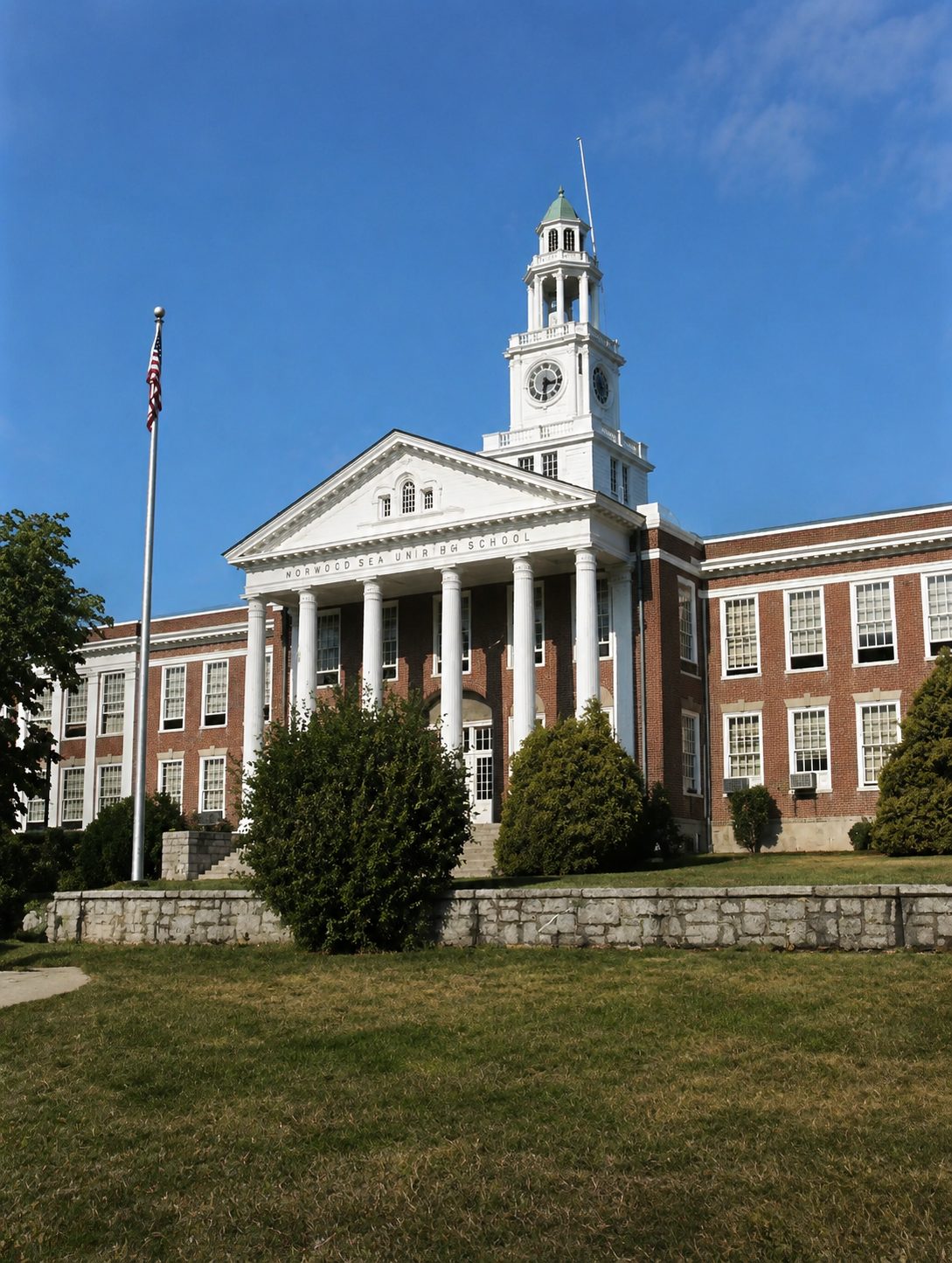
Amid project delays tied to Anchor Construction Corp., the Norwood Finance Commission voted 3-1 to approve an extra $10,000 for KL&Q Architects to oversee the completion of the $5 million high school renovation.
-
School Opening Delayed for High School Students-August 27, 1985
Norwood high school classes are delayed to September 9 as students temporarily relocate to Junior High North during a $5 million renovation project.
-
High School Students to Relocate to Vacant Junior High School North-August 21, 1985
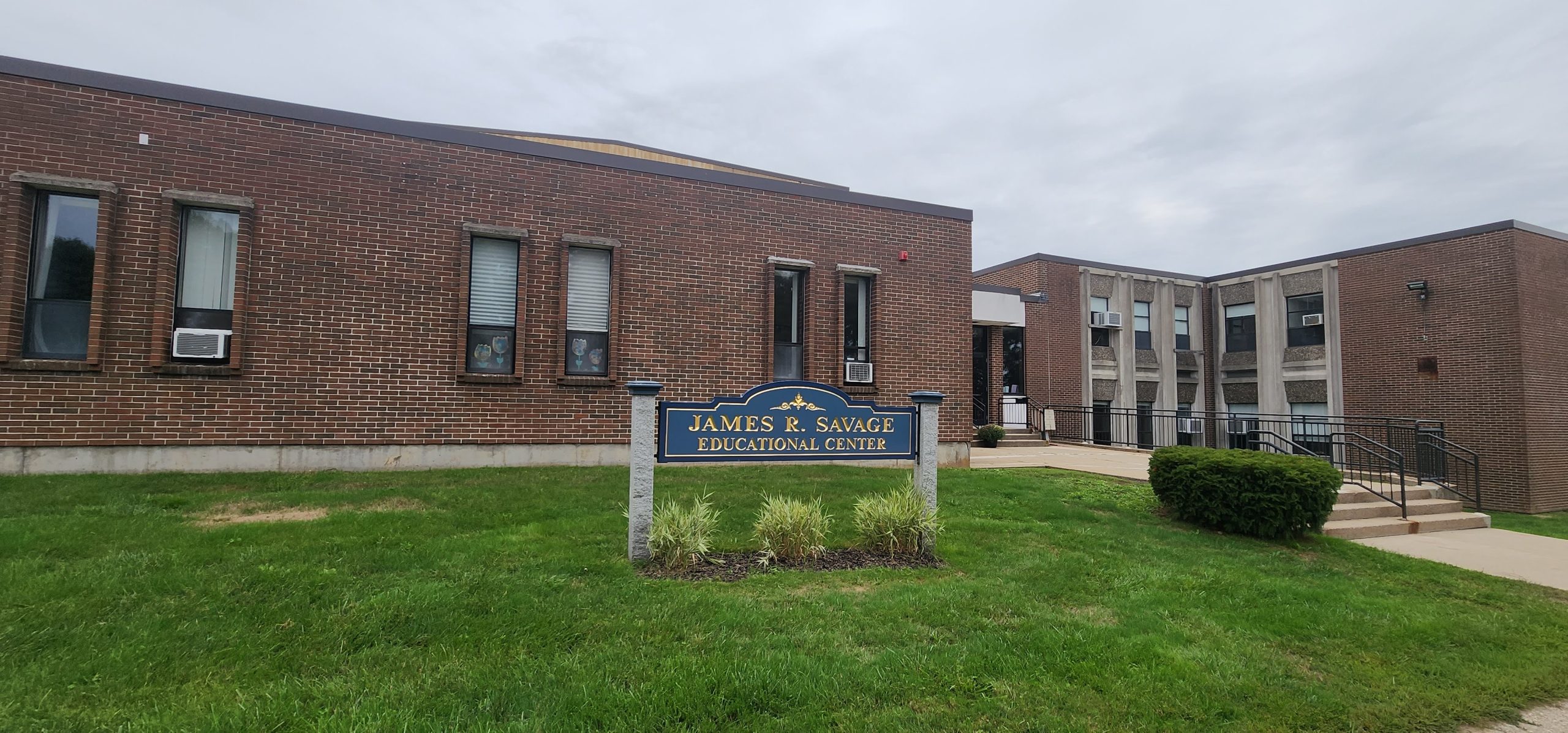
Citing extensive construction delays by Anchor Construction Co., Norwood school officials voted to move nearly 950 high school students to Junior High School North for the start of the school year.
-
Norwood School Officials Weigh Alternatives as Renovation Delays Threaten High School Opening-August 8, 1985
Norwood school officials discussed seven alternatives for opening day if $5 million high school renovations are not finished, while firmly rejecting double sessions.
-
Norwood Rejects Rockland Offer of Part Payment-July 16, 1985
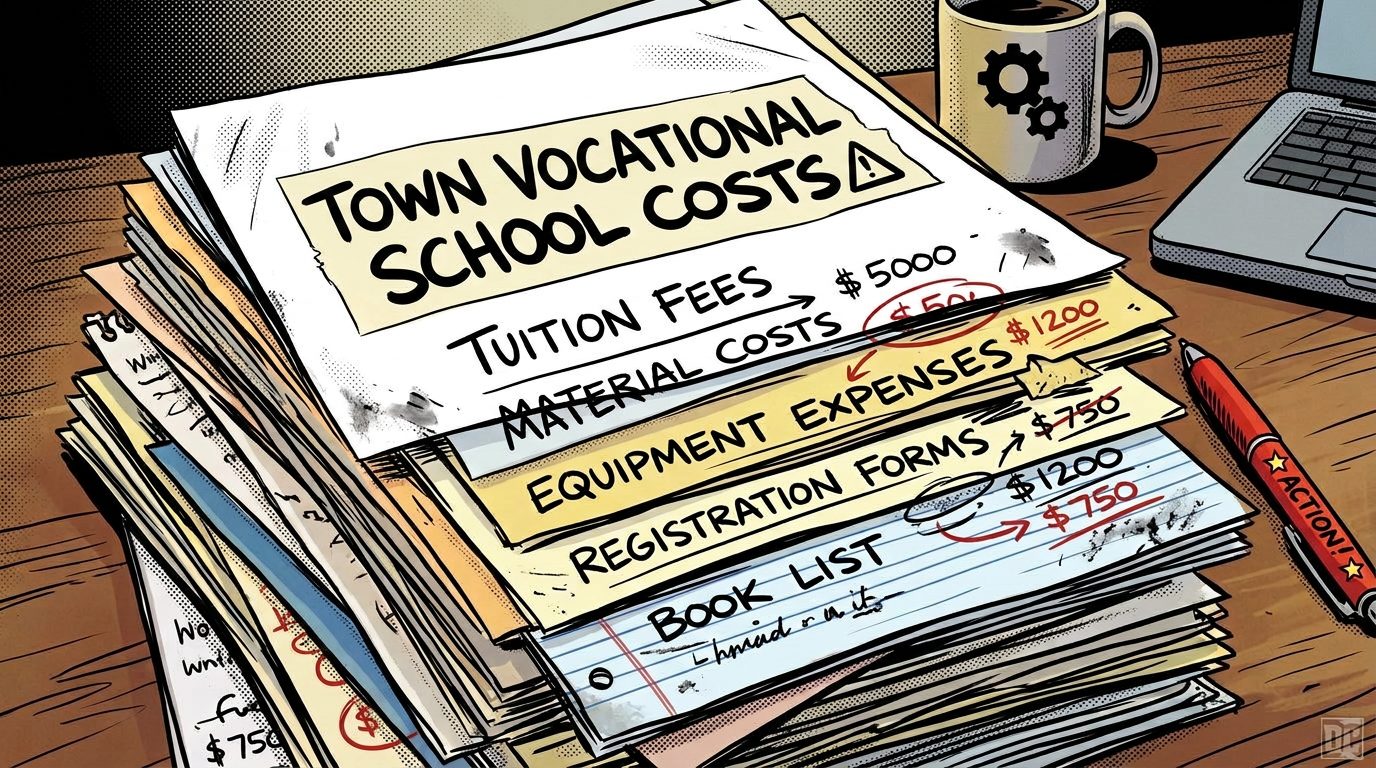
The summer of 1985 was a time of great economic uncertainty in Massachusetts, with the state facing significant budget deficits and high unemployment rates. However, amidst this backdrop of fiscal woes, the town of Norwood found itself embroiled in a dispute with its neighboring municipality, Rockland, over tuition fees for vocational school students. The issue…
-
Norwood High School Implements Total Smoking Ban-July 3, 1985
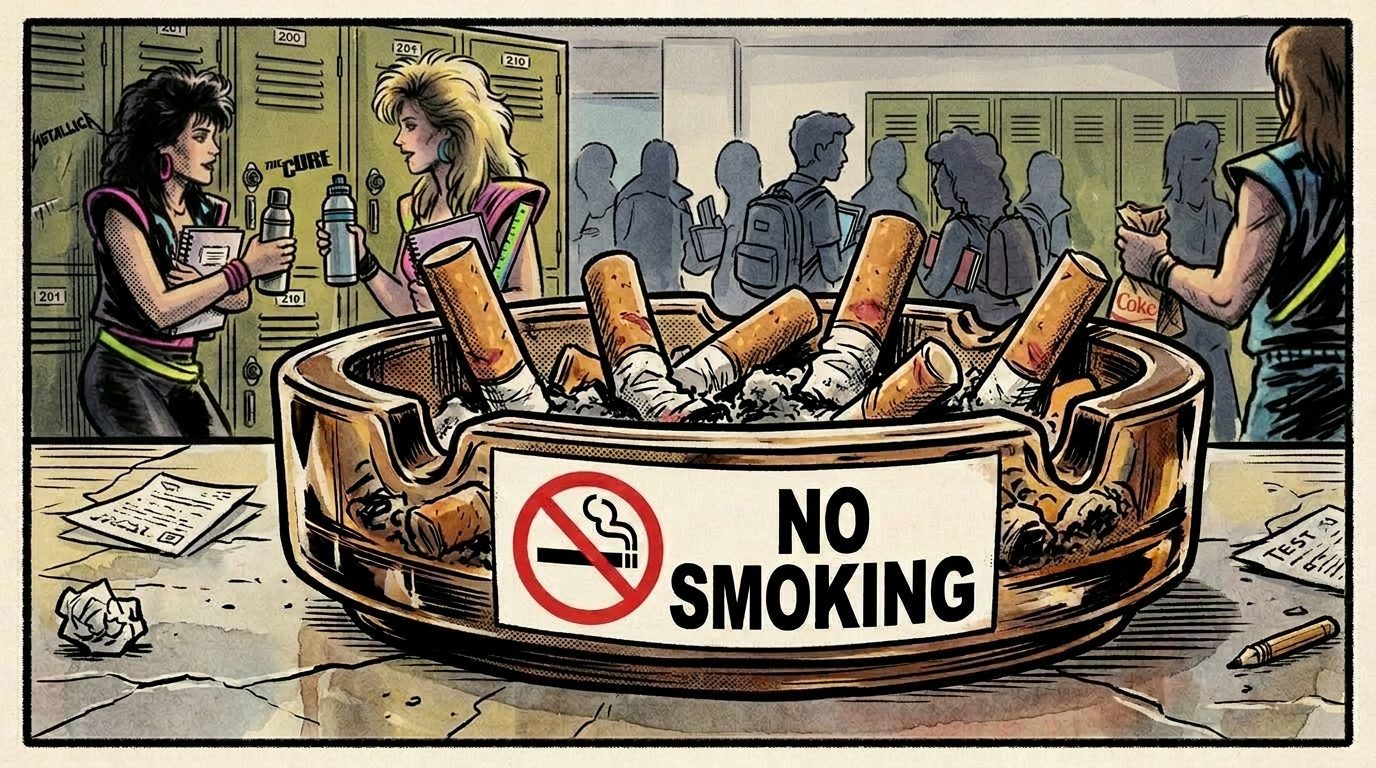
In July 1985, the Norwood School Committee unanimously approved a total smoking ban at Norwood High School to begin in September, prioritizing the health of its students.
-
Recess is a Popular Subject Among Crop of First Graders-September 6, 1984
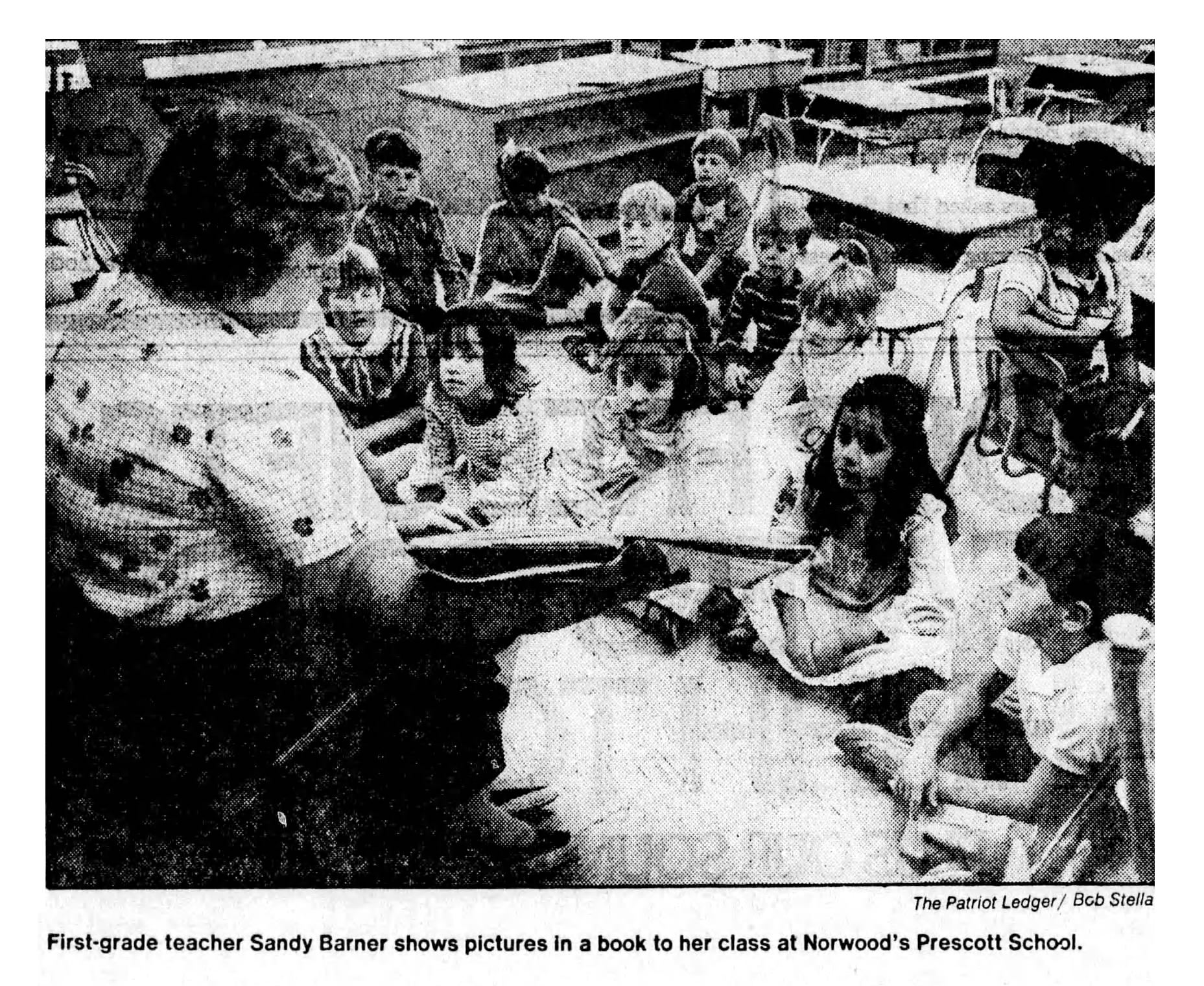
First-grader Amy Frigulietti sat at her desk yesterday, reaching inside to rearrange her freshly sharpened pencils, pens, and a notebook featuring a picture of Michael Jackson on the cover. Like many of her peers across Norwood, 6-year-old Amy was eager for the new term in teacher Sandy Barner‘s class at Prescott Elementary School, though she…
-
Norwood Kindergarten Bus Routes Announced for Fall Term-September 9, 1983
School officials have officially released the comprehensive morning and afternoon bus route schedules for Norwood kindergarten students, with classes set to begin on Monday. Schedule and School-Specific Route Details The morning kindergarten session commences at 8:40 a.m. (with first pickups beginning at 8:20 a.m. and dismissal at 11:15 a.m.), while the afternoon session begins at…
-
Rain-Damaged Cleveland and Prescott Schools Expected to Be Repaired by September-August 17, 1983
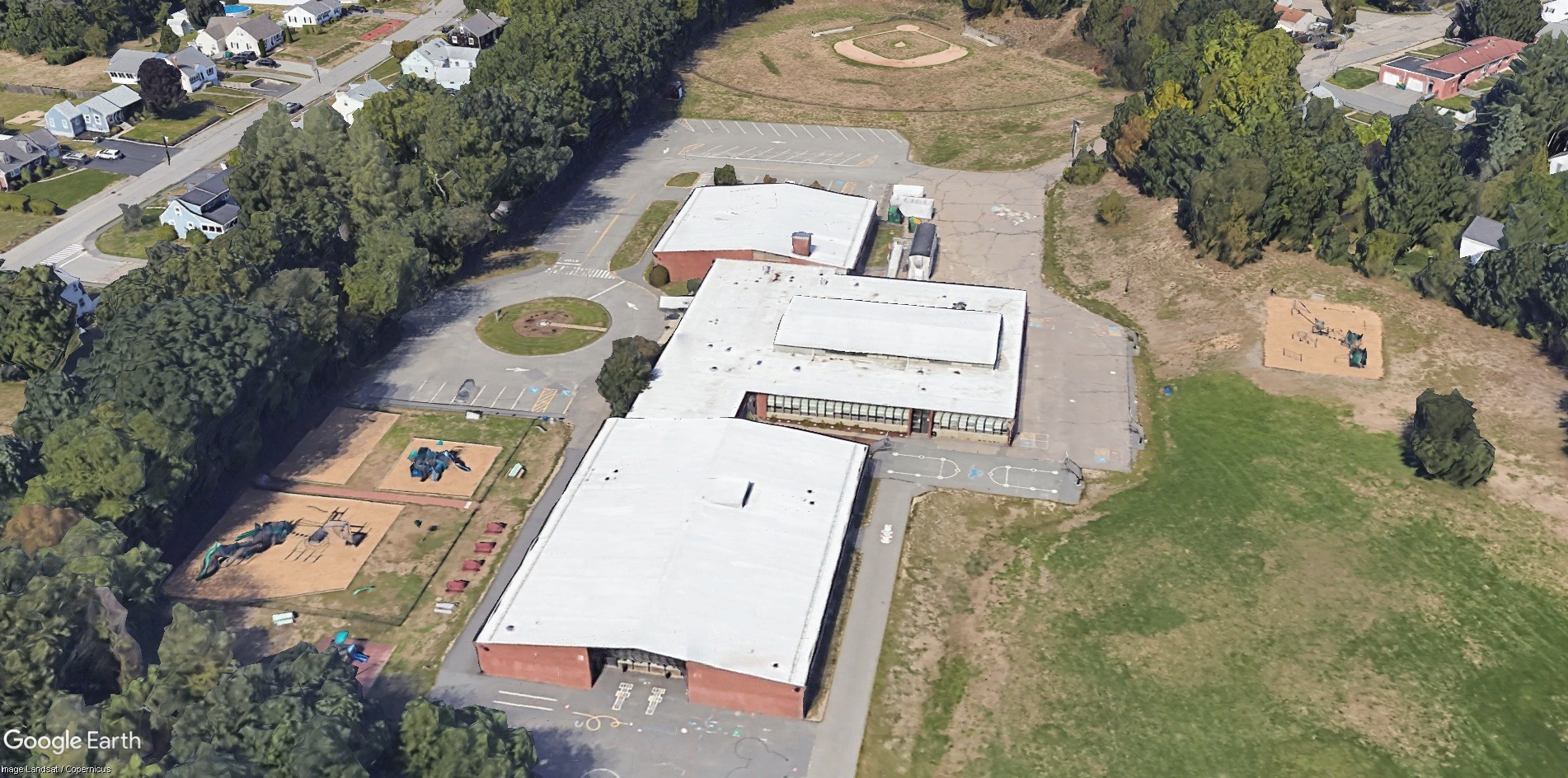
Unexpected rainstorms caused roof leaks at the Cleveland and Prescott schools during active construction, though officials expect full contractor-funded repairs before the September opening.
-
School Committee Warns of Political Firestorms Over Forthcoming School Closing Study-October 21, 1981

Praising the progress of a long-range school planning study, Norwood School Committee members warned that recommendations regarding school closures could spark emotional political debates in January.
Discover more from Norwood Historical Society
Subscribe to get the latest posts sent to your email.