
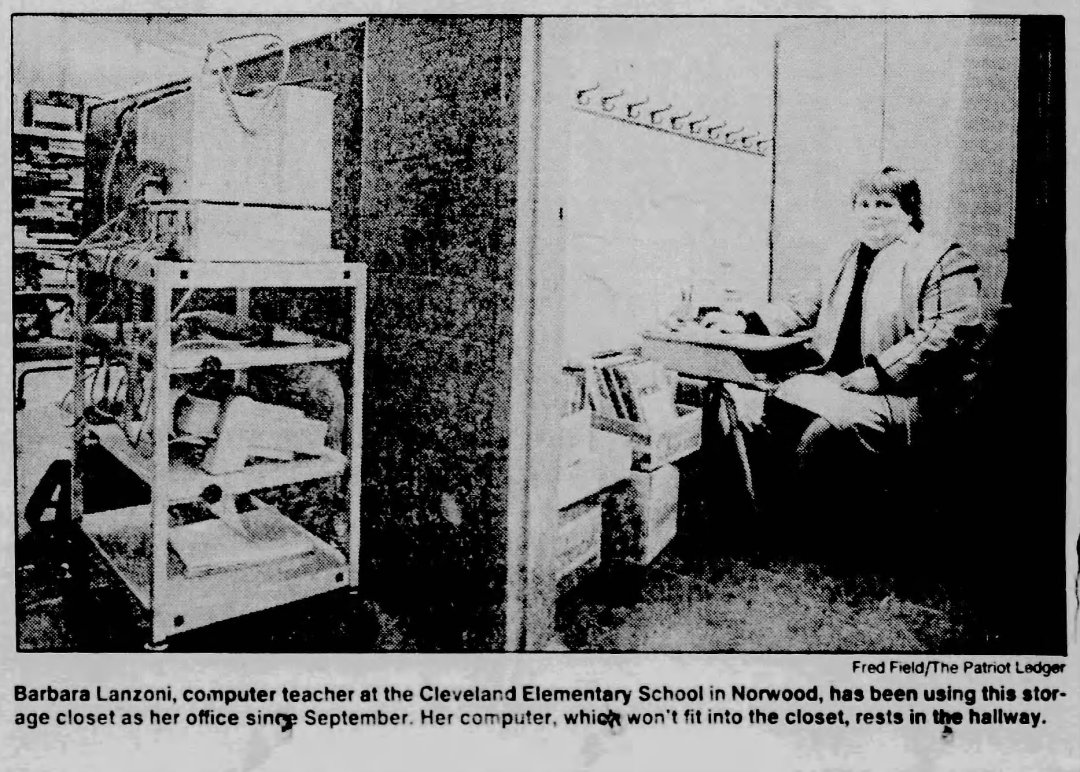
Computer Teacher Operates Out of Converted Storage Closet at Cleveland School
Overflowing classrooms and creative space conversions have become the norm across Norwood’s elementary school system, exemplified by Barbara Lanzoni, computer teacher at the Cleveland Elementary School. As reported by Patriot Ledger staff reporter Stephen Walsh (with photography by Fred Field), Lanzoni has been forced to use a converted storage closet as her office since September. Because her computer will not fit inside the tiny space, the machine sits out in the hallway.
“It’s either the computer or me,” Lanzoni joked, noting she must step out of the closet into the hallway to teach. “I get jokes all the time, everyone always kidding me about coming out of the closet. I’m lucky to have it; it seems there’s no space in any elementary school.”
A tour of the 29-year-old, single-story brick and cinderblock Cleveland School—the largest of the town’s five elementary facilities—revealed space at an absolute premium. In one wide hallway, makeshift partitions braced by file cabinets have been erected to carve out areas for the gifted and talented student program, the music office, a preschool, physical therapy, and remedial education.
Staff members acknowledged the drawbacks of the layout. Early childhood specialist Marcia Krasnow noted, “The partitions don’t work as well as walls. The sound certainly carries farther. Partitions are used in large areas, but the noise can be distracting.” Cleveland Principal William Kenny explained that staff carefully positioned the partitions and file cabinets to give students receiving remedial or physical therapy as much privacy as possible. Nevertheless, ambient noise from band practice and neighboring classes frequently filters through. Band director Daniel Troderman added, “In years past, we had a room to ourselves, but now we’re out in the open, and the sound can travel… The kids don’t notice the overcrowding. The teachers notice the effects [of] any distractions.”
System-Wide Space Crunch and Sixth-Grade Debate
Overcrowding is not isolated to the Cleveland facility:
- Oldham Elementary School: Will require 17 classrooms next September, up from its current 16.
- Callahan Elementary School: Utilizes all 15 classrooms, forcing the school nurse and another staffer to continue sharing the secretary’s office, with zero space available for computer instruction or instrumental music.
- Prescott and Balch Elementary Schools: Currently utilize every available classroom.
School officials attribute the crunch not only to rising enrollment—climbing steadily from 1,571 students in 1983 to a projected 1,816 students by 1989—but also to expanding curricula. “It’s all these extras—the computer program, preschool, state-mandated remedial education; the extras that we either want or have to provide that cause the space problems,” Principal Kenny said.
Amid the elementary squeeze, the Norwood League of Women Voters is urging the school committee to reconsider its decision and move the sixth grade to the junior high next year. Without this shift, elementary schools will remain severely jammed while the junior high school—having a capacity of 865 students—is slated to host only 474 students next September, sitting nearly half-empty.
Archival Note: This article has been dynamically reconstructed from the original public record print archives of the Patriot Ledger
-
School Board Reverses Vote, Keeps NorWest Woods Pupils at Oldham-August 29, 1972
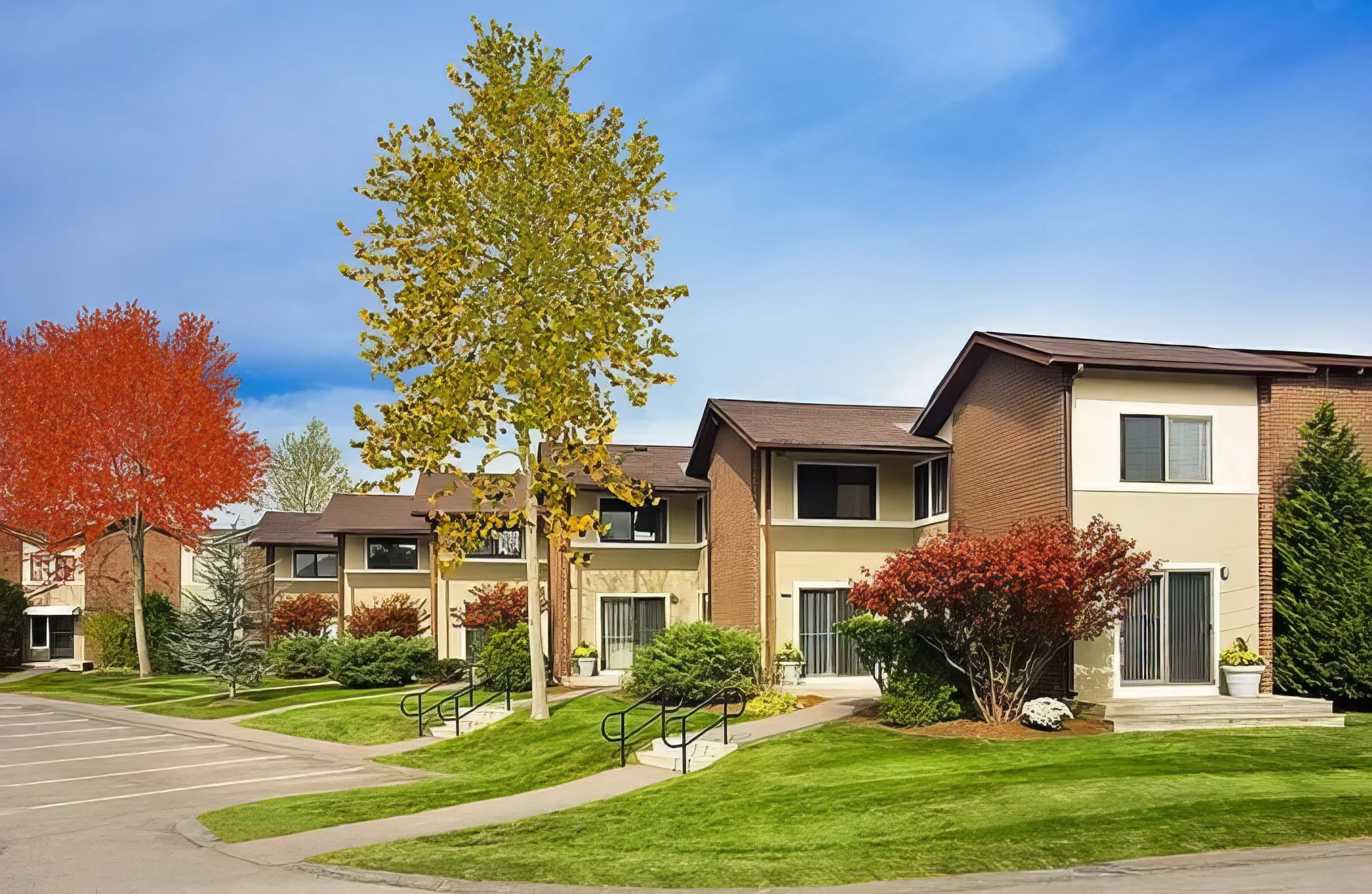
In a reversal of a previous decision, the School Committee has voted to keep 46 elementary school children from the Nor-West Woods apartment complex at the Oldham School, rescinding a July 5 vote that would have transferred them to the Shattuck School. Superintendent Dr. Philip O. Coakley explained that the committee revoted on the matter…
-
Norwood Sets $38 Tax Rate on Court-Ordered 100% Property Valuation for 1972-August 16, 1972

Announcing a 1972 tax rate of $38 per $1,000 under a court-ordered 100 percent property valuation, Assessor Chairman James J. Drummey concluded a major reassessment by Cole, Layer and Trumble.
-
Norwood Jr. High Offered Land At $9,500 An Acre-September 30, 1971
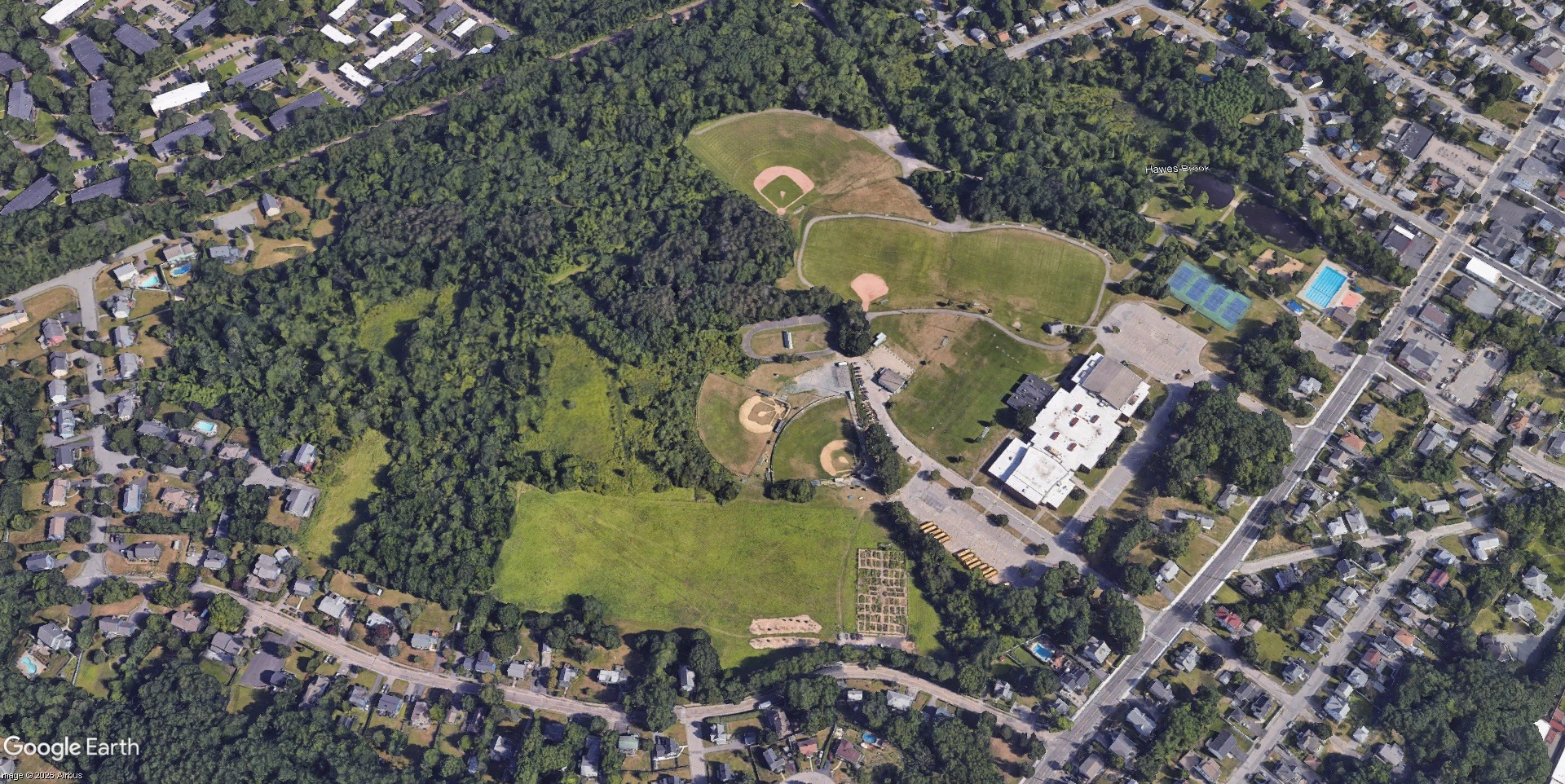
The Norwood School Committee recommends the Endean area in Walpole as the site for a new junior high school, facing sharp questioning from town meeting members over rising costs and site shifts.
-
Norwood High School Launches Innovative Open Campus Plan for Fall Term-September 8, 1971

Norwood High School opens the fall term by launching an innovative open campus and extended-day program designed by Principal John F. Monbouquette to foster student responsibility.
-
Junior High Alternate Estimates Sought-June 25, 1971

A sharp debate divides Town Manager Walter Blasenak and finance officials over mounting unappropriated architectural fees for Boston design firms.
-
Schools Face Heating Oil Shortage for Upcoming Winter, While Band Camp and Library Art Programs Make Headlines-August 6, 1970
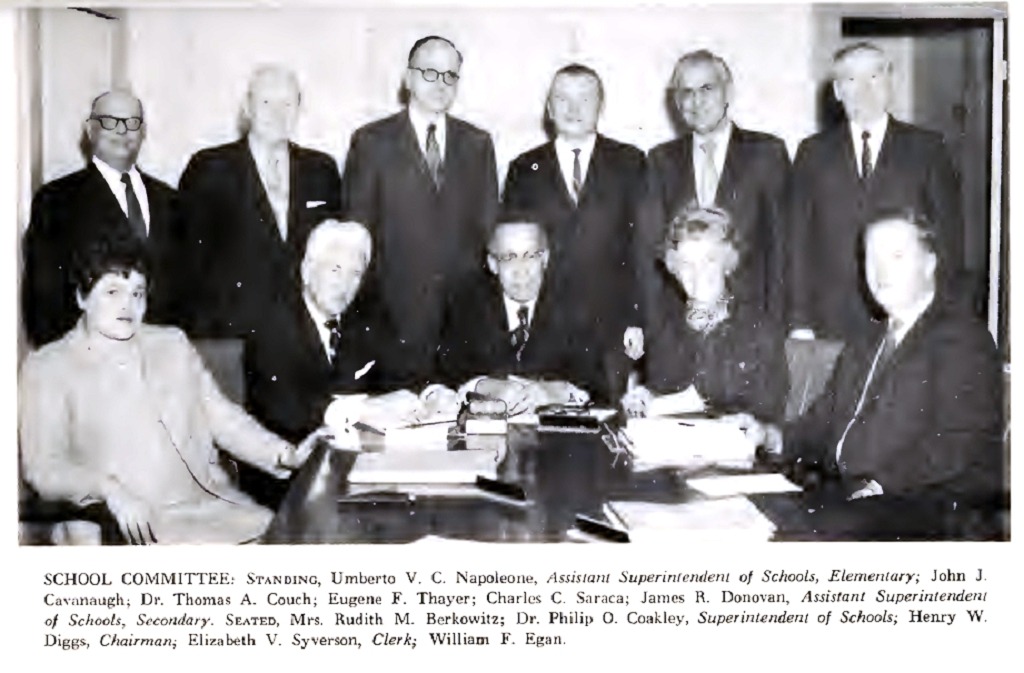
Superintendent Dr. Philip O. Coakley informed the Norwood School Committee that no companies submitted bids to supply 110,000 gallons of No. 5 heating oil for town schools due to quotas, shortages, and environmental regulations.
-
Bells Are Ringin’-July 3, 1970

The Norwood School Committee overhauled its student transportation system and faced an $8,000 wave of structural school vandalism in July 1970
-
Henry O. Peabody School of Practical Nursing Graduates 28 Students-October 13, 1969
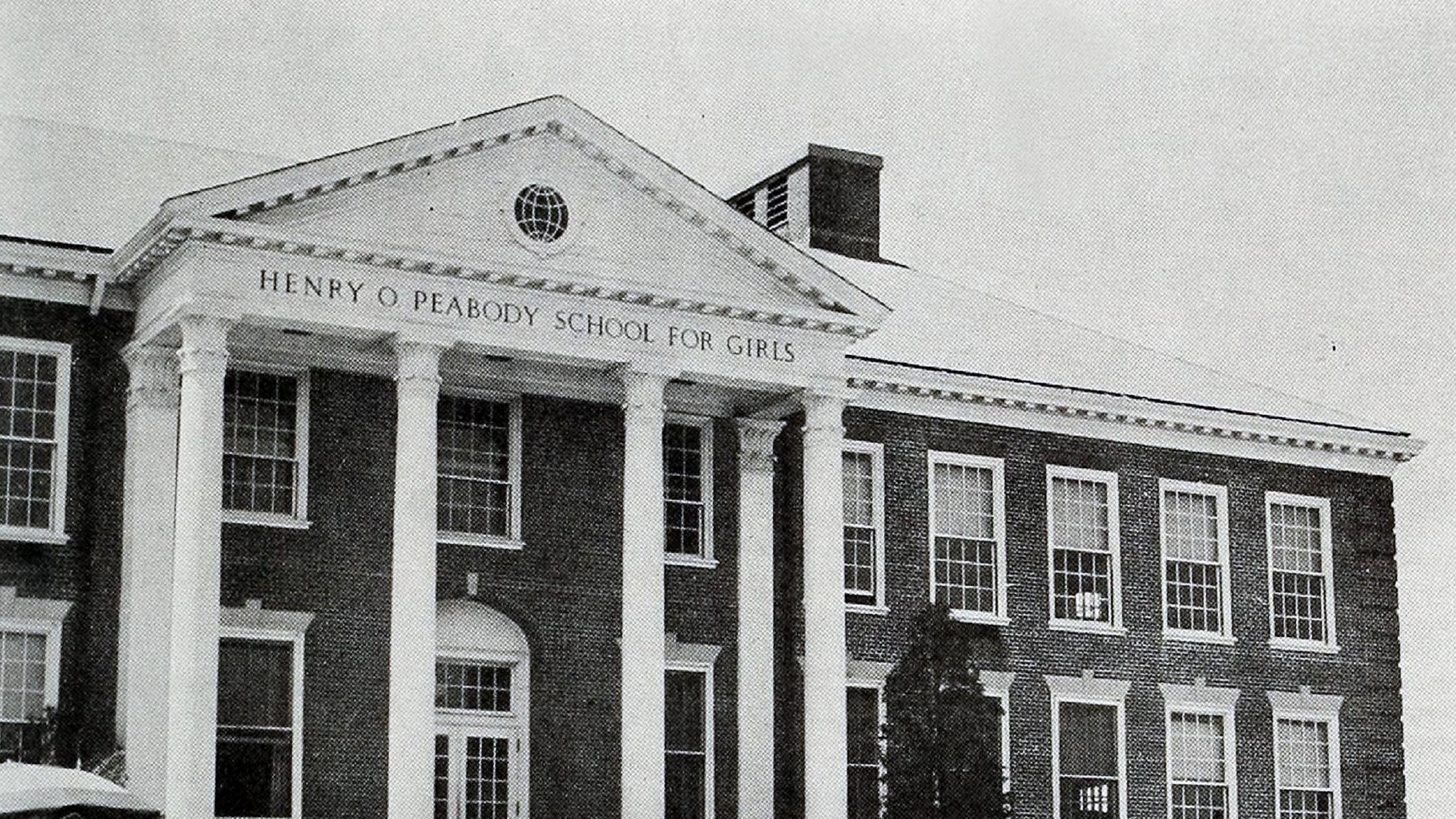
Twenty-eight practical nursing students graduate from Norwood’s Henry O. Peabody School, with special honors awarded to local standouts Gail Penza, Mary A. Paulin, and Grace Robinson.
-
Permanent Building Committee Suspends Planning For Norwood High Addition-September 5, 1969

The building committee pauses planning for a $6.1 million Norwood High School addition pending further review, while addressing low-bidding rules for school furnishings.
-
Almost 50% of Graduates Head To College-July 10, 1969
The Norwood High School guidance department released a significant report on July 10, 1969, detailing the educational future of the school’s 419 graduates. The data revealed that approximately 45 percent of the class planned to attend four-year colleges that fall, a figure the department noted was likely the highest percentage of four-year institution acceptances in…
Discover more from Norwood Historical Society
Subscribe to get the latest posts sent to your email.