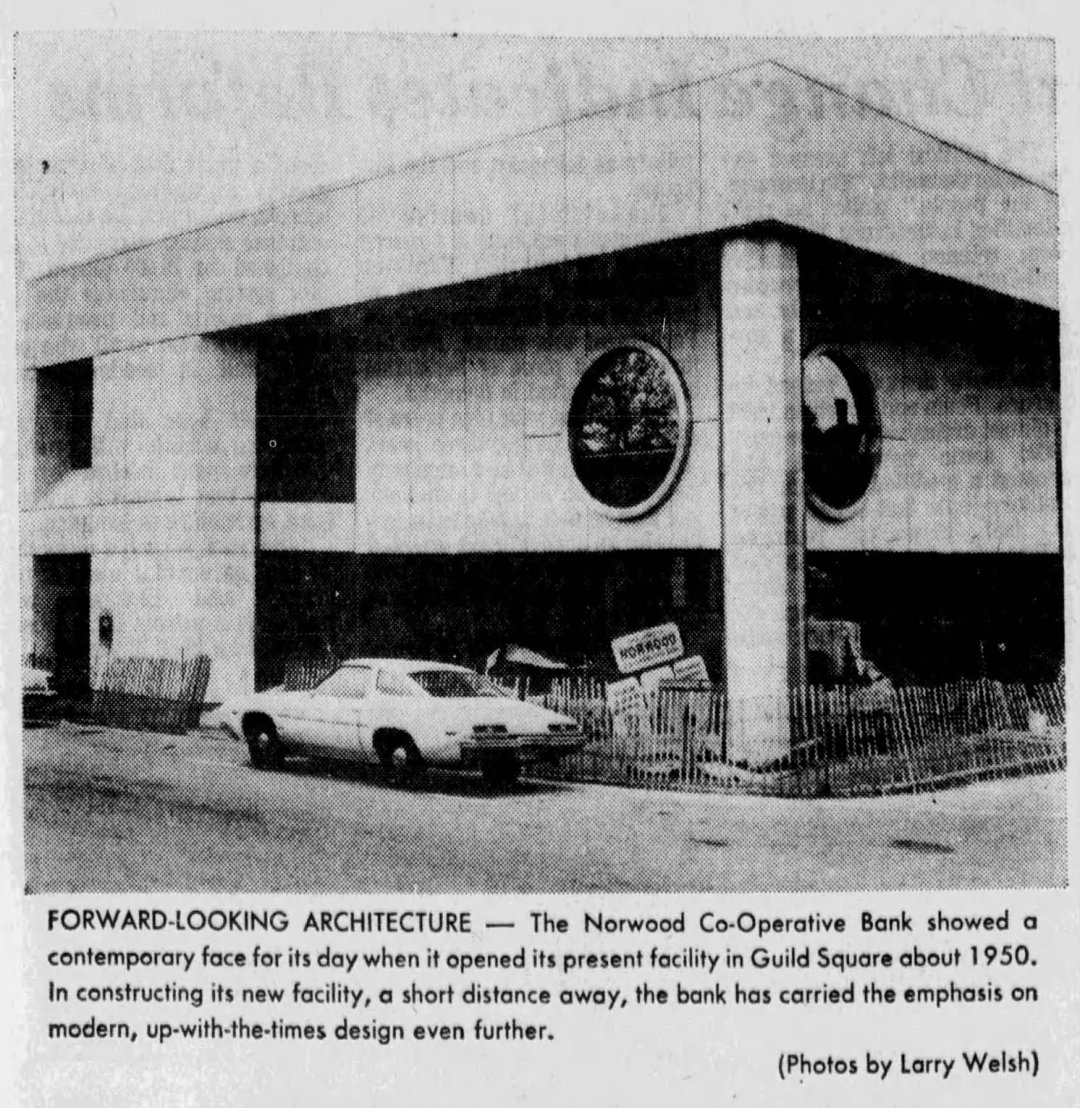
For decades, the Norwood Co-Operative Bank has proudly advertised itself as the ultimate “hometown bank”—a home-grown financial institution standing strong in a community where commercial banking is otherwise dominated by out-of-town branch offices.
When the bank completes its relocation to a strikingly modern, two-story headquarters at the corner of Central and Park Streets in late November, that connection to the community will become literal.
“Roots in the Ground of Norwood”
In one of the most imaginative architectural features of the $1 million-plus construction project, a sizable section of the main lobby’s cement floor has been cut away, exposing the native soil below where an indoor garden will be planted.
As Bank Treasurer Ronald G. McElman pointed out, “The roots of the plants will be in the ground of Norwood.”
Designed by architect William E. Gray of Shevalier Associates in Raynham and constructed over the past 14 months by Pagani Bros. Construction Co. Inc. of West Bridgewater, the new building represents a complete architectural departure from traditional financial institutions.
According to Gray, the primary design philosophy was to create an open, inviting atmosphere that breaks away from the intimidating “Gibraltar image” common to older banks. This is achieved through warm brown paving and facing bricks that extend from the exterior directly into the lobby, floor-to-ceiling glass panels overlooking the street, and a dramatic two-story lobby surrounded by a second-floor balcony and bridge. The second-floor library and conference room offers the most striking view, featuring nearly two walls of bronze-tinted aluminum-sashed glass overlooking Park Street.
The sole touch of exterior visual solidity comes from heavy, bronze-reinforced front doors set in stainless steel frames. Stainless steel accents also frame large disc-shaped windows and encase exterior support columns. A practical and whimsical focal point is the exterior tower staircase—which provides required secondary fire egress from the second floor while doubling as a bridge-like canopy gracefully sheltering the drive-in teller lanes below.
Outgrowing Guild Square and Prioritizing Safety
McElman noted that the bank had originally intended its previous Guild Square facility to serve its needs until assets reached $20 million. Today, however, assets are approaching $55 million. Growing pains began six or seven years ago, prompting several preliminary expansion and renovation studies before management committed to the complete relocation site just yards away.
Customer safety was the ultimate deciding factor against renovating the old location. Expanding the existing building would have consumed its small parking lot, forcing customers to park across busy Central Street. A few close calls involving customers crossing the heavily trafficked road sealed the decision to move. The new facility features a dedicated parking lot situated at Park Street and Broadway.
Expanded Services and a Nod to Tradition
The state-of-the-art facility will enable the bank to roll out entirely new services previously restricted by space constraints, including:
- A high-security vault with an eventual capacity of 3,000 safe deposit boxes.
- Two efficient drive-in windows and an after-hours walk-up lobby.
- A dedicated installment loan department, alongside the bank’s newly launched student loan business.
Despite the ultra-modern aesthetic, management preserved a nod to the past. A special niche in the main lobby wall has been carved out to house a beautifully refurbished grand grandfather clock originally owned by Dr. Irving S. Fogg, the bank’s very first treasurer when the institution was founded in 1889.
As the Co-Operative Bank prepares for just its third move since 1889, the future of its 1940s-era building at Central and Guild Streets remains undecided.
Archival Note: This article has been dynamically reconstructed from the original public record print archives of the Patriot Ledger
More Norwood Business History
-
Goodyear Store Approved for Nahatan Street Alongside Town School and Church Updates-October 20, 1967
Board of Appeal Approves Goodyear Tire and Service Store-October 20, 1967 The Norwood Board of Appeal voted unanimously to approve a special permit requested by 153 Realty Trust to construct a $135,000 Goodyear Tire and Rubber sales and service store at 153 Nahatan St., subject to final review and approval by the Board of Selectmen.…

-
Norwood Entrepreneur Quontay Turner-January 30, 2026
Quontay Turner, owner of The Emerald City Plant Shop on Washington Street, for her business success and community leadership.

-
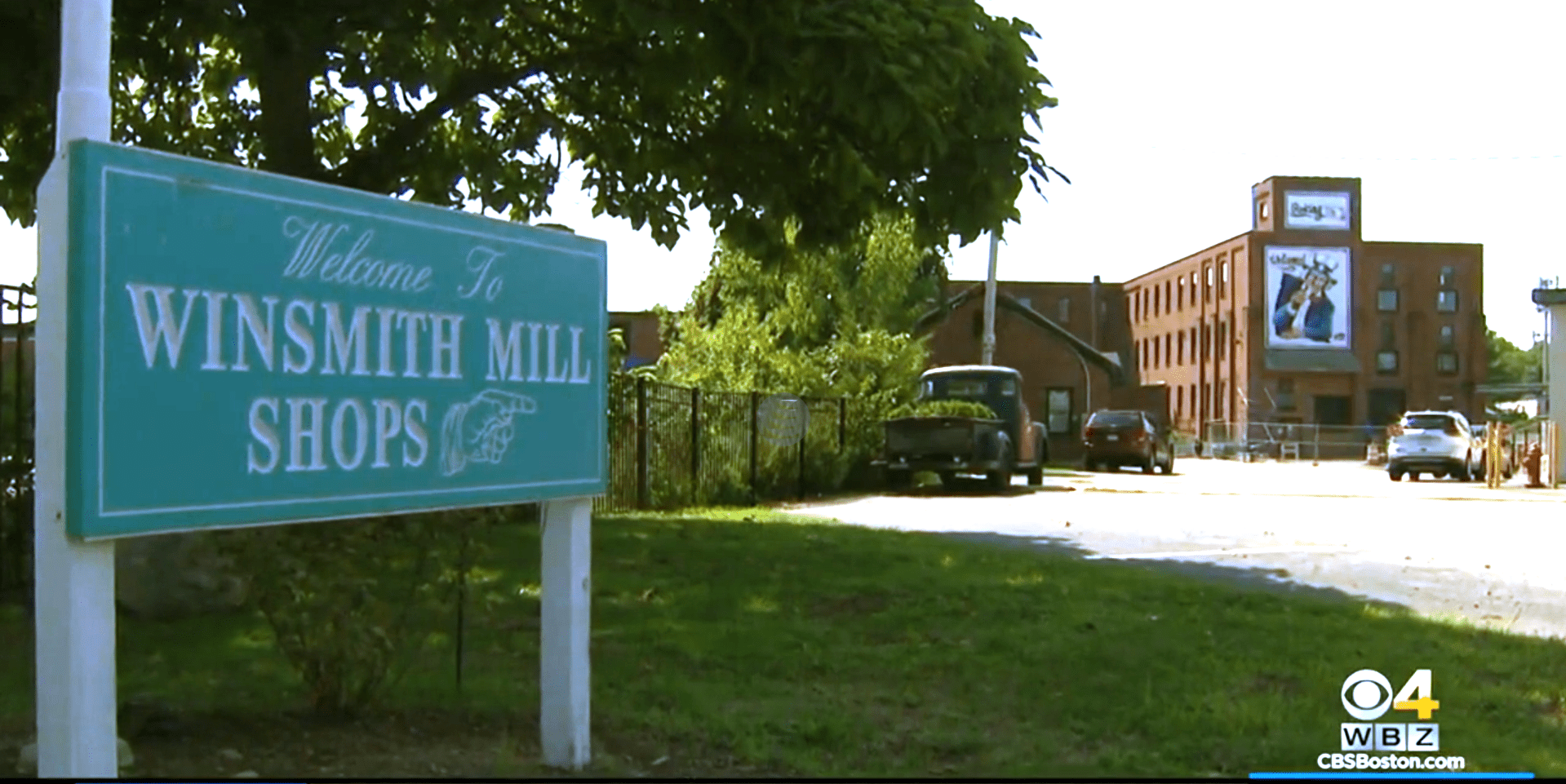
Winsmith Mill Transformed into Eclectic Shopping Center and Creative Hub (CBS-4)-September 22, 2022
The historic 200-year-old Winsmith Mill in Norwood is successfully transformed into a bustling shopping marketplace, artist lofts, and music venue.
-
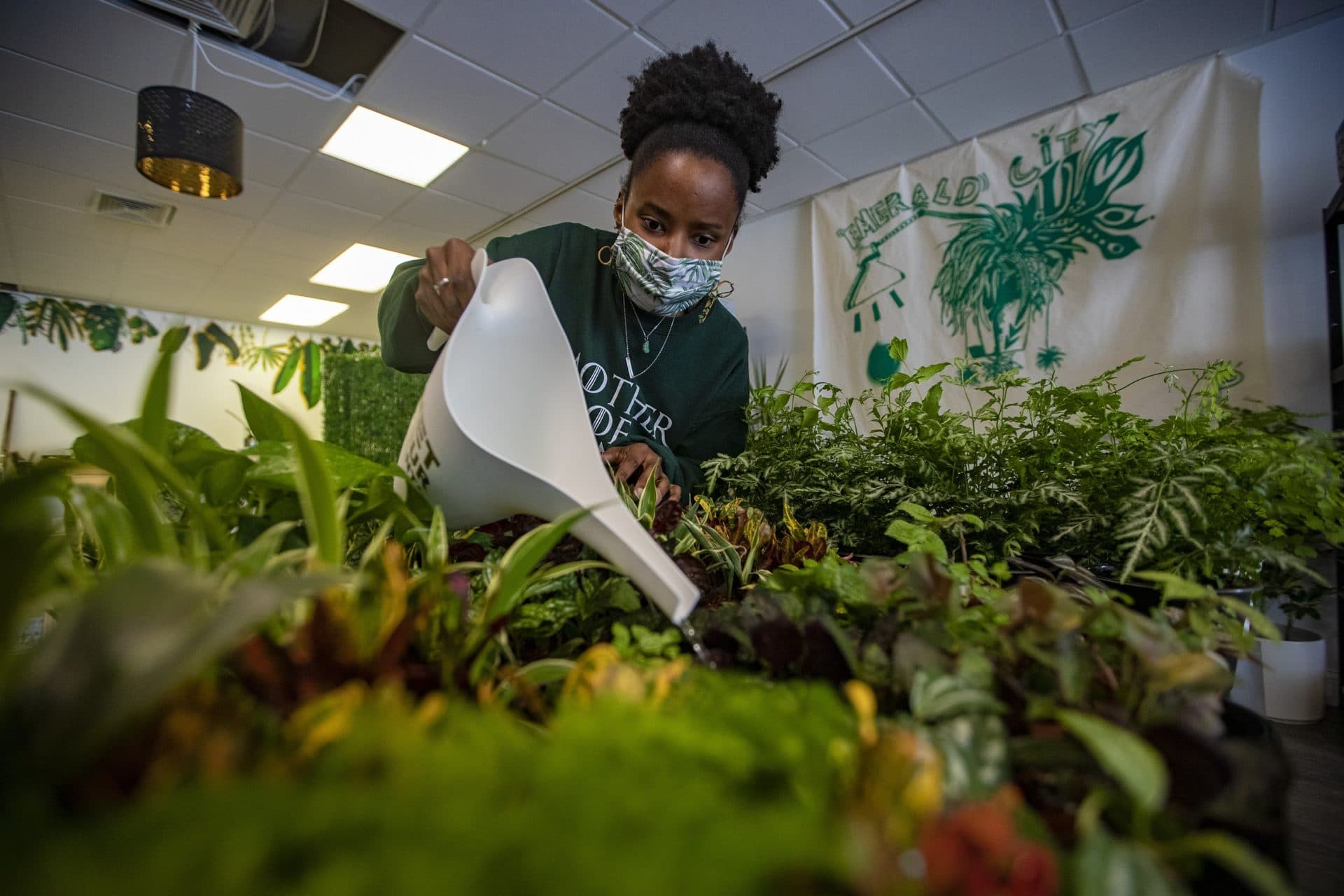
A Black-Owned Plant Shop Blooms In The Pandemic’s Wake-June 9, 2021
Quontay Turner opened Emerald City Plant Shop in Norwood, becoming New England’s first Black woman-owned plant store, turning a pandemic leap into a thriving botanical oasis and community space.
-
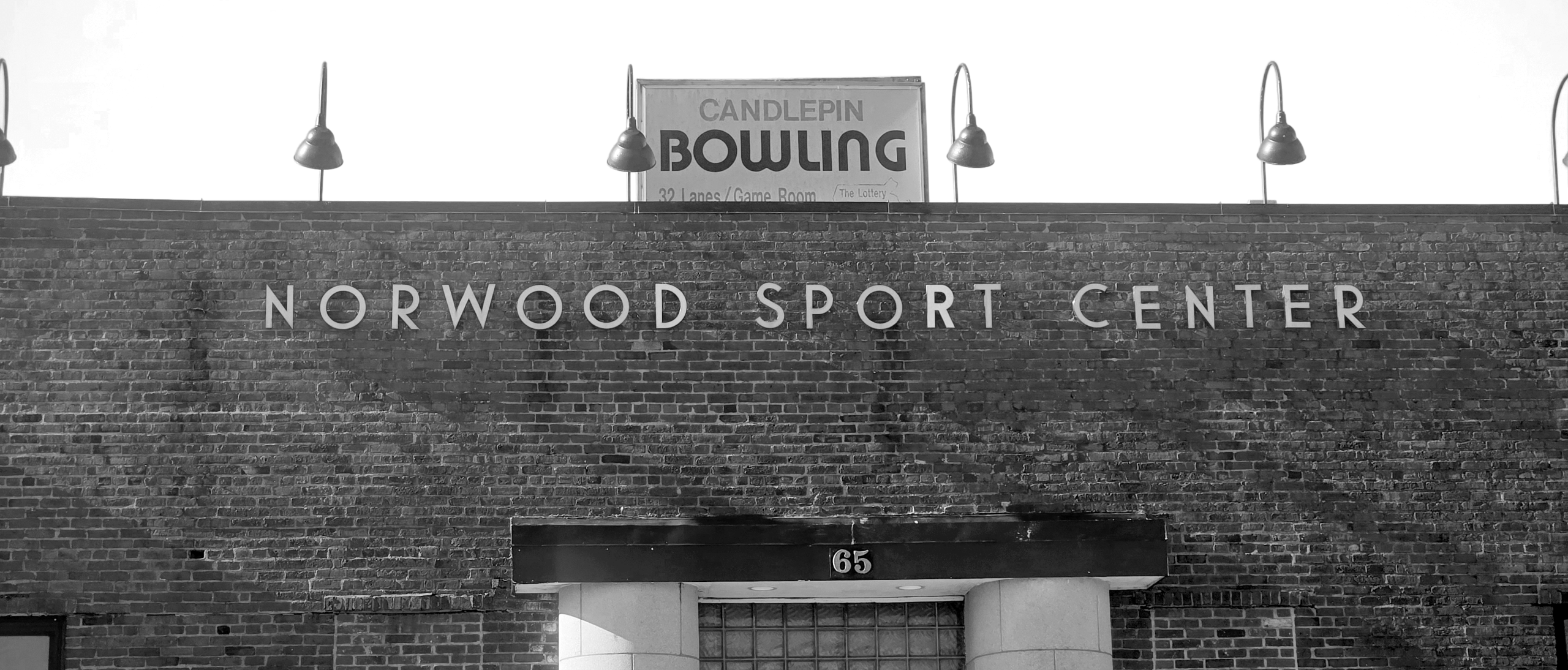
Norwood Sport Center
Explore the history of the Norwood Sport Center on Cottage Street in Norwood, MA, opened in 1940, featured in Hollywood films, and operating until its 2024 closure. Frank Sherwood opened the Norwood Sport Center on October 3, 1940. Modeled after the “Belgian Building” featured in the 1939 World’s Fair, it cost $50,000 to build, a…
-
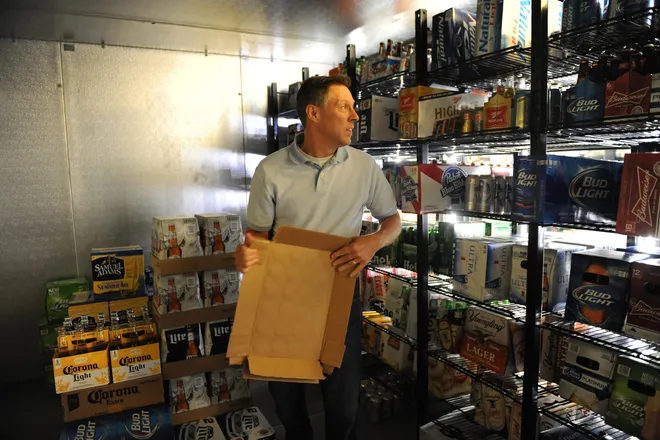
Hurley’s Beer & Wine Relocates to Vanderbilt Avenue-July 17, 2015
After 16 years in South Norwood, Hurley is navigating increased competition by emphasizing community involvement and quality customer service.
-
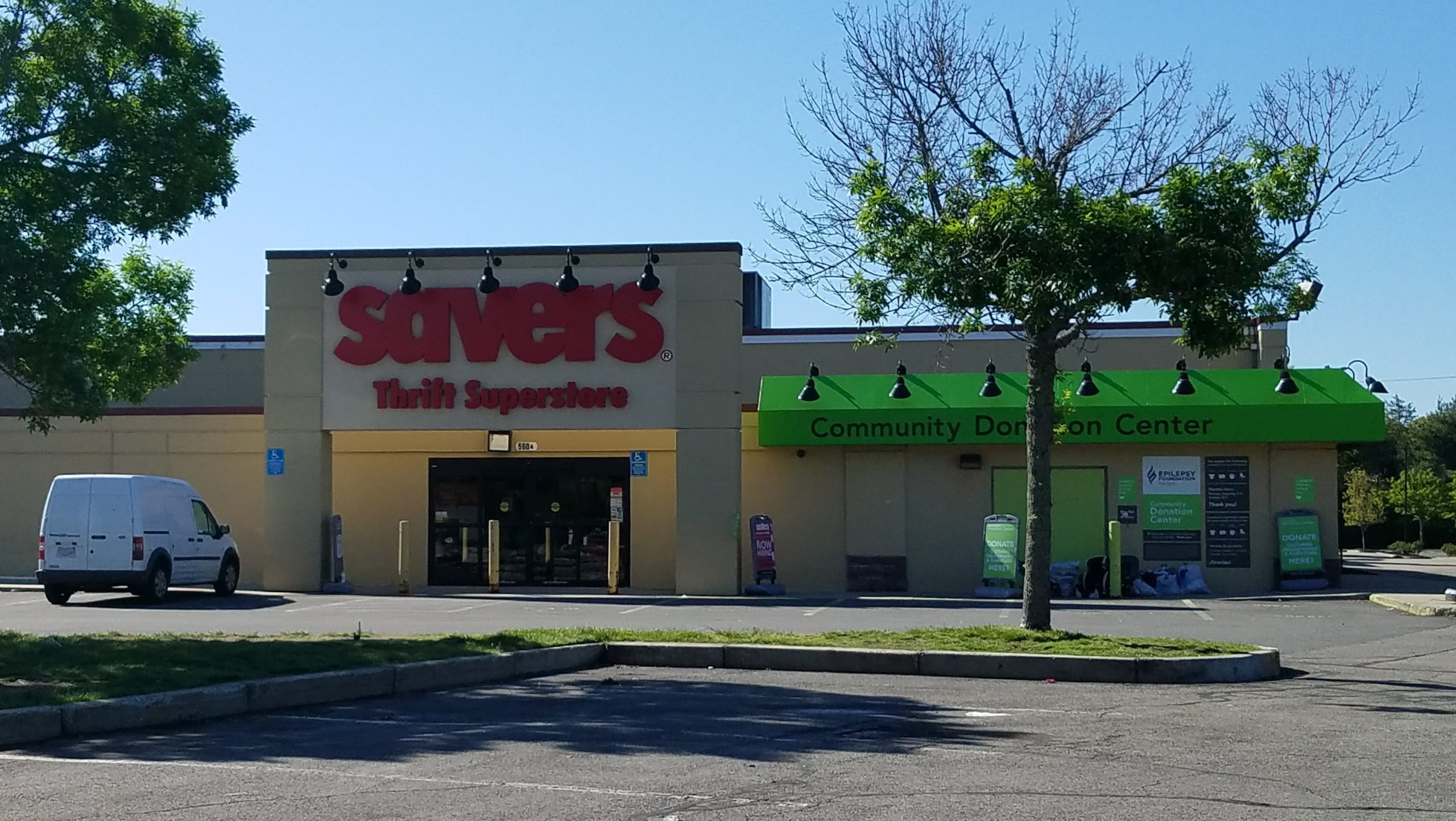
Savers Thrift Store Grand Opening In Norwood-July 30, 2013
On July 30, 2013, Savers Thrift Store opened at 560 Boston Providence Highway in Norwood, providing affordable goods, jobs, and charitable support.
-
Boston’s Baddest Burger-August 10, 2012
Kevin Tortorella’s “Boston’s Baddest Burger” is now serving fresh, locally sourced breakfast and lunch options in Norwood and Boston, marking the town’s first fully licensed food truck.

-
Ruma’s Fruit & Gift Basket World Wins Businesswoman of the Year-July 10, 2010
Tracing its roots back to 1900 on the cobblestones of Haymarket Square, the Ruma family of Norwood built a century-old produce and gift basket enterprise that earned Businesswoman of the Year honors in 2010.

-
Revitalizing Norwood Center: A Town’s Rebirth-July 2, 2005
Discover how Norwood has been working to transform its central business district into a vibrant shopping and dining destination.

Discover more from Norwood Historical Society
Subscribe to get the latest posts sent to your email.