
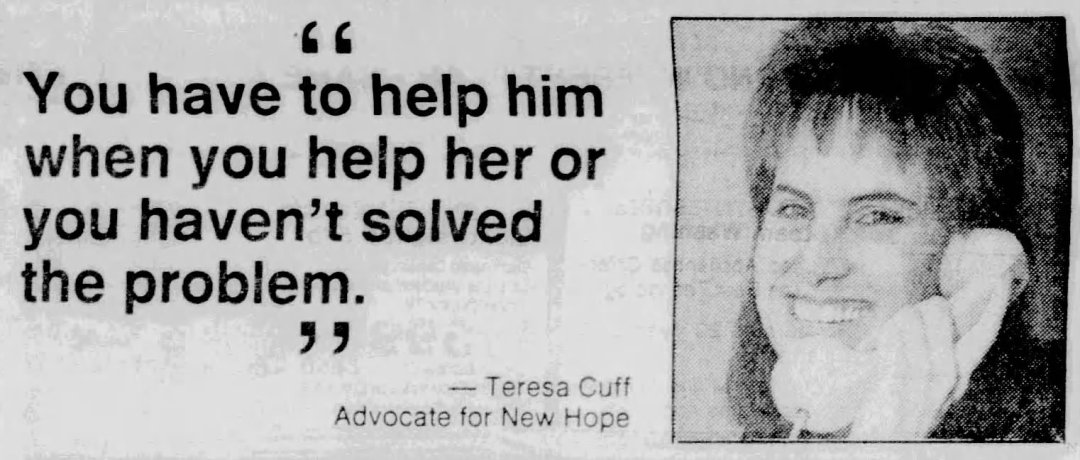
Shelter Program Director Egidia Vergano and Norwood Advocate Teresa Cuff Detail Six Years of Crisis Hotlines, Family Counseling, and Safe Refuge for Battered Women and Children
NORWOOD – Outwardly, their households often appeared quiet and stable to neighbors and extended relatives, yet behind closed doors many local women endured years of physical and emotional abuse before reaching out for assistance. Reported in The Patriot Ledger on Thursday, November 28, 1985, by staff reporter Paul Karon, staff members at New Hope—a six-year-old nonprofit agency operating offices in Norwood Center, Attleboro, and Taunton—outlined how their newly opened walk-in office at 681 Washington Street was providing confidential counseling, legal guidance, and emergency shelter for battered women and their children.
Speaking from the new Washington Street facility, New Hope shelter program director Egidia Vergano and Norwood area advocate Teresa Cuff emphasized how daunting it remained for survivors to break years of silence. “It takes an awful lot of courage to pick up a phone and call a stranger and talk about a problem they may have kept a secret for years,” Vergano said. Left unaddressed, she warned, domestic violence frequently escalated into severe depression, family dissolution, emotional trauma among children, fatal injuries, or suicides brought on by prolonged psychological strain.
Cuff noted that community walk-in centers and crisis lines played a vital role precisely because women often met disbelief or isolation when they confided in relatives or friends. “A lot of times, the women would not be believed,” Cuff explained, adding that viewing abuse strictly as a private “family problem” deterred many victims from seeking outside intervention. “It saddens me to think that there are still women out there who do not know that there are hot lines and walk-in centers,” Vergano added. Across its first six years, New Hope’s three hotlines had fielded more than 9,000 calls from women ranging in age from 18 to 80, offering anonymous emotional support and legal referrals, while its emergency shelter had housed approximately 830 women and children over five years when staying at home proved unsafe.
Drawing on their clinical and advocacy experience, Vergano and Cuff described how abuse typically began with harsh words or intimidation before progressing to physical violence, driven by a desire for power and total control. Vergano observed that social conditioning left many men without nonviolent outlets for anger or frustration—noting that alcohol was involved in more than 90 percent of cases—and stressed that domestic abuse crossed every racial, economic, and social boundary. “It’s not even that all batterers are rotten or no-good,” Vergano said. “That’s how they have learned to control—or not control—their emotions.”
Because violence often repeated across generations—Vergano cited three-year-old children arriving at the shelter already mimicking their fathers’ verbal hostility toward their mothers—New Hope counselors sought to treat the entire family unit whenever possible, offering counseling for abusive partners alongside survivors and children. “You have to help him when you help her, or you haven’t solved the problem,” Cuff emphasized. While acknowledging that women frequently hesitated to leave their homes out of love or financial dependence—“The primary reason a woman will stay in that kind of situation is love. The second reason is money—women feel they cannot afford to leave”—Vergano underscored the organization’s core mission: “We’re not anti-family. We’re just anti-violence.”
(Note: Multi-column newsprint OCR transpositions and pull-quote formatting across the clipping—including OCR symbol artifacts around the pull quote and narrow column line breaks—have been cleanly restored into continuous narrative order.)
Source: The Patriot Ledger • Thursday, November 28, 1985 • Byline: Paul Karon
“We’re not anti-family. We’re just anti-violence.”
Archival Note: This article has been dynamically reconstructed from the original public record print archives of the Patriot Ledger
-
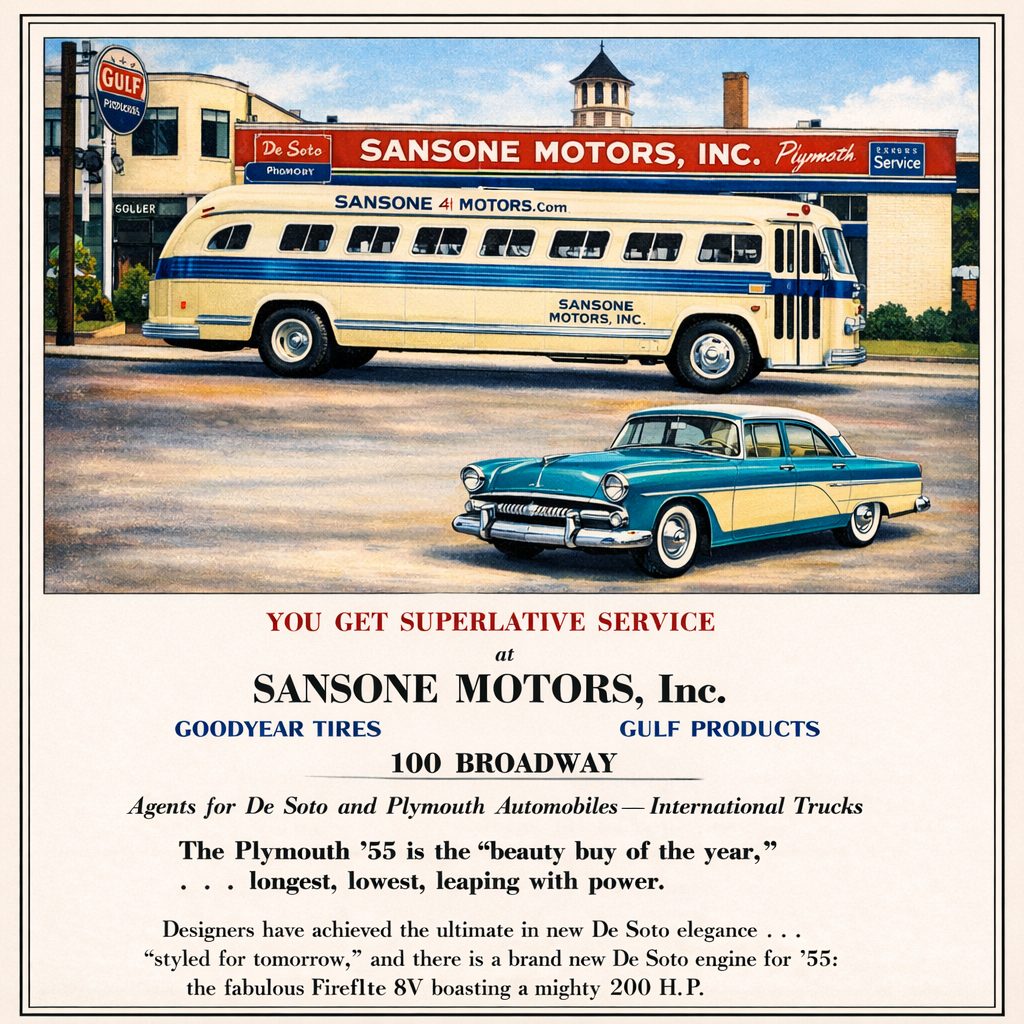
1955 Sansone Motors Ad
Discover more from Norwood Historical Society Subscribe to get the latest posts sent to your email. Type your email… Subscribe
-
Did You Know? Drivers Ed

1948 Norwood School Report: In recent years, the appalling loss of life due to preventable accidents on the part of teenagers has focused attention on the need for safety education in the schools. To supplement our fifteen hour classroom course in safety required of all tenth grade students, this year for the first time behind-the-wheel…
-
The Many Norwoods: A Global Survey of Towns That Share Our Name

(Created with Google Gemini) The Many Norwoods: A Global Survey of Towns That Share Our Name Norwood, Massachusetts, stands proudly in the Neponset Valley — a town shaped by industry, immigration, and civic ambition. But it is far from the only “Norwood” on the map. Across the United States and around the world, dozens of…
-
1944 Norwood High School Cheerleaders
Back: Florence Billingham (Captain), Joan Bernier Front : Ann Coakley, Lillian Kozak, Jeannette Mike, Florence Murray, Audrey Woods Discover more from Norwood Historical Society Subscribe to get the latest posts sent to your email. Type your email… Subscribe
-
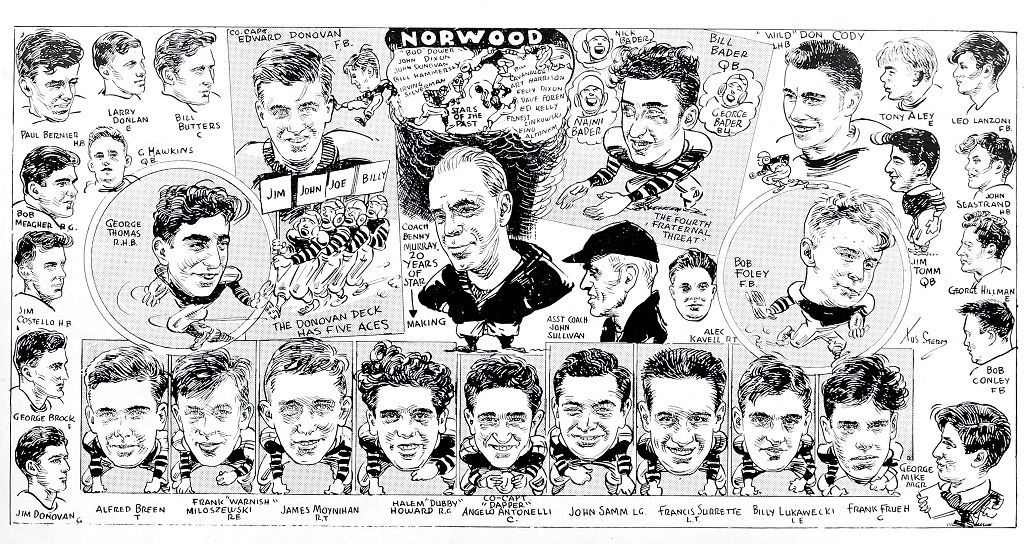
1941 Norwood High School Football Team Drawing
Discover more from Norwood Historical Society Subscribe to get the latest posts sent to your email. Type your email… Subscribe
-
1940’s Downtown Norwood Fire Photo
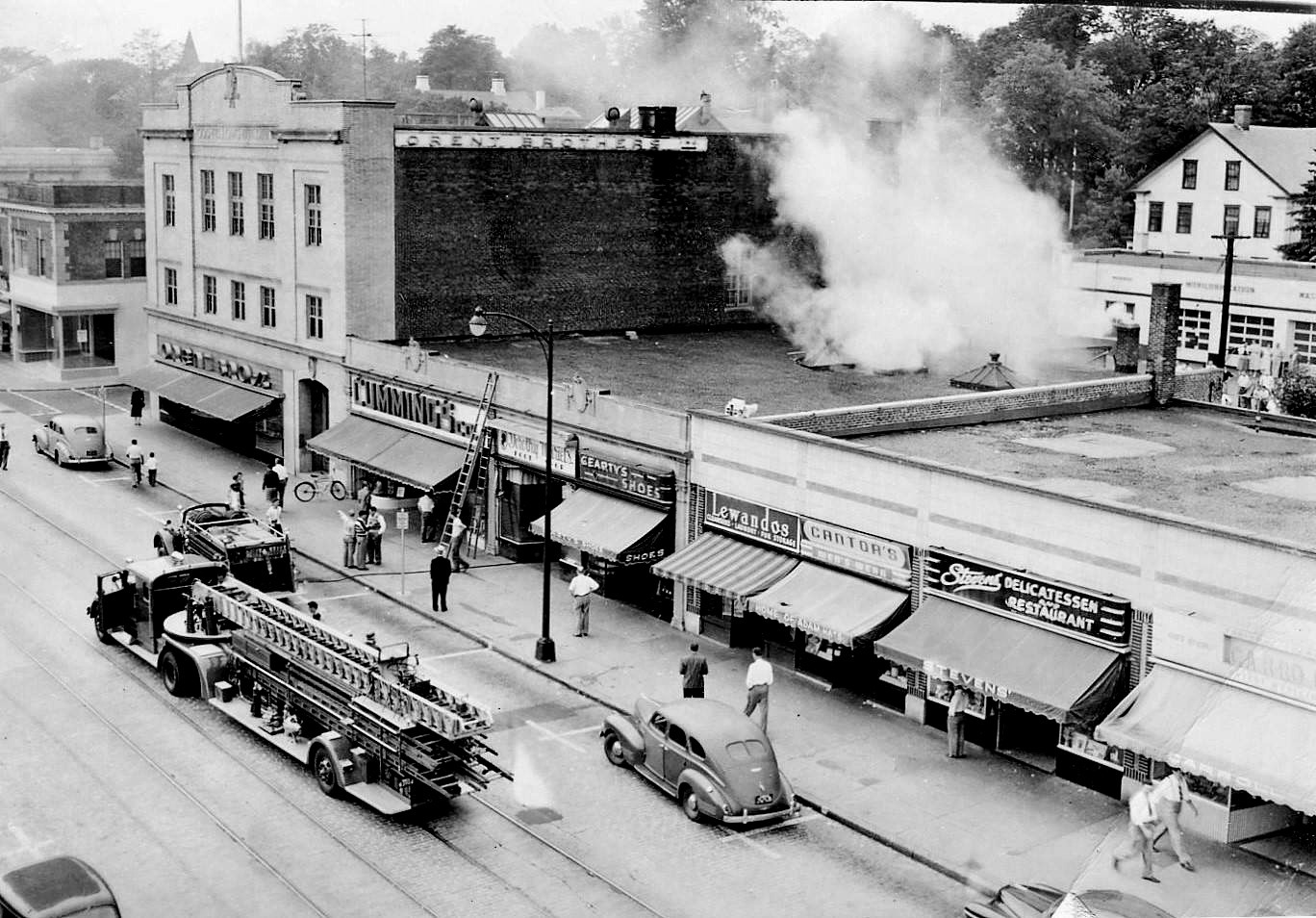
This 1940’s photo shows a fire at 656 Washington st. Businesses that are visible include Orent Bros Clothing store, currently Mizuya Japanese Restaurant Cummings Co, currently Limey’s PubGearty’s Shoes, currently Victoria’s cafeLewan’s Dry Cleaning, Cantor’s Menswear, Stearns Deli and Carroll’s In the rear of the building to the right of the smoke you can see…
-
Norwood’s History-1930’s-NHS Traffic Squad

NORWOOD HIGH SCHOOL—TRAFFIC SQUAD, 1930 First row: Mary Nash, Margaret Corcoran, Bettina Everett, Aurelia Hoegler, Theora Cottrell, Miss Marguerite Elliot, faculty advisor, Rose Acton, Marie Lydon, Catherine Breen, Ellen Drummey.Second row: Robert Metters, Marcus Hallenbeck, Ernest Zinkowski, Edmund Kelly chairman first half-year, Gordon Ellis.Third row: Martin Berezin, James Flaherty, John Chubet, Irving Silverman, Carlton Dyer,…
-
Norwood’s History-1930’s-The Norwood Theater
The Norwood Theater was designed by famed local architect William G. Upham and originally opened on August 31, 1927. Designed for motion pictures, it features a stage for live music and theatrical performances. Upham designed several other buildings in Norwood, including the 1926 Norwood High School building, Odd Fellows Hall, The Norwood Post Office, and…
-
The George H. Morse House: A Piece of Norwood History-September 10, 2012
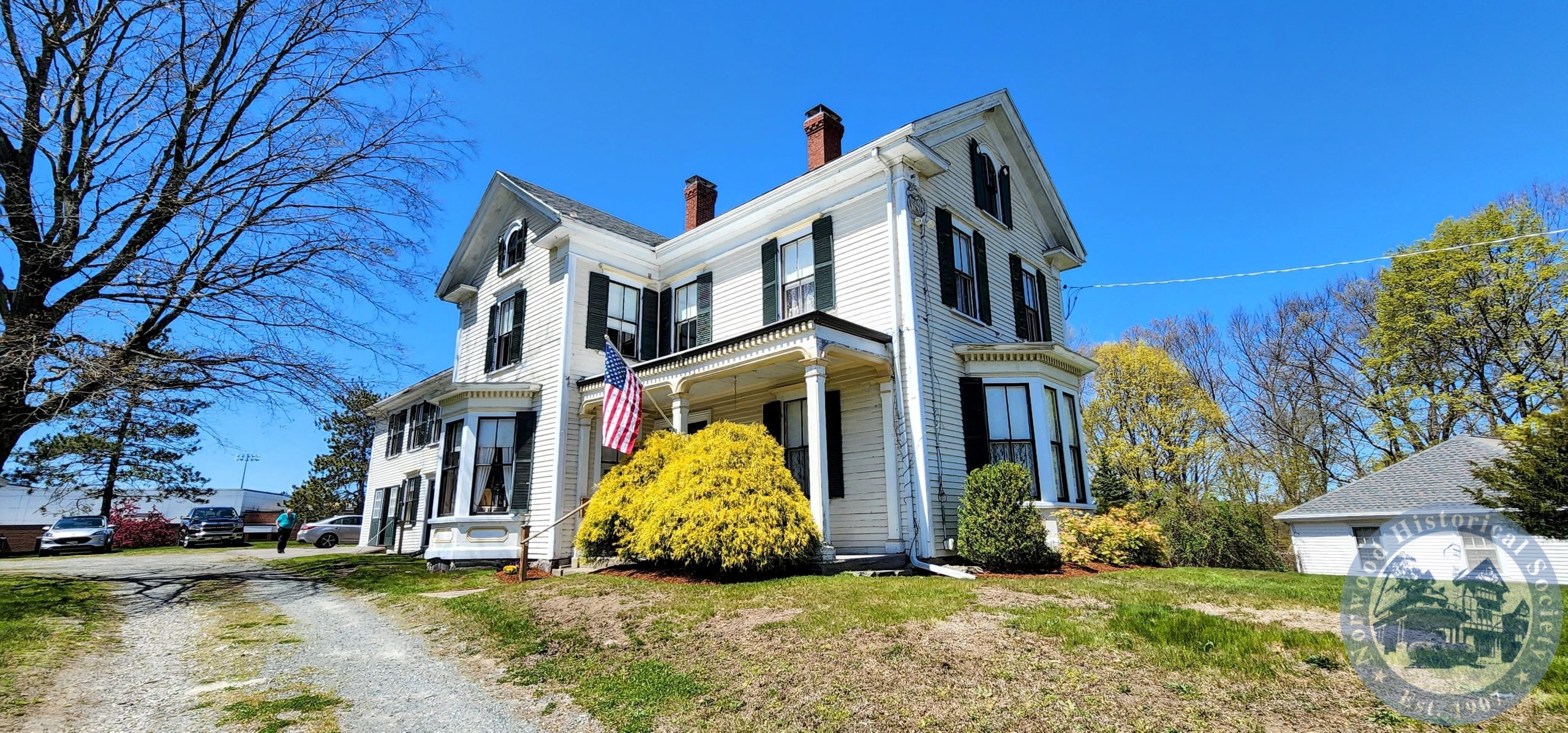
Explore the 144-year history of the George H. Morse House in South Norwood, the oldest home in town, and the 12-year community-led effort to restore the Ezra Morse homestead.
-
Norwood Historical Commission Champions $60,000 Restoration of Highland Cemetery’s Chapel of St. Gabriel-November 19, 1983
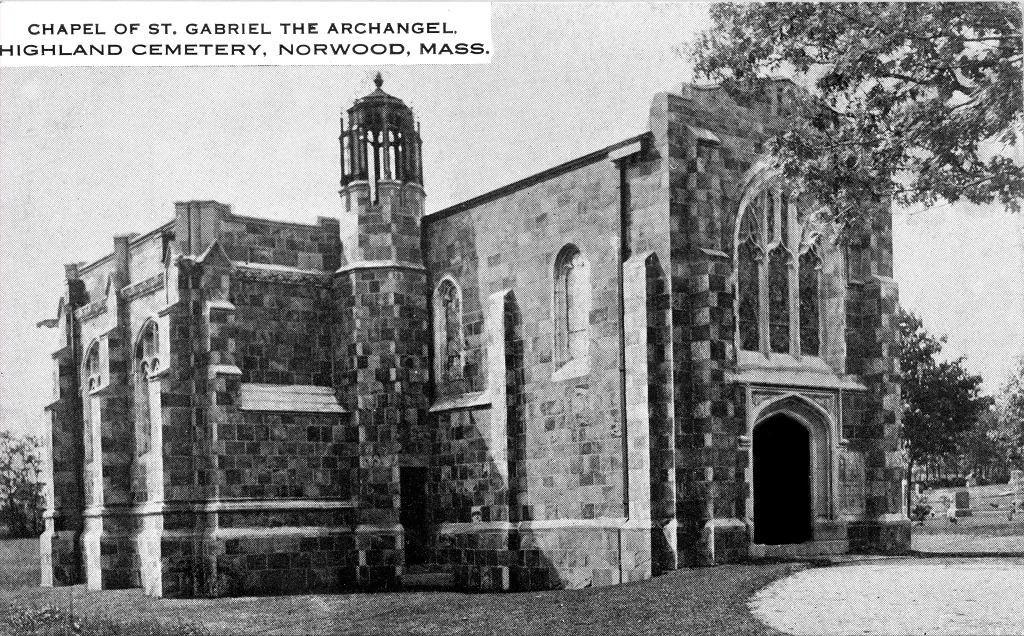
Town Manager John J. Carroll and Historical Commission Chairman William A. Gifford reviewed a $60,000 architectural repair estimate in November 1983 to restore Highland Cemetery’s leaking, Ralph Adams Cram-designed Chapel of St. Gabriel.
Discover more from Norwood Historical Society
Subscribe to get the latest posts sent to your email.