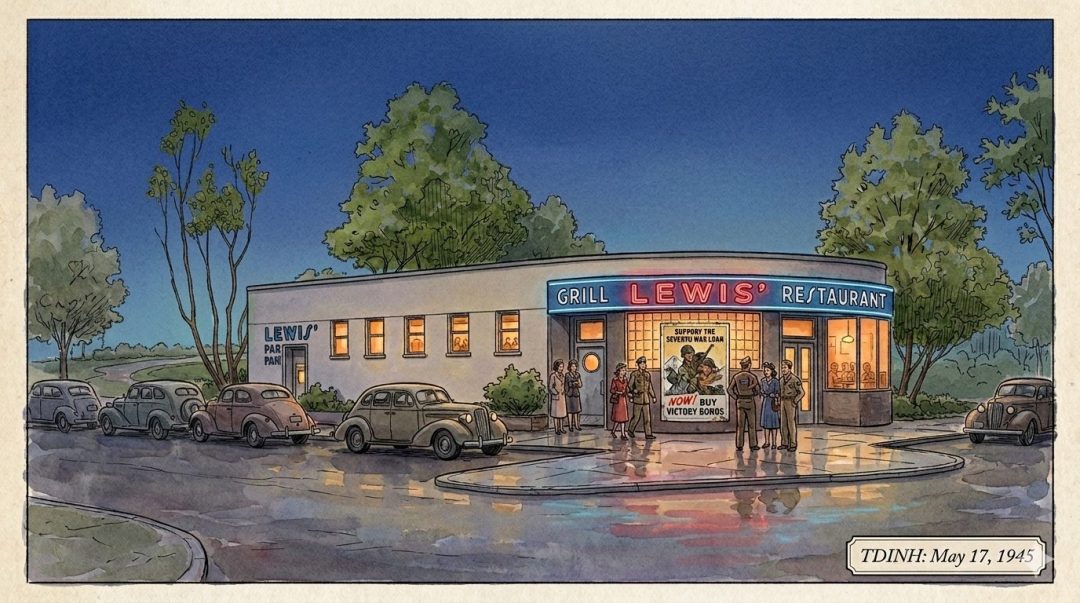
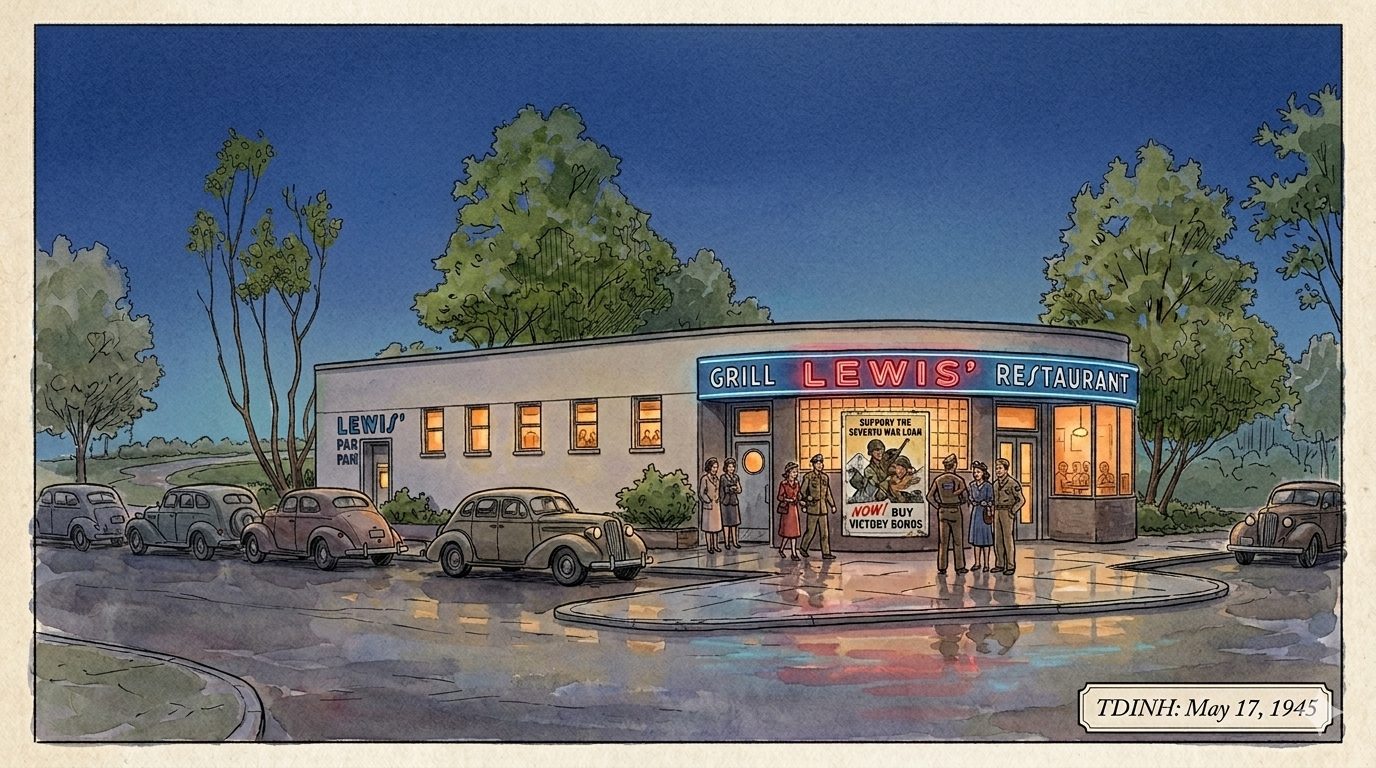
When the doors of Lewis’ Dining Room swung open again in May 1945, the familiar scent of polished wood and fresh paint mingled with the aroma of coffee and roast beef drifting into Norwood’s Town Square. The reopening came as a quiet but meaningful milestone: a sign that the town’s daily rhythms were returning to normal after years of rationing, blackouts, and war‑time austerity.
The restaurant, owned by Lewis Restaurant Co., had been a fixture on Central Street, serving factory workers, clerks, and families since the 1930s. During the war, food shortages and rationing forced the dining room to close temporarily for renovation and conservation. Now, with victory in Europe declared only days earlier, the announcement in the Norwood Free Press carried a tone of optimism:
“Redecorating completed — we are now open daily 11 A.M. to 12 P.M. until the acute food shortage is alleviated.”
Inside, the newly refurbished space gleamed with fresh paint, reupholstered booths, and a modest but elegant banquet room. The décor reflected the era’s restrained style—cream walls, dark wood trim, and brass fixtures polished to a mirror shine. A small sign near the entrance reminded patrons to “Support the Seventh War Loan,” linking the restaurant’s reopening to the national campaign that financed the final push toward peace.
For Norwood residents, Lewis’ was more than a place to eat; it was a social hub. Town officials, teachers, and returning servicemen gathered there to exchange news and celebrate homecomings. The restaurant’s reopening symbolized the town’s resilience—proof that even amid ration cards and shortages, Norwood’s civic life endured.
The reopening also reflected a broader post‑war transition. Across Massachusetts, local businesses were preparing for peacetime commerce, repainting storefronts, and rehiring staff. Lewis’ Dining Room stood among the first in Norwood to reopen fully, signaling confidence in the town’s recovery.
By summer, the restaurant’s hours extended again, and the familiar neon sign once more illuminated Town Square. Mothers pushing strollers paused at its windows; factory workers stopped in for late suppers after shifts at Bird & Son or Tobe Deutschmann Corp.; and young couples found quiet corners for coffee and pie. The war was ending, and Norwood was ready to live again.
Text and images may have been created, edited, colorized, or digitally restored using AI tools such as Microsoft Copilot or Google Gemini. All content is reviewed for accuracy and historical integrity before publication by the Norwood Historical Society
Discover more from Norwood Historical Society
Subscribe to get the latest posts sent to your email.
One thought on “Lewis’ Dining Room Reopens After Wartime Renovation-This Day In Norwood History-May 18, 1945”