
Town Official Recalls ‘Dubious’ Beginnings

Officials of Star Market met yesterday with representatives of Cabot, Cabot, and Forbes, as well as town and state government, at the groundbreaking of the Star Market’s Service and Distribution Center. The facility represents the very first building to be constructed within the 95-acre Norwood Industrial Center. Prominent figures taking part in the physical groundbreaking ceremony included Matthew Connolly of the Norwood Industrial Commission, Sumner Goldman of Star Market, John M. Mugar, president of Star Market, and R. John Greifen, senior vice president of Cabot, Cabot, and Forbes.
The new center will initially occupy six of the 55 acres being developed for Star Market on the site, with a long-term 10-year plan designed to utilize approximately one million square feet of space. Future expansion plans include extending the dry groceries warehouse with specialized room dedicated to all aspects of Star Market produce, alongside a massive service garage engineered to house a private fleet of 80 trucks. Sumner Goldman noted the unique modular construction method of the facility. Although the site itself is not completely ready, the building is already actively under construction off-site through the use of pre-cast and pre-stressed concrete, allowing sections to be manufactured, transported to the site, and assembled. Richard D. Surtevant of the Jewel Company in Chicago noted that this graphic construction illustration showcases the massive growth potential of Star Market.
During a celebratory luncheon following the groundbreaking at the Iron Horse Restaurant in Norwood, Star Market President John Mugar revealed that his firm had been searching for exactly four years to locate this ideal site. He stated that the distribution hub is the single largest project ever undertaken in the 52-year history of Star Market, predicting it will drive a faster overall growth rate for the entire supermarket chain.
The path to town approval, however, was highly contentious. Brooks Dodge of Cabot, Cabot, and Forbes, who personally negotiated with municipal boards, admitted that he initially viewed the groundbreaking as a “rather dubious prospect” at the start of the process. It ultimately required 50 separate meetings between developers and town departments to secure final municipal authorization. Norwood Town Manager Walter A. Blasenak similarly confessed that he had initially “shuddered” when he first heard the massive proportions of the proposed distribution hub. However, Walter A. Blasenak expressed deep pride in the combined efforts of town and company officials who worked systematically through local regulations. He commended the developers’ willingness to resolve structural problems with municipal departments, justifying the Board of Selectmen’s final decision to permit the construction based on the economic compensation and growth that will accrue to the town.
The distribution complex is scheduled to be open by January. Proponents emphasized its ideal logistics hub location near Route 1, Route 128, and Route I-95, as well as its direct proximity to the New York, New Haven and Hartford Railway. R. John Greifen pointed out that the hub is situated near the Westwood Industrial Center, which he cited as the fastest-growing of the 26 Cabot, Cabot, and Forbes centers. R. John Greifen stated that the addition of new business to neighboring Westwood had successfully saved its taxpayers $10 on their local tax rate, suggesting that a similar municipal tax reduction could be expected in Norwood as a direct result of this development. C.E. Ragland of the New York, New Haven and Hartford Railroad commended Norwood on its receptive, progressive attitude toward inbound industry.
A wide contingent of state and local officials attended the groundbreaking ceremonies to mark the occasion. Representing Norwood‘s local government were Selectman Walter Dempsey, Planning Board Member James O’Sullivan, and Town Moderator and Town Counsel Walter Gotovich. State and regional legislators in attendance included Senator John M. Quinlan of Dover, Representative David C. Ahearn of Norwood, and Representative Alan P. Danovitch of Norwood.
Archival Note: This article has been dynamically reconstructed from the original public record print archives of the Patriot Ledger
More…
-
Broken Water Main Leaves Norwood Hospital Without Sprinkler System for Hours-October 21, 1981
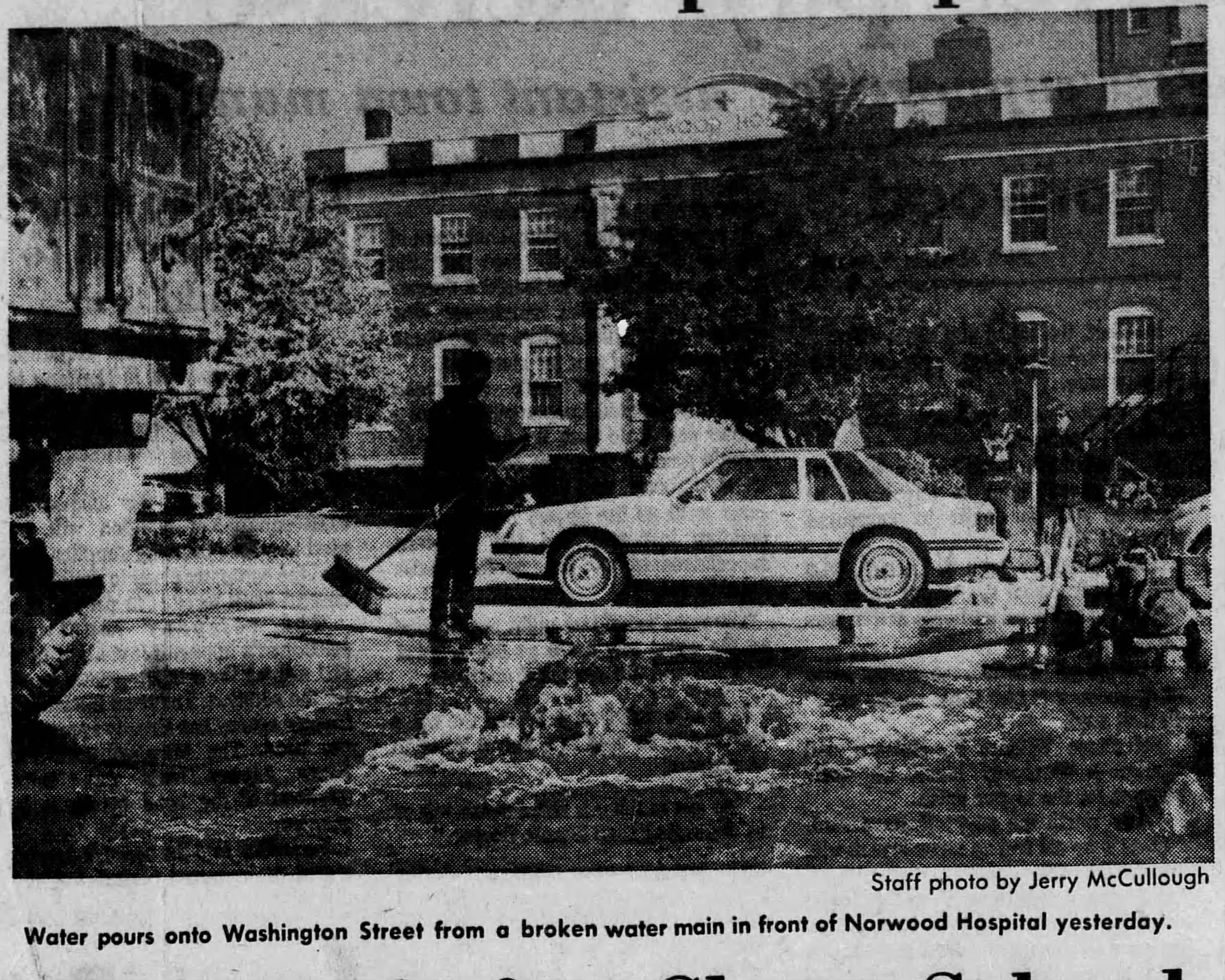
A water main break on Washington Street flooded the area, leaving Norwood Hospital without sprinkler coverage for hours while fire officials maintained a close watch.
-
$1.5 Million Uptown Washington Street Reconstruction and Traffic Improvement Project Scheduled to Begin by Spring 1982-September 10, 1981
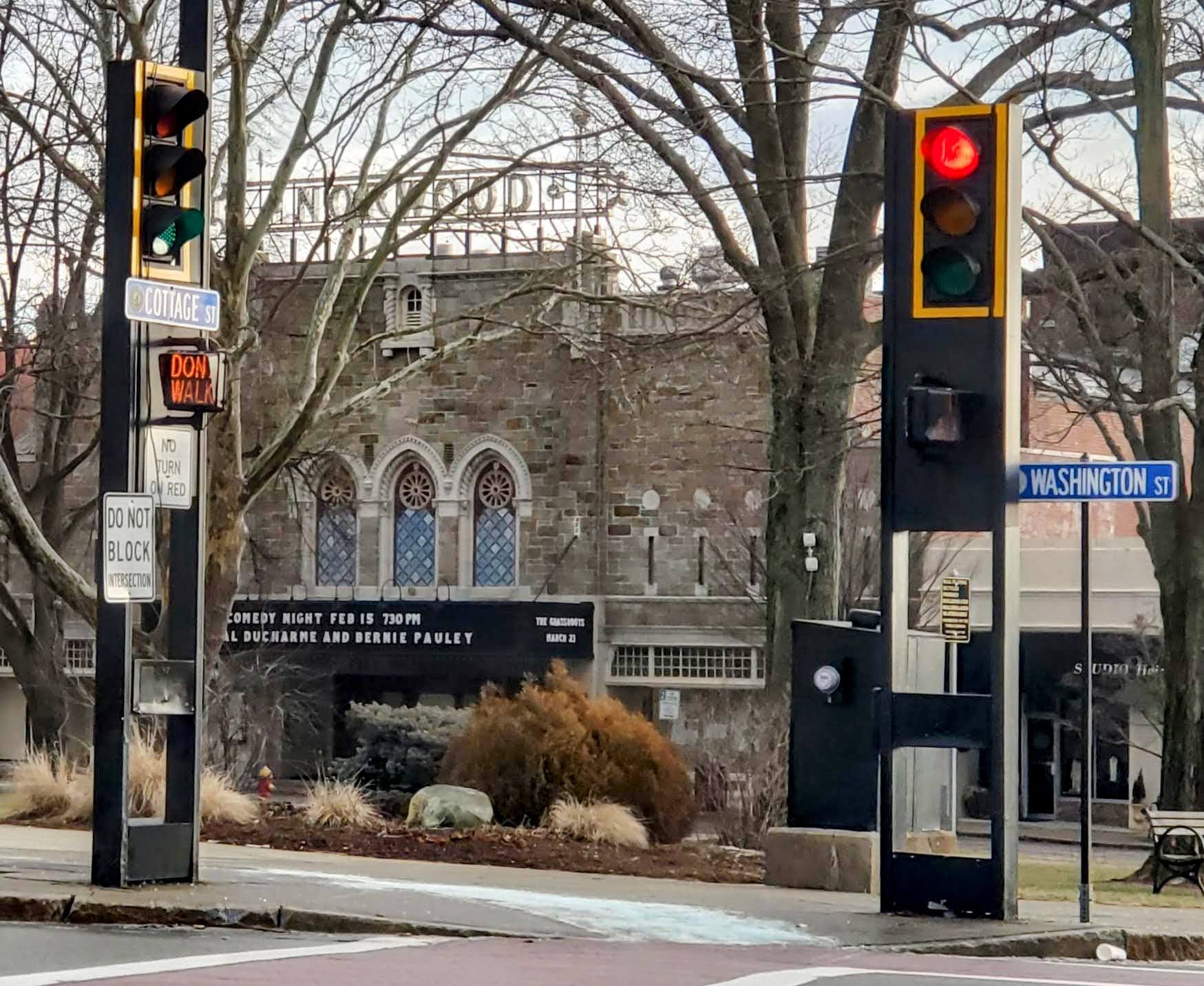
State and local officials outline a $1.5 million Washington Street reconstruction project at a public hearing, targeting spring 1982 construction for traffic and street improvements.
-
South Norwood Committee Seeks Private Funding to Clean Landmark Railroad Bridges-June 26, 1981
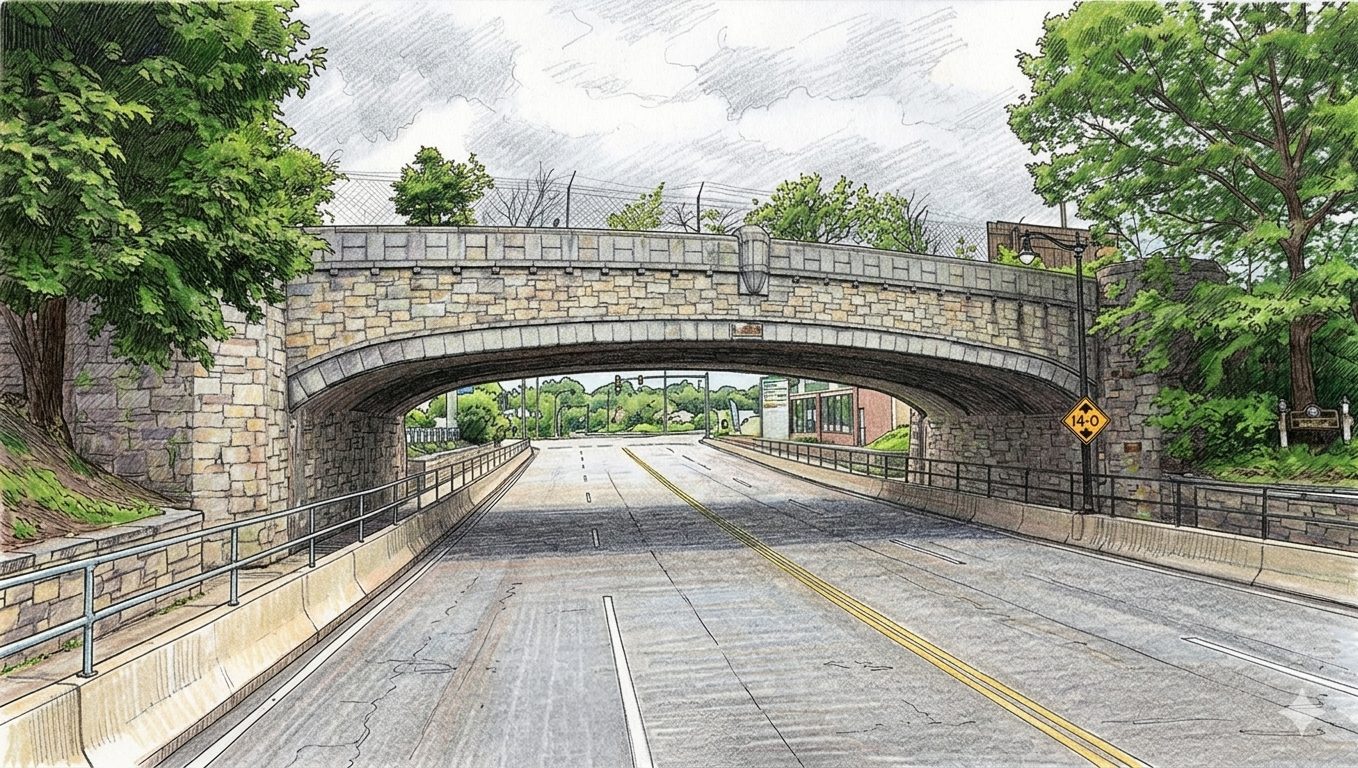
Faced with tight Proposition 2½ limits, South Norwood look to private donors to clean soot and graffiti off historic stone railroad spans.
-
Norwood Tests New Traffic Pattern at Subway Hill Intersection in South Norwood-October 29, 1980
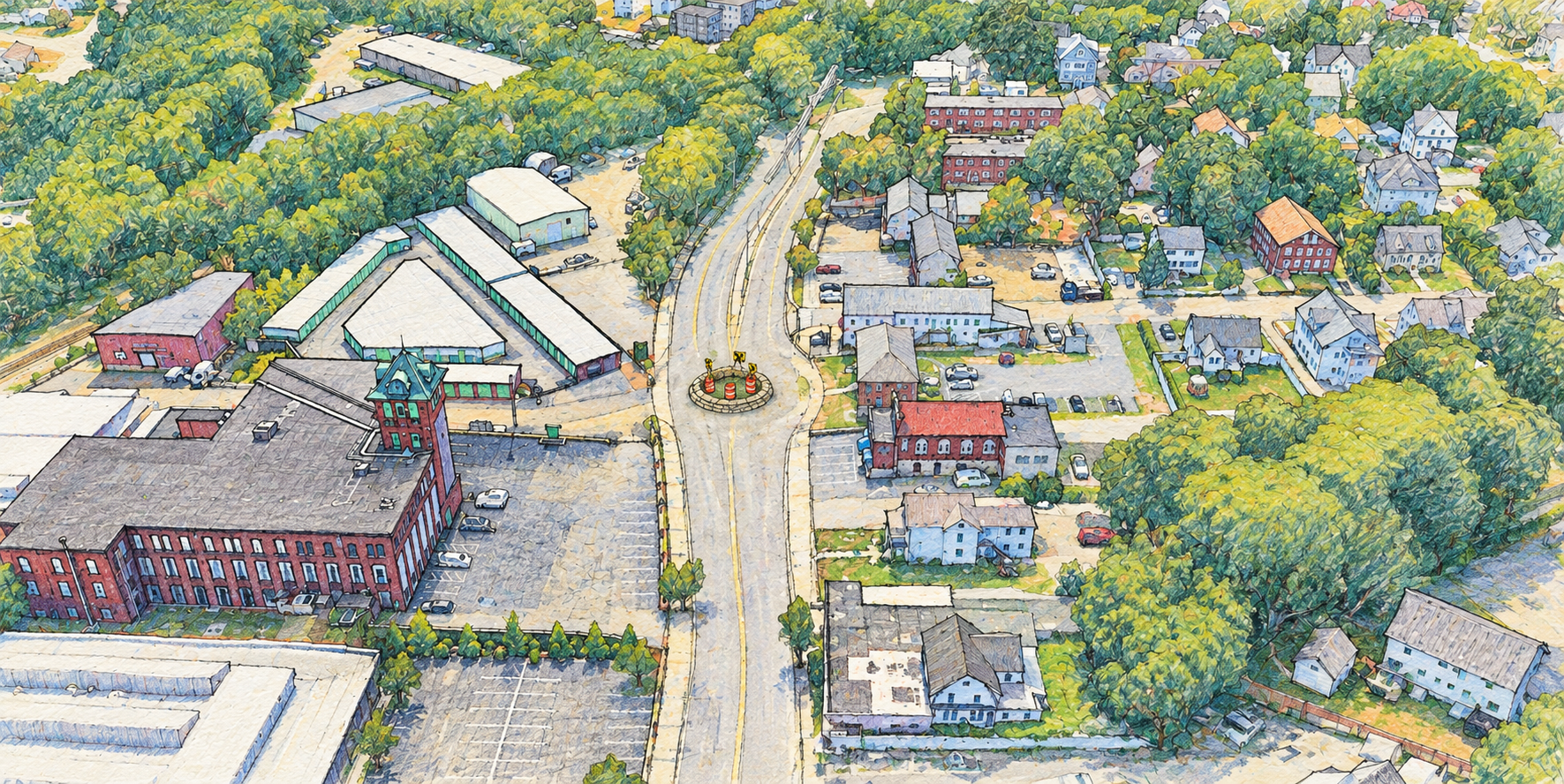
Following recommendations from the South Norwood study committee, selectmen approved a temporary traffic island experiment at Subway Hill to improve safety at Washington and Chapel streets.
-
Guild School Recreation Center Project & Eliot Field Renovation-August 26, 1980
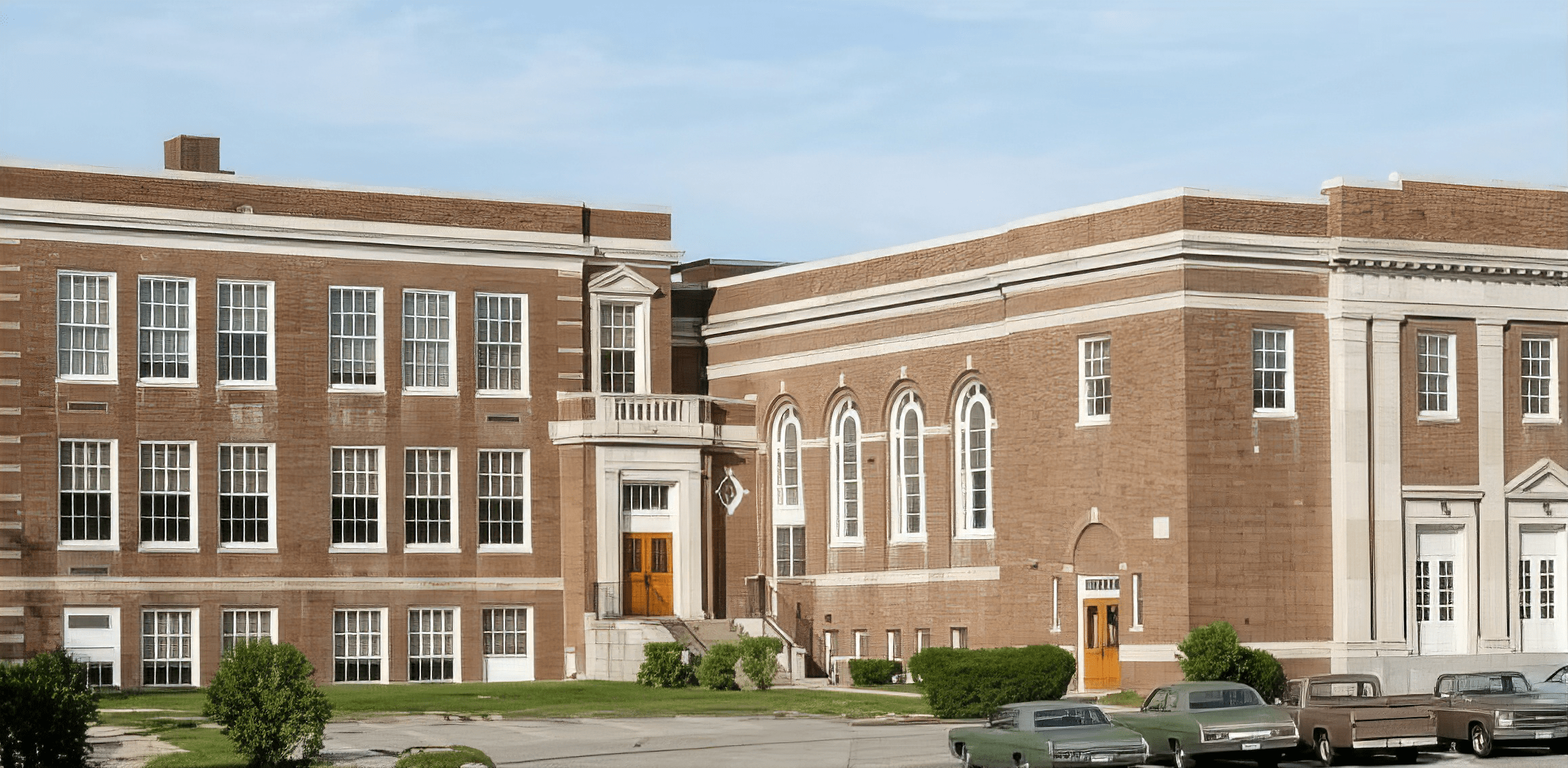
The Norwood Permanent Building Committee selected six architectural firms to interview for the Guild School renovation project, while Norwood Engineering secured the Eliot Field design contract.
-
Armory Still Eyed for Municipal Use-July 9, 1980
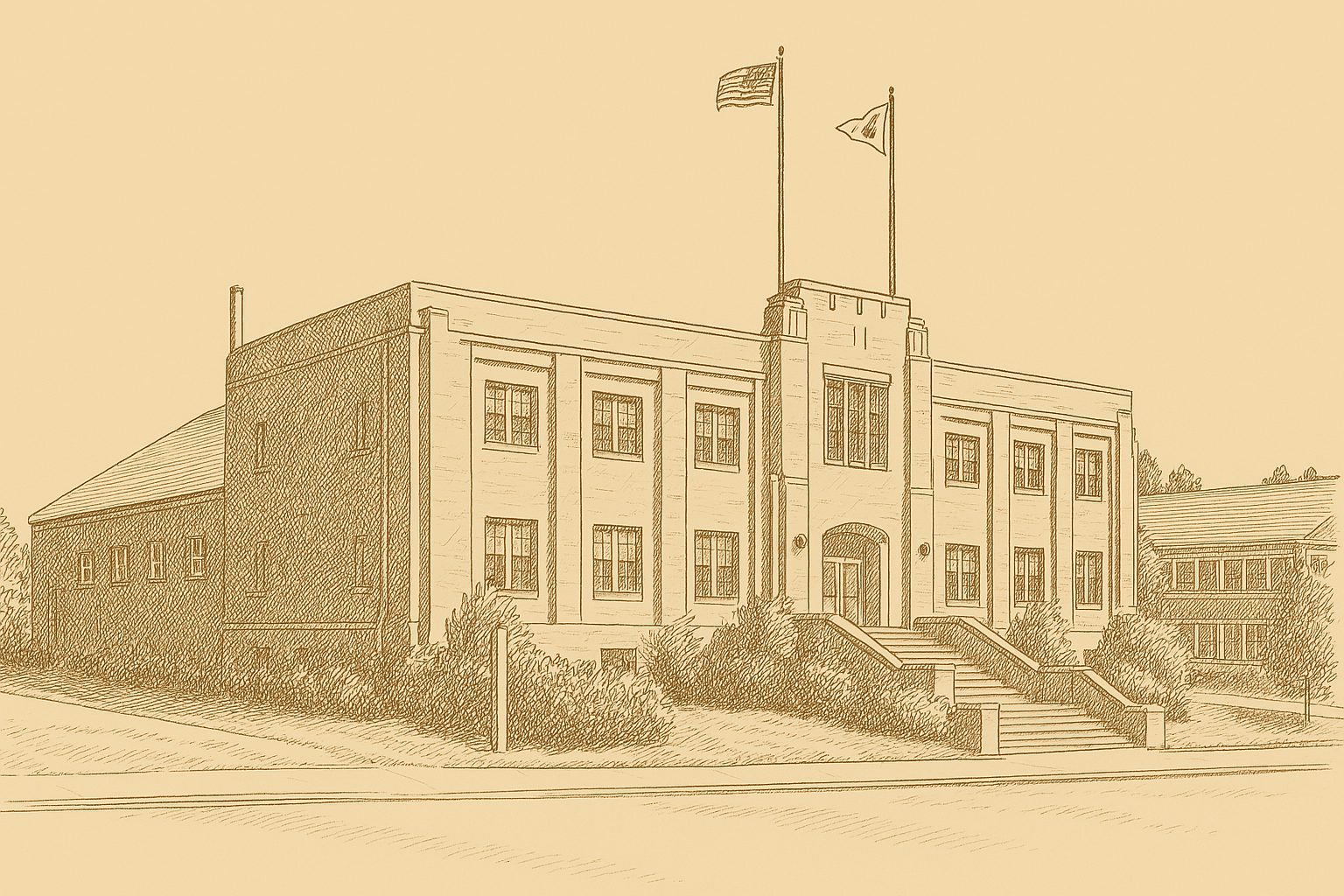
Discover the 1980 efforts by town leadership to acquire the Norwood Armory from the state, following legislative changes and the recent Civic Center location shift.
-
Guild School Picked for Civic Center-July 8, 1980
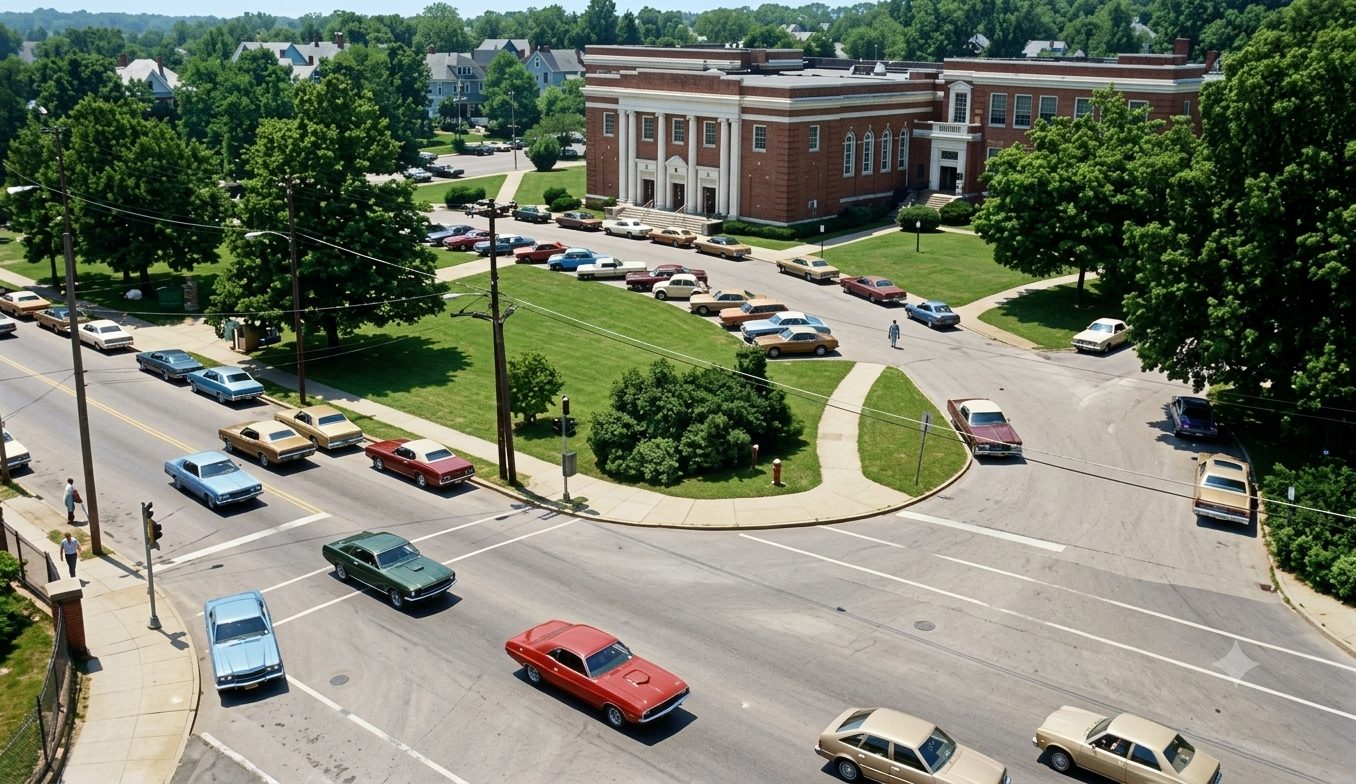
Discover the 1980 decision that transformed the Aaron Guild School into a multi-purpose recreation hub, replacing the former Civic Center sold to Norwood Hospital.
-
Only Two Norwood Intersections Qualify for Right Turns on Red Under New State Law-October 3, 1979
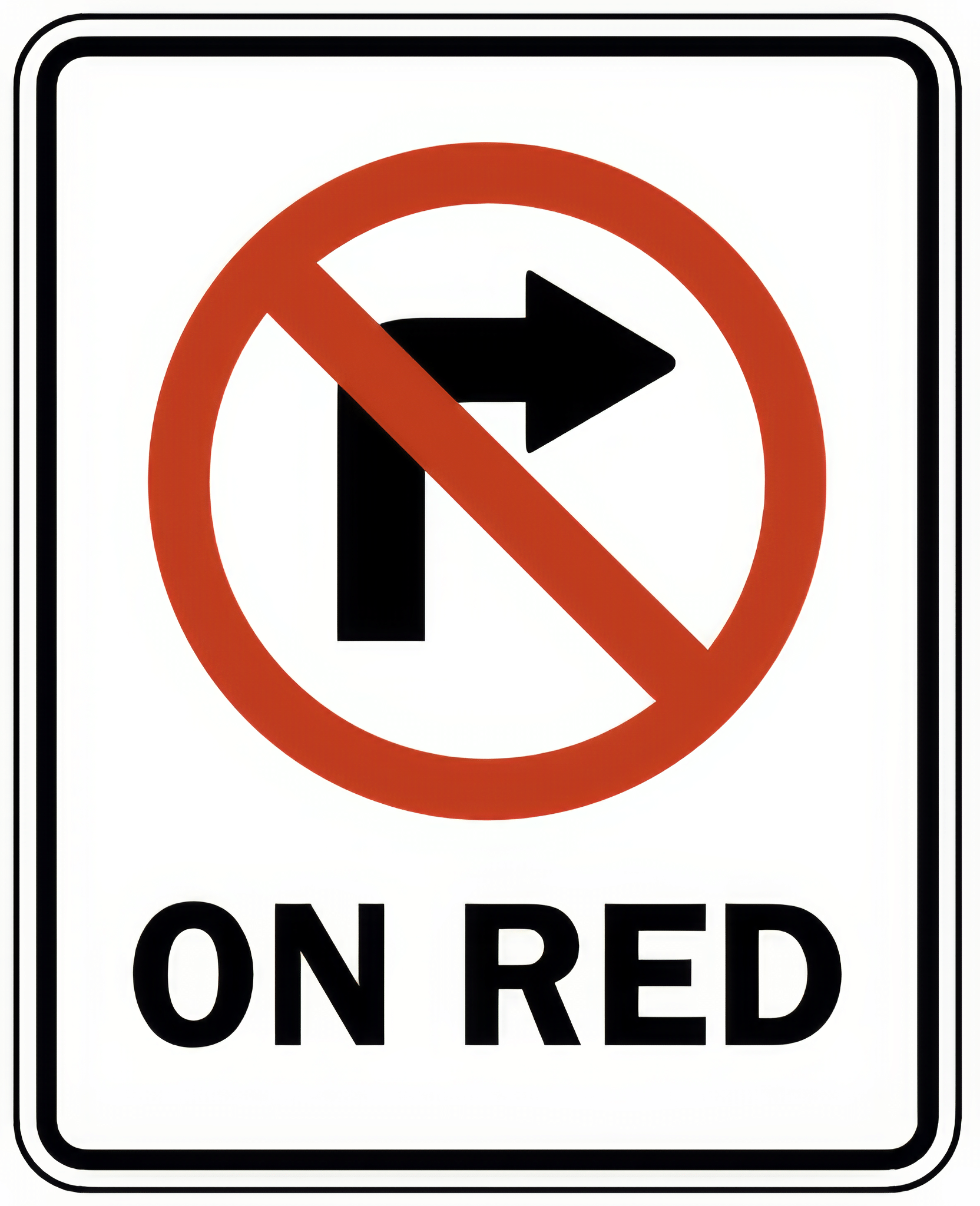
Following a town survey, Town Manager John J. Carroll announces that right-on-red turns will be permitted at only two Norwood intersections when the state law takes effect.
-
Norwood Selectmen Consider One-Way Traffic, Business District Upgrades-August 8, 1979

Building on the Washington Street revitalization project, Town Manager John J. Carroll proposed working with local merchants to secure a second Urban Systems grant for Nahatan Street improvements.
-
Road Resurfacing Project in Norwood-This Day In Norwood History-July 21, 1978

Faced with decades of neglected road maintenance, Norwood officials debated an ambitious $1.9 million resurfacing plan in 1978. While proponents saw it as a path to smooth roads, others questioned the feasibility of the massive effort.
Discover more from Norwood Historical Society
Subscribe to get the latest posts sent to your email.