
Cost-Cutting Sentiment Sweeps Opening Session
Town Meeting Launches Rapid Budget Slashing Campaign Following Historic 70-Minute Quorum Delay
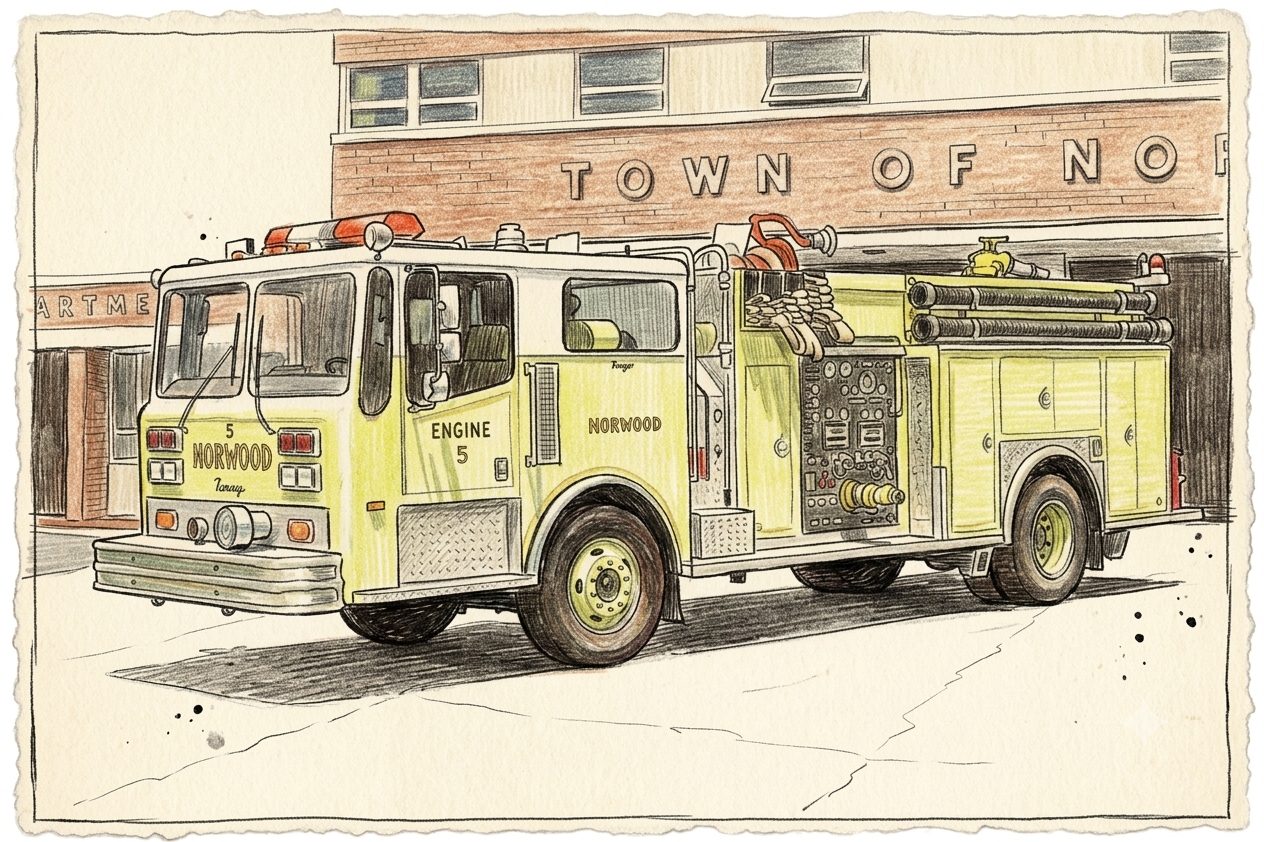
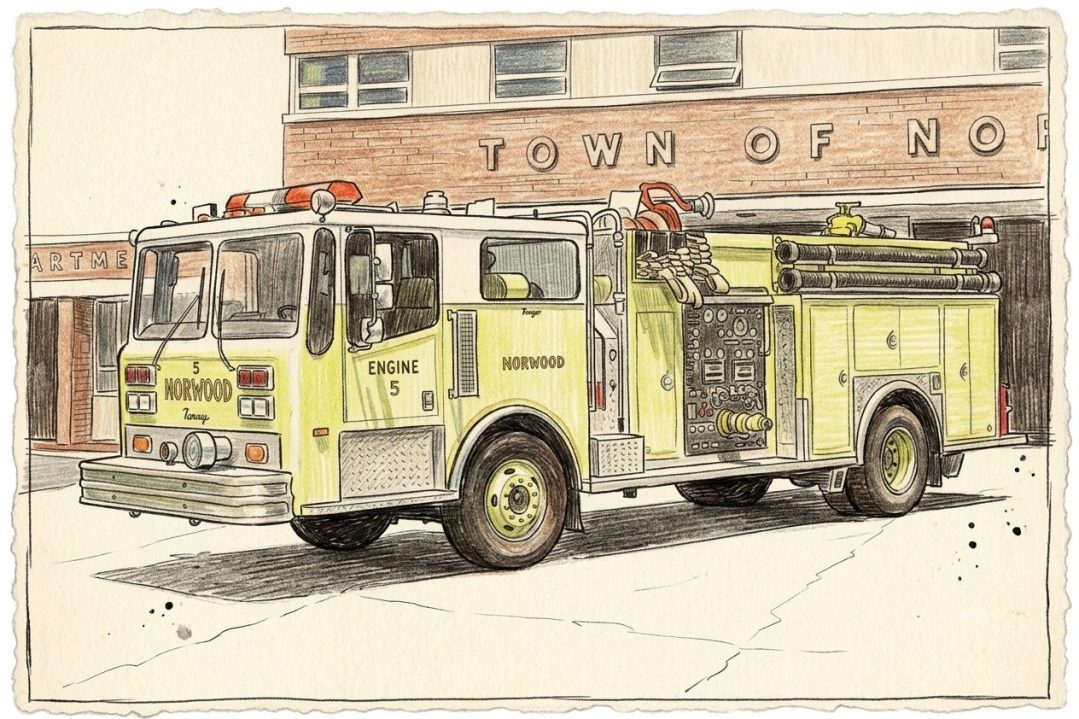
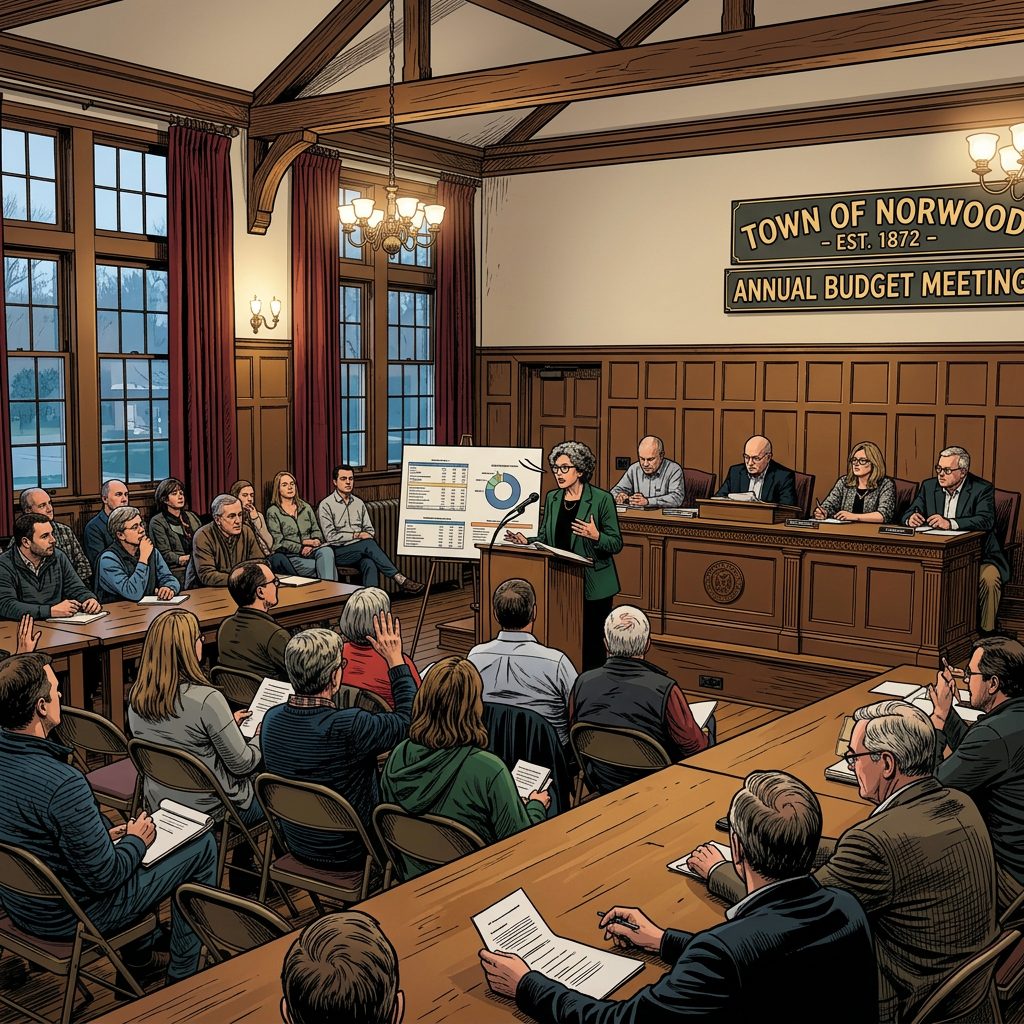
Following an unprecedented 70-minute delay to achieve a quorum, the Norwood Representative Town Meeting opened its annual session in the auditorium with immediate, aggressive cost-cutting measures that disrupted standard personnel salary structures and denied wage parity to the town’s firefighters.
The evening began in limbo as representatives quickly postponed two special warrant articles dealing with planning funds to rehabilitate the fire-damaged Norwood Junior High School South. While the rehabilitation had been previously approved at an April 12 special meeting, a technical wording defect required a new vote. However, when School Committee officials presented an architects’ estimate of $6.7 million to restore and expand the facility—nearly double the town’s anticipated cost—both articles were indefinitely postponed.
Turning to the 17-article annual warrant, the meeting initially proceeded with rapid unanimity, passing three routine articles, accepting the report of the Finance Commission (FinCom), and authorizing the Town Treasurer to act as tax collector and borrow money.
The atmosphere shifted dramatically when the main budget article was reached. District 7 member James A. Barss urged fellow members to start at the beginning of the budget and tighten expenditures line by line. This sparked an intense debate over a recommended 6% across-the-board salary increase for all town employees except teachers. FinCom Chairman George T. Mahoney and Selectmen Chairman John F. Lydon strongly defended the 6% rate as essential to preserving the town’s basic salary spread between department heads and personnel. Lydon pointed out that while school personnel could use legal recourse to restore cuts, general town employees possessed no such option. Selectman Joseph W. Wall warned, “If we toss this out now, the whole salary structure will be jeopardized”.
Defying leadership, the assembly passed a disruptive amendment proposed by a frustrated Mr. Elvey, limiting salary increases to a maximum of $600 for any employee earning $10,000 or more. The amendment passed by a tight 64-51 vote, with Elvey arguing that executives in private industry were taking pay cuts and that the town could not afford the projected $21 tax rate increase. Mr. Mahoney estimated the amendment would save the town roughly $8,000 across all department budgets.
Following this vote, District 5 member Edmund E. Linehan complained that representatives were wasting valuable time to make minor cuts, warning, “If we make one stinking mistake, we could end up with the whole town meeting system down the drain and have to come back and do the whole calisthenics all over again”.
The meeting subsequently became a battleground over police and fire department wage parity. The previous year, town meeting created a structural disparity by holding firefighters—who had a signed contract—to a 9% raise, while granting police officers—who lacked a contract—a 12% hike. This year, the roles were reversed: the Board of Selectmen had signed a one-year contract with the Norwood Police Department calling for a 6% pay hike and a four-days-on, two-days-off work week, while the Norwood Fire Department remained without a signed contract.
Town Meeting member and firefighter negotiator George M. Ruboy proposed an amendment to add $15,000 (a 2.8% increase) to the requested $744,332 fire department salary budget to restore parity. Ruboy argued that the duties of the two departments were completely interwoven, noting that “sagging morale is a big factor” and that two men doing the same job deserved the same pay. Fire Chief Irving J. Dobson also spoke in favor of the restoration, stating, “Disparity is separating our departments as nothing else has—floods, hurricanes”.
Opposing the measure, Member Thomas P. Curran called parity an emotional issue, stating the town was “sick and tired of pat remedies to problems”. Chairman Lydon cautioned that approving the amendment would force the town to renegotiate established police contracts. The amendment failed in a close 55-51 standing vote, after which the FinCom‘s recommended fire budget passed unanimously. The $703,889 police budget was approved in less than a minute.
Before a question of a quorum abruptly halted proceedings, representatives rapidly approved 11 additional departmental accounts in a 15-minute burst. Approved accounts included:
- Town Treasurer and Tax Collector: $11,650
- Assessors: $127,086
- Town Clerk and Accountant: $87,976 (sized down by $334 to conform to the $600 cap after a separate $1,000 cut proposal by Mr. Paciorkowski was rejected)
- Engineering: $75,205
- Law: $18,910
- Election and Registration: $30,899
- Finance Commission: $8,500
- Planning Board: $4,130
- Board of Appeal (Zoning): $4,350
- Board of Appeal (Building): $44,593
- Town Municipal Building Miscellaneous: $16,109
The session was forced to adjourn when a formal count revealed the lack of a quorum. Rejecting proposals to reconvene over the weekend, members voted to adjourn until Monday night, prompted by District 7 member Eugene P. Doherty, who quipped that they should wait until Monday “when we’ve got all day to finish it”.
Archival Note: This article has been dynamically reconstructed from the original public record print archives of the Patriot Ledger
More Town Government Stories
-
Senate budget gives towns $2.4M in aid-June 23, 1981
A bipartisan legislative front forms to secure critical financial relief for regional town treasuries facing immediate cutbacks.
-
Referendum Drive Seen Well Underway-June 23, 1981
A rapid grassroots signature campaign aims to stall a major town development project through a public ballot referendum.

-
Police Overtime Pay Causes Flap-June 17, 1981
Selectmen Spar Over Fat Paychecks Following Around-The-Clock Housebreak Investigation One policeman got $536 in overtime pay last week. Another got $337. And two selectmen say that’s too much. “It’s not right for one man to work 35 hours overtime,” Selectman Walter J Dempsey said last night, adding, “536 bucks for my money is too much…
-
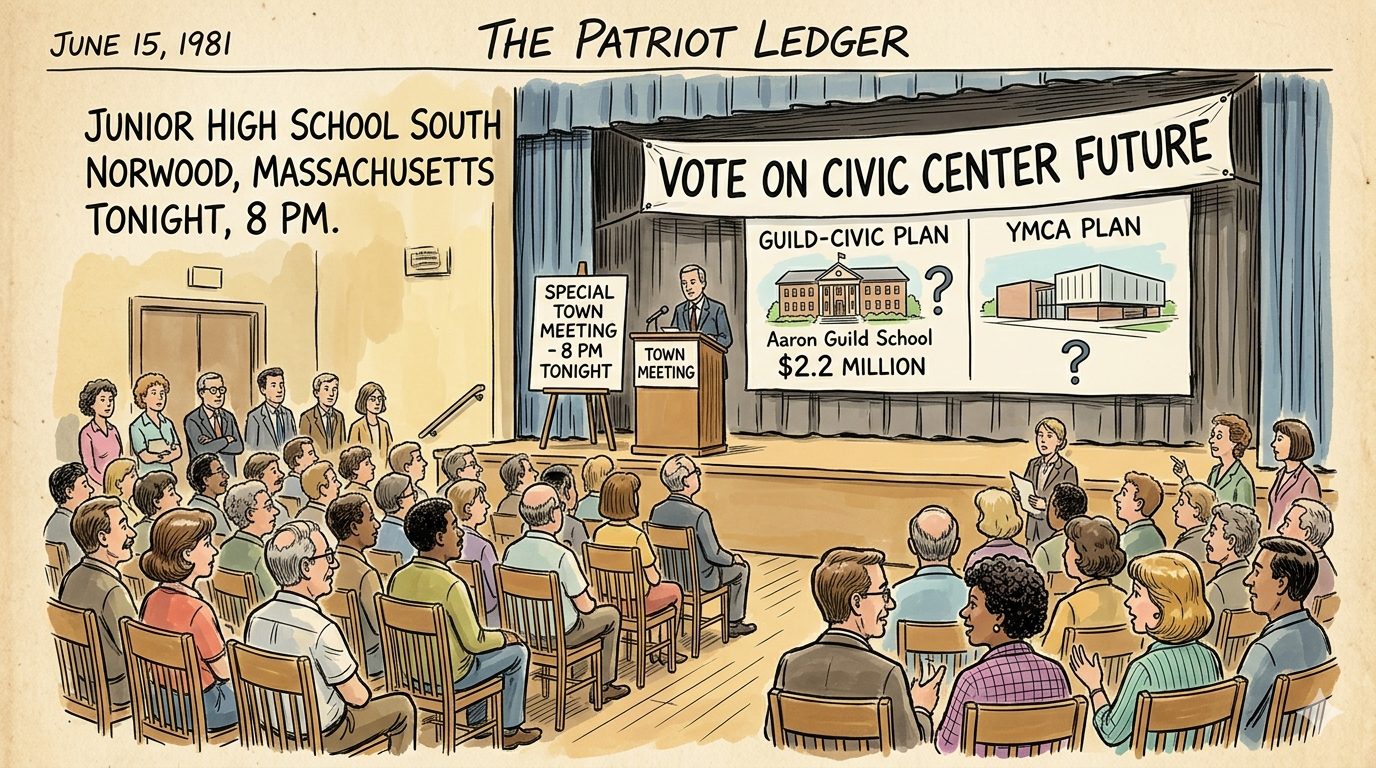
Civic Center Future Up For Vote-June 15, 1981
A high-stakes special town meeting agenda features a multi-million dollar Civic Center relocation choice and the $325,250 sale of Winslow School.
-
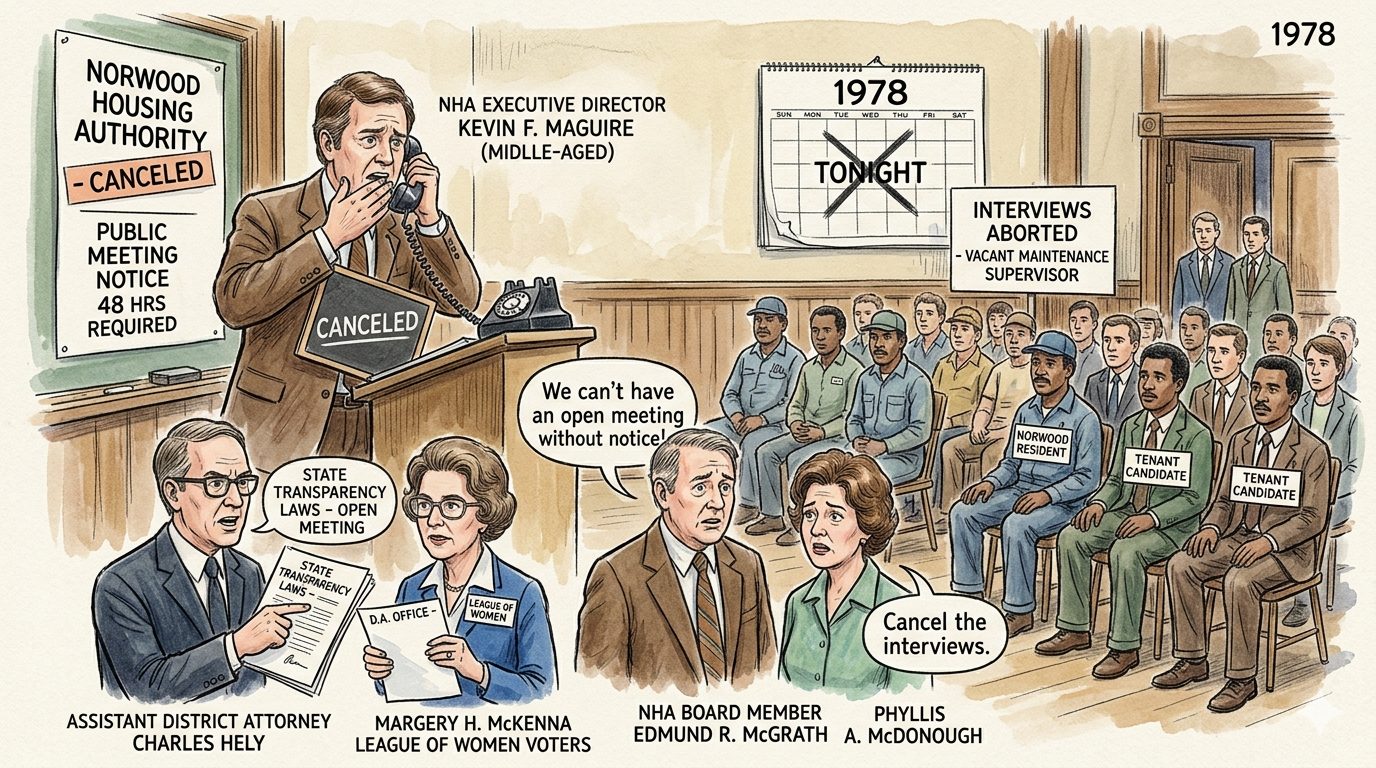
Housing Authority Candidate Screening Halted-June 16, 1978
League Watchdogs and District Attorney Block Closed Maintenance Interviews A sweeping attempt to accelerate administrative appointments inside the local municipal infrastructure collapsed under legal scrutiny last night. The Norwood Housing Authority was forced to completely abort a scheduled slate of 20 confidential candidate interviews for its vacant maintenance supervisor role after legal monitors formally warned…
-
Selectmen Outraged by FinCom Veto of Youth Summer Job Program Funding-June 26, 1974
Runaway teenage unemployment sparks a fierce municipal funding war as watchdogs lock horns over emergency summer public works spending.
-
Norwood FinCom’s Elias Refuses To Resign Amid Recall Threats-June 22, 1974
| A political standoff gridlocks the Finance Commission as a newly elected official breaks rank and drops out of municipal sessions
-
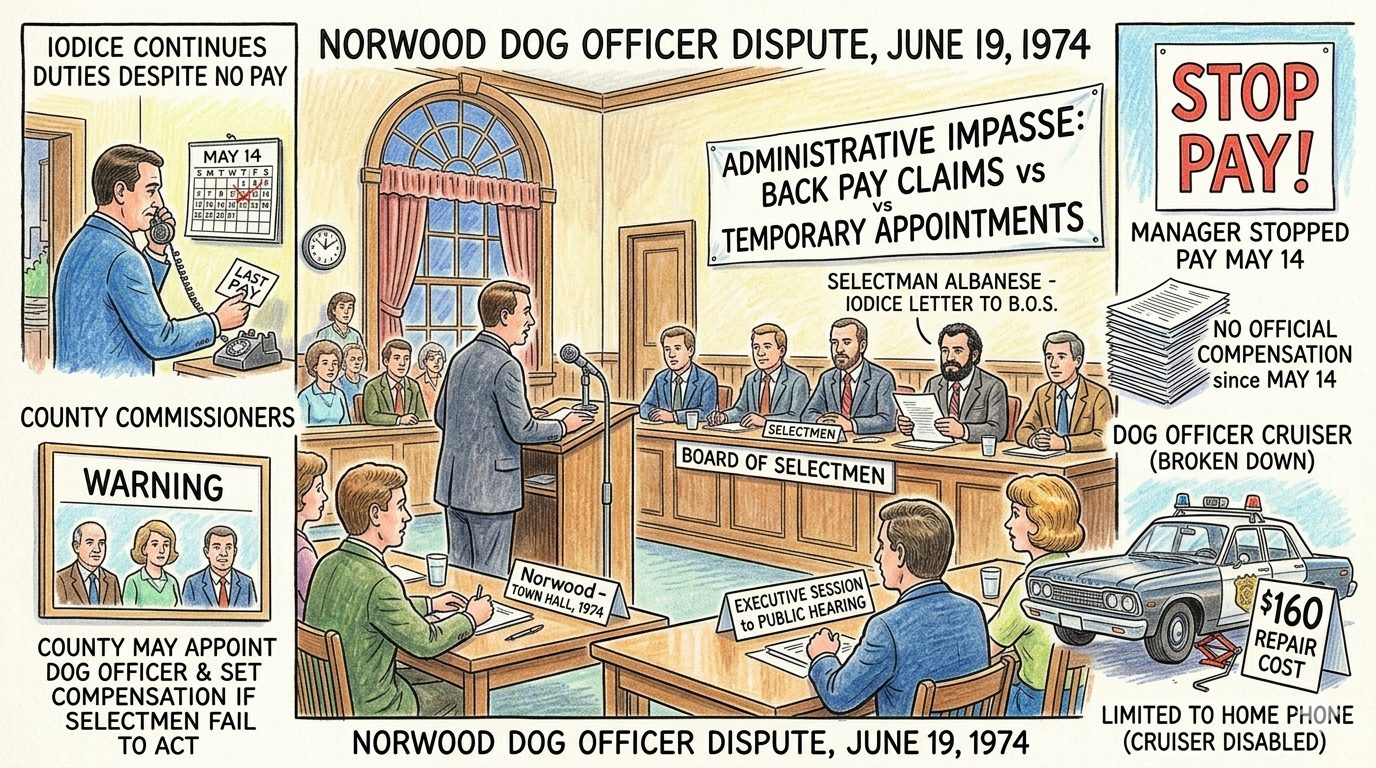
Dog Officer Row Unsettled-June 19, 1974
A breakdown in communication and transport leaves Norwood’s animal control duties in limbo during a fierce political standoff.
-
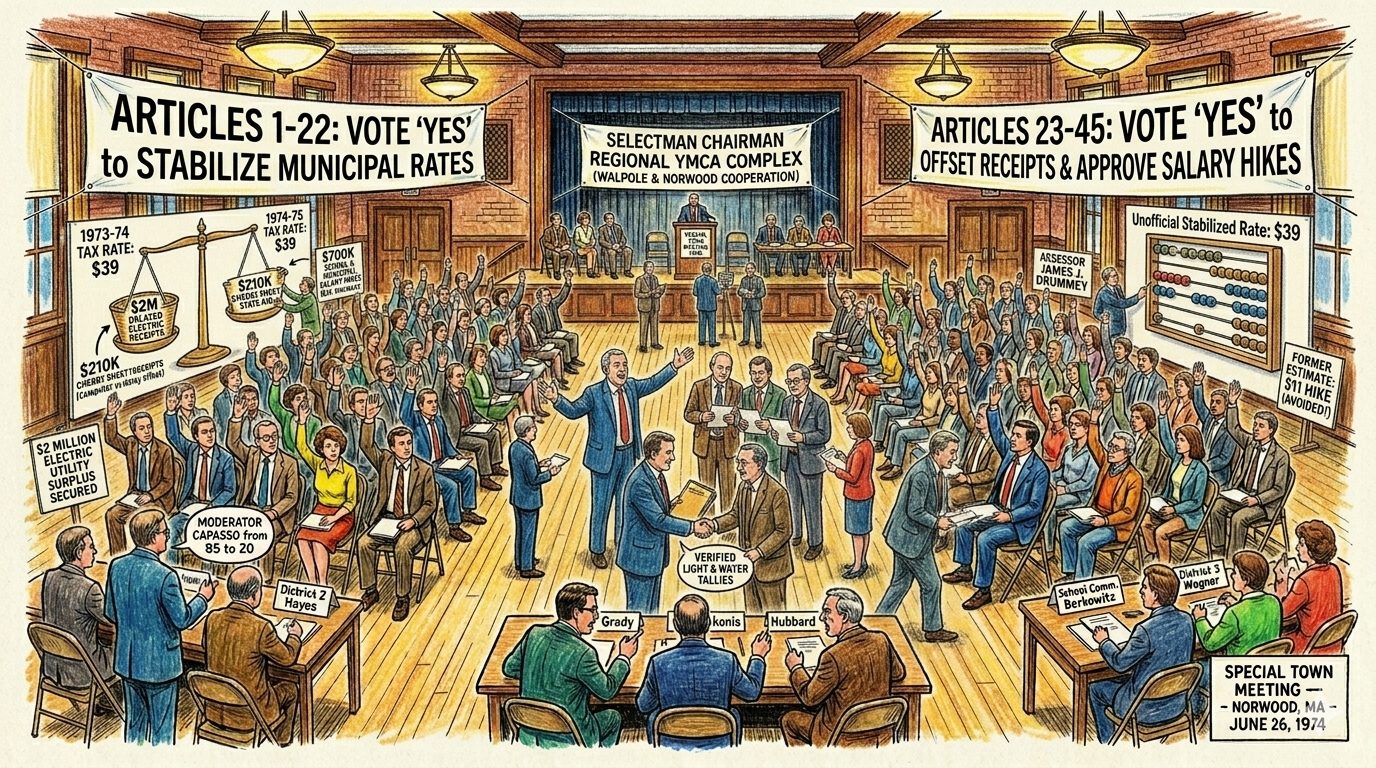
Delayed Computer Billing Receipts Spark Optimistic Tax Forecasts-June 18, 1974
Selectmen and assessors leverage delayed electric receipts and cherry sheet funds to keep tax rates at 39.
-
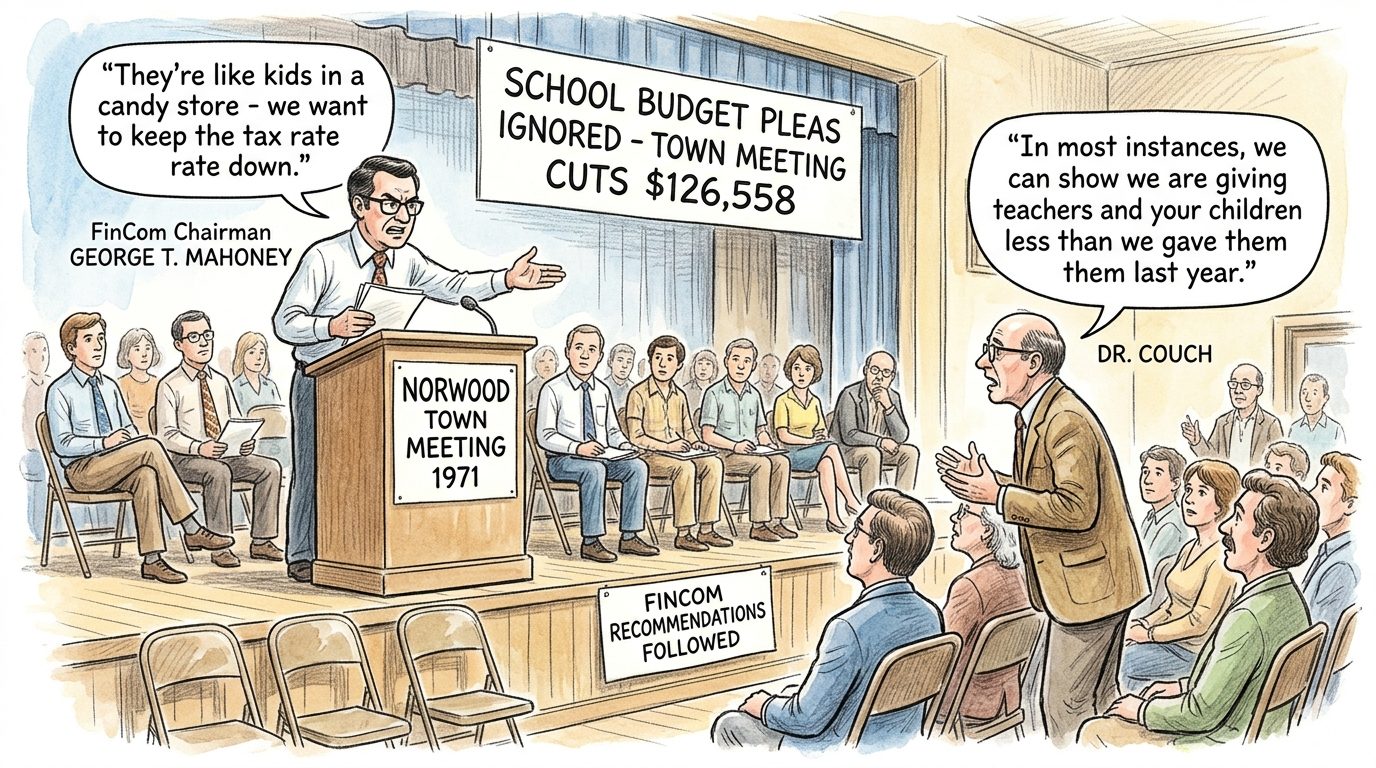
Meeting Ignores School Pleas, Cuts Budget By $126,558-June 15, 1971
A fierce debate over encumbered funds and municipal parity dominates a marathon Norwood Town Meeting session over the town budget.
Discover more from Norwood Historical Society
Subscribe to get the latest posts sent to your email.